
The gift of serving
- 3Statements
- 2Recorded acts
- 17Gifts
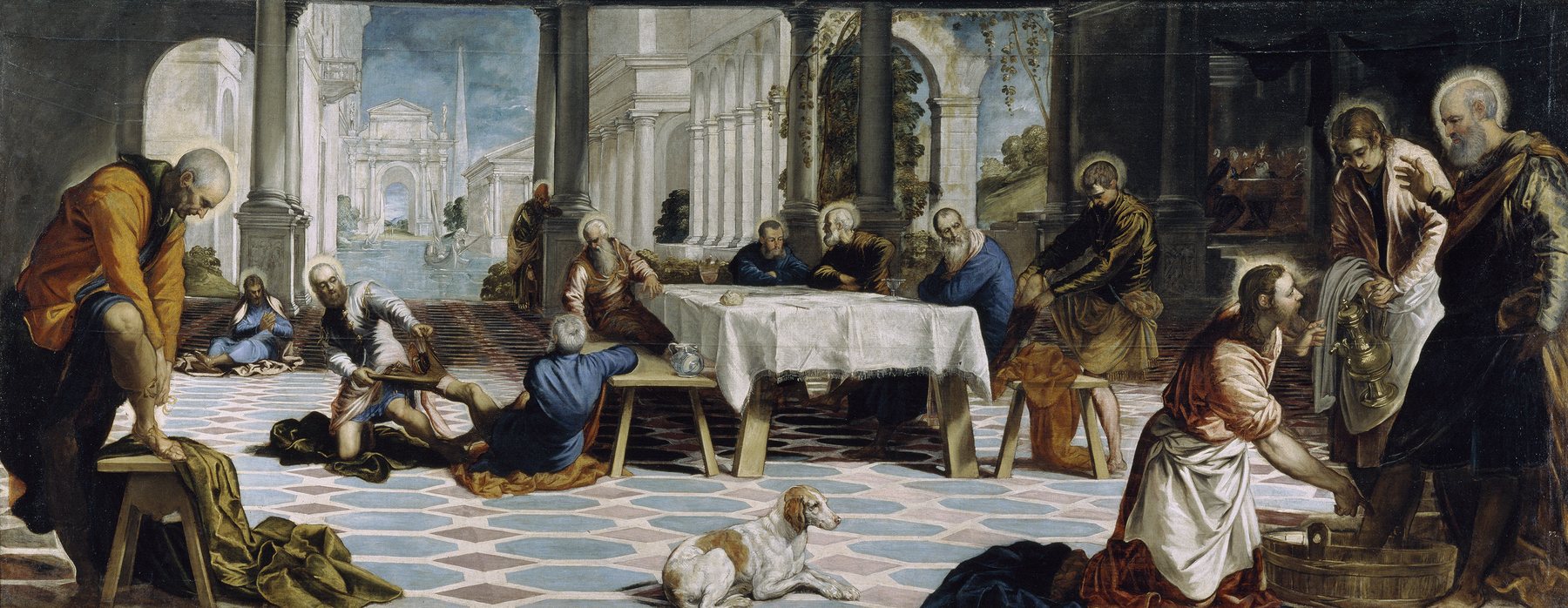
Picture: The Washing of the Feet, Jacopo Tintoretto, about 1548–49. Museo del Prado, Madrid.
From your result on . See your result
- Serving
A low row is something these statements did not find, not a verdict on you.
What is the spiritual gift of serving?
Serving is the gift of doing the practical work everything else depends on: the chairs, the lift to hospital, the meal, the form filled in. Romans 12:7 calls it service and 1 Corinthians 12:28 calls it helps. It is the gift a church notices only when it stops.
Why it matters
Almost nothing a church does on a Sunday happens unless somebody did this first. The New Testament treats it as a gift of the Spirit rather than as the residue left over once the interesting jobs are taken, which is how it is usually treated in practice. Paul’s own picture is blunt about that: the parts of a body that seem weaker are the necessary ones (1 Corinthians 12:22).
Where does the Bible name it?
-
or service, let’s give ourselves to service
Romans 12:7
-
helps
1 Corinthians 12:28
World English Bible British Edition
What does the gift of serving look like in a church?
Romans says service and 1 Corinthians says helps, and this quiz treats them as one: doing the practical work that other people’s work depends on. Romans 12:7 puts it second in its list, straight after prophecy, and 1 Corinthians 12:28 slips it in between gifts of healings and governments. Peter divides the whole church into two kinds of gift, speaking and serving, and hands this one half of everything (1 Peter 4:11).
In an ordinary week it is unglamorous and constant. Somebody puts the chairs out before anyone arrives and stacks them after everyone has gone. Somebody drives the elderly member to a hospital appointment, cooks for the family with a new baby, fixes the boiler in the hall, fills in the form the regulator wants. None of it is announced and all of it is assumed.
People with this gift tend to notice it as an itch rather than as a calling. You have usually started before anyone asked. An unfinished job in a room is physically uncomfortable. When somebody says an errand needs running, yes is out of your mouth before you have thought about your evening.
The gift it is most often confused with is hospitality, and the difference is what each one is pointed at: serving is pointed at the job, hospitality at the person who has just walked in. It also gets mixed up with administration, which organises who does the work rather than doing it, and with mercy, which goes towards distress rather than towards a task. A church that cannot tell them apart asks its servers to run the rota and then wonders why the rota is late.
Did you know?
-
The word behind “helps” in 1 Corinthians 12:28, antilepsis, appears nowhere else in the New Testament. Paul names the gift once and never explains it.
1 Corinthians 12:28; antilepsis, Strong’s Greek 484
-
The Greek for “service” in Romans 12:7 is diakonia, which shares its root with the English word deacon. Luke never calls the seven men of Acts 6 deacons: he says they were appointed over the daily service, and the title arrives later, in 1 Timothy 3.
Romans 12:7; Acts 6:1-6; 1 Timothy 3:8-13
-
Paul uses the same word of a woman. He commends Phoebe, “a servant of the assembly that is at Cenchreae”, and asks the Roman church to give her whatever she needs.
Romans 16:1-2, World English Bible British Edition
Who did this in the Bible?
-
Acts 6:1-6
When the Hellenists complained that their widows were neglected in the daily service, the disciples chose seven men and set them before the apostles, who prayed and laid their hands on them.
-
Romans 16:1-2
Paul commends Phoebe, a servant of the church at Cenchreae, and asks the Romans to assist her because she has been a helper of many, himself included.
Suggest a correction. Corrections that are applied are recorded in the public changelog.