
How Wiser Walk is made
Every quiz starts from a real source. Every quotation is checked word for word. And where Christians disagree, each side is described in words its own people would accept.
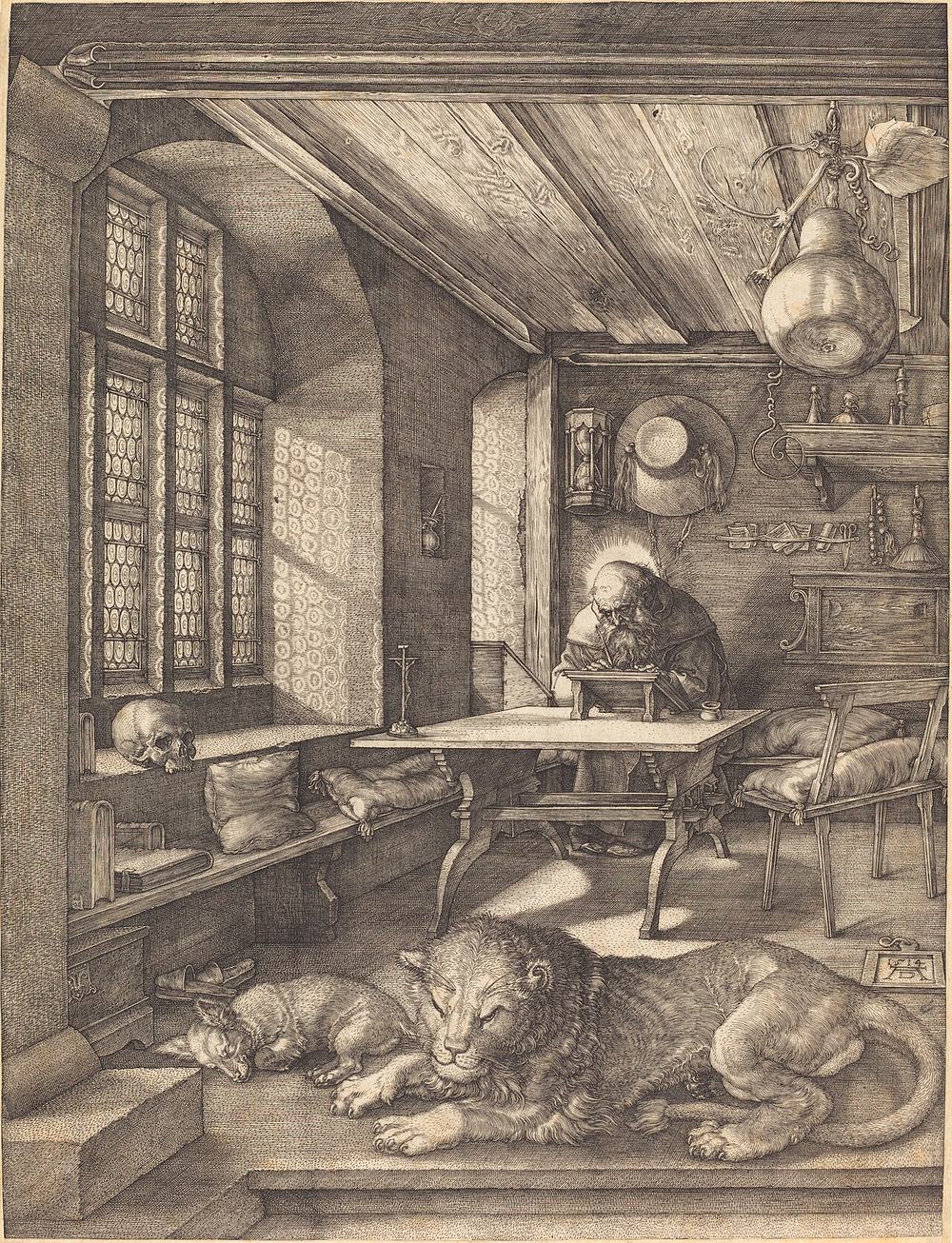
Picture: Saint Jerome in His Study, Albrecht Dürer, 1514. National Gallery of Art, Washington.
every quiz has a source
-
Christian Personality Test
Built onGregory the Great, The Book of Pastoral Rule, about AD 590
Gregory wrote it for pastors. Its third book lists 36 pairs of opposite people, the joyful and the sad, the bold and the shy, and how to speak to each. The eight types are drawn from his pairs. A private page reads you against John Cassian’s eight thoughts.
-
Which saint are you?
Built onThe recorded lives of 85 saints, from the Bible to our own century
Seven plain scales of temperament, such as introvert or extrovert. Each saint is placed only from what their life shows, and under every scale the result tells the moment from that life, with where it is written. You are matched with saints of your own gender.
-
How does your love hit or miss the mark?
Built on1 Corinthians 13, with John Chrysostom’s homilies on it
Its everyday scenes are read against the fifteen things Paul says love does and does not do. What to do about a gap comes from Chrysostom, who preached on the chapter line by line.
-
What are your spiritual gifts?
Built onRomans 12, 1 Corinthians 12, Ephesians 4 and 1 Peter 4
12 gifts, prophecy and healing among them, read from everyday scenes, from what people bring you and from what has happened when you prayed. Where Christians disagree about a gift, the result says so plainly instead of leaving it out.
-
Who in the Bible are you most like?
Built onWhat each figure does in Scripture
Every figure is placed only by what the Bible records them doing, chapter and verse. Jesus is among the results, with a reverent note of His own.
-
Which Psalm are you living right now?
Built onSt Athanasius, Letter to Marcellinus, 4th century
Athanasius matched the Psalms to what people go through: betrayed, afraid, worn down, grateful. The quiz finds your situation, then gives you the psalm he gave for it, read from his Greek.
-
What prayer do you need right now?
Built onThe prayers of the Church, 430 of them, each from a named book or tradition
It asks what you are facing, checks it with you, then hands you the prayer the Church has prayed for exactly that, in plain English beside its traditional words. It was tested on 72 imagined people in hard times and good ones before it went live.
-
Which early Christian thinks like you?
Built onThe early Christians’ own writings
Each statement is a position a real early Christian held, in plain words with no name on it. Your answers are scored only against lines the person actually wrote, each checked in its source.
-
Which of the 7 deadly sins are you weakest to?
Built onGregory the Great’s list of seven, as the Middle Ages settled it
Pride, envy, wrath, sloth, greed, gluttony and lust, each measured by a ladder of its faces as Gregory, Cassian and Aquinas described them, and by everyday scenes.
-
Which Christian denomination are you?
Built onThe confessions and catechisms of 18 traditions
Twenty reviewers were set to find where it was unfair to any tradition. They raised 522 findings and 424 were applied. Each tradition’s own answers, run through the quiz, land back on that tradition.
the learn pages
-
Saints and early Christians
70 lives, each told from the oldest records: Martin of Tours from Sulpicius Severus, who knew him; Perpetua from her own prison diary. A script checks every quotation against the source text before a page can go up, and feast days are given East and West, side by side.
-
What is love?
Paul's fifteen lines on love in 1 Corinthians 13, one page each, read with John Chrysostom's own homilies on the chapter. Every page ends on what he says to do about it.
-
Ancient Christian prayers
430 prayers so far, each in plain English beside its traditional wording, which is checked line by line against the book it comes from.
-
What the early Church said and Compare traditions
Both sides of each question in the early Christians' own words, with a source for every line; and 12 pairs of traditions, each described from its own confessions and catechisms.
nothing made up
-
The Bible, word for word
Scripture is quoted word for word from the Berean Standard Bible, a modern translation in the public domain, so every verse can be checked against any copy.
-
No line written by a machine
Every line in Sounds Like Scripture is quoted from a public-domain edition and checked against it. Who Said It? takes its speakers from SIL's Glyssen data, other people's scholarship.
-
Legends called legends
A saint's life is told from the oldest records. Where a famous story came centuries later, or a well-known quote was never said, the page says so plainly, under Myths and misquotes.
your answers
- Every quiz is scored in your browser, and your results are saved on this device, under My profile.
- When you finish a quiz, we keep a copy of the result to find mistakes and improve the quizzes.
- The twelve private answers of the Christian Personality Test are shown to no one but you.
- An account is optional. It keeps your results on every device you sign in on. One button clears them all, and deleting the account removes everything.
- Every email box on the site starts a free account. A short note comes when something new is made, and one switch stops them.
- Page views are counted without cookies.