Sign Up My Profile
Prayers

Orthodox prayers before work and any task

Prayers to say before a day’s work or any task, and when the work is done.

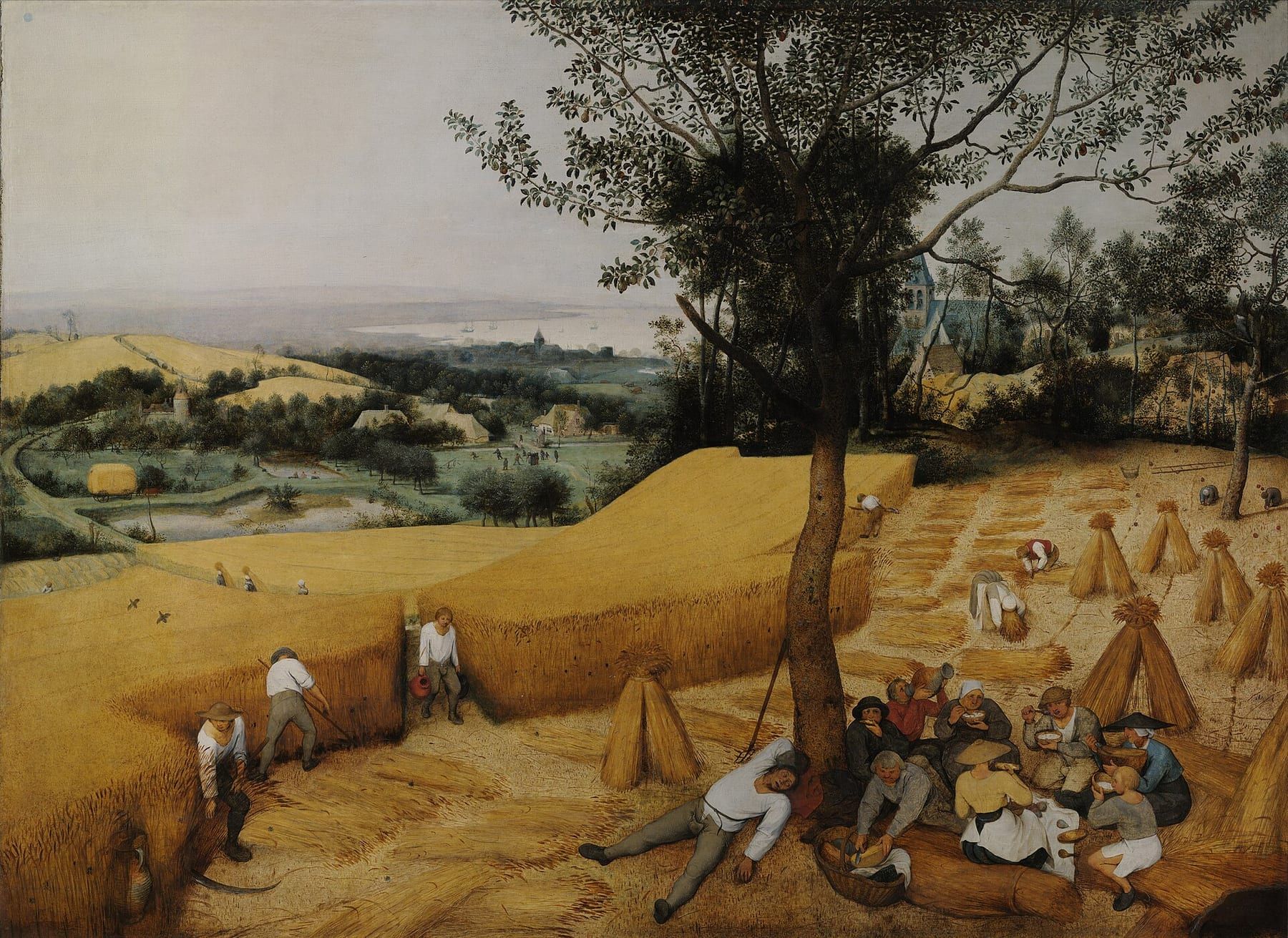
Picture: Pieter Bruegel the Elder, The Harvesters, 1565

5 prayers

Before you begin

Prayer before any task

O Lord Jesus Christ,only-begotten Son of Your eternal Father,You said with Your most pure lips:“Without Me you can do nothing.”

My Lord, O Lord,in faith I embrace in my soul and heartthe words You spoke,and I fall down before Your goodness.

Help me, a sinner,to complete this work I am beginningthrough You Yourself,in the name of the Father, and of the Son, and of the Holy Spirit,through the prayers of the Mother of God and of all Your saints.Amen.

Traditional wording, 2011

O Lord Jesus Christ, Only-begotten Son of Thine unoriginate Father,Thou hast said with Thy most pure lips:For without Me, ye can do nothing.

My Lord, O Lord, in faith having embraced Thy words,I fall down before Thy goodness;

help me, a sinner, to complete through Thee Thyselfthis work which I am about to begin,in the name of the Father, and of the Son, and of the Holy Spirit. Amen.

The prayer before any work in the Russian prayer book asks Christ for help in His own words: “Without Me you can do nothing.”

Plain English by Wiser Walk, from the Church Slavonic, with the Jordanville Prayer Book’s English beside it. How the wording is made. Traditional wording: Holy Trinity Monastery, Jordanville, Prayer Book, 2011.

Today’s Russian prayer book adds “through the prayers of the Mother of God and of all Your saints” before the Amen. This wording, like the Russian prayer book of 1907, ends with the name of the Trinity.

Where it comes from, and the Church Slavonic

A short hymn as you start

Troparion before any good work

O God, Creator and Maker of all things,we begin the work of our hands for Your glory:with Your blessing, be quick to direct it,and deliver us from every evil,for You alone are almighty and the Lover of mankind.

Traditional wording, 1999

O God, Creator and Fashioner of all things,with Thy blessing speedily guide arightthe work of our hands which is beginning unto Thy glory,and deliver us from every evil thing,as Thou only art Almighty and the Lover of Mankind.

A hymn of one sentence, sung in church before a new undertaking and prayed at home before any work. It asks God to direct the work of our hands, begun for His glory.

Plain English by Wiser Walk, from the Church Slavonic, with the English of St Tikhon’s Monastery beside it. How the wording is made. Traditional wording: St Tikhon’s Monastery, The Great Book of Needs, 1999.

Where it comes from, and the Church Slavonic

For the whole day’s work

Prevent us, O Lord

Lord, we ask You:go before all we do and inspire it,and follow it with Your help,so that all our work may always begin from Youand, once begun, be finished through You.

Through our Lord Jesus Christ. Amen.

Traditional wording, 1662

Prevent us O Lord, in all our doings with Thy most gracious favour,and further us with Thy continual help;that in all our works begun, continued, and ended in Thee,we may glorify Thy holy Name,and finally by Thy mercy obtain everlasting life;through Jesus Christ our Lord. Amen.

A Latin prayer of the 700s, from the Roman Mass book. It asks God to go before all we do, so that every task begins from Him and is finished through Him.

Plain English by Wiser Walk, from the Latin, with the English of the Book of Common Prayer (1662) beside it. How the wording is made. Traditional wording: The Church of England, The Book of Common Prayer, 1662.

The last lines of this English, on glorifying God’s name and on everlasting life, were added when it was translated. They are not in the Latin.

Where it comes from, and the Latin

On a Monday morning

Satisfy us in the morning (Psalm 90)

Teach us to number our days,so that we may gain a heart of wisdom.

Turn back, O Lord! How long?Have pity on Your servants.

Satisfy us in the morning with Your steadfast love,so that we may sing for joy and be glad all our days.

Make us glad for as many days as You have afflicted us,for as many years as we have seen trouble.

Let Your servants see Your work,and their children Your glory.

Let the favour of the Lord our God be upon us.Establish the work of our hands for us;yes, establish the work of our hands.

Traditional wording, 1906

So teach us to number our days, that we may apply our hearts unto wisdom.

Turn Thee again, O Lord, at the last, and be gracious unto Thy servants.

O satisfy us with Thy mercy, and that soon:so shall we rejoice and be glad all the days of our life.

Comfort us again now after the time that Thou hast plagued us;and for the years wherein we have suffered adversity.

Show Thy servants Thy work, and their children Thy glory.

And the glorious Majesty of the Lord our God be upon us:prosper Thou the work of our hands upon us;O prosper Thou our handy-work.

Psalm 90 is a prayer of Moses. Its last verses ask God to satisfy us in the morning with His love, and they end by asking twice that He establish the work of our hands.

Plain English by Wiser Walk, from the Hebrew, with Hapgood’s 1906 service book beside it. How the wording is made. Traditional wording: Isabel F. Hapgood, Service Book of the Holy Orthodox-Catholic Apostolic Church, 1906.

Where it comes from, and the original

When you finish

Prayer after any task

You are the fulfilment of all good things, O my Christ.Fill my soul with joy and gladness,and save me,for You alone are most merciful.O Lord, glory to You.

Traditional wording, 2011

Thou art the fullness of all good things, O my Christ;fill my soul with joy and gladness, and save me,for Thou alone art plenteous in mercy.

The prayer book pairs the prayer before any task with this one for when the work is done. It praises Christ as the fulfilment of all good things and asks Him for joy.

Plain English by Wiser Walk, from the Church Slavonic, with the Jordanville Prayer Book’s English beside it. How the wording is made. Traditional wording: Holy Trinity Monastery, Jordanville, Prayer Book, 2011.

Today’s Russian prayer book ends with “O Lord, glory to You”. This wording, like the Russian prayer book of 1907, stops before it.

Where it comes from, and the Church Slavonic

Scripture for this

Then the LORD God took the man and placed him in the Garden of Eden to cultivate and keep it.

Genesis 2:15 God placed the man in Eden to work the garden and keep it. Work was part of His good world from the beginning.

I am the vine and you are the branches. The one who remains in Me, and I in him, will bear much fruit. For apart from Me you can do nothing.

John 15:5 Jesus is the vine and we are the branches. Whoever remains in Him bears much fruit, for apart from Him we can do nothing.

So whether you eat or drink or whatever you do, do it all to the glory of God.

1 Corinthians 10:31 Whatever we do, even eating and drinking, is to be done for the glory of God. The most ordinary task can be done for Him.

For it is God Who works in you to will and to act on behalf of His good purpose.

Philippians 2:13 An Orthodox service of prayer before any good work reads this passage. It is God Who works in us, both to will and to act.

Bible text: Berean Standard Bible, public domain.

A psalm for this

Man goes forth to his work and to his labor until evening.

Psalm 104:23

The Russian Church sings this verse in the service of prayer it approved in 2023 for people looking for work. The psalm praises God for the order of everything He made.

Psalm 104 Read the whole psalm, with St Athanasius’s advice on when to pray it.

Close to this

All prayers

Quiz What prayer do you need right now? A few honest taps about where you are, and a prayer of the Church for exactly that. 8 questions, about 3 minutes. Start

Suggest a correction

Berean Standard Bible