
When it is said
It is the troparion, the day’s main hymn, of the Exaltation of the Cross on 14 September. The Greek book has it sung three times.
It is among the short hymns that open the morning service of Matins, when that service is not part of an all-night vigil. When a priest blesses water, he dips the cross into it three times while it is sung.
Russian prayer books put it in the morning prayers, as “the troparion to the Cross and prayer for the fatherland”. The English prayer book of St Tikhon’s does the same.
Where it comes from
Author by tradition
Who wrote it?
Tradition credits it to St Cosmas, bishop of Maiuma in the 8th century. He was brought up with St John of Damascus and was his friend. Two Russian priests say so in their answers to readers’ questions: Hieromonk Job (Gumerov) and Fr Roman Posypkin.
Hieromonk Job (Gumerov), Pravoslavie.ru (2005); Fr Roman Posypkin, Foma (2020)
Victory for whom?
The Greek asks God to grant “victories to the kings against the barbarians”. Russian books once named the emperor. Isabel Hapgood’s English service book of 1906 prays for “our Sovereign”. In 1917, after the Russian Revolution, the tsar’s rule ended. Russian books then put “Orthodox Christians” in his place, as this page does.
The Greek Menaion, 14 September (Greek Orthodox Archdiocese of America); Isabel F. Hapgood, Service Book (1906); Hieromonk Job (Gumerov), Pravoslavie.ru (2005); Fr Roman Posypkin, Foma (2020)
Tchaikovsky’s 1812
The Russian composer Tchaikovsky wrote his 1812 Overture in 1880. It marks Russia’s defence against the French invasion of 1812. It opens with the tune of this hymn, played by four cellos and two violas. The tune stands for the Russian people praying for victory.
What the words mean
“Your dwelling place”
The last line asks Christ to guard His “dwelling place” by His Cross. Archpriest Seraphim Slobodskoy, in his catechism The Law of God, explains the word: it is the community of true believers, among whom God dwells unseen.
The sign in the sky
Hieromonk Job hears two things in this short hymn. One is faith in the Cross’s power to conquer. The other is the sign of the Cross that St Constantine the Great and his soldiers saw in the sky, with the Greek words “By this, conquer”.
The Scripture in it
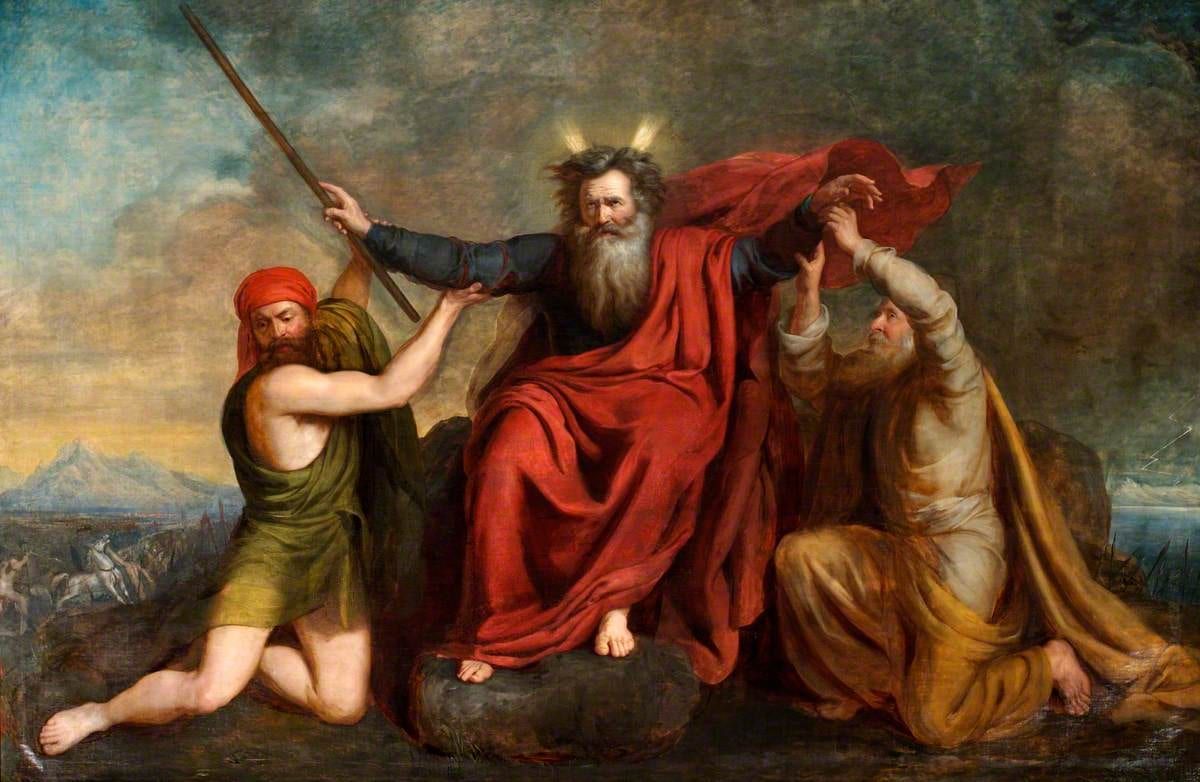
Save Your people and bless Your inheritance; shepherd them and carry them forever.
Bible text: Berean Standard Bible, public domain.
In Church Slavonic
Спаси, Господи, люди Твоя и благослови достояние Твое;
победы православным христианом на сопротивныя даруя,
и Твое сохраняя Крестом Твоим жительство.