
When it is said
The deacon or the priest says them aloud, and the choir answers “Lord, have mercy” three times after each one.
Anyone may pray them before a flight, for themselves or for someone who is flying.
Where it comes from
No author known
Where do they come from?
The petitions belong to the Church’s blessing for people about to fly, a short service in the Russian Book of Needs. The deacon adds them to the litany after the Gospel, after the petitions for the bishop and for the country. No author or date is given.
The Great Book of Needs, Volume IV (St Tikhon’s Seminary Press, 1999), pages 312-314; Воинский требник (the Military Book of Needs), Azbyka
Elijah and the apostles
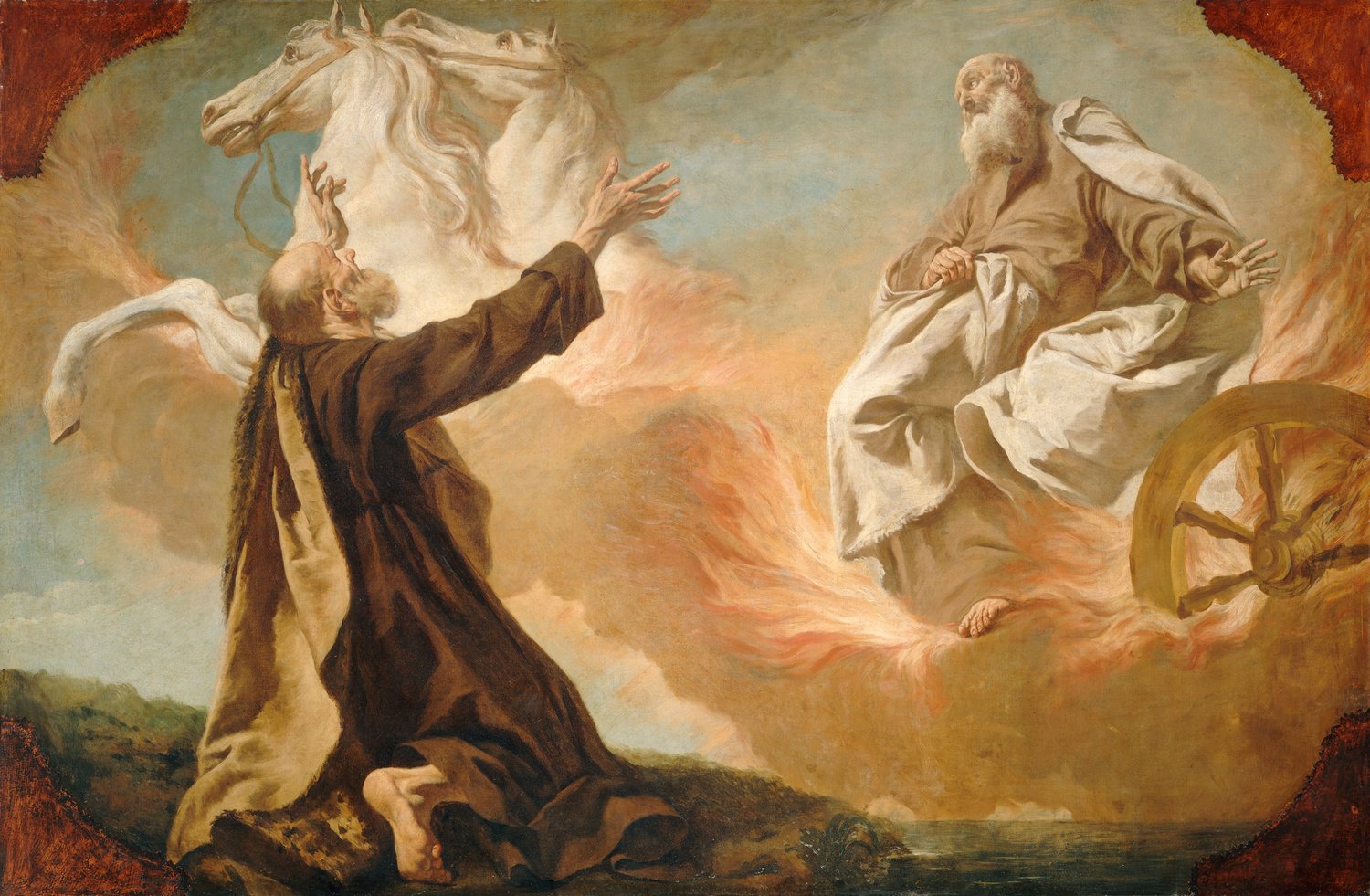
Two of the petitions remember people God carried through the sky. Elijah went up to heaven in a whirlwind when a chariot of fire appeared (2 Kings 2:11), and the fourth petition asks for his prayers. The first recalls the apostles, whom the same service says Christ brought on clouds to the burial of His Mother.
The Great Book of Needs, Volume IV (St Tikhon’s Seminary Press, 1999), pages 308 and 313; Воинский требник (the Military Book of Needs), Azbyka
What the words mean
The prince of the air
The second petition asks the angels to crush “the prince of the air” beneath the travellers’ feet. St Paul calls the devil the ruler of the power of the air (Ephesians 2:2). He also told the Christians in Rome that God would soon crush Satan under their feet (Romans 16:20).
The Scripture in it
As they were walking along and talking together, suddenly a chariot of fire with horses of fire appeared and separated the two of them, and Elijah went up into heaven in a whirlwind.
After He had said this, they watched as He was taken up, and a cloud hid Him from their sight.
… in which you used to walk when you conformed to the ways of this world and of the ruler of the power of the air, the spirit who is now at work in the sons of disobedience.
The God of peace will soon crush Satan under your feet. The grace of our Lord Jesus Christ be with you.
Bible text: Berean Standard Bible, public domain.
In Church Slavonic
Небоше́ственника проро́ка Твоего́, Го́споди, дре́вле показа́вый и апо́столы Твоя́ о́блаки от коне́ц земли́ и во святы́й град пренесы́й, при́зри и ны́не на моли́тву рабо́в Твои́х, к Тебе́ приле́жно припа́дающих и благослови́ возду́шное путеше́ствие их, ти́ху же и ми́рну и безмяте́жну сему́ бы́ти сотвори́, мо́лим Ти ся, всеблаги́й, услы́ши и поми́луй.
А́нгелом Твои́м повели́, Влады́ко, сохрани́ти сия́, рабы́ Твоя́ по возду́ху ше́ствовати хотя́щия, я́ко да крило́ма свои́ма осеня́т я, возду́шнаго же кня́зя под но́зе их сокруша́т, мо́лимся всеми́лостивый Спа́се, услы́ши и поми́луй.
Благо́е наме́рение, Спа́се, рабо́в Твои́х благослови́ и моли́тву их приими́, ско́рое и безбе́дное по возду́ху превожде́ние им устроя́я и благополу́чное во Своя́ си возвраще́ние ми́лостиво да́руя, всеще́дрый Го́споди, услы́ши и поми́луй.
Пресла́вным вознесе́нием Твои́м возду́х освяти́вый Го́споди, и Илию́ огнеколесни́чника пе́рваго небоше́ственника показа́вый, того́ моли́твами рабо́м Твои́м сим (и́мярек) безмяте́жное возду́шное ше́ствие, здра́вие же и от вся́кия ско́рби и смертоно́сныя ра́ны избавле́ние да́руй, мо́лим Ти ся всеми́лостивый Го́споди, услы́ши и поми́луй.
Вся страхова́ния бесо́вская дале́че от рабо́в Твои́х отжени́, я́ко да на крыле́х жела́ния Боже́ственнаго при́сно носи́ми, на Тя же Творца́ и Промысли́теля всея́ тва́ри упова́ние несумне́нное возлага́юще, ми́рно, и ра́достно, я́ко на о́блаце ле́гце, пу́ть возду́шный пре́йдут, ко сла́ве и́мене Твоего́ Пресвята́го и во вре́мя благопотре́бно во своя́ си возвратя́тся, мо́лим Ти ся всемоги́й Влады́ко, услы́ши и ми́лостивно поми́луй.