
When it is said
Russian prayer books print it among the “Prayers for the sick”. It comes after the short hymn for the sick, as the first of two prayers to the Lord. So anyone may say it at home for someone who is ill, with their name.
Holy Unction, the service of anointing the sick, has seven Gospel readings, each followed by a prayer. This is the third. It comes after the reading where Jesus sends out the Twelve to heal. The next tells how He touched Peter’s mother-in-law and her fever left her. The prayer asks the same: that God touch the body and put out the fever.
Where it comes from
No author known
One of the oldest prayers of Holy Unction
This prayer and three others are already in Greek manuscripts of the 10th century, among the prayers for anointing the sick. The Orthodox Encyclopedia says its core, without the lines about the oil, has been the prayer most widely read over the sick from ancient times until now.
Orthodox Encyclopedia (Pravoslavnaya Entsiklopediya), Holy Unction
The lines about the oil came later
The lines in Holy Unction that ask God to bless the oil were once a separate prayer for blessing oil, later set into the middle of this one.
Orthodox Encyclopedia (Pravoslavnaya Entsiklopediya), Holy Unction
The Scripture in it
The LORD upholds all who fall and lifts up all who are bowed down.
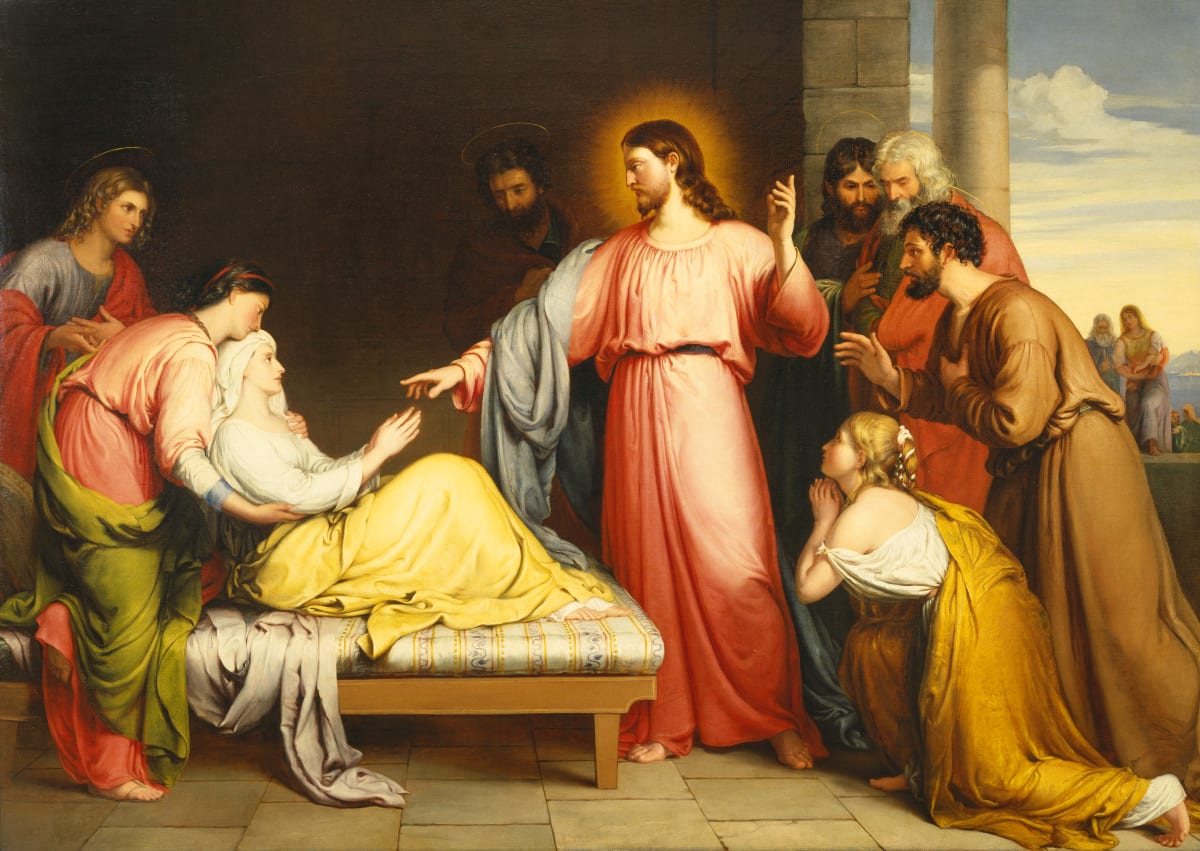
When Jesus arrived at Peter’s house, He saw Peter’s mother-in-law sick in bed with a fever. So He touched her hand, and the fever left her, and she got up and began to serve Him.
… unknown, yet well-known; dying, and yet we live on; punished, yet not killed …
Bible text: Berean Standard Bible, public domain.
In Church Slavonic
Владыко, Вседержителю, Святый Царю, наказуяй и не умерщвляяй, утверждаяй низпадающия и возводяй низверженныя, телесныя человеков скорби исправляяй, молимся Тебе, Боже наш, раба Твоего (имя) немощствующа посети милостию Твоею, прости ему всякое согрешение вольное и невольное.
Ей, Господи, врачебную Твою силу с Небесе низпосли, прикоснися телеси, угаси огневицу, укроти страсть и всякую немощь таящуюся, буди Врач раба Твоего (имя), воздвигни его от одра болезненнаго и от ложа озлобления цела и всесовершенна, даруй его Церкви Твоей благоугождающа и творяща волю Твою.
Твое бо есть, еже миловати и спасати ны, Боже наш, и Тебе славу возсылаем, Отцу и Сыну и Святому Духу, ныне и присно и во веки веков. Аминь.
From the Russian prayer book’s “Prayers for the sick”, on Azbyka, with capitals for God.