
When it is said
The Church sings these hymns on his feast day, 27 February.
At home they can be prayed whenever anger or an old grudge has hold of you, asking St Titus to pray for you.
Where it comes from
No author known
Who was St Titus?
St Titus was a priest and monk of the Kiev Caves monastery, known for living at peace with everyone. His body rests in one of the monastery’s caves. His Life tells how he came to love peace so much, through a quarrel with his closest friend.
Titus and Evagrius
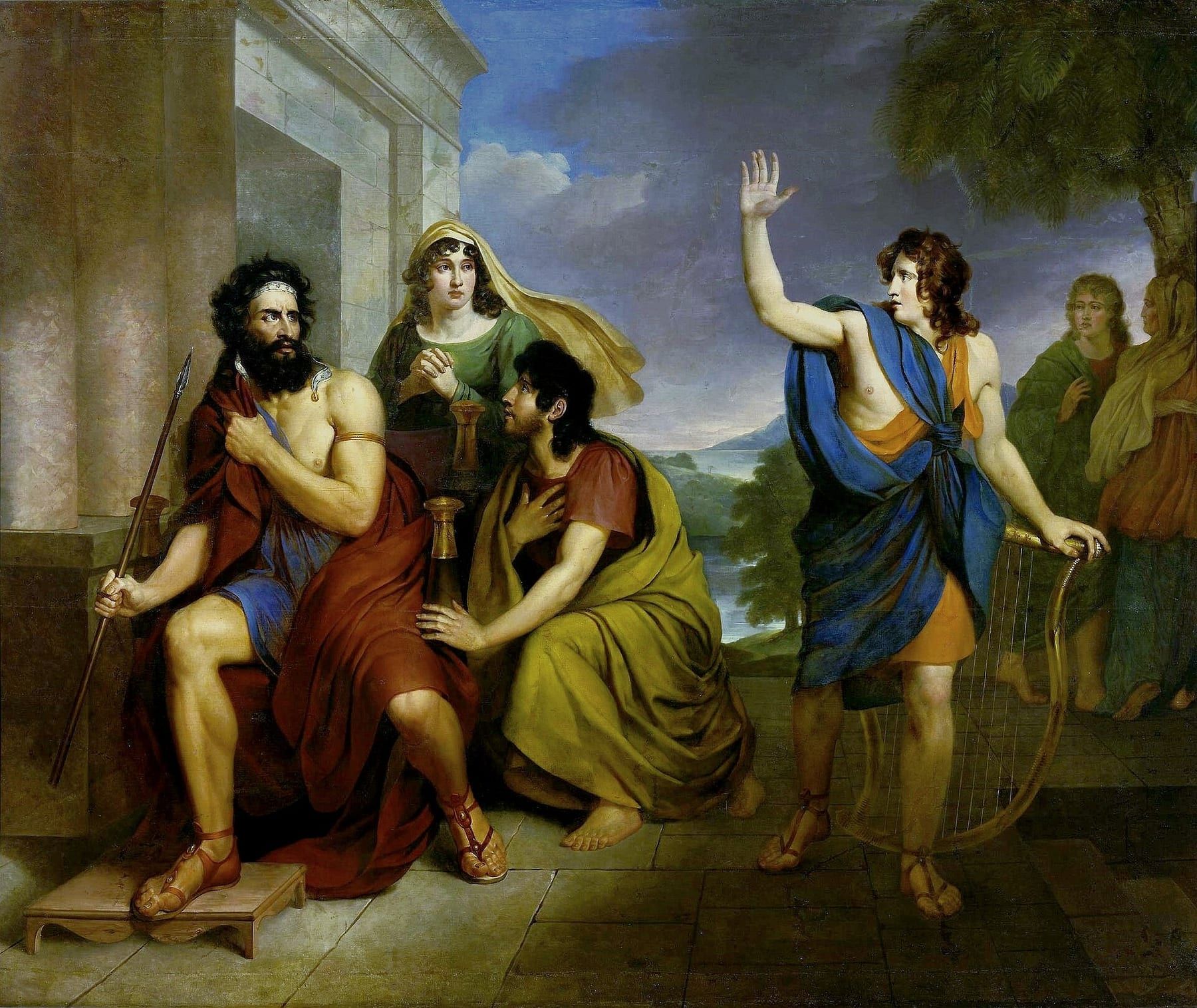
Titus and the deacon Evagrius were such close friends that everyone marvelled at them. Then the two came to hate each other so much that they would not look at one another, and they ignored every plea from the other monks to make peace. When Titus fell gravely ill, he wept over his sin and sent word to Evagrius, “Forgive me, brother, for the Lord’s sake, for wounding you with my anger.”
How the quarrel ended
Evagrius refused, even when the monks brought him to the bedside and Titus fell at his feet in tears. He turned away, saying he would never make peace in this age or the next, and fell dead on the spot. At that moment Titus rose from his bed healed. He never grew angry with anyone again, and always kept in mind the words “Do not let the sun set upon your anger” (Ephesians 4:26).
The Life of St Titus, Azbyka’s church calendar; St Dimitry of Rostov, Lives of the Saints
What the words mean
The “hater of love” and the angel
The “hater of love” in the troparion is the devil, whom the Life blames for the quarrel. The angel in the kontakion comes from Titus’s own account. While he was still angry, he saw angels weeping over his soul, which is why he begged for forgiveness. After Evagrius turned away, an angel took Titus by the hand and raised him from his bed.
The Life of St Titus, Azbyka’s church calendar; St Dimitry of Rostov, Lives of the Saints
The Scripture in it
And being found in appearance as a man, He humbled Himself and became obedient to death—even death on a cross.
Bible text: Berean Standard Bible, public domain.
In Church Slavonic
Братолю́бне тя живу́ща ви́дев любве́ ненави́стник,
победи́л тя во гнев,
но, ве́дый твоя́ пре́жния труды́ любве́ исто́чник – Госпо́дь,
преложи́ тя па́ки на братолю́бие,
в не́мже ты про́чее пожи́в Богоуго́дне,
моли́ся о нас, я́ко да поживе́м братолю́бне.
Смире́нию Госпо́дню подо́бяся,
смири́лся еси́, свяще́нник сый пред лице́м го́рдаго диа́кона Ева́грия,
беззло́бне Ти́те,
за что прия́л еси́ не то́кмо вре́менныя жи́зни неотпаде́ние,
А́нгелу тя воздви́гшу,
но и ве́чныя наслажде́ние,
в не́йже лику́я, избавля́й нас лю́таго гне́ва и памятозло́бия.
From Azbyka’s church calendar, the hymns for St Titus of the Kiev Caves.