
When it is said
Pray it when you are looked down on, ignored or mocked by people who think they are above you.
Its third verse, “Have mercy on us, LORD, have mercy on us”, makes a short prayer of its own.
Where it comes from
No author known
A Song of Ascents
Psalm 123 is the fourth of the 15 Songs of Ascents, and its heading names no author. The Greek Bible the Orthodox read counts it as Psalm 122. In the Orthodox Church the Songs of Ascents are read together at Vespers. That happens every weekday evening for most of the autumn, the winter and Lent, and on Friday evenings from the week after Easter until September.
The Hebrew Psalms with the JPS English, on Mechon Mamre; Kathisma, OrthodoxWiki (the order of the Typicon)
Who was scorned?
The psalm does not say who looked down on its singers. A Russian commentary on the Psalms, compiled by Bishop Palladius of Sarapul in 1874, reads the contempt as the scorn Israel suffered from the Babylonians in captivity and slavery.
Bishop Palladius, commentary on the Psalms (1874), on Azbyka
What the words mean
Why the hand?
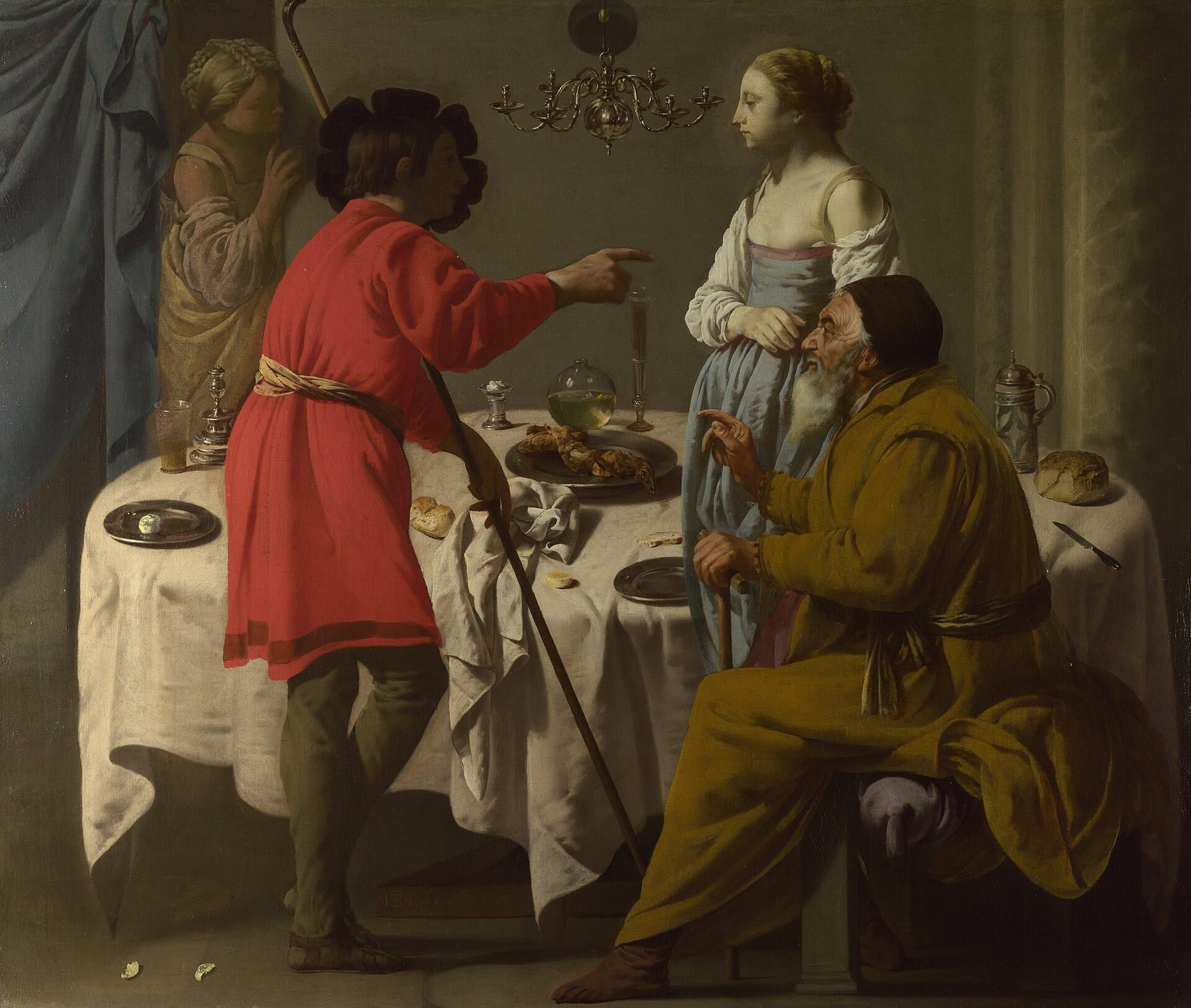
The Church Fathers Theodoret and John Chrysostom explained the picture in the same way. Servants watch their masters’ hands because from those hands they receive what they need to live. In the same way the psalm’s singers wait for good things from God until He shows them mercy.
Bishop Palladius, commentary on the Psalms (1874), on Azbyka
The Scripture in it
I lift up my eyes to You, the One enthroned in heaven. As the eyes of servants look to the hand of their master, as the eyes of a maidservant look to the hand of her mistress, so our eyes are on the LORD our God until He shows us mercy. Have mercy on us, O LORD, have mercy, for we have endured much contempt. We have endured much scorn from the arrogant, much contempt from the proud.
Bible text: Berean Standard Bible, public domain.