
The gift of encouraging
- 3Statements
- 3Recorded acts
- 17Gifts
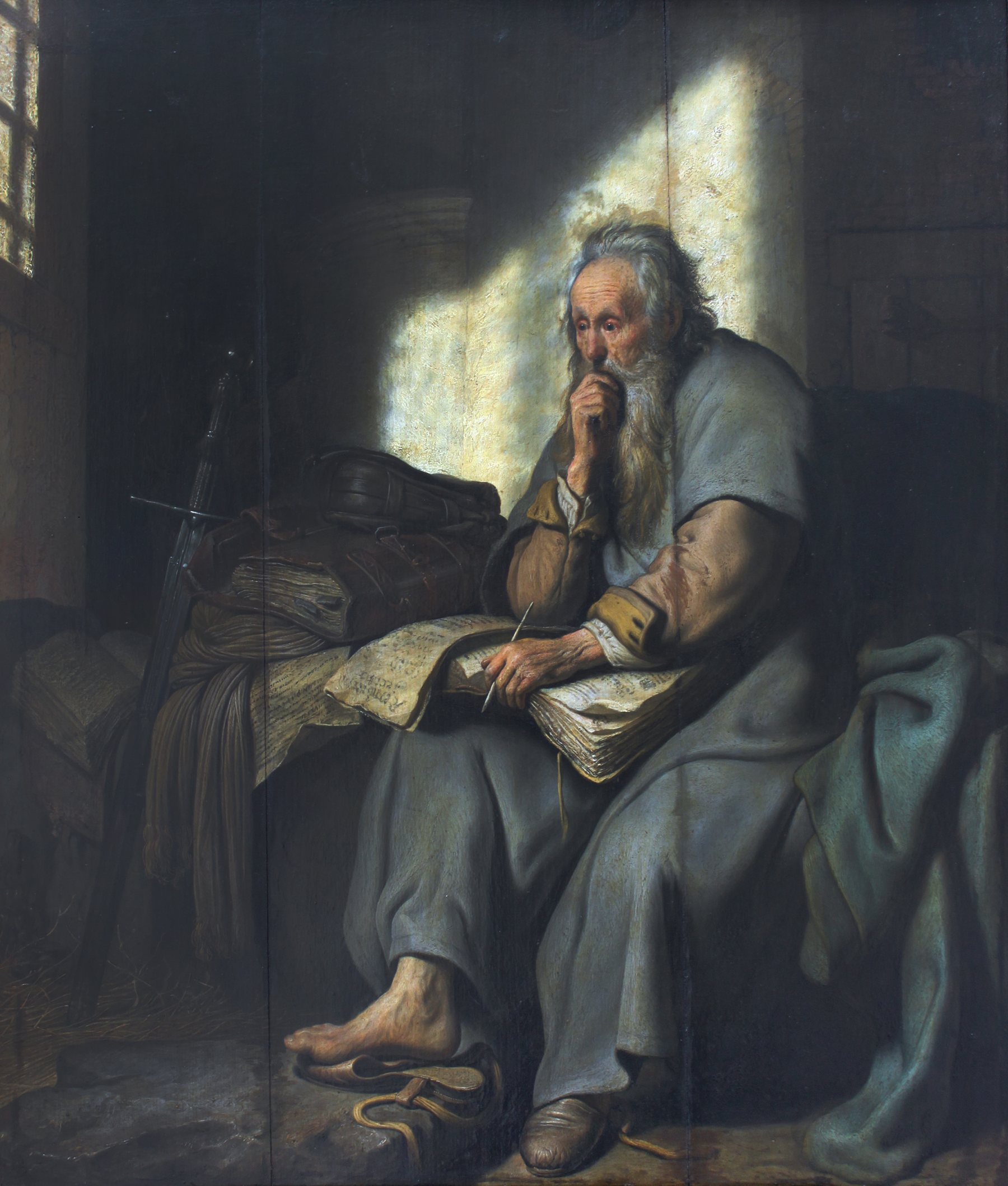
Picture: Saint Paul in Prison, Rembrandt, 1627. Staatsgalerie Stuttgart, Stuttgart.
From your result on . See your result
- Encouraging
A low row is something these statements did not find, not a verdict on you.
What is the spiritual gift of encouragement?
Encouragement is the gift of saying the thing that makes a person take heart and carry on. Romans 12:8 names it; older translations say exhorting, which keeps the push in it. It is not flattery. It means telling someone what you think they can do before they believe it.
Why it matters
Most people leave a church quietly, and many of them leave at a point where one honest sentence would have held them. This is the gift that produces that sentence. It also keeps the other gifts working, because somebody has to tell the teacher, the server and the leader that the last nine months were worth it.
Where does the Bible name it?
-
he who exhorts, to his exhorting
Romans 12:8
World English Bible British Edition
What does the gift of encouraging look like in a church?
The translation quoted here says exhorting where many others say encouraging: speaking so that someone takes heart and keeps going. Romans 12:8 is the only gift list that names it, but the New Testament asks the same thing of everybody: “exhort one another day by day” (Hebrews 3:13), and again in Hebrews 10:25. Paul says a whole church prophesying one by one leaves everyone exhorted (1 Corinthians 14:31), so the gift and the ordinary duty sit very close together.
In an ordinary week it is a message on a Tuesday that lands on exactly the right day. It is the person who sits down beside the man who has come back after two years away and does not mention the two years. It is whoever talks the Sunday school volunteer out of resigning, and whoever tells a nervous eighteen-year-old to apply.
People notice it in themselves by what they cannot leave alone. Somebody hesitating in front of you is uncomfortable, and you say something. You tell people what you think they are capable of without waiting to be asked. Friends come to you when they already know what they should do and need a push to do it.
The gift it is most often mistaken for is mercy. Mercy goes towards pain and is willing to sit still in it; encouragement goes towards a stalled person and moves them, and the wrong one at the wrong moment does real harm. It is also mistaken for being nice. Paul’s word carries a push, and the New Testament uses it for the hard conversation as readily as for the kind one.
Did you know?
-
The apostles thought this was a man’s whole character and renamed him for it. Joses of Cyprus became Barnabas, which Luke translates “Son of Encouragement”. The Greek is paraklesis, the same root as parakletos, the word Jesus uses for the Holy Spirit in John 14:16.
Acts 4:36; John 14:16; paraklesis, Strong’s Greek 3874
-
Barnabas twice took a risk on somebody everyone else had written off: Saul, when the disciples in Jerusalem were still afraid of him, and John Mark, over an argument with Paul sharp enough to split the two of them up.
Acts 9:26-27; Acts 15:37-39
-
Hebrews asks encouragement of everybody and puts a clock on it: “exhort one another day by day, so long as it is called today”.
Hebrews 3:13, World English Bible British Edition
Who did this in the Bible?
-
Acts 4:36
The apostles called Joses of Cyprus Barnabas, which Luke translates as Son of Encouragement.
-
Acts 11:22-23
Sent to Antioch, Barnabas saw what had happened there, was glad, and exhorted them all to remain near to the Lord with purpose of heart.
-
Acts 15:30-32
After the letter from Jerusalem was read at Antioch, Judas and Silas, whom Luke calls prophets themselves, encouraged the brothers with many words and strengthened them.
Suggest a correction. Corrections that are applied are recorded in the public changelog.