
The gift of giving
- 3Statements
- 2Recorded acts
- 17Gifts
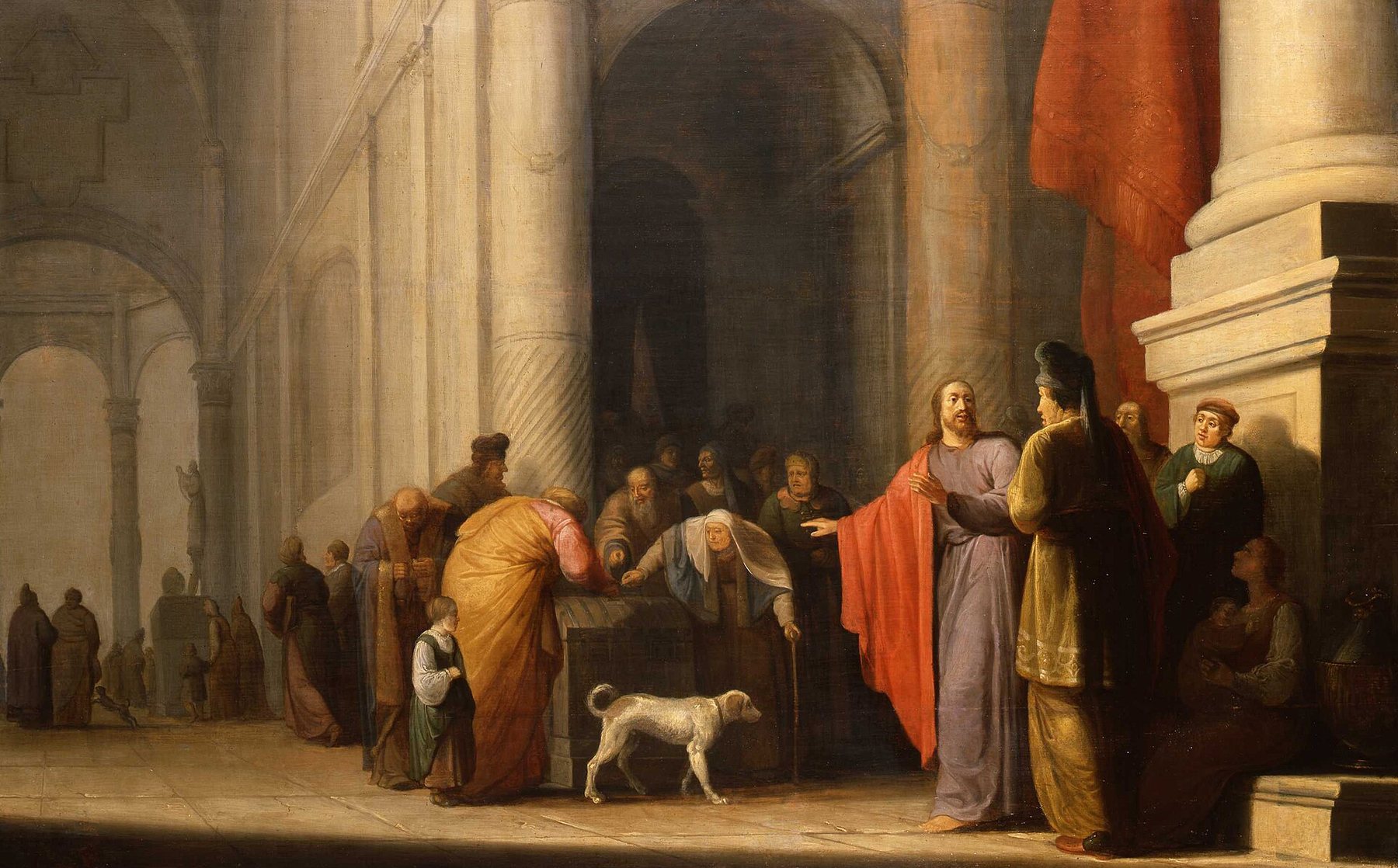
Picture: The Widow’s Mite, Paulus Lesire, about 1628–32. Dordrechts Museum, Dordrecht.
From your result on . See your result
- Giving
A low row is something these statements did not find, not a verdict on you.
What is the spiritual gift of giving?
Giving is the gift of letting money and possessions go where they are needed, gladly and with no hook attached. Romans 12:8 names it and asks one thing only, that it be done with generosity. Nothing in the passage counts amounts, and the churches Paul praises for it were poor.
Why it matters
Every other gift on this list costs money to exercise at any scale, and somebody has to release it. A church with teaching, leading and mercy but no givers runs on the guilt of the same six households. Paul thought the money was worth asking for cheerfully rather than grimly, which changes what a church can honestly say from the front.
Where does the Bible name it?
-
he who gives, let him do it with generosity
Romans 12:8
World English Bible British Edition
What does the gift of giving look like in a church?
Letting money and possessions go where they are needed; nothing here counts how much. Romans 12:8 names it and adds one qualification only, that it be done with generosity, and the Greek behind that word means singleness before it means generosity: giving with no second motive folded in.
In an ordinary week nobody sees it happen. An electricity bill gets paid for a family that never asked. A teenager who could not afford the summer camp goes anyway and never finds out who covered it.
Somebody hears that a person is going without and has found something by the end of the day. The quietness is usually preference rather than modesty: a giver who wants the credit has already bought something with the money.
People notice it in themselves by what they are willing to lose. You give away things you are still using. Friends bring you news of a need because they know what you will do with it. Something surplus in the house nags at you until it has gone somewhere.
It is most often confused with having money, and Paul goes out of his way to shut that down: the churches he holds up as the example were in “deep poverty” and gave beyond what they could manage (2 Corinthians 8:1-5). He tells the Corinthians that a gift is measured by what a person has, not by what they have not (2 Corinthians 8:12). The other common mix-up is with mercy. Mercy goes towards the person in trouble and stays with them; giving releases the resource, and in most churches those are two different people.
Did you know?
-
The word Romans attaches to giving, haplotes, means singleness or simplicity before it means generosity. Paul uses the same word of the Macedonians, who gave out of “deep poverty”.
Romans 12:8; 2 Corinthians 8:2; haplotes, Strong’s Greek 572
-
“It is more blessed to give than to receive” is a saying of Jesus that appears in none of the Gospels. Paul quotes it to the Ephesian elders, and it is the only saying of His quoted anywhere in the New Testament outside them.
Acts 20:35, World English Bible British Edition
-
“God loves a cheerful giver” (2 Corinthians 9:7). The Greek adjective there, hilaros, is the ancestor of the English word hilarious.
2 Corinthians 9:7; hilaros, Strong’s Greek 2431
Who did this in the Bible?
-
Acts 4:34-37
Owners of lands and houses sold them and laid the proceeds at the apostles’ feet, Barnabas among them with the price of a field, and distribution was made to each as anyone had need.
-
2 Corinthians 8:1-5
Paul reports that the churches of Macedonia, in deep poverty, gave of their own accord beyond their power and begged to share in the service to the saints.
Suggest a correction. Corrections that are applied are recorded in the public changelog.