
The gift of hospitality
- 3Statements
- 2Recorded acts
- 17Gifts
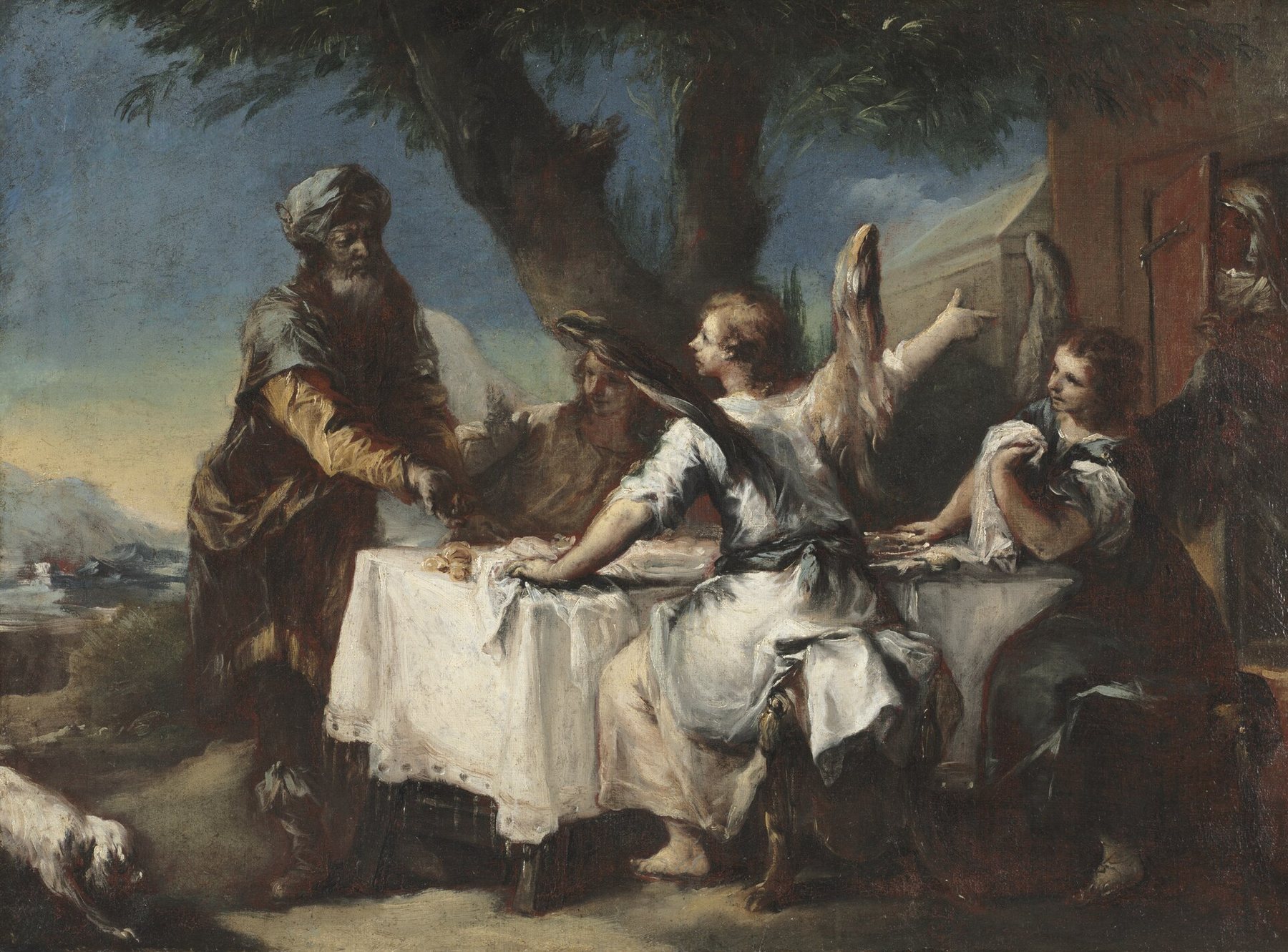
Picture: Abraham Welcoming the Three Angels, Francesco Guardi, 1750s. Cleveland Museum of Art, Cleveland.
From your result on . See your result
- Hospitality
A low row is something these statements did not find, not a verdict on you.
What is the spiritual gift of hospitality?
Hospitality is the gift of making room, at a table, in a house, in a conversation, so that somebody who arrived a stranger does not leave as one. 1 Peter 4:9 asks it of everyone, one verse before Peter writes about gifts, and adds a clause: without grumbling.
Why it matters
Nearly everyone who stays at a church stays because of a table they were invited to, not because of a sermon. This is the gift that produces the invitation, and it is the one most easily crowded out by the state of the kitchen. Peter puts it one verse before he starts writing about gifts, so nobody can read it as optional.
Where does the Bible name it?
-
Be hospitable to one another without grumbling. As each has received a gift, employ it in serving one another, as good managers of the grace of God in its various forms.
1 Peter 4:9-10
World English Bible British Edition
What does the gift of hospitality look like in a church?
Peter asks hospitality of everyone and speaks of each person’s gift in the next sentence, so coming out low here releases nobody from the first. The word he uses means stranger-loving, and it is the exact opposite of the word English took for the fear of strangers. Paul asks the same of the Romans, “given to hospitality” (Romans 12:13), and Hebrews adds the reason most likely to make a reader open the door: “some have entertained angels without knowing it” (Hebrews 13:2).
In an ordinary week it is a place laid before anybody asked for it. It is the house the students end up at, the family who take the new couple home for lunch on their first Sunday, the person who sees a visitor standing alone with a coffee and is beside them within a minute.
People notice it by what a full house does to them. You add a seat for whoever turns up rather than keeping to the numbers you planned for. New people end up sitting with you without either of you arranging it. Where somebody else is counting chairs, you are counting how many more will fit.
It is most often confused with entertaining, and the difference is who the evening is about. Entertaining is about the host: the room, the food, whether it went well. Hospitality is about the stranger, and it survives a burnt dinner. It is also confused with serving, which is aimed at the job rather than at the person, and Peter adds the hardest clause in the verse for anybody who has both: without grumbling.
Did you know?
-
The Greek behind “hospitable” is philoxenos, literally stranger-loving. Its opposite is the word English borrowed for the fear of strangers.
1 Peter 4:9; Romans 12:13; philoxenos, Strong’s Greek 5382
-
Paul signs off a letter from somebody else’s house: “Gaius, my host and host of the whole assembly, greets you.” One household was accommodating the entire church.
Romans 16:23, World English Bible British Edition
-
The first convert Luke names in Europe argued her way into hosting the missionaries. Lydia was baptised at Philippi, asked Paul’s company into her house, and Luke ends the scene, “So she persuaded us.”
Acts 16:14-15, World English Bible British Edition
Who did this in the Bible?
-
Acts 16:14-15
After Lydia and her household were baptised at Philippi, she begged Paul’s company to come into her house and stay, and persuaded them.
-
Romans 16:23
Paul sends greetings from Gaius, whom he calls his host and host of the whole church.
Suggest a correction. Corrections that are applied are recorded in the public changelog.