
When it is said
In the Latin service book it is one of a set of prayers for the rooms of a monastery, from the sacristy to the house for the sick.
It was written for the monks’ dormitory, but its words fit any bedroom, and a parent might say it over a child’s room at bedtime.
Where it comes from
No author known
Where it comes from
It belongs to the supplement of the Gregorian Sacramentary, a Latin service book. Under Charles the Great (Charlemagne), books like it were copied so that worship across his lands would follow the Roman pattern. The supplement names no compiler, but its editor wrote in 1915 that recent study credited it to the scholar Alcuin. He printed the prayer from two Vatican manuscripts of the 800s.
H. A. Wilson, The Gregorian Sacramentary under Charles the Great (1915), Introduction
The God Who never sleeps
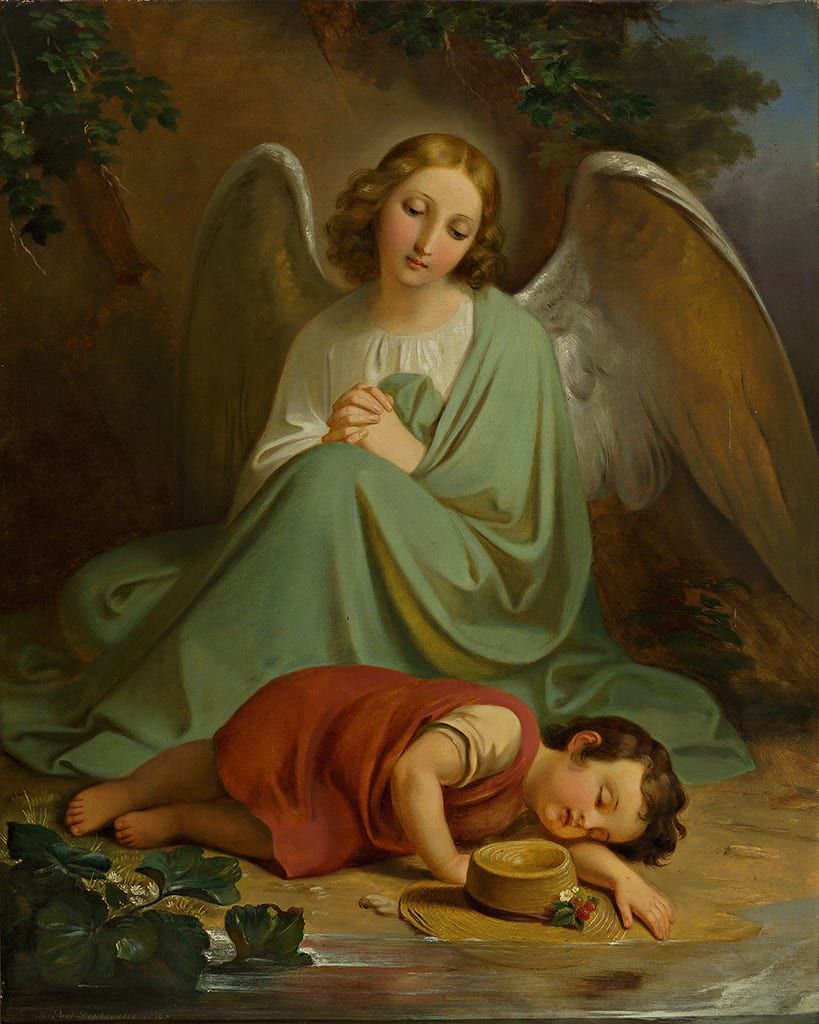
Its first lines borrow Psalm 121:4, “Behold, the Protector of Israel will neither slumber nor sleep.” It then asks that same God to keep watch over those asleep in the room. Awake, they are to think on His commandments, and even asleep they are to sense Him.
The Scripture in it
Behold, the Protector of Israel will neither slumber nor sleep.
Bible text: Berean Standard Bible, public domain.
In Latin
Benedic, Domine, hoc famulorum tuorum dormitorium,
qui non dormis neque dormitas, qui custodis Israhel:
famulos tuos in hac domo quiescentes post laborem
custodi ab inlusionibus fantasmaticis satanae;
uigilantes in praeceptis tuis meditentur,
dormientes te per soporem sentiant,
et hic et ubique defensionis tuae auxilio muniantur.
Per.