
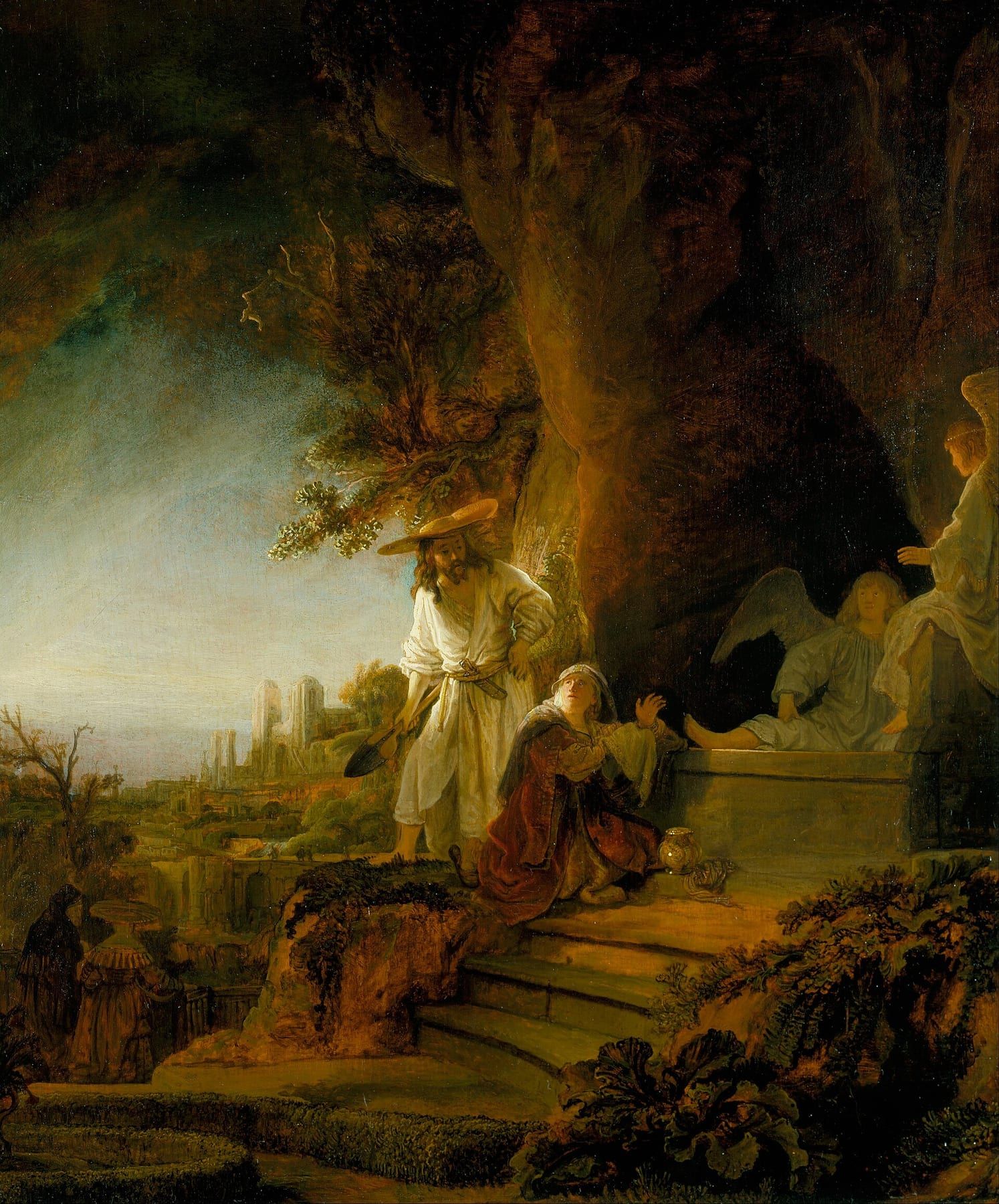
When it is said
It is first sung in the dark, as the night service of Pascha begins. The church doors are shut, and all stand in the porch with lit candles. The priest sings it and everyone sings it back, three times. It then answers each verse of the psalms, beginning “Let God arise”, and the doors are opened.
From Pascha to the Ascension, 40 days, Orthodox prayers at home and in church begin with it, said three times. It takes the place of “O Heavenly King”, which is left out until Pentecost. The Trisagion follows.
In Bright Week, the week after Pascha, it opens even a funeral.
Where it comes from
No author known
Where it comes from
No one knows who wrote it. Its first words take up Paul’s “Christ has been raised from the dead”. It is old: Jerusalem’s ancient hymn book, which survives in a Georgian translation of the 700s, has it sung at the end of the Easter night service. By the 900s it was sung in Hagia Sophia, the great church of Constantinople.
Sung even at a funeral
If someone dies at Pascha or in the week after it, their funeral opens with “Christ is risen”, and less of the usual mourning is sung. G. V. Shann’s 1894 book of the services gives the reason. Pascha “is a festival of joy and gladness, and not of lamentation”. Those who die in hope pass, through Christ’s rising, from grief to joy.
G. V. Shann, Book of Needs of the Holy Orthodox Church (1894)
“Christ is risen!” “Truly He is risen!”
Its first words are also the Orthodox Easter greeting. In Bright Week, the priest censes the church with the cross in his hand and greets the people: “Christ is risen!” All cross themselves and answer: “Truly He is risen!” Christians greet each other the same way in the weeks after Easter. In Russia and Serbia, three kisses on the cheeks follow.
The Church Slavonic book of hours (Chasoslov), on Azbyka.ru; Wikipedia, Paschal greeting
What the words mean
What is a troparion?
A troparion is a short hymn of one stanza. It is often sung as a refrain between the verses of a psalm, and also on its own. This is the troparion of Pascha, which the Church calls the Feast of Feasts.
Wikipedia, Paschal troparion; Isabel F. Hapgood, Service Book (1906)
“Trampling down death by death”
Death is beaten by a death: Christ’s own. The Letter to the Hebrews says the Son took on our flesh and blood so that, by His death, He might destroy the one who holds the power of death. The hymn says it in one line, then gives the result: life for those in the tombs.
Hebrews 2:14
The Scripture in it
But Christ has indeed been raised from the dead, the firstfruits of those who have fallen asleep.
Now since the children have flesh and blood, He too shared in their humanity, so that by His death He might destroy him who holds the power of death, that is, the devil …
Do not be amazed at this, for the hour is coming when all who are in their graves will hear His voice and come out—those who have done good to the resurrection of life, and those who have done evil to the resurrection of judgment.
Bible text: Berean Standard Bible, public domain.
In Greek
Χριστὸς ἀνέστη ἐκ νεκρῶν,
θανάτῳ θάνατον πατήσας,
καὶ τοῖς ἐν τοῖς μνήμασι, ζωὴν χαρισάμενος.
In Latin letters, to sing it
Christos anesti ek nekron,
thanato thanaton patisas,
ke tis en tis mnimasi, zoin charisamenos.
From the Greek service of Pascha, on the Greek Orthodox Archdiocese of America’s liturgical texts site.
In Church Slavonic
Христо́с воскре́се из ме́ртвых,
сме́ртию смерть попра́в
и су́щим во гробе́х живо́т дарова́в.
In Latin letters, to sing it
Khristos voskrese iz mertvykh,
smertiyu smert poprav
i sushchim vo grobekh zhivot darovav.
From the Paschal Hours in Church Slavonic on the Azbyka.ru prayer book, a Russian Orthodox website.
In Arabic
المسيح قام من بين الأموات
ووطئ الموت بالموت
ووهب الحياة
للذين في القبور
In Latin letters, to sing it
Al-Maseeh qam min bayn il-amwaat,
wa wati'a-l-mawt bil-mawt,
wa wahaba-lhayah
lil-ladheena fil-qubour.
From the Paschal letter of 2014 of the Greek Orthodox Patriarchate of Antioch, on its website.
In Romanian
Hristos a înviat din morți,
cu moartea pe moarte călcând,
și celor din morminte
viață dăruindu-le.
From the Paraclesis of the Resurrection, said in Bright Week, on Doxologia, a Romanian Orthodox website.
In Georgian
ქრისტე აღსდგა მკვდრეთით
სიკვდილითა სიკვდილისა დამთრგუნველი
და საფლავების შინათა
ცხოვრების მიმნიჭებელი.
In Latin letters, to sing it
Krist'e aghsdga mk'vdretit
sik'vdilita sik'vdilisa damtrgunveli
da saplavebis shinata
tskhovrebis mimnich'ebeli.
From the Bright Week paraclesis in Georgian, on Orthodoxy.ge, a Georgian Orthodox website.
In Serbian
Христос васкрсе из мртвих,
смрћу смрт уништи,
и свима у гробовима
живот дарова.
In Latin letters, to sing it
Hristos vaskrse iz mrtvih,
smrću smrt uništi,
i svima u grobovima
život darova.
From Paschal Matins in Serbian, from Svetosavlje, a Serbian Orthodox library online.
In Ukrainian
Христос воскрес із мертвих!
Смертю смерть подолав,
і тим, що в гробах,
життя дарував!
In Latin letters, to sing it
Khrystos voskres iz mertvykh!
Smertiu smert podolav,
i tym, shcho v hrobakh,
zhyttia daruvav!
From Ukrainian Orthodox Word, the magazine of the Ukrainian Orthodox Church of the USA, April 2025.
In Spanish
Cristo Resucitó de entre los muertos,
pisoteando la muerte con su muerte,
y otorgando la vida a los que yacían en los sepulcros.
From the Pascha bulletin of 2011 of the Antiochian Orthodox Archdiocese of Mexico.
In Japanese
ハリストス死より復活し、
死を以て死を滅ぼし、
墓に在る者に生命を賜えり!
In Latin letters, to sing it
Harisutosu shi yori fukkatsu shi,
shi o motte shi o horoboshi,
haka ni aru mono ni inochi o tamaeri!
In French
Le Christ est ressuscité des morts,
par la mort il a vaincu la mort,
et à ceux qui sont dans les tombeaux,
il a donné la vie.
From the Paschal message of 2022 of Metropolitan Tikhon, in French, from the Orthodox Church in America.
In Coptic
Ⲡⲓⲭ̀ⲣⲓⲥⲧⲟⲥ ⲁϥⲧⲱⲛϥ ⲉ̀ⲃⲟⲗ ϧⲉⲛ ⲛⲏⲉⲑⲙⲱⲟⲩⲧ:
ⲫⲏⲉ̀ⲧⲁϥⲙⲟⲩ ⲁϥϩⲱⲙⲓ ⲉ̀ϫⲉⲛ ⲫ̀ⲙⲟⲩ
ⲟⲩⲟϩ ⲛⲏⲉⲧⲭⲏ ϧⲉⲛ ⲛⲓⲙ̀ϩⲁⲩ
ⲁϥⲉⲣϩ̀ⲙⲟⲧ ⲛⲱⲟⲩ ⲙ̀ⲡⲓⲱⲛϧ ⲛ̀ⲉ̀ⲛⲉϩ.
In Latin letters, to sing it
Pi-ekhristos aftonf evol khen nee-ethmoout:
fee-etafmou afhomi ejen efmou
o-woh nee-etkee khen ni-emhav
aferehmot noou empionkh eneneh.
In Albanian
Krishti u ngjall së vdekurish,
me vdekje vdekjen shkeli
edhe të varrosurve jetën u fali.
From the Holy Sunday of Pascha, on the website of the Orthodox Autocephalous Church of Albania.
In Finnish
Kristus nousi kuolleista,
kuolemalla kuoleman voitti
ja haudoissa oleville elämän antoi.
In Polish
Chrystus powstał z martwych,
śmiercią podeptał śmierć,
i będącym w grobach życie dał.
From the services of Pascha in Polish, on Cerkiew.pl, a Polish Orthodox website.