
When it is said
Morning and evening prayers at home, and most services in church, open the same way. First comes the short praise “Glory to You, our God, glory to You”, then this prayer. Then come the Trisagion prayers, a short set that begins “Holy God, Holy Mighty, Holy Immortal”.
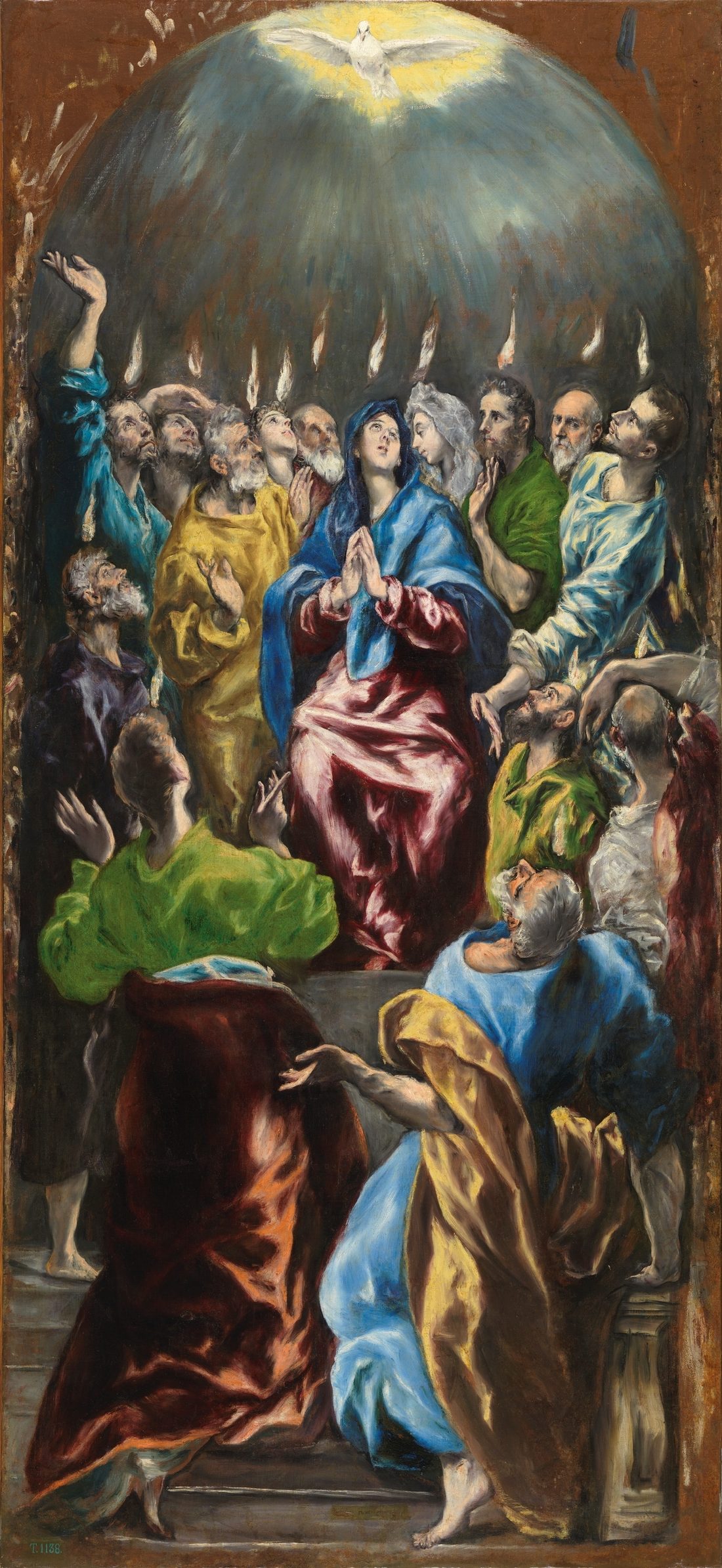
From Pascha (Easter) to Pentecost it is not said. The Easter hymn “Christ is risen” takes its place until the Ascension, and nothing takes its place from the Ascension to Pentecost. It comes back at the vigil on the eve of Pentecost, the feast of the Spirit’s coming.
In Russian custom it is also said before any work or lesson, to ask the Spirit’s help.
Where it comes from
No author known
Who wrote it?
The service books name no author. Mikhail Skaballanovich, a scholar of the Orthodox Church’s services writing in the 1910s, wrote that nothing certain can be said about where it came from. What is known is its path: it was a hymn of Pentecost before it was a daily prayer.
Younger than it sounds
Skaballanovich thought the hymn no older than the 8th or 9th century. Constantinople’s rule book for its services, from the 800s, does not have it yet. An 11th-century monastery’s rule book has it at Pentecost Vespers, the evening service. It was the last prayer to join the opening prayers, in books of the 1300s.
Skaballanovich, Tolkovy Typikon; Azbyka, a history of Pentecost
A tent for the Spirit
The Greek word behind “come and dwell in us” means “pitch Your tent”. It comes from the word for the tabernacle, the tent where God met Israel. John’s Gospel uses the same verb when the Word, Jesus, “made His dwelling among us”.
What people get wrong
Two prayers with the same first words
The service books hold a second, different prayer that also begins “O Heavenly King”. It asks God to strengthen the rulers, give peace to the world and rest to the departed, and it is read on weekdays in Lent before the Prayer of St Ephrem. The two are easy to mix up.
The Scripture in it
When the Advocate comes, Whom I will send to you from the Father—the Spirit of truth Who proceeds from the Father—He will testify about Me.
And I will ask the Father, and He will give you another Advocate to be with you forever— the Spirit of truth. The world cannot receive Him, because it neither sees Him nor knows Him. But you do know Him, for He abides with you and will be in you.
Where can I go to escape Your Spirit? Where can I flee from Your presence?
The Word became flesh and made His dwelling among us. We have seen His glory, the glory of the one and only Son from the Father, full of grace and truth.
Bible text: Berean Standard Bible, public domain.
In Greek
Βασιλεῦ Οὐράνιε, Παράκλητε, τὸ Πνεῦμα τῆς ἀληθείας,
ὁ πανταχοῦ παρών, καὶ τὰ πάντα πληρῶν,
ὁ Θησαυρὸς τῶν ἀγαθῶν, καὶ ζωῆς Χορηγός,
ἐλθέ, καὶ σκήνωσον ἐν ἡμῖν,
καὶ καθάρισον ἡμᾶς ἀπὸ πάσης κηλῖδος,
καὶ σῶσον Ἀγαθὲ τὰς ψυχὰς ἡμῶν.