Sign Up My Profile
Prayers

The prayer of the Hours

The prayer said at each of the Hours, the short services of the day, and also before sleep and at midnight. It asks Christ to receive the prayers of this hour.

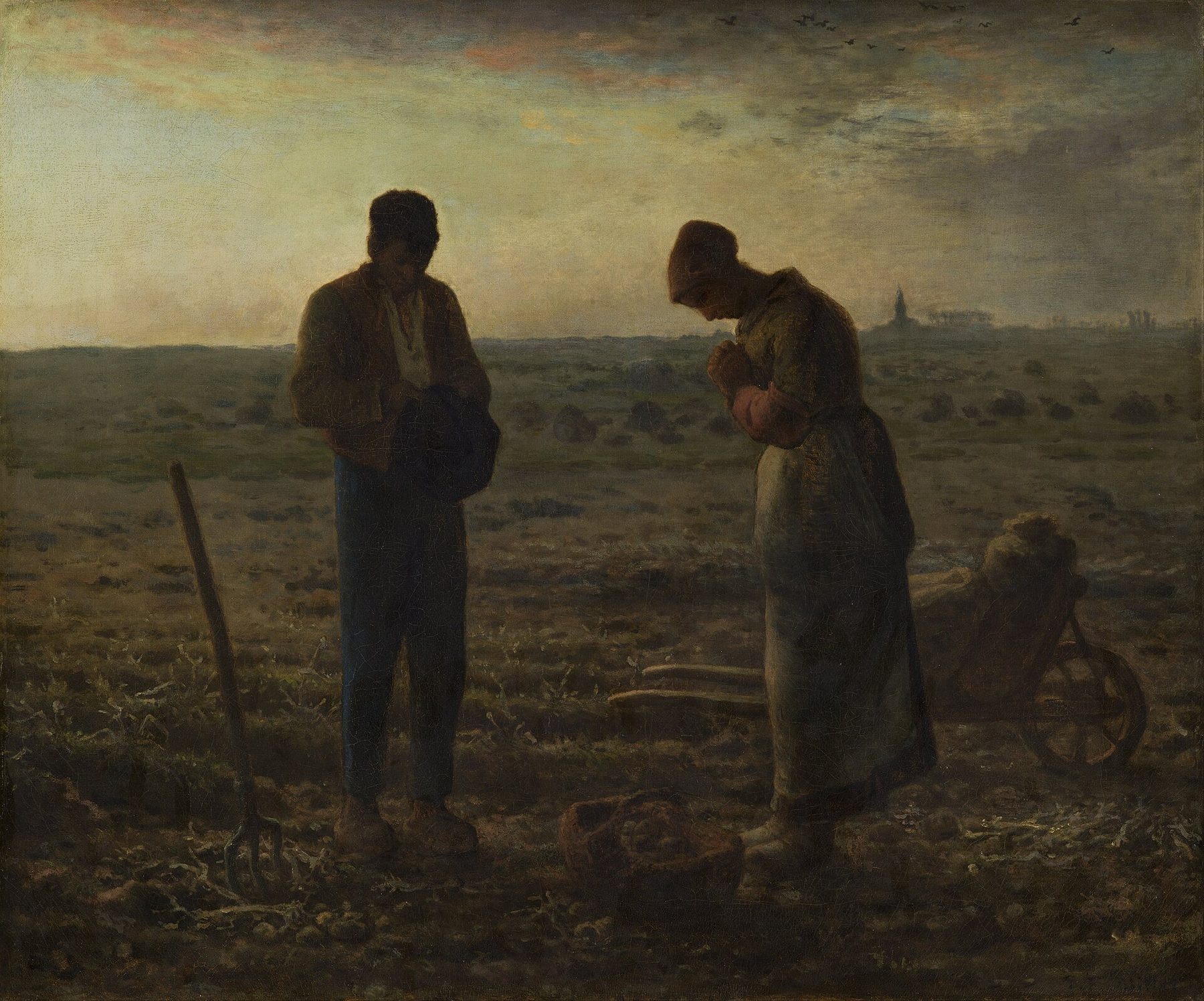
Picture: Jean-François Millet, The Angelus, 1857–59

The words of the prayer

Plain English

Christ our God,at all times and at every hourYou are worshipped and glorified in heaven and on earth.You are patient,rich in mercy and full of compassion.You love the righteous and have mercy on sinners,and You call everyone to salvationthrough the promise of the good things to come.

At this hour, Lord, receive our prayers too,and guide our lives by Your commandments.Make our souls holy and our bodies pure.Set our thoughts right and cleanse our minds.Deliver us from every distress, evil and pain.

Surround us with Your holy angels,so that, guarded and guided by them,we may reach the unity of the faithand the knowledge of Your glory,which no one can approach.For You are blessed for ever and ever. Amen.

Traditional wording, 1891

Thou that in all times and at every hour,in heaven and upon earth, art worshipped and glorified, Christ God,long-suffering, most merciful and of great tenderness,Who lovest the righteous and art merciful to sinners,Who hast called all men to salvation by the promise of future blessings;do Thou, O Lord, accept our prayers at this hour,and guide our life in Thy commandments.

Sanctify our souls, make chaste our bodies,govern our thoughts, purify our intentions,and deliver us from every affliction and pain, and from all evil.

Surround us by Thy holy Angels,that, preserved and guided by their hosts,we may come to the unity of the faith,and to the knowledge of Thine inaccessible glory;for blessed art Thou to ages of ages. Amen.

Plain English by Wiser Walk, from the Greek, with Shann’s 1891 translation beside it. How the wording is made. Traditional wording: G. V. Shann, Euchology: A Manual of Prayers of the Holy Orthodox Church, 1891.

When it is said

There are four Hours, the short services that mark the day: the First at daybreak, the Third at mid-morning, the Sixth at midday and the Ninth at mid-afternoon. This prayer comes near the end of each, after “Lord, have mercy” said 40 times. Each Hour then adds a prayer of its own.

It is also said at Compline, the Orthodox Church’s service after supper, in its short and long forms, and at the Midnight Office, said at midnight. The Orthodox Church in America prints it among its common prayers.

Where it comes from

No author known

Written by St Basil?

The Greek and Slavonic books of hours print it without an author. A number of old manuscript books of hours credit it to St Basil the Great, a bishop of the 300s. The oldest of them, at St Catherine’s Monastery on Mount Sinai, was written some seven centuries after him.

Skaballanovich, Tolkovy Typikon

Prayed in Egypt too

The Coptic Orthodox Church of Egypt ends each Hour of its own book of hours, the Agpeya, with a longer form of the same prayer. Which church prayed it first is not known.

The Agpeya, CopticChurch.net

Not always forty

The number of times “Lord, have mercy” is said before this prayer was not always 40. A 15th-century book of hours now in Moscow has 30 at the First Hour and 12 at the Ninth. The Ethiopian book of hours has 41 at every Hour.

Skaballanovich, Tolkovy Typikon

The Scripture in it

… until we all reach unity in the faith and in the knowledge of the Son of God, as we mature to the full measure of the stature of Christ.

Ephesians 4:13 Quoted The prayer borrows Paul’s words to ask for unity in the faith and knowledge of Christ’s glory.

He alone is immortal and dwells in unapproachable light. No one has ever seen Him, nor can anyone see Him. To Him be honor and eternal dominion! Amen.

1 Timothy 6:16 Echoed God dwells in unapproachable light. The prayer uses the same Greek word, “unapproachable”, for His glory.

The angel of the LORD encamps around those who fear Him, and he delivers them.

Psalm 34:7 Echoed In the Greek, the prayer asks to be guarded by the angels’ “camp”, as this verse pictures the angel camped around God’s people.

Bible text: Berean Standard Bible, public domain.

In Greek

Ὁ ἐν παντὶ καιρῷ καὶ πάσῃ ὥρᾳ ἐν οὐρανῷ καὶ ἐπὶ γῆς προσκυνούμενος καὶ δοξαζόμενος Χριστὸς ὁ Θεός,

ὁ μακρόθυμος, ὁ πολυέλεος, ὁ πολυεύσπλαγχνος,

ὁ τοὺς δικαίους ἀγαπῶν καὶ τοὺς ἁμαρτωλοὺς ἐλεῶν,

ὁ πάντας καλῶν πρὸς σωτηρίαν διὰ τῆς ἐπαγγελίας τῶν μελλόντων ἀγαθῶν,

Αὐτός, Κύριε, πρόσδεξαι καὶ ἡμῶν ἐν τῇ ὥρᾳ ταύτῃ τὰς ἐντεύξεις καὶ ἴθυνον τὴν ζωὴν ἡμῶν πρὸς τὰς ἐντολάς Σου.

Τὰς ψυχὰς ἡμῶν ἁγίασον, τὰ σώματα ἅγνισον, τοὺς λογισμοὺς διόρθωσον, τὰς ἐννοίας κάθαρον καὶ ῥῦσαι ἡμᾶς ἀπὸ πάσης θλίψεως, κακῶν καὶ ὀδύνης.

Τείχισον ἡμᾶς ἁγίοις Σου Ἀγγέλοις, ἵνα τῇ παρεμβολῇ αὐτῶν φρουρούμενοι καὶ ὁδηγούμενοι καταντήσωμεν εἰς τὴν ἑνότητα τῆς πίστεως καὶ εἰς τὴν ἐπίγνωσιν τῆς ἀπροσίτου Σου δόξης,

ὅτι εὐλογητὸς εἶ εἰς τοὺς αἰῶνας τῶν αἰώνων. Ἀμήν.

From the Greek book of hours (the Horologion), at Great Compline, the longer form of the service after supper, on the Greek Orthodox Archdiocese of America’s liturgical texts site, with capitals for God.

Close to this

All prayers

Suggest a correction

Berean Standard Bible