
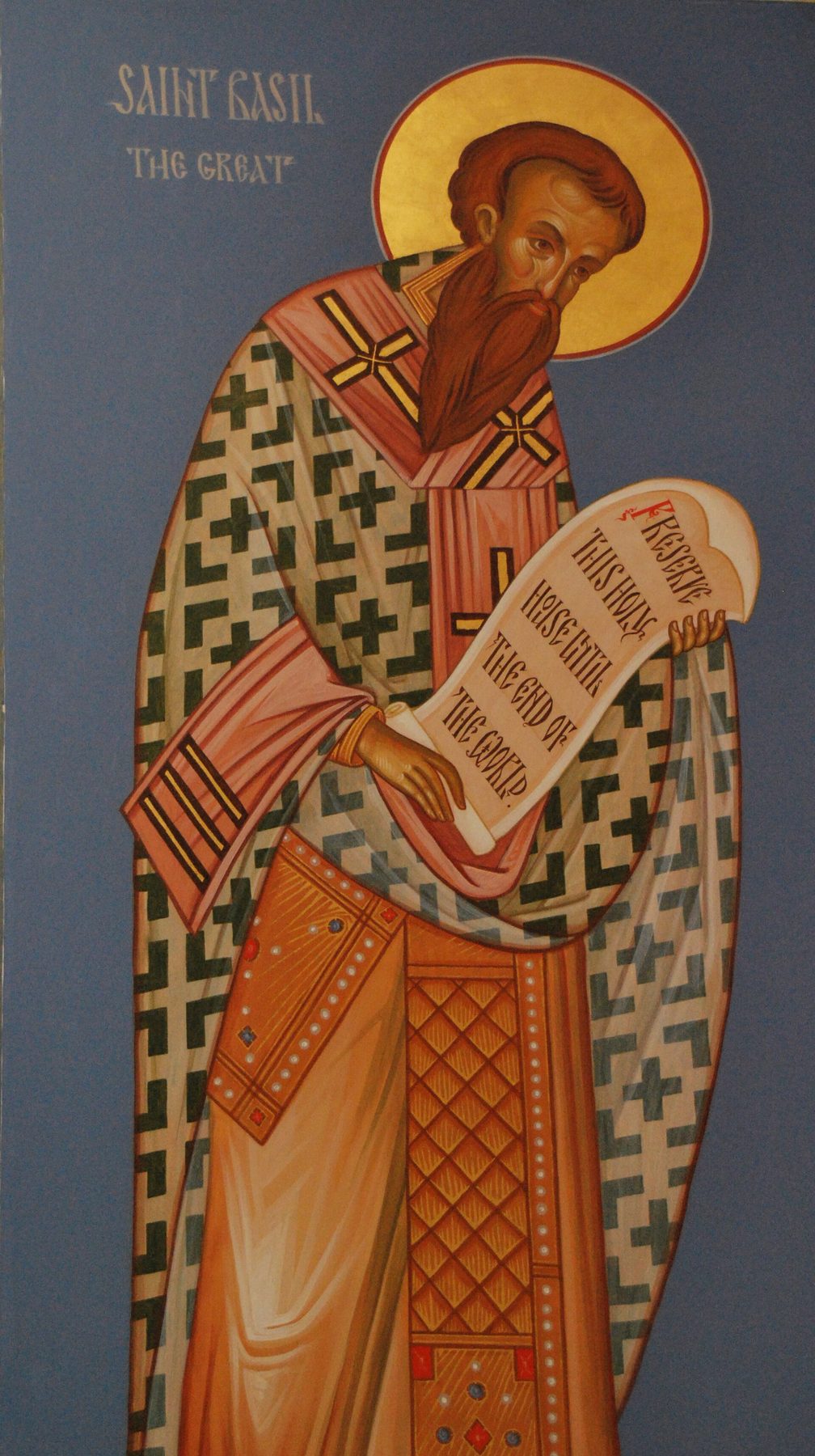
Basil the Great
He fed his city in a famine, built a new city for the sick, and would not bend to an emperor.
Picture: Saint Basil the Great, an icon at St. Paul the Apostle Orthodox Church, Dayton, Ohio. Photo: Ted, CC BY-SA 2.0.
Who was Basil?
Basil was bishop of Caesarea, in today's Turkey, in the 300s. He left a speaker's career to become a monk. His Rules shaped Orthodox monastic life. As a priest he fed the hungry in a famine. As bishop he built a house for the sick and stood up to an emperor. He is one of the Cappadocian Fathers.
at a glance
His path, in order
- StudentAt Athens, with his friend Gregory
- MonkIn Pontus, by the river Iris
- PriestAt Caesarea, from 364
- BishopOf Caesarea, 370 to 379
in numbers
- Children in his family10
- Five boys and five girls
- Five saints: Basil, Macrina, Gregory, Peter
- And Theosebia or Naucratius: the lists differ
- Letters under his name366
- About 325 truly his
- 245 from his eight years as bishop
- Questions his Rules for monks answer368
- 55 in the Longer Rules
- 313 in the Shorter
- Years he lived49
- He died on 1 January 379
- Worn out by work and illness
did you know?
-
In a time of persecution, his father's family hid in the forests of Pontus for about seven years. When they longed for meat, says Gregory of Nazianzus, stags came down from the hills to be caught.
Gregory of Nazianzus, Oration 43, chapters 5 to 8 -
He preached his nine sermons on creation in Lent, morning and evening. Seeing working men crowd round him, he cut one short so as not to keep them from their work.
Hexaemeron, Homily 3; Jackson's introduction -
His 313 Shorter Rules for monks seem to have been taken down in shorthand at an all-night meeting with the heads of monasteries, says their translator. Each heading is a question someone actually asked.
W. K. Lowther Clarke, The Ascetic Works of Saint Basil, introduction -
Benedict's Rule for monks ends by pointing its readers on to older guides. One is the Rule of Basil, whom it calls our holy Father.
The Rule of Benedict, chapter 73
- Born
- About 329 or 330, at Caesarea in Cappadocia, today Kayseri in Turkey. Some older writers said Neocaesarea in Pontus. His family had lands in both.
- Grew up
- On the family estate by the river Iris, in Pontus. Then at school in Caesarea, Constantinople and Athens. His father, also Basil, taught rhetoric. His grandmother Macrina and his father taught him the faith.
- Family
- The eldest son of ten children. His sister Macrina, his brothers Gregory of Nyssa and Peter of Sebaste, his mother and his grandmother are all counted saints.
- Died
- 1 January 379, at Caesarea, worn out by illness and a hard life. He was about 49.
- Buried
- At Caesarea, in “the tomb of his fathers”. The crowd at his funeral was so great that many people were crushed to death.
- Also called
- Basil of Caesarea. Basil the Great: his own brother already called him “the great Basil”. To the Orthodox, one of the Three Holy Hierarchs, with John Chrysostom and his friend Gregory of Nazianzus, called Gregory the Theologian. Vasily Veliky, in Russian.
- Status
- A saint to Catholics, Orthodox and Anglicans. Lutherans remember him too. A Doctor of the Church to Catholics.
- In art
- In icons, a thin bishop with a long, dark, pointed beard, in white vestments marked with crosses, holding a book or a scroll. His friend Gregory says people even copied “his paleness, his beard, his gait”.
- Wrote
- About 325 letters that are really his. On the Holy Spirit. Nine sermons on the six days of creation, the Hexaemeron. Books against Eunomius. The Rules for monks, and many sermons. An Address to Young Men, on reading Greek literature.
- Pronounced
- BAY-zil, or BAZ-il. Caesarea is see-zuh-REE-uh.
 The Herald
 His personality type
Sure of himself, and at his best when there is something to do.
In Gregory the Great's terms
- Confident
- Restless mind
Our reading of him as a young man, from the Christian Personality Test. The Herald is sure of itself, and at its best with something to do. The test places him here as a young man, fresh from university and proud of his speaking, before his sister Macrina turned him round.
See The Heraldfeast days
East and West, side by side
West
- Jan2
Catholic memorial, shared with his friend Gregory Nazianzen. Also the Church of England, with Gregory, a Lesser Festival.
- Jan10
Lutherans in the Missouri Synod, with Gregory of Nazianzus and Gregory of Nyssa.
- Jun14
Episcopal Church. Lutherans in the Evangelical Lutheran Church in America, with the two Gregorys and Macrina. Also the 1916 Roman Martyrology, which kept his feast on this day.
East
- Jan1
Greek churches and the Orthodox Church in America. The day he died.
- Jan14
Russian Church. This is 1 January on the old calendar.
- Jan30
The Three Holy Hierarchs, in Greek churches and the Orthodox Church in America (OCA). The OCA says that in the eleventh century people in Constantinople argued over which of the three was the greatest.
- Feb12
Russian Church, the Three Holy Hierarchs. This is 30 January on the old calendar.
Why so many dates? The East keeps 1 January, the day he died. The old Western calendars kept 14 June, by tradition the day he was made bishop. Today's Catholic calendar and the Church of England keep him on 2 January, beside his friend Gregory. Churches on the old calendar keep each date 13 days later, so 1 January falls on 14 January.
what was he like?
+unafraid of power
The emperor's prefect threatened him with “Confiscation, banishment, torture, death.” Basil said none of them could touch him. He owned nothing to take but rags and a few books. He could not be banished, for every land was God's. The prefect said no one had ever spoken to him like that. Basil answered, “Why, perhaps, you have not met with a Bishop.”
Gregory of Nazianzus, Oration 43, chapters 49 and 50+taken for proud
Some called him proud. His friend Gregory answered that “what they term pride is, I fancy, the firmness and steadfastness and stability of his character.” He was sparing with praise: “His very smile often amounted to praise, his silence to rebuke.” Yet in company, Gregory asks, “Who was more kindly in his stories, more refined in his wit, more tender in his rebukes?”
Gregory of Nazianzus, Oration 43, chapter 64+a sharp pen
His letters could bite. His brother Gregory forged a letter from their uncle, a bishop, and brought it to him. A second came by Gregory's servant, and it was not the bishop's either. When a third came, Basil wrote to his brother, “who ever falls a third time into the same nets?” On courting the bishops of the West for help, he wrote, “Really lofty souls, when they are courted, get haughtier than ever.”
Letters 58 and 239+hard on himself
He lived on bread and salt, with one coat, a worn cloak and a bed on the bare ground. When a judge threatened him with blows, he offered to be torn with combs. It would cure his liver, he said, “which, as you see, is wearing me away.” His friend Gregory calls him “the poorest and most needy man whom I have known”.
Gregory of Nazianzus, Oration 43, chapters 36, 57 and 61what others said of him
Most of his story comes from his best friend, Gregory of Nazianzus, who gave the speech at Basil's funeral. His brother Gregory of Nyssa and his own letters add more.
We seemed to have one soul, inhabiting two bodies.
…glorify the Lord Who has given such a bishop to Cappadocia as any district must pray to have.
Basil, our common father and teacher
his life in eight moments
Athens
The early 350sFriends at Athens
At Athens he was together again with his friend Gregory, from Nazianzus. New students there were mocked, then marched to the baths in a noisy hazing. Gregory talked the others out of it, so Basil “was the only one to escape the general rule”. The two knew only two roads: one to church and one to their teachers. Parties and theatres they left to others.
Gregory of Nazianzus, Oration 43, chapters 16 to 21Caesarea
About 356The proud young speaker
He came home a star speaker. His brother Gregory says he was “puffed up beyond measure with the pride of oratory”, and looked down on the leading men of the town. Their older sister Macrina took him in hand. He gave up his career and all his property. He later wrote that he woke as if from a deep sleep, and wept over his life. Then he went to see the monks of Egypt, Palestine, Syria and Mesopotamia.
Gregory of Nyssa, Life of Macrina; Basil, Letter 223, chapter 2By the river Iris
About 358A monk in Pontus
He settled on the family lands in Pontus and gathered monks around him. He wrote to his friend Gregory, “I have abandoned my life in town, as one sure to lead to countless ills; but I have not yet been able to get quit of myself.” In time he joined the hermit's life to life in community. Gregory says he built hermits' cells close to the shared houses, so that the life of prayer and the active life would not be cut off from each other.
Basil, Letter 2, chapter 1; Gregory of Nazianzus, Oration 43, chapter 62Caesarea
368The famine
A famine struck, the worst anyone remembered. Grain dealers held back their stores to drive prices up. Basil, still a priest, preached until the rich opened their barns. Then he gathered the hungry of every age and set out “basins of soup”. With his own servants he waited on them himself, as Christ washed His disciples' feet. His friend Gregory calls him a second Joseph.
Gregory of Nazianzus, Oration 43, chapters 34 to 36Caesarea
372The emperor in church
The emperor Valens favoured the Arians, who held that the Son of God was a created being. His prefect had failed to frighten Basil. “We have been worsted, Sire, by the prelate of this Church,” the prefect reported. On the feast of the Epiphany, Valens came to Basil's church himself. The thunder of the psalms, the sea of people, and Basil standing still “as if, so to say, he had been a statue” overwhelmed the emperor. He staggered, and someone had to reach out a hand to steady him.
Gregory of Nazianzus, Oration 43, chapters 51 and 52; Theodoret, Church History, Book 4, chapter 16Outside Caesarea
The 370sThe new city
Just outside Caesarea he built what his friend Gregory calls the new city. It had a church, lodging for travellers, and doctors for the sick. Lepers, driven out of their towns, were cared for there. Basil, a nobleman, “saluted them as brethren” and kissed them. The church historian Theodoret says the emperor Valens himself gave land for the poor in Basil's care.
Gregory of Nazianzus, Oration 43, chapters 63 and 64; Basil, Letter 94; Theodoret, Church History, Book 4, chapter 16Sasima
372A bishopric for his best friend
The province of Cappadocia was split in two. Anthimus, bishop of the new capital, Tyana, claimed the churches of the new half for himself. To hold his ground, Basil made new bishops. He made Gregory bishop of Sasima, a small village. Gregory wrote to him, “Give me before all things quiet.” Years later, in his funeral speech for Basil, he still called it “a cause of pain which even time has not obliterated.”
Gregory of Nazianzus, Oration 43, chapters 58 and 59; Letter 48; Jackson, ProlegomenaCaesarea
About 374A book about the Spirit
Praying with his people, he gave glory to the Father “with the Son together with the Holy Ghost”. Some who were there attacked him for it. His friend Amphilochius, bishop of Iconium, asked him to explain. The answer was On the Holy Spirit. It argues that the Spirit shares the glory of the Father and the Son.
On the Holy Spirit, chapter 1
his miracles
His friend Gregory says Basil could not “rain bread from heaven by prayer”, as Moses did in the wilderness. But he tells of healings, and of wonders when Basil was made bishop and when he died.
The emperor's son
The emperor Valens had signed an order to exile Basil, and the carriage to take him away stood ready. That night the emperor's small son fell ill with a fever. The doctors could do nothing, and Valens threw himself on the ground in grief. Too ashamed to ask Basil in person, he sent friends to fetch him. When Basil came, the fever eased at once. But Valens called in Arian clergy as well, and the boy died. His friend Gregory says the boy would have lived, had Valens not “blended salt water with the fresh”. He adds, “This indeed was the conviction of those who were present at the time, and shared in the distress.”
“On his arrival, without the delay or reluctance which any one else might have shown, at once the disease relaxed, and the father cherished better hopes”Gregory of Nazianzus, Oration 43, chapter 54; Theodoret, Church History, Book 4, chapter 16; Sozomen, Church History, Book 6, chapter 16
The prefect
Modestus, the emperor's prefect who had threatened Basil, once fell ill. In tears he sent for Basil and begged him. He got well, and afterwards he never stopped telling people what Basil could do.
“I own that you were in the right; only save me!”Gregory of Nazianzus, Oration 43, chapter 55
The old bishop in the litter
When Basil was chosen bishop, Gregory's father, the aged bishop of Nazianzus, set out to vote for him and help consecrate him. He was so ill that he was carried in a litter. He went home, says his son, “in the freshness and strength of youth, with head erect”.
“he was placed in his litter, as a corpse is laid in its tomb”Gregory of Nazianzus, Oration 43, chapter 37
Strength on his deathbed
He was almost dead and barely breathing. Yet he grew stronger for his last words, long enough to ordain the best of his disciples as priests. His friend Gregory calls it “a wonder in no wise inferior to those mentioned before”.
“he grew stronger in his last words, so as to depart with the utterances of religion”Gregory of Nazianzus, Oration 43, chapter 78
Three broken pens
The church historian Theodoret tells of another time the emperor Valens signed an order to exile Basil. The pen broke. A second pen broke, and a third. His hand shook, and he tore the order up with both hands.
“for the pen broke, and when the same thing happened to the second and to the third pen, and he still strove to sign that wicked edict, his hand shook”Theodoret, Church History, Book 4, chapter 16
his words
Basil wrote a great deal that survives. These are his own words, in Blomfield Jackson's translation of 1895 and W. K. Lowther Clarke's of 1925.
Against living alone
Whose feet then wilt thou wash? Whom wilt thou care for? In comparison with whom wilt thou be last if thou livest by thyself?
From his Rules, arguing that monks should live together. Just before, he recalls that Christ washed the disciples' feet Himself. As a young monk he had written that “solitude is of the greatest use”. This is his later view.
The Longer Rules, Rule 7Death is my benefactor, for it will send me the sooner to God, for Whom I live, and exist, and have all but died, and to Whom I have long been hastening.
Much time had I spent in vanity, and had wasted nearly all my youth in the vain labour which I underwent in acquiring the wisdom made foolish by God. Then once upon a time, like a man roused from deep sleep, I turned my eyes to the marvellous light of the truth of the Gospel.
We have not lost the lad; we have restored him to the Lender. His life is not destroyed; it is changed for the better.
I want creation to penetrate you with so much admiration that everywhere, wherever you may be, the least plant may bring to you the clear remembrance of the Creator.
For me grass is grass; plant, fish, wild beast, domestic animal, I take all in the literal sense.
But to whom do we do any harm by building a place of entertainment for strangers, both for those who are on a journey and for those who require medical treatment on account of sickness?
But for prayer and psalmody, as for many other things, every time is suitable; so that we praise God with psalms and hymns and spiritual songs while we move our hands in work.
Harshness is ever to be put aside, even in censuring.
often misquoted
He wrote the well-loved prayer for the animals, “our brothers”, that goes round under his name.
What the sources sayNot his. It comes from Walter Rauschenbusch's Prayers of the Social Awakening, printed in Boston in 1910. Rauschenbusch's prayer asks God to “enlarge within us the sense of fellowship with all the living things, our little brothers”. The popular version rewords it.
Rauschenbusch, Prayers of the Social Awakening, For This WorldHe wrote the famous line about the bread you store up, the coat hanging in your closet, and the money in your vaults.
What the sources sayHis in substance, from his sermon on the rich fool who planned bigger barns. But that wording is a loose modern paraphrase. In the Greek the cloak is kept in storerooms, not hanging in a closet, and there are no vaults. It does have the shoes rotting away with you, and the silver you have buried.
Homily on I will pull down my barns, the Greek textThe emperor laid a crushing tax on Caesarea. Basil called on him to repent, and the tax was cancelled. To hand back the gold already paid, Basil baked the coins into a loaf and gave each person a piece. That is where the Vasilopita comes from, the New Year cake with a coin inside.
What the sources sayGreek Orthodox parishes tell it as a pious story. It is not in his friend Gregory's funeral speech, nor in the three church historians who tell his story. The real Basil did write to officials about taxes. He even asked Modestus, the prefect who had threatened him, to leave his clergy out of a new census, as the old census had.
St Andrew Greek Orthodox Church, 2015; Basil, Letter 104, to ModestusIn a vision he saw the martyr Mercurius sent to kill the emperor Julian. The hermit Ephrem saw him as a pillar of fire.
What the sources sayThese come from a Life said to be by his friend Amphilochius. The Catholic Encyclopedia calls it “a forgery of about the ninth century”. The medieval Golden Legend spread its stories, and even gets the year of Basil's death wrong. Julian died in 363, before Basil was a bishop.
Catholic Encyclopedia, 1907; The Golden LegendHe wrote the Divine Liturgy of St Basil.
What the sources sayIt bears his name, and the Orthodox Church in America says he composed it. The Catholic Encyclopedia is less sure. The Liturgy goes back at least to the sixth century, it says, but “its connexion with Basil has been a matter of critical discussion”.
OCA; Catholic Encyclopedia, 1907where he stood
Each line is Basil's own. Many come from his Rules, which he wrote for monks, not for everyone. Two are our own translations from his Greek sermons, because we found no public-domain English of them. TapClick “Show his line” to read it.
Your answers are next to his. From your result on . See your result
“A good hearty laugh is good for the soul.”
Basil strongly disagrees.
You
Show his line
Since the Lord condemns those that laugh it is obvious that there is never a time of laughter for the believer.The Shorter Rules, Rule 31
“Wisdom is worth learning from anyone, even people who don't share your faith.”
Basil strongly agrees.
You
Show his line
So we, if wise, shall take from heathen books whatever befits us and is allied to the truth, and shall pass over the rest.Address to Young Men on the Right Use of Greek Literature, chapter 4
“Anger at real wrongdoing can be a good thing.”
Basil agrees.
You
Show his line
Anger, stirred at the proper time and in the proper manner, is an efficient cause of manliness, patience, and endurance.Homily against Anger, as Blomfield Jackson quotes it
“If you had to choose, you'd grow closer to God alone in quiet than among other people.”
Basil strongly disagrees.
You
Show his line
Whose feet then wilt thou wash? Whom wilt thou care for? In comparison with whom wilt thou be last if thou livest by thyself?The Longer Rules, Rule 7
“There's nothing wrong with being rich, as long as you use it well.”
Basil strongly disagrees.
You
Show his line
So the more you abound in wealth, the more you fall short in love.Homily to the Rich. Our translation
“If someone you know is doing wrong, it's your job to tell them.”
Basil strongly agrees.
You
Show his line
Those who pretend to be kind (really suffering from the disease of men-pleasing) and fail to rebuke sinners, are actually sentencing them.The Morals, Rule 72, chapter 6
“Even if you believe you'll see them again, it's right to weep openly for someone you've lost.”
Basil agrees.
You
Show his line
Be an example of fortitude to other women, and so regulate your grief that you may neither eject it from your heart, nor be overwhelmed by your distress.Letter 269, to the wife of Arinthaeus the general
“Lying can be the right thing to do if it protects someone.”
Basil strongly disagrees.
You
Show his line
It is forbidden by the decision of the Lord Who said once for all that lying is of the devil, and allowed no difference in lying.The Shorter Rules, Rule 76
“Giving to the poor isn't generosity. It's paying back what's already theirs.”
Basil strongly agrees.
You
Show his line
The bread you are holding on to belongs to the hungry. The cloak you guard in your storerooms belongs to the naked.Homily on "I will pull down my barns". Our translation
“Nature can teach you as much about God as the Bible can.”
Basil agrees.
You
On record in the Hexaemeron. Not quoted here.
“In many Bible stories, the deeper meaning matters more than the history.”
Basil strongly disagrees.
You
Show his line
There are those truly, who do not admit the common sense of the Scriptures, for whom water is not water, but some other nature.Hexaemeron, Homily 9, chapter 1
“If you believe God is calling you, follow, even if your family begs you not to.”
Basil agrees.
You
Show his line
So he who is seized by the vehement desire of following Christ can no longer care for anything to do with this life.The Longer Rules, Rule 8
“A church should keep out people who openly live in serious wrongdoing.”
Basil strongly agrees.
You
On record in On the Judgment of God. Not quoted here.
“In the end, God will save everyone.”
Basil strongly disagrees.
You
Show his line
But if we cannot think this of life, with what reason shall we give eternal punishment an end? For both equally have the adjective eternal.The Shorter Rules, Rule 267
See where you stand beside him. Take the quiz
the hard parts
Some of what he wrote is hard to read today. Here it is plainly, in his own words and his friends'.
Slavery
He accepted slavery. Runaway slaves who came to his monasteries were to be “admonished and made better, and then restored” to their masters, as Paul sent Onesimus back to Philemon. If a master ordered a slave to sin, the monks were to prepare the slave to suffer for obeying God. Or else they were to keep him, and take on the troubles that might bring.
The Longer Rules, Rule 11Third marriages
Passing on older church rules, he wrote that a third marriage was “no longer described as marriage at all, but as polygamy; nay rather as limited fornication.” Such people were kept from communion for years. Yet they “ought not to be altogether prohibited from the privileges of the Church”.
Letter 188, canon 4Laughter
Writing for monks, he said “there is never a time of laughter for the believer”, since so many around are dead in sin. In another Rule he allows “a cheerful smile”, but not loud laughter that shakes the body. His friend Gregory remembered his refined wit.
The Shorter Rules, Rule 31; The Longer Rules, Rule 17Holding back on the Spirit
In public he would not say the plain words “the Spirit is God”. The Arians were waiting for them, as a reason to exile him and seize his church. Monks attacked him for it. Athanasius of Alexandria defended him. His friend Gregory calls this holding back his “economy”. He says Basil often preached this truth in public when he could, and confessed it gladly in private.
Gregory of Nazianzus, Oration 43, chapters 68 and 69; Athanasius, Letter 63Soldiers who kill
He wrote that the Church Fathers before him did not count killing in war as murder. But for soldiers who had killed in war, he added a counsel of his own.
“Perhaps, however, it is well to counsel that those whose hands are not clean only abstain from communion for three years.”Letter 188, canon 13
friends, family and rivals
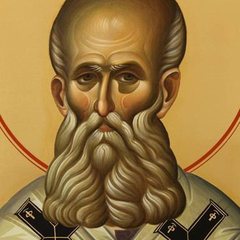 Gregory of Nazianzus
 His best friend, from their student days at Athens. They fell out when Basil made him bishop of Sasima. Gregory still gave the great speech at Basil's funeral.
Oration 43; Letter 48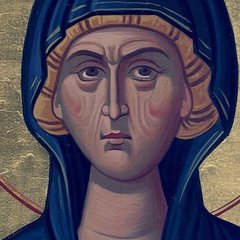 Macrina the Younger
 His older sister, the eldest of the ten children. When he came home proud of his speaking, she drew him to the monk's life, working with his hands.
Gregory of Nyssa, Life of Macrina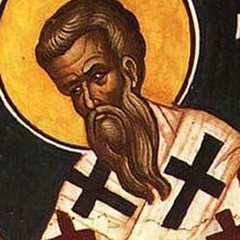 Gregory of Nyssa
 His younger brother. Basil made him bishop of Nyssa in 372. After Basil died, Gregory finished Basil's sermons on the days of creation.
Jackson, Prolegomena; Socrates, Church History, Book 4, chapter 26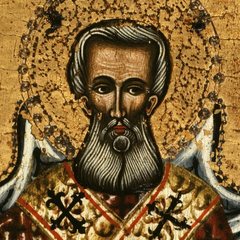 Athanasius of Alexandria
 The old defender of the Council of Nicaea. When monks at Caesarea attacked Basil, Athanasius wrote that he was “a glory to the Church”, and that they should obey him.
Athanasius, Letter 63His youngest brother. Basil ordained him priest. Peter later became bishop of Sebaste.
Gregory of Nyssa, Life of Macrina; Jackson, ProlegomenaHis grandmother. The 1916 Roman Martyrology says she was a disciple of Gregory the Wonderworker, and that she brought Basil up in the Christian faith.
The Roman Martyrology (1916), 14 JanuaryHis parents. His father, also Basil, was a lawyer and a teacher of rhetoric. His mother Emmelia was the daughter of a martyr.
Jackson, Prolegomena; OCAAn older monk he admired in his early years. Later they fell out, in part over the Holy Spirit, and Eustathius's party wrote letters accusing Basil of false teaching. In 375, after three years of silence, Basil answered them in writing.
Basil, Letter 223; Jackson, ProlegomenaThe emperor and his prefect, who favoured the Arians and tried to bend Basil with threats. Both came to respect him. Later Basil wrote to Modestus asking favours for his clergy.
Oration 43; Basil, Letter 104Bishop of Tyana. When Cappadocia was split in two, he claimed the churches of the new half for himself. Once he blocked Basil's road and seized his mules.
Oration 43, chapter 58; Gregory of Nazianzus, Letter 48how he died
He died at Caesarea on 1 January 379, about 49 years old, worn out by illness and a hard life.
The whole city crowded round him as he lay dying. People wished they could give him some of their own years.
At his funeral “tens of thousands of every race and age” came, Jews and pagans among them. The crush was so great that many people died. He was laid in the tomb of his fathers.
His friend Gregory was not at the funeral. He was gravely ill himself, and wrote to Basil's brother that he could not “kiss that holy dust”.
His last words
Into Thy Hands I commend my spirit.
The words of Christ on the cross, from Luke 23:46.
is he a saint?
Yes. Catholics, Orthodox and Anglicans count him a saint, and Lutherans remember him too.
- CatholicSaintA Doctor of the Church. A memorial on 2 January
- OrthodoxSaintOne of the Three Holy Hierarchs
- AnglicanSaintA Lesser Festival in the Church of England
- LutheranRememberedMissouri Synod, 10 January; Evangelical Lutheran Church in America, 14 June
He was never condemned. The Catholic, Orthodox, Anglican and Lutheran calendars all keep his day. The old Roman Martyrology kept his feast on the day he was made bishop:
…the consecration of St. Basil, bishop and doctor of the Church, who was eminent for learning and wisdom in the time of the emperor Valens. Being adorned with every virtue, he was a great light in the Church, and defended her with admirable constancy against the Arians and Macedonians.
what to read first
The funeral speech for Basil
Gregory of Nazianzus
His best friend's portrait of him: Athens, the famine, the prefect, the lepers, their quarrel and the funeral. Almost every story starts here.
Read it freeLetters
Basil
Hundreds of letters: to friends, to a grieving father, to the emperor's officials. Start with Letters 2, 5, 94 and 223.
Read them freeHexaemeron
Basil
Nine sermons on the six days of creation, full of animals, plants and the sea. Reading them, his friend Gregory said, “I am brought into the presence of the Creator”.
Read it freeThe Life of Macrina
Gregory of Nyssa
His brother's life of their sister, with the young Basil at his proudest, and Macrina turning him round.
Read it freetake the quizzes
 Quiz Which early Christian thinks like you? And which would argue with you? See where you stand beside Basil. Start
  Quiz Christian Personality Test Basil reads as The Herald as a young man. Find your own type. Start
 people like him
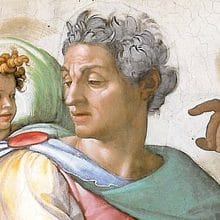 IsaiahThe Herald
 When God asked, “Whom shall I send?”, he did not wait to be asked twice: “Here am I. Send me!”
Isaiah 6:8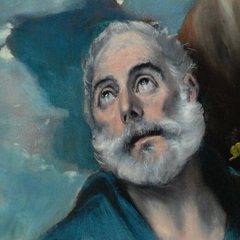 PeterThe Herald
 “Even if all fall away on account of You, I never will,” he said. That same night he denied Christ three times. Then he wept, came back, and led the Church.
Matthew 26:33, 75sources
His life, and his words
- Gregory of Nazianzus, Oration 43, the funeral speech for Basil. Tr. C. G. Browne and J. E. Swallow, 1894.
- Gregory of Nazianzus, Letters 48 and 76. Same edition.
- Basil, Letters. Tr. Blomfield Jackson, 1895.
- Basil, On the Holy Spirit. Same edition.
- Basil, Hexaemeron. Same edition.
- Basil, The Ascetic Works: the Longer and Shorter Rules, and the Morals. Tr. W. K. Lowther Clarke, 1925. Public domain in the United States.
- Basil, Address to Young Men on the Right Use of Greek Literature. Tr. F. M. Padelford, 1902.
- Basil, Homily on I will pull down my barns, in Greek
- Basil, Homily to the Rich, in Greek
- Gregory of Nyssa, Life of Macrina. Tr. W. K. Lowther Clarke, 1916.
- Gregory of Nyssa, On the Making of Man. Tr. H. A. Wilson, 1893.
- Athanasius, Letter 63, to Palladius. Tr. Archibald Robertson, 1892.
- Socrates, Church History, Book 4, chapter 26. Tr. A. C. Zenos, 1890.
- Sozomen, Church History, Book 6, chapter 16. Tr. C. D. Hartranft, 1890.
- Theodoret, Church History, Book 4, chapter 16. Tr. Blomfield Jackson, 1892.
- The Golden Legend, Life of St Basil. Caxton's English, ed. F. S. Ellis, 1900.
- The Golden Legend, the lives of the saints named Julian. Same edition.
Reference
- Catholic Encyclopedia, 1907, “St. Basil the Great”
- Blomfield Jackson, Prolegomena and introductions, Nicene and Post-Nicene Fathers, vol. 8, 1895
- Walter Rauschenbusch, Prayers of the Social Awakening, Boston, 1910
- St Andrew Greek Orthodox Church, “The Orthodox Tradition of the Vasilopita”, 2015
- Merriam-Webster, “Basil”, for how to say it
- Merriam-Webster, “Caesarea”
Calendars
- USCCB, Memorial of Saints Basil the Great and Gregory Nazianzen
- The Roman Martyrology, 1916 edition
- OCA, Saint Basil the Great
- OCA, the Three Hierarchs, 30 January
- GOARCH, Basil the Great
- azbyka.ru, Russian
- Church of England, Common Worship calendar
- The Episcopal Church, Lesser Feasts and Fasts 2022
- Concordia Publishing House, LCMS commemorations from the Lutheran Service Book
- Evangelical Lutheran Worship, ELCA, the church year
Pictures
- Saint Basil the Great, Novgorod school, late 15th century. Nasjonalmuseet, Oslo, NG.M.01523. Photo: Børre Høstland. Public domain.
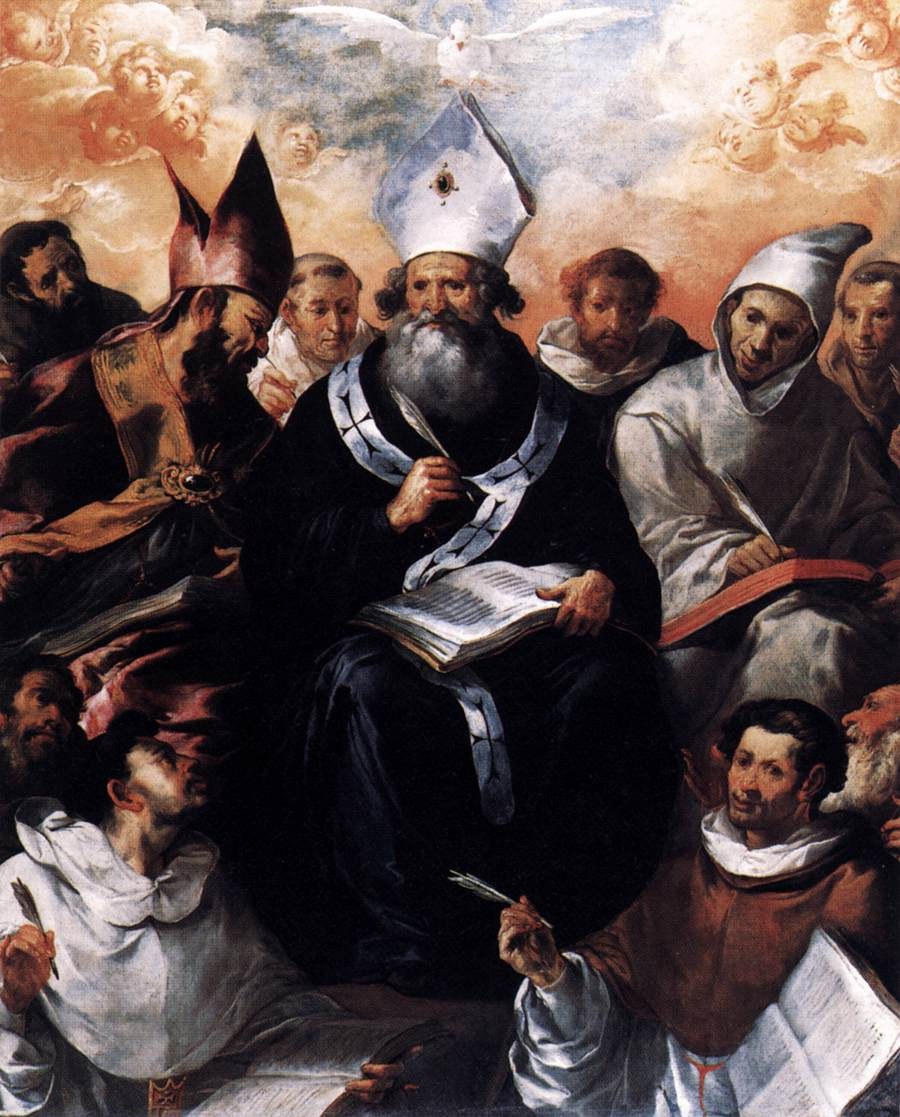
- Saint Basil Dictating His Doctrine, Francisco de Herrera the Elder, about 1639. Musée du Louvre, Paris. Public domain.
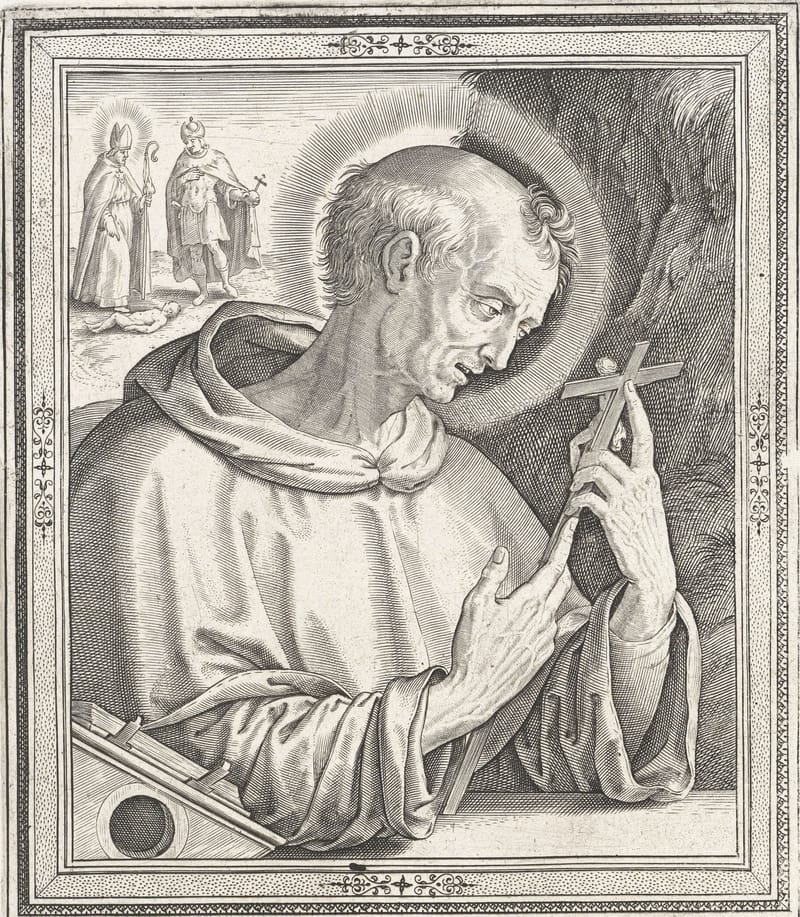
- H. Basilius de Grote (S. Basilivs), Hieronymus Wierix after Philips Galle, Antwerp, 1563 to before 1610, from a series of founders of religious orders. Rijksmuseum, Amsterdam. CC0.