
Gregory of Nyssa
Basil the Great's younger brother. He wrote the Life of his sister Macrina, and he hoped God would one day heal everyone.
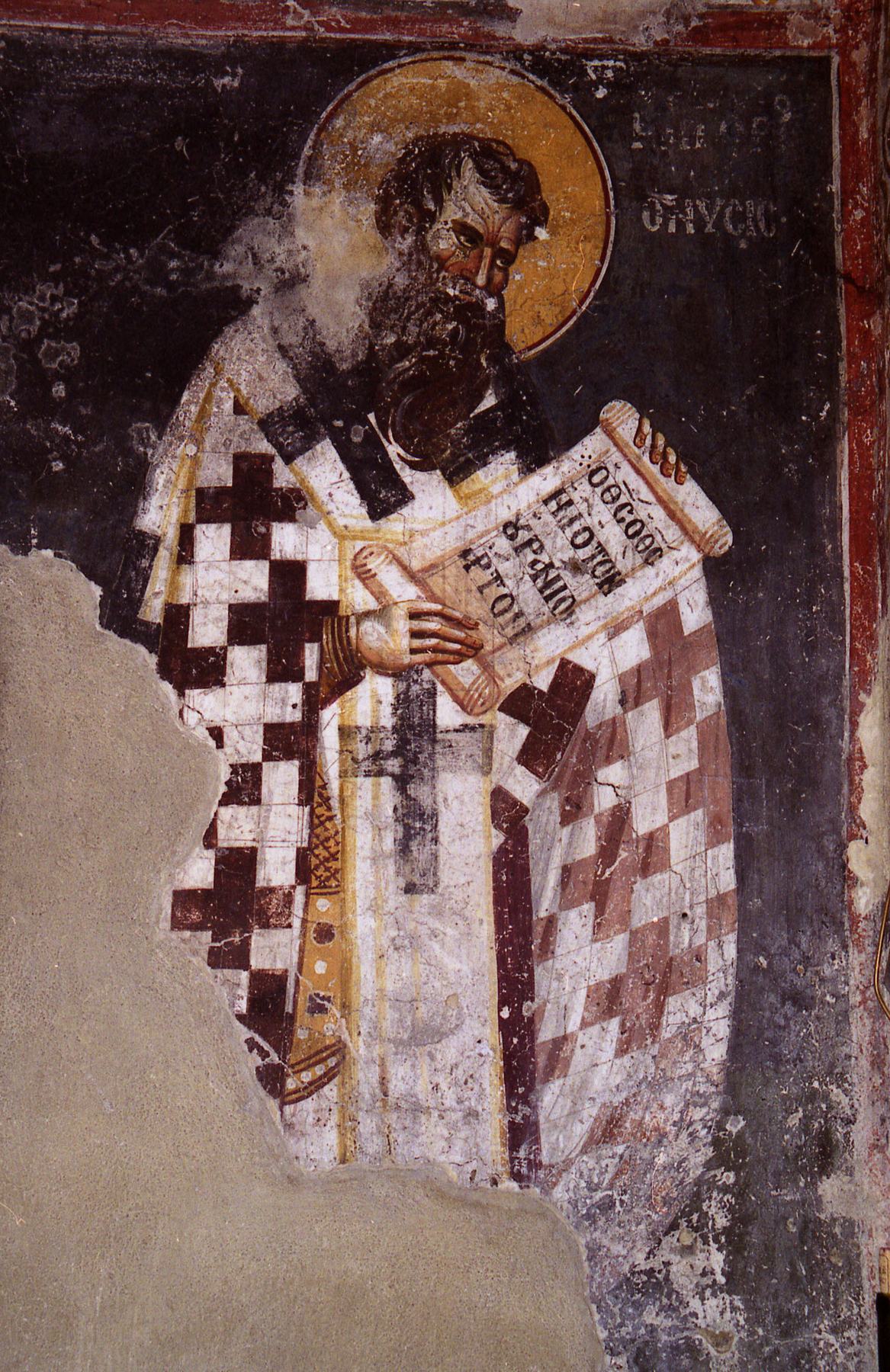
Picture: Saint Gregory of Nyssa, fresco by the painters Michael and Eutychios. Church of the Theotokos Peribleptos, Ohrid, North Macedonia. Public domain.
Who was Gregory?
Gregory was Basil the Great's younger brother, and one of the three Cappadocian Fathers. He taught rhetoric before Basil made him bishop of Nyssa, a small town, in 372. An emperor who believed Christ was created exiled him for two years. He was a leader at the Council of Constantinople in 381. He hoped God would at last heal everyone.
at a glance
His path, in order
- ReaderRead Scripture to the people
- Teacher of rhetoricScolded for it by a friend
- BishopOf Nyssa, from 372
- ExileDriven out, 376 to 378
- TheologianA leader at the Council of Constantinople, 381
in numbers
- Children in his family9
- Four sons and five daughters
- Three of the sons became bishops: Basil, Peter and Gregory
- Years since he had seen his sister Macrina8
- His troubles and exile had kept them apart
- When he went at last, he found her dying
did you know?
-
A dream first turned him to the Church, say his 1893 editors. Worn out by a night service for the Forty Martyrs, he fell asleep in the garden. He dreamed the martyrs beat him with rods for his indifference. He woke in remorse, and became a reader of Scripture in church.
Nicene and Post-Nicene Fathers, volume 5, introduction, chapter 1 -
He planned a martyrs' chapel down to the cubit: a cross around an eight-sided hall, roofed in stone for lack of timber. Then he haggled over the masons' pay, and joked that his poverty left him no choice.
Letter 16, to Amphilochius -
Basil's sermons on the six days of creation stop before the making of man. Gregory wrote On the Making of Man to finish them, so that no scoffer could use the gap against Basil's fame.
On the Making of Man, the letter to Peter
- Born
- About 335, most likely at Caesarea in Cappadocia, today Kayseri in Turkey. The year and the place are not certain.
- Grew up
- In a large Christian family in Cappadocia and Pontus. His father, a famous rhetorician, died young. His mother Emmelia and his sister Macrina taught him the faith. His brother Basil taught him too. Gregory called him “our common father and teacher”.
- Died
- After 394, probably about 395. No one recorded where or how. Where he was buried is not known.
- Also called
- Gregory Nyssen, in older English. Gregorius Nyssenus, in Latin. Later writers called him the Father of Fathers and the Star of Nyssa.
- Status
- A saint to Catholics and Orthodox. Anglicans and Lutherans keep his day too.
- In art
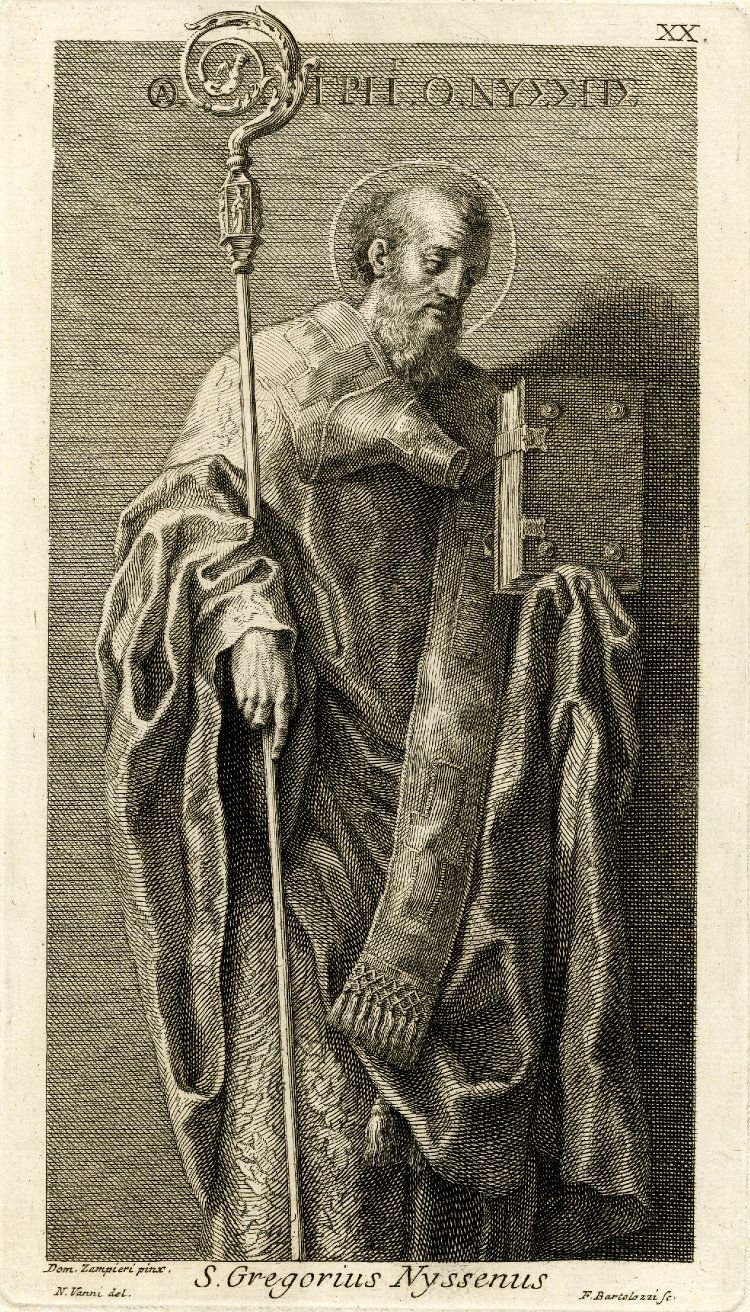
- In the fresco at the top of this page, a bishop with a long dark beard, in a white vestment covered with dark crosses, holding a scroll. In Bartolozzi's engraving, a Western bishop with a crozier and a book.
- Wrote
- A great deal. The Great Catechism, the Life of Macrina, the Life of Moses, books against Eunomius, sermons and letters.
- Pronounced
- GREG-uh-ree of NISS-uh.
feast days
East and West, side by side
West
- Jan10
Catholic, in the Roman Martyrology of 2004. He has no memorial in the General Roman Calendar. Also Lutherans in the Missouri Synod, with Basil and Gregory Nazianzen.
- Mar9
Episcopal Church. Also the 1916 Roman Martyrology, which kept him on this day.
- Jun14
The Evangelical Lutheran Church in America, with Basil, Gregory Nazianzen and Macrina.
- Jul19
Church of England, with his sister Macrina. A Lesser Festival.
East
- Jan10
Greek churches and the Orthodox Church in America.
- Jan23
Russian Church. This is 10 January on the old calendar.
Why so many dates? The East keeps him on 10 January. The West long kept him on 9 March, as the 1916 Martyrology did. The Roman Martyrology of 2004 now has him on 10 January too. Churches on the old calendar keep 10 January 13 days later, on 23 January.
what was he like?
+quick to tears
When Basil died, he went to his sister Macrina, as he tells it: “I sought for one who could feel it equally, to mingle my tears with.” When she died, he writes, “neglecting my duties, I gave myself up to lamentation”. When he came home to Nyssa, crowds met him “mingling tears in abundance with their joy”, and he rejoiced and wept with them.
On the Soul and the Resurrection; Life of Macrina; Letter 3+too simple for politics
Basil doubted that Gregory should be sent to Rome on church business. His brother was “quite inexperienced in ecclesiastical affairs”, he wrote. But he added that Gregory was a man “to whom anything like mean servility is unknown”.
Basil, Letter 215+stung by slights, and honest about it
He rode fifteen miles over a road “like a precipice” to make peace with a bishop who disliked him. He waited outside in the heat till noon, and inside he got no seat and no greeting. He admits the fight within him: “the one, of anger at the insult caused by pride, the other prompting to appease the rising storm”. In a letter about it to Flavian, he also made clear he was that bishop's equal “in education for instance, or in birth … or in theology”.
Letter 18, to Flavian+in love with the world's beauty
Writing from a friend's country house by the river Halys, he said the famous beauty spots of the poets could not match it: “Your Helicon is nothing: the Islands of the Blest are a fable”. Below the house the river “gleams like a golden ribbon through their deep purple”.
Letter 15, to Adelphius the lawyer+able to laugh at himself
Writing to a young lover of the classics, he opened with Homer instead of the Bible, since that was what the young man read. Then he apologised for rambling: “for garrulity is just as characteristic of old age as to be blear-eyed, or for the limbs to fail”.
Letter 8, to a student of the classicswhat others said of him
The people closest to him did not flatter him. His brother scolded him and his sister corrected him. His friend Gregory Nazianzen kept him going.
How can I lay hold of you satisfactorily, with all your simplicity? Tell me; who ever falls a third time into the same nets?
Let him be a bishop, not deriving dignity from his see, but conferring dignity on his see by himself.
But you are renowned in cities and peoples and nations. Churches summon you as an ally and director, and do you not see the grace of God in it all?
…you who are the common prop of the whole Church.
…seeing his character in you as in a bright and shining mirror, I may think myself to possess him also!
his life in eight moments
Cappadocia
As a young manThe rhetoric teacher
He read the Scriptures to the people in church. Then he gave it up to teach rhetoric, like his father. People were whispering that he “preferred to be called a Professor of Rhetoric rather than of Christianity”. His friend Gregory Nazianzen wrote to scold him for hanging up the holy books “over the chimney, as men do in winter with rudders and hoes”.
Gregory Nazianzen, a letter to Gregory of NyssaCaesarea
About 372The forged letter
Basil had fallen out with their uncle, a bishop. To make peace, Gregory forged a letter from the uncle. Basil was delighted and showed it round, until the uncle said he never wrote it. Basil was furious: “You forged one letter, and brought it me as though it came from our right reverend uncle the bishop, trying to deceive me, I have no idea why.” The quarrel was mended in the end. Basil wrote to the uncle: “Formerly I was glad to see my brother. Why not, since he is my brother and such a brother?” He had lost none of that gladness, he went on.
Basil, Letters 58 and 60; Nicene and Post-Nicene Fathers, volume 5, introductionNyssa
372Made bishop
Basil wanted allies against the Arians, who held that the Son of God was created. So he made his brother bishop of Nyssa, a small town, over Gregory's protests. A friend was surprised he chose such an obscure place. Basil said his brother deserved “the whole Church under the sun gathered into one place”. Since Gregory could not have that, he would bring honour to little Nyssa.
Basil, Letter 98, to Eusebius of Samosata; Nicene and Post-Nicene Fathers, volume 5, introductionAncyra and beyond
375 to 378Arrested, and driven out
The emperor Valens held that the Son of God was created. A governor serving him took up charges against Gregory: wasting church money, and an irregular election. Soldiers took him away. On the road he fell ill with his “old kidney complaint”, and he escaped to a safe place. A synod at Nyssa deposed him in 376, and he wandered from town to town until Valens died. Gregory Nazianzen once cheered him about his travels. His wanderings were like those of the planets, he wrote, “whose very wandering is harmonious”.
Basil, Letter 225; Catholic Encyclopedia, 1910; Gregory Nazianzen, Letter 81Nyssa
378Home again
When he came home, the villages along the river road were full of people weeping for joy. At his church the crowd pressed so close that he nearly fainted. Then he saw “a stream of fire flowing into the church”. It was the choir of consecrated virgins, marching in with torches. He wrote to a friend the moment the prayers were done, before he even had a drink.
Letter 3, to AblabiusAnnesi, in Pontus
379His sister's deathbed
Nine months after Basil died, Gregory went to see Macrina. He found her dying of fever, lying on boards on the floor. When he poured out his troubles, she scolded him: “Will you not cease to be insensible to the divine blessings? Will you not remedy the ingratitude of your soul?” She died the next evening, praying. He laid her in their parents' grave. Before he left, he writes, “I first threw myself on the grave and embraced the dust”. Their last talks became his book On the Soul and the Resurrection.
Life of MacrinaJerusalem
After 379An unimpressed pilgrim
A council sent him to set the churches of Arabia in order, and he went on to Jerusalem. The emperor let him travel by the state post. His wagon “was, in fact, as good as a church or monastery to us”, he said. Jerusalem shocked him: theft, adultery and murder were everywhere. Later he told a friend that pilgrimage brings no one nearer to God. Cappadocia had more altars than anywhere else: “One could hardly count so many in all the rest of the world.”
On PilgrimagesConstantinople
381The great council
He was one of the 150 bishops at the Council of Constantinople. He preached at the funeral of Meletius of Antioch, the council's first president. Afterwards the emperor Theodosius named the bishops whose communion marked the true faith. For the cities of Pontus he named three: Helladius of Caesarea, Otreius of Melitene, and Gregory.
Sozomen, Church History, Book 7, chapter 9; Socrates, Book 5, chapter 8
wonders he wrote down
No early writer says Gregory worked a miracle himself. But he wrote wonders down. Two happened to him. The rest are his sister Macrina's, as he heard them at her death.
The shining relics
On his way to Macrina, he dreamed three times in one night that he carried martyrs' relics, too bright to look at. At her deathbed he understood: the relics were his sister. After she died, even in a dark robe, rays seemed to shine from her.
“I seemed to be carrying martyrs' relics in my hands; a light came from them, such as comes from a clear mirror when it is put facing the sun, so that my eyes were blinded by the brilliance of the rays.”Life of Macrina
The healed tumour
Years before her death, his sister Macrina had a tumour on her breast. Her mother begged her to see a doctor, since medicine “was sent from God for the saving of men”. Macrina would not let a stranger see her body. She prayed all night, weeping, and asked her mother to make the sign of the cross on the place. After her death, the widow Vestiana showed Gregory the small scar.
“But when the mother put her hand within her bosom, to make the sign of the cross on the part, the sign worked and the tumour disappeared.”Life of Macrina
The soldier's daughter
On the road home from his sister's deathbed, a soldier who was a relative told Gregory a story. Macrina had kissed his little girl's diseased eye and promised them a medicine. They forgot to take it. As someone ran back for it, the child's mother saw the eye was healed, and cried out:
“She has indeed given her the true drug which cures disease; it is the healing that comes from prayer.”Life of Macrina
The grain that did not run out
In a famine, his sister Macrina gave grain to the hungry all the time, and it never got less. Gregory mentions it only in passing. He also leaves out other healings, demons cast out and true predictions.
“the corn for the relief of need, though constantly distributed, suffered no perceptible diminution”Life of Macrina
The storm that held off
On the road home to Nyssa, a great storm gathered all round Gregory and his companions, with thunder and lightning. They reached shelter dry, and only then did the rain pour down. Three or four hours later it stopped, and they went on. Gregory calls it “a manifest token of His loving kindness”.
“and yet we, like the Israelites of old in their miraculous passage of the Red Sea, though surrounded on all sides by rain, arrived unwetted at Vestena.”Letter 3, to Ablabius
He expected doubt
Gregory says he left most of his sister Macrina's wonders out, because people would not believe them.
“For most men judge what is credible in the way of a tale by the measure of their own experience. But what exceeds the capacity of the hearer, men receive with insult and suspicion of falsehood, as remote from truth.”Life of Macrina, the end
his words
Gregory wrote a great deal. These lines are from Moore and Wilson's translation of 1893. Some of his best-known books, like the Life of Moses, have no public-domain English translation, so they are not quoted here.
After seeing Jerusalem
Change of place does not effect any drawing nearer unto God, but wherever thou mayest be, God will come to thee, if the chambers of thy soul be found of such a sort that He can dwell in thee and walk in thee.
To a friend who asked whether monks should travel to Jerusalem.
On PilgrimagesCounsel the brethren to be absent from the body to go to our Lord, rather than to be absent from Cappadocia to go to Palestine.
The soul immediately shows its royal and exalted character, far removed as it is from the lowliness of private station, in that it owns no lord, and is self-governed, swayed autocratically by its own will.
They therefore do not understand that all virtue is found in moderation, and that any declension to either side of it becomes a vice.
I answered rather audaciously, and without due consideration of what I said, for my passionate grief had not yet given me back my judgment.
his hope that all will be saved
Gregory hoped that in the end God would heal everyone. It is the hardest question about him, so here it is in his own words and in his critics'.
What he wrote
Gregory says God's fire works like a gold refiner's. It burns the dross away, and the pain heals. In the end evil will be gone. Even the devil, “the introducer of evil himself”, will be healed. Then all creation will give thanks together.
“…when there has been a restoration of those who are now lying in Sin to their primal state, a harmony of thanksgiving will arise from all creation.”The Great Catechism, chapter 26
Not his only word
The 1893 English edition of his works notes that elsewhere he speaks of eternal fire for the merciless rich. There, it says, “the language of Scripture as to future punishment is used without any modification”. One example is his second sermon On Loving the Poor. The edition adds that such sermons urge people on, so they weigh less as evidence.
Nicene and Post-Nicene Fathers, volume 5, introduction, chapter 3What the critics said
Origen, an earlier teacher from Alexandria whose books Gregory studied, taught that all would be restored. That hope rested on his belief that souls exist before birth. In the sixth century, a set of anathemas condemned both. They do not name Gregory. Whether the council of 553 itself passed them is still argued. Gregory did not share that belief about souls, says the New Catholic Encyclopedia, but he did teach the restoration of all.
“If anyone asserts the fabulous pre-existence of souls, and shall assert the monstrous restoration which follows from it: let him be anathema.”The Anathemas against Origen, the first
Never condemned
No council condemned him by name. The emperor's letter read at the council of 553 lists him among the holy Fathers it follows. The Council in Trullo, in 692, took his canons into church law.
“in every way follow the holy Fathers, Athanasius, Hilary, Basil, Gregory the Theologian, Gregory of Nyssa, Ambrose”Fifth Ecumenical Council, Session 1, the emperor's letter; Council in Trullo, canon 2
Were his books changed?
In the eighth century Germanus, patriarch of Constantinople, argued that followers of Origen had slipped the hope that all will be saved into Gregory's books. Origen was an earlier teacher from Alexandria who held that hope. Germanus's book is lost. The 1893 English edition doubts it: the ideas are “portions of the very groundwork of his own theology”. The Catholic Encyclopedia of 1910 calls the theory “useless and gratuitous”.
Photius, Bibliotheca, codex 233; Nicene and Post-Nicene Fathers, volume 5; Catholic Encyclopedia, 1910often misquoted
He said, Concepts create idols; only wonder grasps anything.
What the sources sayWe could not find this sentence in any of his works we could read. Quote sites give it in several wordings, which is the mark of a modern summary. It is often traced to his Life of Moses, which has no public-domain English translation.
His works in Nicene and Post-Nicene Fathers, volume 5, searchedHe forged three letters from his uncle.
What the sources sayBasil says Gregory forged one. A second came by Gregory's servant, and it was not from the uncle either. Then a third came. But Basil never says Gregory wrote the other two.
Basil, Letter 58He wrote the clauses added to the Nicene Creed in 381.
What the sources saySome say so, and so does the Orthodox Church in America's life of him. But the 1893 English edition of his works calls it “very doubtful”.
Nicene and Post-Nicene Fathers, volume 5, introduction, chapter 1; OCAHis wife was Theosebia.
What the sources sayNo one knows. Gregory Nazianzen's letter to him on her death calls her “truly consort of a priest”. Some read that as meaning she was his wife. The same letter calls her “your holy and blessed sister”, and the Orthodox Church in America honours her as his sister. He may have married, but that too is argued.
Gregory Nazianzen, Letter 197; OCA, 10 JanuaryThe Seventh Ecumenical Council, in 787, named him the Father of Fathers.
What the sources sayWe could not trace this to any council text. The 1893 English edition says only that “some did not hesitate” to call him that. Later writers did.
Nicene and Post-Nicene Fathers, volume 5, introduction, chapter 1The quoted wording of his joke about Constantinople, where the baker and the bath attendant argue about the Trinity, is his own.
What the sources sayThe story is his, from a sermon he preached at Constantinople. But it has no public-domain English translation. Every English version is a paraphrase, and the words change from book to book.
Roger Pearse, 2009; OCAwhere he stood
Each line is from his own writings. The line on being alone is Ecclesiastes, which he quotes, in New Advent's lightly modernised text. TapClick “Show his line” to read it.
Your answers are next to his. From your result on . See your result
“Anger at real wrongdoing can be a good thing.”
Gregory agrees.
You
On record in Against Eunomius. Not quoted here.
“If you had to choose, you'd grow closer to God alone in quiet than among other people.”
Gregory disagrees.
You
Show his line
Woe to him that is alone when he falls, for he has not another to help him up.On Virginity, chapter 23, quoting Ecclesiastes 4:10
“Even if you believe you'll see them again, it's right to weep openly for someone you've lost.”
Gregory agrees.
You
Show his line
In no other way can the burning heart cool down, swelling as it is with its affliction, unless it relieves itself by sobs and tears.Funeral Oration on Meletius
“Your body is a friend to look after, not an enemy to fight.”
Gregory strongly agrees.
You
Show his line
That is temperance's highest aim; it looks not to the afflicting of the body, but to the peaceful action of the soul's functions.On Virginity, chapter 22
“Miracles still happen today, just as they did in the Bible.”
Gregory strongly agrees.
You
On record in the Life of Macrina. Not quoted here.
“In many Bible stories, the deeper meaning matters more than the history.”
Gregory strongly agrees.
You
Show his line
The Divine intention lies hid under the body of the Scripture, as it were under a veil, some legislative enactment or some historical narrative being cast over the truths that are contemplated by the mind.Against Eunomius, Book 7
“Becoming a better person is mostly down to your own effort.”
Gregory agrees.
You
On record in On Virginity. Not quoted here.
“In the end, God will save everyone.”
Gregory strongly agrees.
You
Show his line
He accomplished all the results before mentioned, freeing both man from evil, and healing even the introducer of evil himself.The Great Catechism, chapter 26
See where you stand beside him. Take the quiz
friends, family and rivals
 Basil the Great
 His older brother and teacher: “our common father and teacher”, Gregory called him. Basil made him a bishop, and scolded him often.
On the Making of Man; Basil, Letters 58 and 215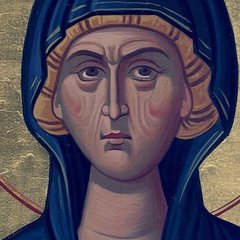 Macrina
 His oldest sister, who taught the whole family. He wrote her Life, and made her the teacher in his dialogue On the Soul and the Resurrection.
Life of Macrina; On the Soul and the Resurrection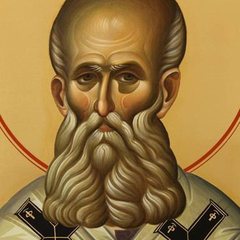 Gregory Nazianzen
 Basil's friend and fellow worker. He scolded Gregory for teaching rhetoric, then wrote to comfort him in exile.
Gregory Nazianzen, Letters; Theodoret, Book 4, chapter 27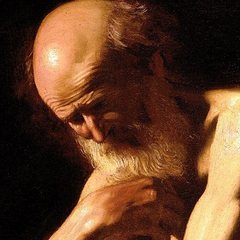 Jerome
 He heard Gregory read his work aloud. Gregory, he wrote, “a few years since read to Gregory Nazianzan and myself a work against Eunomius”.
Jerome, Lives of Illustrious Men, chapter 128The youngest brother, raised by Macrina, and later a bishop himself. Gregory wrote On the Making of Man for him.
Life of Macrina; On the Making of ManA brother who gave up a brilliant start as a speaker to live alone by the river Iris. He fed poor old men there, and died suddenly on one of his trips to feed them.
Life of MacrinaBasil's successor at Caesarea. In 381 the emperor named them both among the bishops who marked the true faith in Pontus. Later Helladius snubbed him, and Gregory complained of it in a long letter.
Sozomen, Book 7, chapter 9; Letter 18A leader of the Arians, who held that the Son of God was created. He attacked Basil's teaching, and Gregory answered him in his long books Against Eunomius.
Against Eunomius; Catholic Encyclopedia, 1910how he died
No one recorded how he died. The last we hear of him is at a council in Constantinople in 394.
He probably died soon after the council of 394, about 395. No early source gives the day, the place or the cause.
Basil had said his brother would bring honour to little Nyssa. At the council of 394, says the 1893 English edition, “Nyssa was ennobled by the name of its bishop”. He was listed between the bishops of the great cities of Caesarea and Iconium.
He left no deathbed story of his own. But he wrote down his sister's, with her last prayer. These are her words, not his.
Macrina's dying prayer, as he wrote it down
Thou, O Lord, hast freed us from the fear of death. Thou hast made the end of this life the beginning to us of true life. Thou for a season restest our bodies in sleep and awakest them again at the last trump.
She prayed facing east, as the sun went down.
is he a saint?
Yes. Catholics and Orthodox count him a saint, and Anglicans and Lutherans keep his day. He was never condemned, though his hope that all will be saved has troubled some.
- CatholicSaintIn the Roman Martyrology, 10 January
- OrthodoxSaint10 January (23 January for the Russian Church)
- AnglicanSaintChurch of England 19 July, Episcopal Church 9 March
- LutheranRememberedMissouri Synod 10 January, ELCA 14 June
The Roman Martyrology of 1916 remembered him in one line:
At Nyssa, the demise of St. Gregory, bishop, brother of blessed Basil the Great, whose life and erudition have rendered him illustrious.
what to read first
The Life of Macrina
Gregory of Nyssa
His sister's life and death, told by her brother, who was there. Short and moving. Lowther Clarke's translation of 1916.
Read it freeOn the Soul and the Resurrection
Gregory of Nyssa
His talk with his sister Macrina at her deathbed, about death and what comes after, written as a dialogue.
Read it freeHis letters
Gregory of Nyssa
Short and very human. Letter 3 tells of his homecoming. Letter 18 tells of the bishop who snubbed him.
Read them freeThe Great Catechism
Gregory of Nyssa
His summary of the faith, written for teachers. Chapter 26 holds his hope for the healing of all.
Read it freetake the quizzes
 Quiz Which early Christian thinks like you? And which would argue with you? See where you stand beside Gregory. Start
  Quiz Christian Personality Test Which of eight types are you? Find your own. Start
 sources
His life, and his words
- Gregory of Nyssa, Life of Macrina. Tr. W. K. Lowther Clarke, 1916.
- Gregory of Nyssa, Works and Letters. Nicene and Post-Nicene Fathers, second series, volume 5. Tr. W. Moore and H. A. Wilson, 1893.
- On the Soul and the Resurrection. Same edition.
- On Pilgrimages. Same edition.
- The Great Catechism, chapter 26. Same edition.
- On Virginity. Same edition. The revised text is at
- New Advent.
- On the Making of Man. Same edition.
- Against Eunomius. Same edition.
- Funeral Oration on Meletius. Same edition.
- Letters 3, 8, 15 and 18. Same edition.
- Basil, Letters 58, 60, 98, 215 and 225. Tr. Blomfield Jackson, 1895.
- Gregory Nazianzen, Letters to Gregory of Nyssa. Tr. C. G. Browne and J. E. Swallow, 1894.
- Jerome, Lives of Illustrious Men, chapter 128. Tr. E. C. Richardson, 1892.
- Sozomen, Church History, Book 7, chapter 9. Tr. Chester D. Hartranft, 1890.
- Socrates, Church History, Book 5, chapter 8. Tr. A. C. Zenos, 1890.
- Theodoret, Church History, Book 4, chapter 27. Tr. Blomfield Jackson, 1892.
- The Anathemas against Origen. The Seven Ecumenical Councils, ed. H. R. Percival, 1900.
- The Fifth Ecumenical Council, Session 1, the emperor's letter. Same edition.
- The Council in Trullo, canon 2. Same edition.
Reference
- Nicene and Post-Nicene Fathers, volume 5, introduction, his life, and
- his Origenism, 1893
- Catholic Encyclopedia, 1910, “St. Gregory of Nyssa”
- New Catholic Encyclopedia, 2nd edition, “Gregory of Nyssa, St.”
- Britannica, “Saint Gregory of Nyssa”
- Roger Pearse, on the famous passage about Constantinople, 2009
- Merriam-Webster, “Gregory of Nyssa”, for how to say it
Calendars
- Martyrologium Romanum, 2004 edition, 10 January
- The Roman Martyrology, 1916 edition, 9 March
- USCCB, 10 January 2026, a weekday with no memorial
- OCA, Saint Gregory, Bishop of Nyssa
- saint.gr, Greek
- azbyka.ru, Russian
- Church of England, Common Worship calendar
- The Episcopal Church, Lesser Feasts and Fasts 2022
- Concordia Publishing House, LCMS commemorations
- Evangelical Lutheran Worship, ELCA, the church year
Pictures
- Saint Gregory of Nyssa, fresco by Michael and Eutychios. Church of the Theotokos Peribleptos, Ohrid. Public domain.
- S. Gregorius Nyssenus, engraving by Francesco Bartolozzi after Domenichino. Public domain.
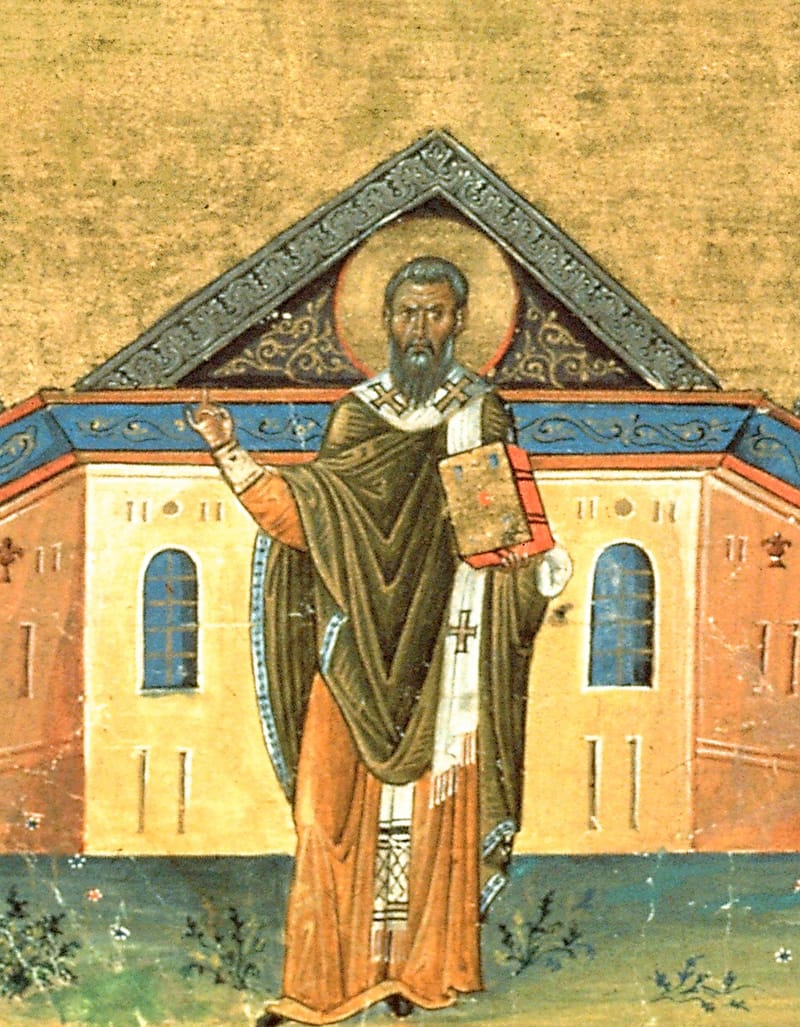
- Gregory of Nyssa (Menologion of Basil II), Constantinople, about 976 to 1025. Vatican Library. Public domain.