
Gregory of Nazianzus
Basil the Great's best friend, and the poet and preacher the East still calls the Theologian.
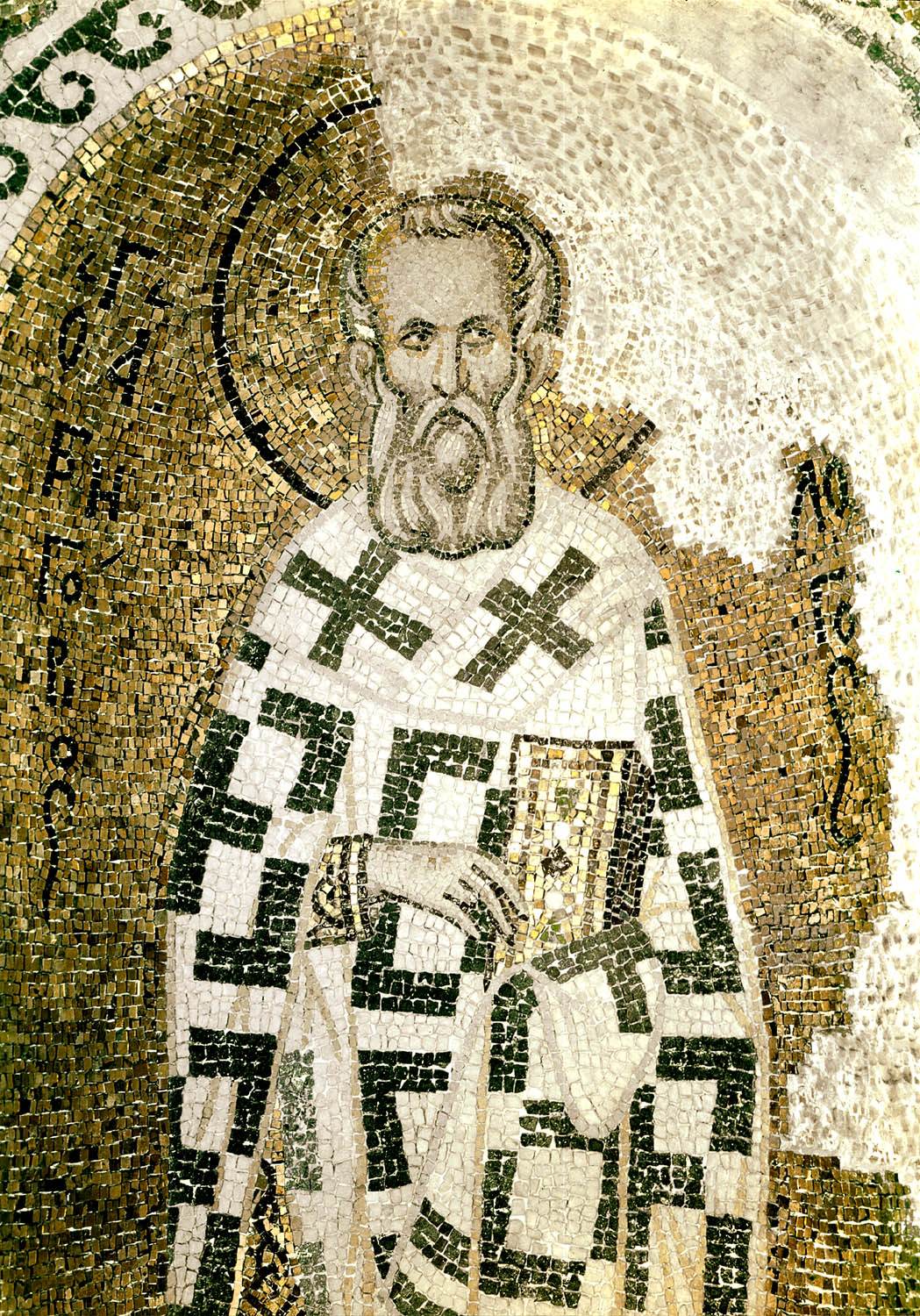
Picture: St Gregory the Theologian, mosaic, Pammakaristos church, Istanbul, about 1310. Photo: Dumbarton Oaks, CC0.
Who was Gregory?
Gregory was a bishop, preacher and poet from Cappadocia, in today's Turkey. He was Basil the Great's closest friend. His father made him a priest by force. Basil made him a bishop against his will. In Constantinople, five sermons on the Trinity won him his name, the Theologian. Then he resigned as bishop there and went home to write poems.
at a glance
His path, in order
- StudentTen years at Athens, with Basil
- PriestOrdained by force, 361
- Bishop of SasimaNever took it up, about 372
- Bishop of ConstantinopleLed its church, 379 to 381
- PoetAt Arianzus, from 383
in numbers
- Orations that survive45
- Sermons and speeches, some at his family's funerals
- Five on the Trinity won him his name, the Theologian
- Poems that survive507
- 206 of them about his life and his times
- 129 of them epitaphs
- 243 of his letters survive too
- Bishops who heard him resign150
- At the great council of 381, in Constantinople
- He had chaired the council for a time, then resigned as the city's bishop
did you know?
-
His Arian opponents in Constantinople once hired a man to murder him. The assassin came to Gregory instead, in tears, and repented.
The 1894 editors' life of Gregory; OCA -
In 382 he was called to another council of bishops, and refused to go. He had never known any good come of one, he said.
Letter 131, with the 1894 editors' note -
A relative, Nicobulus, asked him for a book of his letters. Gregory put Basil's letters first and his own second. He had always ranked Basil above himself, he explained, and he hoped the two of them would always be paired.
Letters 52 and 53, to Nicobulus -
He had three rules for a good letter. Make it as long as the matter needs, no longer and no shorter. Write plainly, the way people talk. Add charm with a proverb or a joke, but sparingly, as purple is used in cloth.
Letter 51, to Nicobulus
- Born
- About 329. Some say 325 or 330. At Arianzus, his father's estate near the small town of Nazianzus in Cappadocia, in central Turkey today.
- Grew up
- At Nazianzus. He studied at Caesarea in Cappadocia, Caesarea in Palestine and Alexandria, then about ten years at Athens.
- Family
- His father Gregory was bishop of Nazianzus. His mother Nonna had won his father to the faith. He had a sister, Gorgonia, and a brother, Caesarius, a doctor at the emperor's court. All four are honoured as saints.
- Died
- Probably in 389 or 390, at Arianzus, where he was born. He had been ill for years.
- Buried
- At Nazianzus. His relics later went to Constantinople and to Rome.
- Also called
- Gregory the Theologian, in the Orthodox Church. Gregory Nazianzen, in the Catholic calendar. With Basil and John Chrysostom, one of the Three Holy Hierarchs.
- Status
- A saint to Catholics, Orthodox and Anglicans. Lutherans remember him too. For Catholics he is a Doctor of the Church.
- Patron of
- Poets, students, teachers and orthodoxy, says Britannica.
- In art
- In Eastern art, a bishop with a high forehead and a grey beard. He wears a white stole marked with crosses and holds a Gospel book. He is often shown with Basil and John Chrysostom.
- Wrote
- Sermons, letters and poems. No Bible commentaries.
- Pronounced
- Nazianzus: naz-ee-AN-zus.
 The Still Water
 His personality type
Careful by nature, and at his best when life is quiet.
In Gregory the Great's terms
- Careful
- Tranquil mind
Our reading, from the Christian Personality Test. Careful here means slow to rush into trouble, as his flights from office show. The test's advice on helping each type also draws on his Oration 2, on caring for souls: “some need the spur, others the curb”.
See The Still Waterfeast days
East and West, side by side
West
- Jan2
Catholic memorial, with Basil the Great. Also the Church of England, a Lesser Festival.
- Jan10
Lutherans in the Missouri Synod, with Basil and Gregory of Nyssa.
- May9
Episcopal Church. Also his day in the 1916 Roman Martyrology.
- Jun11
In the 1916 Roman Martyrology: his relics moved into a chapel of St Peter's in Rome.
- Jun14
Lutherans in the ELCA, with Basil, Gregory of Nyssa and Macrina.
East
- Jan19
OCA: the moving of his relics.
- Jan25
His own day, in the OCA, the Greek churches and the Russian Church.
- Jan30
The Three Holy Hierarchs, with Basil and John Chrysostom.
The Orthodox keep 25 January, the day he died. Churches on the old calendar keep each date 13 days later by today's calendar, so 25 January falls on 7 February and 30 January on 12 February. Why 30 January? It is the feast of the Three Holy Hierarchs: Gregory, Basil and John Chrysostom. The Orthodox Church in America says that in 1084 the three appeared in a vision to John, bishop of Euchaita. They said they were equal before God, and asked for one feast together.
what was he like?
+a teasing wit
He mocked Basil's beloved hermitage in Pontus as “your mousehole with the stately names of Abode of Thought, Monastery, School”. After a page of teasing he ended: “This is perhaps too long for a letter, but it is too short for a comedy.”
Letter 4, to Basil+fond of quiet
Basil called him lazy for not taking up his post as bishop of Sasima. Gregory wrote back: “My greatest business always is to keep free from business.” If everyone did the same, he added, the churches would have no troubles.
Letter 49, to Basil+quick to tears
Preaching at his brother's funeral, he promised not to grieve too much. Soon he broke off: “how can I recall those days without my tears showing that, contrary to my promises, my feelings have overcome my philosophic restraint?” In his speech for Basil, recalling their student days at Athens, he stopped again: “Oh! how can I mention these things without tears.”
Oration 7, section 6; Oration 43, section 20+a joke for a pupil
His pupil Jerome once asked him to explain a hard phrase in Luke, the “second-first Sabbath”. Gregory put him off with a joke. He would explain it in church, he said, and then: “when all the people applaud me, you will be forced against your will to know what you do not know at all.”
Jerome, Letter 52+no avenger
When a mob stoned his people in Constantinople, a friend wanted to take the attackers to court. Gregory wrote to him that it is “far greater and more Godlike, to bear with injuries”. After the emperor Julian's persecution he told Christians: “Let us conquer those that have oppressed us, with clemency”.
Letter 77, to Theodore; Oration 5, section 37, tr. C. W. King+slow to heal
Basil had made him bishop of Sasima, a poor border village, to hold it against a rival. It hurt. Years later, in his speech in Basil's memory, he still called it “a cause of pain which even time has not obliterated”.
Oration 43, on Basil, section 59what others said of him
Three who wrote of him: his pupil Jerome, the historian Socrates, and Pope Gregory the Great two centuries later.
Gregory, bishop of Nazianzen, a most eloquent man, and my instructor in the Scriptures
Gregory, who far excelled in eloquence and piety all those of the age in which he lived
For, as long before us Gregory Nazianzen of reverend memory has taught, one and the same exhortation does not suit all
his life in nine moments
Off Cyprus
A young manThe storm
He sailed from Alexandria for Athens in November, out of season. Near Cyprus a great storm hit. The water tanks burst, and the ship would not answer the helm. He was not yet baptised, and dying unbaptised was his worst fear: “While we were all in fear of a common death, spiritual death was what I was most afraid of”. He prayed, and the crew prayed with him. He vowed himself to God. They reached Rhodes, and he kept his vow.
Oration 18, on his father, section 31; the 1894 editors' lifeAthens
About ten yearsOne soul in two bodies
At Athens he met Basil again, and they became inseparable. They knew only two roads, one to church and one to their teachers. “We seemed to have one soul, inhabiting two bodies.” Among the students was the future emperor Julian. Gregory says he saw trouble in him even then, and cried out: “What an evil the Roman world is breeding!”
Oration 43, on Basil, sections 20 and 21; Oration 5, section 24, tr. C. W. KingNazianzus
Probably Christmas 361Made a priest by force
His old father and the people made him a priest against his will. He ran off to Basil in Pontus. By Easter he was back, and in his first sermon he forgave “the noble tyranny which I have suffered”. Then he wrote a long defence of why he had run. Guiding people, he wrote, is “the art of arts and science of sciences”.
Oration 1, section 1; Oration 2, section 16Sasima
About 372A bishop against his will
Basil, now an archbishop, was fighting a rival bishop over a newly split province. To hold the border he made Gregory bishop of Sasima, a poor village there. Gregory never took up the post. He wrote to Basil: “Give me before all things quiet. Why should I fight for sucking pigs and fowls, and those not my own, as though for souls and canons?” Their friendship never fully healed.
Letter 48, to Basil; Catholic Encyclopedia, 1910Nazianzus
Up to 374His father's helper
He stayed at Nazianzus to help his old father, the bishop. He had already buried his brother Caesarius and his sister Gorgonia. In 374 his father died too. Gregory preached at each of their funerals, and in those speeches he tells of wonders in his family.
Orations 7, 8 and 18Constantinople
379 to 380The Anastasia
The city's churches were in the hands of the Arians, who denied that Christ was fully God. Gregory came to lead the small flock that kept the faith of the Council of Nicaea. He preached in a relative's house and named it Anastasia, “Resurrection”. There he gave the five sermons on the Trinity that won him his name, the Theologian. At Easter a mob burst in during the baptisms and threw stones. Someone was killed.
The 1894 editors' life; Catholic Encyclopedia, 1910; Gibbon, chapter 27Constantinople
380A rival by night
Gregory was taken in by an adventurer named Maximus, and praised him in public. Then, while Gregory lay ill, some bishops from Egypt made Maximus bishop of Constantinople in secret, at night. In the morning the people drove them out. That November the new emperor, Theodosius, took the churches from the Arians and led Gregory into the great church himself.
The 1894 editors' life; Catholic Encyclopedia, 1910Constantinople
May to June 381The farewell
At the great council of 381 he took the chair when its first president, Meletius, died. Meletius had been one of two rival bishops of Antioch. For peace, Gregory asked that the other, Paulinus, be left as sole bishop. The bishops shouted him down. He later said they sounded like a flock of jackdaws. Bishops who came late said his move from Sasima, where Basil had made him bishop, broke the church's rules. He resigned rather than fight, and asked in his farewell: “give me my desert, my country life, and my God, Whom alone I may have to please, and shall please by my simple life.”
Oration 42, sections 24 to 27; Catholic Encyclopedia, 1910Arianzus
383 to his deathHome to the garden
He handed the church of Nazianzus to his cousin Eulalius and went home to the family estate. He wrote poems beside a spring, near a shady walk he loved. He wrote letters against Apollinarius, who taught that Christ had no human mind. One year he kept all of Lent in silence.
Catholic Encyclopedia, 1910; Britannica; Letters 101 and 102
wonders he told
In these stories Gregory works no wonder himself. He tells them in his funeral speeches: wonders in his own family, and at sea when he was young.
His father at Easter
His old father lay dying of a fever. His mouth was so ulcered that he could hardly swallow water, and the doctors could do nothing. On Easter night the people prayed for him in church. At the hour of the Eucharist he stirred. He called a servant to bring his clothes and hold him up. There, far from the altar, he celebrated the Eucharist in the few words his strength allowed. Then he went back to bed, ate a little and slept. A week later he led the service in church.
“he was raised up by Him Who quickeneth the dead, and by the holy night”Oration 18, on his father, sections 28 and 29
Loaves in a dream
His mother Nonna could not eat, and for days her life was in danger. She dreamed that her son Gregory came to her at night with a basket of pure white loaves. He blessed them and fed her. In the morning she was brighter. When he asked how she had slept, she said:
“My child, you most readily and kindly fed me, and then you ask how I am. I am very well and at ease.”Oration 18, section 30
Gorgonia at the altar
His sister Gorgonia had a dangerous illness with a constant fever. The doctors could do nothing. One night she went to the altar, laid her head on it, and said she would not let go until she was healed. Then she rubbed her body with what she had kept of the Sacrament in her hand, mixed with her tears. She told no one while she lived. Gregory told it at her funeral.
“O the wonder, she went away feeling at once that she was saved”Oration 8, on his sister Gorgonia, sections 17 and 18
A vision in the storm
When he was caught in a storm at sea as a young man, his parents at home learned of his danger in a dream, and prayed. Gregory dreamed he was holding a Fury, a sign of danger. A boy on board, who loved him, saw something else. Then the sea began to calm.
“thought he saw my mother walk upon the sea, and seize and drag the ship to land with no great exertion”Oration 18, section 31
Light at the font
His father was baptised as a grown man. As he came up out of the water, a light shone around him. Some saw it and said nothing for a time, each thinking he alone had seen it. The bishop who baptised him cried out that he was anointing his own successor.
“there flashed around him a light and a glory”Oration 18, section 13
He knew some would doubt
Gregory answered doubt himself. Of his sister Gorgonia's healing he said: “Great though these things be, they are not untrue.” Of his father he told his hearers: “though you, my hearers, may shudder, do not disbelieve”. And he told the story of the light at his father's baptism “to the ears of the faithful, for to profane minds nothing that is good is trustworthy.”
Oration 8, section 18; Oration 18, sections 13 and 29his words
Gregory's own words, from his sermons and letters, in the 1894 translation by Charles Gordon Browne and James Edward Swallow.
Farewell to Constantinople, 381
Farewell, O Trinity, my meditation, and my glory.
Near the end of the speech in which he resigned. He had just said goodbye to his church, the city, East and West, and the angels. In Greek, Χαῖρέ μοι, ὦ Τριὰς, τὸ ἐμὸν μελέτημα καὶ καλλώπισμα.
Oration 42, The Last Farewell, section 27For that which He has not assumed He has not healed; but that which is united to His Godhead is also saved.
Christ is born, glorify ye Him. Christ from heaven, go ye out to meet Him. Christ on earth; be ye exalted.
Let us become like Christ, since Christ became like us. Let us become God's for His sake, since He for ours became Man.
No sooner do I conceive of the One than I am illumined by the Splendour of the Three; no sooner do I distinguish Them than I am carried back to the One.
If a stranger fall at your feet, homeless and a foreigner, welcome in him Him Who for your sake was a stranger
For they seek not for priests, but for orators, not for stewards of souls, but for treasurers of money, not for pure offerers of the sacrifice, but for powerful patrons.
hard questions
Gregory has critics. Here are the hard questions, in his own words and in theirs.
His speeches against Julian
After the emperor Julian died, Gregory attacked him in two long speeches. They paint what his 1894 editors call “a very dark picture” of Julian. The historian Gibbon wrote that Julian was “overwhelmed with a torrent of pious invectives, of which the signal was given by the sonorous trumpet of Gregory Nazianzen”. Yet in the second speech Gregory told Christians to take no revenge on Julian's men:
“let us not do to them anything of all that they have done to us”The 1894 editors; Gibbon, chapter 23; Oration 5, section 37, tr. C. W. King, 1888
Second marriages
He taught that a first marriage is the law, and he was hard on a third: “The first is law, the second is indulgence, the third is transgression, and anything beyond this is swinish”. In the same sermon he attacked laws that punished a wife's adultery but not a husband's:
“I do not accept this legislation; I do not approve this custom. They who made the Law were men, and therefore their legislation is hard on women”Oration 37, on Matthew 19, sections 6 and 8
Hell, and mercy
He taught of an unquenchable fire that is “eternal for the wicked”. But he added that “some may prefer even in this place to take a more merciful view of this fire, worthily of Him That chastises.” His translators note that this was not his own reading, “though he admits it to be tenable”. Elsewhere he says that those who refuse mercy to sinners who repent will perhaps be “baptized with Fire, in that last Baptism which is more painful and longer”.
Oration 40, section 36; Oration 39, section 19Ambition, or humility?
Critics at the council of 381 said his move to Constantinople broke the rule against a bishop moving from one church to another. He resigned rather than fight. The historian Gibbon was not sure which it was: “The pride, or the humility, of Gregory prompted him to decline a contest which might have been imputed to ambition and avarice”. Gregory said in his farewell:
“I am weary of being charged with my gentleness.”Oration 42, section 20; Gibbon, chapter 27
often misquoted
The unassumed is the unhealed.
What the sources sayClose to his words, but only half of them. It is a shorter translation of the first half of a line in his letter to Cledonius. The 1894 translation reads “For that which He has not assumed He has not healed”, and the line goes on: “but that which is united to His Godhead is also saved.”
Letter 101, to CledoniusRemember God more often than you breathe.
What the sources sayA loose paraphrase. He wrote that “we ought to think of God even more often than we draw our breath; and if the expression is permissible, we ought to do nothing else.” He said it while warning that not everyone should argue about God, and not at every time.
Oration 27, the First Theological OrationAs a fish cannot swim without water, and a bird cannot fly without air, so a Christian cannot advance a single step without Christ.
What the sources sayShared widely as his. It comes from the introduction to the 1894 translation, which takes it from a writer it names only as Mr Crake. Neither names a work of Gregory's. It is not in any of his sermons or letters in that translation.
The 1894 editors' life of GregoryHe was bishop of Caesarea.
What the sources sayThat was Basil. Gregory was made bishop of Sasima but never served there. He helped his father at Nazianzus and led the church of Constantinople from 379 to 381. The Collins dictionary makes this mistake.
Collins English Dictionary; Catholic Encyclopedia, 1910He and Gregory of Nyssa were brothers.
What the sources sayGregory of Nyssa was Basil's younger brother. Gregory of Nazianzus was their friend.
Letters to Gregory of Nyssa, with the editors' noteThe Hymn to God, O Thou beyond all things, is his.
What the sources saySome authors give it to him. A 2018 study says it was “most probably composed by a Christian Neoplatonist such as Pseudo-Dionysius the Areopagite”.
Andrei Timotin, 2018where he stood
Each line is his own. The line on laughter is his praise of Basil's wit. The line on the poor is our translation from his Greek. TapClick “Show his line” to read it.
Your answers are next to his. From your result on . See your result
“A good hearty laugh is good for the soul.”
Gregory agrees.
You
Show his line
Who was more kindly in his stories, more refined in his wit, more tender in his rebukes?Funeral Oration on Basil the Great, section 64
“Wisdom is worth learning from anyone, even people who don't share your faith.”
Gregory strongly agrees.
You
Show his line
I take it as admitted by men of sense, that the first of our advantages is education.Funeral Oration on Basil the Great, section 11
“If you had to choose, you'd grow closer to God alone in quiet than among other people.”
Gregory strongly agrees.
You
Show his line
For nothing seemed to me so desirable as to close the doors of my senses, and, escaping from the flesh and the world, collected within myself, having no further connection than was absolutely necessary with human affairs, and speaking to myself and to God.In Defence of His Flight to Pontus, section 7
“Even if you believe you'll see them again, it's right to weep openly for someone you've lost.”
Gregory agrees.
You
On record in the Funeral Oration on His Brother Caesarius. Not quoted here.
“Giving to the poor isn't generosity. It's paying back what's already theirs.”
Gregory agrees.
You
Show his line
But look, I beg you, to the first equality, not the later division; not to the law of the one who won the upper hand, but to the law of the One Who made us.On Love of the Poor, section 26. Our translation
“God still speaks to people through dreams.”
Gregory strongly agrees.
You
Show his line
For the salvation of my father there was a concurrence of the gradual conviction of his reason, and the vision of dreams which God often bestows upon a soul worthy of salvation.Funeral Oration on His Father, section 12
“Miracles still happen today, just as they did in the Bible.”
Gregory agrees.
You
On record in the Funeral Oration on His Father. Not quoted here.
“Some questions about God are better left alone.”
Gregory agrees.
You
Show his line
Not to every one, my friends, does it belong to philosophize about God.First Theological Oration, section 3
“If you believe God is calling you, follow, even if your family begs you not to.”
Gregory strongly disagrees.
You
Show his line
Now, I had specially pledged myself to become the stay of their old age and the support of their weakness.In Defence of His Flight to Pontus, section 103
“Becoming a better person is mostly down to your own effort.”
Gregory disagrees.
You
Show his line
For it is necessary both that we should be our own masters and also that our salvation should be of God.Oration on Matthew 19, section 13
See where you stand beside him. Take the quiz
friends, family and rivals
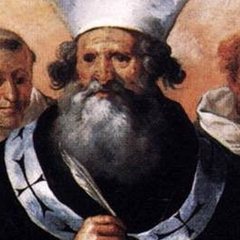 Basil the Great
 His closest friend from their student days. As archbishop, Basil made him bishop of Sasima against his will, and the friendship never fully healed. Years later Gregory gave the great speech in his memory.
Oration 43; Letters 48 to 50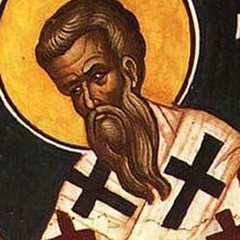 Gregory of Nyssa
 Basil's younger brother. Gregory scolded him for choosing “to be called a Professor of Rhetoric rather than of Christianity”. When Basil died, Gregory wrote to him in grief.
Letters to Gregory of Nyssa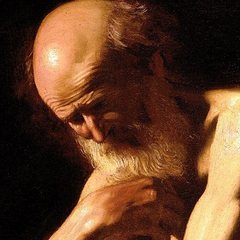 Jerome
 Studied the Scriptures with him in Constantinople, and called him “my teacher”.
Jerome, Lives of Illustrious Men, chapter 117; Letter 52His father, bishop of Nazianzus. He made his son a priest by force, and Gregory served beside him until he died in 374.
Oration 18; the 1894 editorsHis mother. She won his father to the faith. Gregory said “it was on her part a great undertaking to promise me to God before my birth”.
Oration 18, section 11His sister and brother. Caesarius was a doctor at the emperor's court. Gregory preached at both their funerals.
Orations 7 and 8A fellow student at Athens, later the emperor who tried to bring back the old gods. After Julian died, Gregory attacked him in two fierce speeches.
Oration 5The adventurer who won Gregory's trust, then had himself made bishop of Constantinople in secret, in Gregory's place.
The 1894 editors; Jerome, chapter 117A leading official, not yet baptised, chosen bishop of Constantinople when Gregory resigned. Gregory wrote to him kindly afterwards.
Catholic Encyclopedia, 1910; the 1894 editorshow he died
He died at Arianzus, where he was born, probably in 389 or 390. He had been ill for years.
No account of his death survives. The Orthodox keep 25 January as the day he died.
His will left everything he owned to a deacon named Gregory for life, and after that to the poor of Nazianzus. His 1894 editors think it is probably genuine.
His last words to Constantinople
My children, keep, I pray you, that which is committed to your trust. Remember my stonings.
Near the very end of his farewell in 381. No words from his deathbed survive.
is he a saint?
Yes. Catholics, Orthodox and Anglicans count him a saint, and Lutherans remember him too. His own generation already called him a saint, says the Orthodox Church in America.
- CatholicSaintA Doctor of the Church. 2 January, with Basil
- OrthodoxSaintThe Theologian. 25 and 30 January
- AnglicanSaintChurch of England 2 January, Episcopal Church 9 May
- LutheranRememberedMissouri Synod 10 January, ELCA 14 June
The Roman Martyrology of 1916 remembered him on 9 May. The historian Edward Gibbon, writing in 1781, praised him for something else.
At Nazianzus, the birthday of St. Gregory, bishop and doctor of the church, surnamed the Theologian, because of his remarkable knowledge of divinity. At Constantinople, he restored the Catholic faith, which was fast waning, and repressed the rising heresies.
The title of Saint has been added to his name: but the tenderness of his heart, and the elegance of his genius, reflect a more pleasing lustre on the memory of Gregory Nazianzen.
a prayer he wrote
He wrote this prayer to end his funeral speech for his brother Caesarius. He prays for his brother, and for those still living.
O Lord and Maker of all things, and specially of this our frame! O God and Father and Pilot of men who are Thine! O Lord of life and death! O Judge and Benefactor of our souls! O Maker and Transformer in due time of all things by Thy designing Word, according to the knowledge of the depth of Thy wisdom and providence! do Thou now receive Cæsarius, the firstfruits of our pilgrimage; and if he who was last is first, we bow before Thy Word, by which the universe is ruled; yet do Thou receive us also afterwards, in a time when Thou mayest be found, having ordered us in the flesh as long as is for our profit; yea, receive us, prepared and not troubled by Thy fear, not departing from Thee in our last day, nor violently borne away from things here, like souls fond of the world and the flesh, but filled with eagerness for that blessed and enduring life which is in Christ Jesus, our Lord, to Whom be glory, world without end. Amen.
what to read first
Funeral Oration on Basil the Great
Gregory of Nazianzus
His best friend's life, told by Gregory himself: their student days at Athens, and his hurt when Basil made him bishop of Sasima.
Read it freeIn Defence of His Flight to Pontus
Gregory of Nazianzus
Why he ran from being made a priest, and what caring for souls asks of a pastor. Gregory the Great built his Pastoral Rule on it.
Read it freeThe Five Theological Orations
Gregory of Nazianzus
The sermons on the Trinity that won him his name, the Theologian. Start with the first.
Read them freeHis letters to Basil
Gregory of Nazianzus
His teasing about Basil's hermitage, their quarrel over Sasima, and “Give me before all things quiet”.
Read them freetake the quizzes
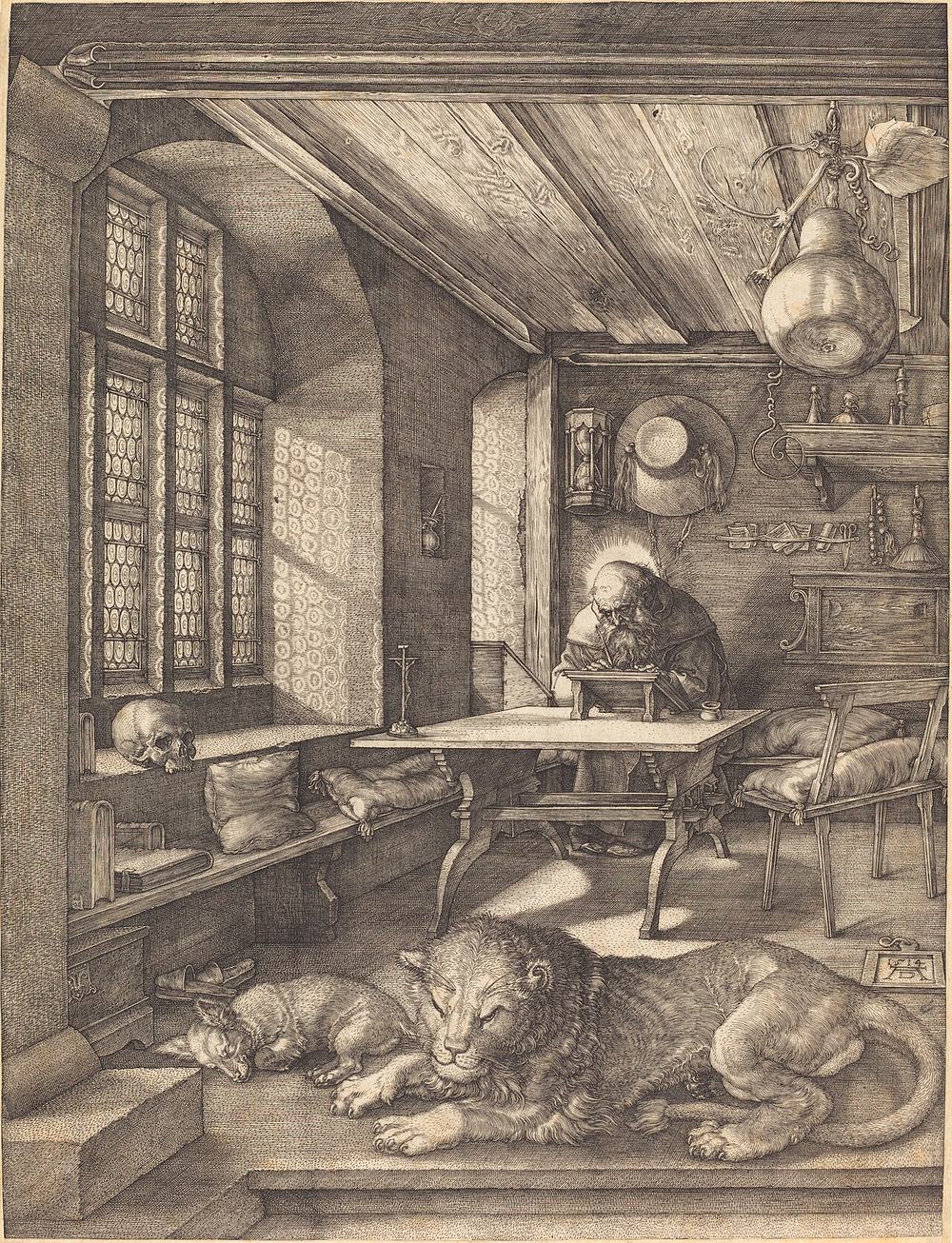 Quiz Which early Christian thinks like you? And which would argue with you? See where you stand beside Gregory. Start
  Quiz Christian Personality Test Gregory reads as The Still Water. Find your own type. Start
 people like him
 JeremiahThe Still Water
 When God called him, he pleaded that he was too young to speak. Gregory the Great says he held back out of love: he longed to stay close to God in quiet.
Jeremiah 1:6; Gregory the Great, Pastoral Rule, Book 1 Abba ArseniusThe Still Water
 A desert monk who fled the world to pray. In an old story he is seen sailing in silence, with the Spirit of God beside him.
The Sayings of the Desert Fatherssources
His life, and his words
- Gregory Nazianzen, Select Orations and Letters. Tr. Charles Gordon Browne and James Edward Swallow, 1894.
- The editors' life of Gregory, and their note on his writings. Same edition.
- Oration 5, the Second Invective against Julian. Tr. C. W. King, 1888.
- On Love of the Poor (Oration 14), in Greek, Migne's text. The line on this page is our translation.
- Oration 42, in Greek, Greek Wikisource.
- Jerome, Lives of Illustrious Men, chapter 117. Tr. E. C. Richardson, 1892.
- Jerome, Letter 52. Tr. W. H. Fremantle, 1893.
- Socrates, Church History, Book 5, chapter 7. Revised by A. C. Zenos, 1890.
- Gregory the Great, Pastoral Rule, Book 3. Tr. James Barmby, 1895.
- Edward Gibbon, The Decline and Fall of the Roman Empire, chapter 27, 1781.
- The same, chapter 23, on the speeches against Julian.
Reference
- Catholic Encyclopedia, 1910, “St. Gregory of Nazianzus”
- Catholic Encyclopedia, 1910, “Doctors of the Church”
- Britannica, “St. Gregory of Nazianzus”
- Collins English Dictionary, for how to say it
- Byzantine Catholic Archeparchy of Pittsburgh, on the Christmas greeting
- Andrei Timotin, on the Hymn to God, 2018
Calendars
- USCCB, Memorial of Saints Basil the Great and Gregory Nazianzen
- The Roman Martyrology, 1916 edition
- OCA, Saint Gregory the Theologian
- OCA, Synaxis of the Three Hierarchs
- OCA, the transfer of his relics
- Great Synaxaristes, Greek
- azbyka.ru, Russian
- Church of England, Common Worship calendar
- The Episcopal Church, Lesser Feasts and Fasts 2022
- Concordia Publishing House, LCMS commemorations
- Evangelical Lutheran Worship, ELCA, the church year
- John Paul II, letter to Patriarch Bartholomew I, 27 November 2004
Pictures
- St Gregory the Theologian, mosaic, Pammakaristos church, Istanbul, about 1310. Photo: Dumbarton Oaks, CC0.
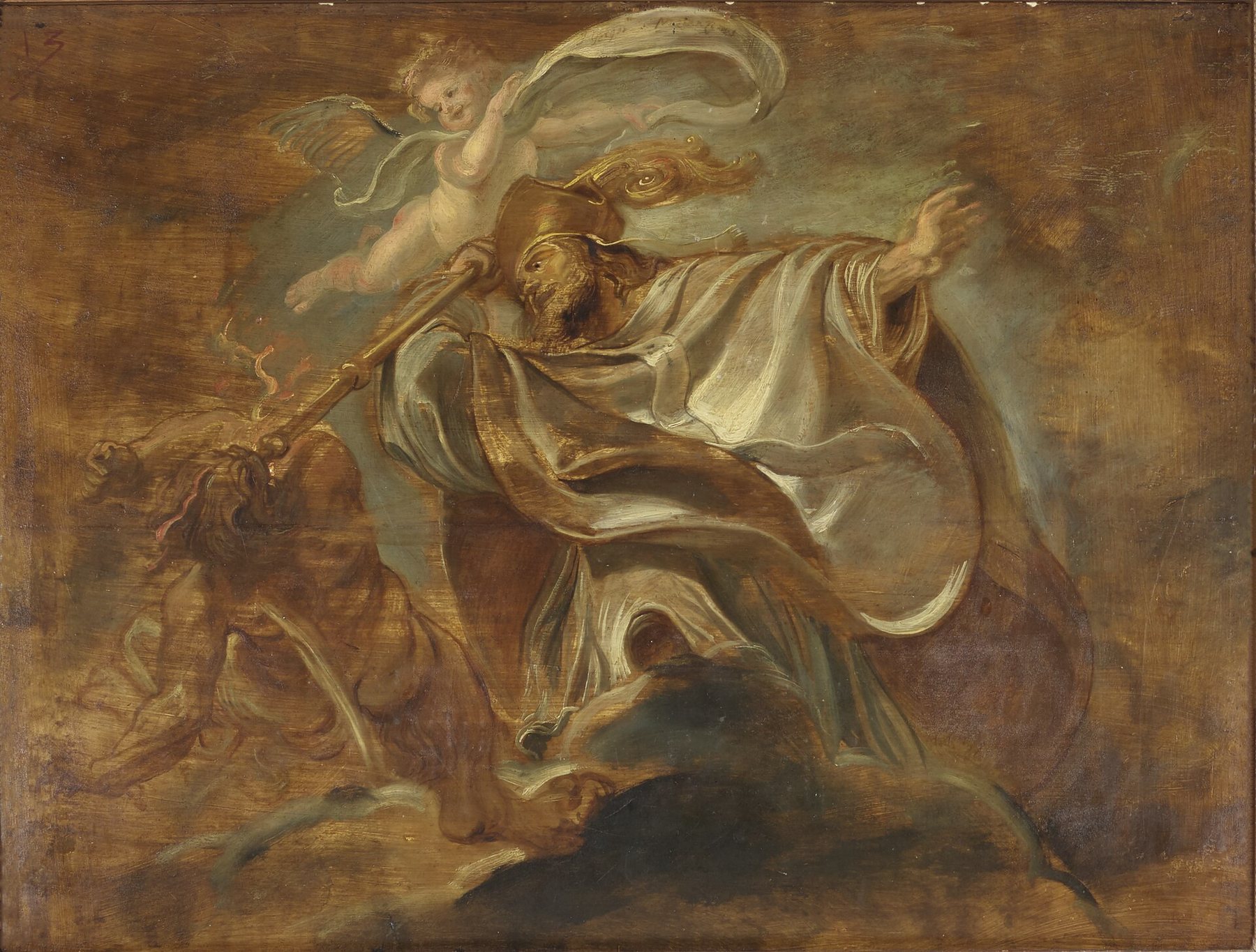
- St. Gregory of Nazianzus, Peter Paul Rubens, 1621. Buffalo AKG Art Museum. Public domain.
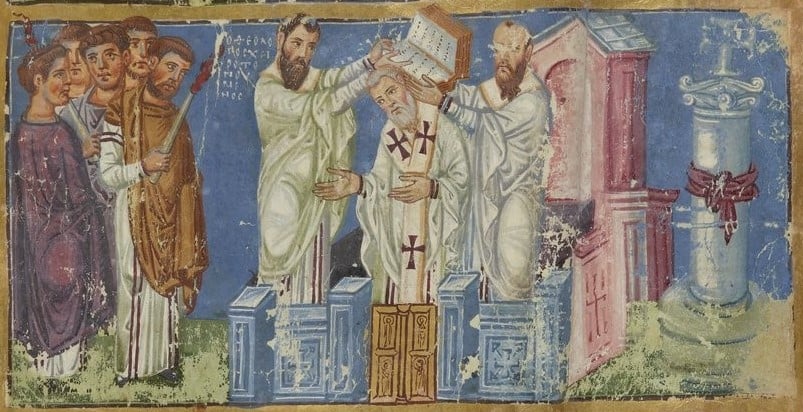
- Consécration de Grégoire de Nazianze, a miniature in his Homilies, Paris gr. 510, folio 452r, Constantinople, 879 to 883. National Library of France, Paris. Public domain.
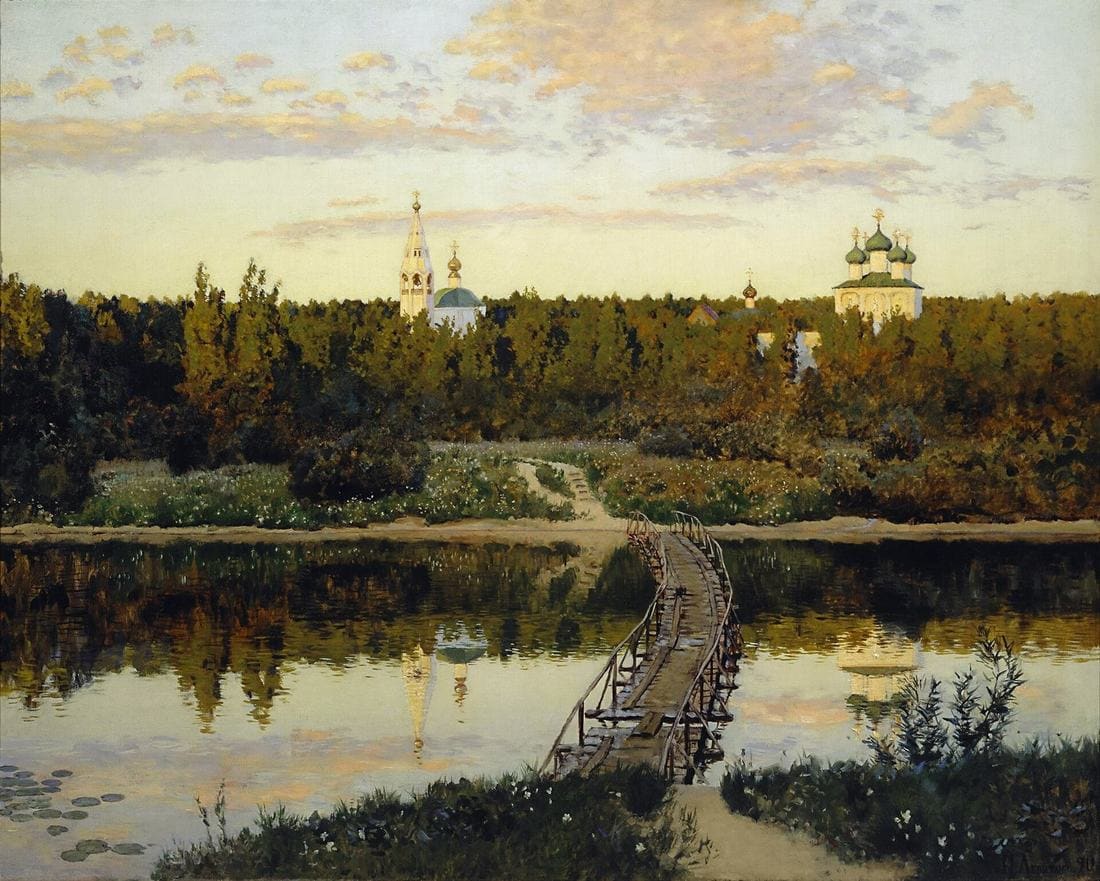
- Quiet Abode, Isaac Levitan, 1890. Public domain.