
Jerome
The scholar-monk behind the Latin Bible, and one of the fiercest letter-writers in Christian history.
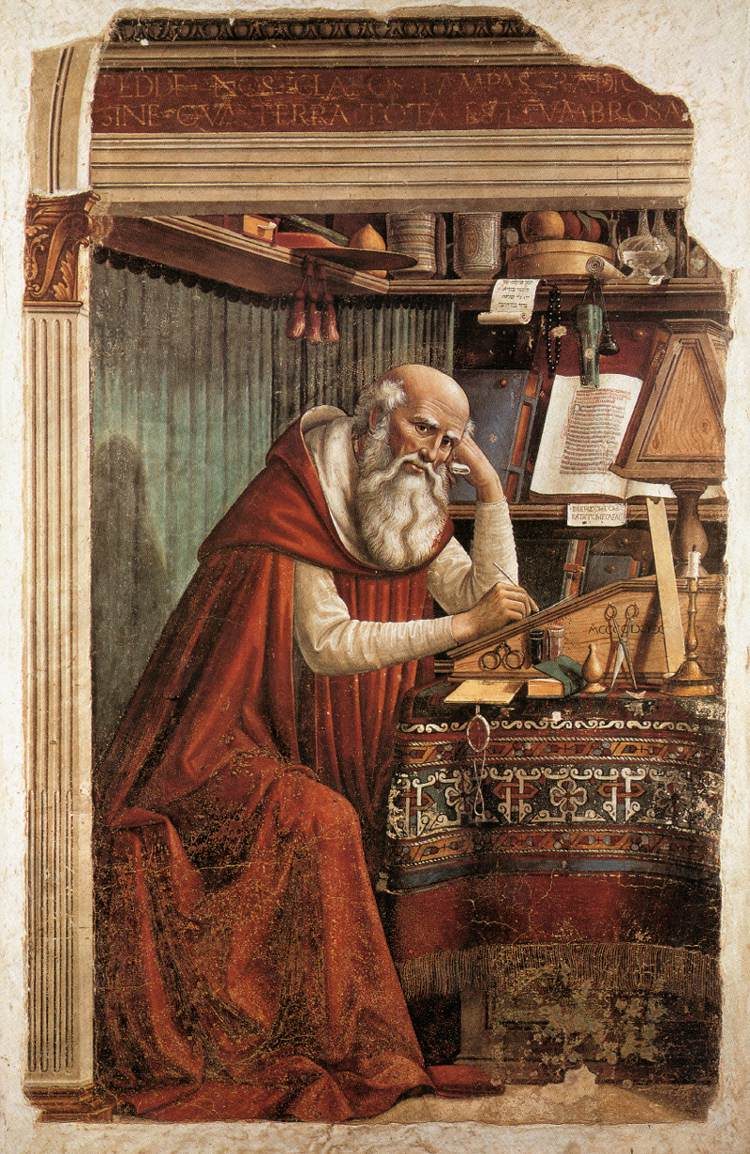
Picture: Saint Jerome in his Study, Domenico Ghirlandaio, 1480. Church of Ognissanti, Florence. Public domain. The cardinal's robes are the painter's: there were no cardinals in Jerome's day.
Who was Jerome?
Jerome was a scholar and monk. He revised the Latin Gospels for Pope Damasus, then spent 15 years at Bethlehem translating the Old Testament from Hebrew. His work lies behind the Latin Bible later called the Vulgate. He knew Latin, Greek and Hebrew. He was devout, brilliant and quick to anger, and he fought his opponents in blistering letters.
at a glance
His path, in order
- StudentIn Rome, from about 12
- HermitIn the Syrian desert
- PriestOn condition he stayed a monk
- SecretaryTo Pope Damasus, 382 to 384
- TranslatorA monk at Bethlehem, 386 to 420
in numbers
- Languages he mastered3
- Latin, Greek and Hebrew
- A guest who stayed six months at Bethlehem said no one dared compare himself with him
- Years translating the Hebrew15
- At Bethlehem, from 390 to 405
- The books of the Hebrew Bible, into Latin
- Days to translate Tobit1
- A helper read the Aramaic book aloud in Hebrew
- He dictated the Latin to a secretary
- His letters that survive120
- About 120, written over half a century
- Loved in the Renaissance, like Augustine's Confessions
- Writers in his book of lives135
- Lives of Illustrious Men, from Simon Peter on
- The last life is his own
did you know?
-
Writing to a young mother about her baby girl, he said to give her alphabet letters made of boxwood or ivory to play with, so that even her play would teach her. Old as he was, he offered to carry the child on his shoulders and teach her himself.
Letter 107, to Laeta, sections 4 and 13 -
Gutenberg's Bible of the 1450s was the Vulgate, the Latin Bible built on his work. In the 1500s the Council of Trent declared it the authentic version for the Catholic Church.
Catholic Encyclopedia, Latin Versions of the Bible -
Before he came to know Paula's household, he wrote, all Rome sang his praises. People called him holy, humble and eloquent, and almost everyone thought him worthy to be a bishop.
Letter 45, to Asella, section 3
- Born
- About 347. Older books say 340 to 345. At Stridon, a town “on the border of Dalmatia and Pannonia”. The Goths later destroyed it, and no one knows exactly where it stood. His parents were Christians and well off.
- Grew up
- At Stridon, then at school in Rome from about 12, under the grammarian Donatus. He was baptised in Rome, about 366.
- Died
- 30 September 420, at Bethlehem. His last year is believed to have been one long illness. Some sources say he died in 419.
- Buried
- At Bethlehem, near the cave of the Nativity, beside Paula and Eustochium. His body was later said to have been moved to Rome, to St Mary Major. The Orthodox Church in America says no one now knows where his relics are.
- Also called
- Eusebius Hieronymus, his Latin name. Jerome of Stridon. Blessed Jerome, in the Russian Church. The Venerable Jerome, in Greek.
- Status
- A saint to Catholics and Orthodox. For Catholics he is a Doctor of the Church. Anglicans and Lutherans remember him too.
- Patron of
- Translators, Bible scholars, librarians, students and archaeologists, says Britannica. The UN keeps his feast day, 30 September, as International Translation Day.
- In art
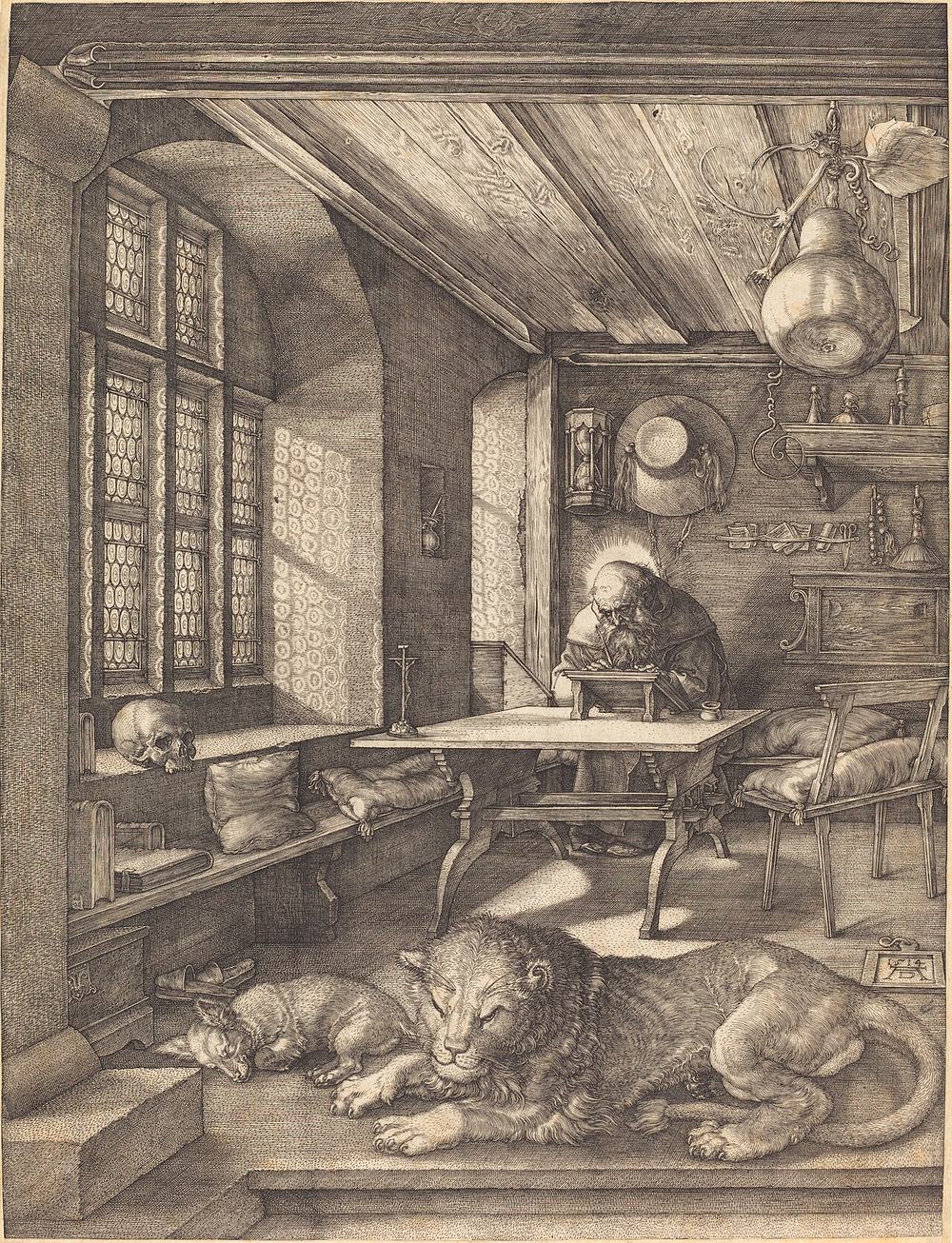
- With a lion at his side. In a cardinal's red hat and robes, or with the hat at his feet. Or kneeling in the wilderness, beating his breast with a stone.
- Wrote
- Most of the Latin Bible later called the Vulgate. Also commentaries on the prophets and on other books of the Bible, the lives of three hermits, 135 short lives of Christian writers, fierce answers to his opponents, and about 120 letters that survive.
- Pronounced
- juh-ROHM, or JERR-um. His Latin name, Hieronymus, is hy-uh-RON-uh-mus.
 The Forge
 His personality type
Serious by nature, and at his best when there is something to do.
In Gregory the Great's terms
- Serious
- Restless mind
Our reading, from the Christian Personality Test. Serious here means he took everything to heart, grief and argument alike. Restless fits a man who, a visitor said, never stopped reading and writing.
See The Forgefeast days
East and West, side by side
West
- May9
In the 1916 Roman Martyrology: his body moved from Bethlehem to St Mary Major in Rome.
- Sep30
Catholic memorial. Also the Church of England (a Commemoration), the Episcopal Church, and Lutherans in the Missouri Synod and the ELCA.
East
- Jun15
OCA and Greek churches. The Greek calendar gives the same day to the prophet Amos and to Augustine. The Russian Church keeps 15 June on the old calendar: that is 28 June on today's calendar.
The West keeps 30 September, the day he died. Churches on the old calendar keep each date 13 days later, so 15 June falls on 28 June.
what was he like?
+a fighter, and said so
In a war of words, he wrote, “I stand in the thick of the fray, my life in constant danger.” He owned his temper: “I will frankly admit that my indignation overpowers me.” He gave his opponents nicknames. Vigilantius, whose name means Wakeful, became Dormitantius, the Sleepy one.
Letter 48, section 13; Letter 109, section 3; Against Vigilantius, section 1+never without a book
A visitor who stayed with him for six months said, “he takes no rest day or night; he is perpetually either reading or writing something.” He wrote so often to Paula and her daughter that he could not count the letters, “for I write daily”.
Sulpicius Severus, Dialogues, Dialogue I, chapter 9; Lives of Illustrious Men, chapter 135+not for sale
When Rome turned against him, he asked, “Have I taken any one's money? Have I not disdained all gifts, whether small or great?” The Episcopal Church's calendar book, which is frank about his faults, says he never sought high office in the Church.
Letter 45, section 2; Lesser Feasts and Fasts 2022+tender in grief
His old friend Heliodorus lost his nephew Nepotian, a young priest Jerome loved. Jerome wrote, “my eyes fill with tears, my grief returns, and I can think of nothing but his death.”
Letter 60, section 1+funny about himself
He could laugh at his own old face: “my head is gray, my brow is furrowed, a dewlap like that of an ox hangs from my chin”. Grey and bald, he still dreamed he was a curly-haired schoolboy about to make a speech, “and, when I wake, I congratulate myself on escaping the peril of making a speech.”
Letter 52, section 1; Apology against Rufinus, Book 1, section 30what others said of him
People argued about him. Friend and foe agreed he was brilliant.
The heretics hate him, because he never desists from attacking them; the clerics hate him, because he assails their life and crimes. But beyond doubt, all the good admire and love him.
…we bless God that to yourself, to us, to all who read your works, He has given you as you are.
Jerome, the Teacher of the Catholics, whose writings shine like divine lamps throughout the whole world…
A certain Jerome, a priest, distinguished Latin writer and cultivated scholar as he was, showed qualities of temper so disastrous that they threw into the shade his splendid achievements.
his life in eight moments
Stridon and Rome
A boyA student in Rome
As a small boy at home, he said, he had to be “dragged like a captive from my grandmother's lap” to his lessons. At about 12 he went on to school in Rome, under the grammarian Donatus. There he built up a library “with great care and toil”, and there he was baptised, about 366.
Apology against Rufinus, Book 1, section 30; Letter 22, section 30; BritannicaAntioch
About 375The dream
He could not give up his pagan books. He would fast, he said, “only that I might afterwards read Cicero.” Then in Lent he fell ill with a fever, and they began to prepare his funeral. He saw himself dragged before the Judge. Asked who he was, he said, “I am a Christian.” The answer came: “Thou liest, thou art a follower of Cicero and not of Christ.” He was flogged, and he swore never again to read pagan books. He insisted “this was no sleep nor idle dream”, for he woke with his shoulders “black and blue”. Years later his old friend Rufinus called him a perjurer for still quoting the classics. Jerome answered that his oath was “a promise for the future, not the abolition of my memory of the past”.
Letter 22, section 30; Apology against Rufinus, Book 1, section 30Desert of Chalcis, Syria
The mid-370sAlone in the desert
He went to live as a hermit in the Syrian desert, burnt by the sun and half starved. His mind still went back to Rome: “I often found myself amid bevies of girls.” Years later he told it plainly to a young woman: “I do not blush to avow my abject misery.” To tame his thoughts, he asked a monk who had been a Jew to teach him Hebrew. After Cicero's smooth Latin, he had to learn to say “words both harsh and guttural”. Long after, he wrote, “I thank the Lord that from this seed of learning sown in bitterness I now cull sweet fruits.”
Letter 22, section 7; Letter 125, section 12Antioch
378 or 379A priest, on his terms
Bishop Paulinus of Antioch wanted to ordain him. Jerome agreed only if he could stay a monk. “Did I ask to be ordained by you?” he told the bishop. He was made a priest, and he lived as a monk to the end.
Against John of Jerusalem, section 41Rome
382 to 385The Pope's secretary
Pope Damasus used him to answer letters from councils East and West, and set him to revise the Latin Gospels. Jerome taught the Bible and Hebrew to a circle of Roman women, Marcella and Paula among them. Then Paula's daughter Blaesilla died of a fever. She was twenty. At her funeral, people in the crowd whispered that fasting had killed her, and blamed the monks: “Why do we not stone them or hurl them into the Tiber?” Damasus died in December 384. People called Jerome “an infamous turncoat, a slippery knave”, and gossip linked him with Paula. His only crime, he wrote, was being a man: “my sex is my one crime”. In August 385 he sailed for the East.
Letter 123, section 10; Letter 39, section 6; Letter 45, sections 2 and 6Bethlehem
386Settling at Bethlehem
He settled at Bethlehem with Paula and her daughter Eustochium. Paula built a monastery for men, which Jerome led. She also built convents for women and a house for pilgrims. Apart from short journeys, he lived there for his last 34 years. His great work was done there.
Britannica; Letter 108Bethlehem
410Rome falls
News came that Alaric's Goths had taken Rome. He wrote, “My voice sticks in my throat; and, as I dictate, sobs choke my utterance.” Soldiers beat his old friend Marcella for gold she did not have, and she died a few days later. Then refugees poured into Bethlehem. He put aside his commentary on Ezekiel to look after them: “the quiet of the monastery has been changed into the bustle of a guest house”.
Letter 127, sections 12 to 14; Commentary on Ezekiel, prefaces to Books 3 and 7Bethlehem
About 416Fire at the monastery
Supporters of Pelagius, whose teaching Jerome had attacked, raided the Bethlehem monasteries. Augustine reports what he heard: they beat the monks and nuns, killed a deacon and burned the buildings. Jerome escaped “in the shelter of a well-defended fortress”.
Augustine, On the Proceedings of Pelagius, chapter 66
the bible he translated
The Latin Bible later called the Vulgate is mostly his work. He worked on it, on and off, from 382 to 405.
Back to the Hebrew
In 382 Pope Damasus set him to revise the Latin Gospels, and he finished them about 383. Next he revised parts of the Old Testament from the Greek, the old translation the Church used. Then he decided the Greek was not good enough and went back to the Hebrew. He worked through it at Bethlehem, from 390 to 405.
Britannica, Vulgate; Catholic Encyclopedia, Latin Versions of the BibleLessons by night
At Jerusalem and Bethlehem he paid a Jewish teacher of Hebrew, Baraninas, who came only after dark, like Nicodemus, for fear of other Jews. For the book of Tobit, written in Aramaic, he found a man who knew both Aramaic and Hebrew. He called the result “one day's hasty labour”.
“What trouble and expense it cost me to get Baraninas to teach me under cover of night.”Letter 84, section 3; his preface to Tobit
The ivy uproar
At Oea, in North Africa, a bishop read out Jerome's new translation of Jonah in church. Where the old Latin had Jonah sit under a gourd, Jerome had put ivy. The people made such an uproar that the bishop changed it back. Augustine told Jerome, who replied that the Hebrew named neither plant. He had put ivy, he said, “that I might not differ from all other translators”.
“The man was compelled to correct your version in that passage as if it had been falsely translated, as he desired not to be left without a congregation—a calamity which he narrowly escaped.”Augustine, Letter 71, section 5; Jerome, Letter 75, section 22
What became of it
His translation was not taken up at once. From the middle of the 500s, whole Bibles built on his work came into common use. W. H. Fremantle, who translated his writings in 1893, called it “the Bible of the Middle Ages”.
Britannica, Vulgate; Fremantle's introduction to Jerome's works, 1893A line still quoted
At the start of his commentary on Isaiah he wrote: ignoratio Scripturarum, ignoratio Christi est. In plain English, not to know the Scriptures is not to know Christ. Pope Leo XIII quoted it in 1893, in his letter on the study of Scripture.
Commentary on Isaiah, prologue, in Latin; Leo XIII, Providentissimus Deushis words
All from his own letters and books, in W. H. Fremantle's translation of 1893.
When Rome fell, 410
The City which had taken the whole world was itself taken.
Written at Bethlehem, on hearing that the Goths had taken Rome. In Latin, Capitur Urbs, quae totum cepit orbem.
Letter 127, to Principia, section 12Always have some work on hand, that the devil may find you busy.
The art of interpreting the scriptures is the only one of which all men everywhere claim to be masters.
Of two imperfect things holy rusticity is better than sinful eloquence.
Almost all bodily excellences alter with age, and while wisdom alone increases all things else decay.
When the stomach is full, it is easy to talk of fasting.
What is praiseworthy is not to have been at Jerusalem but to have lived a good life while there.
The scars of others should teach us caution.
I beseech you, reader, whoever you may be, to remember Jerome the sinner. He, if God would give him his choice, would much sooner take Paul's tunic with his merits, than the purple of kings with their punishment.
often misquoted
He pulled a thorn from a lion's paw, and the lion stayed on at his monastery.
What the sources sayA legend that grew up after his death. W. H. Fremantle, who translated his writings in 1893, thought his descriptions of desert life gave rise to it. The art historian Anna Jameson thought the lion came first, as a sign of his fiery nature, with “the legend invented to explain the symbol”.
Fremantle, 1893; Jameson, Sacred and Legendary Art, 1870He was a cardinal. That is why painters give him the red hat and robes.
What the sources sayThere were no cardinals in his day. He was a priest, and for a few years a pope's secretary. As the art historian Anna Jameson put it in 1870, “there is no historical authority for making St. Jerome a cardinal”.
Jameson, Sacred and Legendary Art; Letter 123, section 10“Good, better, best, never let it rest, til your good is better, and your better best.”
What the sources sayA fact-checker searched his works in English and found nothing like it. The rhyme was in print by 1897, with no link to him. It seems to have been pinned on him only in this century.
Fauxtations, 2016He made up the saying about looking a gift horse in the mouth.
What the sources sayHe used it, but as a proverb everyone knew: ut vulgare proverbium est. His Latin, in the preface to his commentary on Ephesians, is equi dentes inspicere donati, to inspect the teeth of a horse given as a gift.
Commentary on Ephesians, preface, in LatinHe translated the whole Latin Bible himself.
What the sources sayHe revised the Gospels and translated most of the Old Testament from Hebrew. The rest of the New Testament came from older Latin versions, which he may have lightly revised. Some books found only in the Greek Old Testament also came in from the older Latin.
Britannica, Vulgate; Catholic Encyclopedia, Latin Versions of the Bible“Vulgate” means the Bible in the language of the common people.
What the sources sayThe name comes from editio vulgata, the “common version”. The Catholic Encyclopedia says the name marks its common use. Until the 600s the same name belonged to the older Latin Bible. The name was firmly fixed to his translation only in the 1200s.
Britannica, Vulgate; Catholic Encyclopedia, Latin Versions of the Biblehard questions
Parts of what he wrote are hard to read today. Here they are, in his own words and his critics'.
Marriage and virginity
He put virginity far above marriage, and said so bluntly: “I praise wedlock, I praise marriage, but it is because they give me virgins.” On Paul's words he wrote, “If it is good not to touch a woman, it is bad to touch one.” His friends in Rome thought his book against Jovinian went too far. One of them, Pammachius, pulled copies of it, and Jerome admitted people called him excessive “in depreciation of marriage”. He answered that Paul laid down a rule, while he himself only asked a question: “He defines a dogma, I hazard an inquiry.” The Catholic Encyclopedia of 1910 says his hard words on marriage were criticised in his own day, and that he “has given no satisfactory explanation” for them.
Letter 22, section 20; Against Jovinian, Book 1, section 7; Letters 48 and 49; Catholic EncyclopediaPaula
Palladius, a friend of Jerome's enemy Rufinus, wrote that Paula “was able to surpass all”, but that Jerome “hindered her by his jealousy”. The Episcopal Church's calendar sees it the other way: Paula and her daughter were his colleagues, and without them there would be no Vulgate.
Palladius, Lausiac History, chapter 41; Lesser Feasts and Fasts 2022, Paula and EustochiumHard in grief and in argument
When Blaesilla died, he told her weeping mother, “Yours are detestable tears, sacrilegious tears, unbelieving tears.” He held that “there is no cruelty in regard for God's honour.” He defended his way of debating: in a war of words, he wrote, “one argues as one pleases, saying one thing while one means another.” The Episcopal Church's calendar book names his short temper, his pride in his learning and his extreme promotion of self-denial. It adds that he was at times candid about his failings.
Letter 39, section 6; Letter 109, section 3; Letter 48, section 13; Lesser Feasts and Fasts 2022On the Jews
He learned his Hebrew from Jewish teachers, and defended doing so: “can anyone find fault with me for having had a Jew as a teacher?” In the same passage he wrote, “If it is expedient to hate any men and to loath any race, I have a strange dislike to those of the circumcision. For up to the present day they persecute our Lord Jesus Christ in the synagogues of Satan.” The Jewish Encyclopedia of 1904 gives both sides. Its article on him is by the scholars Crawford Howell Toy and Samuel Krauss. It says he went on studying with Jews through his years in Palestine. No other Church Father, it says, passes on so many Jewish traditions so faithfully. Then it says: “Jerome was no friend to the Jews, although he owed them much.” He scolded and cursed them, it adds, and he “even uses against them both the books that he has cunningly obtained from them and the knowledge he has derived therefrom”.
Letter 84, section 3; Jewish Encyclopedia (1904), volume 7, article on Jerome by Crawford Howell Toy and Samuel Krausswhere he stood
Each line is his own. The line on riches is our translation of his Latin: he calls it a common saying and agrees with it. The line on family he wrote as a young man. Years later he said he had “decked it out a good deal with the flourishes of the schools”. TapClick “Show his line” to read it.
Your answers are next to his. From your result on . See your result
“A good hearty laugh is good for the soul.”
Jerome disagrees.
You
Show his line
Leave to worldlings the privileges of laughing and being laughed at. One who is in your position ought to be serious.Letter to Demetrias, section 13
“Most of the time, it's better to say less.”
Jerome agrees.
You
Show his line
You love silence, meekness, privacy; he takes delight in talking and effrontery, in squares, and streets, and apothecaries' shops.Letter to Nepotian, section 5
“Wisdom is worth learning from anyone, even people who don't share your faith.”
Jerome strongly agrees.
You
Show his line
Is it surprising that I too, admiring the fairness of her form and the grace of her eloquence, desire to make that secular wisdom which is my captive and my handmaid, a matron of the true Israel?Letter to Magnus, section 2
“Anger at real wrongdoing can be a good thing.”
Jerome agrees.
You
Show his line
I will frankly admit that my indignation overpowers me; I cannot listen with patience to such sacrilegious opinions.Letter to Riparius, section 3
“If you had to choose, you'd grow closer to God alone in quiet than among other people.”
Jerome agrees.
You
Show his line
Do I condemn a solitary life? By no means: in fact I have often commended it.Letter to Rusticus, section 9
“There's nothing wrong with being rich, as long as you use it well.”
Jerome disagrees.
You
Show his line
So that common saying seems to me most true: a rich man is either unrighteous or the heir of an unrighteous man.Letter to Hedibia, answer to her first question. Our translation
“If someone you know is doing wrong, it's your job to tell them.”
Jerome strongly agrees.
You
Show his line
If an apostle or a prophet, themselves immaculate, could speak thus with a clemency embracing all, how much more earnestly should a sinner like me plead with a sinner like you.Letter to Sabinianus, section 1
“Even if you believe you'll see them again, it's right to weep openly for someone you've lost.”
Jerome disagrees.
You
Show his line
Yours are detestable tears, sacrilegious tears, unbelieving tears; for they know no limits, and bring you to the verge of death.Letter to Paula on the death of Blaesilla, section 6
“Nature can teach you as much about God as the Bible can.”
Jerome disagrees.
You
On record in the Commentary on Isaiah. Not quoted here.
“The best way to live is free of strong emotions, with only a steady peace inside.”
Jerome strongly disagrees.
You
On record in Letter to Ctesiphon. Not quoted here.
“Your body is a friend to look after, not an enemy to fight.”
Jerome strongly disagrees.
You
Show his line
We do not expect that it will be so with us, but we look for increased vigour of soul which becomes stronger as the flesh grows weaker.Letter to Furia, section 10
“Miracles still happen today, just as they did in the Bible.”
Jerome agrees.
You
Show his line
Some may wonder at the miracles he worked, or his incredible fasting, knowledge, and humility. Nothing so astonishes me as his power to tread under foot honour and glory.Life of Hilarion, section 30
“Some questions about God are better left alone.”
Jerome disagrees.
You
On record in Letter to Paulinus of Nola. Not quoted here.
“If you believe God is calling you, follow, even if your family begs you not to.”
Jerome strongly agrees.
You
Show his line
Should your father prostrate himself on the threshold, trample him under foot and go your way.Letter to Heliodorus, section 2
“A church should keep out people who openly live in serious wrongdoing.”
Jerome disagrees.
You
Show his line
As in the ark there were all kinds of animals, so also in the Church there are men of all races and characters.Dialogue against the Luciferians, section 22
“Becoming a better person is mostly down to your own effort.”
Jerome strongly disagrees.
You
Show his line
To will and to run are mine, but they will cease to be mine unless God brings me His continual aid.Letter to Ctesiphon, section 6
“In the end, God will save everyone.”
Jerome strongly disagrees.
You
Show his line
Let us not wait for the repentance of the devil; for this is a vain anticipation and one that will drag us into the deep of hell. Life must be sought or lost here.Letter to Pammachius and Oceanus, section 6
See where you stand beside him. Take the quiz
friends, family and rivals
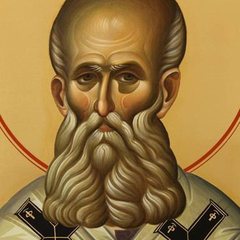 Gregory of Nazianzus
 His teacher at Constantinople. Jerome once asked him to explain a hard phrase in Luke, the second-first Sabbath. Gregory joked that he would do it in church, “and there, when all the people applaud me, you will be forced against your will to know what you do not know at all.”
Letter 52, section 8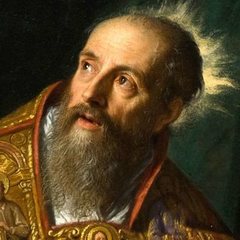 Augustine of Hippo
 Augustine and Jerome wrote to each other from about 394 to 419 and never met. The early letters were sharp. Jerome told the younger man, “do not because you are young challenge a veteran in the field of Scripture”, and added, “The tired ox treads with a firmer step.” The last letters were warm: “You are renowned throughout the whole world.”
Augustine's Letters 68, 195 and 202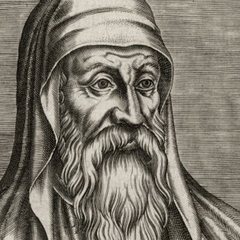 Origen
 Jerome admired and translated him, and called him “our Christian man of brass, or, rather, man of adamant”. Then Jerome turned against his teaching. Later he said, “I have praised the commentator but not the theologian.”
Letter 33, section 3; Letter 84, section 2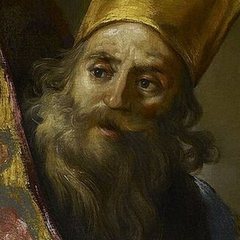 Ambrose of Milan
 Jerome mocked a Latin book on the Holy Spirit as “flaccid and soft, sleek and pretty”, without naming its author. Rufinus said the target was Ambrose.
Rufinus, Apology against Jerome, Book 2A Roman noblewoman who followed him to Bethlehem and built its monasteries. She learned Hebrew so well that “she could chant the psalms in Hebrew”. His tribute to her is Letter 108. She died in 404.
Letter 108, section 27; Lesser Feasts and Fasts 2022Paula's daughter. His famous Letter 22, on virginity, was written to her. She led the convent after her mother, and died about 418. Her death, he wrote, wore him down.
Letter 22; Augustine, Letter 202A Roman widow who studied the Bible with him. She would not take his answers on trust, “but on the contrary would dispute them; not, however, for argument's sake but to learn the answers”. After he left Rome, people went to her to settle questions on Scripture.
Letter 127, section 7His brother, twenty years younger. He sailed east with Jerome in 385. In 394 Bishop Epiphanius made him a priest to serve the Bethlehem monks, against his will. Epiphanius told his deacons “to seize him and to stop his mouth”.
Fremantle, 1893; Epiphanius, in Jerome's Letter 51, section 1His closest friend when young. Jerome once wrote to him, “The friendship which can cease has never been real.” They fell out over Origen and attacked each other in books for years. Augustine asked, “where is the friend who may not be feared as possibly a future enemy, if the breach that we deplore could arise between Jerome and Rufinus?”
Letter 3, section 6; Augustine, Letter 73, section 6how he died
He died at Bethlehem on 30 September 420, old and ill, after 34 years there.
His last known letter, of 419, went to Augustine and his friend Alypius. Eustochium had died not long before. He wrote, “I have suffered so much through the attacks of disease, and through the falling asleep of your distinguished and holy daughter Eustochium.”
His eyes were failing years before he died. Even by day he could not make out the small letters of his Hebrew books, and he needed his fellow monks to read him the Greek commentaries. He wrote that he shared “the suffering of the saintly Isaac”, who went blind in old age.
His last year is believed to have been one long illness. He was nursed by the younger Paula, his friend Paula's granddaughter, and by Melania, who had come to Bethlehem with her husband. No one who was there wrote down how he died, and no last words are recorded. He was buried at Bethlehem, beside Paula and Eustochium.
To Augustine and Alypius, in his last known letter
I call God to witness that, if it were possible, I would take the wings of a dove and fly to be folded in your embrace.
He and Augustine had begun as sparring partners and ended as friends.
is he a saint?
Yes. Catholics and Orthodox count him a saint, and Anglicans and Lutherans remember him too.
- CatholicSaintA Doctor of the Church. Memorial on 30 September
- OrthodoxSaint15 June. Blessed Jerome in the Russian Church
- AnglicanRememberedA Commemoration in the Church of England, 30 September
- LutheranRememberedMissouri Synod and ELCA, 30 September
For Catholics he is one of the four great Latin Doctors of the Church, with Ambrose, Augustine and Gregory the Great. In 1298 Pope Boniface VIII ordered the feasts of all four kept across the whole Church.
The Russian Church calls him Blessed Jerome, a title it also gives Augustine. The same Russian calendar also calls him Venerable, and a saint. The Greek calendar calls him the Venerable Jerome.
The 1916 Roman Martyrology gives him this entry:
…the decease of St. Jerome, priest and Doctor of the Church, who, excelling in all kinds of learning, imitated the life of the most approved monks, and disposed of many monstrous heresies with the sword of his doctrine. Having at length reached a very advanced age, he rested in peace, and was buried near the manger of our Lord.
what to read first
Letter 22, to Eustochium
Jerome
His famous letter of 384, telling of his time in the desert and his dream of standing before the Judge. It is strict, and sometimes harsh about marriage: read it knowing that.
Read it freeLetter 125, to Rusticus
Jerome
An old monk's advice to a young one, with the story of how he learned Hebrew.
Read it freeThe Life of Paul the First Hermit
Jerome
An early book, written in the desert. Short, strange and vivid.
Read it freeHis letters with Augustine
Jerome and Augustine
Two great minds, sparring at first, then friends.
Read them freetake the quizzes
 Quiz Which early Christian thinks like you? And which would argue with you? See where you stand beside Jerome. Start
  Quiz Christian Personality Test Jerome reads as The Forge. Find your own type. Start
 people like him
 John ChrysostomThe Forge
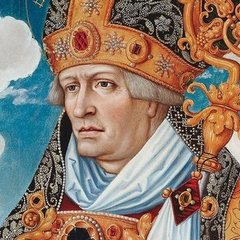
 A friend from his youth called him irritable, and an admiring historian says it was his nature to rebuke wrongdoing. He preached so hard against the powerful that he died in exile.
Socrates and Sozomen, Church Histories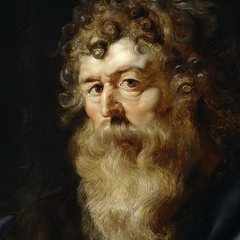 PaulThe Forge
 When the church in Jerusalem was still afraid of Saul, later called Paul, Barnabas brought him to the apostles. Later the two fell out over young Mark, who had once left them. Barnabas wanted to give him a second chance. Paul would not. “Their disagreement was so sharp that they parted company.” Years later Paul wrote, “Get Mark and bring him with you, because he is useful to me in the ministry.”
Acts 9:27; 15:36-40; 2 Timothy 4:11sources
His life, and his words
- Jerome, Letters and Select Works. Nicene and Post-Nicene Fathers, second series, vol. 6. Tr. W. H. Fremantle, with G. Lewis and W. G. Martley, 1893. With Fremantle's introduction.
- Jerome, Lives of Illustrious Men, and the Apologies of Rufinus and Jerome. Same series, vol. 3, 1892.
- Augustine, Letters, with Jerome's letters to him. Tr. J. G. Cunningham.
- Augustine, On the Proceedings of Pelagius, chapter 66
- Sulpicius Severus, Dialogues. Tr. Alexander Roberts, 1894.
- John Cassian, On the Incarnation of the Lord. Tr. Edgar Gibson, 1894.
- Palladius, The Lausiac History. Tr. W. K. Lowther Clarke, 1918.
- Migne, Patrologia Latina 22, the Latin of his letters
- Migne, Patrologia Latina 26, the Latin of the commentary on Ephesians
- Commentary on Isaiah, prologue, Latin, Wikisource
- Leo XIII, Providentissimus Deus, 1893
Reference
- Catholic Encyclopedia, 1910, “St. Jerome”
- Catholic Encyclopedia, 1910, “Latin Versions of the Bible”
- Catholic Encyclopedia, 1910, “Doctors of the Church”
- Britannica, “St. Jerome”
- Britannica, “Vulgate”
- Anna Jameson, Sacred and Legendary Art, vol. 1, 1870 edition
- Les Enluminures, textmanuscripts.com, on the letters of pseudo-Eusebius, citing Rice, Saint Jerome in the Renaissance, 1985
- Fauxtations, “Good, better, best”, 2016
- United Nations, International Translation Day
- Merriam-Webster, “Jerome”, for how to say it
Calendars
- USCCB, Memorial of Saint Jerome, Priest and Doctor of the Church
- The Roman Martyrology, 1916 edition, 9 May and 30 September
- OCA, Saint Jerome (Hieronymus) of Stridon
- saint.gr, Greek
- azbyka.ru, Russian
- Church of England, Common Worship calendar
- The Episcopal Church, Lesser Feasts and Fasts 2022
- LCMS, Commemorations
- Evangelical Lutheran Worship (ELCA), The Church Year, 2006
- Grand Canyon Synod of the ELCA, For What Shall We Pray?
Pictures
- Saint Jerome as Scholar, El Greco, about 1610. The Metropolitan Museum of Art, New York. Public domain.
- Saint Jerome praying before the crucifix, Venetian-Cretan icon, 15th century. Museo nazionale di Ravenna. Photo: Sailko. Public domain.
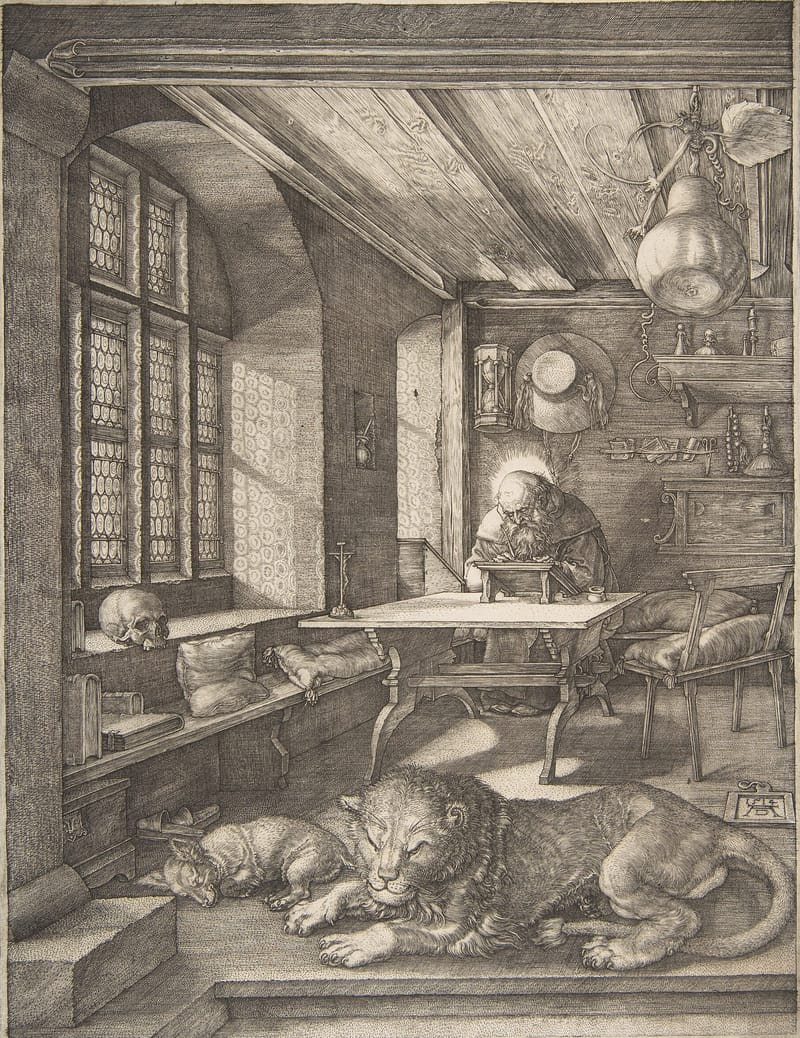
- Saint Jerome in His Study, Albrecht Dürer, engraving, 1514. The Metropolitan Museum of Art, New York. CC0.