
Paul
He hunted the first Christians until a light stopped him on the road to Damascus. Then he carried the faith across the Roman world.
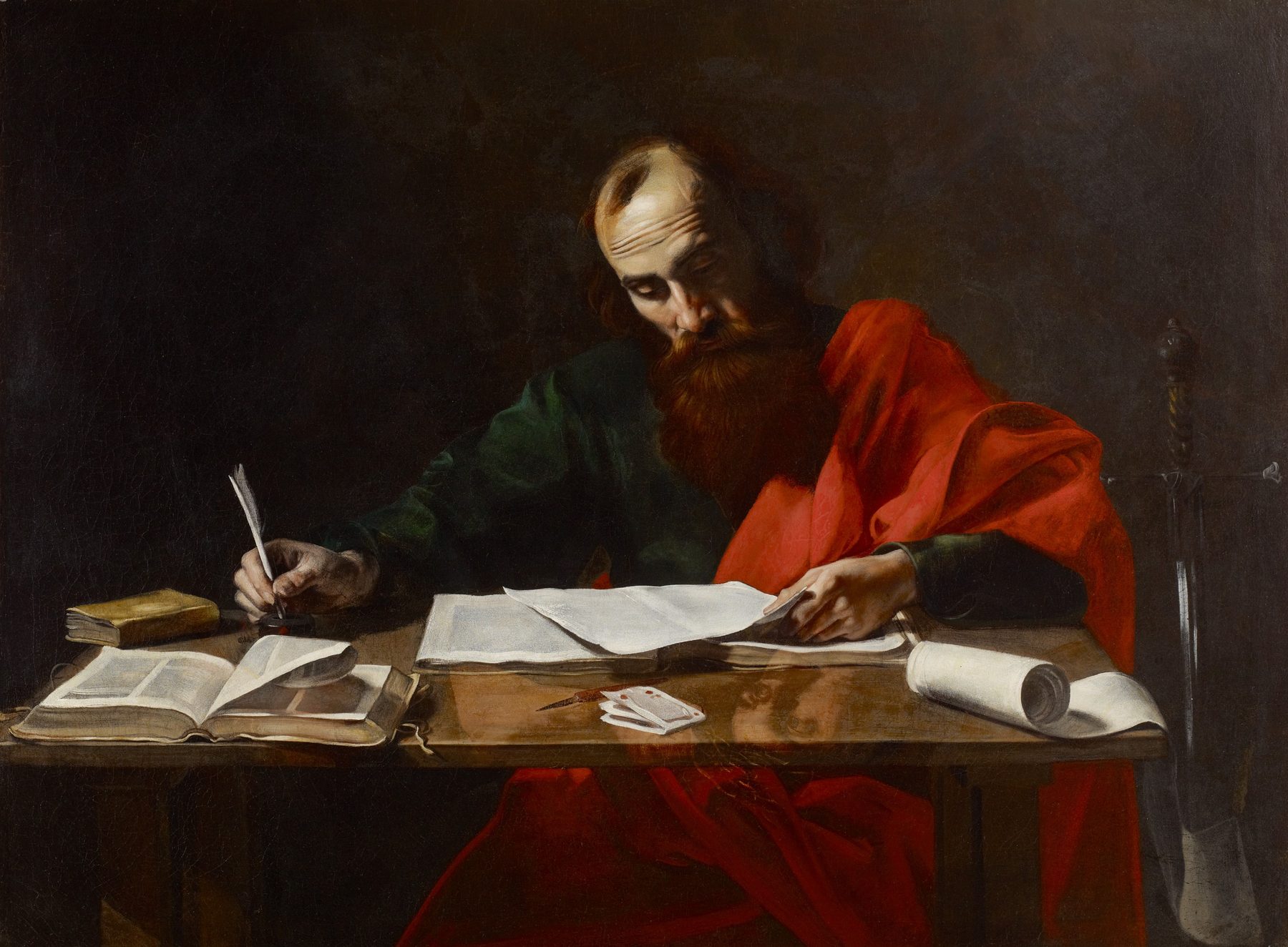
Picture: Saint Paul Writing His Epistles, attributed to Valentin de Boulogne, about 1618 to 1620. Museum of Fine Arts, Houston. Public domain.
Who was Paul?
Paul, first called Saul, was a Jew from Tarsus, a Pharisee and a Roman citizen. He hunted the first Christians until the risen Jesus stopped him on the road to Damascus. Then he became the apostle to the Gentiles, and took the faith across the Roman world. He died a martyr at Rome under Nero.
at a glance
His path, in order
- PhariseeTaught at the feet of Gamaliel
- PersecutorOf the church in Jerusalem
- ApostleCalled on the road to Damascus
- MissionaryFrom Cyprus to Greece
- PrisonerIn Caesarea, then in Rome
- MartyrAt Rome, under Nero
in numbers
- Lashes, five times over39
- “the forty lashes minus one”
- Five times, by his own count
- Shipwrecks, by his own count3
- “three times I was shipwrecked”
- He wrote this before the wreck off Malta
- Soldiers sent to guard him470
- 200 soldiers, 70 horsemen and 200 spearmen
- More than 40 men had sworn to kill him
- On board when his ship ran aground off Malta276
- Soldiers, prisoners and crew
- Every one reached land safely
- Letters under his name13
- Nearly half the books of the New Testament
- Seven are accepted as his by nearly all scholars
did you know?
-
The saying about scales falling from someone's eyes comes from his story. As a disciple named Ananias laid his hands on him in Damascus, “something like scales fell from Saul's eyes”.
Acts 9:17-18 -
He quotes words of Jesus that are in none of the four Gospels: “It is more blessed to give than to receive.”
Acts 20:35 -
He quoted Greek poets. The Bible scholar Jerome names three: Epimenides on the Cretans, Menander for “Bad company corrupts good character”, and Aratus for “We are His offspring”.
Jerome, Letter 70; Titus 1:12; 1 Corinthians 15:33; Acts 17:28
- Born
- At Tarsus in Cilicia, in today's Turkey, “a citizen of no ordinary city”. No one recorded the year. The Bible scholar Jerome says the family came to Tarsus from Gischala, in the Holy Land.
- Family
- Of the tribe of Benjamin, “a Hebrew of Hebrews”. A Pharisee, “the son of a Pharisee”. A Roman citizen from birth. His sister's son lived in Jerusalem.
- Married?
- Unmarried when he wrote 1 Corinthians: “It is good for them to remain unmarried, as I am.” Clement of Alexandria, a Christian teacher of about 200, thought he had a wife and left her at home for the sake of his work.
- Schooling
- In Jerusalem, “at the feet of Gamaliel”, a teacher of the law honoured by all the people.
- Work
- A tentmaker, like his friends Priscilla and Aquila. He paid his own way: “these hands of mine have ministered to my own needs”.
- Also called
- Saul, his Hebrew name. It was the name of Israel's first king, who was also of the tribe of Benjamin. Paul, his Roman name. The apostle to the Gentiles, his own words.
- Died
- At Rome, under the emperor Nero, in the 60s. Early Christian writers say he was beheaded. Jerome puts it on the same day as Peter's death.
- Buried
- By the road to Ostia, says Jerome. The basilica of St Paul Outside the Walls marks the grave.
- Wrote
- Thirteen letters of the New Testament open with his name. Who wrote six of them is debated. Hebrews, which names no author, was long counted his too. See the section on his letters, below.
- Patron of
- Missionaries, evangelists, writers, journalists and publishers, in the Catholic Church, says Britannica.
 The Forge
 His personality type
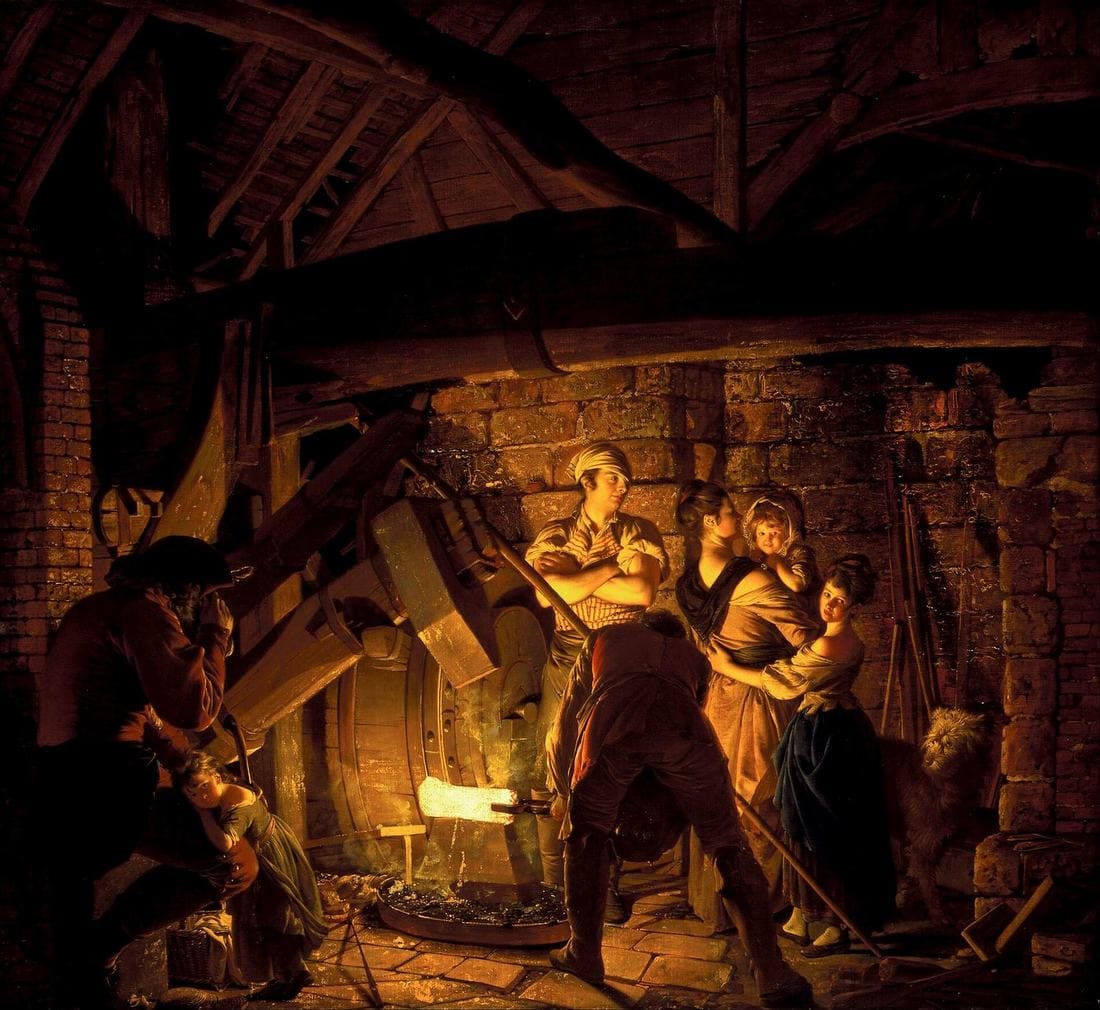
Serious by nature, and at his best when there is something to do.
In Gregory the Great's terms
- Serious
- Restless mind
Our reading, from the Christian Personality Test. The Forge is serious by nature, and at its best with something to do. The personality test sets Paul against Barnabas, the Hearth, over young Mark: Barnabas gave him a second chance, and Paul would not. Years later Paul wrote, “Get Mark and bring him with you, because he is useful to me in the ministry.”
See The Forgefeast days
East and West, side by side
West
- Jan25
The Conversion of Paul, a Catholic feast. A Festival in the Church of England, and kept by the Episcopal Church and Lutherans in the Missouri Synod and the ELCA. It closes the Week of Prayer for Christian Unity.
- Jun29
Peter and Paul, a Catholic solemnity. Also the Church of England, the Episcopal Church, and Lutherans in the Missouri Synod and the ELCA.
- Jun30
The Commemoration of Paul, in the 1916 Roman Martyrology and the 1962 Missal. Since 1969 Rome keeps the day for the first martyrs of Rome.
- Nov18
The dedication of the basilicas of Peter and Paul in Rome. A Catholic optional memorial.
East
- Jun29
Peter and Paul, the leaders of the apostles, for the OCA and the Greek churches.
- Jun30
All twelve apostles together, the day after Peter and Paul, in the OCA.
- Jul12
The Coptic Church, on 5 Abib in its own calendar: the martyrdom of Peter and Paul. The Russian Church keeps 29 June on the old calendar, which falls on this day too.
Why a day of his own on 30 June? The Catholic Encyclopedia explains. On 29 June the pope went from St Peter's to St Paul's, about five miles apart, and the double ceremony was too tiring. So Paul's part moved to the next day. Rome's calendar of 1969 notes that the Martyrology of Jerome already marks his conversion on 25 January. Books from Gaul keep it as a feast by the end of the 700s. Churches on the old calendar keep each date 13 days later.
what others said of him
Jesus, his friends, his critics and the first generations after him, in their own words.
This man is My chosen instrument to carry My name before the Gentiles and their kings, and before the people of Israel.
The man who formerly persecuted us is now preaching the faith he once tried to destroy.
His letters are weighty and forceful, but his physical presence is unimpressive, and his speaking is of no account.
Consider also that our Lord's patience brings salvation, just as our beloved brother Paul also wrote you with the wisdom God gave him.
For neither I, nor any other such one, can come up to the wisdom of the blessed and glorified Paul.
Paul's heart was His heart, and a tablet of the Holy Spirit, and a book of grace.
his life in 18 moments
Jerusalem
A young manStephen's death
Stephen, the first martyr, was dragged out of the city and stoned. “Meanwhile the witnesses laid their garments at the feet of a young man named Saul.” Stephen fell on his knees and cried out, “Lord, do not hold this sin against them.” Acts adds, “And Saul was there, giving approval to Stephen's death.” Then Saul began to destroy the church. He went from house to house and dragged off men and women to prison.
Acts 7:58 to 8:3The road to Damascus
About noonA light from heaven
Saul asked the high priest for letters to the synagogues in Damascus, so he could bring the Lord's followers back to Jerusalem in chains. Near the city a light flashed around him, “brighter than the sun”. He fell to the ground and heard a voice: “Saul, Saul, why do you persecute Me?” “Who are You, Lord?” Saul asked. “I am Jesus, Whom you are persecuting.” The men with him heard the voice but saw no one. Saul got up blind, and they led him by the hand into Damascus. For three days he did not eat or drink.
Acts 9:1-9; 26:13Straight Street, Damascus
Three days later“Brother Saul”
The Lord sent a disciple named Ananias to the blinded Saul. Ananias was afraid. “Lord, many people have told me about this man and all the harm he has done to Your saints in Jerusalem.” He went anyway, and placed his hands on the man. “Brother Saul,” he said. At once Saul could see again. He was baptised, and began to preach in the synagogues that Jesus is the Son of God. All who heard him were astounded. “Isn't this the man who wreaked havoc in Jerusalem on those who call on this name?”
Acts 9:10-22Damascus
After many daysOver the wall in a basket
He went away into Arabia, he writes, and came back to Damascus. Then some of the Jews plotted to kill him. Day and night they watched the city gates. So one night his disciples lowered him in a basket through a window in the wall. Paul tells it himself, in a list of things he could boast of. The governor under King Aretas was guarding the city to arrest him. “But I was lowered in a basket through a window in the wall and escaped his grasp.”
Acts 9:23-25; 2 Corinthians 11:32-33; Galatians 1:17Jerusalem, then Tarsus
Three years onBarnabas speaks for him
In Jerusalem he tried to join the disciples, “but they were all afraid of him, not believing that he was a disciple.” Then Barnabas brought him to the apostles, and told them how Saul had seen the Lord on the road to Damascus. Paul says he stayed fifteen days with Cephas, that is Peter. When some of the Greek-speaking Jews tried to kill him, the believers took him down to Caesarea and sent him home to Tarsus.
Acts 9:26-30; Galatians 1:18Antioch
A full yearWhere they were first called Christians
Years after Saul went home to Tarsus, Barnabas went there to look for him, and brought him back to Antioch. For a full year the two of them taught large numbers of people there. “The disciples were first called Christians at Antioch.” When a prophet foretold a famine, the church sent help to the believers in Judea, carried by Barnabas and Saul.
Acts 11:25-30Antioch and Cyprus
The first journey“Saul, who was also called Paul”
The church at Antioch was worshipping and fasting when the Holy Spirit said, “Set apart for Me Barnabas and Saul for the work to which I have called them.” They sailed to Cyprus, with John Mark as their helper. At Paphos the Roman governor, Sergius Paulus, sent for them to hear the word of God. From that day on, Acts calls Saul by his Roman name, Paul. On the mainland, at Perga, Mark left them and went home to Jerusalem.
Acts 13:1-13Lystra
Taken for godsZeus, Hermes, and then stones
When Paul healed a man lame from birth, the crowd shouted, “The gods have come down to us in human form!” They called Barnabas Zeus, and Paul Hermes, “because he was the chief speaker.” The priest of Zeus brought bulls and wreaths to offer them a sacrifice. The two tore their clothes and rushed into the crowd: “We too are only men, human like you.” Then Jews came from Iconium and from Pisidian Antioch, a different Antioch from the one that had sent him out. They won the crowd over. They stoned Paul and dragged him out of the city, thinking he was dead. The disciples gathered around him. He got up and went back into the city.
Acts 14:8-20Antioch
Before the second journeyA sharp disagreement
Paul wanted to go back and visit the churches he and Barnabas had founded. Barnabas wanted to take John Mark. Paul thought it best not to, because Mark had deserted them in Pamphylia. “Their disagreement was so sharp that they parted company.” Barnabas took Mark and sailed for Cyprus. Paul chose Silas and set out by land. John Chrysostom saw two gifts at work: Barnabas was the gentler, Paul the stricter. As he put it, the one was “more tender and indulgent, but this one more strict and austere,” and he saw God's plan in the parting.
Acts 15:36-41; John Chrysostom, Homilies on Acts, Homily 34Philippi
About midnightSinging in the stocks
In a night vision a man of Macedonia begged him, “Come over to Macedonia and help us.” So Paul crossed into Europe. At Philippi he freed a slave girl from a spirit, and her owners dragged him and his companion Silas before the magistrates. They were beaten with rods and put in the stocks. “About midnight Paul and Silas were praying and singing hymns to God.” An earthquake shook the prison, and every door flew open. The jailer was about to kill himself when Paul called out, “Do not harm yourself! We are all here!” The jailer asked, “Sirs, what must I do to be saved?” “Believe in the Lord Jesus and you will be saved, you and your household.” In the morning Paul refused to slip away quietly. He and Silas were Roman citizens, beaten without a trial: “Let them come themselves and escort us out!”
Acts 16:9-40Athens
The AreopagusTo an unknown god
Paul was deeply disturbed to see Athens full of idols. He argued in the marketplace every day. Some philosophers asked, “What is this babbler trying to say?” At the Areopagus he began, “Men of Athens, I see that in every way you are very religious.” He had found an altar inscribed TO AN UNKNOWN GOD. “Therefore what you worship as something unknown, I now proclaim to you.” He quoted their own poets. When he spoke of the resurrection of the dead, some began to mock. Others said, “We want to hear you again on this topic.” A few believed, among them Dionysius the Areopagite and a woman named Damaris.
Acts 17:16-34Corinth
A year and a halfTentmakers
At Corinth he met Aquila and his wife Priscilla, Jews lately expelled from Rome by the emperor Claudius. “They were tentmakers by trade, just as he was”, so he stayed and worked with them. One night the Lord spoke to him in a vision: “Do not be afraid; keep on speaking; do not be silent. For I am with you.” He stayed a year and a half, teaching the word of God.
Acts 18:1-11Ephesus
About two hoursThe riot of the silversmiths
At Ephesus, people who had practised magic burned their books in public. The books were worth fifty thousand drachmas. Then a silversmith named Demetrius, who made silver shrines of the goddess Artemis, warned his fellow craftsmen that Paul was ruining their trade. “He says that man-made gods are no gods at all.” The whole city rushed into the theatre. Paul wanted to go in, but the disciples would not let him. For about two hours the crowd shouted, “Great is Artemis of the Ephesians!” Most of them did not even know why they were there. At last the city clerk calmed them and sent them home.
Acts 19:19-41Miletus
On the way to JerusalemThe last goodbye
Paul sent for the elders of the church at Ephesus. He told them the Holy Spirit warned him in town after town that chains awaited him. “But I consider my life of no value to me, if only I may finish my course.” He reminded them that he had worked with his own hands to help the weak. Then he knelt down with them all and prayed. “They all wept openly as they embraced Paul and kissed him.” What grieved them most was that they would never see his face again.
Acts 20:17-38Jerusalem
In the temple courtsArrested
Jews from Asia saw him in the temple and stirred up the crowd. They dragged him out and were trying to kill him when Roman soldiers ran down. The commander had him bound with two chains. As they stretched him out to be flogged, Paul asked, “Is it lawful for you to flog a Roman citizen without a trial?” The commander said he had paid a high price for his own citizenship. “But I was born a citizen,” Paul replied. Then more than forty men swore not to eat or drink until they had killed him. The son of Paul's sister heard of the plot and warned him. That night the Romans sent him to the governor at Caesarea, under a heavy guard.
Acts 21:27 to 23:24Caesarea
Two years in prison“I appeal to Caesar!”
The governor Felix kept him in prison for two years, hoping for a bribe. When Paul spoke of righteousness, self-control and the coming judgment, Felix grew frightened. The next governor, Festus, asked if he would stand trial in Jerusalem. Paul refused: “I appeal to Caesar!” Before King Agrippa he told his story again. Festus shouted, “You are insane, Paul! Your great learning is driving you to madness!” Agrippa asked, “Can you persuade me in such a short time to become a Christian?” “Short time or long,” Paul replied, “I wish to God that not only you but all who hear me this day may become what I am, except for these chains.”
Acts 24:24 to 26:32The sea off Crete, then Malta
Fourteen daysShipwreck
Paul was being taken to Rome by sea, as a prisoner. He warned that sailing on had become dangerous. No one listened. A wind called the Northeaster caught the ship, and for many days neither sun nor stars appeared. Paul stood up among the men. An angel had told him, “Do not be afraid, Paul; you must stand before Caesar.” On the fourteenth night he urged them all to eat. He took bread, gave thanks to God in front of them all, and broke it. At daybreak the ship struck a sandbar and broke up. The soldiers planned to kill the prisoners, but the centurion stopped them to save Paul. “In this way everyone was brought safely to land.”
Acts 27:9-44Rome
Two full yearsBoldly and freely
Believers from Rome walked out along the road to meet him, and when Paul saw them he took courage. In Rome he was allowed to live by himself, with a soldier to guard him. “Paul stayed there two full years in his own rented house, welcoming all who came to visit him.” Acts ends there, with Paul still waiting for his trial. Its last verse says of him: “Boldly and freely he proclaimed the kingdom of God and taught about the Lord Jesus Christ.”
Acts 28:14-31
his miracles
Acts says “God did extraordinary miracles through the hands of Paul”. Paul himself said where the power came from:
I will not presume to speak of anything except what Christ has accomplished through me in leading the Gentiles to obedience by word and deed, by the power of signs and wonders, and by the power of the Spirit of God.
4 healing stories in Acts
-
Lystra
As he preachedThe man who had never walked
A man in Lystra had been lame from birth and had never walked. He was listening to Paul. Paul looked straight at him, and saw that he had faith to be healed. In a loud voice he called out:
“Stand up on your feet!”
The man jumped up and began to walk. The crowd took Paul and Barnabas for gods.
Acts 14:8-11 -
Ephesus
His two years thereHandkerchiefs and aprons
Even handkerchiefs and aprons that had touched him were carried to the sick,
“and the diseases and evil spirits left them”
Acts 19:10-12 -
Troas
Past midnightEutychus
Paul talked on until midnight in an upper room full of lamps. A young man named Eutychus sat in the window, sinking into a deep sleep. He fell from the third story and was picked up dead. Paul went down, threw himself on the young man, and put his arms around him.
“Do not be alarmed! He is still alive!”
Then Paul went back upstairs, broke bread, and talked on until daybreak. The people took the boy home alive, greatly relieved.
Acts 20:7-12 -
Malta
After the shipwreckPublius's father
Publius, the chief official of Malta, took the shipwrecked men in for three days. His father was sick in bed with fever and dysentery. Paul went in to see him, prayed, placed his hands on him, and healed him. After that,
“the rest of the sick on the island came and were cured as well”
Acts 28:7-10
The sorcerer struck blind
On Cyprus, a sorcerer named Elymas tried to turn the island's Roman governor, Sergius Paulus, from the faith. Paul looked straight at him and spoke. Mist and darkness came over Elymas, and he groped about for someone to lead him by the hand, as Paul had once been led. The governor believed.
“Now look, the hand of the Lord is against you, and for a time you will be blind and unable to see the light of the sun.”Acts 13:6-12; 9:8
The fortune-teller
At Philippi a slave girl with a spirit of divination earned her owners a large income. For many days she followed Paul, shouting after him. At last he grew so annoyed that he turned and spoke to the spirit, and it left her that very moment.
“In the name of Jesus Christ I command you to come out of her!”Acts 16:16-18
The seven sons of Sceva
At Ephesus, travelling exorcists tried to use the name Paul preached: “I command you by Jesus, Whom Paul proclaims.” Seven sons of a chief priest named Sceva were doing it. A man with an evil spirit leapt on them, and they ran out of the house naked and wounded. The spirit had answered them first:
“Jesus I know, and I know about Paul, but who are you?”Acts 19:13-17
The viper
On Malta, Paul laid a bundle of sticks on the fire, and a viper fastened itself to his hand. The islanders said he must be a murderer. He had escaped the sea, they said, but Justice would not let him live. He shook it off into the fire and suffered no harm. They waited for him to swell up or drop dead. When nothing happened,
“they changed their minds and said he was a god”Acts 28:1-6
his words
Thirteen letters in the New Testament bear his name, and Acts records his speeches. Outside the section on where the quiz places him, every Bible line on this page is from the Berean Standard Bible.
To a church at odds
Love is patient, love is kind. It does not envy, it does not boast, it is not proud. It is not rude, it is not self-seeking, it is not easily angered, it keeps no account of wrongs. Love takes no pleasure in evil, but rejoices in the truth. It bears all things, believes all things, hopes all things, endures all things.
He wrote it to the church at Corinth, which was split into factions and proud of its spiritual gifts.
1 Corinthians 13:4-7For I am convinced that neither death nor life, neither angels nor principalities, neither the present nor the future, nor any powers, neither height nor depth, nor anything else in all creation, will be able to separate us from the love of God that is in Christ Jesus our Lord.
I have been crucified with Christ, and I no longer live, but Christ lives in me. The life I live in the body, I live by faith in the Son of God, Who loved me and gave Himself up for me.
For I am the least of the apostles and am unworthy to be called an apostle, because I persecuted the church of God. But by the grace of God I am what I am, and His grace to me was not in vain.
That is why, for the sake of Christ, I delight in weaknesses, in insults, in hardships, in persecutions, in difficulties. For when I am weak, then I am strong.
For to me, to live is Christ, and to die is gain.
I know how to live humbly, and I know how to abound. In any and every situation I have learned the secret of being filled and being hungry, of having plenty and having need. I can do all things through Christ Who gives me strength.
his letters
Thirteen letters of the New Testament open with Paul's name. Christians have always read them as Scripture. Who wrote six of them is debated today, and so is Hebrews, which names no author. Here each side speaks for itself.
To churches and to friends
The Bible scholar Jerome counts “nine epistles to seven churches”: Rome, Corinth, Galatia, Ephesus, Philippi, Colossae and Thessalonica. Four more go to friends: two to Timothy, one to Titus, one to Philemon. Paul did not always hold the pen. In Romans the scribe, Tertius, adds his own greeting. Paul often wrote the last lines himself:
“This greeting is in my own hand—Paul. This is my mark in every letter; it is the way I write.”2 Thessalonians 3:17; Romans 16:22; Jerome, Lives of Illustrious Men, chapter 5
The seven
Romans, 1 and 2 Corinthians, Galatians, Philippians, 1 Thessalonians and Philemon. Nearly all scholars accept these seven as his. Britannica calls them the seven “accepted as being entirely authentic”.
Britannica, “Saint Paul the Apostle”The six in doubt: the case against
Ephesians, Colossians, 2 Thessalonians, 1 and 2 Timothy and Titus. Many modern scholars think these came from followers writing in Paul's name, as Britannica puts it. They point to differences in the words, the style, and the way the churches are run. Of the letters to Timothy and Titus, the Scottish scholar James Moffatt wrote in the Encyclopaedia Biblica:
“Favourite Pauline phrases and words are totally wanting.”James Moffatt, in the Encyclopaedia Biblica, volume 4, as quoted in the Catholic Encyclopedia, “Pastoral Epistles”; Britannica
The six in doubt: the case for
The early Church received all thirteen as his. About 180, Bishop Irenaeus of Lyons wrote of Rome's second bishop: “Of this Linus, Paul makes mention in the Epistles to Timothy.” Those who hold that Paul wrote all thirteen say his other letters differ from one another too, and that his scribes, his readers and the years between explain the rest. The Catholic Encyclopedia answered Moffatt:
“the early and universal tradition ascribing the whole of them to the Apostle is correct.”Irenaeus, Against Heresies, Book 3, chapter 3; Catholic Encyclopedia, “Pastoral Epistles”
And Hebrews?
Hebrews names no author. The church historian Eusebius counted “Paul's fourteen epistles”, but noted that the church of Rome disputed Hebrews. Jerome says it was not counted his because of its style and language. The Latin theologian Tertullian thought Barnabas wrote it, and others named Luke, or Clement of Rome. Origen, a Bible scholar of Alexandria, gave the verdict Eusebius kept:
“But who wrote the epistle, in truth, God knows.”Eusebius, Church History, Book 3, chapter 3, and Book 6, chapter 25; Jerome, Lives of Illustrious Men, chapter 5
often misquoted
He fell off his horse on the road to Damascus.
What the sources sayActs mentions no horse on the road to Damascus. “He fell to the ground,” says Acts. Paul told King Agrippa, “We all fell to the ground.” The horse comes from painters, Caravaggio among them. Acts puts Paul on a mount just once, years later, as a prisoner: the Romans brought “mounts for Paul” to carry him to the governor by night.
Acts 9:4; 26:14; 23:23-24; Caravaggio, The Conversion of Saint Paul, 1601Saul changed his name to Paul when he became a Christian.
What the sources sayActs goes on calling him Saul for years. Ananias greets him as “Brother Saul”, and the Holy Spirit says, “Set apart for Me Barnabas and Saul.” The change comes later, on Cyprus, in a single line: “Saul, who was also called Paul”. The Catholic Encyclopedia says Jews of his day often had two names, one Hebrew and one Latin or Greek. As a Roman citizen he had a Latin one. The Bible scholar Jerome thought he took it from Sergius Paulus, the governor of Cyprus, his first convert there. Augustine heard humility in it, since paulus means small.
Acts 9:17; 13:2, 9; Catholic Encyclopedia, “St. Paul”; Jerome, Lives of Illustrious Men, chapter 5; Augustine, a sermon for 29 June, given by the OCAWe know what Paul looked like: short, bald and bow-legged.
What the sources sayThe Bible never describes his face. The famous picture comes from the Acts of Paul and Thecla, a story written in the second century. It describes him as “a man little of stature, thin-haired upon the head, crooked in the legs, of good state of body, with eyebrows joining, and nose somewhat hooked, full of grace”. The Latin theologian Tertullian says the church elder in Asia who wrote it was found out. He confessed “that he had done it from love of Paul”, and lost his office.
Acts of Paul, tr. M. R. James (1924); Tertullian, On Baptism, chapter 17Paul was one of the Twelve.
What the sources sayHe was not. After Judas died, the apostles drew lots for his place, and “the lot fell to Matthias.” Paul was called later, on the road to Damascus, and he claimed the name apostle all the same: “Am I not an apostle? Have I not seen Jesus our Lord?” Jerome calls him “an apostle outside the number of the twelve apostles”.
Acts 1:26; 1 Corinthians 9:1; Jerome, Lives of Illustrious Men, chapter 5friends, family and rivals
 Barnabas
 The “Son of Encouragement”. He brought Saul to the apostles when they were all afraid of him, fetched him from Tarsus to Antioch, and travelled with him to Cyprus and Lystra. They parted over Mark. Later Paul wrote of him as a fellow apostle who, like Paul, worked for a living.
Acts 4:36; 9:27; 11:25-26; 15:39; 1 Corinthians 9:6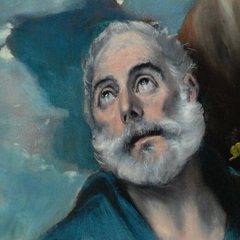 Peter
Peter Paul stayed fifteen days with him in Jerusalem. Later, at Antioch, Peter drew back from eating with Gentile believers, and Paul writes, “I opposed him to his face.” The second letter under Peter's name calls him “our beloved brother Paul”. Early Christian writers say both died at Rome under Nero.
Galatians 1:18; 2:11; 2 Peter 3:15; Eusebius, Church History, Book 2, chapter 25John Mark, Barnabas's cousin. He left Paul and Barnabas at Perga and went home, and Paul would not take him again. Years later Mark was at Paul's side while Paul was a prisoner, and near the end of his life Paul asked for him.
Acts 13:13; 15:37-39; Colossians 4:10; Philemon 1:24; 2 Timothy 4:11A young disciple from Lystra, with a believing Jewish mother and a Greek father. Paul called him “my true child in the faith”, and told the Philippians, “I have nobody else like him.”
Acts 16:1-3; 1 Timothy 1:2; Philippians 2:20“Luke, the beloved physician”. Acts is held to be his work. At Troas its story turns from “they” to “we”. Irenaeus, a bishop of the 100s, took that as proof “that this Luke was inseparable from Paul”. Near the end of his life Paul wrote, “Only Luke is with me.”
Colossians 4:14; Acts 16:10; 2 Timothy 4:11; Irenaeus, Against Heresies, Book 3, chapter 14A leader of the Jerusalem church, whom Paul chose after he parted from Barnabas. He was beaten and jailed with Paul at Philippi, and sang hymns with him at midnight. Paul's letters call him Silvanus.
Acts 15:22, 40; 16:25; 1 Thessalonians 1:1A husband and wife, tentmakers expelled from Rome with the other Jews. Paul lived and worked with them at Corinth. They “risked their lives” for him, he says, and “all the churches of the Gentiles are grateful to them.”
Acts 18:1-3; Romans 16:3-4His teacher, a Pharisee “honored by all the people”. When the council wanted to kill the apostles, Gamaliel told the council to leave them alone. If their work was from God, “you will not be able to stop them.”
Acts 22:3; 5:34-39The first martyr, “full of grace and power”. Paul never forgot his death. Years later he told the Lord, “I stood there giving my approval and watching over the garments of those who killed him.”
Acts 6:8; 22:20A slave of Paul's friend Philemon. He became a Christian through Paul, while Paul was in prison. Paul sent him back with a short letter, asking Philemon to take him “no longer as a slave, but better than a slave, as a beloved brother.”
Philemon 1:10-16how he died
He died at Rome under the emperor Nero. Early Christian writers say he was beheaded, and buried by the road to Ostia.
Acts ends with him still waiting for his trial in Rome, and does not tell how he died. The church historian Eusebius passes on a report that Paul made his defence, went out to preach again, and “upon coming to the same city a second time he suffered martyrdom.”
About 97, Clement of Rome wrote that Paul had been “seven times thrown into captivity, compelled to flee, and stoned.” He had “taught righteousness to the whole world, and come to the extreme limit of the west, and suffered martyrdom under the prefects.” Paul had hoped to reach Spain. The Catholic Encyclopedia thinks Clement's words make that journey probable.
About 200, the Latin theologian Tertullian wrote that at Rome “Paul wins his crown in a death like John's”, the death of John the Baptist, who was beheaded. Eusebius says plainly that “Paul was beheaded in Rome itself”.
The Bible scholar Jerome says Paul died “in the fourteenth year of Nero on the same day with Peter”, and that Paul “was buried in the Ostian way”. About 200, a Roman churchman named Gaius could already point visitors to the memorials of Peter and Paul on the Vatican Hill and the Ostian Way. The basilica of St Paul Outside the Walls stands over the grave.
John Chrysostom loved Rome for Paul's sake, and for Peter's. He pictured the two rising from their graves on the last day: “What a rose will Rome send up to Christ!”
The time of my departure
For I am already being poured out like a drink offering, and the time of my departure is at hand.
From 2 Timothy, written as his last letter. Whether Paul wrote it is one of the questions in the section on his letters.
The race
I have fought the good fight, I have finished the race, I have kept the faith.
is he a saint?
Yes. Every church that keeps saints' days honours him. Most keep his day with Peter's, on 29 June, and the West keeps his conversion on 25 January.
- CatholicSaintA solemnity with Peter, 29 June
- OrthodoxSaintLeader of the Apostles, 29 June
- CopticSaint5 Abib, which is 12 July
- AnglicanSaintHis conversion is a Festival in England
- LutheranSaintMissouri Synod and ELCA, 25 January and 29 June
The Orthodox call Peter and Paul the leaders of the apostles, though Paul was not one of the Twelve.
Rome's book of martyrs, in its 1916 edition, opens its day for 25 January like this:
Conversion of St. Paul the Apostle, which happened the second year after the Ascension of our Lord.
what to read first
Acts, chapters 9 and 13 to 28
The Acts of the Apostles
The road to Damascus, then his journeys, his arrest and the storm at sea, ending with him in Rome. Much of it is told by a companion who says “we”.
Read it freePhilippians
Paul, from prison
Four short chapters, written in chains and full of joy. “Rejoice in the Lord always.”
Read it free2 Corinthians 11 and 12
Paul, to Corinth
He boasts of his weakness: the lashes, the shipwrecks, the basket down the wall, and the thorn in his flesh.
Read it freePhilemon
Paul, in prison
His shortest letter, one page long. He sends Onesimus home to his master, as a brother.
Read it freeRomans
Paul, to a church he had not yet visited
His longest letter, in sixteen chapters, written to Rome before he ever saw the city.
Read it freewhere the quiz places him
The record, drawn
Each arm is one axis; length is how far from the centre the recorded acts sit. An axis the text does not place Paul on has no arm.
In the quiz's own words
Says it, confronts, more in front than alongside
The six axes
Your answers are marked. From your result on . See your result
In the hatched middle the quiz names neither pole.
The moments behind each axis
Each line is one recorded act and the reference it is taken from. The sentence says what the person did; where it is in quotation marks it is verbatim from the World English Bible British Edition. An act listed here is evidence of how this person moved, not approval of it; read the passage for how it was received. On 1 of the six the text does not show this, and that axis is left out of the match rather than filled in. On 1 the text shows both ends and they do not settle, so that axis is left out too — the acts for each end are printed under it.
Pace Acts first ↔ Weighs first
recorded at both ends
The text shows both ends. The recorded acts go one way and the other and do not settle, so this axis is left out when a reader is matched rather than counted as a position in the middle. Both ends are below.
Toward Acts first
-
Acts 16:10 toward Acts first
After the night vision the party immediately looked for a way over to Macedonia.
Toward Weighs first
-
Galatians 1:17-18 toward Weighs first
He went into Arabia and back to Damascus and let three years pass before going up to Jerusalem.
Voice Says it ↔ Holds it
says it
-
Acts 17:17 toward Says it
He reasoned in the synagogue and in the marketplace every day with those who met him.
-
Galatians 2:11 toward Says it
He opposed Peter in public at Antioch.
I resisted him to his face
Lead Out in front ↔ Alongside
more in front than alongside
-
Acts 15:40 toward Out in front
He picked Silas and set out on his own circuit.
-
Acts 20:16 toward Out in front
He fixed the party's route past Ephesus to reach Jerusalem by Pentecost.
Conflict Confronts ↔ Reconciles
confronts
-
Acts 15:39 toward Confronts
The contention over Mark grew so sharp that he and Barnabas separated from each other.
the contention grew so sharp that they separated from each other
-
Galatians 2:11 toward Confronts
He resisted Peter to his face at Antioch.
Reasons Asks why ↔ Takes it on trust
not shown in the text
The text does not show this. Nothing in the record puts Paul at either end of this axis, so it is left out when a reader is matched, rather than counted as a position in the middle.
-
No record
The text does not show this.
Plans Plans ahead ↔ Meets the day
leans to planning
-
Acts 20:16 toward Plans ahead
He had settled the sailing route in advance so as not to spend time in Asia.
-
Romans 15:24 toward Plans ahead
He wrote ahead about a journey to Spain and about being helped on his way by the Romans.
Nearest on the map
Distance between two sets of coordinates across every axis, on the same scale a reader's answers are measured on. No number is shown against a person, and nearness is not likeness: two people can land in the same band for different reasons.
Suggest a correction. Corrections that are applied are recorded in the public changelog.
 Quiz Who in the Bible are you most like? Answer eighteen plain statements about you, none of them about the Bible, and see how near you land to Paul. Start
  Quiz Christian Personality Test Paul reads as The Forge. Find your own type. Start
 people like him
 John ChrysostomThe Forge
 He preached or wrote on every one of Paul's letters, and longed to see the dust of Paul's heart at his grave in Rome. A historian says it was his nature to rebuke wrongdoing.
Homilies on Romans, Homily 32; Sozomen, Church History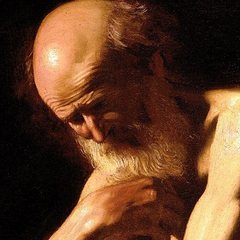 JeromeThe Forge
 The great translator of the Bible was a fighter by his own account. In an argument, he wrote, he threw himself into the thick of it.
Jerome, Letter 48sources
His life, and his words
- The Berean Standard Bible, public domain. Every Bible line on this page outside the section on where the Bible figure quiz places him.
- 1 Clement, chapter 5. Tr. Alexander Roberts and James Donaldson. Ante-Nicene Fathers, volume 1, 1885.
- Polycarp, Letter to the Philippians, chapter 3. Same edition.
- Irenaeus, Against Heresies, Book 3, chapters 3 and 14. Same edition.
- Tertullian, The Prescription against Heretics, chapter 36. Tr. Peter Holmes. Ante-Nicene Fathers, volume 3.
- Tertullian, On Baptism, chapter 17. Tr. S. Thelwall. Same volume.
- Eusebius, Church History, Book 2, chapters 22 and 25. Tr. Arthur McGiffert, 1890. With Gaius and Dionysius of Corinth.
- Eusebius, Church History, Book 3, chapters 3 and 30, and Book 6, chapter 25. Same edition. With Clement of Alexandria and Origen.
- Jerome, Lives of Illustrious Men, chapter 5. Tr. Ernest Richardson, 1892.
- Jerome, Letter 70, to Magnus. Tr. W. H. Fremantle. Nicene and Post-Nicene Fathers, second series, volume 6.
- John Chrysostom, Homilies on Acts, Homily 34. Nicene and Post-Nicene Fathers, first series, volume 11.
- John Chrysostom, Homilies on Romans, Homily 32. Same volume.
- The Acts of Paul, with Paul and Thecla and his martyrdom. Tr. M. R. James, The Apocryphal New Testament, 1924.
His letters
- Catholic Encyclopedia, 1911, “Pastoral Epistles”, quoting James Moffatt in the Encyclopaedia Biblica
- Britannica, “Saint Paul the Apostle”, on the seven letters and the others
Reference
- Catholic Encyclopedia, 1911, “St. Paul”
- OCA, Peter and Paul, with Augustine's sermon for 29 June
- The Conversion of Saint Paul, Caravaggio, 1601, Santa Maria del Popolo, Rome, for the horse
Calendars
- USCCB, Liturgical Calendar 2026, 29 June and 18 November
- Calendarium Romanum, 1969, with its notes on 25 January and 30 June
- The Roman Martyrology, 1916 edition, 25 January and 30 June
- General Roman Calendar of 1960, Wikipedia, for the calendar of the 1962 Missal
- OCA, Synaxis of the Twelve Apostles
- Great Synaxaristes, Greek, 29 June
- azbyka.ru, Russian, 12 July
- CopticChurch.net, the Coptic synaxarium, 5 Abib
- Church of England, Common Worship calendar
- The Episcopal Church, Lesser Feasts and Fasts 2022
- The Lutheran Church–Missouri Synod, Commemorations
- Evangelical Lutheran Worship, ELCA, the church year (final draft, 2006)
Pictures
- Saint Paul Writing His Epistles, attributed to Valentin de Boulogne, about 1618 to 1620. Museum of Fine Arts, Houston. Public domain.
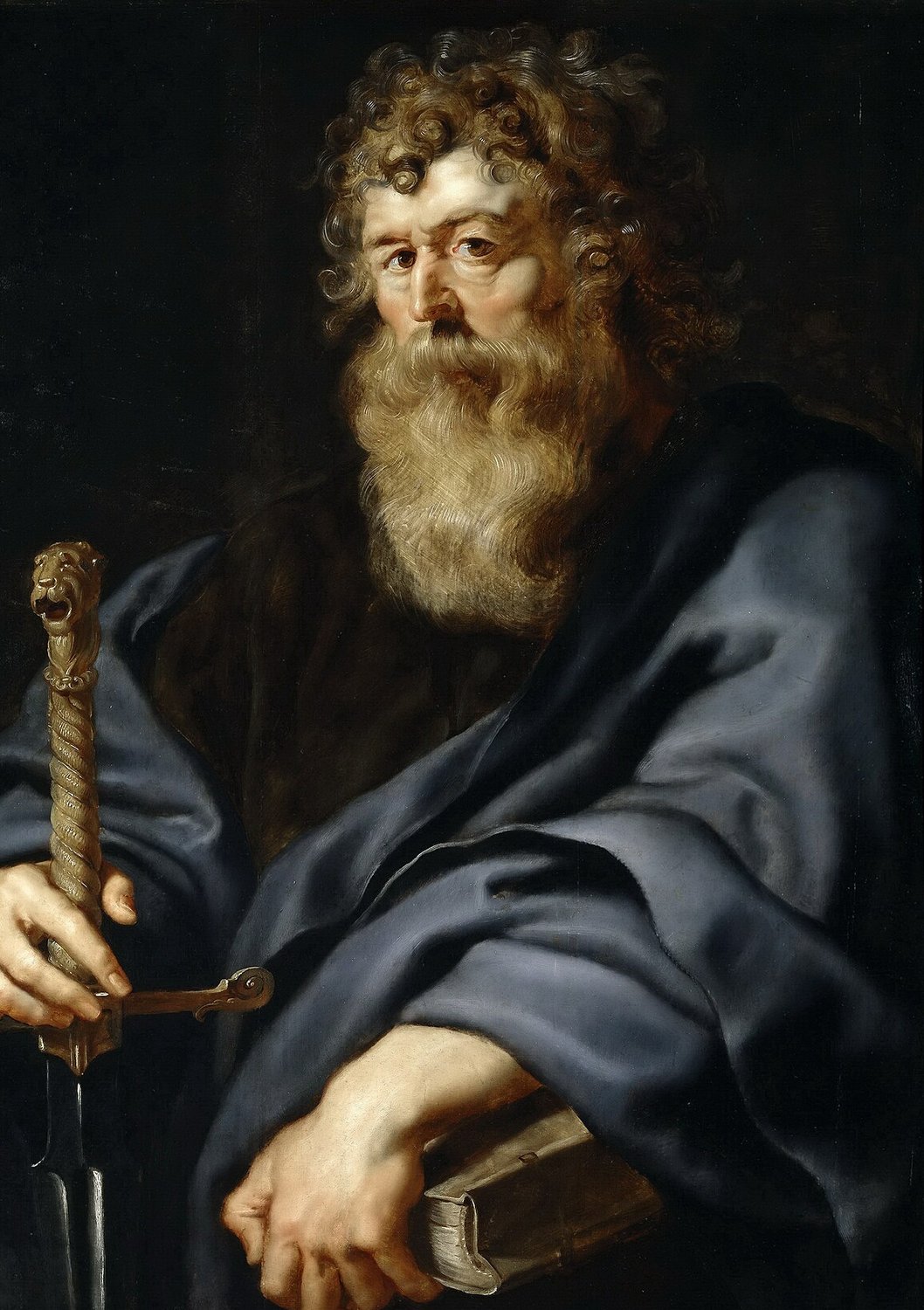
- Saint Paul, Peter Paul Rubens, about 1611, from the apostles painted for the Duke of Lerma. Museo del Prado, Madrid. Public domain.