
Hannah
She prayed for a son at Shiloh so quietly that the priest thought she was drunk. When the boy came, she gave him back to the LORD, and sang.
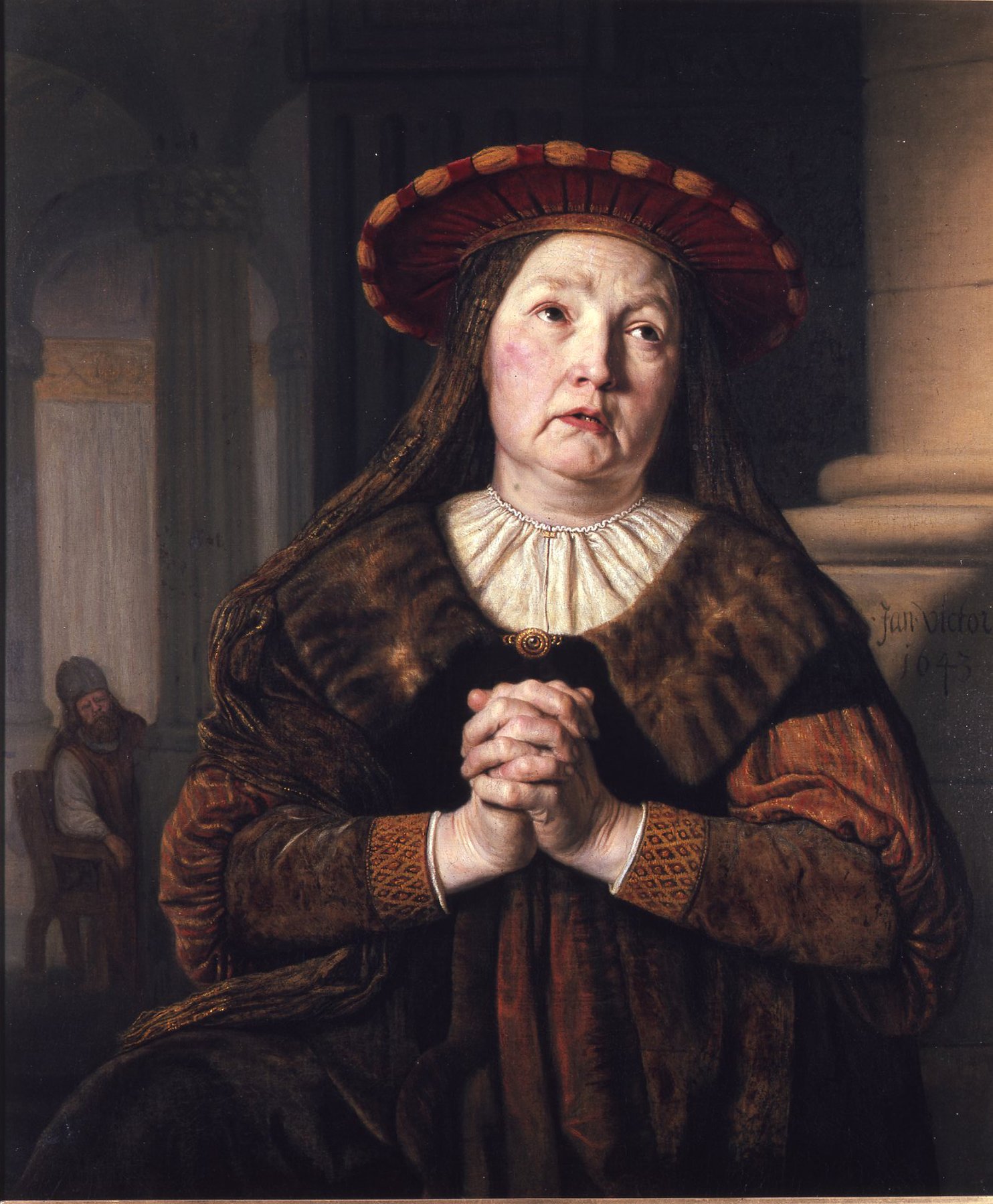
Picture: Hannah prays in the temple, Jan Victors, 1643. Dordrechts Museum. Public domain.
Who was Hannah?
Hannah was the wife of Elkanah, in the hill country of Ephraim. For years she had no children, and his other wife taunted her. At the house of the LORD in Shiloh she prayed in silence for a son, and vowed to give him back. The son was Samuel. She kept her vow, and sang a song of praise.
at a glance
Her path, in order
- WifeOf Elkanah, who loved her
- MotherOf Samuel, the son she asked for
- ProphetessHer song spoke of a king to come
in numbers
- Sons her husband said he was worth10
- “Am I not better to you than ten sons?”
- Elkanah, when she would not eat
- Children she had after Samuel5
- Three sons and two daughters
- Just as Eli the priest had blessed her
did you know?
-
The Talmud draws its rules for the central Jewish prayer from her: mean it in your heart, form the words with your lips, and keep your voice down.
Babylonian Talmud, Berakhot 31a -
The Talmud hears a prophecy in one word of her song: “my horn is exalted in the LORD.” Her son Samuel anointed David from a horn of oil, and David's line kept the throne. Samuel anointed Saul from a flask, and Saul's did not.
Babylonian Talmud, Megillah 14a; 1 Samuel 10:1; 16:13 -
Every Jewish New Year, synagogues read her story. The Talmud sets it for the first day of Rosh Hashanah, beside the birth of Sarah's son. By tradition, God remembered both women on that day.
Babylonian Talmud, Megillah 31a
- In the Bible
- Only in 1 Samuel 1 and 2. No other book of the Bible names her.
- Home
- Ramathaim-zophim, or Ramah, in the hill country of Ephraim. Each year the family went up to Shiloh, where Eli was priest at the house of the LORD.
- Family
- Her husband Elkanah, and his second wife Peninnah, who had sons and daughters. Hannah's first child was Samuel. Three sons and two daughters followed.
- Her vow
- That no razor would touch her son's head. It is the mark of a Nazirite, set apart to the LORD, in the law of Numbers 6. Samson's mother was told the same of her son.
- Her name
- Hebrew for grace. Greek and Latin Bibles call her Anna.
- Also called
- The Prophetess Hannah, in the Orthodox Church.
- Died
- The Bible does not say. It last speaks of her five younger children.
- In art
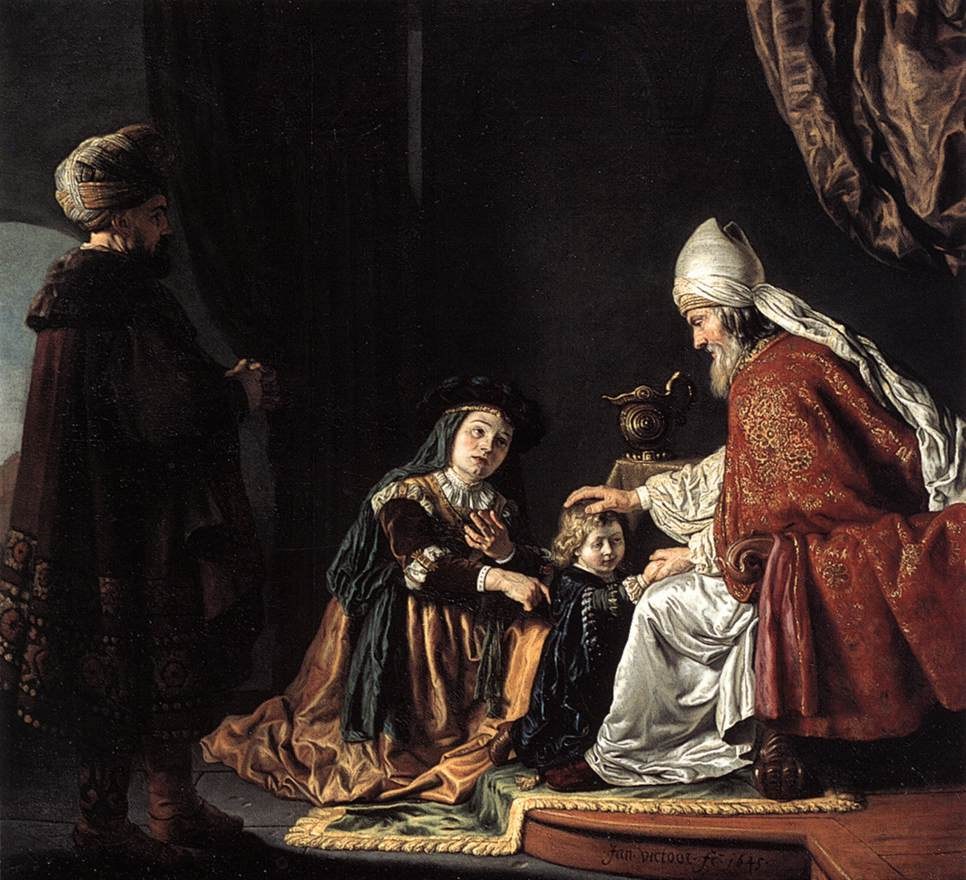
- Dutch painters of the 1600s, several of them Rembrandt's pupils, painted her often: at prayer, as at the top of this page, or bringing the young Samuel to Eli the priest.
feast days
East and West, side by side
West
- Sep2
Hannah, remembered by Lutherans of the Missouri Synod. The Roman calendar has no day for her. It keeps her son Samuel on 20 August.
East
- Dec9
The Holy Prophetess Hannah, mother of the Prophet Samuel, for the OCA and the other Orthodox churches.
On 9 December the Orthodox also keep the conception of the Virgin Mary by Saint Anna: two women with the same name, on one day. Churches on the old calendar keep the day 13 days later.
what others said of her
The early Church Fathers, in their own words. They took her as a model of prayer, and heard prophecy in her song.
She spoke with hidden prayer, but with manifest faith. She spoke not with her voice, but with her heart, because she knew that thus God hears; and she effectually obtained what she sought, because she asked it with belief.
Her tears alone uttered a cry more clear than any trumpet. And because of this, God also opened her womb, and made the hard rock a fruitful field.
Who amongst you would not rather that his son should become a Samuel than that he should be king of the whole world ten thousand times over?
Anna even before Samuel was born promised him to God, and after his birth consecrated him at once, and brought him up in the priestly habit, not fearing anything in human nature, but trusting in God.
When as yet no one was king over that people, whence, if she did not prophesy, did she say what she puts at the end, He gives strength to our kings, and shall exalt the horn of His Christ?
her life in six moments
Ramah and Shiloh
Year after yearHer rival taunted her
Elkanah had two wives. “Peninnah had children, but Hannah had none.” Every year he took the family up to Shiloh to worship and sacrifice to the LORD. He gave Hannah a double portion, “for he loved her even though the LORD had closed her womb.” But her rival taunted her, year after year, until she wept and would not eat. “Hannah, why are you crying?” Elkanah asked. “Am I not better to you than ten sons?”
1 Samuel 1:1-8Shiloh
After the mealA vow at the doorpost
After the family had eaten, Hannah stood up. Eli the priest was sitting by the doorpost of the temple of the LORD. “In her bitter distress, Hannah prayed to the LORD and wept with many tears.” She made a vow. If the LORD gave her a son, she would give him to the LORD all the days of his life, and no razor would ever touch his head. Her vow is below, in her words.
1 Samuel 1:9-11Shiloh
The same hour“How long will you be drunk?”
Eli the priest watched Hannah's mouth. She was praying in her heart, “and though her lips were moving, her voice could not be heard.” So Eli thought she was drunk. “How long will you be drunk?” he said. “Put away your wine!” She told him she had drunk nothing. She had been pouring out her soul before the LORD. “Go in peace,” Eli replied, “and may the God of Israel grant the petition you have asked of Him.” She went on her way and ate, “and her face was no longer downcast.”
1 Samuel 1:12-18Ramah
In the course of timeA son named Samuel
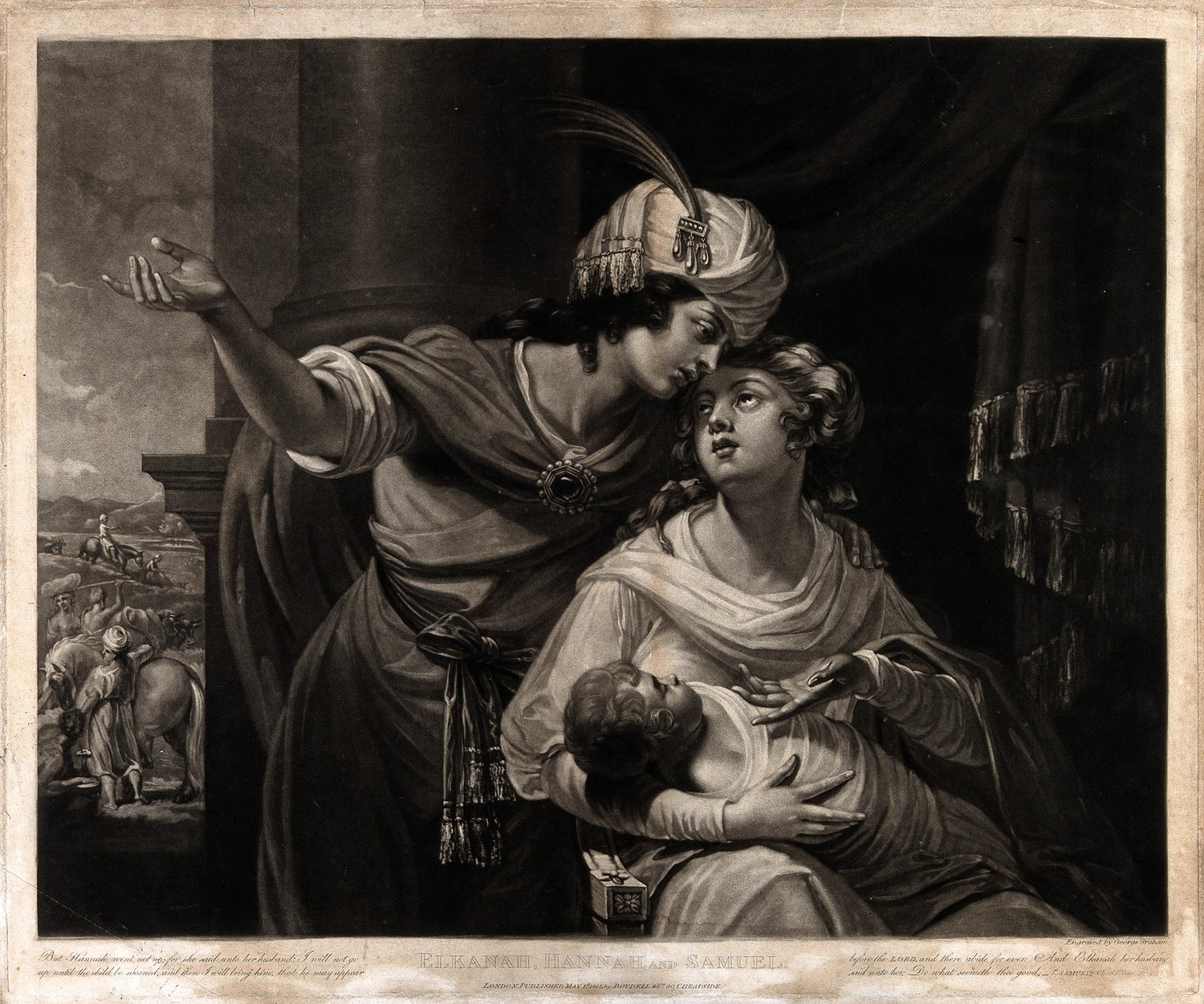
Hannah's family went home to Ramah, “and the LORD remembered her.” Hannah gave birth to a son. She named him Samuel, “Because I have asked for him from the LORD.” When the next yearly sacrifice came, she stayed at home. She would bring the boy once he was weaned, she told her husband, to stay at the house of the LORD for good. “Do what you think is best,” Elkanah replied.
1 Samuel 1:19-23Shiloh
Once he was weaned“I prayed for this boy”
Hannah took her son Samuel up to Shiloh with a three-year-old bull, an ephah of flour and a skin of wine. “Though the boy was still young, she brought him to the house of the LORD at Shiloh.” After the sacrifice they brought him to Eli. She reminded the old priest that she was the woman he had seen praying there. “I prayed for this boy,” she said, and she gave him to the LORD for as long as he lived. Then she prayed again, a song of praise: it is below. Elkanah went home, and the boy stayed to serve the LORD under Eli.
1 Samuel 1:24-2:11Shiloh
Every year afterA little robe
Samuel grew up at Shiloh, “a boy wearing a linen ephod.” “Each year his mother would make him a little robe and bring it to him” when she came up with her husband for the yearly sacrifice. Eli the priest would bless them: “May the LORD give you children by this woman in place of the one she dedicated to the LORD.” And the LORD did. Hannah had three sons and two daughters, while “the boy Samuel grew up in the presence of the LORD.” Here the Bible's story of Hannah ends.
1 Samuel 2:18-21
her words
Her words, as 1 Samuel records them. Outside the section on where the quiz places her, every Bible line on this page is from the Berean Standard Bible.
To Eli, who thought she was drunk
I am a woman troubled in spirit. I have not had any wine or strong drink, but I have poured out my soul before the LORD.
She had been praying in silence, her lips moving. Eli had told her, “Put away your wine!”
1 Samuel 1:13-15O LORD of Hosts, if only You will look upon the affliction of Your maidservant and remember me, not forgetting Your maidservant but giving her a son, then I will dedicate him to the LORD all the days of his life, and no razor shall ever touch his head.
Do not take your servant for a wicked woman, for all this time I have been praying out of the depth of my anguish and grief.
After the boy is weaned, I will take him to appear before the LORD and to stay there permanently.
Please, my lord, as surely as you live, my lord, I am the woman who stood here beside you praying to the LORD. I prayed for this boy, and since the LORD has granted me what I asked of Him, I now dedicate the boy to the LORD. For as long as he lives, he is dedicated to the LORD.
My heart rejoices in the LORD; my horn is exalted in the LORD. My mouth speaks boldly against my enemies, for I rejoice in Your salvation. There is no one holy like the LORD. Indeed, there is no one besides You! And there is no Rock like our God.
her song, and mary's
Centuries later, Mary, a young woman of Nazareth, sang a song much like Hannah's. The Catholic Encyclopedia calls Mary's song “very similar in thought and phrase to the Canticle of Anna”. The Lutheran calendar says Hannah's song foreshadows Mary's. Here are some of their lines side by side.
Joy in God
Hannah sang, “My heart rejoices in the LORD.” Mary sang:
“My spirit rejoices in God my Savior!”1 Samuel 2:1; Luke 1:47
The mighty brought low
Hannah sang, “The bows of the mighty are broken, but the feeble are equipped with strength.” Mary sang:
“He has brought down rulers from their thrones, but has exalted the humble.”1 Samuel 2:4; Luke 1:52
The hungry fed
Hannah sang, “The well-fed hire themselves out for food, but the starving hunger no more.” Mary sang:
“He has filled the hungry with good things, but has sent the rich away empty.”1 Samuel 2:5; Luke 1:53
The lowly lifted up
Hannah sang, “He raises the poor from the dust and lifts the needy from the ash heap.” Mary sang:
“He has looked with favor on the humble state of His servant.”1 Samuel 2:8; Luke 1:48
often misquoted
Hannah was Saint Anne, the mother of the Virgin Mary.
What the sources sayThey are two women with one name: Hannah in Hebrew, Anna in Greek and Latin, Anne in English. Hannah was Samuel's mother, and lived long before Saint Anne. The Bible never names Mary's mother: the name comes from the Protoevangelium of James, a book from about AD 150. In it, a childless wife weeps, prays and is given a child. The Catholic Encyclopedia calls that story “apparently a reproduction of the biblical account of the conception of Samuel”.
Catholic Encyclopedia (1907), St. Annefriends, family and rivals
Her husband, an Ephraimite. He loved her, gave her a double portion at the yearly feast, and let her keep Samuel at home until he was weaned.
1 Samuel 1:1-8, 23Elkanah's other wife, who had sons and daughters. Year after year she taunted Hannah to tears.
1 Samuel 1:2-7The old priest at Shiloh. He took her silent prayer for drunkenness, then sent her away with a blessing. She left Samuel in his care.
1 Samuel 1:12-17, 25; 2:11Her first child, the son she asked for. He grew up at Shiloh, became a prophet and judged Israel, and anointed its first two kings, Saul and David.
1 Samuel 3:20; 7:15; 10:1; 16:13is she a saint?
Yes, in the Orthodox Church, which honours her as a prophetess on 9 December. Lutherans in the Missouri Synod remember her on 2 September.
- OrthodoxSaintThe Holy Prophetess Hannah, 9 December
- LutheranCommemoratedMissouri Synod, 2 September
- CatholicNot on the calendarRome keeps her son Samuel, 20 August
- AnglicanNot on the calendarHer song is a Church of England canticle
The Orthodox call her a prophetess for her song. Their hymn for her day says she saw far-off things as if they were near. The Talmud counts her among Israel's seven prophetesses, for the same song.
The Missouri Synod remembers her for keeping the vow she made before her son was born.
what to read first
1 Samuel 1
The first book of Samuel
Her whole story up to the day she gave Samuel to the LORD. One chapter.
Read it free1 Samuel 2:1-21
The first book of Samuel
Her song, and the little robe she brought every year.
Read it freeOn the Lord's Prayer
Cyprian of Carthage
A short book on prayer. Hannah is his model of praying from the heart.
Read it freewhere the quiz places her
The record, drawn
Each arm is one axis; length is how far from the centre the recorded acts sit. An axis the text does not place Hannah on has no arm.
In the quiz's own words
Plans ahead, takes time to decide, slow to speak up
The six axes
Your answers are marked. From your result on . See your result
In the hatched middle the quiz names neither pole.
The moments behind each axis
Each line is one recorded act and the reference it is taken from. The sentence says what the person did; where it is in quotation marks it is verbatim from the World English Bible British Edition. An act listed here is evidence of how this person moved, not approval of it; read the passage for how it was received. On 2 of the six the text does not show this, and that axis is left out of the match rather than filled in.
Pace Acts first ↔ Weighs first
takes time to decide
-
1 Samuel 1:22-23 toward Weighs first
She stayed behind from the yearly journey and waited until the child was weaned before bringing him.
Voice Says it ↔ Holds it
slow to speak up
-
1 Samuel 1:13 toward Holds it
She prayed at the doorpost without making a sound.
Hannah spoke in her heart. Only her lips moved, but her voice was not heard.
-
1 Samuel 2:1 toward Says it
When she had brought Samuel up she prayed and said her song.
Lead Out in front ↔ Alongside
not shown in the text
The text does not show this. Nothing in the record puts Hannah at either end of this axis, so it is left out when a reader is matched, rather than counted as a position in the middle.
-
No record
The text does not show this.
Conflict Confronts ↔ Reconciles
not shown in the text
The text does not show this. Nothing in the record puts Hannah at either end of this axis, so it is left out when a reader is matched, rather than counted as a position in the middle.
-
No record
The text does not show this.
Reasons Asks why ↔ Takes it on trust
slow to question
-
1 Samuel 1:18 toward Takes it on trust
After Eli's word she went her way and ate, and her face was no longer sad.
Plans Plans ahead ↔ Meets the day
plans ahead
-
1 Samuel 1:24 toward Plans ahead
She brought three bulls, an ephah of meal and a container of wine with the child.
-
1 Samuel 2:19 toward Plans ahead
She made him a little robe and brought it up to him year after year.
Nearest on the map
Distance between two sets of coordinates across every axis, on the same scale a reader's answers are measured on. No number is shown against a person, and nearness is not likeness: two people can land in the same band for different reasons.
Suggest a correction. Corrections that are applied are recorded in the public changelog.
 Quiz Who in the Bible are you most like? Answer eighteen plain statements about you, none of them about the Bible, and see how near you land to Hannah. Start
  Quiz Christian Personality Test Which of eight types are you? Find your own. Start
 people like her
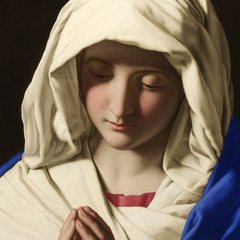 Mary of Nazareth
 Her song is very like Hannah's, the Catholic Encyclopedia notes. It begins, “My soul magnifies the Lord.”
Luke 1:46-55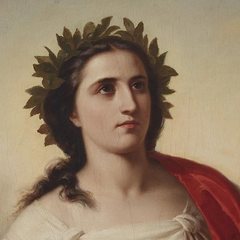 Deborah
 Another woman of Israel who sang to the LORD after He acted, and whom the Bible itself calls a prophetess.
Judges 4:4; 5:1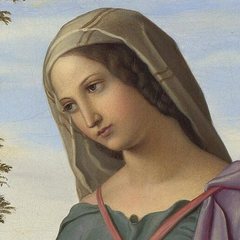 Ruth
Ruth Another woman from the days of the judges to whom the LORD gave a son. Her great-grandson was David, whom Hannah's son anointed.
Ruth 4:13, 17; 1 Samuel 16:13sources
Her life, and her words
- The Berean Standard Bible, public domain. Every Bible line on this page outside the section on where the Bible figure quiz places her.
- Cyprian, On the Lord's Prayer. Tr. Robert Ernest Wallis. Ante-Nicene Fathers, volume 5, 1886.
- John Chrysostom, Homilies on Matthew, Homily 6. Tr. George Prevost. Nicene and Post-Nicene Fathers, first series, volume 10, 1888.
- John Chrysostom, Homilies on Ephesians, Homily 21. The Oxford translation, revised by Gross Alexander. Nicene and Post-Nicene Fathers, first series, volume 13, 1889.
- Gregory of Nazianzus, Oration 40, On Holy Baptism. Tr. Charles Gordon Browne and James Edward Swallow. Nicene and Post-Nicene Fathers, second series, volume 7, 1894.
- Augustine, The City of God, book 17. Tr. Marcus Dods. Nicene and Post-Nicene Fathers, first series, volume 2, 1887.
Reference
- Catholic Encyclopedia, 1907, “St. Anne”
- Catholic Encyclopedia, 1910, “Magnificat”
- The Babylonian Talmud, Berakhot 31a, Megillah 14a and 31a, at Sefaria
Calendars
- OCA, Prophetess Hannah the mother of the Prophet Samuel, 9 December, with its troparion and kontakion
- The Lutheran Church–Missouri Synod, Commemorations, 2 September
- The Roman Martyrology, 2004 edition, in English at GCatholic: Samuel, 20 August
- Church of England, Common Worship: Daily Prayer, canticle 21, A Song of Hannah
Pictures
- Hannah prays in the temple, Jan Victors, 1643. Dordrechts Museum. Public domain.
- Elkanah and Hannah discuss the weaning of Samuel, a mezzotint by G. Graham, 1815. Wellcome Collection. CC BY 4.0.
- Hannah Giving Her Son Samuel to the Priest, Jan Victors, 1645. Gemäldegalerie, Berlin. Public domain.