
Judith
A widow who told her town's rulers they were testing God. Then she walked into the enemy camp, and her people were saved.
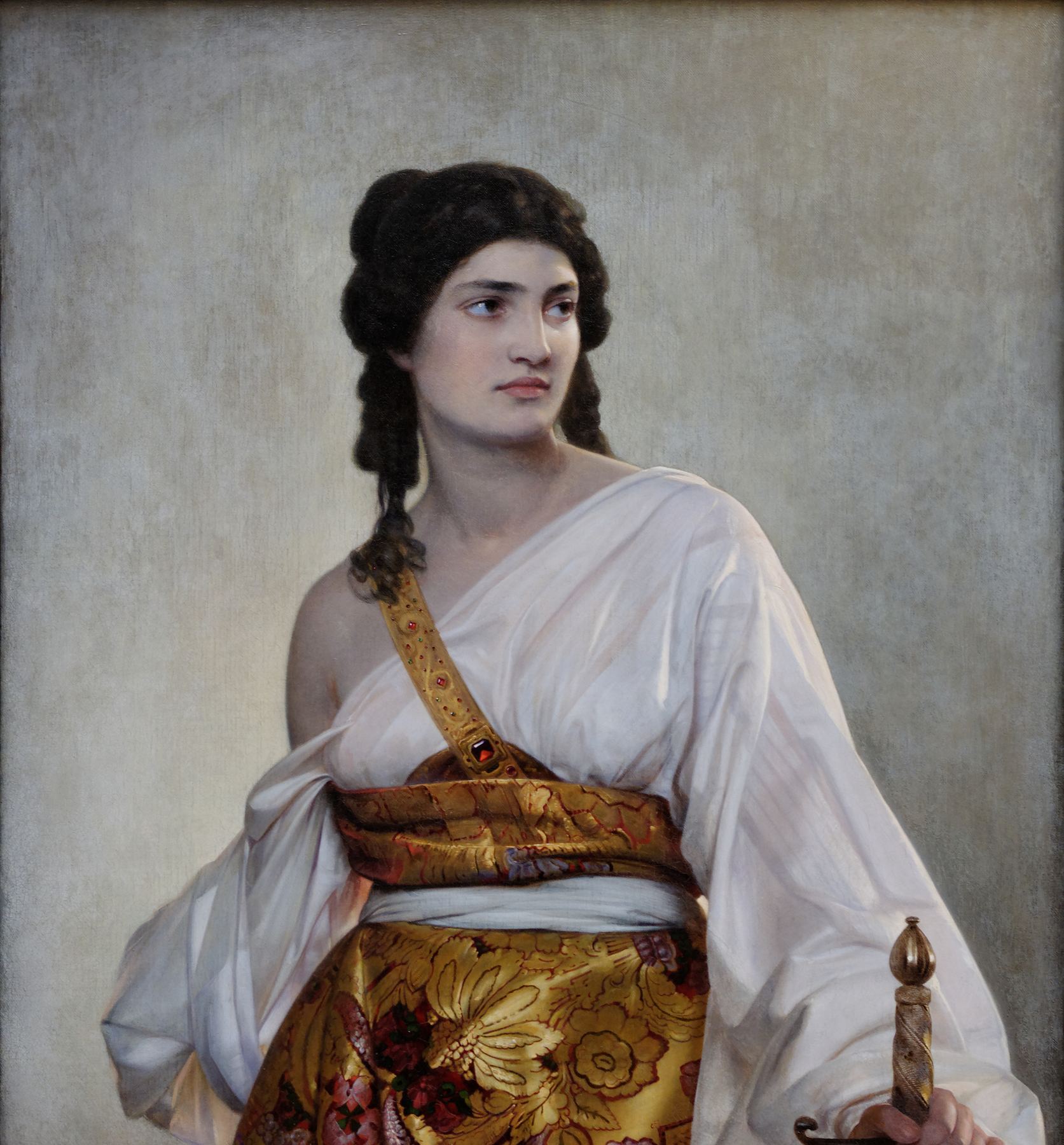
Picture: Judith, August Riedel, 1840. Neue Pinakothek, Munich. Public domain.
Who was Judith?
Judith was a rich, God-fearing widow of Bethulia, a hill town under siege by the Assyrian general Holofernes. When its rulers promised to surrender in five days, she rebuked them. Then she dressed in her finest clothes, walked into the enemy camp with her maid, and cut off Holofernes' head while he lay drunk. The army fled.
at a glance
Her path, in order
- WidowThree years and four months, fasting on her roof
- CounsellorShe told her town's rulers they were testing God
- DelivererShe went into the enemy camp with her maid
- SingerShe led the women's dance and sang to God
- BenefactorShe freed her maid and gave away her goods
in numbers
- Soldiers at the siege170k
- 170,000 on foot, plus 12,000 horsemen
- Camped below her small hill town
- Days her town's rulers gave God5
- If no help came, the town would surrender
- Judith called the deadline putting God to the test
- Nights she went out to pray3
- From the enemy camp, to a spring
- On the fourth day Holofernes gave a banquet
- Her age when she died105
- She grew old in her husband's house
- She never married again
did you know?
-
Jerome translated her book into Latin in one night. He says he gave it “a single night's work”.
Jerome, Preface to Judith, tr. Andrew S. Jacobs -
Three women hear almost the same blessing. Jael, in the book of Judges, is “Most blessed among women”. Judith is blessed “above all the women upon the earth”. And Mary, the mother of Jesus, hears, “Blessed are you among women”.
Judges 5:24; Judith 13:18; Luke 1:42
- In the Bible
- The Book of Judith, 16 chapters. She appears in chapter 8, and the rest of the book is hers.
- Which Bibles
- Catholic and Orthodox Bibles have it. Protestant Bibles leave it out, or print it among the Apocrypha. It is not in the Hebrew Bible.
- Home
- Bethulia, a hill town guarding a pass on the way to Jerusalem. No one has found it for sure.
- Family
- Daughter of Merari, of the tribe of Simeon. Widow of Manasses, who left her gold, silver, servants, cattle and land. The book names no children.
- Her name
- Yehudit in Hebrew. It means Jewess, a woman of Judah.
- When
- Her book sets her story under Nebuchadnezzar, whom it calls king of the Assyrians, soon after the Jews came home from exile. Whether it happened, and when, is argued over: see Her book, below.
- Died
- At Bethulia, aged 105. She was buried in her husband's cave, and Israel mourned her seven days.
- Also called
- Righteous Judith, in the Orthodox Church. Holy Judith, in the writings of Ambrose of Milan.
- In art
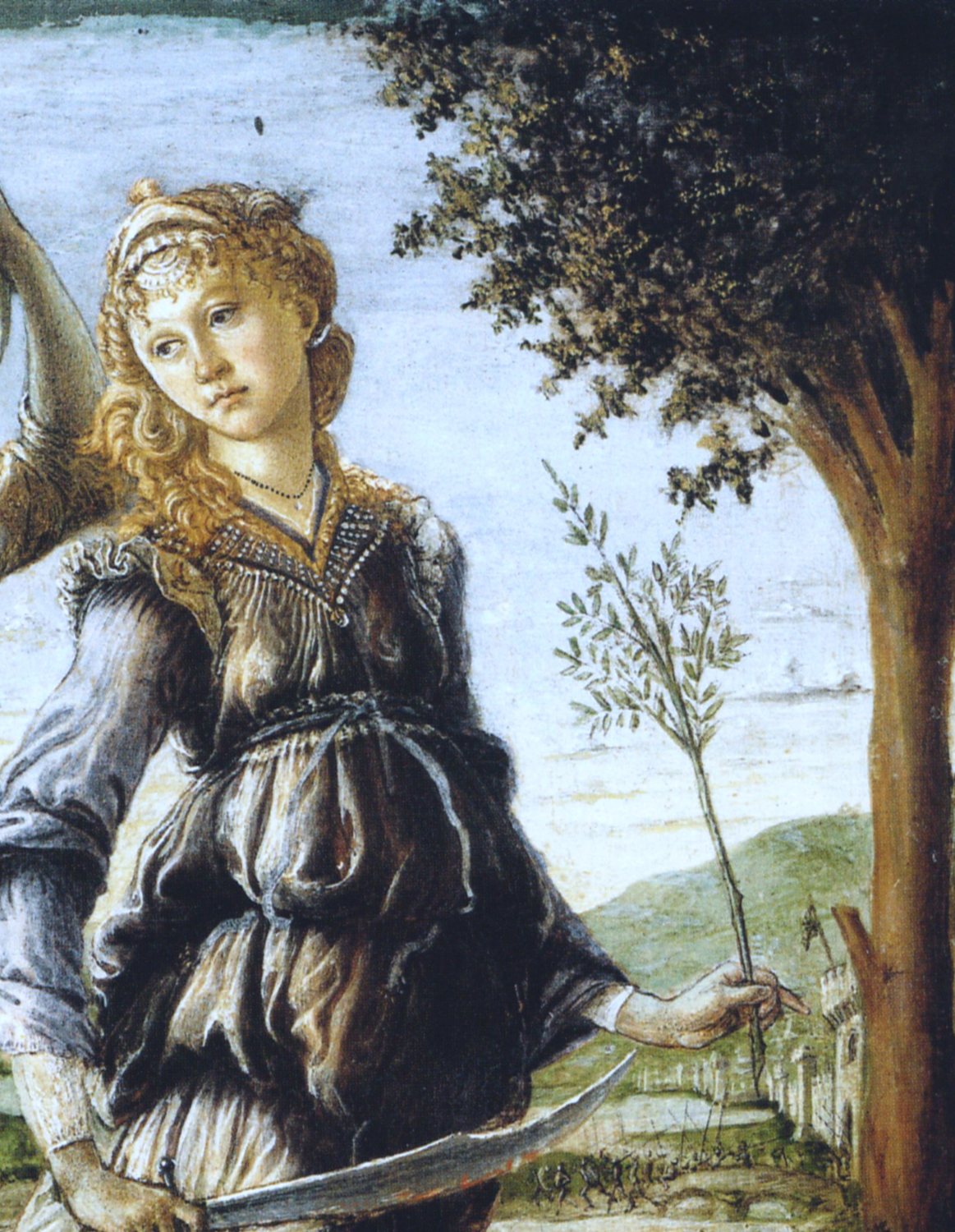
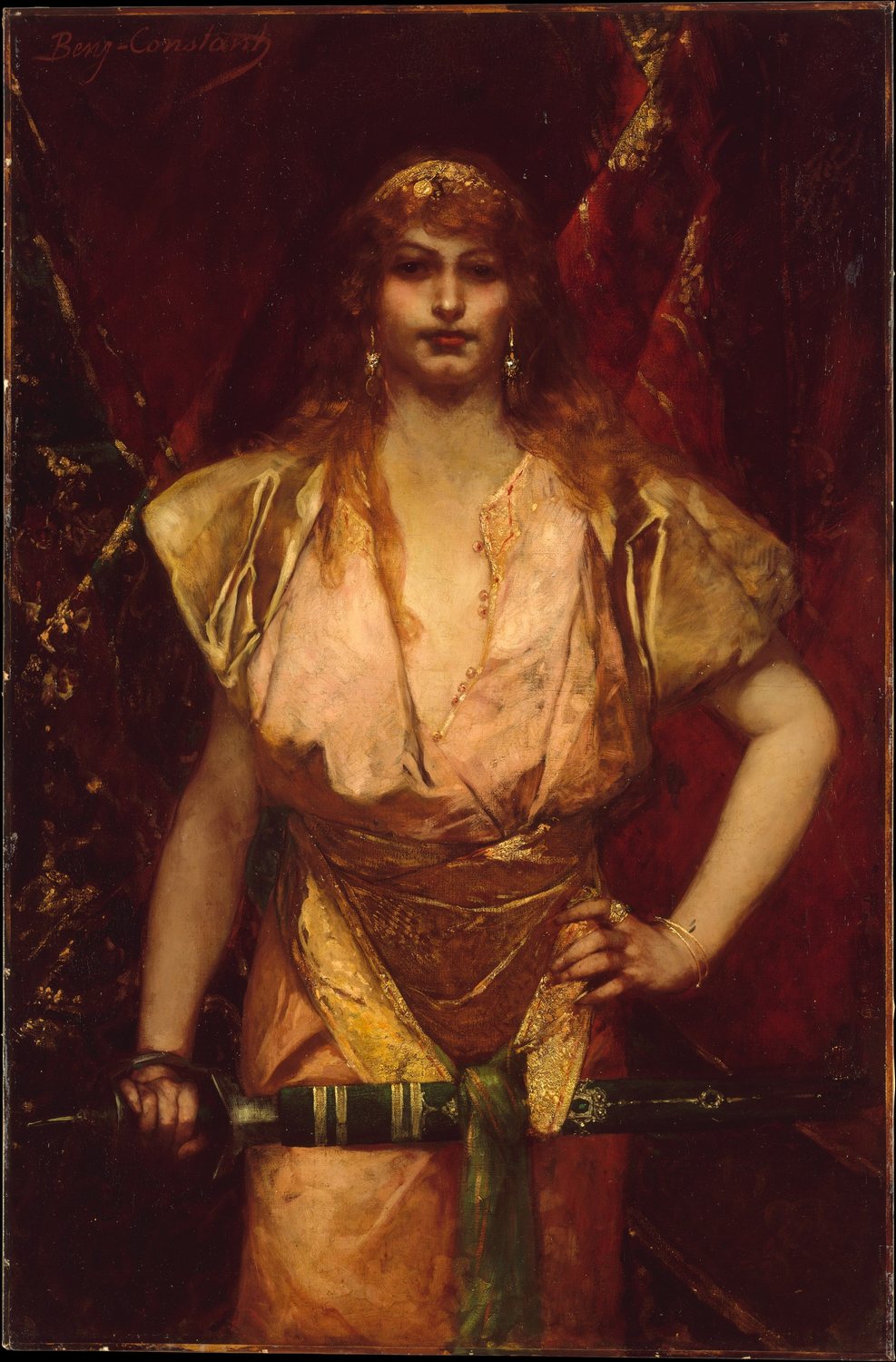
- Nearly always with a sword, as in the pictures on this page. Often her maid is with her, carrying the head of Holofernes.
what others said of her
The people she saved, and the early Church Fathers after them, in their own words.
There is not such a woman from one end of the earth to the other, for beauty of face and wisdom of words.
Blessed are you, daughter, in the sight of the Most High God, above all the women upon the earth.
You are the exaltation of Jerusalem! You are the great glory of Israel! You are the great rejoicing of our race!
Exposing herself to danger, she went out for the love which she bare to her country and people then besieged; and the Lord delivered Holofernes into the hands of a woman.
As one looks at her overwhelming danger, one would say she went out to die; as one looks at her faith, one says she went but out to fight.
Receive the widow Judith, example of chastity, and with triumphant praise acclaim her with eternal public celebration.
her life in twelve moments
Bethulia
Before the warA widow on the roof
Judith's husband Manasses died at the barley harvest. He stood in the heat over the men binding sheaves, fell on his bed, and died. For three years and four months she lived as a widow. She made a tent on the roof of her house and wore sackcloth. She fasted every day, except Sabbaths, new moons and feasts. She was beautiful, and rich in land and servants. “No one said anything evil about her, for she feared God exceedingly.”
Judith 8:1-8Bethulia
After thirty-four daysFive days
Holofernes, the chief general of Nebuchadnezzar, came to take the hill country. He camped below Bethulia with 170,000 foot soldiers and seized the springs. After 34 days the cisterns were empty. Women and young men fainted from thirst in the streets. The people begged their rulers to surrender. Ozias, the chief ruler, asked them to hold out five more days for God to help. “But if these days pass, and no help comes to us, I will do what you say.”
Judith 7:1-32Her house
The day of the rulers' oath“Who are you?”
Judith heard that her town's rulers had sworn to surrender in five days. She sent her maid to fetch them. She told them their word “is not right”. They had set God a deadline, as if He could be threatened. She asked them, “Now who are you that you have tested God this day, and stand in the place of God among the children of men?” Better to wait for His help, and pray. Ozias, the chief ruler, answered that she had spoken well, but the oath stood. “And now pray for us, because you are a godly woman.” Judith had another answer. “I will do a thing, which will go down to all generations among the children of our race.” She would not tell them what.
Judith 8:9-34Her house
The hour of the evening incenseHer prayer
At the hour when the evening incense was offered in Jerusalem, Judith lay face down, put ashes on her head, and cried out to God. She remembered how He had put a sword in the hand of her forefather Simeon. She asked Him to bless the plan she had made, even its lies: “Strike by the deceit of my lips the servant with the prince”. And she asked for a strange victory. “Break down their arrogance by the hand of a woman.” The heart of her prayer is below, in Her words.
Judith 9The gate of Bethulia
The night of her prayerThe garments of gladness
Judith took off her sackcloth and her widow's clothes. She bathed, anointed herself and braided her hair. She put on the clothes she used to wear while her husband lived, and all her jewellery. Her maid carried wine, oil, roasted grain, figs and bread, so that she would eat nothing unclean in the enemy camp. The elders at the gate were astonished at her beauty. The men of the town watched her go down the mountain and across the valley, until “they could see her no more.”
Judith 10:1-10The Assyrian camp
At the outpostsBefore Holofernes
The Assyrian watch stopped Judith. She said she had fled her people, and would show Holofernes how to take the hill country without losing a man. A hundred men took her to his tent, and the whole camp came out to stare. She told him her people were about to sin, by eating food set apart for God. Then God would give them into his hand. She would go out each night to pray, and tell him when they had sinned. Holofernes was delighted. If she did as she said, “your God will be my God”.
Judith 10:11 to 11:23The Assyrian camp
Three daysNights at the spring
Holofernes offered her food from his own table and wine from his own cup. She refused: she would eat what she had brought. She asked leave to go out to pray, and he told his guards not to stop her. For three days she stayed in the camp. Each night she went down to the spring in the valley of Bethulia, washed, and prayed to God to direct her way.
Judith 12:1-9Holofernes' tent
The fourth dayThe banquet
On her fourth day in the camp, Holofernes gave a feast for his own servants, and sent his eunuch Bagoas to bring her. He had wanted her since the day he saw her. She came in all her finery, and ate and drank what her maid had prepared. Holofernes “drank exceedingly much wine, more than he had drunk at any time in one day since he was born.” When evening came, the guests left and Bagoas shut the tent from outside. Judith was left alone with him. He lay sprawled on his bed, drunk.
Judith 12:10 to 13:2Holofernes' tent
The night of the banquetThe sword
Standing by Holofernes' bed, Judith prayed in her heart. She took his sword down from the bedpost at his head. She took hold of his hair and said, “Strengthen me, O Lord God of Israel, this day.” She struck his neck twice with all her might, and cut off his head. She rolled the body off the bed and took down the canopy. Then she gave the head to her maid, who put it in the food bag. The two walked out of the camp, as they did every night, to pray.
Judith 13:3-10The gate of Bethulia
The night of the banquet“Open, open the gate”
From far off she called to the watchmen. “Open, open the gate, now. God is with us”. The whole town ran down, small and great, hardly believing it, and lit a fire to see. She took Holofernes' head out of the bag and held it up, with the canopy from his bed. “The Lord struck him by the hand of a woman.” Holofernes had not touched her, she told them. All the people bowed down and worshipped God.
Judith 13:11-17Below Bethulia
At sunriseThe rout
At Judith's word, the people of Bethulia hung Holofernes' head on the town wall. At sunrise the men of the town marched out as if to attack. The Assyrian officers ran to wake their general. Bagoas, the general's eunuch, knocked, went in, and found the body without its head. He tore his clothes and shouted to the army: “One woman of the Hebrews has brought shame upon the house of King Nebuchadnezzar”. Panic swept the camp, and the whole army fled. Israel chased them past Damascus, and plundered the camp for thirty days.
Judith 14:1 to 15:7; 15:11Bethulia and Jerusalem
The victoryHer song
Joakim the high priest came from Jerusalem to see her and bless her. The women of Israel danced for her. She led the dance, crowned with olive, and the men followed in their armour. Then she sang a song of thanksgiving, and all the people sang with her. “The Almighty Lord brought them to nothing by the hand of a woman.” The people had given her Holofernes' tent and his silver. At Jerusalem she gave it all to God, even the canopy from his bed.
Judith 15:8 to 16:19
her words
Judith wrote nothing we have. These are her words as her book records them. Her book is not in the Berean Standard Bible, so her lines on this page are from the World English Bible, with capitals for God. The few other Bible lines are from the Berean Standard Bible.
Her prayer, before she went to the enemy camp
For Your power stands not in numbers, nor Your might in strong men, but You are a God of the afflicted. You are a helper of the oppressed, a helper of the weak, a protector of the forsaken, a savior of those who are without hope.
Her town's rulers had promised to surrender in five days. She lay face down, with ashes on her head, at the hour of the evening incense in Jerusalem.
Judith 9:1, 11Now who are you that you have tested God this day, and stand in the place of God among the children of men?
For God is not like a human being, that He should be threatened, neither is He like a son of man, that He should be won over by pleading.
Besides all this let's give thanks to the Lord our God, Who tries us, even as He did our fathers also.
Praise God! Praise Him! Praise God, Who has not taken away His mercy from the house of Israel, but has destroyed our enemies by my hand tonight!
Let all Your creation serve You; for You spoke, and they were made. You sent out Your Spirit, and it built them. There is no one who can resist Your voice.
For all sacrifice is little for a sweet savor, and all the fat is very little for a whole burnt offering to You; but he who fears the Lord is great continually.
often misquoted
Judith slept with Holofernes to get close to him.
What the sources sayHer book says she did not. She dressed to catch his eye, and he meant to seduce her: “He was watching for a time to deceive her from the day that he had seen her.” But he drank himself senseless first. Home again, she swore “he didn't commit sin with me, to defile and shame me.” Only his eunuch Bagoas, knocking at the tent next morning, “supposed that Holofernes was sleeping with Judith.” Ambrose counts it her first triumph that she came back “with her purity unspotted”.
Judith 12:16-20; 13:16; 14:14; Ambrose, On the Duties of the Clergy, Book 3, chapter 13Judith killed her enemy with a tent peg.
What the sources sayThat was Jael, in the book of Judges. While Sisera, the Canaanite general, lay asleep in her tent, Jael drove a tent peg through his temple. Judith used Holofernes' own sword. The two stories have much in common: a woman alone with an enemy general, the general asleep, and a song of praise after.
Judges 4:17-22 and 5:24-27; Judith 13:6-8her book
Judith's whole story is in one book, and Christians have long disagreed about it. Which Bibles hold it, and is it history? Here each side speaks for itself.
In Catholic and Orthodox Bibles
Early Christians read the Book of Judith, and Clement of Rome retold her story in his letter to Corinth. Jerome doubted it belonged in Scripture, but translated it anyway, because “the Nicene Council is considered to have counted this book among the number of sacred Scriptures”. A council at Carthage in 419 listed Judith among “the Canonical Scriptures”, and the Council of Trent did the same in 1546. The Orthodox Synod of Jerusalem, in 1672, named Judith among the books it defended:
“For we judge these also to be with the other genuine Books of Divine Scripture genuine parts of Scripture.”Jerome, Preface to Judith, tr. Andrew S. Jacobs; Code of Canons of the African Church (419), canon 24; Council of Trent, fourth session; Confession of Dositheus, question 3, tr. J. Robertson (1899)
Among the Apocrypha, or left out
Judith is not in the Hebrew Bible, and Protestant churches follow the Hebrew Bible for their Old Testament. The Catholic Encyclopedia puts it plainly: the book “is consequently excluded from the Protestant Canon”. Some Protestant Bibles leave it out. Others print it among the Apocrypha, between the Testaments, where it comes after Tobit. The Church of England's Thirty-Nine Articles list “The Book of Judith” among books the Church reads, but not for doctrine. The Articles credit these words to Jerome:
“the Church doth read for example of life and instruction of manners; but yet doth it not apply them to establish any doctrine”The Thirty-Nine Articles, Article 6, in the Book of Common Prayer (Oxford, about 1900); Catholic Encyclopedia (1910), “Book of Judith”; Encyclopaedia Britannica (1911), “Judith, The Book of”
Not in the Jewish Bible
Jewish Scripture has never included the Book of Judith. Origen asked the Jews of his day about it in the 200s. Augustine knew that “the Jews are said not to have received” it “into the canon of the Scriptures”. Jerome says the Jews counted it “among the apocrypha”, and he made his Latin from a copy in Aramaic. Origen wrote:
“Tobias (as also Judith), we ought to notice, the Jews do not use. They are not even found in the Hebrew Apocrypha, as I learned from the Jews themselves.”Origen, Letter to Africanus, chapter 13; Augustine, City of God, Book 18, chapter 26; Jerome, Preface to Judith
A true story
For most of Christian history the Book of Judith was read as history. Sulpicius Severus, writing about the year 400, tried to find the king under whom she lived. He settled on the Persian Ochus. Augustine placed her story in the time of Cyrus. Defenders point to details a mere story would not need: how her husband died, the passes her town guarded, and a family tree fifteen generations long. The Catholic Encyclopedia of 1910 admits “very serious difficulties”. But it says the Fathers “have ever looked upon the book as historical”, and:
“Catholics with very few exceptions accept the book of Judith as a narrative of facts, not as an allegory.”Sulpicius Severus, Sacred History, Book 2, chapter 14; Augustine, City of God, Book 18, chapter 26; Catholic Encyclopedia (1910), “Book of Judith”
A story told to teach
Many scholars now read the Book of Judith as a story told to teach, set in a past that never quite was. Its first verse makes Nebuchadnezzar king of the Assyrians at Nineveh. But the Nebuchadnezzar of history ruled from Babylon, after Nineveh had fallen. No one has found Bethulia. And the names can sound like symbols: Judith means Jewess. The scholar R. H. Charles, in the Encyclopaedia Britannica of 1911:
“The book in its fuller form was most probably written in the 2nd century B.C. The writer places his romance two centuries earlier”Judith 1:1; Catholic Encyclopedia (1910), “Book of Judith”; Encyclopaedia Britannica (1911), “Judith, The Book of”
friends, family and rivals
She has no name in the Book of Judith, but she is at Judith's side from start to end. She carried the food bag into the enemy camp, and carried Holofernes' head out in it. Judith set her free before she died.
Judith 10:5; 13:9-10; 16:23Her husband, of her own tribe and family. He died of the heat at the barley harvest. She lived on in his house, and was buried in his cave.
Judith 8:2-3; 16:23The chief ruler of Bethulia, of the tribe of Simeon. He promised to surrender after five days, and took her rebuke well: “All that you have spoken, you have spoken with a good heart.”
Judith 6:15; 7:30-31; 8:28The chief general of Nebuchadnezzar, “second to himself”, sent to punish the nations of the west. He laid siege to Bethulia and cut off its water.
Judith 2:4-13; 7:1-20The eunuch in charge of all Holofernes had. He brought Judith to Holofernes' banquet, shut the tent on the two of them, and found his master dead in the morning.
Judith 12:11-13; 13:1; 14:14-18An Ammonite leader who warned Holofernes that Israel could not be beaten unless it sinned against its God. For that, Holofernes had him left bound at the foot of Bethulia's hill. When he saw Holofernes' head, he fainted. Then he believed in God, was circumcised, and was “joined to the house of Israel”.
Judith 5:5-21; 6:10-14; 14:6-10The high priest in Jerusalem. He ordered the towns to hold the mountain passes, and came with the elders to bless her after Holofernes' army fled.
Judith 4:6-7; 15:8-10how she died
She died at home in Bethulia, at 105, and was buried in her husband's cave.
After Holofernes' army fled, she went up to Jerusalem with the people, and stayed three months while they feasted before the temple. Then she went home to her own land, and was honoured “in all the land”.
After her husband Manasses died, she never married again. “Many desired her, but no man knew her all the days of her life”. She grew old in her husband's house. Before she died, she set her maid free, and shared out her goods among her husband's family and her own.
She was buried in the cave of her husband, Manasses. “The house of Israel mourned for her seven days.” Her book ends on the peace she left behind: “There was no one who made the children of Israel afraid any more in the days of Judith, nor for a long time after her death.”
is she a saint?
The Orthodox honour her as Righteous Judith, on the Sunday of the Forefathers in December. No Western church keeps a day for her.
- OrthodoxRighteousSunday of the Forefathers, in December
- CatholicNo feast dayHer book is in its Bible
- AnglicanNot on the calendarHer song is a Church of England canticle
- LutheranNot on the calendarNeither the Missouri Synod nor the ELCA lists her
Rome's 1916 book of martyrs has no day for her, and the Anglican and Lutheran calendars have none either. Yet the early Church Fathers called her holy: Ambrose writes of “holy Judith”. And the Church of England sings her song. Common Worship: Daily Prayer keeps it among its canticles, as A Song of Judith.
The Orthodox Church in America (OCA) lists Righteous Judith on the Sunday of the Forefathers, the Sunday between 11 and 17 December, when the Orthodox remember the righteous of the Old Testament. Of her it says only this:
Information about the Righteous Judith may be found in the Old Testament book bearing her name.
what to read first
Judith 8 to 16
The Book of Judith
Her whole story, from the widow on the roof to her death at 105. Chapters 1 to 7 tell of the war before she appears.
Read it freeJudith 9
The Book of Judith
Her prayer before she went into the enemy camp, fourteen verses long.
Read it freeConcerning Widows, chapter 7
Ambrose of Milan
A short portrait of her courage, her fasting and her wisdom, written for widows.
Read it freeSacred History, Book 2, chapters 14 to 16
Sulpicius Severus
Her story retold in a few paragraphs, written about the year 400. He also guesses when she lived.
Read it freewhere the quiz places her
The record, drawn
Each arm is one axis; length is how far from the centre the recorded acts sit. An axis the text does not place Judith on has no arm.
In the quiz's own words
Plans ahead, out in front, quick to confront
The six axes
Your answers are marked. From your result on . See your result
In the hatched middle the quiz names neither pole.
The moments behind each axis
Each line is one recorded act and the reference it is taken from. The sentence says what the person did; where it is in quotation marks it is verbatim from the World English Bible British Edition. An act listed here is evidence of how this person moved, not approval of it; read the passage for how it was received. On 1 of the six the text does not show this, and that axis is left out of the match rather than filled in.
Pace Acts first ↔ Weighs first
quick to move
-
Judith 8:33 toward Acts first
She told the rulers to stand at the gate that night, and said she would go out with her maid.
You shall all stand at the gate tonight. I will go out with my maid.
Voice Says it ↔ Holds it
quick to speak up
-
Judith 8:11 toward Says it
When the rulers of Bethulia came to her, she told them that what they had said before the people that day was not right.
your word that you have spoken before the people this day is not right
-
Judith 13:14-15 toward Says it
She said with a loud voice that God had destroyed their enemies by her hand that night, then took the head out of the bag and showed it.
She said to them with a loud voice
-
Judith 8:34 toward Holds it
She told the rulers not to enquire about her act, and that she would not tell them until the things she would do were finished.
I will not tell you until the things are finished that I will do
Lead Out in front ↔ Alongside
out in front
-
Judith 14:1-2 toward Out in front
She told the people to hang the head on the battlement of their wall, and at sunrise to take up their weapons, send every valiant man out of the city and set a captain over them.
take this head, and hang it upon the battlement of your wall
-
Judith 10:6-9 toward Out in front
At the gate she told Ozias and the elders standing by it to command that it be opened for her, and they commanded the young men to open it.
-
Judith 15:13 toward Out in front
She went before all the people in the dance, leading all the women, and all the men of Israel followed in their armour.
she went before all the people in the dance, leading all the women
Conflict Confronts ↔ Reconciles
quick to confront
-
Judith 8:12 toward Confronts
She asked the rulers who they were, that they had tested God that day and stood in the place of God amongst men.
Now who are you that you have tested God this day
-
Judith 13:6-8 toward Confronts
She took Holofernes' sword down from the bedpost at his head, took hold of his hair, and struck twice upon his neck.
She struck twice upon his neck with all her might and cut off his head
Reasons Asks why ↔ Takes it on trust
not shown in the text
The text does not show this. Nothing in the record puts Judith at either end of this axis, so it is left out when a reader is matched, rather than counted as a position in the middle.
-
No record
The text does not show this.
Plans Plans ahead ↔ Meets the day
plans ahead
-
Judith 10:5 toward Plans ahead
She gave her maid a container of wine and a flask of oil, filled a bag with roasted grain, figs and bread, and packed all her vessels together.
filled a bag with roasted grain, lumps of figs, and fine bread
-
Judith 13:3 toward Plans ahead
She had told her servant to stand outside her bedchamber and wait for her to come out, as she did daily, and she spoke to Bagoas in the same words.
-
Judith 16:24 toward Plans ahead
She distributed her goods before she died, to her husband's nearest kin and to her own.
She distributed her goods before she died
Nearest on the map
Distance between two sets of coordinates across every axis, on the same scale a reader's answers are measured on. No number is shown against a person, and nearness is not likeness: two people can land in the same band for different reasons.
Suggest a correction. Corrections that are applied are recorded in the public changelog.
 Quiz Who in the Bible are you most like? Answer eighteen plain statements about you, none of them about the Bible, and see how near you land to Judith. Start
  Quiz Christian Personality Test Which of eight types are you? Find your own. Start
 people like her
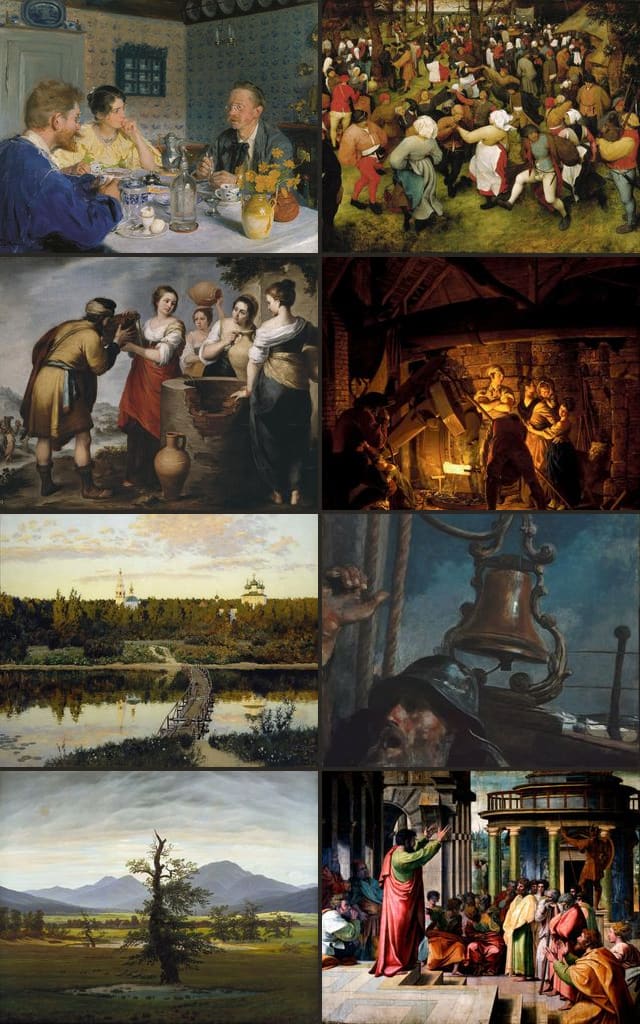
 Deborah
 A prophetess who judged Israel. She foretold that an enemy general would fall to a woman: “the LORD will be selling Sisera into the hand of a woman.”
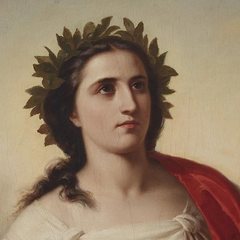
Judges 4:4-9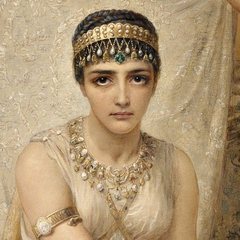 Esther
 Clement of Rome praises her in the same breath as Judith. She too risked her life to save her people: “And if I perish, I perish!”
Esther 4:16; 1 Clement 55 Abigail
 “An intelligent and beautiful woman” who rode out with bread, wine and figs to meet an armed man, and turned him back with her words.
1 Samuel 25sources
Her life, and her words
- The World English Bible, the Book of Judith, public domain. Every line of Judith on this page.
- The Berean Standard Bible, public domain. The other Bible lines on this page, outside the section on where the Bible figure quiz places her.
- 1 Clement, chapter 55. Tr. Alexander Roberts and James Donaldson. Ante-Nicene Fathers, volume 1, 1885.
- Origen, Letter to Africanus. Tr. Frederick Crombie. Ante-Nicene Fathers, volume 4, 1885.
- Ambrose, On the Duties of the Clergy, Book 3. Tr. H. de Romestin. Nicene and Post-Nicene Fathers, second series, volume 10, 1896.
- Ambrose, Concerning Widows. Same edition.
- Jerome, Preface to Judith. Tr. Andrew S. Jacobs, 2004, public domain.
- Sulpicius Severus, Sacred History, Book 2. Tr. Alexander Roberts. Nicene and Post-Nicene Fathers, second series, volume 11, 1894.
- Augustine, City of God, Book 18. Tr. Marcus Dods. Nicene and Post-Nicene Fathers, first series, volume 2, 1887.
Her book
- Catholic Encyclopedia, 1910, “Book of Judith”, by Hugh Pope
- Encyclopaedia Britannica, 1911, “Judith, The Book of”, by R. H. Charles
- The Code of Canons of the African Church, 419, canon 24. Tr. Henry Percival. Nicene and Post-Nicene Fathers, second series, volume 14, 1900.
- The Council of Trent, fourth session, 1546. Tr. J. Waterworth, 1848.
- The Confession of Dositheus, Synod of Jerusalem, 1672, question 3. Tr. J. Robertson, 1899.
- The Book of Common Prayer, Oxford, about 1900. The Thirty-Nine Articles, Article 6.
Calendars
- OCA, Righteous Judith
- OCA, Sunday of the Forefathers
- The Roman Martyrology, 1916 edition
- Church of England, Canticles (Daily Prayer), 45: A Song of Judith
- Church of England, Common Worship calendar
- The Episcopal Church, Lesser Feasts and Fasts 2022
- The Lutheran Church–Missouri Synod, Commemorations
- Evangelical Lutheran Worship, ELCA, the church year (final draft, 2006)
Pictures
- Judith, August Riedel, 1840. Neue Pinakothek, Munich. Public domain.
- The Return of Judith to Bethulia, Sandro Botticelli, about 1470. Uffizi, Florence. Public domain.
- Judith, Benjamin-Constant, possibly about 1886. The Metropolitan Museum of Art, New York. CC0.