
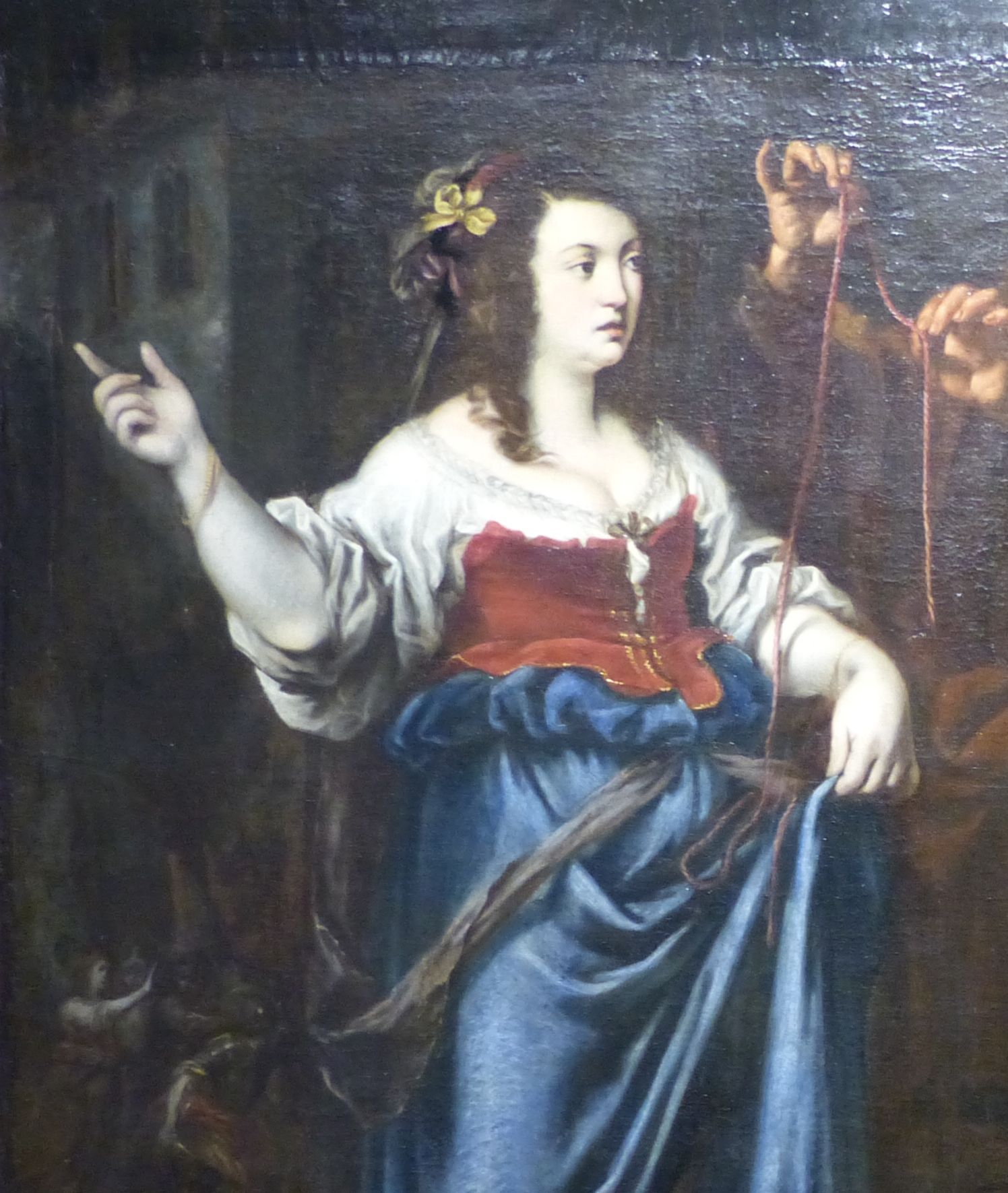
Rahab
A woman of Jericho who hid Joshua's spies and trusted their God. When the city fell, she and her family were spared, and Matthew counts her among the ancestors of Jesus.
Picture: Rahab and the Emissaries of Joshua (detail), attributed to Matteo Rosselli, about 1630. Musée des Beaux-Arts, Nîmes. Photograph by Finoskov. Public domain.
Who was Rahab?
Rahab was a prostitute in Jericho, and her house was built into the city wall. She hid two of Joshua's spies, told them the LORD had given Israel the land, and let them down by a rope. She tied a scarlet cord in her window, and when Jericho fell, her whole family was spared.
at a glance
Her path, in order
- Woman of JerichoHer house built into the city wall
- HostOf Joshua's two spies
- BelieverShe confessed Israel's God
- RescuerShe hid the spies and sent them to safety
- SurvivorSpared with her family when Jericho fell
- AncestorOf King David, and of Jesus
in numbers
- Days Israel marched around Jericho7
- Once a day for six days
- Seven times on the seventh
- Generations down to King David4
- Boaz, Obed, Jesse, David
- She was David's great-great-grandmother
- Times the New Testament names her3
- In Matthew's family line of Jesus
- Among the faithful, in Hebrews and James
did you know?
-
The Hebrew word for her scarlet cord is tiqvah. Everywhere else in the Bible, the same word means hope.
Joshua 2:18, 21; Strong's Hebrew 8615, at Bible Hub -
Hebrews 11 names only two women among its heroes of faith: Sarah and Rahab. And when James wants two examples of faith shown in deeds, he picks Abraham and Rahab.
Hebrews 11:11, 31; James 2:21-25 -
Dante puts her in heaven. In his Paradiso she shines in the heaven of Venus, the first soul that Christ’s triumph brought there: “First of Christ’s triumph was she taken up.”
Dante, Paradiso, canto 9, tr. Henry Wadsworth Longfellow
- In the Bible
- Joshua 2 and 6. The New Testament names her three times: in Matthew 1, Hebrews 11 and James 2.
- Home
- Jericho, near the fords of the Jordan. Her house was built into the city wall, with a window on the outside.
- Her people
- A Canaanite of Jericho, not an Israelite. Justin Martyr and Irenaeus saw in her the Gentiles coming to Christ.
- Her name
- From the Hebrew for broad or wide. It is spelled differently from the Rahab of the Psalms, a poetic name for Egypt.
- Her trade
- A prostitute, as the book of Joshua says, and Hebrews and James after it. Josephus, a Jewish historian of the first century, calls her house an inn.
- Family
- Her father, mother, brothers and sisters, all spared with her. Matthew names the father of her son Boaz: Salmon, of the tribe of Judah.
- When
- As Israel crossed the Jordan under Joshua, after forty years in the wilderness.
- Also called
- Rahab the harlot, in older English Bibles and in the Fathers. Raab, in the Greek of Hebrews and James.
- In art
- Letting the spies down from her window, or with the scarlet cord, as at the top of this page.
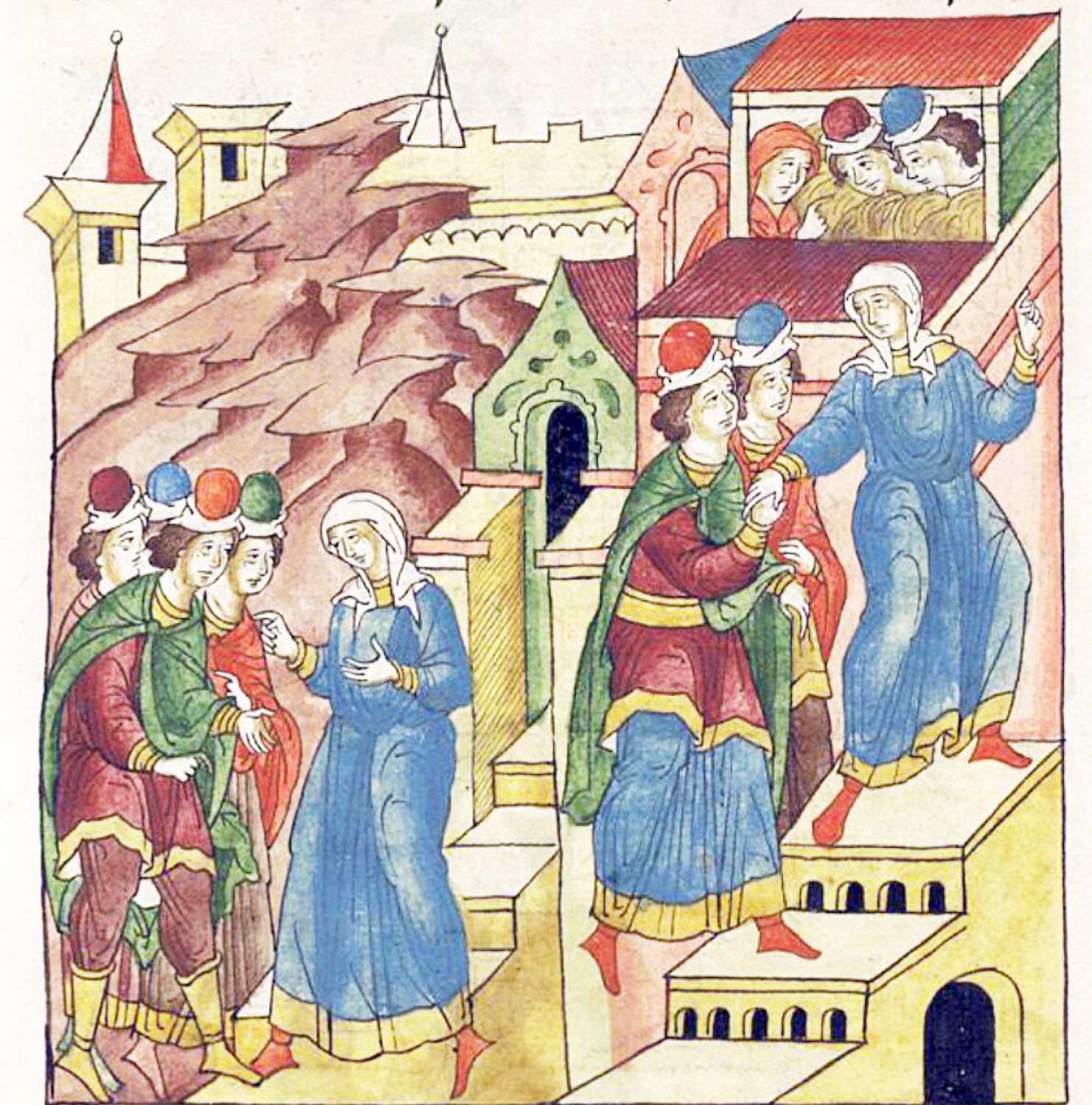
what others said of her
The New Testament, a Jewish historian and the early Church, in their own words.
By faith the prostitute Rahab, because she welcomed the spies in peace, did not perish with those who were disobedient.
In the same way, was not even Rahab the prostitute justified by her actions when she welcomed the spies and sent them off on another route?
He gave her certain lands immediately, and had her in great esteem ever afterwards.
And thus they made it manifest that redemption should flow through the blood of the Lord to all them that believe and hope in God. Ye see, beloved, that there was not only faith, but prophecy, in this woman.
The typical Jesus saved Rahab the harlot when she believed: and the true Jesus says, Behold, the publicans and the harlots go before you into the kingdom of God.
For this end he hath mentioned Ruth also and Rahab, the one an alien, the other an harlot, that thou mayest learn that He came to do away with all our ills. For He hath come as a Physician, not as a Judge.
her life in five moments
Jericho
Before Israel crossed the JordanTwo spies at her door
Joshua “secretly sent two spies from Shittim” to look over the land, especially Jericho. “So they went and entered the house of a prostitute named Rahab and stayed there.” Word reached the king of Jericho, and he sent to her: “Bring out the men who came to you”. She had already hidden them on her roof, among the stalks of flax she had laid out there. Yes, she said, the men had come, but they had left at dusk, when the gate was about to close. “Pursue them quickly, and you may catch them!” The king's men set off along the road to the fords of the Jordan, and the gate was shut behind them.
Joshua 2:1-7Her roof
The night the spies came“Your God is God”
Before Joshua's two spies lay down, Rahab went up to them on the roof. “I know that the LORD has given you this land”, she said. Jericho had heard how the LORD dried up the Red Sea, and what Israel had done to Sihon and Og, two kings across the Jordan. “When we heard this, our hearts melted”. Then she made her confession, given below in her own words. She asked them to swear by the LORD to spare her father and mother, her brothers and sisters. “Our lives for your lives!” the men agreed.
Joshua 2:8-14The city wall
Before the spies leftThe scarlet cord
Her house was built into the city wall, so she let the two spies down by a rope through the window. “Go to the hill country,” she told them, and hide there three days. The men gave her a sign. When Israel came, she must tie “this scarlet cord in the window through which you let us down”, and bring her whole family inside. Anyone who went out into the street would be on his own. “Let it be as you say,” she replied. When they had gone, she tied the scarlet cord in the window. The spies hid three days in the hills, then went back to Joshua: “The LORD has surely delivered the entire land into our hands”.
Joshua 2:15-24Jericho
The seventh day of marchingThe wall falls
Jericho was shut tight. For six days Israel marched around the city once a day, with seven priests blowing rams' horns before the ark of the covenant. On the seventh day they went around seven times. Before the shout, Joshua gave an order: “Only Rahab the prostitute and all those with her in her house will live, because she hid the spies we sent.” The horns sounded, the people shouted, “and the wall collapsed.” Joshua sent the two spies into her house to bring her out, “just as you promised her.” They brought out her whole family and settled them outside the camp. The rest of the city was destroyed and burned.
Joshua 6:1-24Israel
After Jericho fellIn the line of David
Joshua spared her, with her father's household, “because she hid the men Joshua had sent to spy out Jericho.” The book of Joshua ends her story simply: “So she has lived among the Israelites to this day.” Matthew adds what came next. She became the mother of Boaz, by a man of Judah named Salmon. Boaz married Ruth, and their grandson Jesse was the father of King David. So Matthew writes her into the family line of Jesus: “Salmon was the father of Boaz by Rahab”.
Joshua 6:25; Matthew 1:5-6
her words
Rahab wrote nothing. These are her words as the book of Joshua records them. Outside the section on where the Bible figure quiz places her, every Bible line on this page is from the Berean Standard Bible.
On her roof, to the spies
When we heard this, our hearts melted and everyone’s courage failed because of you, for the LORD your God is God in the heavens above and on the earth below.
The king of Jericho's men had gone off toward the Jordan. She went up to the two spies hidden under her flax, and told them what Jericho had heard.
Joshua 2:11Yes, the men did come to me, but I did not know where they had come from. At dusk, when the gate was about to close, the men went out, and I do not know which way they went. Pursue them quickly, and you may catch them!
I know that the LORD has given you this land and that the fear of you has fallen on us, so that all who dwell in the land are melting in fear of you.
For we have heard how the LORD dried up the waters of the Red Sea before you when you came out of Egypt.
Now therefore, please swear to me by the LORD that you will indeed show kindness to my family, because I showed kindness to you.
Go to the hill country, so that your pursuers will not find you. Hide yourselves there for three days until they have returned; then go on your way.
was she right to lie?
To save the spies, she told the king of Jericho's men that the spies had already gone. Christians have argued about that lie ever since. Here each side speaks for itself.
What the Bible praises
Joshua spared her “because she hid the spies we sent.” Hebrews praises her faith: she “welcomed the spies in peace.” James praises her deeds: she “welcomed the spies and sent them off on another route.” None of them mentions what she told the king of Jericho's men.
Joshua 6:17; Hebrews 11:31; James 2:25Augustine: the kindness, not the lie
Augustine held that a Christian may never lie, even to save a life. He sets Rahab beside the Hebrew midwives in Egypt, who lied to Pharaoh to save baby boys. God rewarded them, he says, “not because they lied, but because they were merciful to God's people.” More could not yet be asked of Rahab, for she did not yet belong to God's people. For hiding the spies, for her faith and for her good counsel, “let her be praised”. But her lie was forgiven, not held up to copy.
“That therefore which was rewarded in them was, not their deceit, but their benevolence; benignity of mind, not iniquity of lying.”Augustine, Against Lying
Cassian: a medicine for deadly danger
In John Cassian's Conferences, the Egyptian monk Abba Joseph takes the other side. A lie, he says, is like hellebore, a poisonous plant used as medicine: deadly to the healthy, a remedy when death is near. Had Rahab told the truth, she and her house would have died with the city. She would never have been “inserted in the progenitors of our Lord's nativity”. Even so, he warns:
“When then any grave danger hangs on confession of the truth, then we must take to lying as a refuge, yet in such a way as to be for our salvation troubled by the guilt of a humbled conscience.”John Cassian, Conferences, Conference 17
often misquoted
Rahab was an innkeeper, not a prostitute.
What the sources sayThe Bible calls her a prostitute. The book of Joshua does, and so do Hebrews and James. The gentler reading is old, though. Josephus, writing in the first century, has the spies lodge in “the inn kept by Rahab”. An Aramaic paraphrase of Joshua made her an innkeeper, the Jewish Encyclopedia notes, and the medieval Jewish scholar Rashi followed it. The Talmud itself takes her for a harlot.
Joshua 2:1; Hebrews 11:31; James 2:25; Josephus, Antiquities of the Jews, book 5, chapter 1; Jewish Encyclopedia, “Rahab”The Rahab of the Psalms is Rahab of Jericho.
What the sources sayThey are two different words. In Hebrew they are spelled with different letters, and hers means broad. The other Rahab is a poetic name for Egypt, and for a monster of the sea. Isaiah calls Egypt “Rahab Who Sits Still”, and Psalm 89 says to God, “You crushed Rahab like a carcass.” Some Fathers still heard Psalm 87 as about her: “I will mention Rahab and Babylon among those who know Me.” Cyril of Jerusalem did, and so did Ambrose. The 1894 English edition of Cyril adds a note: the psalm “has nothing to do with Rahab the harlot.”
Isaiah 30:7; Psalm 87:4; 89:10; Strong's Hebrew 7343 and 7294; Cyril of Jerusalem, Catechetical Lectures, Lecture 2, with its noteRahab married Joshua.
What the sources sayNot in the Bible. The book of Joshua says only that she lived among the Israelites, and Matthew names Salmon as the father of her son Boaz. The marriage to Joshua is a Jewish tradition, found in the Talmud. It adds that eight prophets who were also priests came from her, Jeremiah among them. So did the prophetess Huldah.
Joshua 6:25; Matthew 1:5; Jewish Encyclopedia, “Rahab”, on the Talmud, tractate Megillahfriends, family and rivals
 Ruth
Ruth Her daughter-in-law, by Matthew's reckoning: Ruth married her son Boaz. Another woman from outside Israel who came to trust Israel's God.
Matthew 1:5; Ruth 4:13 David
David Her great-great-grandson, by Matthew's family line: Boaz, Obed, Jesse, then “David the king”.
Matthew 1:5-6; Ruth 4:21-22Moses' successor. He sent the two spies from Shittim, and when Jericho fell he sent them to bring her out, with all her family.
Joshua 2:1; 6:22-25Joshua's men, never named. She hid them under her flax and let them down from her window. They swore to spare her house, and kept their word.
Joshua 2; 6:22-23He heard that spies had come and sent to her house for them. She sent his men off down the road to the Jordan.
Joshua 2:2-7The father of her son, in Matthew's line. The book of Ruth names him as the father of Boaz, but only Matthew names Rahab as the mother.
Matthew 1:4-5; Ruth 4:20-21Her son. He was the kind landowner of Bethlehem who married Ruth, and the great-grandfather of David.
Matthew 1:5; Ruth 4:13-22is she a saint?
The New Testament counts her among the faithful, and the Fathers praised her faith. But she has no feast day of her own. East and West remember her with the ancestors of Christ just before Christmas, when her name is read out in the Gospel.
- OrthodoxRememberedWith Christ's ancestors, the Sunday before Christmas
- CatholicRememberedWith Christ's forefathers, 24 December
- AnglicanNot on the calendarChurch of England and Episcopal Church
- LutheranNot on the calendarMissouri Synod and ELCA
On the last Sunday before Christmas, the Orthodox remember the forefathers of Christ. The Gospel that day is Matthew's family line of Jesus, with its line “Salmon was the father of Boaz by Rahab”.
Rome's book of martyrs keeps 24 December for all the holy forefathers of Jesus Christ. That evening, at the vigil Mass of Christmas, the Gospel is Matthew's family line of Jesus.
what to read first
Joshua 2
The book of Joshua
The spies, the roof, her confession and the scarlet cord. One chapter.
Read it freeJoshua 6
The book of Joshua
Seven days of marching. The wall falls, and she and her family are brought out alive.
Read it freeHebrews 11
The letter to the Hebrews
The roll call of faith, from Abel to Abraham and Moses, with her name among them.
Read it free1 Clement, chapter 12
Clement of Rome
A short chapter from about 97: the first reading of her scarlet cord as a sign of the Lord's blood.
Read it freewhere the quiz places her
The record, drawn
Each arm is one axis; length is how far from the centre the recorded acts sit. An axis the text does not place Rahab on has no arm.
In the quiz's own words
Acts first, more in front than alongside, slow to speak up
The six axes
Your answers are marked. From your result on . See your result
In the hatched middle the quiz names neither pole.
The moments behind each axis
Each line is one recorded act and the reference it is taken from. The sentence says what the person did. An act listed here is evidence of how this person moved, not approval of it; read the passage for how it was received. On 2 of the six the text does not show this, and that axis is left out of the match rather than filled in.
Pace Acts first ↔ Weighs first
acts first
-
Joshua 2:4 toward Acts first
She took the two men and hid them, and told the messengers she did not know where they came from.
-
Joshua 2:15 toward Acts first
She let them down by a cord through the window, for her house was on the wall.
Voice Says it ↔ Holds it
slow to speak up
-
Joshua 2:4-5 toward Holds it
She told the king's messengers the men had gone out at dark and to pursue them quickly.
-
Joshua 2:9-11 toward Says it
She told the two spies what the city had heard about the Red Sea and about Sihon and Og.
Lead Out in front ↔ Alongside
more in front than alongside
-
Joshua 2:16 toward Out in front
She told the spies where to go and how many days to stay hidden.
-
Joshua 2:12-13 toward Out in front
She required an oath from them for her father, mother, brothers and sisters before they left.
Conflict Confronts ↔ Reconciles
not shown in the text
The text does not show this. Nothing in the record puts Rahab at either end of this axis, so it is left out when a reader is matched, rather than counted as a position in the middle.
-
No record
The text does not show this.
Reasons Asks why ↔ Takes it on trust
not shown in the text
The text does not show this. Nothing in the record puts Rahab at either end of this axis, so it is left out when a reader is matched, rather than counted as a position in the middle.
-
No record
The text does not show this.
Plans Plans ahead ↔ Meets the day
leans to meeting the day
-
Joshua 2:4-6 toward Meets the day
Two men came to her house and she hid them under the stalks of flax on the roof when the messengers came.
Nearest on the map
Distance between two sets of coordinates across every axis, on the same scale a reader's answers are measured on. No number is shown against a person, and nearness is not likeness: two people can land in the same band for different reasons.
Suggest a correction. Corrections that are applied are recorded in the public changelog.
 Quiz Who in the Bible are you most like? Answer eighteen plain statements about you, none of them about the Bible, and see how near you land to Rahab. Start
  Quiz Christian Personality Test Which of eight types are you? Find your own. Start
 people like her
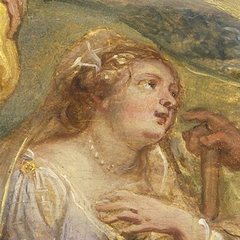 Abigail
 She too saw what God would do before it happened, acted fast to save her household from an army, and asked to be remembered: “may you remember your servant.”
1 Samuel 25:18-31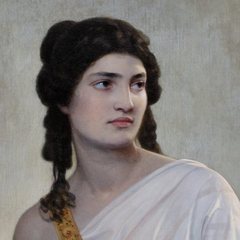 Judith
 Another woman who used deception to save lives: Judith saved her city, Rahab her household. Ambrose names the two women together.
Judith 10 to 13; Ambrose, Concerning Virginity, Book 2sources
Her life, and her words
- The Berean Standard Bible, public domain. Every Bible line on this page outside the section on where the Bible figure quiz places her.
- Josephus, Antiquities of the Jews, book 5. Tr. William Whiston.
- 1 Clement, chapter 12. Tr. Alexander Roberts and James Donaldson. Ante-Nicene Fathers, volume 1, 1885.
- Justin Martyr, Dialogue with Trypho, chapter 111. Same edition.
- Irenaeus, Against Heresies, Book 4, chapter 20. Same edition.
- Cyril of Jerusalem, Catechetical Lectures, Lectures 2 and 10. Tr. Edwin Hamilton Gifford. Nicene and Post-Nicene Fathers, second series, volume 7, 1894.
- Ambrose, Exposition of the Christian Faith, Book 5, and Concerning Virginity, Book 2. Nicene and Post-Nicene Fathers, second series, volume 10.
- John Chrysostom, Homilies on Matthew, Homily 3. Nicene and Post-Nicene Fathers, first series, volume 10.
- Augustine, Against Lying. Tr. H. Browne. Nicene and Post-Nicene Fathers, first series, volume 3.
- John Cassian, Conferences, Conference 17. Tr. Edgar C. S. Gibson. Nicene and Post-Nicene Fathers, second series, volume 11, 1894.
- Dante, Paradiso, canto 9. Tr. Henry Wadsworth Longfellow, 1867.
Reference
- Jewish Encyclopedia, 1905, “Rahab”
- Bible Hub, Strong's Hebrew 8615, for the cord and hope
- Bible Hub, Strong's Hebrew 7343 and 7294, for her name and the Rahab of the Psalms
Calendars
- OCA, the Sunday before the Nativity
- OCA, Scripture readings, the Sunday before the Nativity, Matthew 1:1-25
- The Roman Martyrology, 24 December, as quoted in Latin and English by Fr John Zuhlsdorf, with the Gospel of the vigil Mass
- USCCB, Liturgical Calendar 2026, the calendar used at Mass in the United States
- Church of England, Common Worship calendar
- The Episcopal Church, Lesser Feasts and Fasts 2022
- The Lutheran Church–Missouri Synod, Commemorations
- Evangelical Lutheran Worship, ELCA, the church year (final draft, 2006)
Pictures
- Rahab and the Emissaries of Joshua, attributed to Matteo Rosselli, about 1630. Musée des Beaux-Arts, Nîmes. Photograph by Finoskov. Public domain.
- Rahab and the spies, a miniature from the Illustrated Chronicle of Ivan the Terrible, 1560s. Public domain.