
Ruth
A widow from Moab who would not leave her mother-in-law. She gleaned barley in the field of Boaz, married him, and became King David's great-grandmother.
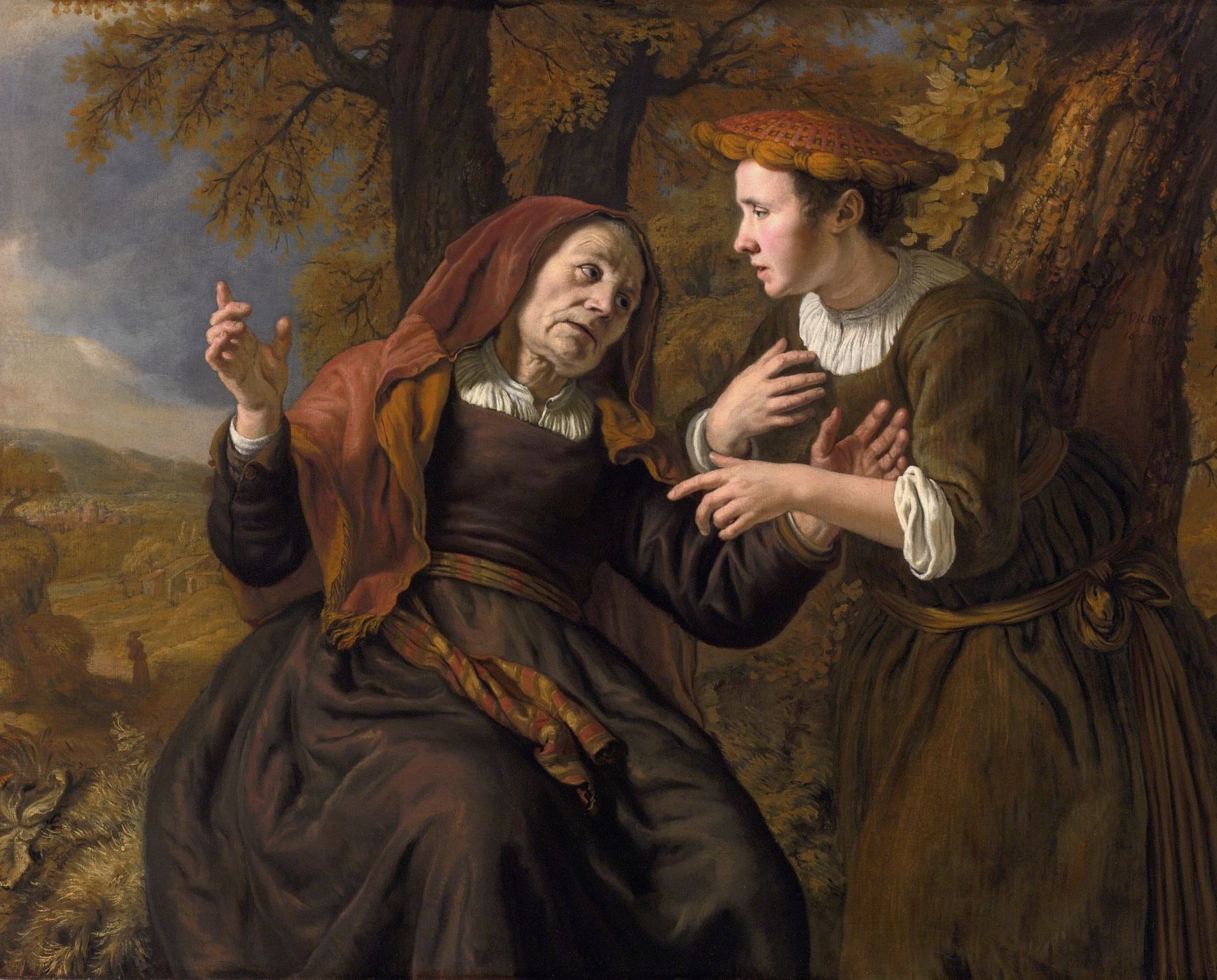
Picture: Ruth swearing her allegiance to Naomi, Jan Victors, 1653. Oil on canvas. Public domain.
Who was Ruth?
Ruth was a woman of Moab who married into a family from Bethlehem. When her husband died, she would not leave her widowed mother-in-law, Naomi. She went home with her to Judah and gleaned barley in the field of Boaz, who married her. Their son Obed was the grandfather of King David.
at a glance
Her path, in order
- WifeOf Mahlon, in Moab
- WidowAbout ten years after she married
- CompanionShe went with Naomi to Bethlehem
- GleanerIn the barley field of Boaz
- BrideRedeemed at the town gate
- MotherOf Obed, David's grandfather
in numbers
- Sons she was worth to Naomi7
- “better to you than seven sons”
- So said the women of Bethlehem
- Women in Matthew's family tree of Jesus5
- Tamar, Rahab and Ruth
- Uriah's wife, and Mary
did you know?
-
Jews read her book at Shavuot, the Feast of Weeks, 50 days after Passover. Her story, like the feast, comes at harvest time.
Britannica, “Ruth” and “Shavuot” -
The Jewish historian Josephus retold her story around the year 93. In his version, Boaz bids Ruth pull off the shoe of the kinsman who would not marry her and “spit in his face, according to the law”, as Deuteronomy 25:9 lays down. Her own book has the kinsman take off his own sandal.
Josephus, Antiquities of the Jews, book 5, chapter 9; Ruth 4:8; Deuteronomy 25:9 -
An old Jewish tradition in the Talmud says the prophet Samuel wrote her book. The Catholic Encyclopedia of 1912 already called that groundless. The writer is unknown.
Catholic Encyclopedia, “Book of Ruth”, 1912 -
The Law of Moses said no Moabite could enter the assembly of the LORD, “even to the tenth generation.” Yet a woman of Moab became the great-grandmother of King David.
Deuteronomy 23:3; Ruth 4:17
- In the Bible
- The book of Ruth, four short chapters. Outside it, only Matthew 1:5 names her, in the family tree of Jesus.
- Her book
- Christian Bibles place it after Judges, as the Greek Septuagint did. Hebrew Bibles put it among the Writings, as one of five short scrolls.
- When
- Her book says “In the days when the judges ruled”. The historian Josephus places her story in the time of Eli, the priest who raised Samuel.
- Home
- Moab, east of the Dead Sea, where she was born. Then Bethlehem in Judah, her husband's family's town.
- Her name
- Hebrew Rut. Probably from a word for friendship.
- Family
- Married first to Mahlon, Naomi's son, then to Boaz. Her son Obed was the grandfather of King David. Her father and mother are mentioned but never named.
- Also called
- Ruth the Moabitess, five times in her own book. Righteous Ruth, in the Orthodox Church.
- Died
- The Bible does not say. In the 1880s, British surveyors at Hebron were shown her tomb in a small mosque, beside the traditional tomb of Jesse, David's father.
- In art
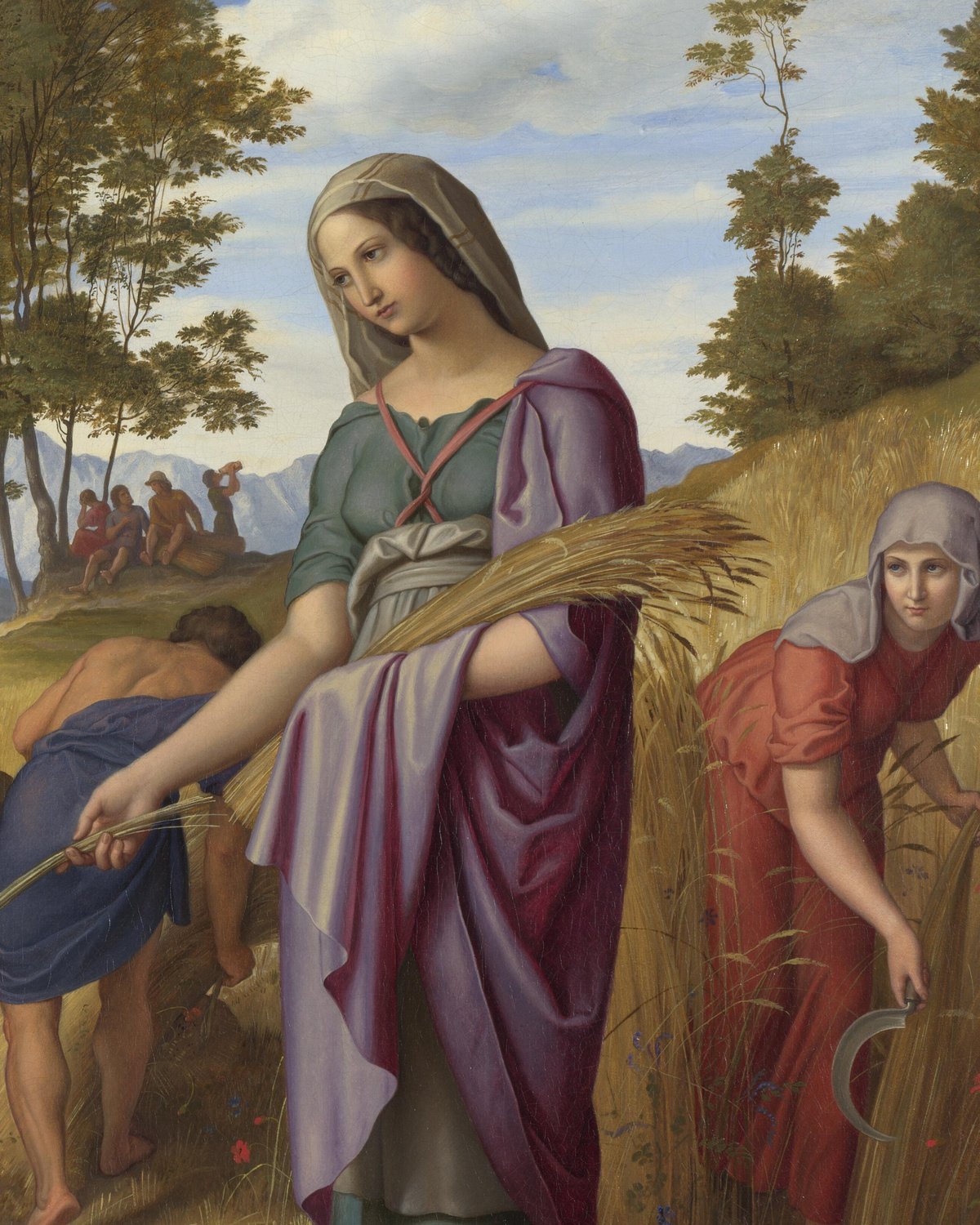
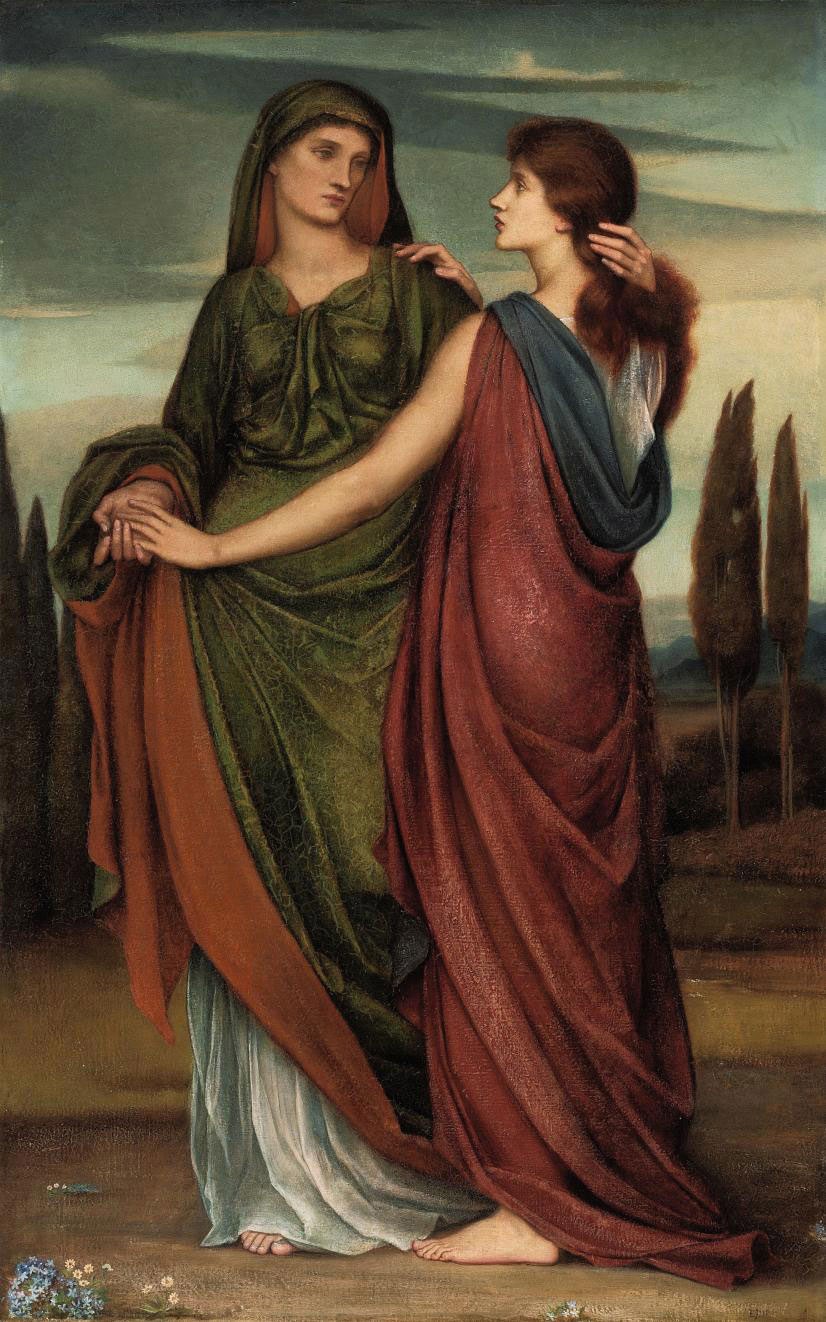
- Painters show her in the harvest field, or pleading with Naomi on the road, as at the top of this page.
feast days
West
- Jul16
Ruth, in the calendar of the Lutheran Church–Missouri Synod.
The Orthodox keep her on a Sunday, not a fixed date. The Orthodox Church in America lists Righteous Ruth on the Sunday of the Forefathers, between 11 and 17 December, and names her again on the Sunday before the Nativity. The Catholic calendar has no day for her.
what others said of her
Boaz, a Jewish historian and three Church Fathers, in their own words.
May the LORD repay your work, and may you receive a rich reward from the LORD, the God of Israel, under Whose wings you have taken refuge.
all my fellow townspeople know that you are a woman of noble character.
I was therefore obliged to relate this history of Ruth, because I had a mind to demonstrate the power of God, Who, without difficulty, can raise those that are of ordinary parentage to dignity and splendor, to which He advanced David, though he were born of such mean parents.
For she was both of a strange race, and reduced to the utmost poverty, yet Boaz when he saw her neither despised her poverty nor abhorred her mean birth
a Ruth will never be wanting who will prefer the widowed life of her mother-in-law to her father's house
And see what a great thing it is to comfort a lonely woman! Ruth, for her reward, is made an ancestress of Christ.
her life in seven moments
Moab
In the days of the judgesA family from Bethlehem
“In the days when the judges ruled, there was a famine in the land.” A man of Bethlehem named Elimelech took his wife Naomi and their two sons to live in Moab. There Elimelech died. His sons married Moabite women, Orpah and Ruth. About ten years later both sons died too, and Naomi “was left without her two sons and without her husband.”
Ruth 1:1-5The road to Judah
When the famine ended“Ruth clung to her”
Naomi heard that the LORD had given His people food again, and set out for home with both her daughters-in-law. On the road she stopped them. “Go back, each of you to your mother’s home,” she said. She had no more sons for them to marry. They wept aloud. Then “Orpah kissed her mother-in-law goodbye, but Ruth clung to her.” Naomi tried once more. Ruth's answer is below, in her words. “When Naomi saw that Ruth was determined to go with her, she stopped trying to persuade her.”
Ruth 1:6-18Bethlehem
The start of the barley harvest“Call me Mara”
Ruth and Naomi walked on to Bethlehem, and the whole town was stirred. “Can this be Naomi?” the women of the town asked. “Do not call me Naomi,” she replied. “Call me Mara, because the Almighty has dealt quite bitterly with me. I went away full, but the LORD has brought me back empty.” They arrived at the beginning of the barley harvest.
Ruth 1:19-22The field of Boaz
The barley harvest“Whose young woman is this?”
Ruth went out to glean, gathering the grain the harvesters left behind. “She happened to come to the part of the field belonging to Boaz,” a relative of Naomi's husband. He asked his foreman, “Whose young woman is this?” He told her to stay in his field, close to his servant girls, and to drink from his men's jars. She bowed to the ground and asked why he should notice a foreigner. He had heard, he said, all she had done for her mother-in-law. At the meal he gave her roasted grain. Then he told his young men to pull stalks from the bundles and leave them for her. By evening she had about an ephah of barley, probably some 13 kilograms. She carried it home to Naomi, with the food she had saved from her meal.
Ruth 2The threshing floor
The end of the harvestAt midnight
Naomi wanted a home for Ruth. Boaz was one of their kinsman-redeemers, she said: a relative with the right to buy back the family's land. That night he was winnowing barley. She told Ruth to wash, put on perfume and her best clothes, and go down to the threshing floor. When he lay down, Ruth was to uncover his feet and lie down there. She did. At midnight Boaz woke with a start and found a woman at his feet. Ruth asked him to act as her kinsman-redeemer. He blessed her. There was a nearer redeemer, he said, but if that man would not, “as surely as the LORD lives, I will.” Before dawn he poured six measures of barley into her shawl and sent her home.
Ruth 3The town gate
The same dayThe sandal
Boaz sat down at the town gate. He called over a kinsman who was closer to the family than he was, and asked ten elders to sit with them. Naomi was selling land that had belonged to her husband Elimelech, he said. The kinsman was ready to buy it back. But whoever bought it, Boaz added, must also take Ruth as his wife, to keep her dead husband's name alive. The kinsman drew back: “I cannot redeem it myself, or I would jeopardize my own inheritance.” He took off his sandal, the old way of sealing a deal in Israel, and gave the right to Boaz. The elders blessed the marriage: “May the LORD make the woman entering your home like Rachel and Leah, who together built up the house of Israel.”
Ruth 4:1-12Bethlehem
Afterward“A son has been born to Naomi”
Boaz married Ruth, and “the LORD enabled her to conceive, and she gave birth to a son.” The women of the town blessed the LORD, Who had not left Naomi without a redeemer. Naomi took the child on her lap and cared for him. The neighbour women named him Obed. “He became the father of Jesse, the father of David.” Centuries later, Matthew opened his Gospel with the family tree of Jesus. In it he wrote: “Boaz the father of Obed by Ruth.”
Ruth 4:13-17; Matthew 1:5
her words
Ruth wrote nothing. These are her words as her book records them. Outside the section on where the Bible figure quiz places her, every Bible line on this page is from the Berean Standard Bible.
On the road out of Moab
Wherever you go, I will go, and wherever you live, I will live; your people will be my people, and your God will be my God. Where you die, I will die, and there I will be buried.
Naomi had told her to go back home, as her sister-in-law Orpah had done.
Ruth 1:16-17Do not urge me to leave you or to turn from following you.
May the LORD punish me, and ever so severely, if anything but death separates you and me.
Please let me go into the fields and glean heads of grain after someone in whose sight I may find favor.
Why have I found such favor in your eyes that you should take notice of me, even though I am a foreigner?
I am your servant Ruth. Spread the corner of your garment over me, for you are a kinsman-redeemer.
He gave me these six measures of barley, for he said, ‘Do not go back to your mother-in-law empty-handed.’
often misquoted
“Wherever you go, I will go” is a vow between lovers.
What the sources sayIt is often read at weddings, but Ruth said it to her mother-in-law. Naomi was a widow with nothing to give her. She had just told Ruth to go back to her own mother's home and find a new husband in Moab. Ruth chose Naomi, her people and her God instead.
Ruth 1:8-17Ruth wept, homesick, in the fields of Bethlehem.
What the sources sayThat picture comes from a poem, not the Bible. In his 1819 “Ode to a Nightingale”, John Keats imagined the bird's song reaching “the sad heart of Ruth, when, sick for home, she stood in tears amid the alien corn.” In her book, Ruth weeps only on the road out of Moab. In Boaz's field she works “from morning until now”, and goes home with about 13 kilograms of barley.
John Keats, “Ode to a Nightingale” (1819); Ruth 1:9-14; 2:7, 17Ruth went to the threshing floor to seduce Boaz.
What the sources sayThe book tells what she did and said, and no more. Naomi sent her, washed and perfumed, to lie down at his feet. When he woke, Ruth asked him to spread the corner of his garment over her, “for you are a kinsman-redeemer.” Ezekiel uses the same picture for God's covenant with Jerusalem: “I spread My cloak over you”. Boaz praised her kindness, promised to act that day, and sent her home before anyone could recognise her. Readers have long argued over how daring her visit was.
Ruth 3:3-14; Ezekiel 16:8friends, family and rivals
 Rahab
Rahab Matthew names her as the mother of Boaz, which makes her Ruth's mother-in-law. Both women came from outside Israel, and they share one verse of Jesus' family tree.
Matthew 1:5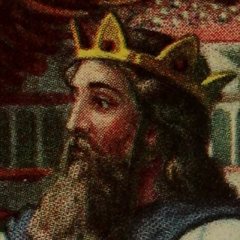 David
David Her great-grandson, the shepherd who became king. Her book ends with his name. When King Saul hunted him, David asked the king of Moab to shelter his father and mother.
Ruth 4:17-22; 1 Samuel 22:3-4Her mother-in-law, from Bethlehem. She lost her husband and both sons in Moab. Back home she planned Ruth's marriage, and took Ruth's son on her lap.
Ruth 1:3-5; 3:1; 4:16A relative of Naomi's husband, “a prominent man of noble character”. He let her glean in his field, then redeemed the family's land and married her.
Ruth 2:1; 4:9-10Her sister-in-law, also from Moab. She kissed Naomi goodbye and went back “to her people and her gods”.
Ruth 1:14-15Her first husband, one of Naomi's two sons. He died in Moab. Only at the town gate does the book say which son she had married.
Ruth 1:5; 4:10Her son by Boaz. The neighbour women named him, and he became the father of Jesse.
Ruth 4:17is she a saint?
The Orthodox honour her as a saint, Righteous Ruth, among the forefathers of Christ. Lutherans of the Missouri Synod keep her day on 16 July. The Catholic calendar has no day for her.
- OrthodoxRighteousSunday of the Forefathers, in December
- LutheranCommemorationMissouri Synod, 16 July
- CatholicNo feast dayNamed in Matthew's family tree of Jesus
The Orthodox Church in America lists Righteous Ruth, the wife of Boaz, on the Sunday of the Forefathers, the Sunday between 11 and 17 December. On the Sunday before the Nativity, a week later, she is named again among the righteous women of the Old Testament.
The Catholic calendar has no day for her, and Rome's 1916 book of martyrs does not name her. The Church of England and the Episcopal Church keep no day for her.
what to read first
The book of Ruth
The Bible
Four short chapters: the whole story, from the famine that sent Naomi's family to Moab to the birth of Obed. It takes about a quarter of an hour.
Read it freeMatthew 1:1-17
The Gospel of Matthew
The family tree of Jesus, from Abraham to Joseph. Ruth is in verse 5.
Read it freeHomily 3 on Matthew
John Chrysostom
Why Matthew named Tamar, Rahab and Ruth among the forebears of Christ.
Read it freeAntiquities of the Jews, book 5, chapter 9
Josephus
Her story retold by a Jewish historian of the first century, with a few details of his own.
Read it freewhere the quiz places her
The record, drawn
Each arm is one axis; length is how far from the centre the recorded acts sit. An axis the text does not place Ruth on has no arm.
In the quiz's own words
Slow to question, quick to move, quick to speak up
The six axes
Your answers are marked. From your result on . See your result
In the hatched middle the quiz names neither pole.
The moments behind each axis
Each line is one recorded act and the reference it is taken from. The sentence says what the person did; where it is in quotation marks it is verbatim from the World English Bible British Edition. An act listed here is evidence of how this person moved, not approval of it; read the passage for how it was received. On 2 of the six the text does not show this, and that axis is left out of the match rather than filled in.
Pace Acts first ↔ Weighs first
quick to move
-
Ruth 2:2-3 toward Acts first
She proposed going out to glean and went that day.
-
Ruth 3:6 toward Acts first
She went down to the threshing floor and did everything she had been told.
Voice Says it ↔ Holds it
quick to speak up
-
Ruth 1:16-17 toward Says it
She told Naomi to her face not to urge her to leave or to turn back from following her.
Lead Out in front ↔ Alongside
more alongside than in front
-
Ruth 2:18 toward Alongside
She carried the barley into the city and gave Naomi what she had left over from her own meal.
-
Ruth 1:16 toward Alongside
She told Naomi that where she went she would go, and that her people would be her people.
-
Ruth 3:9 toward Out in front
Told that Boaz would say what she should do, she told him who she was and asked him to spread the corner of his garment over her.
Conflict Confronts ↔ Reconciles
not shown in the text
The text does not show this. Nothing in the record puts Ruth at either end of this axis, so it is left out when a reader is matched, rather than counted as a position in the middle.
-
No record
The text does not show this.
Reasons Asks why ↔ Takes it on trust
slow to question
-
Ruth 3:5 toward Takes it on trust
She answered Naomi's instruction about the threshing floor by saying she would do all that she said.
All that you say, I will do.
Plans Plans ahead ↔ Meets the day
not shown in the text
The text does not show this. Nothing in the record puts Ruth at either end of this axis, so it is left out when a reader is matched, rather than counted as a position in the middle.
-
No record
The text does not show this.
Nearest on the map
Distance between two sets of coordinates across every axis, on the same scale a reader's answers are measured on. No number is shown against a person, and nearness is not likeness: two people can land in the same band for different reasons.
Suggest a correction. Corrections that are applied are recorded in the public changelog.
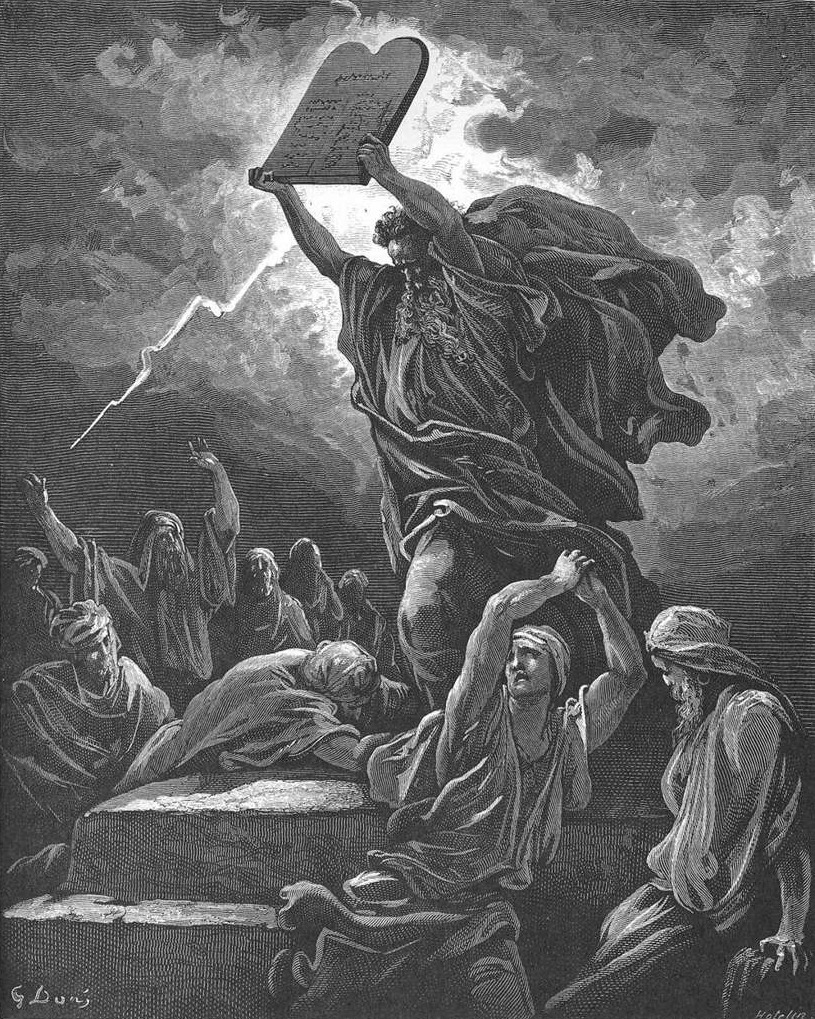 Quiz Who in the Bible are you most like? Answer eighteen plain statements about you, none of them about the Bible, and see how near you land to Ruth. Start
  Quiz Christian Personality Test Which of eight types are you? Find your own. Start
 people like her
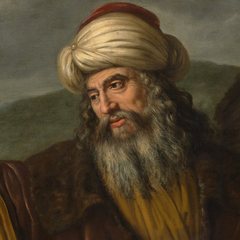 Abraham
 God told him to leave his country and his father's household. Boaz praised Ruth for doing the same: “you left your father and mother and the land of your birth”.
Genesis 12:1; Ruth 2:11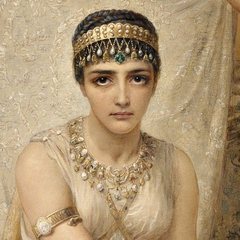 Esther
 In every Christian Bible, hers is the only other book named for a woman. Esther's story is set in a palace; Ruth's, in a barley field.
The book of Esther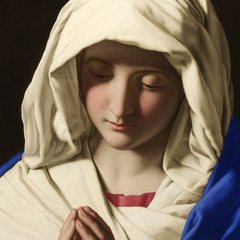 Mary of Nazareth
 The last of the five women in Matthew's family tree of Jesus. Her Son was born in Bethlehem, Ruth's town.
Matthew 1:16; 2:1sources
Her life, and her words
- The Berean Standard Bible, public domain. Every Bible line on this page outside the section on where the Bible figure quiz places her.
- Josephus, Antiquities of the Jews, book 5. Tr. William Whiston, 1737.
- John Chrysostom, Homilies on Matthew, Homily 3. Tr. George Prevost, rev. M. B. Riddle. Nicene and Post-Nicene Fathers, first series, volume 10, 1888.
- Ambrose, Concerning Widows. Tr. H. de Romestin. Nicene and Post-Nicene Fathers, second series, volume 10, 1896.
- Jerome, Letter 39, to Paula. Tr. W. H. Fremantle. Nicene and Post-Nicene Fathers, second series, volume 6, 1893.
- John Keats, “Ode to a Nightingale”, in Lamia, Isabella, The Eve of St. Agnes, and Other Poems, 1820.
Reference
- Catholic Encyclopedia, 1912, “Book of Ruth”
- Jewish Encyclopedia, 1906, “Ruth, Book of”
- Bible Hub, Strong's Hebrew 7327, for her name
- Britannica, “Shavuot” and “Ruth”
- C. R. Conder and H. H. Kitchener, The Survey of Western Palestine, volume 3, 1883, on the tombs of Jesse and Ruth at Hebron
Calendars
- OCA, Righteous Ruth, on the Sunday of the Forefathers
- OCA, Sunday before the Nativity
- The Lutheran Church–Missouri Synod, Commemorations, 16 July
- The Roman Martyrology, 1916 edition
Pictures
- Ruth swearing her allegiance to Naomi, Jan Victors, 1653. Oil on canvas. Public domain.
- Ruth in Boaz's Field, Julius Schnorr von Carolsfeld, 1828. The National Gallery, London. Public domain.
- Naomi and Ruth, Evelyn De Morgan, 1887. Private collection. Public domain.