
Esther
An orphan raised by her cousin, she became queen of Persia. When a decree doomed her people, she went to the king unsummoned: “If I perish, I perish!”
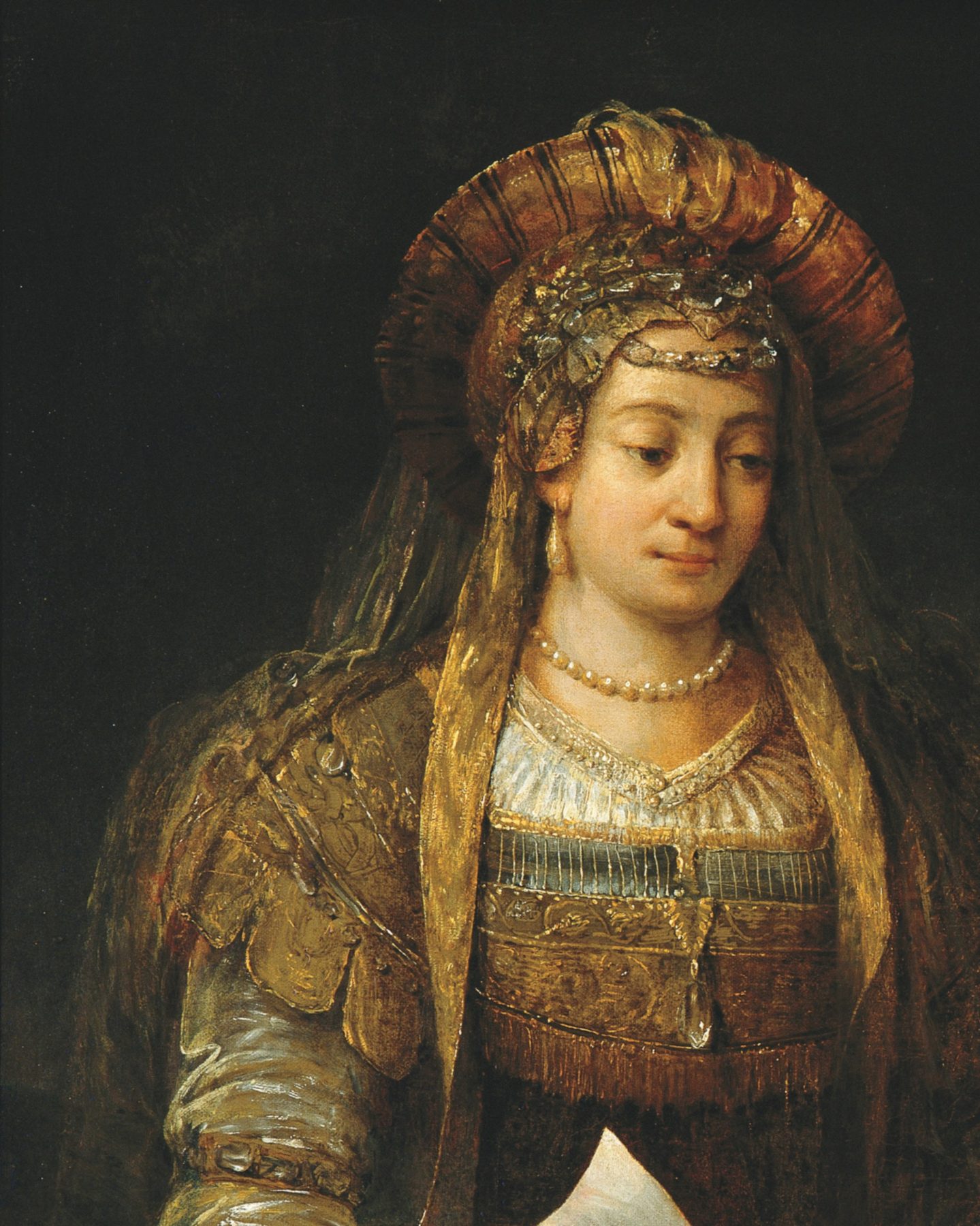
Picture: Esther and Mordecai Writing the First Purim Letter (detail), Aert de Gelder, 1675. Museo Nacional de Bellas Artes, Buenos Aires. Public domain.
Who was Esther?
Esther was a Jewish orphan in Persia, raised by her cousin Mordecai. She was taken into the palace of King Xerxes and made queen. When his chief minister, Haman, won a decree to wipe out her people, she risked death to plead with the king. She saved them. Jews still remember it every year at Purim.
at a glance
Her path, in order
- OrphanRaised by her cousin Mordecai
- QueenCrowned by King Xerxes
- AdvocateShe went in to the king unsummoned
- FounderWith Mordecai, she set the feast of Purim
in numbers
- Times the king offered her half his kingdom3
- “Even up to half the kingdom”
- Twice she asked only for a banquet
- Days she fasted before going to the king3
- No food or drink, night or day
- The Jews of Susa fasted with her
- Provinces of the king she married127
- From India to Cush
- Letters to keep Purim went to all 127
- Months of beauty treatments12
- Six with oil of myrrh
- Six with perfumes and cosmetics
did you know?
-
God is never named in the Hebrew book of Esther. Not once in ten chapters. The Greek text, read in Catholic and Orthodox Bibles, adds prayers that call on Him again and again.
The book of Esther; Greek Esther 4, World English Bible -
The rabbis counted her among the prophetesses of Israel, and among “the four most beautiful women ever created.”
Jewish Encyclopedia, “Esther” -
At Purim her book is read aloud from a scroll, and Haman's name is drowned out with noise. Some “wrote the name of Haman on the soles of their shoes” and stamped at every mention.
Jewish Encyclopedia, “Purim”
- In the Bible
- The book of Esther: ten chapters in Hebrew. Catholic and Orthodox Bibles read a longer Greek text, with her prayer and Mordecai's. Protestant Bibles follow the Hebrew.
- Home
- The citadel of Susa, the Persian capital, in what is now south-west Iran. Her family had been carried into exile from Jerusalem.
- Family
- An orphan, the daughter of Abihail, of the tribe of Benjamin. Her cousin Mordecai raised her as his own daughter. The Bible names no children.
- Her name
- Hadassah in Hebrew, which means myrtle. Esther is often taken to mean star.
- Her king
- Xerxes in the Berean Standard Bible, Ahasuerus in the Hebrew and many Bibles. The Greek text of her book and the Jewish historian Josephus call him Artaxerxes. Around AD 400, the Christian historian Sulpicius Severus confessed he could not easily tell which king it was.
- Also called
- Queen Esther. Righteous Esther, in the Orthodox Church. The early Church Fathers saw in her a foreshadowing of the Virgin Mary, the Catholic Encyclopedia says.
- Died
- The Bible does not say. Jewish tradition puts her tomb at Hamadan, the ancient Ecbatana, in Iran, beside Mordecai's.
- Her feast
- Purim, on 14 and 15 Adar, in February or March. Jews still keep it, and read her book from a scroll.
- In art
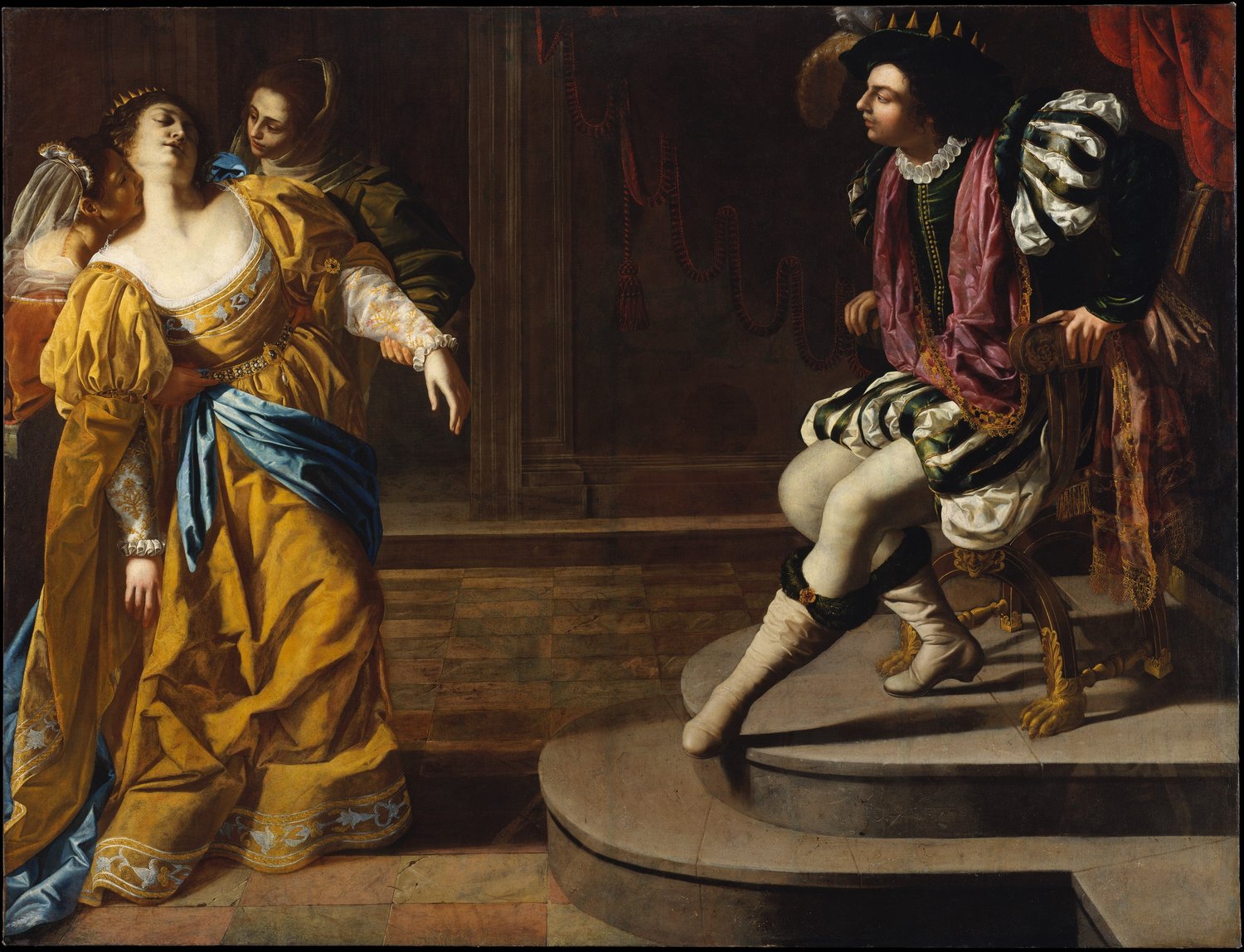
- Painters often chose the scene where she faints before the king, from the Greek text of her book. Artemisia Gentileschi painted it in the 1620s.
feast days
West
- May24
Esther, in the calendar of the Lutheran Church–Missouri Synod.
The Orthodox keep her on a Sunday, not a fixed date. The Orthodox Church in America names Righteous Esther on the Sunday before the Nativity, between 18 and 24 December. The Catholic and Anglican calendars have no day for her. Jews remember her every year at Purim.
what others said of her
The early Church, and a Jewish historian, in their own words.
Esther also, being perfect in faith, exposed herself to no less danger, in order to deliver the twelve tribes of Israel from impending destruction. For with fasting and humiliation she entreated the everlasting God, Who seeth all things; and He, perceiving the humility of her spirit, delivered the people for whose sake she had encountered peril.
Why did Queen Esther expose herself to death and not fear the wrath of a fierce king? Was it not to save her people from death, an act both seemly and virtuous?
There was a certain Hebrew woman, Esther was her name. This Esther rescued the whole people of the Jews, when they were about to be delivered over to destruction, by this very method.
But God laughed to scorn the wicked expectations of Haman
her life in ten moments
The citadel of Susa
The reign of King XerxesAn orphan in Susa
Mordecai, a Jew of the tribe of Benjamin, lived in the citadel of Susa. He had brought up his uncle's daughter, Hadassah, that is Esther, “because she did not have a father or mother.” When her parents died, he took her as his own daughter. The young woman “was lovely in form and appearance.” Earlier, Queen Vashti had refused to come when King Xerxes sent for her to show off her beauty to his guests. The king had put her away, and now he sent out a search for a new queen.
Esther 1:10-2:7The king's harem
The seventh year of XerxesQueen in Vashti's place
Young women were gathered from every province, and “Esther was also taken to the palace.” Hegai, the eunuch in charge of the women, favoured her. At Mordecai's word, she told no one who her people were. Each woman had twelve months of beauty treatments before her night with the king. When Esther's turn came, she asked for nothing but what Hegai advised. “And the king loved Esther more than all the other women.” He set the royal crown on her head and made her queen.
Esther 2:8-18The king's gate
Soon after she was crownedA plot against the king
Two of the king's eunuchs plotted to assassinate him. Esther's cousin Mordecai, sitting at the king's gate, learned of it. “He reported it to Queen Esther, and she informed the king on Mordecai's behalf.” The plot was confirmed, and both men were hanged. It was all written in the king's chronicles, and nothing was done for Mordecai. Not yet.
Esther 2:19-23Susa
The twelfth year of XerxesHaman's decree
The king raised Haman the Agagite above all his princes, and commanded everyone at the gate to bow to him. Esther's cousin Mordecai would not. In a rage, Haman set out to destroy not Mordecai alone but all his people. The Pur, the lot, was cast to choose the day: the thirteenth of Adar. Haman offered ten thousand talents of silver to the treasury, and letters went out to every province “to destroy, kill, and annihilate all the Jews.” “Then the king and Haman sat down to drink, but the city of Susa was in confusion.”
Esther 3The palace
Days of mourningFor such a time as this
When he learned of Haman's decree, Esther's cousin Mordecai tore his clothes, put on sackcloth and wailed through the city. Esther sent him clothes, but he would not take them. Through the eunuch Hathach he sent her a copy of the decree and urged her to plead with the king. She reminded him of the law: anyone who went in to the king unsummoned would die, unless the king held out his gold scepter. And she had not been called for thirty days. Mordecai sent back: “Do not imagine that because you are in the king's palace you alone will escape the fate of all the Jews.” And then: “Who knows if perhaps you have come to the kingdom for such a time as this?” Her answer is below, in her words.
Esther 4:1-14The inner court
The third day of her fastThe gold scepter
On the third day, Esther put on her royal robes and stood in the inner court, facing the king's throne. “She found favor in his sight.” He held out the gold scepter, and she came near and touched its tip. “What is your request?” he asked. “Even up to half the kingdom, it will be given to you.” She asked only that the king and Haman come to a banquet she had prepared. At the banquet he asked again. Again she asked only for another banquet, the next day.
Esther 5:1-8Haman's house and the palace
The night after the first banquetA sleepless night
Haman went home glad from the queen's first banquet, until he passed Mordecai at the gate. Mordecai would not rise for him. His wife Zeresh and his friends told him to build a gallows fifty cubits high and ask to have Mordecai hanged on it. “That night sleep escaped the king.” He had the chronicles read to him, and heard how Mordecai had saved his life. Nothing had been done for Mordecai. In the morning Haman came to ask for Mordecai's death, and the king asked him, “What should be done for the man whom the king is delighted to honor?” Haman, sure the king meant him, proposed a royal robe and a royal horse. Then he had to lead Mordecai, robed and on the horse, through the city square.
Esther 5:9-6:14The queen's banquet
The day after the first banquetThe second banquet
At the second banquet the king asked a third time: “Queen Esther, what is your petition?” Now she answered. She asked for her life and her people's, for they had been “sold out to destruction, death, and annihilation.” The king asked who had dared. Esther named Haman to his face. The king rose in fury and went out into the garden. Haman fell on the queen's couch to beg for his life, just as the king came back. A eunuch mentioned the gallows at Haman's house. “Hang him on it!” said the king. So Haman was hanged on the gallows he had built for Mordecai.
Esther 7Before the king
The day Haman was hangedLetters to undo the decree
The king gave Esther Haman's estate, and she told him who Mordecai was to her. Mordecai received the king's signet ring. Then Esther fell at the king's feet and wept, begging him to undo Haman's evil plan. A decree sealed with the king's ring could not be revoked. So Mordecai wrote new letters in the king's name, allowing the Jews in every city to assemble and defend themselves on the day set for their death. He went out in royal robes of blue and white. “For the Jews it was a time of light and gladness, of joy and honor.”
Esther 8Susa and the provinces
The thirteenth of AdarThe days of Purim
On the day the enemies of the Jews had hoped to overpower them, “their plan was overturned and the Jews overpowered those who hated them.” When the king told Esther of the dead in Susa and asked what more she wanted, she asked that the Jews of Susa have one more day to overpower their enemies, and that the bodies of Haman's ten sons be hanged on the gallows. Then came rest, feasting and gifts to the poor. Mordecai sent letters to keep the feast of Purim every year. It is named for the Pur, the lot Haman cast to choose the day. Queen Esther wrote too, “with full authority,” and “Esther's decree confirmed these regulations about Purim.” It is the last the Bible tells of her.
Esther 9
her words
Esther wrote no book. Her words are kept in the book that bears her name. Outside the section on where the quiz places her, every Bible line on this page is from the Berean Standard Bible. The lines from the Greek text, which only Catholic and Orthodox Bibles hold, are from the World English Bible.
To Mordecai, before she went in to the king
After that, I will go to the king, even though it is against the law. And if I perish, I perish!
Mordecai had warned her that silence would not save her. She sent back word to gather the Jews of Susa and fast for her three days, “night or day,” while she and her maidens fasted too.
Esther 4:16Only if the king extends the gold scepter may that person live. But I have not been summoned to appear before the king for the past thirty days.
If it pleases the king, may the king and Haman come today to the banquet I have prepared for the king.
If I have found favor in your sight, O king, and if it pleases the king, grant me my life as my petition, and the lives of my people as my request. For my people and I have been sold out to destruction, death, and annihilation.
The adversary and enemy is this wicked man—Haman!
For how could I bear to see the disaster that would befall my people? How could I bear to see the destruction of my kindred?
O my Lord, You alone are our King. Help me. I am destitute, and have no helper but You, for my danger is near at hand.
often misquoted
Esther said, “For such a time as this.”
What the sources sayHer cousin Mordecai said it, in a message sent to her: “And who knows if perhaps you have come to the kingdom for such a time as this?” Her own answer was a fast of three days, and “If I perish, I perish!”
Esther 4:13-16Esther won a beauty contest.
What the sources sayThe book tells of no contest she chose to enter. The king's commissioners gathered young women from every province into his harem, and “Esther was also taken to the palace.” Each had twelve months of beauty treatments, then one night with the king. Esther asked for nothing but what Hegai, the eunuch in charge of the women, advised. The king loved her more than all the others and made her queen.
Esther 2:2-17Mordecai was Esther's uncle.
What the sources sayThe Hebrew text says she was “the daughter of his uncle,” which makes them cousins. The Jewish historian Josephus calls Mordecai her uncle, and many retellings follow him. Either way, Mordecai raised her “as his own daughter.”
Esther 2:7; Josephus, Antiquities of the Jews, book 11friends, family and rivals
Her cousin, who raised her as his own daughter. He would not bow to Haman, and he rose to be second only to the king.
Esther 2:7; 3:2; 10:3Her husband, called Ahasuerus in many Bibles. He loved Esther more than all the other women, and three times offered her up to half his kingdom.
Esther 2:17; 5:3, 6; 7:2The king's chief minister, raised above all his princes. He plotted to destroy her people, and was hanged on the gallows he had built for Mordecai.
Esther 3:1-6; 7:10The queen before her, put away for refusing to come at the king's command.
Esther 1:10-19The king's eunuch in charge of the women. Esther pleased him, and when her turn came she took only what he advised.
Esther 2:8-9, 15The king's eunuch appointed to her. He carried her messages to Mordecai, and Mordecai's back to her.
Esther 4:5-10is she a saint?
The Orthodox honour her as Righteous Esther on the Sunday before Christmas, among the righteous of the Old Testament. Lutherans of the Missouri Synod keep her day on 24 May. The Catholic calendar has no day for her.
- OrthodoxRighteousThe Sunday before Christmas
- LutheranCommemorationMissouri Synod, 24 May
- CatholicNo feast dayHer prayer is read at Mass in Lent
- AnglicanNot on the calendarChurch of England and Episcopal Church
The Orthodox Church in America names her on the Sunday before the Nativity, in its long list of the righteous of the Old Testament. Rome's 1916 book of martyrs does not name her.
The Lutheran Church–Missouri Synod's calendar tells her story for 24 May and draws a lesson from it in its own words.
The righteous Esther, who delivered Israel from death
This story is an example of how God intervenes on behalf of His people to deliver them from evil
her prayer
In the Greek text of her book, kept in Catholic and Orthodox Bibles, Esther prays through her three days of fasting. She takes off her royal robes, puts on mourning and covers her head with ashes. The lion in her prayer is the king.
Remember us, O Lord! Manifest Yourself in the time of our affliction. Encourage me, O King of gods, and ruler of all dominion! Put harmonious speech into my mouth before the lion … But deliver us by Your hand, and help me who am alone and have no one but You, O Lord.
what to read first
The book of Esther
The Bible
Ten short chapters: the whole story, easily read in one sitting.
Read it freeEsther 4
The book of Esther
Mordecai's warning, “for such a time as this,” and her answer. One chapter.
Read it freeGreek Esther
The World English Bible
The longer text of Catholic and Orthodox Bibles. The prayers of Mordecai and Esther are in chapter 4.
Read it freeAntiquities of the Jews, book 11
Josephus, tr. William Whiston
The story retold by the Jewish historian in the first century, with a few details of his own.
Read it freewhere the quiz places her
The record, drawn
Each arm is one axis; length is how far from the centre the recorded acts sit.
In the quiz's own words
Weighs first, plans ahead, more in front than alongside
The six axes
Your answers are marked. From your result on . See your result
In the hatched middle the quiz names neither pole.
The moments behind each axis
Each line is one recorded act and the reference it is taken from. The sentence says what the person did; where it is in quotation marks it is verbatim from the World English Bible British Edition. An act listed here is evidence of how this person moved, not approval of it; read the passage for how it was received.
Pace Acts first ↔ Weighs first
weighs first
-
Esther 4:16 toward Weighs first
She called a three-day fast before going in to the king.
-
Esther 5:8 toward Weighs first
At the first banquet she asked the king and Haman to come to a second banquet the next day.
Voice Says it ↔ Holds it
slow to speak up
-
Esther 2:10 toward Holds it
She did not tell anyone in the palace who her people were, because Mordecai had told her not to.
Esther had not made known her people nor her relatives
-
Esther 2:20 toward Holds it
After she was made queen she still had not made it known, as Mordecai had commanded her.
-
Esther 7:3-4 toward Says it
At the second banquet she told the king to his face that she and her people had been sold to be destroyed.
Lead Out in front ↔ Alongside
more in front than alongside
-
Esther 4:16-17 toward Out in front
She ordered the fast in Susa and Mordecai did everything she had commanded him.
-
Esther 8:5 toward Out in front
She asked the king to have letters written reversing Haman's.
Conflict Confronts ↔ Reconciles
quick to confront
-
Esther 7:6 toward Confronts
She named Haman as the enemy while he was sitting at the table.
An adversary and an enemy, even this wicked Haman!
-
Esther 9:13 toward Confronts
She asked for the decree in Susa to run a further day.
Reasons Asks why ↔ Takes it on trust
quick to question
-
Esther 4:11 toward Asks why
She set out the law about the inner court and said she had not been called these thirty days.
Plans Plans ahead ↔ Meets the day
plans ahead
-
Esther 5:4-8 toward Plans ahead
She prepared one banquet, then a second, and made her request only at the second.
-
Esther 4:16 toward Plans ahead
She fixed the three days of fasting for herself, her maidens and the Jews of Susa first.
Nearest on the map
Distance between two sets of coordinates across every axis, on the same scale a reader's answers are measured on. No number is shown against a person, and nearness is not likeness: two people can land in the same band for different reasons.
Suggest a correction. Corrections that are applied are recorded in the public changelog.
 Quiz Who in the Bible are you most like? Answer eighteen plain statements about you, none of them about the Bible, and see how near you land to Esther. Start
  Quiz Christian Personality Test Which of eight types are you? Find your own. Start
 people like her
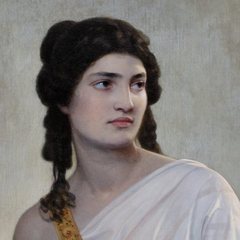 Judith
 Clement of Rome told Judith's story beside Esther's: two women who risked their lives to save their people.
Clement of Rome, Letter to the Corinthians, chapter 55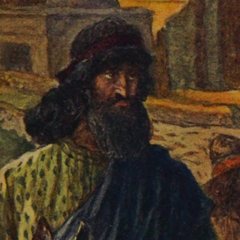 Nehemiah
 Another Jew at the Persian court, cupbearer to the king. He was “overwhelmed with fear,” prayed, and began his request as Esther did: “If it pleases the king.”
Nehemiah 2:1-5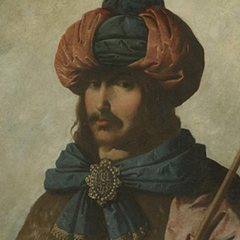 Joseph
 Raised high at a foreign court, he too saved his people. He told his brothers, “it was to save lives that God sent me before you.”
Genesis 45:5sources
Her life, and her words
- The Berean Standard Bible, public domain. Every Bible line on this page outside the section on where the Bible figure quiz places her, except those from the Greek text.
- The World English Bible, Esther (Greek), public domain. Her prayer, and the fainting scene in the caption.
- Clement of Rome, Letter to the Corinthians. Tr. Alexander Roberts and James Donaldson. Ante-Nicene Fathers, volume 1, 1885.
- Ambrose, On the Duties of the Clergy, Book 3. Tr. H. de Romestin. Nicene and Post-Nicene Fathers, second series, volume 10, 1896.
- John Chrysostom, Homilies on the Statues, Homily 3. Nicene and Post-Nicene Fathers, first series, volume 9, 1889.
- Sulpicius Severus, Sacred History, Book 2. Tr. Alexander Roberts. Nicene and Post-Nicene Fathers, second series, volume 11, 1894.
- Josephus, Antiquities of the Jews, book 11. Tr. William Whiston, 1737.
Reference
- Catholic Encyclopedia, 1909, “Esther”
- Jewish Encyclopedia, “Esther”
- Jewish Encyclopedia, “Purim”
- USCCB, readings for Thursday of the First Week in Lent, where her prayer is the first reading
Calendars
- OCA, Sunday before the Nativity
- The Lutheran Church–Missouri Synod, Commemorations, 24 May
- The Roman Martyrology, 1916 edition
Pictures
- Esther and Mordecai Writing the First Purim Letter, Aert de Gelder, 1675. Museo Nacional de Bellas Artes, Buenos Aires. Public domain.
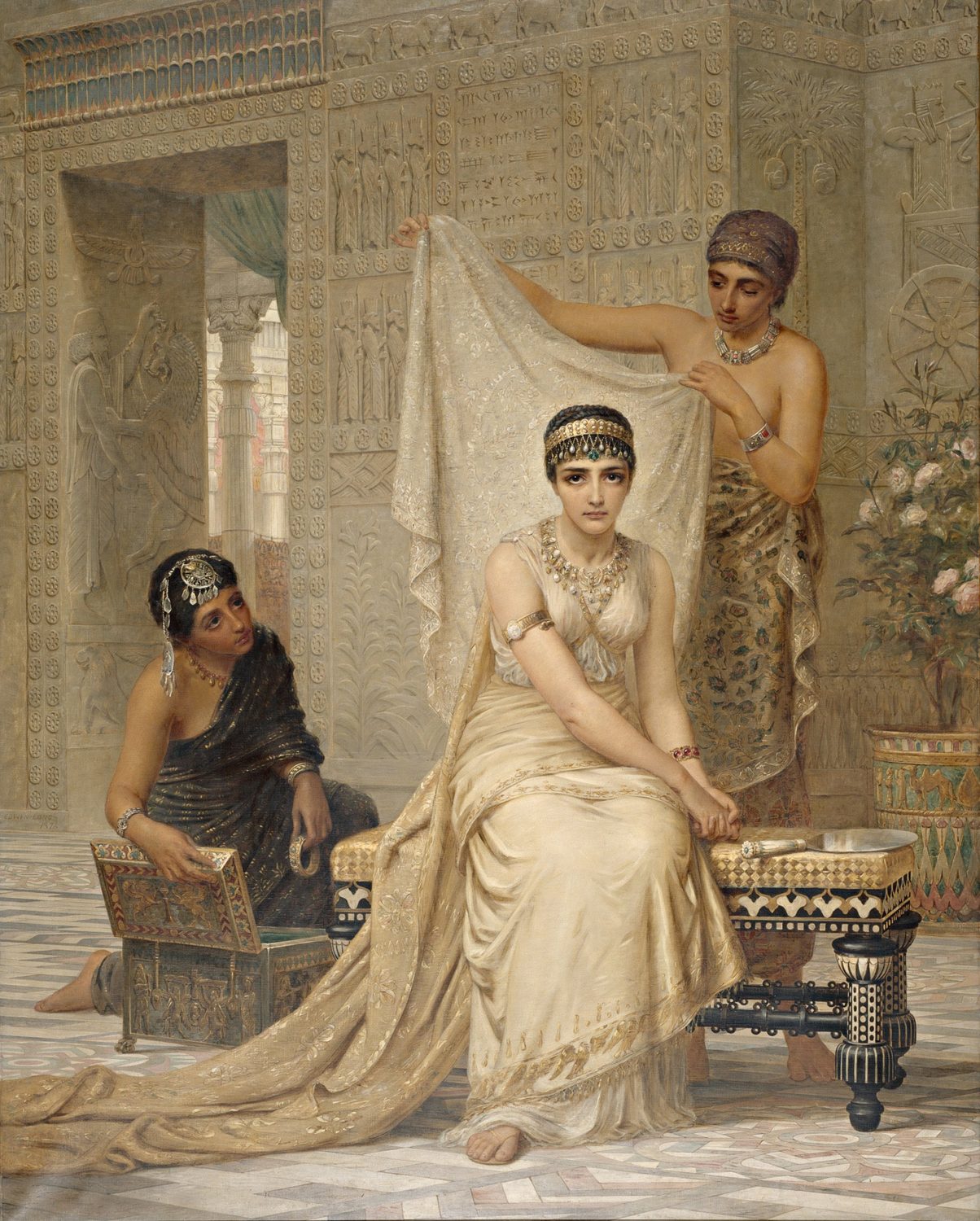
- Queen Esther, Edwin Long, 1878. National Gallery of Victoria, Melbourne. Public domain.
- Esther before Ahasuerus, Artemisia Gentileschi, 1620s. The Metropolitan Museum of Art, New York. CC0.
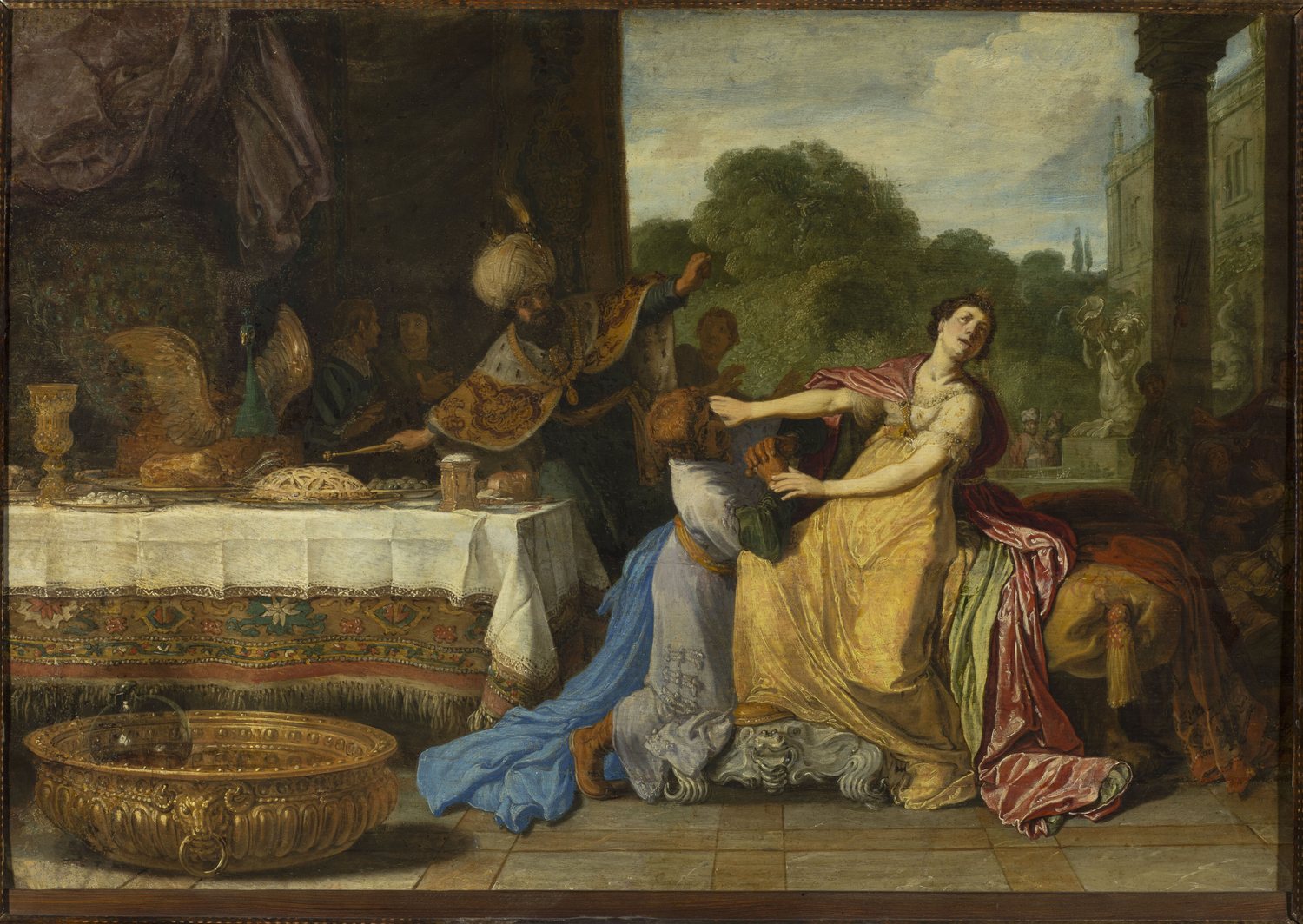
- Haman Begging the Mercy of Esther, Pieter Lastman, early 1600s. National Museum in Warsaw. Public domain.