
Joseph
Sold as a slave by his brothers, he rose from an Egyptian prison to govern Egypt. When they bowed before him, he forgave them.
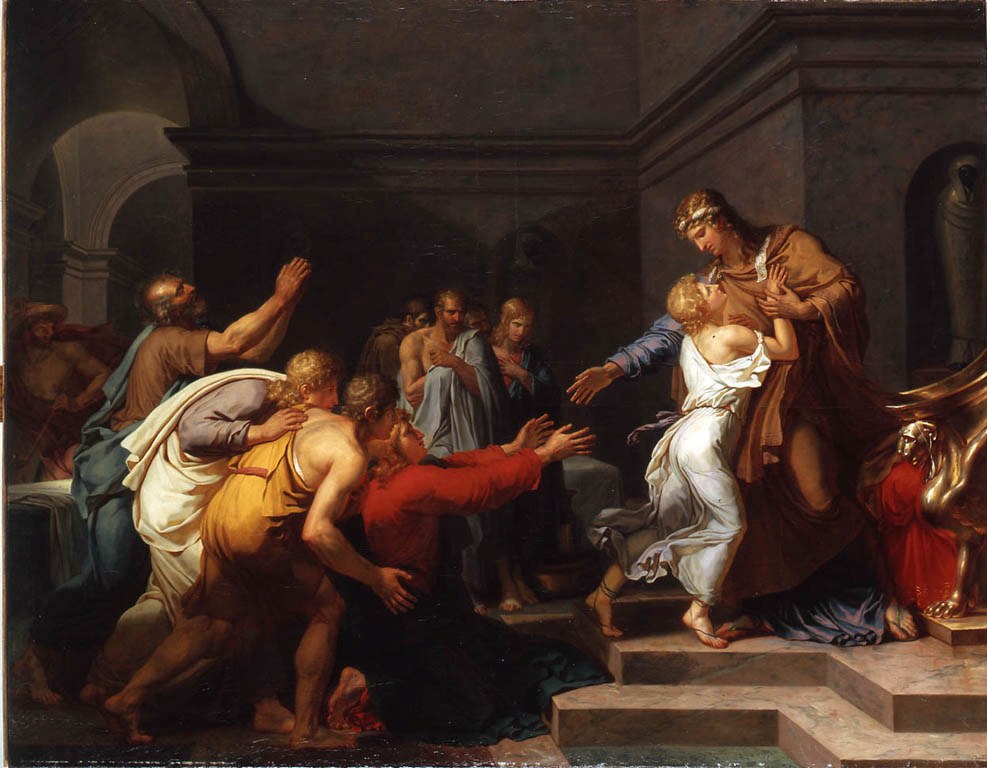
Picture: Joseph Recognised by His Brothers, Anne-Louis Girodet, 1789. École nationale supérieure des Beaux-Arts, Paris. Public domain.
Who was Joseph?
Joseph was the eleventh son of Jacob, in the book of Genesis. He is not Joseph of Nazareth, the husband of Mary. His jealous brothers sold him into slavery in Egypt. He rose from prison to rule Egypt, after reading Pharaoh's dreams. When famine struck, his brothers came to him for grain, and he forgave them.
at a glance
His path, in order
- Favourite sonOf Jacob, with a robe of many colors
- SlaveIn Potiphar's house in Egypt
- PrisonerFalsely accused, in the king's prison
- InterpreterOf Pharaoh's two dreams
- GovernorOver all Egypt, through the famine
- BrotherWho forgave the brothers who sold him
in numbers
- Shekels of silver he was sold for20
- Paid by traders bound for Egypt
- Judas was paid thirty for Jesus
- Years before he saw his father again22
- Sold at seventeen, governing Egypt at thirty
- Then seven good years and two of famine before they met
- Years of plenty, then of famine7+7
- Read from Pharaoh's two dreams
- He stored grain “like the sand of the sea”
- Years he lived110
- His great-grandsons grew up on his knees
- Then he asked for his bones to go home
did you know?
-
In Matthew's Gospel, Joseph the husband of Mary was also the son of a Jacob. He too was led by dreams, and took his family down to Egypt.
Matthew 1:16; 2:13-14 -
Tertullian, writing about 197, told the pagans that their god Serapis was Joseph. The god's headdress was shaped like a grain measure, he said, and “marks the memory of his corn-provisioning”.
Tertullian, Ad Nationes, book 2, chapter 8 -
Jesus met a Samaritan woman at Jacob's well, by “the plot of ground that Jacob had given to his son Joseph.”
John 4:5-6 -
Ambrose praised him for selling the grain in the famine, not giving it away: “For if he had given it to a few there would have been none for most.”
Ambrose, On the Duties of the Clergy, book 2, chapter 16
- Name
- Joseph sounds like the Hebrew for may He add. His mother named him with a prayer: “May the LORD add to me another son.”
- Also called
- Zaphenath-paneah, the Egyptian name Pharaoh gave him. Joseph the Fair, or the All-Comely, in the Orthodox Church. He is not Joseph of Nazareth, Mary's husband.
- Parents
- Jacob, also called Israel, and Rachel, the wife Jacob loved. She died giving birth to Joseph's younger brother Benjamin.
- Brothers
- He was the eleventh of Jacob's twelve sons. Ten were his half-brothers, sons of Leah and of two maidservants.
- Born
- In Paddan-aram, where Jacob worked for his uncle Laban. He grew up in Canaan.
- When
- Genesis gives no year. Moses was the great-grandson of Joseph's brother Levi. The Orthodox Church in America dates Joseph's death to about 1700 BC.
- How he looked
- “Well-built and handsome”, says Genesis.
- Wife and sons
- Asenath, daughter of Potiphera, priest of On. Their sons Manasseh and Ephraim each became a tribe of Israel.
- Languages
- He spoke to his brothers through an interpreter, though he understood every word they said.
- Wrote
- No book. His words are kept in Genesis 37 to 50.
- Died
- In Egypt, at 110. His bones were buried at last at Shechem, in Canaan.
- Honoured by
- Christians, East and West, and Jews.
- In art
- The robe and the pit, Potiphar's wife clutching his cloak, Pharaoh's dreams, and the brothers bowing before him.
feast days
East and West, side by side
West
- Mar31
Joseph, Patriarch, for Lutherans in the Missouri Synod. He has no day of his own in the Roman calendar or the Roman Martyrology.
East
- Mar31
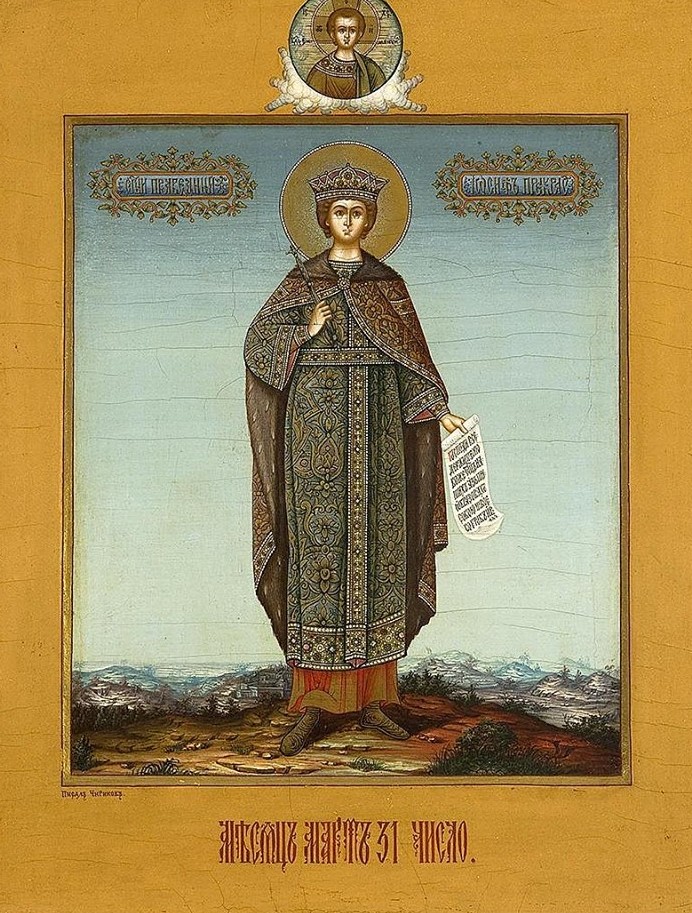
Righteous Joseph the Patriarch, in the Orthodox Church in America. The Orthodox keep him again on Great and Holy Monday, the Monday of Holy Week, and on the Sunday of the Holy Fathers before Christmas.
Holy Monday moves with Easter. Churches on the old calendar keep 31 March 13 days later, on 13 April.
what others said of him
Stephen, the Psalms, Ben Sira and the early Church, in their own words.
Because the patriarchs were jealous of Joseph, they sold him as a slave into Egypt. But God was with him and rescued him from all his troubles. He granted Joseph favor and wisdom in the sight of Pharaoh king of Egypt, who appointed him ruler over Egypt and all his household.
He sent a man before them—Joseph, sold as a slave. They bruised his feet with shackles and placed his neck in irons, until his prediction came true and the word of the LORD proved him right.
Nor was there a man born like Joseph, a leader of his kindred, a supporter of the people. Even his bones were cared for.
Envy made Joseph be persecuted unto death, and to come into bondage.
He who is enamoured of chastity dwells upon the history of Joseph, and from him learns chaste actions.
How meek he was in slavery, how unchanging in virtue, how kindly in prison! Wise, too, in interpreting, and self-restrained in exercising his power!
Who then before Moses was patient? The blessed and noble Joseph, who having shone by his chastity, shone no less by his long suffering.
his life in 15 moments
Canaan
At seventeenThe robe and the dreams
Joseph was Jacob's favourite, the son of his old age, born to his beloved Rachel. At seventeen he brought his father a bad report about his brothers. Jacob “made him a robe of many colors”, and his brothers “hated him and could not speak a kind word to him.” Then Joseph dreamed that their sheaves of grain bowed down to his sheaf. In a second dream “the sun and moon and eleven stars were bowing down to me.” Even Jacob rebuked him. Yet “his father kept in mind what he had said.”
Genesis 37:1-11Dothan
Soon afterInto the pit
Jacob sent Joseph to see how his brothers and the flocks were doing. They saw him coming. “Here comes that dreamer!” they said. “Come now, let us kill him.” Reuben, the eldest, talked them into throwing him into a pit instead, meaning to rescue him later. They stripped off his robe, threw him into the dry pit, and sat down to eat. When a caravan came by on its way to Egypt, Judah said, “What profit will we gain if we kill our brother and cover up his blood?” They sold him for twenty shekels of silver.
Genesis 37:12-28The Valley of Hebron
That same timeThe robe in the blood
Reuben, Joseph's eldest brother, came back to the pit where Joseph had been thrown. It was empty. “The boy is gone! What am I going to do?” The brothers killed a young goat and dipped Joseph's robe in its blood. They sent it to their father: “Examine it to see whether it is your son's robe or not.” Jacob knew it at once. “Joseph has surely been torn to pieces!” He tore his clothes and would not be comforted. “I will go down to Sheol mourning for my son.”
Genesis 37:29-35Potiphar's house
In EgyptA slave who prospered
The traders who had bought Joseph sold him to Potiphar, the captain of Pharaoh's guard. “And the LORD was with Joseph, and he became a successful man.” Potiphar saw it, and put him in charge of everything he owned. From then on the LORD blessed the Egyptian's house because of Joseph. Potiphar concerned himself with nothing “except the food he ate.”
Genesis 37:36; 39:1-6Potiphar's house
Some time laterHe left his cloak
Joseph was “well-built and handsome”, and his master's wife wanted him. Day after day she asked him to sleep with her. He refused: “So how could I do such a great evil and sin against God?” One day, with no servants in the house, she grabbed him by his cloak. He left it in her hand and ran outside. She showed the cloak to the servants, then to her husband. She said the Hebrew slave had tried to sleep with her. Potiphar burned with anger, and had Joseph thrown into the king's prison.
Genesis 39:6-20The king's prison
Some time laterThe cupbearer and the baker
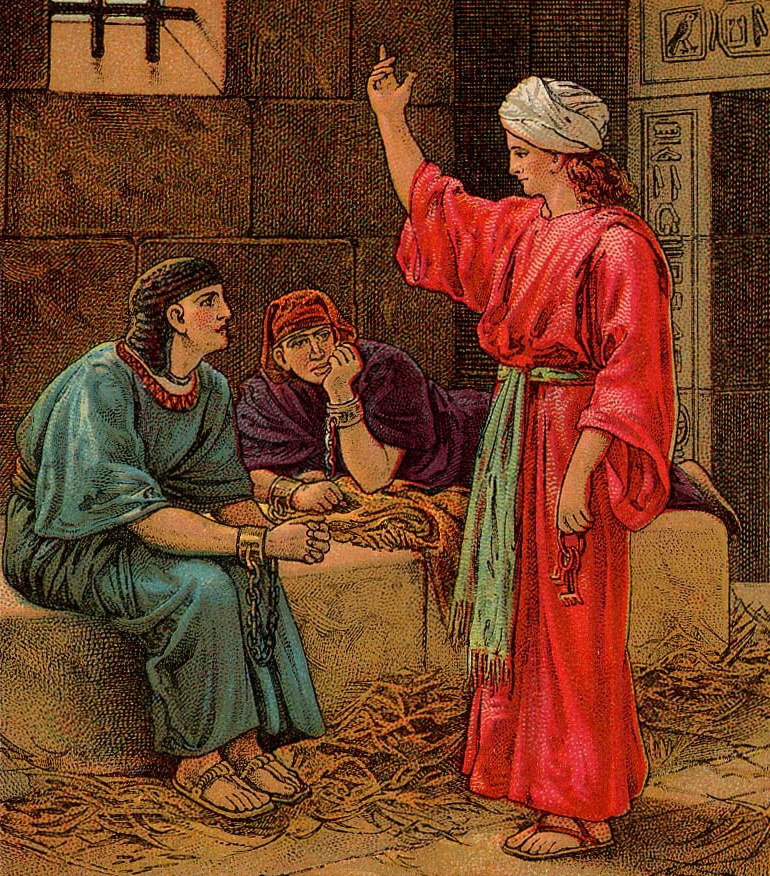
Even in prison, “the LORD was with him”, and the warden put all the prisoners in his care. Pharaoh's cupbearer and baker were thrown in with him. One morning both were downcast: each had had a dream, and no one could tell them what it meant. “Don't interpretations belong to God?” Joseph said. The three branches in the cupbearer's dream meant that in three days he would have his post back. The three baskets in the baker's dream meant that in three days he would be hanged. It happened just so, on Pharaoh's birthday. Joseph had asked the cupbearer to remember him. But the cupbearer “forgot all about him.”
Genesis 39:21-40:23Pharaoh's court
Two full years laterPharaoh's dreams
Pharaoh dreamed that seven thin cows ate up seven fat ones, and that seven thin heads of grain swallowed seven full ones. None of his magicians could explain them. Then Pharaoh's cupbearer remembered Joseph, who had read his dream in prison. Joseph was brought out of the dungeon, shaved and changed. “I myself cannot do it,” he said, “but God will give Pharaoh a sound answer.” Seven years of plenty were coming, he said, then seven years of famine. Pharaoh should set a wise man over the land, and store a fifth of the harvest in the good years.
Genesis 41:1-36Egypt
At thirtyOver all the land of Egypt
Pharaoh chose Joseph himself. “Can we find anyone like this man,” he asked, “in whom the Spirit of God abides?” He put his own signet ring on Joseph's finger, dressed him in fine linen and hung a gold chain around his neck. Men ran before Joseph's chariot calling, “Bow the knee!” Pharaoh gave him an Egyptian name, Zaphenath-paneah, and a wife, Asenath. Joseph was thirty. In the seven good years he stored up grain “like the sand of the sea”, until he stopped counting.
Genesis 41:37-49Joseph's hall
In the famineThe brothers bow
The famine Joseph had foretold reached Canaan, and Jacob sent ten of his sons to Egypt for grain. He kept Benjamin, Joseph's only full brother, at home. The brothers came before the governor and “bowed down before him with their faces to the ground.” Joseph knew them, but they did not know him. He remembered his dreams. “You are spies!” he said, and held them for three days. Then, not knowing he understood every word, they said to one another, “Surely we are being punished because of our brother.” Joseph turned away and wept. He kept one brother, Simeon, bound, and sent the rest home with grain and their silver hidden in their sacks.
Genesis 42Joseph's house
The second journeyBenjamin and the silver cup
When the grain ran out, Jacob let his youngest son, Benjamin, go down to Egypt too. Seeing his mother's son, Joseph hurried out of the room to weep, then washed his face and came back. At dinner Benjamin's portion was five times larger than anyone else's. Then Joseph had his silver cup hidden in Benjamin's sack, and sent his steward after them. The cup was found, and they all came back. One brother, Judah, pleaded for the boy: their father would die if he did not come home. “Now please let your servant stay here as my lord's slave in place of the boy.”
Genesis 43 and 44Joseph's house
That day“I am Joseph!”
Joseph could hold back no longer. He sent everyone else out, and wept so loudly that the Egyptians heard. “I am Joseph! Is my father still alive?” His brothers were too terrified to answer. “Please come near me,” he said. “It was not you who sent me here, but God.” He threw his arms around Benjamin and wept, and kissed each of his brothers. As they left to fetch their father, he told them, “Do not quarrel on the way!”
Genesis 45:1-24Goshen
The second year of famineFather and son
At first Jacob did not believe that Joseph was alive. Then he saw the wagons Joseph had sent. “My son Joseph is still alive! I will go to see him before I die.” On the way God spoke to him at Beersheba: “Do not be afraid to go down to Egypt.” Seventy of the family went down in all. Joseph drove out to Goshen to meet his father, threw his arms around him and wept. “Finally I can die,” said Jacob, “now that I have seen your face and know that you are still alive!”
Genesis 45:25-46:30Egypt
The famine yearsGrain for land
The seven-year famine grew worse. The Egyptians spent all their money on Joseph's grain, then traded him their livestock. At last they offered their land and themselves, for seed to sow. So all the land of Egypt became Pharaoh's, except the priests' land, and Joseph “reduced the people to servitude from one end of Egypt to the other.” From then on they gave Pharaoh a fifth of every harvest. “You have saved our lives,” they told him.
Genesis 47:13-26Jacob's bedside
Seventeen years laterThe crossed hands
Jacob fell ill, and Joseph brought his two sons to be blessed. He set Manasseh, the elder, at his father's right hand. Jacob crossed his arms and laid his right hand on Ephraim, the younger. Joseph tried to move it. “Not so, my father!” he said. “This one is the firstborn.” “I know, my son, I know!” Jacob answered, and put Ephraim first. On his deathbed he blessed Joseph as “a fruitful vine by a spring, whose branches scale the wall.”
Genesis 47:28-49:26Egypt
After Jacob's burialWhat they meant for evil
Jacob was buried in Canaan, in the cave where Abraham lay. Then Joseph's brothers were afraid. “What if Joseph bears a grudge?” They sent word that their father had asked Joseph to forgive them. Joseph wept. They came and fell down before him: “We are your slaves!” He answered, “Do not be afraid. Am I in the place of God?” God had meant it all for good, he told them. “I will provide for you and your little ones.”
Genesis 50:1-21
a picture of christ
The early Church read Joseph's story as a picture of Christ's. The Orthodox still do, at the start of Holy Week.
Hated by his own
Stephen told Joseph's story to the council that condemned him (Acts 7). John Chrysostom, preaching on that speech, saw Christ in it. His brothers had no fault to find with Joseph, he said,
“and though he came on purpose to bring them their food, they thus ill-treated him.”Acts 7:9; John Chrysostom, Homilies on Acts, Homily 17
Sold for silver
Joseph's brothers took twenty shekels of silver for him. Judas was paid thirty for Jesus. Ambrose of Milan set the two sales side by side: “In one place the sale is for twenty pieces, in the other for thirty.”
“Joseph was sold, Jesus Christ was bought, the one to slavery, the Other to death.”Genesis 37:28; Matthew 26:15; Ambrose, On the Holy Spirit, book 3, chapter 17
Silent when accused
Potiphar's wife lied about him, and Genesis gives him no word in his own defence. John Chrysostom saw the Passion in it:
“What then did Joseph? He held his peace, and thus is condemned, even as Christ is also.”Genesis 39:13-20; John Chrysostom, Homilies on Matthew, Homily 84
Holy Monday
The Orthodox begin Holy Week with him. On Great and Holy Monday they remember Joseph the All-Comely, beside the fig tree that Jesus cursed. A Russian Orthodox priest in Texas lists the likenesses for his parish: sold for silver, thrown into a pit, patient under wrong, and feeding his people with bread.
Priest Seraphim Holland, “Joseph the All-Comely, a type of Christ”, 2010; OCA, Righteous Joseph the Patriarchhis words
He wrote nothing. His words are kept in Genesis. Outside the section on where the Bible figure quiz places him, every Bible line on this page is from the Berean Standard Bible. The exceptions are Sirach, from the World English Bible, and one King James line, named where it stands.
To his brothers, after their father's death
As for you, what you intended against me for evil, God intended for good, in order to accomplish a day like this—to preserve the lives of many people.
His brothers had fallen down before him: “We are your slaves!” He wept, and first told them, “Do not be afraid. Am I in the place of God?”
Genesis 50:18-20So how could I do such a great evil and sin against God?
Don't interpretations belong to God? Tell me your dreams.
But when it goes well for you, please remember me and show me kindness by mentioning me to Pharaoh, that he might bring me out of this prison.
God has made me fruitful in the land of my affliction.
I am Joseph, your brother, the one you sold into Egypt! And now, do not be distressed or angry with yourselves that you sold me into this place, because it was to save lives that God sent me before you.
Do not quarrel on the way!
often misquoted
Jacob gave Joseph a coat of many colours.
What the sources sayPerhaps. The King James Version reads “a coat of many colours”, and the Berean Standard Bible keeps “a robe of many colors”. But no one is sure what the Hebrew word means. It is found only here and in 2 Samuel 13, for the robe of King David's daughter Tamar, “because this is what the king's virgin daughters wore.” Strong's gives its first sense as the palm of the hand or the sole of the foot. So it may have been a robe reaching to the wrists and ankles, “a long and sleeved tunic”.
Genesis 37:3, BSB and King James Version; 2 Samuel 13:18; Strong's Hebrew 6446, at Bible HubPotiphar's wife was called Zuleika.
What the sources sayGenesis never names her. The name comes from later Arab tellings of the story, where she is Zulaikha. A Hebrew retelling, the Sefer ha-Yashar, took the name over as Zelikah, “following Arabic sources”, says the Jewish Encyclopedia.
Genesis 39; Jewish Encyclopedia, “Joseph”, 1906The pyramids were Joseph's granaries.
What the sources sayAn old guess. Gregory of Tours, writing in the 500s, said Joseph built “wonderful granaries of squared stone and rubble” in Egypt, wide at the base and narrow at the top, “and these granaries are to be seen at the present day.” Some Arab writers also said he built the pyramids. Genesis says only that he stored the grain “in the cities”. The pyramids were built as tombs for Egypt's kings.
Genesis 41:48; Gregory of Tours, History of the Franks, book 1, chapter 10; Jewish Encyclopedia, “Joseph”friends, family and rivals
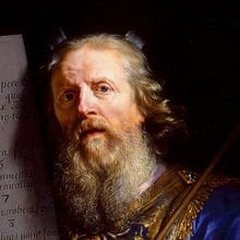 Moses
Moses Born generations later, the great-grandson of Joseph's brother Levi. When the Israelites left Egypt, he carried Joseph's bones with him, as Joseph had made his family swear.
Exodus 6:16-20; 13:19His father, also called Israel. He loved Joseph more than his other sons, and mourned him for twenty-two years. He came down to Egypt to see him before he died.
Genesis 37:3, 34-35; 46:29-30His mother, the wife Jacob loved, childless for years. “God has taken away my shame,” she said when Joseph was born. She died on the road to Bethlehem, giving birth to Benjamin.
Genesis 30:22-24; 35:16-19His only full brother, the youngest of the twelve. Joseph had his silver cup hidden in Benjamin's sack. Joseph gave him three hundred shekels of silver and five sets of clothes.
Genesis 35:18; 44:1-12; 45:22The eldest brother. He talked the others out of killing Joseph and meant to rescue him. Years later, in Egypt, he reminded them: “Didn't I tell you not to sin against the boy?”
Genesis 37:21-30; 42:22The brother who said, “Come, let us sell him to the Ishmaelites.” Years later he offered himself as a slave in Benjamin's place.
Genesis 37:26-27; 44:18-34An officer of Pharaoh and captain of the guard, who bought Joseph and put him over his house. He believed his wife's lie, and sent Joseph to prison.
Genesis 39Genesis never names her. When Joseph would not sleep with her, she kept his cloak and accused him.
Genesis 39:7-20The king whose dreams Joseph read. He set Joseph over all Egypt: “Only with regard to the throne will I be greater than you.”
Genesis 41:14-45His Egyptian wife, a priest's daughter, and their two sons. Jacob counted the boys as his own, and each became a tribe of Israel.
Genesis 41:45, 50-52; 48:5how he died
He died in Egypt at 110, and made his family swear to carry his bones home.
He lived long. “He saw Ephraim's sons to the third generation, and indeed the sons of Machir son of Manasseh were brought up on Joseph's knees.” Then he called his brothers.
“So Joseph died at the age of 110. And they embalmed his body and placed it in a coffin in Egypt.” It is the last line of Genesis.
Generations later a new king came to power, “who did not know Joseph”. When the Israelites left Egypt at last, “Moses took the bones of Joseph with him”. They were buried at Shechem, in the field Jacob had bought, and it became the inheritance of Joseph's descendants.
The letter to the Hebrews counts his last request as faith: “By faith Joseph, when his end was near, spoke about the exodus of the Israelites and gave instructions about his bones.”
To his brothers, as he was dying
I am about to die, but God will surely visit you and bring you up from this land to the land He promised on oath to Abraham, Isaac, and Jacob.
The oath he made them swear
God will surely attend to you, and then you must carry my bones up from this place.
is he a saint?
Yes, in the Orthodox Church, which keeps him as Righteous Joseph on 31 March and again in Holy Week. The Catholic Church gives him no day of his own. Lutherans in the Missouri Synod remember him on 31 March.
- OrthodoxRighteous31 March, and Great and Holy Monday
- CatholicNo feast dayNot in the Roman Martyrology
- LutheranCommemoratedMissouri Synod, 31 March
- AnglicanNot on the calendarChurch of England and Episcopal Church
The Orthodox Church in America calls him Righteous Joseph, and Joseph the Fair. As the father of Manasseh and Ephraim, it notes, he stands at the head of two of the tribes of Israel.
The Catholic Roman Martyrology, in its 1916 edition and in the edition of 2004, has no entry for him. The Missouri Synod remembers him for his uprightness and for forgiving his brothers.
Long before any calendar, Tertullian was already counting him among the saints. Writing about 197, he told the pagans:
For that Serapis of yours was originally one of our own saints called Joseph.
what to read first
Genesis 37 to 41
The book of Genesis
The robe, the pit, Potiphar's house, the prison and Pharaoh's dreams. Five chapters.
Read it freeGenesis 42 to 45
The book of Genesis
The brothers come for grain, the silver cup, and “I am Joseph!” Four chapters.
Read it freeGenesis 46 to 50
The book of Genesis
Jacob comes to Egypt, the blessings, and Joseph's death. Five chapters.
Read it freewhere the quiz places him
The record, drawn
Each arm is one axis; length is how far from the centre the recorded acts sit. An axis the text does not place Joseph on has no arm.
In the quiz's own words
Plans ahead, out in front, takes time to decide
The six axes
Your answers are marked. From your result on . See your result
In the hatched middle the quiz names neither pole.
The moments behind each axis
Each line is one recorded act and the reference it is taken from. The sentence says what the person did; where it is in quotation marks it is verbatim from the World English Bible British Edition. An act listed here is evidence of how this person moved, not approval of it; read the passage for how it was received. On 1 of the six the text does not show this, and that axis is left out of the match rather than filled in.
Pace Acts first ↔ Weighs first
takes time to decide
-
Genesis 41:33-36 toward Weighs first
He set out a scheme of appointment and storage across the seven plenteous years against the seven of famine before anything was done.
-
Genesis 42:7 toward Weighs first
He recognised his brothers and dealt with them as a stranger instead of saying who he was.
acted like a stranger to them, and spoke roughly with them
Voice Says it ↔ Holds it
slow to speak up
-
Genesis 42:7 toward Holds it
He recognised his brothers and acted like a stranger to them instead of telling them who he was.
-
Genesis 42:24 toward Holds it
He turned away from them to weep, then came back, spoke to them and bound Simeon in front of them.
-
Genesis 37:5-7 toward Says it
He told his brothers the dream about their sheaves bowing to his.
Lead Out in front ↔ Alongside
out in front
-
Genesis 39:22 toward Out in front
The keeper of the prison put all the prisoners into his hand, and he was responsible for all that was done there.
-
Genesis 41:48-49 toward Out in front
He gathered the food of seven years and stored it city by city until he stopped counting.
Conflict Confronts ↔ Reconciles
quick to reconcile
-
Genesis 45:4-5 toward Reconciles
He told the brothers who had sold him not to be grieved or angry with themselves.
-
Genesis 50:21 toward Reconciles
He promised to provide for them and their little ones, and spoke kindly to them.
-
Genesis 42:24 toward Confronts
He took Simeon from among them and bound him before their eyes.
Reasons Asks why ↔ Takes it on trust
not shown in the text
The text does not show this. Nothing in the record puts Joseph at either end of this axis, so it is left out when a reader is matched, rather than counted as a position in the middle.
-
No record
The text does not show this.
Plans Plans ahead ↔ Meets the day
plans ahead
-
Genesis 41:34-36 toward Plans ahead
He proposed taking a fifth of the produce through seven plenteous years against seven years of famine.
-
Genesis 41:48-49 toward Plans ahead
He carried the storage out himself, laying up grain in each city from the fields around it.
Nearest on the map
Distance between two sets of coordinates across every axis, on the same scale a reader's answers are measured on. No number is shown against a person, and nearness is not likeness: two people can land in the same band for different reasons.
Suggest a correction. Corrections that are applied are recorded in the public changelog.
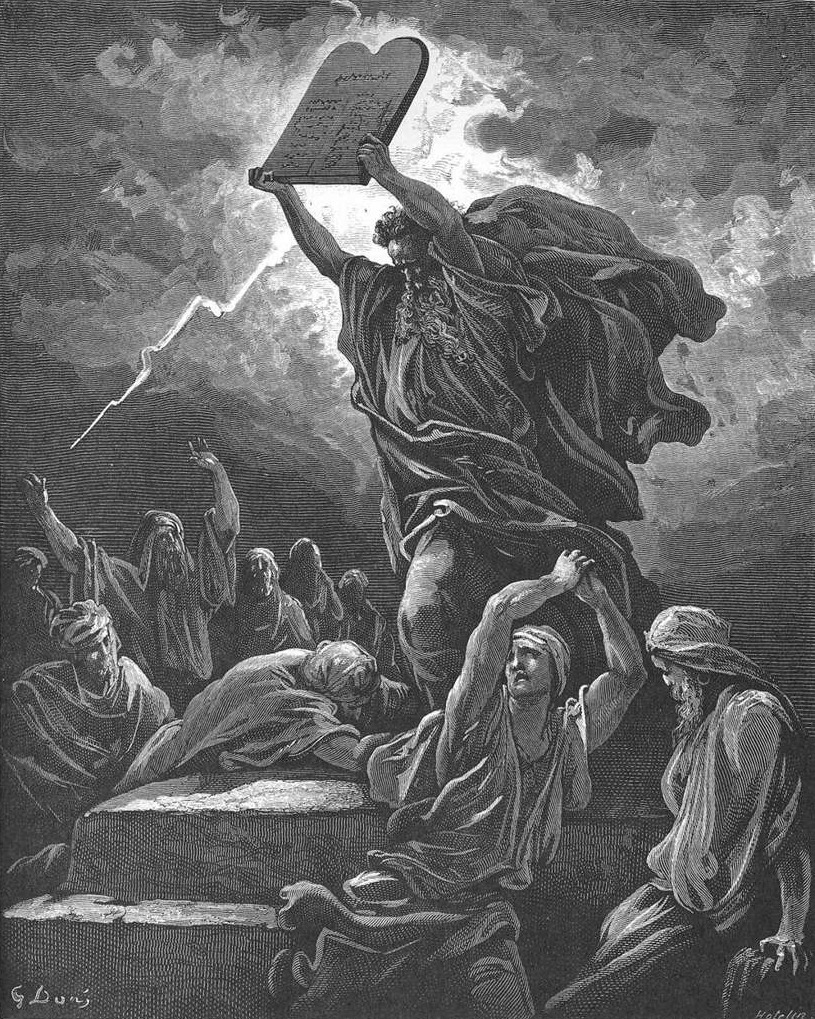 Quiz Who in the Bible are you most like? Answer eighteen plain statements about you, none of them about the Bible, and see how near you land to Joseph. Start
  Quiz Christian Personality Test Which of eight types are you? Find your own. Start
 people like him
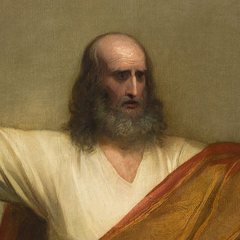 Daniel
 Like Joseph, a young Hebrew carried off to a foreign court. He told a king what his dream meant, saying, “there is a God in heaven Who reveals mysteries”, and was made ruler over a province.
Daniel 2:28, 48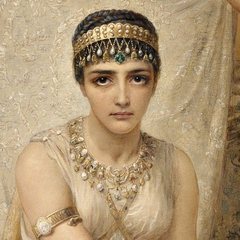 Esther
 Like Joseph, raised up in a foreign palace, where her place saved her people. “Who knows if perhaps you have come to the kingdom for such a time as this?”
Esther 4:14sources
His life, and his words
- The Berean Standard Bible, public domain. Every Bible line on this page outside the section on where the Bible figure quiz places him, except Sirach and one King James line.
- The World English Bible, British Edition, Sirach 49, public domain.
- The King James Version, for Genesis 37:3.
- 1 Clement, chapter 4. Tr. Alexander Roberts and James Donaldson. Ante-Nicene Fathers, volume 1, 1885.
- Tertullian, Ad Nationes, book 2, chapter 8. Tr. Peter Holmes. Ante-Nicene Fathers, volume 3.
- Basil, Letter 2. Tr. Blomfield Jackson. Nicene and Post-Nicene Fathers, second series, volume 8.
- Ambrose, On the Duties of the Clergy, books 1 and 2, and On the Holy Spirit, book 3. Tr. H. de Romestin. Nicene and Post-Nicene Fathers, second series, volume 10.
- John Chrysostom, Homilies on Matthew, Homily 84. Nicene and Post-Nicene Fathers, first series, volume 10.
- John Chrysostom, Homilies on Acts, Homily 17. Nicene and Post-Nicene Fathers, first series, volume 11.
- John Chrysostom, Homilies on John, Homily 71. Nicene and Post-Nicene Fathers, first series, volume 14.
- Gregory of Tours, History of the Franks, book 1. Tr. Ernest Brehaut, 1916.
Reference
- Jewish Encyclopedia, 1906, “Joseph”
- Bible Hub, Strong's Hebrew 6446, for the word behind the robe
- OCA, “Righteous Joseph the Patriarch”
- Priest Seraphim Holland, St Nicholas Russian Orthodox Church, McKinney, Texas, “Joseph the All-Comely, a type of Christ”
Calendars
- OCA, 31 March
- The Lutheran Church–Missouri Synod, Commemorations, 31 March
- The Roman Martyrology, 1916 edition
- The Roman Martyrology, 2004 edition, in English at GCatholic
- Church of England, Common Worship calendar
- The Episcopal Church, Lesser Feasts and Fasts 2022
Pictures
- Joseph Recognised by His Brothers, Anne-Louis Girodet, 1789. École nationale supérieure des Beaux-Arts, Paris. Public domain.
- Joseph Faithful in Prison, a Bible picture card, Providence Lithograph Company, 1907. Public domain.
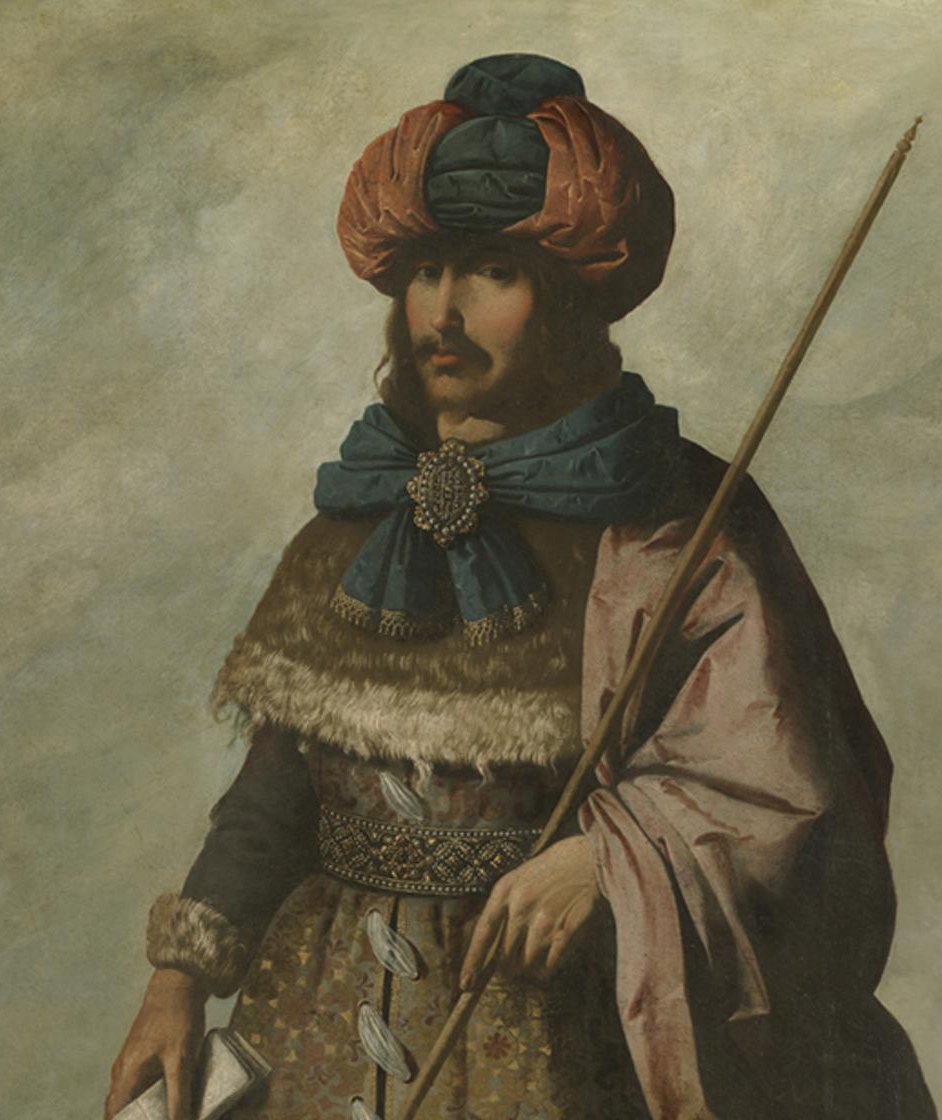
- Joseph, from Jacob and His Twelve Sons, Francisco de Zurbarán, 1640s. Auckland Castle, Bishop Auckland. Public domain.
- Righteous Joseph the Fair, an icon by Osip Chirikov, 1800s. The State Hermitage Museum, St Petersburg. Public domain.