
Mary, mother of Jesus
The mother of Jesus. She said yes to God at Nazareth, stood by the cross, and prayed with the first Christians.
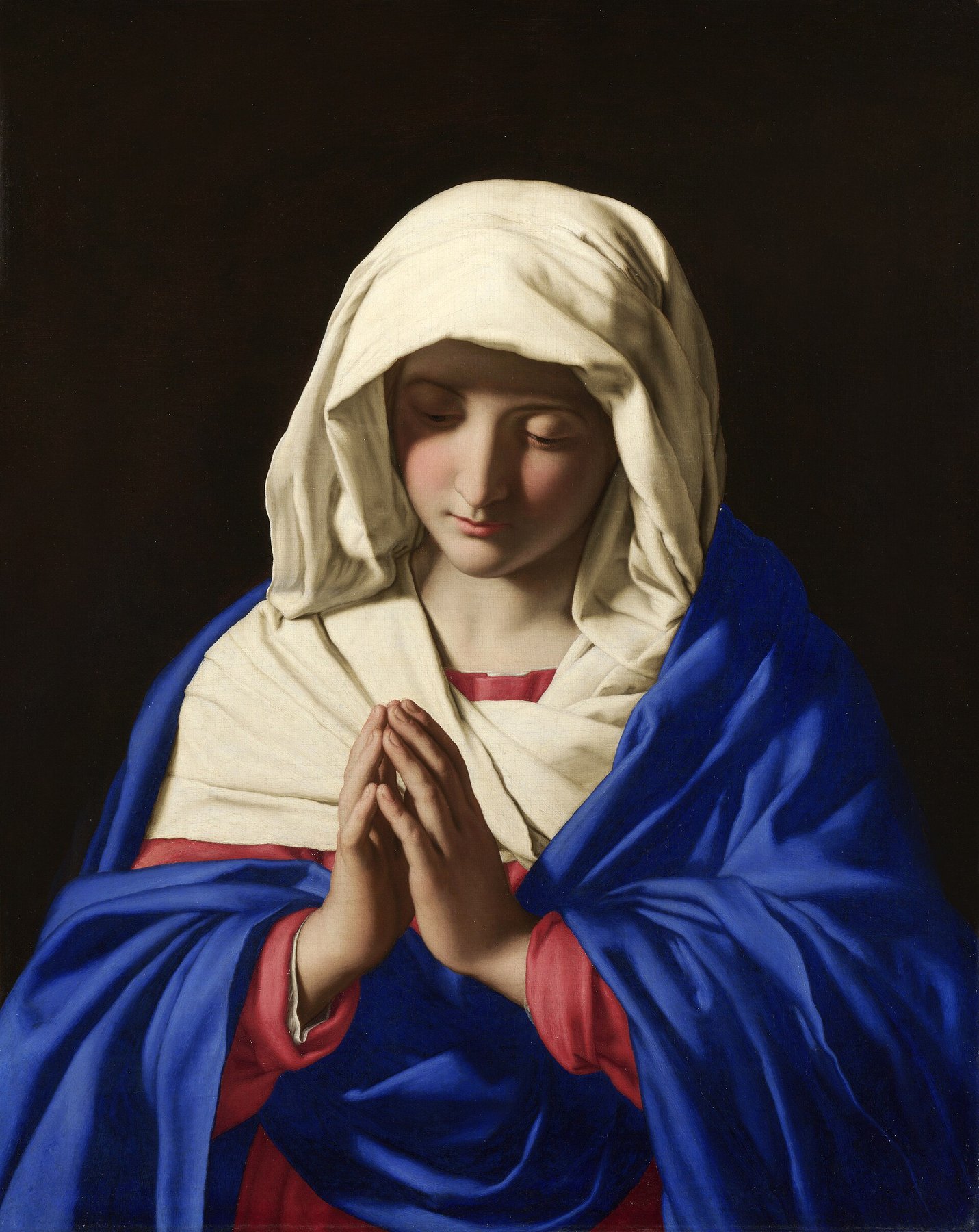
Picture: The Virgin in Prayer, Sassoferrato, 1640 to 1650. The National Gallery, London. Public domain.
Who was Mary?
Mary was a woman of Nazareth, pledged to marry Joseph. Luke tells how the angel Gabriel said she would bear the Son of God, and she answered, “May it happen to me according to your word.” She gave birth to Jesus in Bethlehem, stood by His cross, and prayed with the apostles after He rose.
at a glance
Her path, in order
- VirginOf Nazareth, pledged to Joseph
- MotherOf Jesus, born in Bethlehem
- ExileIn Egypt, out of King Herod's reach
- WitnessAt Cana, and at the cross
- DiscipleAt prayer with the apostles
in numbers
- Times the Gospels give her words6
- Four in Luke, two in John
- The last: “Do whatever He tells you.”
- Months she stayed with Elizabeth3
- Her relative, expecting John the Baptist
- Then she returned home
- Days she and Joseph searched for Jesus3
- He was twelve years old
- They found Him in the temple courts
- Women in Jesus' family tree5
- In Matthew: Tamar, Rahab, Ruth, Uriah's wife
- And last of all, Mary
did you know?
-
Her song, the Magnificat, is close in thought and words to Hannah's song in 1 Samuel 2. The Catholic Church sings it every evening, at Vespers.
Catholic Encyclopedia, “Magnificat” -
Three old Latin manuscripts of Luke give her song to Elizabeth: “And Elizabeth said”. The Greek and Syriac texts all give it to Mary.
Catholic Encyclopedia, “Magnificat” -
The first half of the Hail Mary is Luke's words: the angel's greeting, then Elizabeth's.
Luke 1:28, 42; Catholic Encyclopedia, “Hail Mary” -
In 1950 Rome defined her Assumption: that she was taken up to heaven, body and soul. Before then, more than eight million people had signed petitions asking for it, says Britannica.
Britannica, “Mary”
- Born
- In a year no one recorded. The Bible does not name her parents. The Protevangelium of James, a book of the 100s, calls them Joachim and Anna.
- Home
- Nazareth, a town in Galilee. She went to Bethlehem for a census, to Egypt with Joseph, and to Jerusalem every year for the Passover.
- Family
- Pledged in marriage to Joseph, of the house of David. The mother of Jesus. Elizabeth, the mother of John the Baptist, was her relative. John's Gospel names “her sister” at the cross.
- Name
- Miriam in Hebrew, the name of Moses' sister. The Greek New Testament writes it Mariam or Maria. Six women in it are called Mary.
- Also called
- The Virgin Mary. The Blessed Virgin Mary, in Catholic and Anglican calendars. The Theotokos, the Mother of God. Our Lady.
- Named in
- Matthew, Mark, Luke and Acts. John never gives her name: she is “His mother” or “Jesus' mother”. Paul writes only that God sent His Son “born of a woman”, probably the earliest mention of her, says Britannica.
- Died
- The Bible does not say. The last time it names her, she is at prayer in Jerusalem with the apostles. Later tradition places her death in Jerusalem, or at Ephesus.
- Buried
- No grave is known for certain. A tomb in Jerusalem is said to be hers, says Britannica. John of Damascus preached in the 700s that she was laid in a tomb at Gethsemane.
- Pronounced
- Theotokos is thee-uh-TOH-kohs.
feast days
East and West, side by side
West
- Jan1
Mary, the Holy Mother of God, a Catholic solemnity.
- Mar25
The Annunciation, the angel's greeting to her: a Catholic solemnity. A Principal Feast in the Church of England. Also kept by the Episcopal Church, and by Lutherans in the Missouri Synod and the ELCA.
- May31
The Visitation, her visit to Elizabeth: a Catholic feast. Also kept by the Church of England, the Episcopal Church, and Lutherans in the Missouri Synod and the ELCA.
- Aug15
The Assumption, her being taken up to heaven: a Catholic solemnity. The Church of England keeps the day as The Blessed Virgin Mary, and the Episcopal Church as Saint Mary the Virgin. Lutherans in the Missouri Synod and the ELCA keep it as Mary, Mother of our Lord.
- Sep8
Her birth, a Catholic feast. Also kept by the Church of England.
- Sep15
Our Lady of Sorrows, a Catholic memorial.
- Nov21
The Presentation of Mary in the temple as a child, a Catholic memorial.
- Dec8
The Immaculate Conception, a Catholic solemnity. The Church of England keeps the Conception of the Blessed Virgin Mary.
East
- Jan29
The Coptic Church, on 21 Tobi in its own calendar: her Dormition, her falling asleep.
- Mar25
The Annunciation, the angel's greeting to her: one of the great feasts, in the OCA and the Greek churches.
- Aug15
The Dormition of the Theotokos, her falling asleep, kept by the OCA and the Greek churches.
- Aug22
The Coptic Church, on 16 Mesori: the Assumption of her body.
- Sep8
Her Nativity, in the OCA and the Greek churches.
- Oct1
The Protection of the Theotokos, in the OCA. It remembers how she appeared in a church in Constantinople in the 900s.
- Nov21
Her Entry into the Temple as a child, in the OCA and the Greek churches.
- Dec9
Her Conception by Saint Anna, in the OCA.
- Dec26
The Synaxis of the Theotokos, in the OCA. On the day after Christmas, the faithful gather to praise her.
Her birth on 8 September and her conception on 8 or 9 December are nine months apart. Both halves of the Church keep her conception, but they differ on what it means: see What the churches believe about her, below. The Coptic Church keeps her death in January and the taking up of her body in August. Churches on the old calendar keep each date 13 days later, so their Dormition falls on 28 August. The OCA is the Orthodox Church in America. The ELCA is the Evangelical Lutheran Church in America.
what others said of her
An angel, her relative, an old man in the temple, and Christians from the second century to the Reformation, in their own words.
Greetings, you who are highly favored! The Lord is with you.
Blessed are you among women, and blessed is the fruit of your womb! And why am I so honored, that the mother of my Lord should come to me?
Behold, this Child is appointed to cause the rise and fall of many in Israel, and to be a sign that will be spoken against, so that the thoughts of many hearts will be revealed—and a sword will pierce your soul as well.
Now the virginity of Mary was hidden from the prince of this world, as was also her offspring, and the death of the Lord; three mysteries of renown, which were wrought in silence by God.
And thus also it was that the knot of Eve's disobedience was loosed by the obedience of Mary. For what the virgin Eve had bound fast through unbelief, this did the virgin Mary set free through faith.
When the apostles fled, she stood at the Cross, and with pious eyes beheld her Son's wounds, for she did not look for the death of her Offspring, but the salvation of the world.
We see how Mary makes herself nothing, and praises God alone.
her life in eleven moments
Nazareth
In Elizabeth's sixth monthThe angel's greeting
God sent the angel Gabriel to a virgin in Nazareth, pledged in marriage to a man named Joseph. Mary was greatly troubled at his greeting. The angel said, “Do not be afraid, Mary, for you have found favor with God.” She would bear a Son, and call Him Jesus. “How can this be,” Mary asked the angel, “since I am a virgin?” The Holy Spirit would come upon her, he said. Her relative Elizabeth, called barren, was already six months pregnant. “For no word from God will ever fail.” Mary answered, “I am the Lord's servant. May it happen to me according to your word.”
Luke 1:26-38The hill country of Judah
In those daysThe visit to Elizabeth
Mary got ready and hurried to the home of her relative Elizabeth, the wife of the priest Zechariah. Elizabeth was expecting a child. When she heard Mary's greeting, the baby leaped in her womb, and she was filled with the Holy Spirit. She called Mary blessed among women, “the mother of my Lord”. Mary answered with a song of praise, the Magnificat: see Her words, below. She stayed about three months, then went home.
Luke 1:39-56Nazareth
While pledged to JosephJoseph's dream
Mary was pledged in marriage to Joseph, but before they came together, “she was found to be with child through the Holy Spirit.” Joseph was a righteous man. He did not want to disgrace her publicly, so he resolved to divorce her quietly. Then an angel of the Lord spoke to him in a dream: “Joseph, son of David, do not be afraid to embrace Mary as your wife, for the One conceived in her is from the Holy Spirit.” When he woke, he took her home as his wife.
Matthew 1:18-24Bethlehem
The time of the censusNo room in the inn
An order from Caesar Augustus sent Joseph to Bethlehem, the city of David, to register with Mary. While they were there, she gave birth to her firstborn, a Son. She wrapped Him in swaddling cloths and laid Him in a manger, “because there was no room for them in the inn.” Shepherds came from the fields, sent by an angel, and told what they had heard. All who heard them were amazed. “But Mary treasured up all these things and pondered them in her heart.”
Luke 2:1-19The temple in Jerusalem
When Jesus was a babyThe sword foretold
Mary and Joseph brought the Child to Jerusalem to present Him to the Lord. They offered the sacrifice the Law of the Lord specified: “A pair of turtledoves or two young pigeons.” An old man named Simeon, who had been waiting for the Lord's Christ, took Jesus in his arms and blessed God. Then he turned to Mary. Her Son would be a sign spoken against, he said, and a sword would pierce her own soul. An aged prophetess, Anna, gave thanks and spoke about the Child to all who were waiting for the redemption of Jerusalem.
Luke 2:22-38Bethlehem and Egypt
The Magi comeThe flight into Egypt
Magi from the east came to a house in Bethlehem, and “saw the Child with His mother Mary”. They fell down and worshiped Him, and gave Him gold, frankincense and myrrh. Then an angel warned Joseph in a dream: “Take the Child and His mother and flee to Egypt.” The angel said that King Herod would search for the Child to kill Him. They left by night, and stayed until Herod died. Then they came back, and settled in Nazareth.
Matthew 2:11-23Jerusalem
The Passover, when He was twelveLost and found in the temple
Every year the family went to Jerusalem for the Passover. When Jesus was twelve, He stayed behind, and His parents did not know. After three days they found Him in the temple courts, sitting among the teachers. “Child, why have You done this to us?” His mother asked. “Your father and I have been anxiously searching for You.” He answered, “Did you not know that I had to be in My Father's house?” They did not understand. He went home with them and was obedient to them. “But His mother treasured up all these things in her heart.”
Luke 2:41-51Cana in Galilee
A weddingThe wine runs out
Mary was at a wedding at Cana, and Jesus and His disciples were invited too. When the wine ran out, she said to Him, “They have no more wine.” “Woman, what is that to you and to Me?” Jesus replied. “My hour has not yet come.” His mother said to the servants, “Do whatever He tells you.” Jesus had them fill six stone jars with water, and the water became wine. John's Gospel calls it “the first of His signs”.
John 2:1-11Galilee
While He taught“Who is My mother?”
Once Jesus' mother and brothers came to see Him, but could not reach Him for the crowd. Jesus pointed to His disciples. “Here are My mother and My brothers. For whoever does the will of My Father in heaven is My brother and sister and mother.” Another day a woman in the crowd called out, “Blessed is the womb that bore You.” He replied, “Blessed rather are those who hear the word of God and obey it.” Augustine read both sayings as praise of Mary herself: “Mary is more blessed in receiving the faith of Christ, than in conceiving the flesh of Christ.”
Matthew 12:46-50; Luke 11:27-28; Augustine, On Holy Virginity, chapter 3Golgotha
The crucifixionAt the cross
Near the cross of Jesus stood His mother and her sister, with Mary the wife of Clopas and Mary Magdalene. Jesus saw His mother, and the disciple whom He loved standing nearby. He said to His mother, “Woman, here is your son.” Then He said to the disciple, “Here is your mother.” “So from that hour, this disciple took her into his home.”
John 19:25-27The upper room, Jerusalem
After the AscensionAt prayer with the apostles
After Jesus was taken up, the eleven apostles went back to the upper room where they were staying. “With one accord they all continued in prayer, along with the women and Mary the mother of Jesus, and with His brothers.” It is the last time the Bible names her.
Acts 1:12-14
her words
Mary wrote nothing. The Gospels give her words six times: her questions and answers are in the story of her life, above. Her longest words are a song she spoke at Elizabeth's house. It is known by its first word in Latin, the Magnificat. Outside the section on where the Bible figure quiz places her, every Bible line on this page is from the Berean Standard Bible.
Her song
My soul magnifies the Lord, and my spirit rejoices in God my Savior!
Elizabeth had just called her blessed. Mary answered with a song of praise to God.
Luke 1:46-47For He has looked with favor on the humble state of His servant. From now on all generations will call me blessed.
For the Mighty One has done great things for me. Holy is His name. His mercy extends to those who fear Him, from generation to generation.
He has brought down rulers from their thrones, but has exalted the humble. He has filled the hungry with good things, but has sent the rich away empty.
He has helped His servant Israel, remembering to be merciful, as He promised to our fathers, to Abraham and his descendants forever.
often misquoted
The Immaculate Conception means Jesus was conceived without a human father.
What the sources sayThat is the virgin birth, told in Matthew and Luke. The Immaculate Conception is a different teaching, about Mary's own conception. The Catholic Church defined it in 1854: from the first instant of her conception, she was kept free of original sin. See What the churches believe about her, below.
Matthew 1:18; Luke 1:34-35; Ineffabilis Deus (1854), in Philip Schaff, The Creeds of ChristendomMary rode a donkey to Bethlehem.
What the sources sayLuke does not say how they travelled. Joseph went “to register with Mary, who was pledged to him in marriage and was expecting a child.” The donkey comes from the Protevangelium of James, a book of the 100s that never became part of the Bible. There Joseph “saddled the ass, and set her upon it”.
Luke 2:4-5; Protevangelium of James, chapter 17, Ante-Nicene Fathers, volume 8An innkeeper turned them away.
What the sources sayNo innkeeper appears in the story. Luke says only that she laid her Son in a manger, “because there was no room for them in the inn.”
Luke 2:7Mary was fourteen when the angel came.
What the sources sayThe Bible gives no age. The Protevangelium of James says “she was sixteen years old when these mysteries happened”. Its manuscripts differ: one says fourteen, two say fifteen, and one says seventeen.
Protevangelium of James, chapter 12, with the notes in the Ante-Nicene Fathers, volume 8Catholics and Orthodox worship Mary.
What the sources sayBoth churches say worship belongs to God alone. In 787 the Second Council of Nicaea, which both accept, approved images of Christ, of “our spotless Lady, the Mother of God”, and of the saints. They were to be given honour, “not indeed that true worship of faith (latreian) which pertains alone to the divine nature”. Protestant confessions object to calling on the saints in prayer: see Asking her prayers, below.
Second Council of Nicaea, the definition, Nicene and Post-Nicene Fathers, second series, volume 14Mary spent her last years in a house near Ephesus.
What the sources sayThe Bible does not say where she lived after the cross. The house shown near Ephesus was found by searchers following the visions of Catherine Emmerich, a nun. The Catholic Encyclopedia weighed the old claims for Ephesus and for Jerusalem. It judged that “the evidence for her permanent home in Jerusalem is much stronger”.
Catholic Encyclopedia, “The Blessed Virgin Mary”what the churches believe about her
Catholics, Orthodox and Protestants all honour Mary, in different ways. The early councils gave her one great title. On three other questions the churches differ, and here each speaks for itself. How they see the end of her life is below.
Mother of God
The early Church called her the Theotokos, Greek for “giving birth to God”. The title is about who her Son is. In 431 the Council of Ephesus condemned Nestorius, bishop of Constantinople, who would call her only “mother of Christ”. The council heard the letter from Cyril of Alexandria quoted here. Catholics pray, “Holy Mary, Mother of God”. The Orthodox catechism calls it a great title. The Lutheran Formula of Concord (1577) says “she is both rightly called and in very deed is the Mother of God.”
“They ventured to call the holy Virgin, the Mother of God, not as if the nature of the Word or His divinity had its beginning from the holy Virgin, but because of her was born that holy body with a rational soul, to which the Word being personally united is said to be born according to the flesh.”Cyril of Alexandria, Second Letter to Nestorius, at the Council of Ephesus; the Formula of Concord, Epitome, article 8; Britannica; Merriam-Webster
Conceived without sin?
The Catholic Church teaches that God kept Mary free of original sin from the first instant of her conception. Pope Pius IX defined it in 1854. It was a gift given “in view of the merits of Christ Jesus the Saviour of mankind”. In Catholic teaching, Christ saved her too, by keeping her from it. The Orthodox honour her as most pure. Their catechism speaks of Christ and “His immaculate Mother”. But they do not accept the 1854 teaching. The Patriarch of Constantinople wrote in 1895 that it was new, unknown to the ancient Church. Protestant churches do not hold it either. The Protestant historian Philip Schaff pointed to Luke 1:47, where she calls God her Savior. So she “includes herself in the number of the redeemed”, he wrote.
Ineffabilis Deus (1854) and the Longer Catechism, question 520, in Schaff, The Creeds of Christendom, volume 2; the Patriarchal Encyclical of 1895, chapter 13; Schaff, volume 1Ever a virgin? The brothers of Jesus
The three traditions agree that she was a virgin when she conceived Jesus. After His birth, they differ. The Catholic Church holds that she stayed a virgin all her life. Jerome wrote in 383, “We believe that God was born of the Virgin, because we read it. That Mary was married after she brought forth, we do not believe, because we do not read it.” Catholics read the brothers as “His cousins or the more or less near relatives”. The Orthodox call her ever-virgin, a virgin “before the birth, during the birth, and after the birth”. The Orthodox Church in America calls James, one of the brothers, a son of Joseph by an earlier wife. Protestants differ among themselves. The Second Helvetic Confession (1566) calls her “Mary, who was always a virgin”. Many read the brothers, with the historian Philip Schaff, as “younger children of Joseph and Mary”.
“Isn't this the carpenter, the son of Mary and the brother of James, Joses, Judas, and Simon? Aren't His sisters here with us as well?”Mark 6:3; Jerome, Against Helvidius, chapter 21; Catholic Encyclopedia; the Longer Catechism, question 186; the OCA, 23 October; the Second Helvetic Confession, chapter 11; Schaff, History of the Christian Church, volume 1
Asking her prayers
The Catholic Church teaches that the saints pray for us, and “that it is good and useful suppliantly to invoke them”, as the Council of Trent put it. The Hail Mary ends, “Holy Mary, Mother of God, pray for us sinners now and at the hour of our death.” The Orthodox ask her prayers too. Their catechism says the Church “calls upon Christ our true God, by the prayers of His most pure Mother and all His saints.” Protestant confessions object to calling on her. The Lutheran Augsburg Confession (1530) says “the memory of saints may be set before us, that we may follow their faith and good works”. But “the Scripture teacheth not to invocate saints, or to ask help of saints, because it propoundeth unto us one Christ the Mediator”.
Council of Trent, session 25; Catholic Encyclopedia, “Hail Mary”; the Longer Catechism, question 264; the Augsburg Confession, article 21, in Schaff, The Creeds of Christendomfriends, family and rivals
 John the Baptist
 Elizabeth's son. When Mary's greeting reached his mother's ears, the baby leaped for joy in her womb.
Luke 1:41-44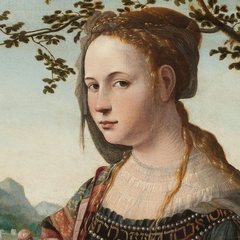 Mary Magdalene
 She stood near the cross with Jesus' mother. On the first day of the week, she went to Jesus' tomb.
John 19:25; 20:1Her husband, of the house of David. Four times a dream guided him: to marry her, to flee to Egypt, to come back, and to settle in Galilee. Each time he obeyed.
Matthew 1:20-24; 2:13-23Her relative, the wife of the priest Zechariah. She conceived in her old age, and was the first to call Mary “the mother of my Lord”.
Luke 1:5-7, 36, 43A righteous old man in Jerusalem, promised he would see the Christ before he died. He took the Child in his arms, and warned Mary that a sword would pierce her soul.
Luke 2:25-35A prophetess of the tribe of Asher, who never left the temple. She gave thanks for the Child and spoke of Him to all who waited for the redemption of Jerusalem.
Luke 2:36-38From the cross Jesus gave her to him as his mother, and he took her into his home. Tradition names him as John the apostle.
John 19:26-27; Catholic Encyclopedia, “The Blessed Virgin Mary”She too stood by the cross. John's Gospel names Jesus' mother there and “her sister”. Many take that sister to be this same woman.
John 19:25; Strong's Greek 3137, with Thayer's lexiconJames, Joses, Judas and Simon, with sisters not named. At first “even His own brothers did not believe in Him.” After He rose, they prayed with Mary in the upper room. Who they were is argued: see What the churches believe about her, above.
Mark 6:3; John 7:5; Acts 1:14the end of her life
The Bible does not say how or when her life ended. It last names her at prayer with the apostles, before Pentecost.
At the cross Jesus gave her to the disciple He loved, and “from that hour, this disciple took her into his home.” Where they lived is not told.
Later Christians told of her death, and of her body taken up to heaven. John of Damascus, preaching in the 700s, said her body was laid in a tomb at Gethsemane: “Then it was assumed after three days to the heavenly mansions.” The churches hold this in different ways.
The Catholic Church. In 1950 Pope Pius XII defined that Mary was taken up to heaven, body and soul. His Latin reads Immaculatam Deiparam semper Virginem Mariam, expleto terrestris vitae cursu, fuisse corpore et anima ad caelestem gloriam assumptam. In our translation: “the Immaculate Mother of God, the ever-Virgin Mary, having completed the course of her earthly life, was taken up body and soul into heavenly glory.” The feast is the Assumption, on 15 August.
The Orthodox Church keeps 15 August as the Dormition, her falling asleep. John of Damascus preached, “Thy pure and spotless body was not left in the earth.” The Orthodox Church in America tells the old account. The apostles buried her at Gethsemane. Thomas came late, and on the third day they opened the tomb for him. They found only her grave wrappings.
Protestant confessions do not teach that her body was taken up to heaven. They hold to Scripture alone for doctrine, as the Church of England's Thirty-nine Articles put it: “whatsoever is not read therein, nor may be proved thereby, is not to be required of any man, that it should be believed as an article of the Faith.” The Church of England, the Episcopal Church and many Lutherans still keep 15 August, as a feast of Mary herself.
is she a saint?
Yes. Every church that keeps saints' days honours her, most of them on 15 August.
- CatholicSaintThe Assumption, 15 August
- OrthodoxSaintThe Dormition, 15 August
- CopticSaint21 Tobi and 16 Mesori
- AnglicanSaintA Festival in the Church of England
- LutheranSaintMissouri Synod and ELCA, 15 August
The Orthodox catechism says the Church “honors her far above the cherubim and seraphim”.
Churches that keep no saints' days honour her too. The Waldensians of Piedmont, a Protestant church since 1532, were accused in 1655 of despising her. They answered that they “hold above all the holy Virgin Mary to be ‘blessed amongst women.’”
In her song, Mary had foretold that she would be honoured: “From now on all generations will call me blessed.”
what to read first
Luke 1 and 2
The Gospel of Luke
The angel's greeting, the visit to Elizabeth, her song, the birth in Bethlehem, Simeon's warning and the boy in the temple. Two chapters.
Read it freeMatthew 1 and 2
The Gospel of Matthew
Jesus' birth and early years, through Joseph's eyes: his dreams, the Magi, and the flight into Egypt.
Read it freeJohn 2 and 19
The Gospel of John
The wedding at Cana, where she speaks for the last time, and the cross, where her Son gives her a new son.
Read it freeThe Protevangelium of James
Unknown, the 100s
Never part of the Bible. It gives her parents' names, Joachim and Anna, and tells of her childhood in the temple and her marriage to Joseph.
Read it freewhere the quiz places her
The record, drawn
Placed on 3 of 6
-
Pace recorded at both ends
Acts firstWeighs first
-
Voice slow to speak up
Says itHolds it
-
Lead more alongside than in front
Out in frontAlongside
-
Conflict quick to confront
ConfrontsReconciles
-
Reasons recorded at both ends
Asks whyTakes it on trust
-
Plans not shown in the text
Plans aheadMeets the day
The text places Mary the mother of Jesus on 3 of the 6, and on none of them far from the middle, so a wheel would have almost nothing to draw.
In the quiz's own words
Slow to speak up, more alongside than in front, quick to confront
The six axes
Your answers are marked. From your result on . See your result
In the hatched middle the quiz names neither pole.
The moments behind each axis
Each line is one recorded act and the reference it is taken from. The sentence says what the person did; where it is in quotation marks it is verbatim, from the translation named under it. An act listed here is evidence of how this person moved, not approval of it; read the passage for how it was received. On 1 of the six the text does not show this, and that axis is left out of the match rather than filled in. On 2 the text shows both ends and they do not settle, so that axis is left out too — the acts for each end are printed under it.
Pace Acts first ↔ Weighs first
recorded at both ends
The text shows both ends. The recorded acts go one way and the other and do not settle, so this axis is left out when a reader is matched rather than counted as a position in the middle. Both ends are below.
Toward Acts first
-
Luke 1:39 toward Acts first
She got up in those days and went into the hill country in haste.
Toward Weighs first
-
Luke 1:29 toward Weighs first
At the greeting she was greatly troubled, and considered what kind of salutation it might be.
Voice Says it ↔ Holds it
slow to speak up
-
Luke 2:19 toward Holds it
After the shepherds came she kept what was said to herself and turned it over.
Mary kept all these sayings, pondering them in her heart.
World English Bible British Edition
-
Luke 2:51 toward Holds it
After Jerusalem she again kept what had been said in her heart.
-
Luke 1:46-47 toward Says it
She answered Elizabeth at length, saying that her soul magnified the Lord and her spirit had rejoiced in God her Saviour.
My soul magnifies the Lord.
World English Bible British Edition
Lead Out in front ↔ Alongside
more alongside than in front
-
John 2:5 toward Alongside
At the wedding she told the servants to do whatever He told them.
Do whatever He tells you.
Berean Standard Bible
-
John 2:3 toward Out in front
When the wine ran out she was the one who raised it, and she raised it with Him.
Conflict Confronts ↔ Reconciles
quick to confront
-
Luke 2:48 toward Confronts
When they found Him in the temple she asked Him why He had treated them this way, and said that she and His father had been anxiously looking for Him.
Child, why have You done this to us?
Berean Standard Bible
Reasons Asks why ↔ Takes it on trust
recorded at both ends
The text shows both ends. The recorded acts go one way and the other and do not settle, so this axis is left out when a reader is matched rather than counted as a position in the middle. Both ends are below.
Toward Asks why
-
Luke 1:34 toward Asks why
She asked how what she had been told could happen.
How can this be, seeing I am a virgin?
World English Bible British Edition
-
Luke 2:48 toward Asks why
When they found Him in the temple she asked Him why He had treated them this way.
Toward Takes it on trust
-
Luke 1:38 toward Takes it on trust
Once the angel had answered her she said she was the Lord's servant and asked that it be done to her according to His word.
Behold, the servant of the Lord; let it be done to me according to your word.
World English Bible British Edition
Plans Plans ahead ↔ Meets the day
not shown in the text
The text does not show this. Nothing in the record puts Mary the mother of Jesus at either end of this axis, so it is left out when a reader is matched, rather than counted as a position in the middle.
-
No record
The text does not show this.
Nearest on the map
Distance between two sets of coordinates across every axis, on the same scale a reader's answers are measured on. No number is shown against a person, and nearness is not likeness: two people can land in the same band for different reasons.
Suggest a correction. Corrections that are applied are recorded in the public changelog.
 Quiz Who in the Bible are you most like? Answer eighteen plain statements about you, none of them about the Bible, and see how near you land to Mary the mother of Jesus. Start
  Quiz Christian Personality Test Which of eight types are you? Find your own. Start
 people like her
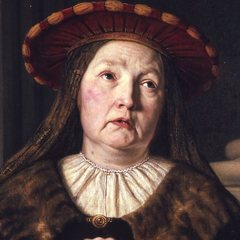 Hannah
 She prayed for a son and gave him to God. Her song, “My heart rejoices in the LORD”, is the one Mary's song echoes.
1 Samuel 2:1-10; Catholic Encyclopedia, “Magnificat”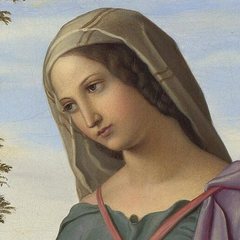 Ruth
Ruth A foreigner who became David's great-grandmother. Matthew names her in the family tree of Jesus, with Mary last.
Ruth 4:13-17; Matthew 1:5, 16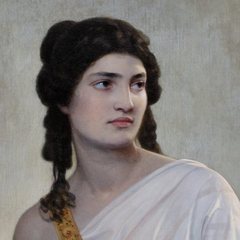 Judith
 After she saved her people, the governor of her city blessed her “above all the women upon the earth”. Elizabeth blessed Mary “among women”.
Judith 13:18, World English Bible; Luke 1:42sources
Her life, and her words
- The Berean Standard Bible, public domain. Every Bible line on this page outside the section on where the Bible figure quiz places her, except Judith.
- The World English Bible, Judith 13, public domain. Judith is in Catholic and Orthodox Bibles.
- Ignatius, Letter to the Ephesians, chapter 19. Tr. Alexander Roberts and James Donaldson. Ante-Nicene Fathers, volume 1, 1885.
- Irenaeus, Against Heresies, Book 3, chapter 22. Same edition.
- Ambrose, Letter 63. Tr. H. de Romestin. Nicene and Post-Nicene Fathers, second series, volume 10.
- Augustine, On Holy Virginity, chapter 3. Tr. C. L. Cornish. Nicene and Post-Nicene Fathers, first series, volume 3.
- John of Damascus, Sermons on the Dormition. Tr. Mary H. Allies, 1898.
- John Calvin, Commentary on a Harmony of the Evangelists, volume 1. Tr. William Pringle, 1845.
- The Protevangelium of James. Tr. Alexander Walker. Ante-Nicene Fathers, volume 8, with its notes on the manuscripts.
- The Passing of Mary. Same volume.
What the churches believe
- Philip Schaff, The Creeds of Christendom, volume 2. The Council of Chalcedon; the Council of Trent; Ineffabilis Deus (1854); the Longer Catechism, tr. R. W. Blackmore.
- The Longer Catechism, on Mary and on the saints, questions 185 to 190 and 263 to 264
- Philip Schaff, The Creeds of Christendom, volume 3. The Augsburg Confession, the Formula of Concord, the Thirty-nine Articles, the Second Helvetic Confession and the Waldensian Confession of 1655.
- Philip Schaff, The Creeds of Christendom, volume 1, on the argument for the Immaculate Conception
- Philip Schaff, History of the Christian Church, volume 1, on James and the brothers of the Lord
- Cyril of Alexandria, Second Letter to Nestorius, in the acts of the Council of Ephesus. Nicene and Post-Nicene Fathers, second series, volume 14.
- The Second Council of Nicaea, the definition. Same volume.
- Jerome, Against Helvidius. Tr. W. H. Fremantle. Nicene and Post-Nicene Fathers, second series, volume 6.
- Pius XII, Munificentissimus Deus, 1950, in Latin. The English on this page is ours.
- The Patriarchal Encyclical of 1895, the reply of Constantinople to Pope Leo XIII, chapter 13
- OCA, James the Brother of the Lord, 23 October
- Catholic Encyclopedia, “The Brethren of the Lord”
Reference
- Catholic Encyclopedia, “The Blessed Virgin Mary”
- Catholic Encyclopedia, “Magnificat”
- Catholic Encyclopedia, “Hail Mary”
- Britannica, “Mary”
- Merriam-Webster, “Theotokos”, for what it means and how to say it
- Bible Hub, Strong's Greek 3137, for her name, with Thayer's lexicon
Calendars
- USCCB, Liturgical Calendar 2026, 1 January, 25 March, 15 August, 8 and 15 September, 21 November and 8 December
- Calendarium Romanum, 1969, for the Visitation on 31 May
- OCA, the Dormition of the Theotokos
- OCA, the Annunciation
- OCA, the Nativity of the Theotokos
- OCA, the Protection of the Theotokos
- OCA, the Entry into the Temple
- OCA, the Conception by Saint Anna
- OCA, the Synaxis of the Theotokos
- CopticChurch.net, the Coptic synaxarium, 21 Tobi
- CopticChurch.net, the Coptic synaxarium, 16 Mesori
- Church of England, Common Worship calendar
- The Episcopal Church, Lesser Feasts and Fasts 2022
- The Lutheran Church–Missouri Synod, Commemorations
- Evangelical Lutheran Worship, ELCA, the church year (final draft, 2006)
Pictures
- The Virgin in Prayer, Sassoferrato, 1640 to 1650. The National Gallery, London. Public domain.
- The Virgin Hodegetria, Emmanuel Lambardos, about 1600. Benaki Museum, Athens. Public domain.
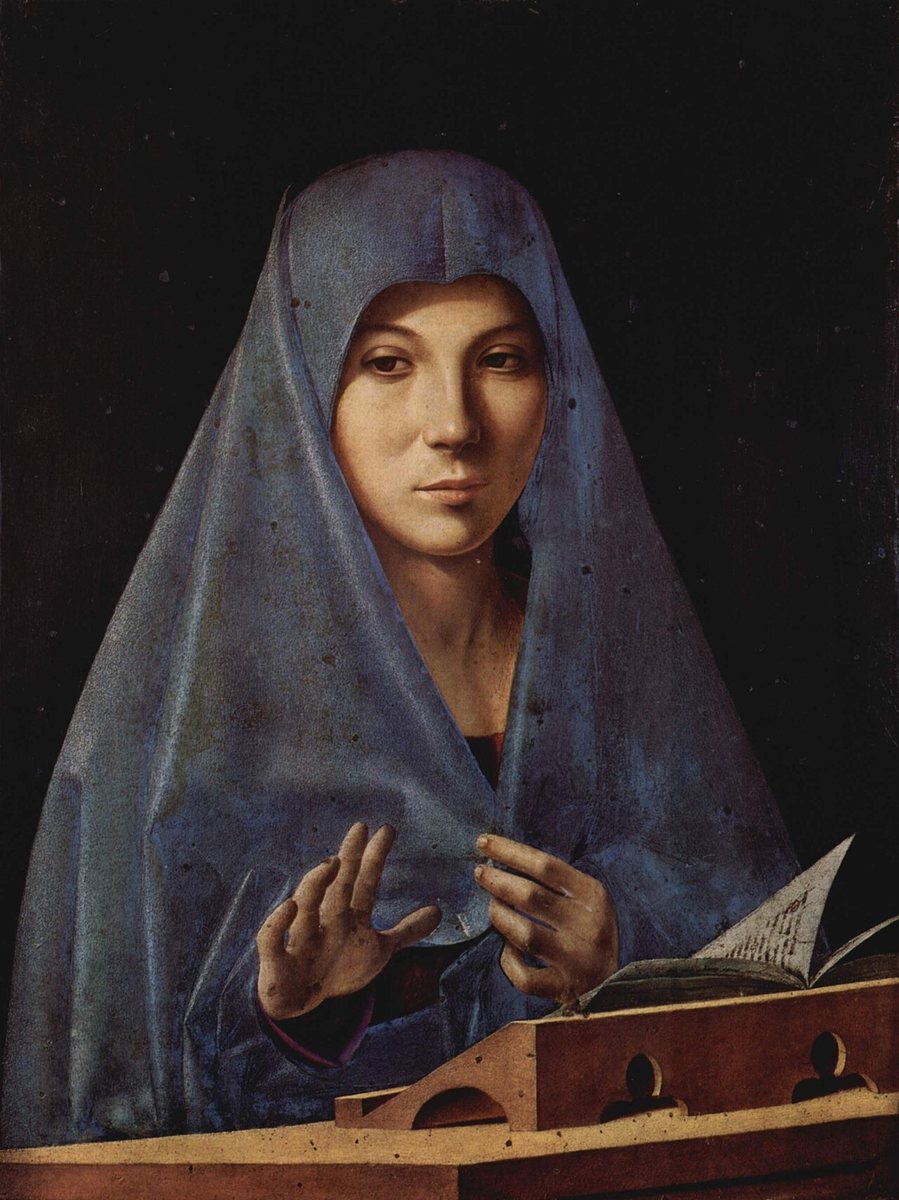
- Virgin Annunciate, Antonello da Messina, about 1475. Galleria Regionale della Sicilia, Palermo. Public domain.