
Barnabas
The Son of Encouragement. He vouched for Saul (later Paul) when the church feared him, and gave young Mark a second chance.
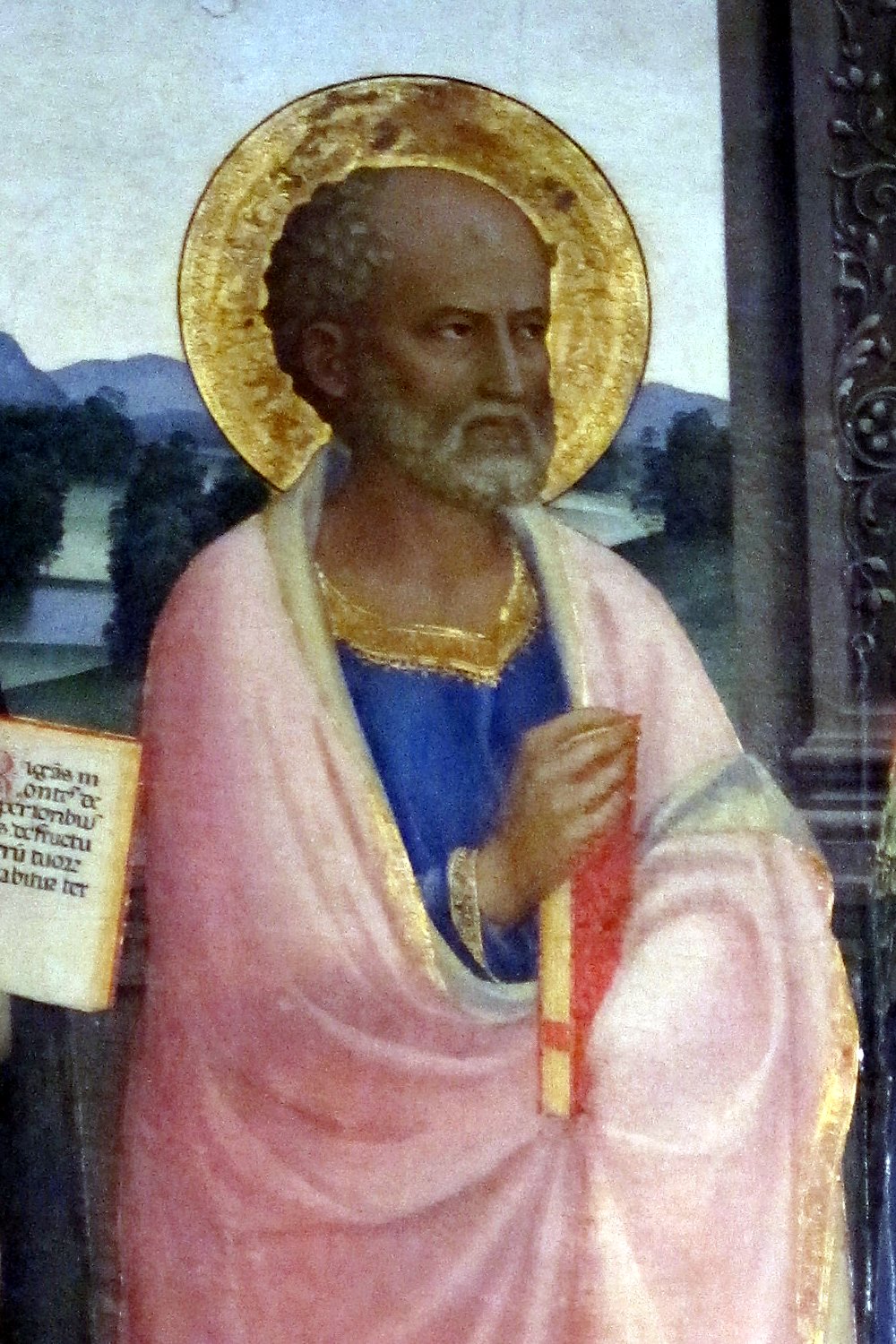
Picture: Saint Barnabas, from the Fiesole Altarpiece, Fra Angelico, the 1420s (detail). San Domenico, Fiesole. Photograph by Sailko. Public domain.
Who was Barnabas?
Barnabas was a Levite from Cyprus named Joseph. The apostles called him Barnabas, Son of Encouragement. When the church in Jerusalem feared Saul (later Paul), he vouched for him. He taught the new church at Antioch with Saul, then made the first missionary journey with him. They parted over Mark, whom Barnabas would not give up.
at a glance
His path, in order
- LeviteFrom a family on Cyprus
- DiscipleSold a field for the church
- EnvoySent from Jerusalem to Antioch
- TeacherA year at Antioch, with Saul (later Paul)
- ApostleSent out with Paul
- MissionaryBack to Cyprus, with Mark
in numbers
- Year he and Saul taught at Antioch1
- “A full year”, meeting with the church
- Antioch, where believers were first called Christians
- Letters of Paul that name him3
- 1 Corinthians, Galatians and Colossians
- They name him five times in all
did you know?
-
In Acts, Luke writes “Barnabas and Saul” until Paphos, on Cyprus, where Saul is first called Paul. After that it is mostly “Paul and Barnabas”. At Lystra and in Jerusalem, Barnabas comes first again.
Acts 11:30; 13:7, 43; 14:14; 15:12, 25 -
Acts tells of no miracle by Barnabas alone. At Iconium, it says, the Lord enabled him and Paul “to perform signs and wonders”.
Acts 14:3; 15:12 -
The Acts of Barnabas, a story of the 400s, says he carried a Gospel he had received from Matthew, and laid it on the sick wherever he went: “it immediately made a cure of their sufferings.”
Acts of Barnabas, Ante-Nicene Fathers, volume 8 -
By the 1500s the old calendar had slipped ten days behind the sun. His day, 11 June, had become the longest day of the year. Hence the old rhyme: “Barnaby bright, the longest day and the shortest night.”
Catholic Encyclopedia, “Reform of the Calendar”
- Born
- On Cyprus, into a family of Levites, the tribe that served in the temple. No one recorded the year.
- Also called
- Joseph, his own name. Older English Bibles call him Joses. Barnabas, the name the apostles gave him, which Acts explains as Son of Encouragement. Where the name really comes from is disputed. In Italian he is Barnaba, in Spanish Bernabé.
- Home
- Jerusalem, in the first church. Then Antioch in Syria, where he taught with Saul.
- Family
- His cousin was John Mark. Mark's mother, Mary, had a house in Jerusalem where the church gathered to pray.
- Work
- He worked for his own living, as Paul did. Acts does not name his trade.
- Journeys
- With Paul: Cyprus, then Perga, Pisidian Antioch, Iconium, Lystra and Derbe, in what is now Turkey. Then back to Cyprus, with Mark.
- Died
- The Bible does not say. Later accounts say he died a martyr at Salamis, on Cyprus: stoned, and his body burned. The Orthodox Church in America, in its life of him, puts it about the year 62.
- Buried
- A tomb near Salamis was said to be his when it was found in 488, with a copy of Matthew's Gospel in it. The Monastery of St Barnabas stands near the site.
- Wrote
- Nothing in the Bible. The Letter of Barnabas bears his name, and Tertullian thought he wrote Hebrews: see Often misquoted.
 The Hearth
 His personality type
Light-hearted, and at his best when life is quiet.
In Gregory the Great's terms
- Cheerful
- Tranquil mind
Our reading, from the Christian Personality Test. The test sets him opposite Paul. He brought Paul, then called Saul, to the apostles when the church still feared him, and later wanted to give young Mark a second chance when Paul would not. Of Barnabas and Paul, John Chrysostom wrote: “the one was more tender and indulgent, but this one more strict and austere.”
See The Hearthfeast days
East and West, side by side
West
- Jun11
Barnabas the Apostle, a Catholic memorial. The Church of England keeps it as a Festival. The Episcopal Church and Lutherans in the Missouri Synod and the ELCA keep it too.
East
- Jun11
The Apostle Barnabas of the Seventy, for the Orthodox Church in America, on the same day as the apostle Bartholomew.
- Dec30
The Coptic Church, on 21 Kiahk in its own calendar: the martyrdom of Barnabas, one of the Seventy whom Jesus sent out.
The Roman Martyrology of 1916 keeps him on 11 June, and so did Rome's new calendar of 1969. Churches on the old calendar keep 11 June 13 days later, on 24 June.
what others said of him
Luke, Paul and the Fathers, in their own words.
Barnabas was a good man, full of the Holy Spirit and faith, and a great number of people were brought to the Lord.
James, Cephas, and John—those reputed to be pillars—gave me and Barnabas the right hand of fellowship, so that we should go to the Gentiles, and they to the circumcised.
he was one of the seventy, and a fellow-worker of Paul
“Son of Consolation” is his appellation, whence also he makes himself easy of access to the man.
With the exception of St. Paul and certain of the Twelve, Barnabas appears to have been the most esteemed man of the first Christian generation.
his life in eleven moments
Jerusalem
The first days of the churchThe field
The first believers in Jerusalem shared everything they owned. Those who had land or houses sold them and brought the money to the apostles. Acts names one of them: Joseph, a Levite from Cyprus, whom the apostles called Barnabas. He “sold a field he owned, brought the money, and laid it at the apostles' feet.” The very next story is of Ananias and Sapphira, who sold land too, kept back part of the money and lied about it. John Chrysostom saw why Luke, who wrote Acts, put them in that order: he “first mentions him who performed the virtuous deed”.
Acts 4:32 to 5:3; John Chrysostom, Homilies on Acts, Homily 12Jerusalem
Saul's first visitHe vouched for Saul
Saul, later called Paul, had hunted down the followers of Jesus. Now, after his conversion on the road to Damascus, he came to Jerusalem and tried to join the disciples, “but they were all afraid of him, not believing that he was a disciple.” Barnabas took him to the apostles. He told them how Saul had seen the Lord on the road, and how he had spoken boldly at Damascus in the name of Jesus. So Saul stayed with them, and moved about freely in Jerusalem.
Acts 9:26-28Antioch in Syria
Sent from JerusalemThe grace of God
Believers scattered by persecution reached Antioch. Some began to tell Greeks about Jesus too, and a great number believed. The church in Jerusalem sent Barnabas to see. “When he arrived and saw the grace of God, he rejoiced and encouraged them all to abide in the Lord with all their hearts.” Still more people came to the Lord.
Acts 11:19-24Tarsus and Antioch
A full yearHe went to find Saul
Barnabas went to Tarsus to look for Saul. He found him and brought him back to Antioch. For a full year the two met with the church and “taught large numbers of people.” It was at Antioch that the disciples were first called Christians. When a prophet foretold a famine, the church sent relief to the believers in Judea “with Barnabas and Saul.” They came back with Barnabas's cousin, John Mark.
Acts 11:25-30; 12:25Antioch
While they fastedSet apart
Barnabas headed the list of prophets and teachers at Antioch. While they were worshipping the Lord and fasting, the Holy Spirit said, “Set apart for Me Barnabas and Saul for the work to which I have called them.” After more fasting and prayer, they laid their hands on the two and sent them off. Mark went with them as their helper.
Acts 13:1-5Cyprus
His home islandFrom Salamis to Paphos
Barnabas and Saul sailed first to Cyprus, where Barnabas came from. At Salamis they preached in the synagogues. They crossed the whole island to Paphos. There the proconsul, Sergius Paulus, “summoned Barnabas and Saul because he wanted to hear the word of God.” A sorcerer named Elymas tried to turn him from the faith. Saul, “who was also called Paul”, told him he would be blind for a time, and mist and darkness came over him. The proconsul believed. When they sailed on to Perga, Mark, their helper, “left them to return to Jerusalem.”
Acts 13:4-13Lystra
The first journeyTaken for Zeus
At Lystra, Paul healed a man who had been lame from birth. The crowd shouted, “The gods have come down to us in human form!” They called Barnabas Zeus, and Paul Hermes, “because he was the chief speaker.” The priest of Zeus brought bulls and wreaths to the city gates, to offer sacrifice to them. Barnabas and Paul tore their clothes and rushed into the crowd, and could hardly stop them. Soon after, men from Pisidian Antioch and Iconium turned the crowd against them, and Paul was stoned and left for dead. He got up. “And the next day he left with Barnabas for Derbe.”
Acts 14:8-20Lystra, Iconium and Pisidian Antioch
On the way homeElders in every church
Barnabas and Paul went back the way they had come, through the towns that had driven them out. They encouraged the new disciples to keep the faith. In each church they appointed elders, “praying and fasting”. Home at Antioch in Syria, they gathered the church and told how God “had opened the door of faith to the Gentiles.”
Acts 14:21-27Jerusalem
The apostles and elders meetThe council
Men from Judea came to Antioch teaching that Gentile believers must be circumcised to be saved. Paul and Barnabas argued sharply with them, and the church sent the two to Jerusalem. After Peter spoke, “The whole assembly fell silent as they listened to Barnabas and Paul describing the signs and wonders God had done among the Gentiles through them.” The apostles and elders agreed with them. Their letter to the Gentile believers called the two “our beloved Barnabas and Paul”.
Acts 15:1-29Antioch
In Paul's words“Even Barnabas”
At Antioch, Peter used to eat with Gentile believers. When men came from James in Jerusalem, he drew back, afraid of those who said Gentile believers must be circumcised. Paul tells what followed: “The other Jews joined him in his hypocrisy, so that by their hypocrisy even Barnabas was led astray.” Paul opposed Peter to his face, in front of them all. Acts does not tell this story. We have only Paul's side of it.
Galatians 2:11-14Antioch
Some time laterThe parting
Paul wanted to go back and visit the believers in every town where they had preached. Barnabas wanted to take Mark. Paul thought it best not to, “because he had deserted them in Pamphylia and had not accompanied them in the work.” “Their disagreement was so sharp that they parted company.” Barnabas took Mark and sailed for Cyprus. Paul chose Silas. Here the story in Acts leaves Barnabas.
Acts 15:36-40
the quarrel over mark
Barnabas wanted to give young Mark a second chance. Paul would not, and the two friends parted. How it turned out, and what later Christians made of it, each in their own words.
How it turned out
Years later Mark was with Paul. Paul sent greetings from “Mark the cousin of Barnabas”, and told the church at Colossae, “If he comes to you, welcome him.” He calls Mark one of “my fellow workers”. From prison, in his second letter to Timothy, he wrote:
“Get Mark and bring him with you, because he is useful to me in the ministry.”Colossians 4:10; Philemon 1:24; 2 Timothy 4:11
Who was right? John Chrysostom
Chrysostom saw two different gifts. Barnabas was the gentler man, Paul the stricter, and each was right for the churches he went to. He would not choose between them:
“Now which of them advised best, it is not for us to pronounce”John Chrysostom, Homilies on Acts, Homily 34
Still friends? Jerome
Jerome was quarrelling with an old friend of his own, Rufinus. He pointed him to Paul and Barnabas:
“We read of Apostles quarrelling, namely Paul and Barnabas who were angry with each other on account of John whose surname was Mark; those who were united by the bonds of Christ's gospel were separated for a voyage; but they still remained friends.”Jerome, Apology against Rufinus, Book 3
A later telling
The Acts of Barnabas, a story of the 400s told as if by Mark, imagines the scene. Both men knelt and prayed, and both wept. Barnabas says why he will not leave Mark behind:
“The grace of God does not desert him who has once served the Gospel and journeyed with us.”Acts of Barnabas, Ante-Nicene Fathers, volume 8
his words
Acts records no words of his alone. He speaks with Paul, and every line below is theirs together. Outside the section on where the Bible figure quiz places him, every Bible line on this page is from the Berean Standard Bible.
When the crowd called him Zeus
Men, why are you doing this? We too are only men, human like you. We are bringing you good news that you should turn from these worthless things to the living God, Who made heaven and earth and sea and everything in them.
At Lystra, the priest of Zeus had brought bulls and wreaths to the city gates, to sacrifice to Barnabas and Paul. The two tore their clothes and rushed into the crowd, shouting.
Acts 14:13-15It was necessary to speak the word of God to you first. But since you reject it and do not consider yourselves worthy of eternal life, we now turn to the Gentiles.
Yet He has not left Himself without testimony to His goodness: He gives you rain from heaven and fruitful seasons, filling your hearts with food and gladness.
We must endure many hardships to enter the kingdom of God.
often misquoted
Barnabas wrote the Letter of Barnabas.
What the sources sayThe letter never names its writer. It is old: the Codex Sinaiticus, a Bible copied in the 300s, has it straight after the New Testament. About 200, Clement of Alexandria quoted it as the words of “the Apostle Barnabas”. A century later Eusebius put “the extant epistle of Barnabas” among the rejected writings, and added that such books “may be reckoned among the disputed books”. Jerome says Barnabas “wrote one Epistle, valuable for the edification of the church, which is reckoned among the apocryphal writings.” Scholars today do not think he wrote it. As early as 1890, Arthur McGiffert found that the verdict against it had “become practically unanimous”.
Clement of Alexandria, Stromata, Book 2, chapter 6; Eusebius, Church History, Book 3, chapter 25, with McGiffert's note; Jerome, Lives of Illustrious Men, chapter 6; Catholic Encyclopedia, “Epistle of Barnabas”The Gospel of Barnabas is an early gospel that he wrote.
What the sources sayThe book known by that name survives in an Italian manuscript now in Vienna, and a Spanish copy is known too. It retells the life of Jesus, and in it Jesus foretells the coming of Muhammad. Lonsdale and Laura Ragg first put the Italian into English in 1907. They found its paper was made in the second half of the 1500s, and its scribe was “a Venetian of the sixteenth or early seventeenth century”. The text itself echoes Dante. It speaks of a jubilee held every hundred years. The Raggs noted that a jubilee every hundred years was the rule only from 1300 to 1350. So they dated the book itself to Italy in the first half of the 1300s, more than a thousand years after Barnabas. An old list of forbidden books, the so-called Gelasian Decree, names a Gospel of Barnabas, but no copy of that one is known.
Lonsdale and Laura Ragg, The Gospel of Barnabas (Oxford, 1907), introductionBarnabas wrote the Letter to the Hebrews.
What the sources sayHebrews names no writer. Tertullian, about 200, says “there is extant withal an Epistle to the Hebrews under the name of Barnabas”. Jerome knew three views: it was the work of Barnabas “according to Tertullian”, or of Luke, or of Clement of Rome. The Catholic Encyclopedia thinks Tertullian was probably wrong.
Tertullian, On Modesty, chapter 20; Jerome, Lives of Illustrious Men, chapter 5; Catholic Encyclopedia, “St. Barnabas”Barnabas was one of the Twelve.
What the sources sayHe was not, though Acts calls him an apostle: “the apostles Barnabas and Paul”. When the eleven apostles chose a man to take Judas's place, the two put forward were Matthias and “Joseph called Barsabbas”. This was not the Joseph the apostles called Barnabas. John Chrysostom already told his hearers not to mix them up: “I do not think that this is the same with the companion of Matthias”. Clement of Alexandria counts Barnabas among the Seventy, the wider circle Jesus sent out, and Eusebius passes it on: “Barnabas, indeed, is said to have been one of them”. The Catholic Encyclopedia calls this “A rather late tradition”.
Acts 1:23; 14:14; John Chrysostom, Homilies on Acts, Homily 11; Eusebius, Church History, Book 1, chapter 12; Catholic EncyclopediaBarnabas founded the Church of Milan.
What the sources sayA tradition says so, and the Orthodox Church in America tells it in its life of him: “Saint Barnabas founded the episcopal see at Mediolanum (now Milan)”. Other stories have him preach at Rome and at Alexandria. The Catholic Encyclopedia weighs them all: “The traditions are all late and untrustworthy.”
OCA, Apostle Barnabas of the Seventy; Catholic Encyclopedia, “St. Barnabas”friends, family and rivals
 Paul
Paul Barnabas vouched for him in Jerusalem, fetched him from Tarsus, and went with him on the first journey. They parted over Mark. Years later Paul still named Barnabas as a fellow apostle.
Acts 9:27; 11:25; 15:39; 1 Corinthians 9:6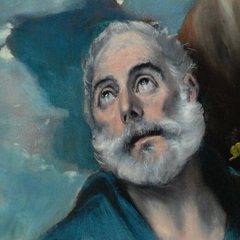 Peter
Peter He led the church in Jerusalem when Barnabas sold his field. At Antioch, when Peter drew back from eating with Gentiles, Barnabas followed him, and Paul opposed Peter to his face.
Acts 4:33-37; Galatians 2:11-13His cousin. Mark went with Barnabas and Saul as their helper, and left them at Perga. Barnabas took him to Cyprus when Paul would not. Tradition makes him the writer of the Gospel of Mark.
Colossians 4:10; Acts 13:5, 13; 15:37-39; Catholic EncyclopediaOne of the prophets and teachers at Antioch, with Lucius of Cyrene, Manaen and Saul. Together they laid their hands on Barnabas and Saul and sent them out.
Acts 13:1-3The proconsul of Cyprus, “a man of intelligence”. He sent for Barnabas and Saul to hear the word of God, and believed.
Acts 13:7-12Jerusalem sent Barnabas to it, and he and Saul taught there for a year. It sent the two with famine relief, then sent them out on their first journey, and welcomed them home.
Acts 11:22-30; 13:1-3; 14:26-28how the record leaves him
The Bible does not say how or when he died. Later accounts say he died a martyr on Cyprus.
Acts leaves him sailing for Cyprus with Mark. A few years later Paul names him as an apostle who still worked for his living. After that, the Bible names him only as Mark's cousin.
When Paul, in prison, sends greetings from “Mark the cousin of Barnabas”, Mark is now with Paul, not with Barnabas. The Catholic Encyclopedia takes this as a sign that he had died by then.
Britannica puts it plainly: “Nothing is known for certain about the time or circumstances of his death.”
Later accounts place his death at Salamis, the port where he first preached on Cyprus. The Coptic Synaxarium, the Copts' book of saints' days, says Jews on Cyprus who resented his preaching accused him falsely before the governor. It goes on: “They seized St. Barnabas and brutally beat him, then they stoned him and finally burnt his body with fire.” Mark, it says, laid his body in a cave.
In 488 Anthimus, the chief bishop of Cyprus, “claimed to have learned by a revelation” that Barnabas's grave was near Salamis, where Anthimus was bishop. He found a body there with a copy of Matthew's Gospel, and took the relics to the emperor Zeno at Constantinople. The find helped the Church of Cyprus keep its independence from Antioch. The Roman Martyrology of 1916 says the Gospel was “copied with his own hand”.
is he a saint?
Yes. Every church that keeps saints' days honours him, nearly all of them on 11 June.
- CatholicSaintA memorial, 11 June
- OrthodoxSaintApostle of the Seventy, 11 June
- CopticSaint21 Kiahk, which is 30 December
- AnglicanSaintA Festival in the Church of England
- LutheranSaintMissouri Synod and ELCA, 11 June
He was not one of the Twelve, but the churches call him an apostle, as Acts does. The Orthodox and the Copts count him among the Seventy whom Jesus sent out.
The Catholic Encyclopedia credits Paul, Barnabas and Mark with preaching the faith on Cyprus. The finding of his tomb in 488 helped the Church of Cyprus keep its independence from Antioch.
Rome's book of martyrs, in its 1916 edition, gives his day like this:
By the disciples, he was ordained apostle of the Gentiles with St. Paul, and with him traversed many regions, fulfilling his commission to preach the Gospel. At length he went to Cyprus, where he ennobled his apostolate by a glorious martyrdom.
what to read first
Acts, chapters 11 to 15
The Acts of the Apostles
Antioch, the first journey with Paul, Lystra, the council in Jerusalem, and the parting over Mark.
Read it freeGalatians 2
Paul's letter to the Galatians
Paul's own account of going up to Jerusalem with Barnabas, and of the day at Antioch when “even Barnabas was led astray.”
Read it freeThe Letter of Barnabas
An early letter under his name
An early Christian letter on how to read the Old Testament, old enough to sit in the Codex Sinaiticus. Who wrote it is disputed: see Often misquoted.
Read it freeThe Acts of Barnabas
A story of the 400s, told as if by Mark
The later legend of his last voyage to Cyprus, and of his death at Salamis. Short, and strange in places.
Read it freewhere the quiz places him
The record, drawn
Each arm is one axis; length is how far from the centre the recorded acts sit. An axis the text does not place Barnabas on has no arm.
In the quiz's own words
Alongside, quick to speak up, quick to confront
The six axes
Your answers are marked. From your result on . See your result
In the hatched middle the quiz names neither pole.
The moments behind each axis
Each line is one recorded act and the reference it is taken from. The sentence says what the person did. An act listed here is evidence of how this person moved, not approval of it; read the passage for how it was received. On 1 of the six the text does not show this, and that axis is left out of the match rather than filled in.
Pace Acts first ↔ Weighs first
quick to move
-
Acts 14:14 toward Acts first
When he and Paul heard what the crowd at Lystra was doing, they tore their clothes and sprang into the multitude, crying out.
Voice Says it ↔ Holds it
quick to speak up
-
Acts 11:23 toward Says it
When he came to Antioch and saw the grace of God he was glad, and exhorted them all to remain near to the Lord.
-
Acts 15:12 toward Says it
He and Paul reported to the gathered assembly what God had done among the nations, and the multitude listened.
Lead Out in front ↔ Alongside
alongside
-
Acts 9:27 toward Alongside
When the disciples in Jerusalem were afraid of Saul, he took him and brought him to the apostles and told them what had happened on the road.
-
Acts 11:25-26 toward Alongside
He went to Tarsus to look for Saul, found him and brought him to Antioch, and for a whole year they taught many people there.
Conflict Confronts ↔ Reconciles
quick to confront
-
Acts 15:2 toward Confronts
He and Paul had no small discord and discussion with those who were teaching the brothers at Antioch.
-
Acts 15:37-39 toward Confronts
He planned to take Mark with them; when Paul did not agree the contention grew sharp and they separated, and he took Mark and sailed to Cyprus.
Reasons Asks why ↔ Takes it on trust
not shown in the text
The text does not show this. Nothing in the record puts Barnabas at either end of this axis, so it is left out when a reader is matched, rather than counted as a position in the middle.
-
No record
The text does not show this.
Plans Plans ahead ↔ Meets the day
leans to planning
-
Acts 4:37 toward Plans ahead
Having a field, he sold it, brought the money and laid it at the apostles’ feet.
Nearest on the map
Distance between two sets of coordinates across every axis, on the same scale a reader's answers are measured on. No number is shown against a person, and nearness is not likeness: two people can land in the same band for different reasons.
Suggest a correction. Corrections that are applied are recorded in the public changelog.
 Quiz Who in the Bible are you most like? Answer eighteen plain statements about you, none of them about the Bible, and see how near you land to Barnabas. Start
  Quiz Christian Personality Test Barnabas reads as The Hearth. Find your own type. Start
 people like him
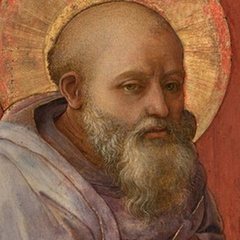 Antony the GreatThe Hearth
 After twenty years alone in the desert he came out, says Athanasius, so settled that his friends were amazed. His face was cheerful, because his soul was at peace.
Athanasius, Life of Antony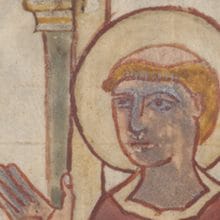 Cuthbert of LindisfarneThe Hearth
 Bede describes him as pleasant and easy to talk to, with a cheerful, soothing way of speaking. Made a bishop, he went back after two years to his island.
Bede, Life of St Cuthbertsources
His life, and his words
- The Berean Standard Bible, public domain. Every Bible line on this page outside the section on where the Bible figure quiz places him.
- John Chrysostom, Homilies on Acts, Homilies 11, 12, 21 and 34. Nicene and Post-Nicene Fathers, first series, volume 11.
- Clement of Alexandria, Stromata, Book 2. Ante-Nicene Fathers, volume 2.
- Eusebius, Church History, Book 1, chapter 12. Tr. Arthur McGiffert, 1890.
- Eusebius, Church History, Book 3, chapter 25. Same edition, with McGiffert's note on the Letter of Barnabas.
- Jerome, Lives of Illustrious Men, chapters 5 and 6. Tr. Ernest Richardson, 1892.
- Jerome, Apology against Rufinus, Book 3. Nicene and Post-Nicene Fathers, second series, volume 3.
- Tertullian, On Modesty, chapter 20. Ante-Nicene Fathers, volume 4.
- The Acts of Barnabas. Ante-Nicene Fathers, volume 8.
- Lonsdale and Laura Ragg, The Gospel of Barnabas. Oxford, 1907. The introduction, on the manuscripts and their date.
Reference
- Catholic Encyclopedia, 1907, “St. Barnabas”
- Catholic Encyclopedia, 1907, “Epistle of Barnabas”
- Catholic Encyclopedia, 1908, “Cyprus”, for the finding of the tomb
- Catholic Encyclopedia, 1908, “Reform of the Calendar”, for the old rhyme
- Britannica, “Saint Barnabas”
- OCA, “Apostle Barnabas of the Seventy”
- CopticChurch.net, the Coptic synaxarium, 21 Kiahk
Calendars
- USCCB, Liturgical Calendar 2026, 11 June
- Calendarium Romanum, 1969
- The Roman Martyrology, 1916 edition, 11 June
- Church of England, Common Worship calendar
- The Episcopal Church, Lesser Feasts and Fasts 2022
- The Lutheran Church–Missouri Synod, Commemorations
- Evangelical Lutheran Worship, ELCA, the church year (final draft, 2006)
Pictures
- The Fiesole Altarpiece, Fra Angelico, the 1420s. Barnabas stands beside Thomas Aquinas. Lorenzo di Credi repainted the background in 1501. San Domenico, Fiesole. Photograph by Sailko. Public domain.
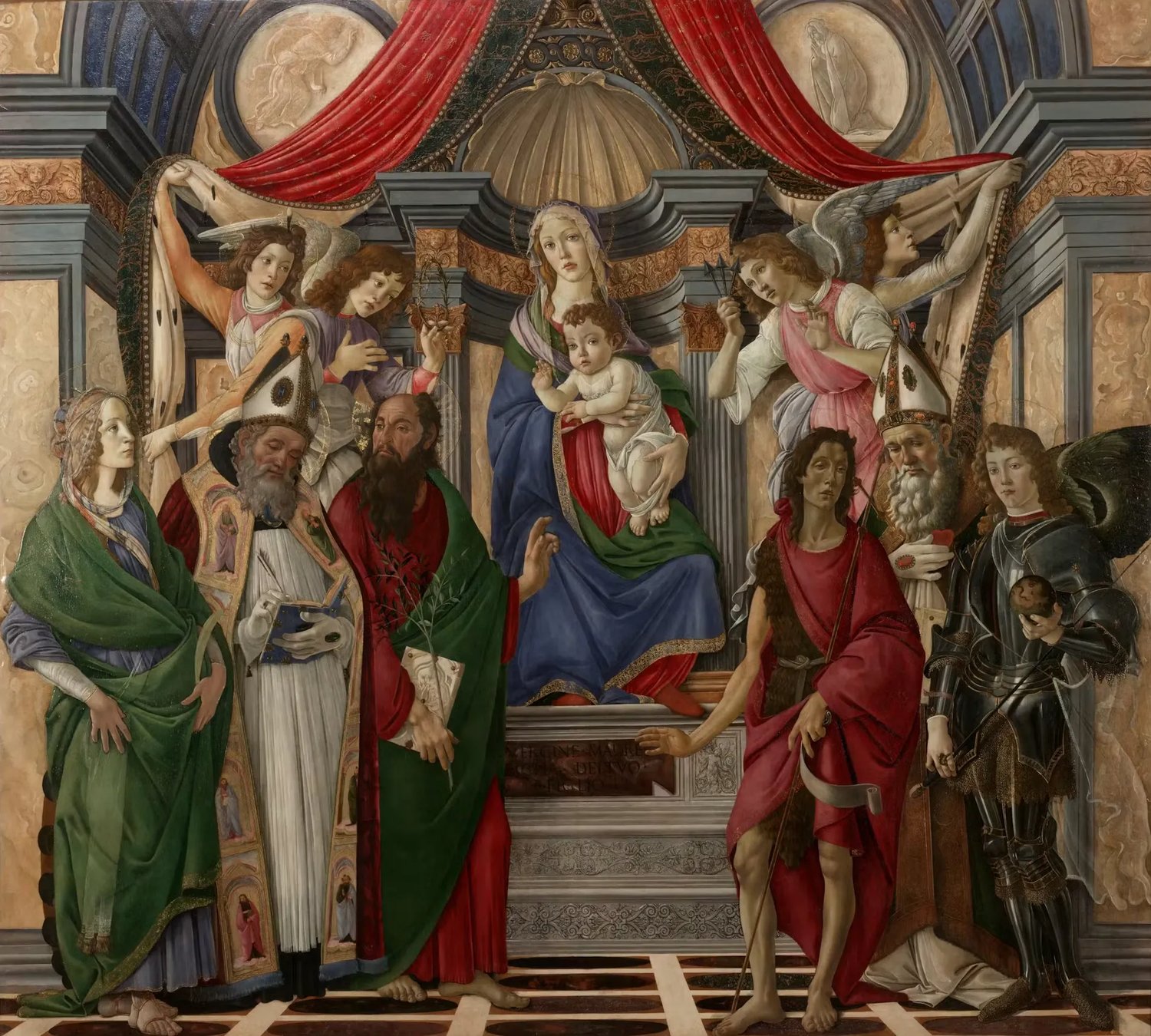
- The San Barnaba Altarpiece, Sandro Botticelli, about 1487. Uffizi Galleries, Florence. Public domain.