
Antony the Great
He heard one Gospel verse, gave away his land, and became the father of monks.
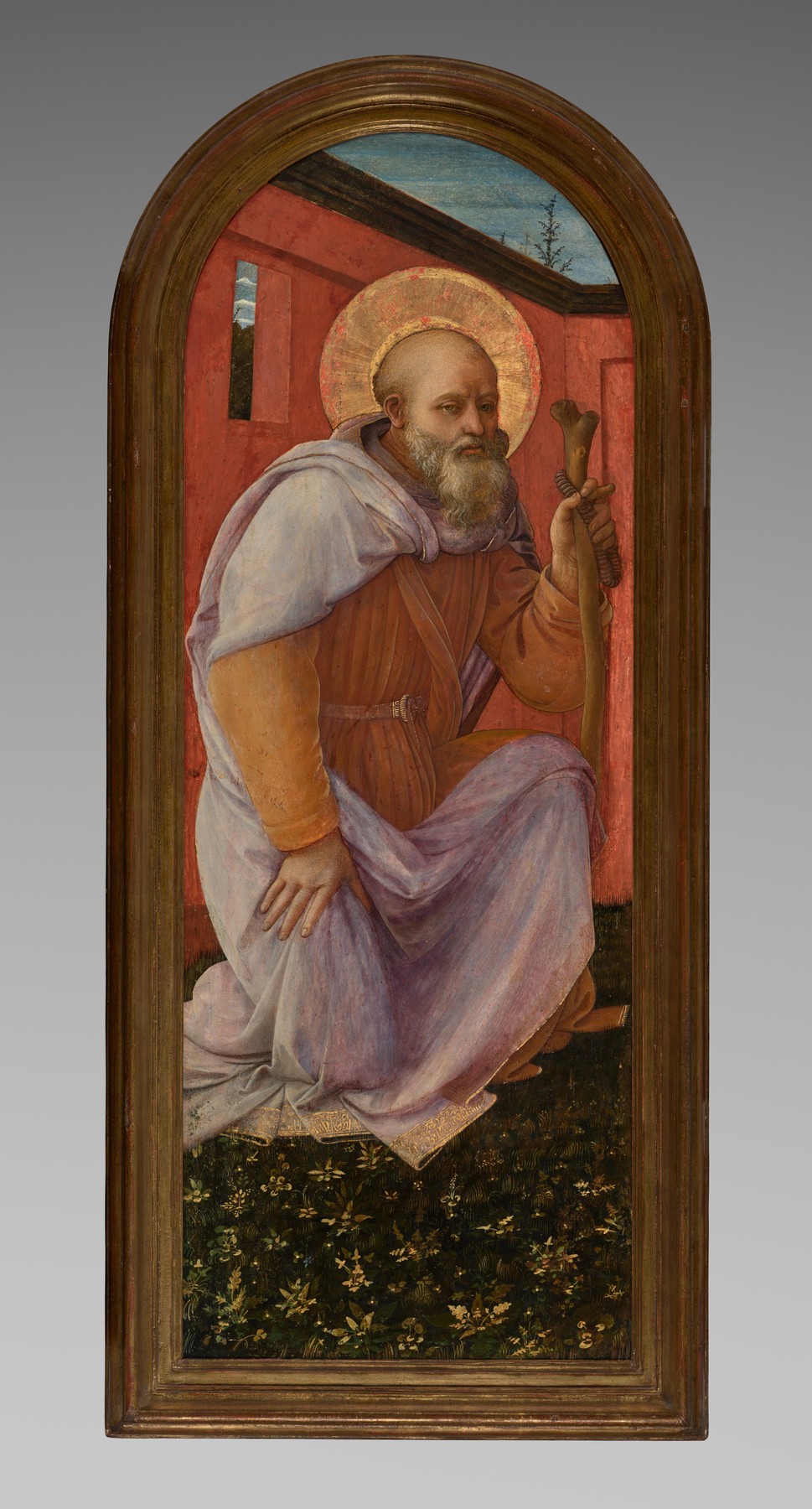
Picture: Saint Anthony Abbot, Fra Filippo Lippi, 1458. Cleveland Museum of Art. CC0.
Who was Antony?
Antony was the son of a wealthy Christian family in Egypt. At eighteen or twenty he gave away his land and went to live alone, first near his village and then deep in the desert. So many followed him that he is called the father of monks. He died in 356, about 105 years old.
at a glance
His path, in order
- HeirGave his family's land away
- HermitIn a tomb, then a fort
- Father of monksMonks' cells spread around him
- Friend of martyrsAlexandria, 311
- ElderThe inner mountain, to 356
in numbers
- Acres he gave away300
- His family's good farmland
- Given to the people of his village
- At his death he left two sheepskins and his clothes
- Years shut in a fort20
- Nearly twenty, in a deserted fort
- Bread let down to him twice a year
- Years he lived105
- Near 105, by his own count
- He died in 356, on his mountain near the Red Sea
- Teeth he had lost0
- Not one, at about 105
- His teeth were worn down to the gums
- His eyes were still clear
did you know?
-
Michelangelo's first known painting, made when he was about twelve, shows demons attacking Antony in the air. To make them look real, his early biographers say, he studied scales at the fish market. It hangs in the Kimbell Art Museum in Texas.
Kimbell Art Museum, The Torment of Saint Anthony -
He told his monks to write down their deeds and the stirrings of their souls, as if to tell each other. No one wants to be seen sinning, he said. The page would stand in for a brother's eyes.
Life of Antony, chapter 55 -
The disease ergotism is also called St Anthony's fire. Its sufferers once went on pilgrimage to the Hospitallers of St Anthony, near Grenoble. Today his feast is often kept with a blessing of animals.
Britannica, St. Anthony of Egypt
- Born
- About 251. At Coma in Egypt, today Qiman al-Arus, near Beni Suef.
- Grew up
- At home, with wealthy Christian parents. He would not learn letters, and did not care to mix with other boys. He went to church with his parents. He listened closely to the readings, and kept in his heart what did him good.
- Died
- 356, on his inner mountain near the Red Sea, aged about 105. The Monastery of St Antony stands there today. The Coptic Synaxarium says 355.
- Buried
- In secret, by his two companions, as he had told them. Athanasius says no one else knew the place.
- Also called
- Antony the Great in the East. Saint Anthony, Abbot in the Catholic calendar. Antony of Egypt in Anglican and Lutheran calendars. The Coptic Church calls him “the father of all monks”.
- Status
- A saint to Catholics, Orthodox and the Coptic Church. The Church of England, the Episcopal Church and the Lutheran ELCA keep his day too.
- Patron of
- Christian monasticism, and also butchers, gravediggers, basket makers, brush makers and animals, says Britannica. In Greece, the town of Veria.
- In art
- An old monk, often with a pig and a small bell. He holds a T-shaped staff, as in the painting at the top. The T, the Greek letter tau, is called St Anthony's cross. Painters from Bosch to Dalí painted his temptation by demons.
- Letters
- Jerome says he sent seven letters in Coptic to monasteries. Yet he never learned to read. The letters survive in Latin. In 1907 the Catholic Encyclopedia thought it “premature to decide” if they are his.
- Pronounced
- AN-thuh-nee, or chiefly in Britain AN-tuh-nee.
 The Hearth
 His personality type
Light-hearted, and at his best when life is quiet.
In Gregory the Great's terms
- Cheerful
- Tranquil mind
Our reading, from the Christian Personality Test. Light-hearted here means the settled joy Athanasius saw in his face. Cassian's Conferences also name him among those “joined most closely to God by the silence of solitude”. That makes him an example of The Watcher, one of the personality test's seven roles.
See The Hearthfeast days
East and West, side by side
West
- Jan17
Catholic memorial, as Saint Anthony, Abbot. Also the Church of England, the Episcopal Church, and the Evangelical Lutheran Church in America, which remembers him with Pachomius, a younger Egyptian who organised monks into communities. Not in the calendar of the Lutheran Church–Missouri Synod.
East
- Jan17
Greek churches and the Orthodox Church in America.
- Jan30
Russian Church, which keeps 17 January on the old calendar. Also the Coptic Church, whose 22 Toba, in the Coptic calendar, falls here in most years.
East and West keep the same day, 17 January. Churches on the old calendar run 13 days behind, so their 17 January falls on 30 January. Athanasius does not say what day he died.
what was he like?
+steady, even after twenty years alone
When friends broke down the door of the fort he had shut himself in, he came out neither fat nor thin. His soul was just as steady. “It was neither contracted as if by grief, nor relaxed by pleasure, nor possessed by laughter or dejection.”
Life of Antony, chapter 14+cheerful
Strangers could pick him out of a crowd of monks. He was no taller or broader than the rest. They knew him by the calm in his face. “He was never disturbed, for his soul was at peace; he was never downcast, for his mind was joyous.”
Life of Antony, chapter 67+ready to learn
He bowed his head to bishops and priests. When a deacon came to him, he let the deacon lead the prayer. He often asked questions and listened, and “if any one said anything that was useful he confessed that he was profited.”
Life of Antony, chapter 67+quick-witted
Philosophers came to mock him because he had never learned letters. He asked them which comes first, mind or letters. They said mind. “Whoever, therefore, hath a sound mind hath not need of letters.”
Life of Antony, chapter 73+gentle with the troubled
A young man of rank, possessed by a demon, was brought to him. Antony prayed with him all night. At dawn the young man shoved him, and those who brought him were angry. Antony said, “Be not angry with the young man, for it is not he, but the demon which is in him.” The young man was healed.
Life of Antony, chapter 64what others said of him
Almost everything we know about Antony comes from one book. Athanasius, bishop of Alexandria, wrote the Life of Antony within a few years of his death. He says he had seen Antony many times.
And it was as if a physician had been given by God to Egypt. For who in grief met Antony and did not return rejoicing?
He was exceedingly meek and philanthropic, prudent and manly; cheerful in conversation and friendly in disputations, even when others used the controverted topics as occasion for strife.
…speaking of Antony, the Egyptian monk, whose name was in high repute among Thy servants, though up to that time not familiar to us.
We see nothing but tenderness and love of men in his character…
his life in eight moments
Coma
About 270One verse
His parents died when he was eighteen or twenty, leaving him their land and a little sister. Less than six months later, in church, he heard the Gospel read where Christ tells a rich man to sell what he has and give to the poor. “Antony, as though God had put him in mind of the Saints, and the passage had been read on his account, went out immediately from the church”. He gave his land to the villagers and sold the rest for the poor. He kept a little for his sister, until he heard “be not anxious for the morrow”. Then he gave that away too, and placed her with a community of virgins.
Life of Antony, chapters 2 and 3Near his village
A young hermitLike a bee
No monk yet knew the far desert, so he lived near his village. He copied an old hermit in the next village. Whenever he heard of a good man, he went to find him, “like the prudent bee”. He noted what each did best: one man's kindness, another's prayer, another's freedom from anger. Then he tried to have them all.
Life of Antony, chapters 3 and 4The tombs
About 35 years oldBeaten in the tombs
He shut himself in a tomb, and a friend brought him bread. One night demons beat him until he lay as if dead. His friend carried him to the village church, but at midnight Antony asked to be carried back. Alone again, he saw the roof open and a ray of light come down, and the pain left him. He asked, “Where wert Thou? Why didst Thou not appear at the beginning to make my pains to cease?” A voice answered, “Antony, I was here, but I waited to see thy fight; wherefore since thou hast endured, and hast not been worsted, I will ever be a succour to thee, and will make thy name known everywhere.”
Life of Antony, chapters 8 to 10Pispir, across the Nile
About 285 to 305Twenty years in a fort
He ran past gold lying in the road, crossed the river, and walled himself into an old fort full of creeping things. Bread was let down to him twice a year. Visitors outside heard din and voices within. After nearly twenty years his friends broke the door down. Monks' cells soon rose even in the mountains, and “the desert was colonised by monks”.
Life of Antony, chapters 12 to 14Alexandria
311In his best clothes
When the persecution under the emperor Maximinus came, he went to Alexandria to stand by the martyrs. He longed to die for Christ, but he would not hand himself in. He served the Christians held in the mines and prisons for their faith. The governor ordered every monk out of the court and the city. The others hid. Antony “washed his garment, and stood all next day on a raised place before them, and appeared in his best before the governor.”
Life of Antony, chapter 46The inner mountain
After 311Further into the desert
When crowds would not leave him alone, a voice sent him into the inner desert. He travelled three days and nights with a band of Saracens to a high mountain with a cold spring and a few palm trees. “Recognising it as his own home, he remained in that place for the future.” He grew his own grain, so the monks need not carry bread to him.
Life of Antony, chapters 49 and 50Alexandria
338Against the Arians
The Arians, who taught that the Son of God was created, claimed he agreed with them. He was angry. Called by the bishops, he came down to Alexandria and taught the crowds that the Son of God is not a created being. Pagans and their priests came to the church asking to see “the man of God”. As many became Christians in those few days, says Athanasius, as in a year. When some tried to keep the crowds off him, he said calmly that there were no more of them than of the demons he wrestled on his mountain.
Life of Antony, chapters 69 and 70The desert
Under Constantine and his sonsLetters from emperors
Constantine and his sons wrote to him as to a father. At first he did not want the letters read. “Do not be astonished if an emperor writes to us, for he is a man; but rather wonder that God wrote the Law for men and has spoken to us through His own Son.” In the end he wrote back. He told them to remember the judgment to come, and to care for justice and the poor.
Life of Antony, chapter 81
his miracles
Athanasius's Life of Antony is full of healings and wonders. He says Antony “healed not by commanding, but by prayer and speaking the name of Christ”. He wrote with care, he says, so that no one would disbelieve:
…in all points being mindful of the truth, that no one should disbelieve through hearing too much, nor on the other hand by hearing too little should despise the man.
3 healed from far away
-
His mountain
Healed once he leftFronto
Fronto, an officer of the court, kept biting his own tongue, and his eyes were in danger. He came to the mountain and asked Antony to pray. Antony told him to go, and he would be healed. But Fronto stayed on for days. So Antony told him he could not be healed if he stayed. He must leave the desert and go down into Egypt, and there he would see the sign. He believed and went.
“as soon as he set eyes on Egypt his sufferings ceased”
Life of Antony, chapter 57 -
Outside the mountain
Healed where she wasThe girl from Busiris
A girl from Busiris in Tripolitania had a hideous illness, and she was paralysed. Her parents brought her with a party of monks, and waited outside the mountain with Paphnutius, a confessor who had suffered for the faith. Before the monks could tell Antony about her, he told them her story. He would not have her brought in. He said the Lord would heal her where she was.
“Go, and if she be not dead, you will find her healed”
The monks went out and found her parents rejoicing and the girl whole.
Life of Antony, chapter 58 -
Pispir, near the Nile
Healed in LaodiceaPolycratia
Count Archelaus asked Antony to pray for Polycratia of Laodicea, a Christian young woman in terrible pain in her stomach and side from too much self-denial. Antony prayed, and the count wrote down the day. At Laodicea he found her well. He asked when she had recovered.
“he produced the paper on which he had written the time of the prayer”
Polycratia had been relieved at the time Antony was praying, and all who heard it wondered.
Life of Antony, chapter 61
He did not boast when his prayers were heard, or grumble when they were not. Those who were healed were taught to thank God, not Antony. Life of Antony, chapter 56
Water in the desert
He was crossing the desert with monks when the water ran out. The heat was great, and they lay on the ground in despair. Antony went a little way off, knelt and prayed.
“immediately the Lord made water to well forth where he had stood praying, and so all drank and were revived.”Life of Antony, chapter 54
The crocodiles
Once, going to visit some monks, he had to cross the Arsinoite canal. He prayed, went in with his companions, and all of them crossed safely.
“the canal was full of crocodiles. And by simply praying, he entered it, and all they with him, and passed over in safety.”Life of Antony, chapter 15
Amun's soul
Sitting on his mountain, he saw a soul carried up with great joy. He prayed to know whose it was, and a voice told him it was Amun's. Amun lived at Nitria, thirteen days' journey away. The monks with him marked the day. Thirty days later, brothers from Nitria told them Amun had died that day and hour.
“This is the soul of Amun, the monk at Nitria.”Life of Antony, chapter 60
The wild beasts
Wild beasts came for his water and often spoiled his crops. He gently took hold of one of them and spoke to them all. They never came near the place again.
“Why do you hurt me, when I hurt none of you? Depart, and in the name of the Lord come not nigh this spot.”Life of Antony, chapter 50
A warning to a persecutor
Balacius, a general who favoured the Arians, beat virgins and flogged monks. Antony wrote to warn him. Balacius laughed, spat on the letter and threw it down. Within five days one of his own horses, the quietest in his stable, pulled him down with a bite and tore his thigh. Three days later he was dead.
“I see wrath coming upon thee, wherefore cease to persecute the Christians”Life of Antony, chapter 86
his words
His seven letters are not quoted here: we found no free English translation of them. These are his words as others recorded them: Athanasius in the Life, Cassian, and the desert monks in their sayings, which Budge translated from the Syriac in 1907.
To a philosopher
My book, O philosopher, is the nature of things that are made, and it is present whenever I wish to read the words of God.
A philosopher asked him, “How can you endure, father, being deprived of the comfort of books?” Evagrius, a desert monk who died about 400, recorded the answer, and the church historian Socrates copied it into his Church History. In Greek, τὸ ἐμὸν βιβλίον, φιλόσοφε, ἡ φύσις τῶν γεγονότων ἐστί.
Socrates, Church History, Book 4, chapter 23If you came to a foolish man, your labour is superfluous; but if you think me prudent become as I am, for we ought to imitate what is good. And if I had come to you I should have imitated you; but if you to me, become as I am, for I am a Christian.
A man’s life or death cometh from his neighbour; if we benefit our brother we benefit ourselves, and if we offend him we sin against God.
Live as though dying daily.
He who liveth in the desert is free from three kinds of spiritual attacks, that is to say, those which arise through the ears, speech, and sight; he hath only one kind to fight, namely, that of the heart.
I saw all the snares of the Enemy laid out upon the ground, and I groaned and said, ‘Who can escape from these?’
I do not fear God, on the contrary I love Him.
That is not a perfect prayer, wherein a monk understands himself and the words which he prays.
often misquoted
He foretold our times: a day would come when people go mad, and turn on anyone who is not mad because he is not like them.
What the sources sayIt is one of the sayings the desert monks remembered, not something he wrote, and it names no time. Budge's translation of 1907 has “Behold a time shall come to the children of men when they shall become silly”.
Sayings of the Desert Fathers, Book 2, saying 179He is the St Anthony to ask for lost things.
What the sources sayThat is a different saint, Anthony of Padua, a Franciscan friar who died in 1231. Britannica says Anthony of Padua “is commonly invoked for the return of lost property”. Merriam-Webster lists the two separately.
Britannica, St. Anthony of Padua; Merriam-Webster, AnthonyHe was the first monk.
What the sources sayAthanasius's Life of Antony says he learned from an old man in the next village who “had lived the life of a hermit from his youth up”. The Catholic Encyclopedia thinks he was probably not the first Christian hermit. He is the father of monks because so many followed him.
Life of Antony, chapter 3; Catholic Encyclopedia, 1907He was a disciple of Paul the Hermit.
What the sources sayBritannica says so, but Athanasius never mentions Paul. In Jerome's story Antony is ninety when he first hears of Paul, and finds him just before Paul dies. The Catholic Encyclopedia says Jerome's account “cannot be used for historical purposes”.
Jerome, Life of Paul; Catholic Encyclopedia, 1907The pig and the bell in his pictures come from his life.
What the sources sayThey come from the Hospitallers of St Anthony, an order founded about 1100. Their pigs roamed medieval streets, and they rang bells as they collected alms.
Britannicahard questions
Some things in the record are hard to read today. Here they are, plainly.
Was he black?
No early source describes the colour of his skin. Athanasius says he was “by descent an Egyptian”, and Sozomen “an Egyptian by race”. He spoke Egyptian, not Greek, and needed an interpreter to talk with Greeks.
Life of Antony, chapters 1, 16 and 72; Sozomen, Church History, Book 1, chapter 13The demon he saw as a black boy
In Athanasius's Life of Antony, the spirit of lust appears to him “like a black boy, taking a visible shape in accordance with the colour of his mind”. Antony tells it, “thou art black-hearted and weak as a child.” The Life says the black is the colour of the demon’s mind. Scholars see more in it than that. The historians Philip Harland and Maia Kotrosits set this scene beside other Christian stories that picture darker-skinned peoples as demons. In some of them, they write, the result is “a relatively consistent association between darker-skinned natives in isolated regions and demons or the devil.” We give the Life as it has it.
Life of Antony, chapter 6; Philip A. Harland and Maia Kotrosits, Ethnic Relations and Migration in the Ancient World, 2023Hard on the body
He was ashamed to eat. He never bathed, and would not even put his feet in water unless he had to. He wore a hair shirt until he died. Yet the desert monks' sayings have him warn against hardship without understanding: “There are some monks who vex their bodies with the labours of abstinence and self-denial, and who, because they have not found understanding, are remote from the path of God.”
Life of Antony, chapters 45 and 47; Sayings of the Desert Fathers, Book 1, chapter 8, saying 296No fellowship with heretics
He would have nothing to do with the Meletians, a rival church in Egypt, or with the Arians. When Arians came to his mountain, “he drove them from the mountain, saying that their words were worse than the poison of serpents.” Dying, he told his monks to keep clear of both. The Orthodox Church in America sums up his charge: “to preserve the Orthodox Faith in its purity”. Archibald Robertson, editor of the Life of Antony, warned that even Athanasius would mix some of his own words into “the speeches of his hero”.
Life of Antony, chapters 68 and 91; OCA; Robertson's introductionwhere he stood
Most lines are Antony's as Athanasius recorded them. Others come from the desert monks' sayings, and one from Evagrius, a desert monk. TapClick “Show his line” to read it.
Your answers are next to his. From your result on . See your result
“A good hearty laugh is good for the soul.”
Antony agrees.
You
On record in the Sayings of the Desert Fathers. Not quoted here.
“Most of the time, it's better to say less.”
Antony agrees.
You
Show his line
Put no confidence in thine own righteousness, and regret not nor cogitate upon a matter which is past, and be persistent in restraining thy tongue and thy belly.Sayings of the Desert Fathers, Book 2, saying 197
“Wisdom is worth learning from anyone, even people who don't share your faith.”
Antony disagrees.
You
Show his line
We Christians therefore hold the mystery not in the wisdom of Greek arguments, but in the power of faith richly supplied to us by God through Jesus Christ.Life of Antony, chapter 78
“Anger at real wrongdoing can be a good thing.”
Antony agrees.
You
Show his line
And once also the Arians having lyingly asserted that Antony's opinions were the same as theirs, he was displeased and wroth against them.Life of Antony, chapter 69
“If you had to choose, you'd grow closer to God alone in quiet than among other people.”
Antony strongly agrees.
You
Show his line
Fishes, if they remain long on dry land, die. And so monks lose their strength if they loiter among you and spend their time with you. Wherefore as fish must hurry to the sea, so must we hasten to the mountain.Life of Antony, chapter 85
“Nature can teach you as much about God as the Bible can.”
Antony strongly agrees.
You
Show his line
'My book, O philosopher,' replied Anthony, 'is the nature of things that are made, and it is present whenever I wish to read the words of God.'Evagrius, as Socrates quotes him in his Church History, Book 4, chapter 23
“The best way to live is free of strong emotions, with only a steady peace inside.”
Antony strongly agrees.
You
On record in the Life of Antony. Not quoted here.
“Your body is a friend to look after, not an enemy to fight.”
Antony disagrees.
You
Show his line
'For,' said he, 'the fibre of the soul is then sound when the pleasures of the body are diminished.'Life of Antony, chapter 7
“God still speaks to people through dreams.”
Antony agrees.
You
On record in the Life of Antony. Not quoted here.
“Miracles still happen today, just as they did in the Bible.”
Antony agrees.
You
Show his line
For the working of signs is not ours but the Saviour's work.Life of Antony, chapter 38
“Some questions about God are better left alone.”
Antony strongly agrees.
You
Show his line
Abba Joseph saith, "I do not know." And Abba Anthony said unto him, "In truth, Abba Joseph, thou hast found the way to say, 'I do not know.'"Sayings of the Desert Fathers, Book 1, chapter 10, saying 551
“Becoming a better person is mostly down to your own effort.”
Antony strongly agrees.
You
Show his line
Wherefore virtue has need at our hands of willingness alone, since it is in us and is formed from us.Life of Antony, chapter 20
See where you stand beside him. Take the quiz
friends, family and rivals
 Athanasius
 Bishop of Alexandria, and his biographer. When Athanasius was exiled, Antony wrote to Constantine again and again in his defence. In his will he left Athanasius a sheepskin, and the garment he lay on, which Athanasius had once given him new, “which with me has grown old”.
Life of Antony, chapter 91; Sozomen, Church History, Book 2, chapter 31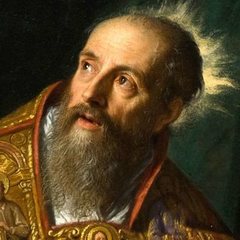 Augustine of Hippo
 Augustine and Antony never met. In Milan, about 386, a visitor named Pontitianus told Augustine about Antony, whose name was new to him. Soon after, weeping under a fig tree, Augustine opened Paul's letters and read the first passage he saw. He did so, he wrote, “for I had heard of Antony”, whose life one Gospel verse had changed. It was Augustine's conversion.
Augustine, Confessions, Book 8, chapters 6 and 12When Antony gave everything away, he placed his little sister with a community of virgins. Years later he was glad to find her grown old in virginity, and leading other virgins herself.
Life of Antony, chapters 2, 3 and 54A bishop. He was with Antony on the mountain when Antony saw visions of what was happening far away. Antony left him one of his two sheepskins.
Life of Antony, chapters 82 and 91A monk of Nitria who had often stayed at Antony's mountain. Antony saw his soul carried up at the hour he died. In one of the desert monks' sayings, an Ammon of Nitria asks why Antony's name is better known, when his own labours are greater. Antony answers, “Because I also love the Lord more than thou.”
Life of Antony, chapter 60; Sayings of the Desert Fathers, Book 2, saying 180A peasant of sixty who found his wife with a lover and walked to Antony to become a monk. Antony shut the door on him for three days, then set him to weave mats and unpick them. Paul never grumbled, and Antony made him a monk.
Palladius, Lausiac History, chapter 22A learned man who had lost his sight. He came to see Antony when Antony was in Alexandria. Antony asked if he grieved for his eyes, and at last Didymus said he did. Antony said, “I am surprised that a wise man should grieve at the loss of a faculty which he shares with ants and flies and gnats, and not rejoice rather in having one of which only saints and apostles have been thought worthy.”
Jerome, Letter 68how he died
He died in 356, about 105 years old, on his inner mountain near the Red Sea.
One last time, he went to see the monks of his outer mountain, at Pispir near the Nile. He told them he was near 105 and would not see them again. They wept, and he talked joyfully, “as though sailing from a foreign city to his own”.
The monks begged him to die among them. He would not. Egyptians then kept the bodies of holy people in their houses, and he had long spoken against it. He did not want his own body kept that way. So he went back to the inner mountain.
A few months after returning to the inner mountain, he fell ill. Only his two companions were with him. Palladius, author of the Lausiac History, names the two who buried him, Macarius and Amatas. He left his sheepskins to the bishops Athanasius and Serapion, and his hair shirt to the two.
His burial order
Bury my body, therefore, and hide it underground yourselves, and let my words be observed by you that no one may know the place but you alone. For at the resurrection of the dead I shall receive it incorruptible from the Saviour.
His last words
For the rest fare ye well, my children, for Antony is departing, and is with you no more.
Then “he lifted up his feet, and as though he saw friends coming to him and was glad because of them”, he died. His face was joyful.
is he a saint?
Yes. Catholics, Orthodox and the Coptic Church count him a saint. The Church of England, the Episcopal Church and the Lutheran ELCA keep his day too.
- CatholicSaintA memorial on 17 January, as Saint Anthony, Abbot
- OrthodoxSaintAnthony the Great, 17 January
- CopticSaintFather of all monks, 22 Toba
- AnglicanSaintA Lesser Festival in the Church of England
- LutheranRememberedELCA, 17 January. Not in the Missouri Synod's calendar
He longed to die a martyr in 311, but he was not killed. Athanasius says that afterwards he was “daily a martyr to his conscience”. The Orthodox Church in America calls the Life of Antony “the first biography of a saint who was not a martyr”.
…St. Anthony, abbot and spiritual guide of many monks. He was most celebrated for his life and miracles, of which St. Athanasius has written a detailed account.
what to read first
The Life of Antony
Athanasius
Written within a few years of his death, by a bishop who had seen him many times. Everything else depends on it. The long middle is Antony's own teaching to his monks.
Read it freeThe Sayings of the Desert Fathers
Translated by E. A. Wallis Budge
Short sayings and stories of the desert monks, dozens of them Antony's. Translated from the Syriac in 1907.
Read them freeThe Lausiac History, chapters 21 and 22
Palladius
Two stories told by Antony's interpreter, Cronius: the man who nursed a cripple for fifteen years, and Paul the Simple.
Read it freeConfessions, Book 8
Augustine
How the story of Antony moved Augustine to his own conversion.
Read it freetake the quizzes
 Quiz Which early Christian thinks like you? And which would argue with you? See where you stand beside Antony. Start
  Quiz Christian Personality Test Antony reads as The Hearth. Find your own type. Start
 people like him
 Cuthbert of LindisfarneThe Hearth
 Bede says he was “affable and pleasant in his character”, and spoke “with cheerful and soothing language, as he was accustomed”. He had long wanted “the secrecy of solitude”, and at last he lived alone on the island of Farne. Made a bishop, he went back after two years to “his much-loved solitude”.
Bede, Life of St Cuthbert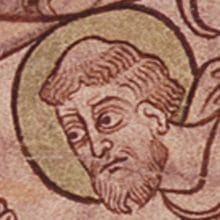 Guthlac of CrowlandThe Hearth
 He led a war band for nine years, then became a monk and began “to long for the wilderness”. He spent his last fifteen years as a hermit in the fens, and “evermore sweetness was in his temper”. When two visiting monks hid their ale under a turf, he knew, and asked them “with merry countenance and laughing words” why they had not brought it along.
Felix, Life of St Guthlac, the Old English version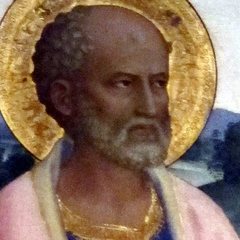 BarnabasThe Hearth
 When the church in Jerusalem was still afraid of Saul, Barnabas, the “Son of Encouragement”, brought him to the apostles. Later he and Saul, also called Paul, fell out over Mark, who had once left them. Barnabas wanted to give him a second chance. Paul would not.
Acts 4:36; 9:27; 15:36-40sources
His life, and his words
- Athanasius, Life of Antony. Tr. H. Ellershaw, ed. Archibald Robertson, 1892.
- The same translation, revised, on New Advent.
- Robertson's introduction to the Life. Same edition.
- The Sayings of the Desert Fathers, in The Paradise, vol. 2. Tr. E. A. Wallis Budge, 1907, from the Syriac.
- The 1907 printing of Budge's Paradise, scanned.
- Palladius, The Lausiac History, chapters 21 and 22. Tr. W. K. Lowther Clarke, 1918.
- John Cassian, Conferences, Conference 9, chapter 31. Tr. Edgar C. S. Gibson, 1894.
- John Cassian, Conferences, Conference 14, chapter 4. Same edition.
- Socrates, Church History, Book 4, chapter 23. Tr. A. C. Zenos, 1890.
- Evagrius, Praktikos, chapter 92, in Greek, Luke Dysinger's edition.
- Sozomen, Church History, Book 1, chapter 13. Tr. Chester D. Hartranft, 1890.
- Sozomen, Church History, Book 2, chapter 31. Same edition.
- Jerome, Lives of Illustrious Men, chapter 88. Tr. Ernest Cushing Richardson, 1892.
- Jerome, Letter 68. Tr. W. H. Fremantle, 1893.
- Jerome, Life of Paul the First Hermit. Same edition.
- Augustine, Confessions, Book 8. Tr. J. G. Pilkington, 1886.
Reference
- Catholic Encyclopedia, 1907, “St. Anthony”
- Catholic Encyclopedia, 1907, “Orders of Saint Anthony”
- Britannica, “St. Anthony of Egypt”
- The Monastery of St Antony, on the Red Sea, “Saint Anthony The Great”
- Britannica, “St. Anthony of Padua”
- Merriam-Webster, “Anthony”, for how to say it
- Philip A. Harland and Maia Kotrosits, “Ethiopians, Nubians, and Egyptians: Christian authors picturing darker-skinned peoples as demons”, 2023
Calendars
- USCCB, Memorial of Saint Anthony, Abbot
- The Roman Martyrology, 1916 edition, 17 January
- OCA, Venerable and God-bearing Father Anthony the Great
- Great Synaxaristes, Greek
- azbyka.ru, Russian
- The Coptic Synaxarium, 22 Toba
- St-Takla.org, Coptic Synaxarium, the month of Toba, which runs from 9 January to 7 February
- Church of England, Common Worship calendar
- The Episcopal Church, Lesser Feasts and Fasts 2022
- Evangelical Lutheran Worship, ELCA, the church year
- Concordia Publishing House, LCMS, the commemorations in Lutheran Service Book
Pictures
- Panel from a Triptych: St. Anthony Abbot, Fra Filippo Lippi, 1458. Cleveland Museum of Art. CC0.
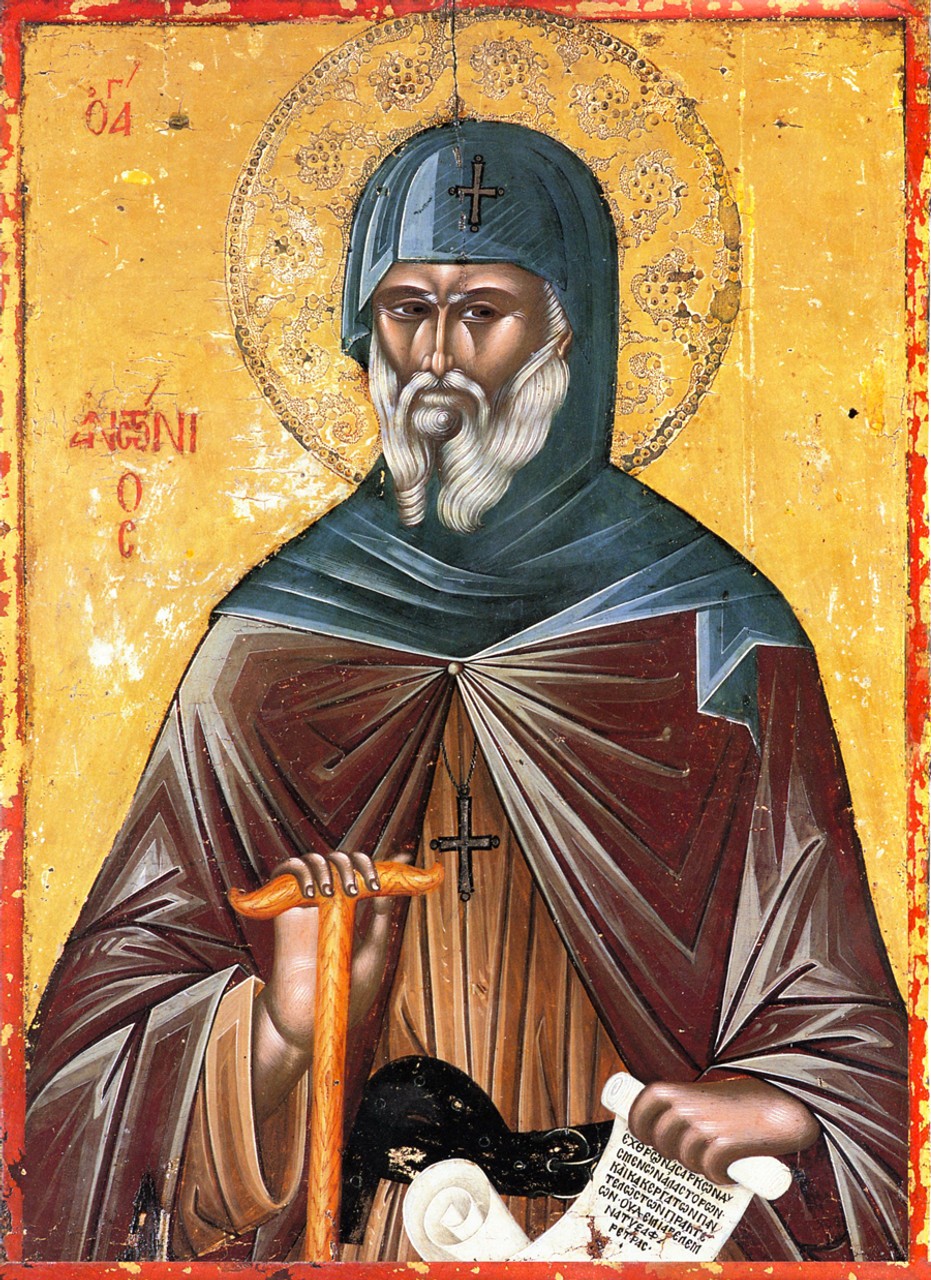
- Saint Anthony, from the Dionysiou Monastery on Mount Athos, Cretan icon, said to be 16th century. Public domain.
- A Luncheon, Peder Severin Krøyer, 1893. Public domain.