
Athanasius of Alexandria
Four emperors drove him out of his city five times. He came home every time.
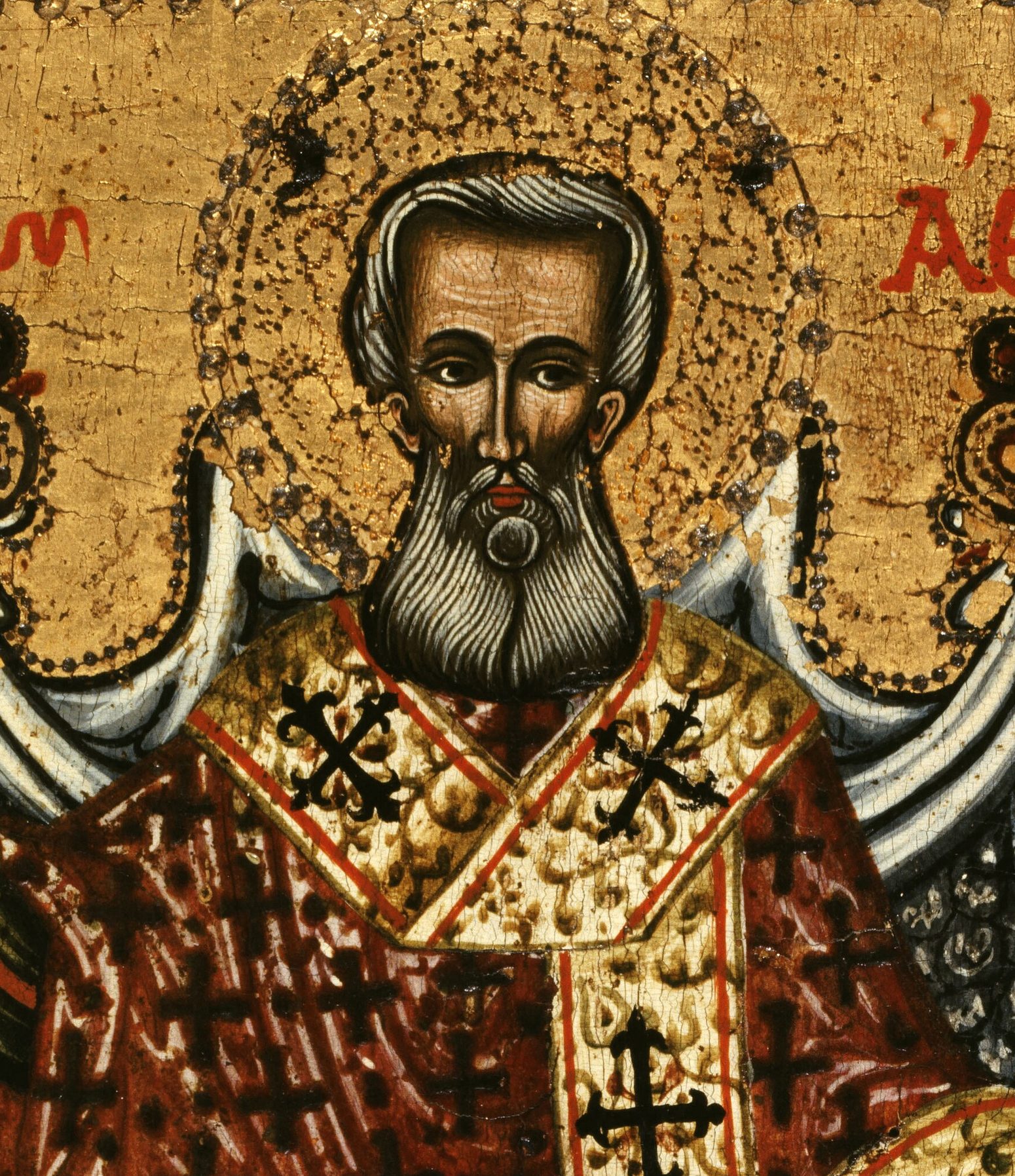
Picture: Saint Athanasius, a Greek icon by Georges the Hierodeacon, 1728 (detail). Petit Palais, Paris. CC0.
Who was Athanasius?
Athanasius was bishop of Alexandria, in Egypt, from 328 to 373. As a deacon he was at the Council of Nicaea. All his life he defended its faith: that the Son of God is truly God. Four emperors drove him out five times. He wrote the Life of Antony, and the first list of exactly our 27 New Testament books.
at a glance
His path, in order
- DeaconSecretary to his bishop, at Nicaea in 325
- BishopOf Alexandria, from 8 June 328
- ExileFive times, under four emperors
- WriterOf the Life of Antony, and a letter each Easter
- PeacemakerCalled both sides to stop fighting over words, 362
in numbers
- Times he was driven out5
- By four emperors, one after another
- He came back every time
- Years he spent in exile or hiding17
- About seventeen and a half years in all
- Out of 45 years as bishop
- Books in his New Testament list27
- The first list to match ours exactly
- In his Easter letter of 367
- Soldiers round his church5,000
- More than that, he says
- On the night of 8 February 356
did you know?
-
The emperor Julian swore “by mighty Serapis” that if Athanasius was not out of Egypt by 1 December, he would fine the governor's own troops a hundred pounds of gold.
Julian, Letter 46, to Ecdicius, prefect of Egypt, tr. W. C. Wright (1923) -
The emperor Julian had ordered Athanasius out of Egypt. On the day Julian died in Persia, Didymus, the blind teacher of Alexandria, saw riders in a vision. They said Julian had died that hour. Then they added: “send to Athanasius the bishop, that he too may know”.
Palladius, Lausiac History, chapter 4, tr. W. K. Lowther Clarke (1918) -
At Trier, the city of his first exile, two officials of the emperor found a book in a monks' cottage “in which was written the life of Antony”. It was the book Athanasius wrote about Antony, the famous monk. They read it and gave up their careers on the spot. Augustine heard the story in Milan, and it helped bring on his own conversion.
Augustine, Confessions, Book 8, chapter 6
- Born
- About 296 to 298, most likely in Alexandria. The Greek synaxarion, the Orthodox book of saints' lives, says his parents were Christians. The Coptic synaxarium says they were pagans, and that after his father died, Bishop Alexander baptized him and his mother.
- Bishop of
- Alexandria, in Egypt, from 8 June 328 until he died: 45 years. Older histories say 46, from an earlier date for his election.
- Died
- 2 May 373, at home in Alexandria, aged about 75.
- Buried
- In Alexandria. Later accounts move his body to Constantinople, and then to Venice.
- Also called
- Athanasius the Great. The Apostolic, in the Coptic Church, which counts him its twentieth pope. The Catholic Encyclopedia calls him the “Father of Orthodoxy”.
- His name
- From the Greek ἀθανασία: immortality.
- In looks
- Small. The emperor Julian sneered that he was “not even a man but only a contemptible puppet”. Gregory of Nazianzus found him “angelic in appearance, more angelic in mind”.
- Status
- A saint to Catholics, Orthodox, Copts, Anglicans and Lutherans. A Doctor of the Church in the Roman calendar.
- In art
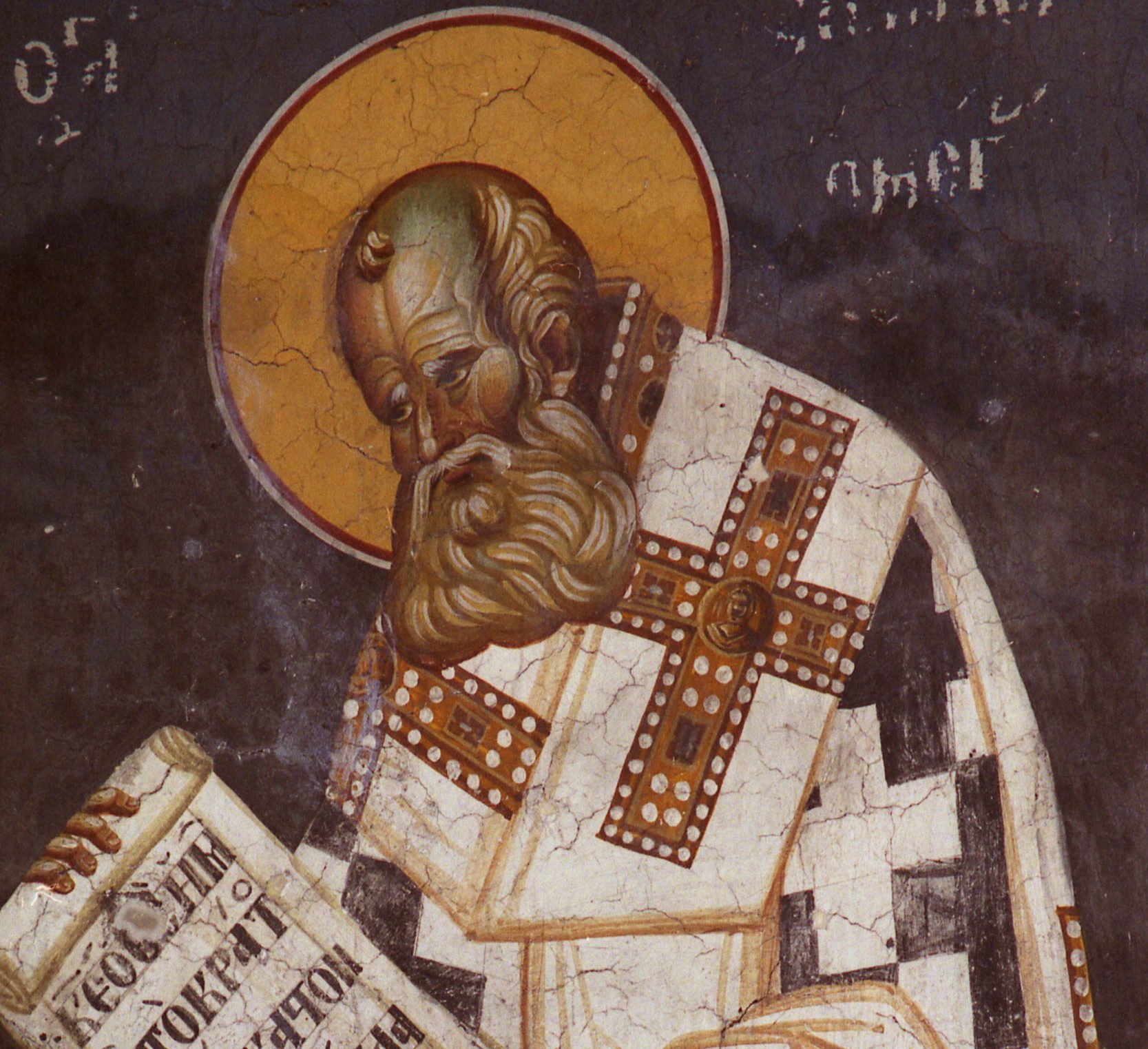
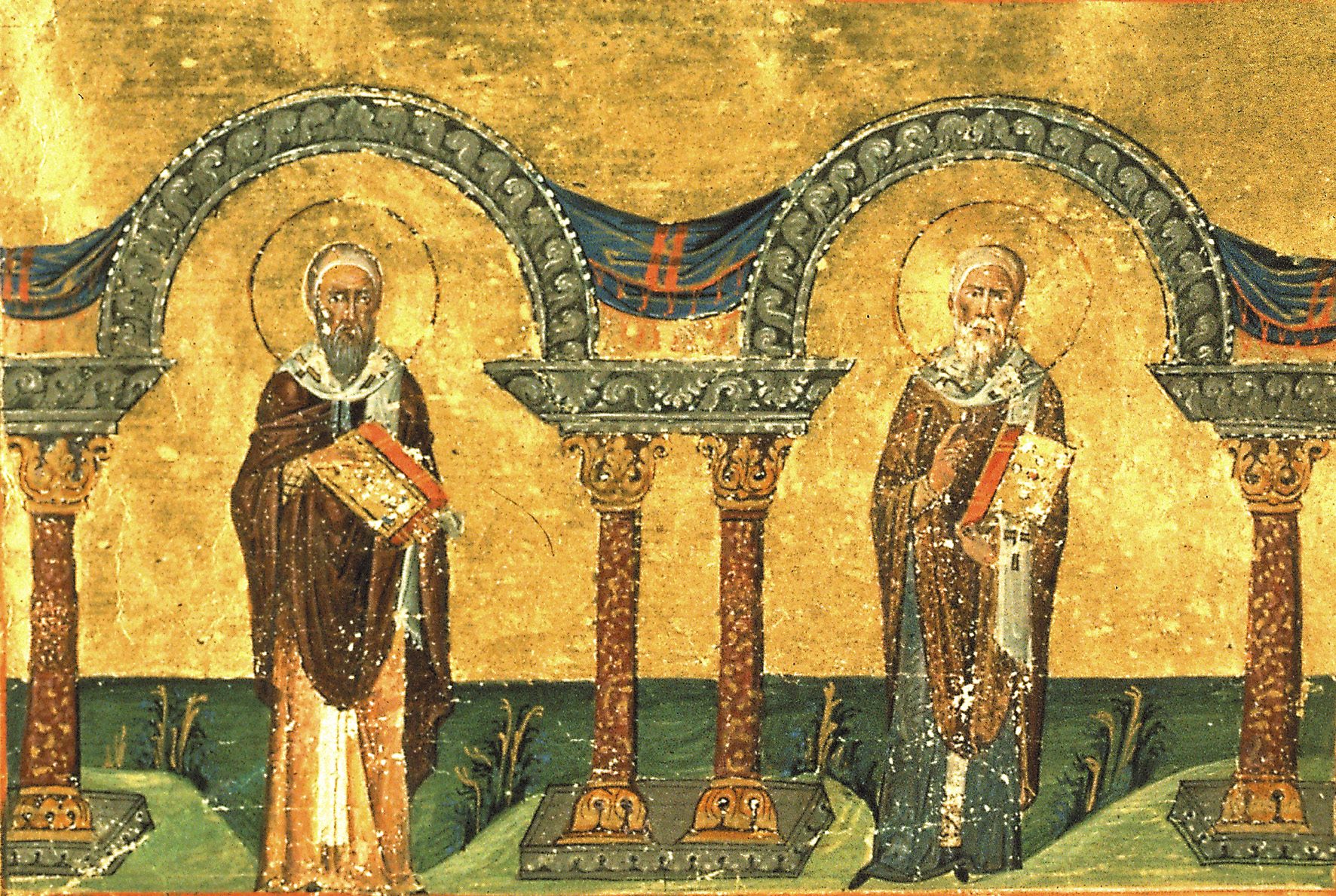
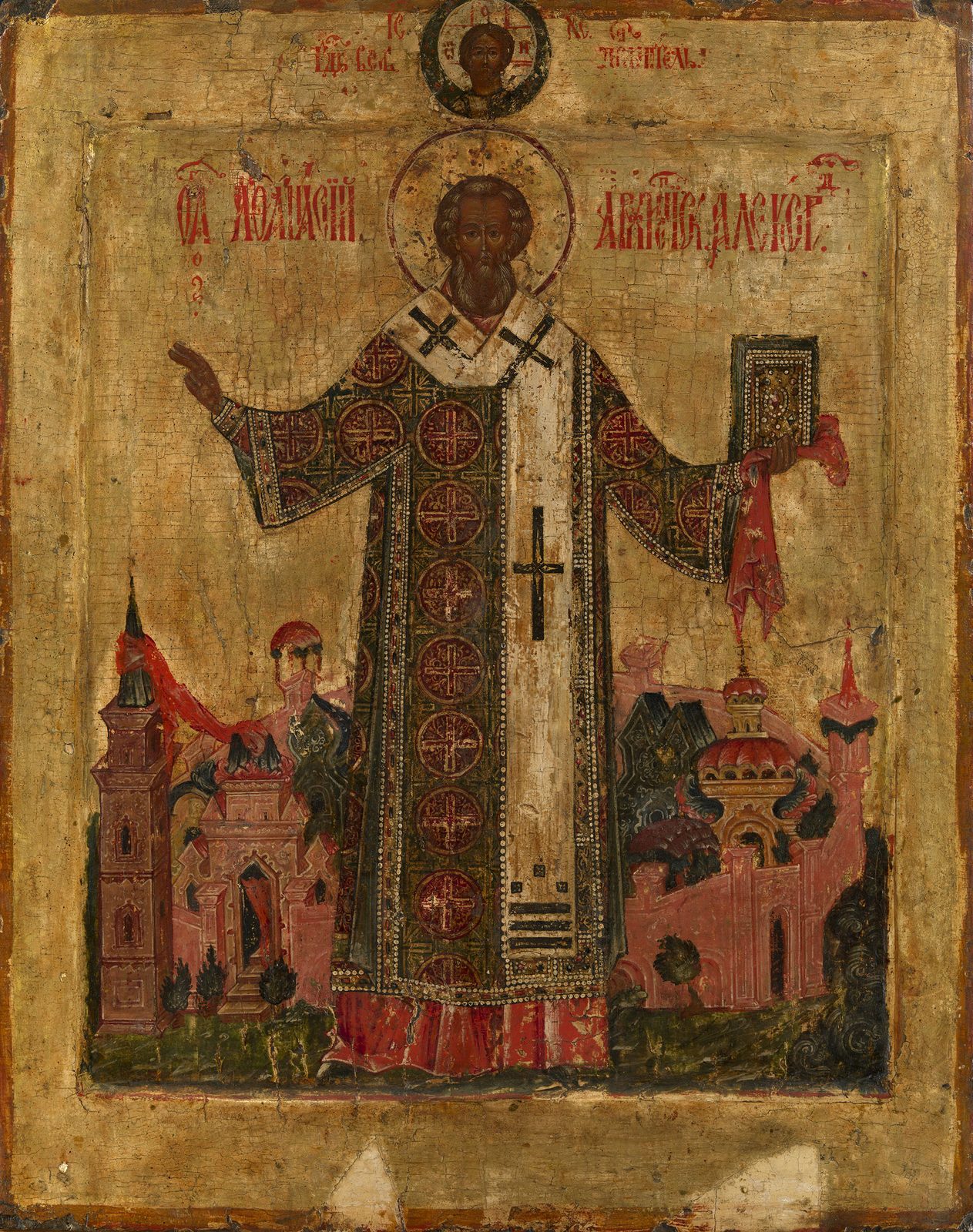
- An old bishop with a grey or white beard, holding a book. Eastern icons often pair him with Cyril of Alexandria, who shares his day on 18 January.
- Wrote
- On the Incarnation, the Discourses against the Arians, the Life of Antony, defences of his own conduct, and a letter each Easter to the churches of Egypt.
- Pronounced
- ath-uh-NAY-zhus.
feast days
East and West, side by side
West
- May2
Catholic memorial of a bishop and Doctor of the Church, and his day in the 1916 Roman Martyrology. Also the Church of England, the Episcopal Church, and Lutherans in the Missouri Synod and the ELCA.
East
- Jan18
The Greek churches and the Orthodox Church in America, together with Cyril of Alexandria. The Russian Church, on the old calendar, keeps it on 31 January.
- May2
The Orthodox Church in America, and the Russian Church on the old calendar (15 May). The Greek calendar keeps it as the day his relics were moved.
- May15
The Coptic Church, on 7 Pashons in its own calendar: the day he died.
Why two days in the East? His own church's records put his death on 2 May, and the West keeps that day. The Greek synaxarion tells his life under 18 January. It keeps 2 May for the moving of his relics, and says no details of that move are known. An editor of Gregory of Nazianzus in 1894 gives the older view: 18 January as “the day of the actual death”, and 2 May for the moving of his body to Hagia Sophia in Constantinople. Churches on the old calendar keep each date 13 days later.
what was he like?
+fierce on paper
He could write savagely. Of the emperor Constantius he asked, “Now what is yet wanting to make him Antichrist?” He called the Meletians, a rival church in Egypt, “like dogs unable to forget their vomit”. His own admiring editor, Archibald Robertson, called Athanasius's book attacking Constantius “the one work which we would gladly believe to have come from any other pen”. Yet when his old enemy Arius died, Athanasius wrote, “we ought not to insult the dead, though he be an enemy”.
History of the Arians, chapter 76; Apology against the Arians, chapter 59; To the Bishops of Egypt, chapter 19; Robertson, Prolegomena (1892)+gentle in person
Gregory of Nazianzus called him “gentle, free from anger, sympathetic, sweet in words, sweeter in disposition”. When he came home from exile, Gregory says, “he treated so mildly and gently those who had injured him, that even they themselves, if I may say so, did not find his restoration distasteful”.
Gregory of Nazianzus, Oration 21, chapters 9 and 30+funny, even in danger
His editor Robertson wrote, “Like most men of great power, he had a real sense of humour.” Once, in Alexandria, a crow cawed, and some pagans asked him, mocking, what it said. He smiled. “It utters the sound cras,” he told them, and cras is Latin for “tomorrow”. Tomorrow, it meant, would not go well for them. The next day, says the historian Sozomen, an order came from the emperor forbidding their festival.
Sozomen, Church History, Book 4, chapter 10; Robertson, Prolegomena (1892)+humble before God
He fought all his life over who Christ is. Yet he wrote to monks who asked him about it: “For the more I desired to write, and endeavoured to force myself to understand the Divinity of the Word, so much the more did the knowledge thereof withdraw itself from me.”
First Letter to Monks (Letter 52), chapter 1+a peacemaker over words
Christians who meant the same thing were quarrelling over the words for it. At his council of 362 he asked them “not to enquire further into each other's opinions, nor to fight about words to no useful purpose”. Gregory of Nazianzus saw the result: “by permitting each party to use its own terms, he bound them together in unity of action”.
Tome to the People of Antioch, chapter 8; Gregory of Nazianzus, Oration 21, chapter 35+immovable on the faith
Gregory of Nazianzus put it in one line: “to those who assailed him he was adamant, and to those at variance a magnet”. When the emperor Constantine ordered him to take back the condemned priest Arius, he refused. His editor Robertson wrote: “With Arius and Arianism no compromise was to be thought of.”
Gregory of Nazianzus, Oration 21, chapter 31; Apology against the Arians, chapters 59 and 60; Robertson, Prolegomena (1892)+not in it for himself
His editor Robertson: “In the whole of our minute knowledge of his life there is a total lack of self-interest.” Serapion was the bishop he trusted most. He treated him and the monks “as equals or superiors, begging them to correct and alter anything amiss in his writings”.
Robertson, Prolegomena to the Nicene and Post-Nicene Fathers, volume 4 (1892)what others said of him
Friends, emperors and a sceptic, in their own words.
In praising Athanasius, I shall be praising virtue.
The worse the diseases of the Churches grow, the more do we all turn to your excellency, in the belief that your championship is the one consolation left to us in our troubles.
…Athanasius, the interpreter of the adorable Law, was sent away into Gaul for a time…
Infamous man! He has had the audacity to baptise Greek women of rank during my reign! Let him be driven forth!
…Athanasius displayed a superiority of character and abilities, which would have qualified him, far better than the degenerate sons of Constantine, for the government of a great monarchy.
his life in 14 moments
Alexandria
As a boyBishop in a game
The church historian Rufinus told this story first. Two later historians, Socrates and Sozomen, retold it. On the feast of Peter, a martyred bishop, Bishop Alexander looked out toward the sea. Children on the shore were playing church. Athanasius was their bishop, and he had baptized some who were not yet Christians. Alexander questioned them. They had done everything exactly as the Church does, so he let the baptisms stand. Then he had Athanasius brought up for the Church. Socrates thought it “not improbable”. Athanasius's Victorian editor, Archibald Robertson, thought it “highly improbable”.
Socrates, Church History, Book 1, chapter 15; Sozomen, Church History, Book 2, chapter 17; Robertson, Prolegomena (1892)Nicaea
325The deacon at the council
Bishop Alexander of Alexandria made him a deacon and his secretary. In 325 he took him to the great council at Nicaea. Arius, a priest of Alexandria, was teaching that the Son of God was created, and had a beginning. The council condemned him. Its creed said the Son is of one essence with the Father: in Greek, ὁμοούσιος. How much the young deacon did there is hard to say. His editor Robertson thinks the winning side owed much “to the energy and eloquence of the deacon Athanasius”. Gregory of Nazianzus says that though he was “not yet ranked among the Bishops, he held the first rank among the members of the Council”.
Sozomen, Church History, Book 2, chapter 17; Robertson, Prolegomena (1892); Gregory of Nazianzus, Oration 21, chapter 14Alexandria
8 June 328Chosen bishop
Bishop Alexander died in the spring of 328. The bishops of Egypt later wrote that the whole church crowded together for days and nights, and “cried, shouted, that Athanasius should be Bishop”. They called him “good, pious, Christian, an ascetic, a genuine Bishop”. His enemies told another story: that six or seven bishops made him bishop “clandestinely in a secret place”. The historian Sozomen, quoting the Syrian writer Apolinarius, gives a third: Athanasius ran away to escape the honour, and the dying Alexander called out, “O Athanasius, thou thinkest to escape, but thou wilt not escape.” He was about thirty.
Apology against the Arians, chapter 6; Sozomen, Church History, Book 2, chapter 17Alexandria
About 330No to the emperor
The council of Nicaea had condemned the priest Arius. Eusebius of Nicomedia, the bishop who led his side, pressed Athanasius to take him back. Athanasius refused to receive men the council had condemned. Then a letter came from the emperor Constantine himself: “if I learn that you have hindered or excluded any who claim to be admitted into communion with the Church, I will immediately send some one who shall depose you by my command”. Athanasius wrote back that “that anti-Christian heresy had no communion with the Catholic Church”. He held his ground.
Apology against the Arians, chapters 59 and 60Tyre
335The man with two hands
His enemies said he had murdered Arsenius, a bishop of the rival Meletian church, and cut off his hand for magic. They carried a hand about as proof. At the council of Tyre, Athanasius asked who there knew Arsenius. Several said they did. Then he brought in a man wrapped in a cloak, and turned back the cloak on one side to show one hand. He let them wait. Then he showed the other. “Arsenius, as you see, is found to have two hands: let my accusers show the place whence the third was cut off.” The council deposed Athanasius anyway.
Socrates, Church History, Book 1, chapters 27 to 29; Sozomen, Church History, Book 2, chapter 25; Apology against the Arians, chapters 63 to 72Constantinople, then Trier
335 to 337The grain ships
He went to the emperor Constantine himself. His enemies met him with a new charge: that he had threatened to stop the grain ships that fed Constantinople, the new capital. In his own words, they said “that Athanasius had threatened that he would cause the corn to be withheld which was sent from Alexandria to his own home”. Constantine, he says, “instead of granting me a hearing, he sent me away into Gaul”. He lived at Trier, on the Moselle, until Constantine died. He was home on 23 November 337.
Apology against the Arians, chapter 87; Robertson, Prolegomena (1892)Alexandria
July 338Antony comes to town
The Arians claimed that Antony, the famous monk, agreed with them. So the old man came down from his mountain to Alexandria and taught the crowds that the Son of God is not a created being. Pagans came to the church asking to see “the man of God”. As many became Christians in those few days, Athanasius wrote, “as one would have seen made in a year”. When Antony left, Athanasius and others walked him to the city gate.
Life of Antony, chapters 69 to 71Rome
339 to 346Seven years away
In 339 a council at Antioch named Gregory of Cappadocia bishop of Alexandria, and Gregory arrived that March. Athanasius left for Rome. Julius, bishop of Rome, took him in, and his council declared him innocent. In 343 the Western bishops at Sardica cleared him too. By the reckoning of his own church, he was away seven years, six months and three days. He came home on 21 October 346, to what his editor Robertson calls “the golden decade”.
Robertson, Prolegomena (1892), from the Historia Acephala; Socrates, Church History, Book 2, chapter 22Alexandria
Night of 8 February 356A psalm in the dark
His people were keeping an all-night vigil in the church of Theonas. The general Syrianus surrounded it “with more than five thousand soldiers”. Athanasius sat down on his bishop's chair. He had a deacon read a psalm, with the people answering, “For His mercy endureth for ever”. It was Psalm 136. The soldiers broke in. His clergy begged him to go. In his own account, he refused until the people were out, “saying that it was better that my safety should be endangered, than that any of them should receive hurt”. At last monks dragged him away, and he slipped past the soldiers unseen.
Defence of his Flight, chapter 24The desert, and the city
356 to 362Six years hidden
From 356 to 362 no one could find him. His editor Robertson says he spent most of those years in the monks' cells of Upper and Lower Egypt, and part of them hidden in Alexandria itself. He probably wrote the Life of Antony now. Palladius tells another story: Athanasius hid all six years in the house of a woman in Alexandria. Palladius met her himself when she was about seventy. She had been young at the time, and very beautiful, so no one would suspect her. She brought him books, “washing his feet herself”. Palladius's translator, W. K. Lowther Clarke, doubted it: “Athanasius may have hid for a little while in a virgin's house, but the story as it stands is unhistorical.” Meanwhile, in 359, the bishops of the West at Ariminum signed a creed that dropped Nicaea's word for the Son: of one essence with the Father. Jerome looked back: “The whole world groaned, and was astonished to find itself Arian.”
Robertson, Prolegomena (1892); Palladius, Lausiac History, chapter 63, tr. Lowther Clarke (1918); Jerome, Dialogue against the Luciferians, chapter 19Alexandria
21 February 362Home on a colt
The emperor Constantius died. His bishop at Alexandria, George, was lynched by the city's pagans, “in a way I cannot praise”, says Gregory of Nazianzus. The new emperor, Julian, let the exiled bishops go home. People came from all over Egypt to see Athanasius return. Gregory describes a homecoming like Palm Sunday, with branches, cloaks in the road, and a crowd like the Nile: “He rode upon a colt, almost, blame me not for folly, as my Jesus did upon that other colt.”
Gregory of Nazianzus, Oration 21, chapters 26 to 29; Socrates, Church History, Book 3, chapters 2 to 4; Robertson, Prolegomena (1892)The Nile
October 362“Not far”
The emperor Julian had let the exiled bishops go home, but not back to their churches. And Athanasius was baptizing pagans. Julian ordered him out. Athanasius told his friends, “Let us retire for a little while, friends; it is but a small cloud which will soon pass away.” He took a boat up the Nile. When he heard that Julian's officer was close behind, he had the boat turned round, and rowed back to meet him. In the historian Theodoret's telling, the officer called out, “How far off is Athanasius?” “Not far,” said Athanasius, and the officer hurried on upriver. Julian was dead within the year.
Socrates, Church History, Book 3, chapter 14; Theodoret, Church History, Book 3, chapter 5Near Alexandria
October 365 to February 366The last flight
Under the Arian emperor Valens, an order came to expel him again. Soldiers broke into his church at night to take him. He had already gone. The historian Socrates says he hid “for four entire months in an ancestral tomb”. Athanasius's editor Robertson, following an older chronicle, says he went to “a country house which belonged to him near the New River”. The city was near riot, and Valens gave way. On 1 February 366 he was restored for good.
Socrates, Church History, Book 4, chapter 13; Robertson, Prolegomena (1892)Alexandria
Easter 367The 27 books
Every year he sent Egypt a letter to announce the date of Easter. In 367 he used it to list the books of the Bible, because people were reading others “called apocryphal”. His New Testament is exactly our 27 books, the first list known to match ours. His Old Testament has 22 books, one for each letter of the Hebrew alphabet. It includes Baruch, but not Esther. Esther he set with Wisdom, Sirach, Judith, Tobit, the Didache and the Shepherd: books not in the canon, but good for new believers to read. Of the canon he wrote: “Let no man add to these, neither let him take ought from these.”
Festal Letter 39
the charges against him
His enemies called him a sorcerer and a ruffian. His friends called every charge a lie. Some were plainly false. A letter found in Egypt shows that one was partly true.
The broken chalice
A man named Ischyras said that Macarius, a priest sent by Athanasius, had broken into his service, overturned the altar and smashed the cup. Athanasius's side said Ischyras was never a priest at all. The clergy of his district wrote that he “never had a Church”, and that only his own relations believed him. Ischyras once took the story back in writing, then told it again. Athanasius's editor Robertson notes how it grew: in one later council's letter, his cottage “becomes a basilica” that Athanasius had torn down.
“For he spread a report that he had suffered dreadfully in consequence of an assault; and that Macarius had rushed furiously toward the altar, had overturned the table, and broken a mystical cup.”Socrates, Church History, Book 1, chapter 27; Apology against the Arians, chapter 74; Robertson, Prolegomena (1892)
The hand of Arsenius
His enemies said he had murdered Arsenius, a bishop of the rival Meletian church, and cut off his hand. They had their own account of why they thought Arsenius was dead. A bishop under Athanasius, they said, had burned Arsenius's house, tied him to a pillar, whipped him and locked him up. Arsenius got out through a window and went into hiding, and when he did not reappear, “they naturally supposed him to be dead”. Athanasius's side said he had been paid to hide. Arsenius turned up alive at the council of Tyre, and afterwards made his peace. He wrote to Athanasius as “dearly beloved Pope”, promising to keep the canons of the Church.
“…a bishop under the jurisdiction of Athanasius, named Plusian, had, at the command of his chief, burnt the house of Arsenius, fastened him to a column, and maltreated him with thongs, and then chained him in a cell.”Sozomen, Church History, Book 2, chapter 25; Apology against the Arians, chapter 69; Robertson, Prolegomena (1892)
Violence against the Meletians
Bishops of the Meletians, a rival church in Egypt, told the council of Tyre that Athanasius had beaten them and thrown them into prison. Most of what survives was written by his side. Then in 1924 H. Idris Bell of the British Museum published a letter from the other side, written by a Meletian named Callistus, most likely in 335. It says drunken soldiers beat Meletian monks, “and made them all bloody, so that they were in danger of death”. It says Athanasius himself had a bishop locked in the meat market. Bell judged that the charges “were in part true”. He thought it unlikely that Athanasius ordered the beatings, but doubted he did much to stop them. And he added that the letter too is one-sided, and that both parties were “tarred with the same brush”.
“We must conclude that there was a germ of truth in the picture given of Athanasius by his enemies as a self-willed, unruly man, apt to treat even the Imperial authority with contempt.”Sozomen, Church History, Book 2, chapter 25; H. I. Bell, Jews and Christians in Egypt (1924), Papyrus 1914
his words
His own words, in the English of the Nicene and Post-Nicene Fathers, volume 4 (1892), edited by Archibald Robertson.
Why God became man
For He was made man that we might be made God; and He manifested Himself by a body that we might receive the idea of the unseen Father; and He endured the insolence of men that we might inherit immortality.
From On the Incarnation, which the editor Archibald Robertson dated to about 318, when Athanasius was in his early twenties. The Greek verb he used means “made God”: θεοποιηθῶμεν.
On the Incarnation, chapter 54For the truth is not preached with swords or with darts, nor by means of soldiers; but by persuasion and counsel.
When did a judgment of the Church receive its validity from the Emperor?
For although it be impossible to comprehend what God is, yet it is possible to say what He is not.
But now that the Saviour has raised His body, death is no longer terrible; for all who believe in Christ tread him under as nought, and choose rather to die than to deny their faith in Christ.
…while before your election you lived to yourself, after it, you live for your flock.
…for the crown is given not according to position, but according to action.
For what else is the feast, but the service of the soul? And what is that service, but prolonged prayer to God, and unceasing thanksgiving?
his letter on the psalms
Our quiz Which Psalm are you living right now? is built on one of his letters. The lines here are our own translation from his Greek.
A friend who was ill
His friend Marcellinus was getting over an illness. He had spent the time reading the Psalms, trying to understand each one. Athanasius wrote back with what a studious old man had once taught him about them. He opens warmly:
“I admire your purpose in Christ, my friend Marcellinus.”Letter to Marcellinus, chapter 1, our translation from the Greek (Migne, Patrologia Graeca 27)
A mirror
A studious old man had once taught Athanasius about the Psalms. The rest of Scripture, he said, we read as other people's words. The Psalms we say as our own, as if they were written about us. He called them a mirror:
“And it seems to me that these words become a kind of mirror for the one who sings them, so that he sees himself in them, and the movements of his own soul; and so, having felt them, he speaks them out.”Letter to Marcellinus, chapter 12, our translation from the Greek
A psalm for every need
His letter to Marcellinus goes through one situation after another, and names the psalm to pray in each. Slandered? Psalm 52. Sinned? Psalm 51. Afraid? Psalm 118. Want to give thanks? Psalm 103. Our quiz uses 53 of his situations. You answer a few questions about your life now, and it gives you the psalm he named for it. He prayed the Psalms himself, too. On the night in 356 when soldiers surrounded his church, he had a deacon read Psalm 136.
Letter to Marcellinus, chapters 15 to 28; Defence of his Flight, chapter 24Bound in with the Bible
One of the oldest Bibles in the world, the Codex Alexandrinus of the 400s, is now in the British Library. In it, his letter to Marcellinus comes right before the Book of Psalms.
“The Psalter, which contains the ψαλμὸς ἰδιόγραφος (cli.) and the liturgical canticles, is preceded by the Epistle of Athanasius to Marcellinus”H. B. Swete, An Introduction to the Old Testament in Greek (1900)
often misquoted
He wrote the Athanasian Creed.
What the sources sayIt carries his name, but it is not his. Until the 1600s it was thought to be. In 1644 Gerard Voss pointed out that “no early writer of authority speaks of it as the work of this doctor”, and that its language looks Western, not Alexandrian. The Catholic Encyclopedia agrees it “most probably” cannot be his. The Lutheran Church–Missouri Synod says the creed, “though not composed by Athanasius, is named in his honor”.
Catholic Encyclopedia (1907), “Athanasian Creed”; Lutheran Church–Missouri Synod, commemoration for 2 May“If the world is against the truth, then I am against the world.”
What the sources sayQuote sites give this as his. We could not find it in his writings. Nor did we find the famous Latin tag Athanasius contra mundum, Athanasius against the world, in any ancient writer. The oldest form of the idea we found is Richard Hooker's, in 1597: “the whole world against Athanasius, and Athanasius against it”. In Athanasius's own day, the man who stood alone was Liberius, bishop of Rome, speaking up for him. The emperor Constantius asked him, “What portion do you constitute of the universe, that you alone by yourself take part with an impious man?” Liberius answered, “My standing alone does not make the truth a whit the weaker.”
Goodreads; Hooker, Laws of Ecclesiastical Polity, Book 5, chapter 42; Theodoret, Church History, Book 2, chapter 13He spent twenty years in exile.
What the sources sayGibbon wrote that “twenty years he passed as an exile or a fugitive”, and the Orthodox Church in America says “more than twenty years”. The oldest chronicle of his life, the Historia Acephala, gives the length of his exiles almost to the day. By the dates of his editor, Archibald Robertson, his exiles add up to about seventeen and a half years.
Gibbon, The Decline and Fall of the Roman Empire, chapter 21; OCA; Robertson, Prolegomena (1892)He spent six years hiding in a dry well.
What the sources sayThat is the historian Rufinus's tale, of a dry cistern. Athanasius's editor Robertson calls it “probably a confused version” of his time hidden in the monks' cells. Palladius says a young woman hid him in her house. No one knows for sure.
Robertson, Prolegomena (1892); Palladius, Lausiac History, chapter 63He escaped to Spain and hid as a cook in a monastery.
What the sources sayA later legend, kept in the Acta Sanctorum, a great collection of saints' lives. His editor Robertson mentions it with an exclamation mark. His exiles took him to Trier, to Rome and Italy, and into the Egyptian desert. He never went to Spain.
Robertson, Prolegomena (1892)friends, family and rivals
 Antony the Great
 The father of the monks. Athanasius says he saw him many times, and “poured water on his hands”. Antony came to Alexandria to stand with him. When Antony died, he left Athanasius a sheepskin, and the cloak Athanasius had given him when it was new.
Life of Antony, chapters 1, 69 to 71 and 91 Basil the Great
 Bishop of Caesarea, who looked to him to heal the split among the Eastern churches. They wrote to each other, and Basil hoped one day to see him.
Basil, Letters 66, 69, 80 and 82 Gregory of Nazianzus
 Preached the great sermon on him at Constantinople, about seven years after his death.
Gregory of Nazianzus, Oration 21His bishop. He brought him up for the Church, made him his deacon and secretary, and took him to Nicaea.
Sozomen, Church History, Book 2, chapter 17The Alexandrian priest who taught that the Son of God was created. Athanasius would not take him back. Arius died suddenly in Constantinople in 336, just before he was to be received back.
To the Bishops of Egypt, chapters 18 and 19; Robertson's tableThe bishop who led the side that backed Arius. Athanasius says he “buys the Meletians with large promises” to bring charges against him.
Apology against the Arians, chapter 59The emperor who drove him out twice, and sent troops for him in 356. Athanasius compared him to Antichrist.
History of the Arians, chapter 76The emperor who turned back to the old gods. He called Athanasius “that enemy of the gods”.
Julian, Letter 46The Meletian bishop he was said to have murdered. He turned up alive at Tyre, and later made his peace with Athanasius.
Socrates, Church History, Book 1, chapter 29; Apology against the Arians, chapter 69A young man who had helped run a kingdom beyond Egypt. The historian Socrates calls it India. The Copts remember it as Ethiopia. He came to Alexandria asking for a bishop for the Christians there, and Athanasius made him that bishop. The Copts remember him as Abba Salama.
Socrates, Church History, Book 1, chapter 19; Coptic synaxarium, 7 PashonsThe bishop of Rome who took him in, in 339, and whose council declared him innocent.
Apology against the Arians, chapters 20 to 35The friend, ill and reading the Psalms, to whom he wrote the letter behind our Psalm quiz.
Letter to MarcellinusThe rival bishop whom the emperor Constantius put in his place in 357. A pagan mob killed him in 361.
Gregory of Nazianzus, Oration 21, chapters 16 and 26; Robertson's tablehow he died
He died at home in Alexandria on 2 May 373, bishop of his city, after seven quiet years. He was about seventy-five.
After his last return, no emperor moved against him again. The historian Socrates says the emperor Valens held back while Athanasius lived, because he knew that “the multitude of those who were attached to Athanasius was very great”.
In his last quiet years he built a new church, begun in 368 and finished in 370. He wrote to Basil in Cappadocia, who looked to him as the one bishop who could still bring the East together.
He named Peter, one of his clergy, to follow him as bishop. The historian Socrates calls Peter “a devout and eloquent man”. Soon after Athanasius died, the emperor Valens let the Arians set up a bishop of their own, Lucius. Peter was jailed, escaped, and fled to Damasus, bishop of Rome.
Gregory of Nazianzus summed up his life: “In a good old age he closed his life, and was gathered to his fathers, the Patriarchs, and Prophets, and Apostles, and Martyrs, who contended for the truth.”
is he a saint?
Yes. Catholics, Orthodox, Copts, Anglicans and Lutherans all honour him.
- CatholicSaintDoctor of the Church, 2 May
- OrthodoxSaint18 January and 2 May
- CopticSaintThe Apostolic, 7 Pashons
- AnglicanSaintA Lesser Festival in the Church of England
- LutheranRememberedMissouri Synod and ELCA, 2 May
He was honoured soon after he died. Within about seven years Gregory of Nazianzus was preaching on his feast day in Constantinople.
No miracle is told of him. His editor Robertson wrote: “Not a single miracle of any kind is related of him.” His name as a saint rested, he said, “on his life and character alone”.
The Roman calendar keeps him as a bishop and Doctor of the Church. The 1916 Roman Martyrology put it like this:
Although almost all the world had formed a conspiracy to persecute him, he courageously defended the Catholic faith…
what to read first
On the Incarnation
Athanasius
His best-known book, on why the Word of God became man. Fifty-seven short chapters.
Read it freeThe Life of Antony
Athanasius
The life of the first famous monk, by a bishop who knew him. The book that stirred Augustine.
Read it freeDefence of his Flight
Athanasius
Why he fled the emperor's soldiers, and his own account of the night in 356 when they surrounded his church.
Read it freeFestal Letter 39
Athanasius
The Easter letter of 367, with his list of the books of the Bible. A few minutes.
Read it freeOration 21, on Athanasius
Gregory of Nazianzus
The sermon a friend of his cause preached on his feast, a few years after he died.
Read it freetake the quizzes
 Quiz Which Psalm are you living right now? His Letter to Marcellinus names a psalm for one need after another. Find the one he would give you. Start
  Quiz Christian Personality Test Which of eight types are you? Find your own. Start
 sources
His life, and his words
- Athanasius: Select Works and Letters. Ed. Archibald Robertson. Nicene and Post-Nicene Fathers, second series, volume 4, 1892. His works quoted here, and Robertson's Prolegomena and chronological table.
- Epistula ad Marcellinum, the Greek text (Migne, Patrologia Graeca 27). Our translation.
- Socrates and Sozomen, Church Histories. Tr. A. C. Zenos and Chester Hartranft. Nicene and Post-Nicene Fathers, second series, volume 2, 1890.
- Theodoret, Church History. Tr. Blomfield Jackson. Nicene and Post-Nicene Fathers, second series, volume 3, 1892.
- Gregory of Nazianzus, Oration 21. Tr. Charles Gordon Browne and James Swallow. Nicene and Post-Nicene Fathers, second series, volume 7, 1894.
- Basil, Letter 80. Tr. Blomfield Jackson. Nicene and Post-Nicene Fathers, second series, volume 8, 1895.
- Jerome, Dialogue against the Luciferians. Tr. W. H. Fremantle. Nicene and Post-Nicene Fathers, second series, volume 6, 1893.
- Palladius, The Lausiac History. Tr. W. K. Lowther Clarke, 1918.
- Julian, Letters. Tr. W. C. Wright, 1923.
- Augustine, Confessions, Book 8. Tr. J. G. Pilkington, 1886.
Reference
- H. Idris Bell, Jews and Christians in Egypt, 1924. The Meletian letter of 335 (Papyrus 1914), with his translation and notes.
- Edward Gibbon, The Decline and Fall of the Roman Empire, volume 2, chapter 21
- Richard Hooker, Of the Laws of Ecclesiastical Polity, Book 5, chapter 42, in Keble's edition, 1874
- H. B. Swete, An Introduction to the Old Testament in Greek, 1900, on the Codex Alexandrinus
- Catholic Encyclopedia, 1907, “St. Athanasius”
- Catholic Encyclopedia, 1907, “Athanasian Creed”
- Liddell, Scott and Jones, Greek-English Lexicon, “ἀθανασία”
- Merriam-Webster, “Athanasius”, for how to say it
- Goodreads, for the line wrongly given to him
Calendars
- USCCB, Liturgical Calendar 2026, Saint Athanasius, Bishop and Doctor of the Church, 2 May
- Calendarium Romanum, 1969
- The Roman Martyrology, 1916 edition
- OCA, Saint Athanasius the Great, Patriarch of Alexandria (2 May)
- OCA, 18 January
- Great Synaxaristes, Greek, 18 January and 2 May
- azbyka.ru, Russian
- CopticChurch.net, the Coptic synaxarium, 7 Pashons
- Church of England, Common Worship calendar
- The Episcopal Church, Lesser Feasts and Fasts 2022
- The Lutheran Church–Missouri Synod, Commemorations
- Evangelical Lutheran Worship, ELCA, the church year (final draft, 2006)
Pictures
- Saint Athanase, Georges the Hierodeacon, 1728. Petit Palais, Paris (Paris Musées). CC0.
- Paintings in the Church of the Theotokos Peribleptos of Ohrid, Michael and Eutychios. Public domain.
- Athanasius and Cyril of Alexandria, Menologion of Basil II. Vatican Library. Public domain.
- Saint Athanasius (17th c, priv.coll), a Russian icon of the mid-1600s. Private collection. Public domain.