
Peter
The fisherman Jesus called the rock. He denied Him three times, was forgiven, and led the Church.
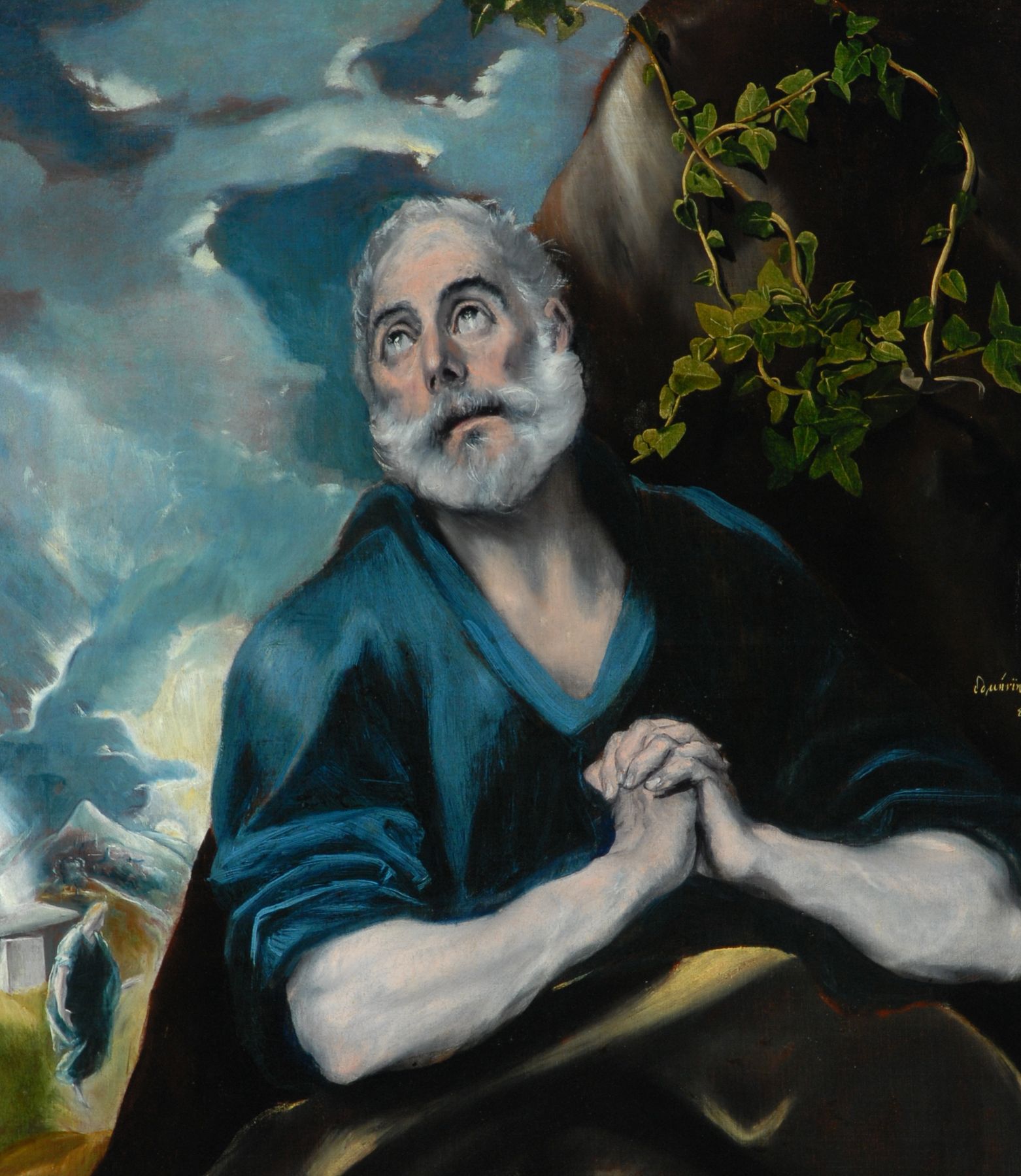
Picture: The Tears of Saint Peter, El Greco, 1580s. The Bowes Museum, Barnard Castle. Public domain.
Who was Peter?
Peter was a fisherman from Galilee named Simon. Jesus gave him a new name, Cephas, the rock. He is first in every list of the Twelve, and often spoke for them. On the night Jesus was arrested, he denied Him three times. Forgiven, he led the first Christians in Jerusalem. He died a martyr at Rome under Nero.
at a glance
His path, in order
- FishermanOn the Sea of Galilee, with Andrew
- ApostleOne of the Twelve Jesus chose
- WitnessThe risen Lord appeared to him
- PreacherAt Pentecost, and to Cornelius
- LeaderOf the first church, in Jerusalem
- MartyrAt Rome, under Nero
in numbers
- Times he denied Jesus3
- In one night, by a fire
- After the third, the Lord turned and looked at him
- “Do you love Me?”3
- Jesus asked him three times
- On the shore, after breakfast
- Fish in one net, after Jesus rose153
- All of them large
- And the net was not torn
- Baptised at Pentecost3,000
- “About three thousand”
- After his first sermon
did you know?
-
Jesus gave him his new name. Cephas is the Aramaic word for rock, and Peter is the same name in Greek.
John 1:42; Britannica -
He is named first in every list of the Twelve. Matthew says it outright: “first Simon, called Peter”.
Matthew 10:2; Mark 3:16; Luke 6:14; Acts 1:13 -
The New Testament mentions a charcoal fire only twice. Peter stood by one when he denied Jesus. By the other, on the shore after He rose, Jesus asked him three times, “Do you love Me?”
John 18:18 and 21:9; Strong's Greek 439, at Bible Hub -
A letter under his name admits that some parts of Paul's letters “are hard to understand”.
2 Peter 3:16 -
A fishhook appears just once in the New Testament. When collectors of the temple tax came to Peter, Jesus sent him to the sea with a hook. In the mouth of the first fish he caught, Jesus said, he would find a four-drachma coin: “Take it and give it to them for My tax and yours.”
Matthew 17:24-27; Strong's Greek 44, at Bible Hub
- Born
- In Galilee, in a year no one recorded. John's Gospel says he came from Bethsaida, the town of Andrew and Philip.
- Home
- Capernaum, on the Sea of Galilee. He shared a house there with his brother Andrew.
- Family
- His father was John, or Jonah. His brother Andrew was an apostle too. He was married: Jesus healed his mother-in-law, and Paul says Peter's wife travelled with him. Clement of Alexandria says he had children.
- Work
- A fisherman, in partnership with James and John, the sons of Zebedee.
- Also called
- Simon, his own name. Cephas, the Aramaic form of his new name. Simon Peter. The Leader of the Apostles, in the Orthodox Church. The Prince of the Apostles, in Catholic writing.
- Died
- At Rome, under the emperor Nero, in the 60s. Tertullian and Origen say he was crucified. Jerome puts it in Nero's last year.
- Buried
- On the Vatican Hill, says Jerome. In about 200, Gaius of Rome already pointed visitors there, to the apostles' memorials. Constantine built a church over the grave, and today's St Peter's replaced it.
- Wrote
- Two letters bear his name, 1 Peter and 2 Peter. Eusebius counts the first as undisputed. He had learned that the second was not in the canon, though many used it. Jerome says many doubted it for its style. Catholic, Orthodox and Protestant Bibles all have both. Some scholars today doubt Peter wrote them, says Britannica.
- Patron of
- Fishermen, Rome and popes, says Britannica. Locksmiths too, for the keys.
- In art
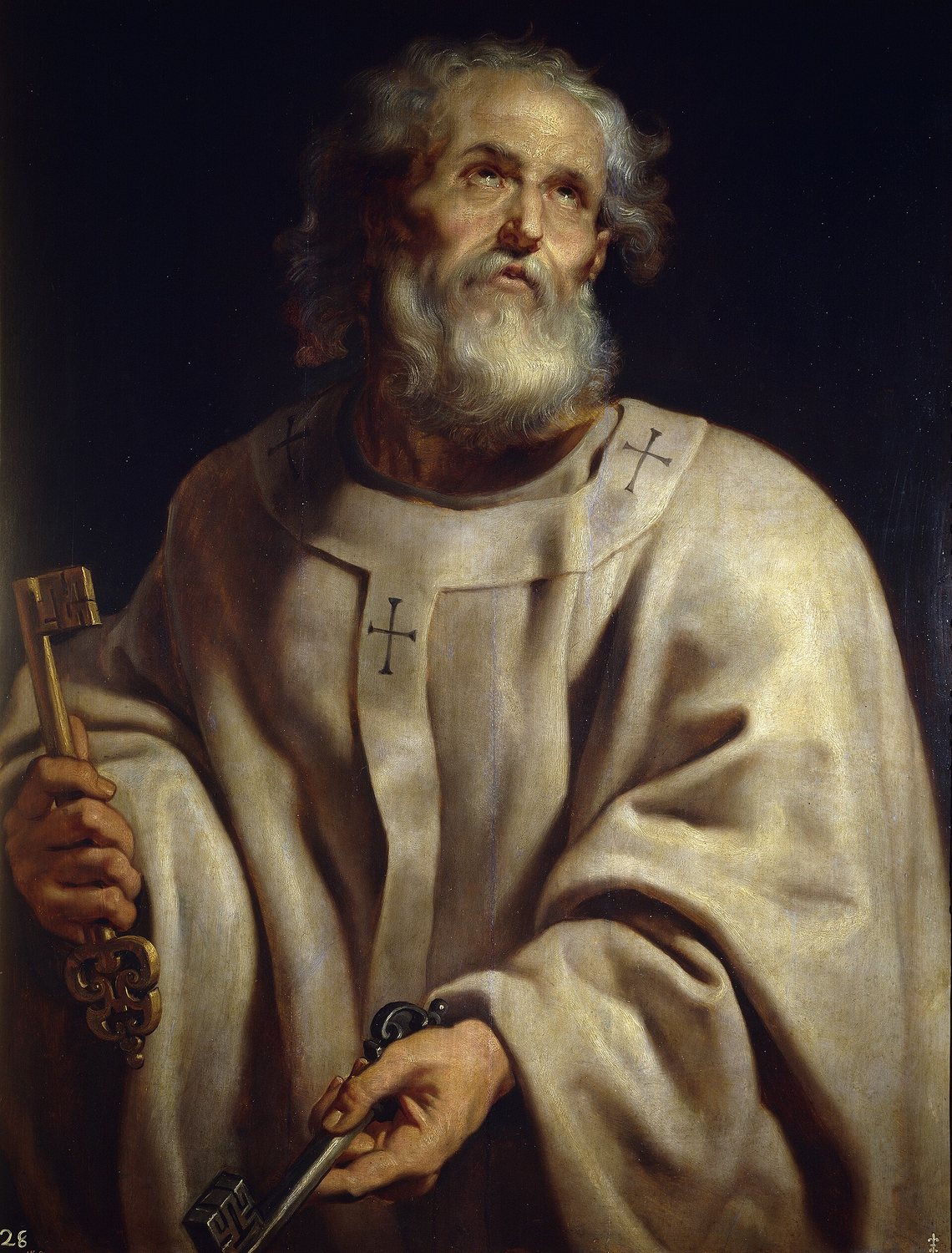
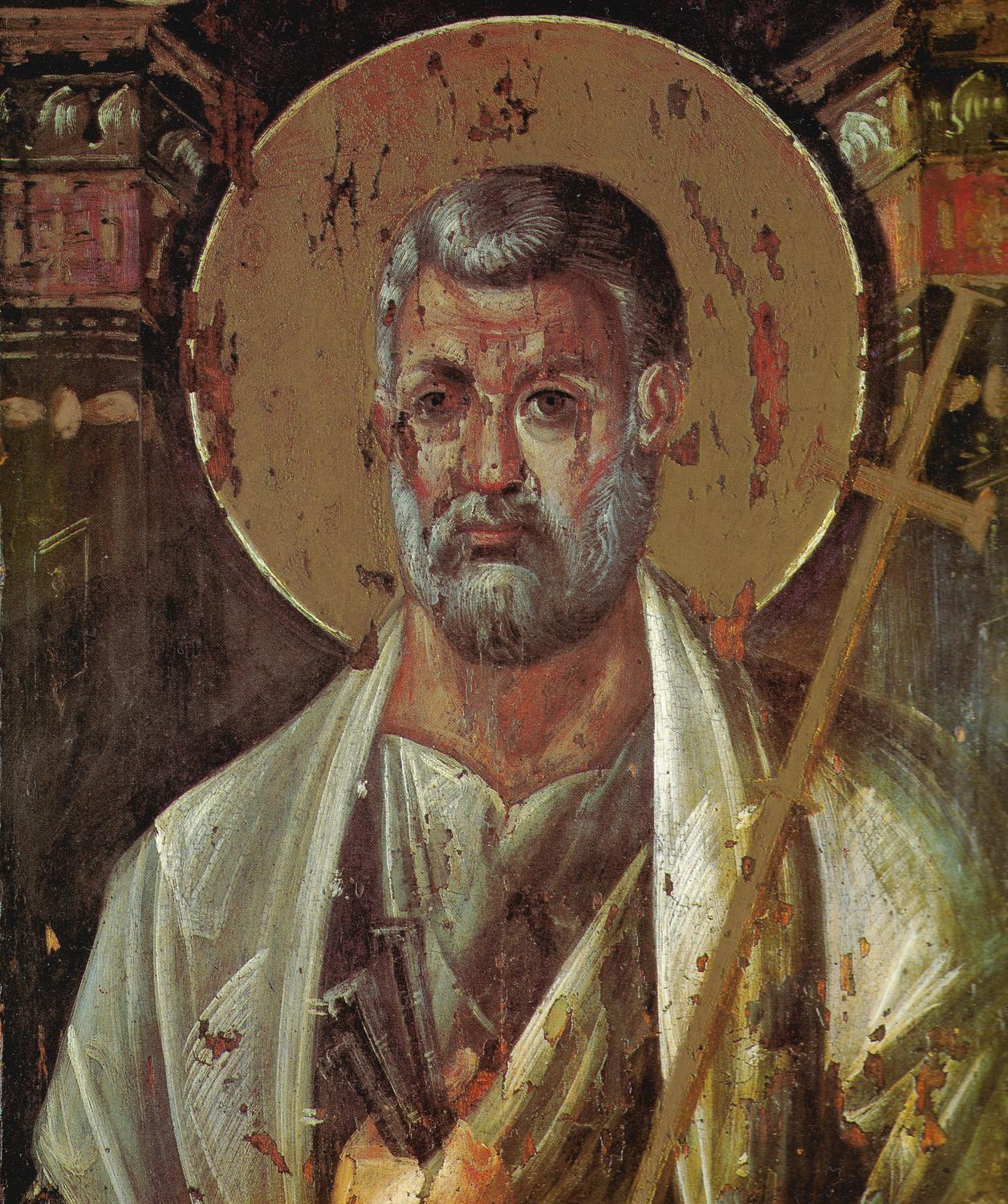
- Holding keys, for “the keys of the kingdom of heaven”. The oldest pictures give him a strong, round head, with thick curly hair and a beard. Keys became his sign from the end of the 500s.
- Pronounced
- Cephas is SEE-fus.
 The Herald
 His personality type
Sure of himself, and at his best when there is something to do.
In Gregory the Great's terms
- Confident
- Restless mind
Our reading, from the Christian Personality Test. The test puts him in this type because of one night. “Even if all fall away on account of You, I never will,” he said. That same night he denied Christ three times. Then he wept, came back, and led the Church.
See The Heraldfeast days
East and West, side by side
West
- Jan18
The Confession of Peter, for the Episcopal Church and Lutherans in the Missouri Synod and the Evangelical Lutheran Church in America. Until 1960 Rome kept his Chair at Rome on this day.
- Feb22
The Chair of Peter, a Catholic feast. Until 1960 this was his Chair at Antioch.
- Jun29
Peter and Paul, a Catholic solemnity. Also kept by the Episcopal Church, and by Lutherans in the Missouri Synod and the Evangelical Lutheran Church in America. The Church of England keeps it too, and may keep Peter alone.
- Aug1
St Peter in Chains, in the 1916 Roman Martyrology: the day his church on the Esquiline in Rome was dedicated. Dropped from Rome's calendar in 1960.
- Nov18
The dedication of the basilicas of Peter and Paul in Rome. A Catholic optional memorial.
East
- Jan16
The chains of Peter, honoured by the Orthodox Church in America and the Greek churches. The Russian Church keeps the day on the old calendar, which is 29 January on today's calendar.
- Jun29
Peter and Paul, the leaders of the apostles, for the Orthodox Church in America and the Greek churches.
- Jun30
All twelve apostles together, the day after Peter and Paul, in the Orthodox Church in America.
- Jul12
The Coptic Church, on 5 Abib in its own calendar: the martyrdom of Peter and Paul. The Russian Church keeps 29 June by the old calendar, which falls on this day too.
Why 29 June? A Roman list of martyrs' days, made in 354, keeps Peter and Paul on this day and dates the feast from 258. The same list has his Chair on 22 February. Rome's reform of 1960 dropped 18 January and 1 August as repeats, so the 1962 Missal keeps 22 February, 29 June and 18 November. The Week of Prayer for Christian Unity runs from the Confession of Peter on 18 January to the Conversion of Paul on 25 January. Churches on the old calendar keep each date 13 days later.
what others said of him
Jesus, Paul and the first generations after them, in their own words.
Blessed are you, Simon son of Jonah! For this was not revealed to you by flesh and blood, but by My Father in heaven.
Simon, Simon, Satan has asked to sift all of you like wheat. But I have prayed for you, Simon, that your faith will not fail. And when you have turned back, strengthen your brothers.
James, Cephas, and John—those reputed to be pillars—gave me and Barnabas the right hand of fellowship.
Peter, through unrighteous envy, endured not one or two, but numerous labours and when he had at length suffered martyrdom, departed to the place of glory due to him.
I do not, as Peter and Paul, issue commandments unto you. They were apostles; I am but a condemned man.
After their departure, Mark, the disciple and interpreter of Peter, did also hand down to us in writing what had been preached by Peter.
his life in 15 moments
Lake of Gennesaret
At his netsThe catch of fish
Jesus taught the crowd from Simon Peter's boat. Then He told him to put out into deep water and let down the nets. Simon had worked all night and caught nothing. “But because You say so, I will let down the nets.” The nets began to tear, and both boats began to sink. Simon fell at Jesus' knees. “Go away from me, Lord, for I am a sinful man.” Jesus said to him, “Do not be afraid. From now on you will catch men.” Simon and his partners left everything and followed Him.
Luke 5:1-11The Sea of Galilee
The fourth watch of the nightWalking on the water
The disciples' boat was far from land, with the wind against it. Jesus came to them, walking on the sea. Peter called out, “Lord, if it is You, command me to come to You on the water.” Jesus said, “Come.” Peter got down out of the boat and walked on the water toward Him. But when he saw the strength of the wind, he was afraid and began to sink. “Lord, save me!” Jesus reached out His hand at once. “You of little faith, why did you doubt?”
Matthew 14:22-33Caesarea Philippi
A question from Jesus“Who do you say I am?”
Jesus asked the disciples, “But what about you? Who do you say I am?” Simon Peter answered, “You are the Christ, the Son of the living God.” Jesus called him blessed, and said, “you are Peter, and on this rock I will build My church.” What He meant has been argued over ever since: see The rock, below. Then Jesus began to tell them He must suffer and be killed. Peter took Him aside and began to rebuke Him. “Far be it from You, Lord! This shall never happen to You!” Jesus turned and said, “Get behind Me, Satan! You are a stumbling block to Me.”
Matthew 16:13-23A high mountain
Six days after he called Jesus the ChristThe Transfiguration
Jesus took Peter, James and John up a high mountain. There His face shone like the sun, and Moses and Elijah appeared, talking with Him. Peter spoke up: “Lord, it is good for us to be here.” He offered to put up three shelters. Mark says they were all so terrified “that Peter did not know what else to say.” Then a voice from a bright cloud said, “This is My beloved Son, in Whom I am well pleased. Listen to Him!” The second letter under Peter's name remembers the day: “we were eyewitnesses of His majesty.”
Matthew 17:1-8; Mark 9:6; 2 Peter 1:16-18The upper room
The Last SupperThe foot-washing
Jesus got up from supper, wrapped a towel around His waist, and began to wash the disciples' feet. When He came to Peter, Peter said, “Never shall You wash my feet!” Jesus answered, “Unless I wash you, you have no part with Me.” So Peter asked for more: “not only my feet, but my hands and my head as well!”
John 13:1-10Gethsemane
The night Jesus was arrestedThe sword
Judas came to the garden with soldiers and officers, carrying torches and weapons. Simon Peter drew his sword and struck the high priest's servant, cutting off his right ear. The servant's name was Malchus. Jesus said to Peter, “Put your sword back in its sheath! Shall I not drink the cup the Father has given Me?” Luke adds that Jesus touched the man's ear and healed him.
John 18:1-11; Matthew 26:36; Luke 22:51The high priest's courtyard
After Jesus' arrestThree denials, and a look
Peter followed Jesus at a distance and sat by the fire in the high priest's courtyard. A servant girl looked hard at him. “This man also was with Him.” Peter said, “Woman, I do not know Him.” Twice more someone said it, and twice more he denied it. While he was still speaking, the rooster crowed. “And the Lord turned and looked at Peter.” Peter remembered that Jesus had said he would deny Him three times, “and he went outside and wept bitterly.”
Luke 22:54-62The tomb
The first day of the weekThe race to the tomb
Mary Magdalene ran to tell Peter and another disciple that the Lord had been taken from the tomb. The two ran there together. The other disciple outran Peter and got there first, but did not go in. Peter came just after him and went in, and saw the linen cloths lying there. Later that day the disciples were saying, “The Lord has indeed risen and has appeared to Simon!” Paul's list of those who saw the risen Lord begins with him: “He appeared to Cephas and then to the Twelve.”
John 20:1-10; Luke 24:33-34; 1 Corinthians 15:5The Sea of Tiberias
After the resurrectionBreakfast on the shore
Peter said, “I am going fishing,” and six others went with him. They caught nothing all night. Early in the morning, a man on the shore told them to cast the net on the right side, and it filled. When the disciple Jesus loved said, “It is the Lord!”, Peter put on his outer garment and jumped into the sea. After breakfast by a charcoal fire, Jesus asked him three times, “Do you love Me?” The third time, Peter was deeply hurt. “Lord, You know all things. You know I love You.” Each time Jesus gave him a charge: “Feed My lambs.” “Shepherd My sheep.” “Feed My sheep.”
John 21:1-17Jerusalem
PentecostThe first sermon
When the day of Pentecost came, the disciples were filled with the Holy Spirit, and a crowd gathered. Peter stood up with the Eleven and spoke. He told them God had raised Jesus, Whom they had crucified. They were cut to the heart. “Brothers, what shall we do?” Peter replied, “Repent and be baptized, every one of you, in the name of Jesus Christ for the forgiveness of your sins.” About three thousand were baptised that day.
Acts 2:1-41Jerusalem
Soon after PentecostBefore the Council
After a lame man was healed at the temple, Peter and John were arrested. Filled with the Holy Spirit, Peter told the rulers, “Salvation exists in no one else.” They saw the boldness of these “unschooled, ordinary men”, and took note “that these men had been with Jesus.” Ordered never to teach in the name of Jesus, Peter and John answered, “we cannot stop speaking about what we have seen and heard.”
Acts 3:1 to 4:22Joppa and Caesarea
A vision on a roofCornelius
At Joppa, Peter went up on a roof to pray and saw a vision: a great sheet full of animals, and a voice. “Get up, Peter, kill and eat!” He refused. “I have never eaten anything impure or unclean.” The voice answered, “Do not call anything impure that God has made clean.” Then men came from Cornelius, a centurion at Caesarea, and Peter went with them. When Cornelius fell at his feet, Peter helped him up. “I am only a man myself.” As Peter preached to the people gathered in the centurion's house, the Holy Spirit fell on these Gentiles, and Peter had them baptised.
Acts 10:1 to 11:18A prison in Jerusalem
The night before his trialThe angel and the chains
King Herod had James, the brother of John, put to death with the sword. Then he arrested Peter. The night before his trial, Peter was asleep between two soldiers, bound with two chains. An angel woke him, and the chains fell off his wrists. An iron gate opened by itself. Peter thought he was seeing a vision. He went to the house of Mary, the mother of Mark, where many were praying. A servant girl named Rhoda knew his voice. She was so overjoyed “that she forgot to open the gate.”
Acts 12:1-17Jerusalem
The apostles and elders meetSaved by grace
Some believers taught that Gentile Christians must be circumcised and obey the law of Moses. The apostles and elders met. After much discussion, Peter reminded them how God had given the Holy Spirit to the Gentiles. Why, he asked, put on them “a yoke that neither we nor our fathers have been able to bear”? “We believe it is through the grace of the Lord Jesus that we are saved, just as they are.”
Acts 15:1-11Antioch
In Paul's wordsPaul opposes him
At Antioch, Peter used to eat with Gentile believers. Then certain men came from James, the Lord's brother. Peter drew back, for fear of those who said Gentile believers must be circumcised. Other Jewish believers followed him, even Barnabas. Paul writes, “I opposed him to his face.” In front of them all he asked, “If you, who are a Jew, live like a Gentile and not like a Jew, how can you compel the Gentiles to live like Jews?” The second letter under Peter's name calls Paul “our beloved brother”.
Galatians 1:19 and 2:11-14; 2 Peter 3:15
his miracles
Acts tells of wonders done through Peter. He was quick to say where the power came from:
Why do you stare at us as if by our own power or godliness we had made this man walk?
4 healing stories in Acts
-
The temple gate called Beautiful
One afternoonThe man lame from birth
A man lame from birth was carried to the temple gate every day to beg. He asked Peter and John for money. Peter told him to look at them, and spoke in the name of Jesus. He took him by the right hand and helped him up. At once the man's feet and ankles were made strong.
“walking and leaping and praising God”
All the people knew the man as the beggar from the gate. Acts adds that he was over forty years old.
Acts 3:1-10; 4:22 -
The streets of Jerusalem
As he passed byHis shadow
The apostles did many signs and wonders. People carried the sick into the streets on cots and mats, so that Peter's shadow might fall on some of them as he passed. Crowds came from the towns around Jerusalem too, bringing the sick and those tormented by unclean spirits.
“and all of them were healed”
Acts 5:12-16 -
Lydda
On his travelsAeneas
At Lydda, Peter found a man named Aeneas. He had been paralysed and bedridden for eight years. Peter spoke to him, and he got up at once.
“Aeneas, Jesus Christ heals you! Get up and put away your mat.”
All who lived in Lydda and Sharon saw Aeneas, says Acts, and turned to the Lord.
Acts 9:32-35 -
Joppa
Soon after healing AeneasTabitha raised
At Joppa lived a disciple named Tabitha, always busy with works of kindness. She fell sick and died. When Peter came, widows stood around him, weeping, and showed him the clothes she had made. He sent them all out of the room. He knelt down and prayed, and turned toward her body.
“Tabitha, get up!”
Tabitha opened her eyes and sat up. Peter presented her alive to the believers and widows, and it became known all over Joppa.
Acts 9:36-42
Ananias and Sapphira
A couple sold a piece of land and kept back part of the money, while pretending to give it all. Peter told Ananias he had lied to the Holy Spirit, and Ananias fell down and died. About three hours later his wife told the same lie, and died too. “And great fear came over the whole church.”
“You have not lied to men, but to God!”Acts 5:1-11
The open prison
The high priest had the apostles put in the public jail. During the night an angel of the Lord opened the doors and brought them out. At daybreak they were back in the temple courts, teaching. The officers sent to fetch them came back with a strange report.
“We found the jail securely locked, with the guards posted at the doors; but when we opened them, we found no one inside.”Acts 5:17-25
his words
Two letters in the Bible bear his name, and Acts records his sermons. Outside the section on where the Bible figure quiz places him, every Bible line on this page is from the Berean Standard Bible.
When many turned away
Lord, to whom would we go? You have the words of eternal life. We believe and know that You are the Holy One of God.
Many disciples had stopped following Jesus. He asked the Twelve, “Do you want to leave too?” Peter answered for them.
John 6:66-69Silver or gold I do not have, but what I have I give you: In the name of Jesus Christ of Nazareth, get up and walk!
We must obey God rather than men.
But in your hearts sanctify Christ as Lord. Always be prepared to give a defense to everyone who asks you the reason for the hope that is in you. But respond with gentleness and respect.
Above all, love one another deeply, because love covers over a multitude of sins.
Cast all your anxiety on Him, because He cares for you.
With the Lord a day is like a thousand years, and a thousand years are like a day.
often misquoted
He asked to be crucified upside down, because he felt unworthy to die as Jesus did.
What the sources sayThe Bible does not say how he was crucified. Origen, as Eusebius quotes him, says Peter was “crucified head-downwards; for he had requested that he might suffer in this way”. Origen gives no reason. The Acts of Peter has the same detail, with a mystical reason of its own. It is a story written by about 200, and never part of the Bible. The humble reason appears in Jerome, in 392: Peter said “he was unworthy to be crucified in the same manner as his Lord.”
John 21:18-19; Origen, in Eusebius, Church History, Book 3, chapter 1; Acts of Peter, chapters 37 and 38, tr. M. R. James (1924); Jerome, Lives of Illustrious Men, chapter 1“Quo vadis?” Leaving Rome, Peter met Jesus and asked Him where He was going.
What the sources sayNot in the Bible. The story comes from the Acts of Peter. There Jesus answers, “I go into Rome to be crucified,” and Peter turns back to die. Ambrose, bishop of Milan, told it again in a sermon. The Bible does have Peter ask, “Lord, where are You going?”, but at the Last Supper. In the Latin Bible those words are Domine, quo vadis?
Acts of Peter, chapter 35, tr. M. R. James (1924); Ambrose, Sermon against Auxentius; John 13:36, in the VulgatePeter stands at the pearly gates and decides who gets into heaven.
What the sources sayNot in Scripture. Jesus promised him “the keys of the kingdom of heaven”, and Britannica says that is why art puts him at heaven's gates. But the gates of pearl belong to the new Jerusalem in Revelation. There each gate is a single pearl, and the Bible puts “twelve angels at the gates”.
Matthew 16:19; Revelation 21:12, 21; BritannicaThe rooster crowed three times.
What the sources sayPeter denied Jesus three times. In Mark, the rooster crows twice: “Before the rooster crows twice, you will deny Me three times.” Matthew, Luke and John tell of it crowing once.
Mark 14:30, 72; Matthew 26:74; Luke 22:60; John 18:27Peter never went to Rome.
What the sources sayThe New Testament never says he did. His first letter sends greetings from “The church in Babylon”, and early writers took Babylon to mean Rome. The next generations tie him to Rome, and to his death there. Ignatius was a bishop taken to Rome to die. He tells the Romans he does not command them “as Peter and Paul” did. Dionysius, bishop of Corinth, says the two “taught together in like manner in Italy, and suffered martyrdom at the same time.” In about 200, Gaius of Rome could show the apostles' memorials on the Vatican Hill and the Ostian Way.
1 Peter 5:13; Eusebius, Church History, Book 2, chapters 15 and 25; Ignatius, Letter to the Romans, chapter 4The Bible calls Peter the first pope.
What the sources sayThe word pope is not in the Bible. The New Testament never places Peter at the head of the church in Rome. The early writers count Rome's bishops from the apostles, in different ways. Irenaeus says Peter and Paul founded the church there, and “committed into the hands of Linus the office of the episcopate”. Eusebius calls Linus “Peter's successor in the episcopate”. Jerome says Peter himself “held the sacerdotal chair there for twenty-five years”. The Catholic Church counts Peter as the first pope. Whether his place passed to Rome's bishops is the question of The rock, below.
Irenaeus, Against Heresies, Book 3, chapter 3; Eusebius, Church History, Book 3, chapters 2 and 4; Jerome, Lives of Illustrious Men, chapter 1; Britannicathe rock
Jesus said to him, “you are Peter, and on this rock I will build My church” (Matthew 16:18). Christians have long disagreed about what the rock is, and what it meant for the Church after Peter. Here each side speaks for itself.
The Catholic reading
The rock is Peter. The Catholic Encyclopedia notes that in Aramaic one word, Kipha (Cephas), means both Peter and rock. In 1870 the First Vatican Council taught that Christ gave Peter a true primacy of jurisdiction over the whole Church: a first place with real authority. It pointed to the keys he was promised, and to “Feed My sheep.” It taught too that this primacy lives on in his successors, the bishops of Rome.
“We therefore teach and declare that, according to the testimony of the Gospel, the primacy of jurisdiction over the universal Church of God was immediately and directly promised and given to blessed Peter the Apostle by Christ the Lord.”First Vatican Council, Pastor Aeternus, chapters 1 and 2, in Philip Schaff's The Creeds of Christendom; Catholic Encyclopedia, “St. Peter”
The Orthodox reading
The rock is the faith Peter confessed. A sermon of Augustine says so, and the Orthodox Church in America gives it as its reading for 29 June. The Orthodox honour Peter as the foremost of the apostles. But the Longer Catechism of Philaret of Moscow names Christ as the Church's only Head. The Russian Church's Holy Synod approved it. Asked what authority reaches over the whole Church, the catechism answers, “An œcumenical Council.” John Chrysostom read the rock this way:
“upon this rock will I build My Church; that is, on the faith of his confession.”John Chrysostom, Homilies on Matthew, Homily 54; the OCA, 29 June; the Longer Catechism, questions 259 and 278, tr. R. W. Blackmore
The Protestant reading
The rock is the confession of Christ, the Church's only foundation. Some later Protestant scholars read it as Peter himself, like the Lutheran Oscar Cullmann. But Cullmann held that Peter began no line of successors. John Calvin gave Peter first place among the apostles, but not power over them: “Let Peter have the preeminence, still there is a great difference between the honour of rank and the possession of power.” On the rock itself he wrote:
“Peter had confessed in his own name, and that of his brethren, that Christ was the Son of God. On this rock Christ builds His Church, because it is the only foundation.”John Calvin, Institutes of the Christian Religion, Book 4, chapter 6, tr. Henry Beveridge (1845); Wikipedia, “Saint Peter”, on Oscar Cullmann
Augustine left it open
Augustine gave both readings in his life. As a priest, he wrote that the Church was founded on Peter as on a rock. Many people sang the same thought, he says, in a hymn of Ambrose about the rooster's crow. Later he often explained the rock as Christ, Whom Peter confessed. Looking back over his books in his Retractations, he did not choose. Our translation:
“Of these two opinions, let the reader choose which is the more probable.”Augustine, Retractations, Book 1, chapter 21, from the Latin
how he died
He died at Rome under the emperor Nero, in the 60s. The early writers say he was crucified.
Jesus had told Peter how his life would end. “When you are old, you will stretch out your hands, and someone else will dress you and lead you where you do not want to go.” John adds that He said this “to indicate the kind of death by which Peter would glorify God.”
The second letter under his name knows his death is near: “this tent will soon be laid aside, as our Lord Jesus Christ has made clear to me.”
In about 97, Clement of Rome wrote that “the greatest and most righteous pillars [of the Church]” had been put to death through envy. He named Peter first, then Paul.
Tertullian takes up Jesus' words about how Peter would die: “At Rome Nero was the first who stained with blood the rising faith. Then is Peter girt by another, when he is made fast to the cross.” Lactantius says the same of Nero: “he crucified Peter, and slew Paul”.
In about 200, a Roman named Gaius told a rival teacher, “if you will go to the Vatican or to the Ostian way, you will find the trophies of those who laid the foundations of this church.” Eusebius took these trophies to mark the apostles' graves. Jerome says Peter was “buried at Rome in the Vatican near the triumphal way”. Constantine built a church over the grave, and today's St Peter's stands in its place.
is he a saint?
Yes. Every church that keeps saints' days honours him, and most keep his day with Paul's, on 29 June.
- CatholicSaintA solemnity with Paul, 29 June
- OrthodoxSaintLeader of the Apostles, 29 June
- CopticSaint5 Abib, which is 12 July
- AnglicanSaintA Festival in the Church of England
- LutheranSaintMissouri Synod and ELCA, 18 January and 29 June
The Orthodox call Peter and Paul the leaders of the apostles, the koryphaioi. In Greek drama the word meant the leaders of the chorus.
Was he the first pope? The Catholic Church counts him so. It teaches that his primacy over the whole Church lives on in the bishops of Rome. The Orthodox and Protestants honour him as first among the apostles, but do not accept that teaching. Each side's own words are in The rock, above.
Rome's book of martyrs, in its 1916 edition, gives his day like this:
At Rome, the birthday of the holy apostles Peter and Paul, who suffered martyrdom on the same day, under the emperor Nero.
what to read first
The Gospel of Mark
Mark, Peter's interpreter
The shortest Gospel, in sixteen chapters. Papias, an early bishop, says Mark was Peter's interpreter. Mark wrote down what he remembered “of the things said or done by Christ”.
Read it freeActs, chapters 1 to 12
The Acts of the Apostles
Peter's years as a leader in Jerusalem: Pentecost, the lame man at the gate, Cornelius and the prison. Then the story turns to Paul.
Read it free1 Peter
Peter, with Silvanus
Five short chapters to Christians scattered across what is now Turkey, on suffering and hope.
Read it freeJohn 21
The Gospel of John
The breakfast on the shore, the three questions, and what Jesus said about how Peter would die. One chapter.
Read it freewhere the quiz places him
The record, drawn
Each arm is one axis; length is how far from the centre the recorded acts sit.
In the quiz's own words
Acts first, says it, out in front
The six axes
Your answers are marked. From your result on . See your result
In the hatched middle the quiz names neither pole.
The moments behind each axis
Each line is one recorded act and the reference it is taken from. The sentence says what the person did; where it is in quotation marks it is verbatim from the World English Bible British Edition. An act listed here is evidence of how this person moved, not approval of it; read the passage for how it was received.
Pace Acts first ↔ Weighs first
acts first
-
Matthew 14:28-29 toward Acts first
He asked to be called out onto the water, and on the one word stepped down from the boat.
-
John 21:7 toward Acts first
Told it was the Lord on the shore, he pulled his coat on and threw himself into the sea.
-
John 18:10 toward Acts first
He drew a sword in the garden and struck the high priest's servant.
Voice Says it ↔ Holds it
says it
-
Matthew 16:16 toward Says it
Asked who the disciples said Jesus was, he was the one who answered.
You are the Christ, the Son of the living God.
-
Matthew 16:22 toward Says it
He took Jesus aside and began to rebuke Him for what He had just said.
-
Matthew 17:4 toward Says it
On the mountain he proposed building three tents.
-
Acts 2:14 toward Says it
He stood up with the eleven and addressed the crowd at Jerusalem.
Lead Out in front ↔ Alongside
out in front
-
Acts 1:15 toward Out in front
He stood up in the middle of about a hundred and twenty disciples and spoke.
-
John 21:3 toward Out in front
He said he was going fishing and the others went with him.
Conflict Confronts ↔ Reconciles
quick to confront
-
Acts 5:3-4 toward Confronts
He charged Ananias to his face with keeping back part of the price and lying to God.
-
Acts 8:20-23 toward Confronts
He told Simon that his silver would perish with him, that he had no part in the matter, and told him to repent.
May your silver perish with you
-
Acts 11:2-4 toward Reconciles
When those of the circumcision contended with him he explained what had happened in order.
Reasons Asks why ↔ Takes it on trust
quick to question
-
Acts 10:14 toward Asks why
He refused the vision's instruction, saying he had never eaten anything common or unclean.
-
Matthew 18:21 toward Asks why
He asked how many times he had to forgive and proposed a number.
-
Matthew 14:29 toward Takes it on trust
He left the boat on a single word.
Plans Plans ahead ↔ Meets the day
leans to meeting the day
-
John 21:3 toward Meets the day
He said he was going fishing, and they went out that night and caught nothing.
Nearest on the map
Distance between two sets of coordinates across every axis, on the same scale a reader's answers are measured on. No number is shown against a person, and nearness is not likeness: two people can land in the same band for different reasons.
Suggest a correction. Corrections that are applied are recorded in the public changelog.
 Quiz Who in the Bible are you most like? Answer eighteen plain statements about you, none of them about the Bible, and see how near you land to Peter. Start
  Quiz Christian Personality Test Peter reads as The Herald. Find your own type. Start
 people like him
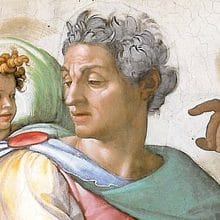 IsaiahThe Herald
 When God asked, “Whom shall I send?”, he did not wait to be asked twice: “Here am I. Send me!”
Isaiah 6:8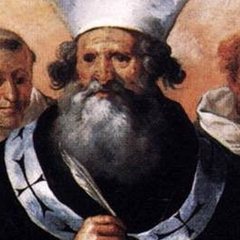 Basil the Great, as a young manThe Herald
 Basil's own brother says he came home from university proud of his speaking. He looked down on the leading men of his town, until his sister Macrina turned him round.
Gregory of Nyssa, Life of Macrinasources
His life, and his words
- The Berean Standard Bible, public domain. Every Bible line on this page outside the section on where the Bible figure quiz places him.
- 1 Clement, chapter 5. Tr. Alexander Roberts and James Donaldson. Ante-Nicene Fathers, volume 1, 1885.
- Ignatius, Letter to the Romans, chapter 4. Same edition.
- Irenaeus, Against Heresies, Book 3, chapters 1 and 3. Same edition.
- Eusebius, Church History, Book 2, chapters 15 and 25. Tr. Arthur McGiffert, 1890. With Gaius, Dionysius of Corinth and Papias.
- Eusebius, Church History, Book 3, chapters 1 to 4, 30 and 39. Same edition. With Origen, Clement of Alexandria and Papias.
- Tertullian, Scorpiace, chapter 15. Tr. S. Thelwall. Ante-Nicene Fathers, volume 3.
- Lactantius, On the Deaths of the Persecutors, chapter 2. Ante-Nicene Fathers, volume 7.
- Jerome, Lives of Illustrious Men, chapter 1. Tr. Ernest Richardson, 1892.
- Ambrose, Sermon against Auxentius. Nicene and Post-Nicene Fathers, second series, volume 10.
- The Acts of Peter. Tr. M. R. James, The Apocryphal New Testament, 1924.
- The Vulgate, John 13, for Domine, quo vadis?
The rock
- Philip Schaff, The Creeds of Christendom, volume 2. The First Vatican Council, Pastor Aeternus, in Latin and English.
- The Longer Catechism of the Orthodox, Catholic, Eastern Church. Tr. R. W. Blackmore, in the same volume.
- John Chrysostom, Homilies on Matthew, Homily 54. Tr. George Prevost, revised by M. B. Riddle. Nicene and Post-Nicene Fathers, first series, volume 10.
- John Calvin, Institutes of the Christian Religion, Book 4, chapter 6. Tr. Henry Beveridge, 1845.
- Augustine, Retractationes, Book 1, chapter 21, in Latin. The English on this page is ours.
- Wikipedia, Saint Peter, for Oscar Cullmann's reading of the rock
- OCA, Peter and Paul, the reading for 29 June
Reference
- Catholic Encyclopedia, 1911, “St. Peter, Prince of the Apostles”
- Britannica, “Saint Peter the Apostle”
- OCA, “The Holy Glorious and All-Praised Leader of the Apostles, Peter”
- Wiktionary, “Cephas”, for how to say it
- Bible Hub, Strong's Greek 439 and 44, for the charcoal fire and the fishhook, each counted in the Greek New Testament
Calendars
- USCCB, Feast of the Chair of Saint Peter, Apostle
- USCCB, Liturgical Calendar 2026, 29 June and 18 November
- Calendarium Romanum, 1969, with its notes on the Depositio Martyrum of 354
- The Roman Martyrology, 1916 edition
- General Roman Calendar of 1960, Wikipedia, for the calendar of the 1962 Missal
- OCA, the Precious Chains of the Apostle Peter
- OCA, Synaxis of the Twelve Apostles
- Great Synaxaristes, Greek, 29 June and 16 January
- azbyka.ru, Russian, 12 July and 29 January
- CopticChurch.net, the Coptic synaxarium, 5 Abib
- Church of England, Common Worship calendar
- The Episcopal Church, Lesser Feasts and Fasts 2022
- The Lutheran Church–Missouri Synod, Commemorations
- Evangelical Lutheran Worship, ELCA, the church year (final draft, 2006)
Pictures
- The Tears of Saint Peter, El Greco, 1580s. The Bowes Museum, Barnard Castle. Public domain.
- Saint Peter, an encaustic icon of the 500s or 600s. St Catherine's Monastery, Mount Sinai. Public domain.