
Deborah
A prophetess who judged Israel under a palm tree. She sent Barak against 900 iron chariots, went with him, and sang the victory.
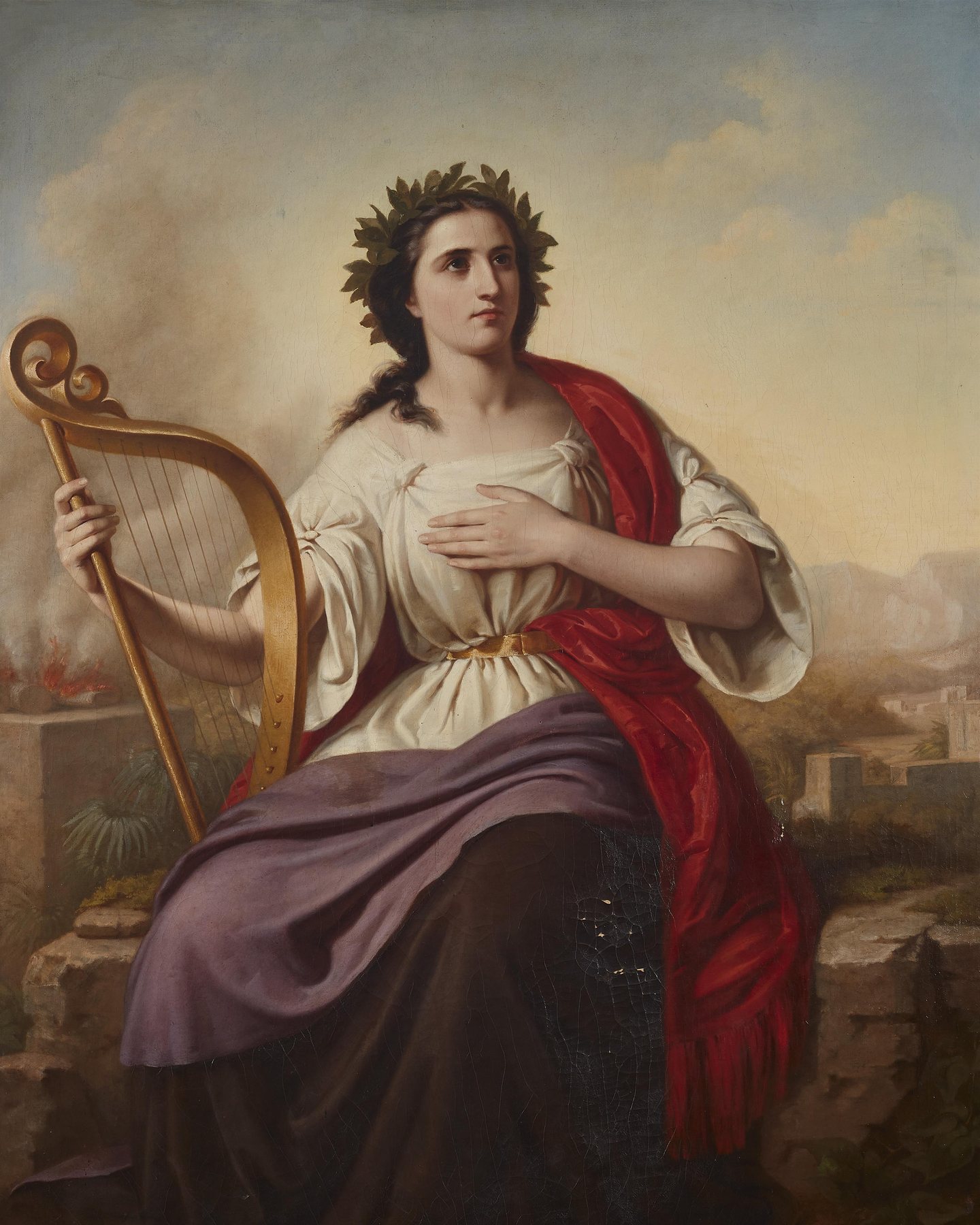
Picture: Debora, Johanna Unger, before 1871. Oil on canvas. Public domain.
Who was Deborah?
Deborah was a prophetess and a judge of Israel, in the time of the Judges. People came to her for judgment under a palm tree between Ramah and Bethel. When Jabin of Canaan had oppressed Israel for twenty years, she sent Barak to war and went with him. After the victory they sang the song of Judges 5.
at a glance
Her path, in order
- ProphetessThe wife of Lappidoth
- JudgeUnder her palm tree, near Bethel
- Caller to armsShe sent for Barak
- SingerShe sang the song of Judges 5
in numbers
- Iron chariots against Israel900
- Sisera commanded them for Jabin, king of Canaan
- The River Kishon swept them away
- Men who came down Mount Tabor10k
- From the tribes of Naphtali and Zebulun
- Barak led; she went with him
- Years of rest after her song40
- After 20 years under Jabin, king of Canaan
- Then 7 years under the Midianites
did you know?
-
Deborah means bee. Barak means lightning, as Josephus notes, and her husband's name, Lappidoth, means torches.
Josephus, Antiquities of the Jews, book 5; Strong's Hebrew 1683, 1301 and 3941, at Bible Hub -
She is the one judge in the Book of Judges shown hearing cases. The others are judges in the sense of “deliverers and leaders”, says the Catholic Encyclopedia.
Catholic Encyclopedia, 1908, “Debbora” -
The Talmud counts seven women as prophets: Sarah, Miriam, Deborah, Hannah, Abigail, Huldah and Esther.
Talmud, Megillah 14a -
Why a palm tree? The rabbis said that, as a woman, she would not judge in private. She judged in the open air, where all could gather.
Jewish Encyclopedia, 1903, “Deborah” -
Her song calls Jael, who killed the enemy commander, “Most blessed among women”. Elizabeth greets Mary with nearly the same words.
Judges 5:24; Luke 1:42
- Home
- Under the Palm of Deborah, between Ramah and Bethel in the hill country of Ephraim. The Israelites came up to her there for judgment.
- Husband
- Lappidoth. Judges gives nothing about him but his name.
- Work
- A prophetess, who spoke the LORD's word, and a judge of Israel, who heard the people's cases.
- Her enemy
- Jabin, king of Canaan, who reigned in Hazor, and Sisera, the commander of his army.
- The battle
- From Mount Tabor down to the River Kishon. Her song places it “at Taanach by the waters of Megiddo”.
- Also called
- Debbora, in older Catholic Bibles and the Catholic Encyclopedia.
- Died
- Judges does not say. Josephus says that she and Barak died at about the same time.
- Remembered
- By the Orthodox, on the Sunday of the Holy Forefathers in mid-December. No Western church keeps a day for her.
- In the New Testament
- Not named. Hebrews 11 names Barak among the faithful.
- In art
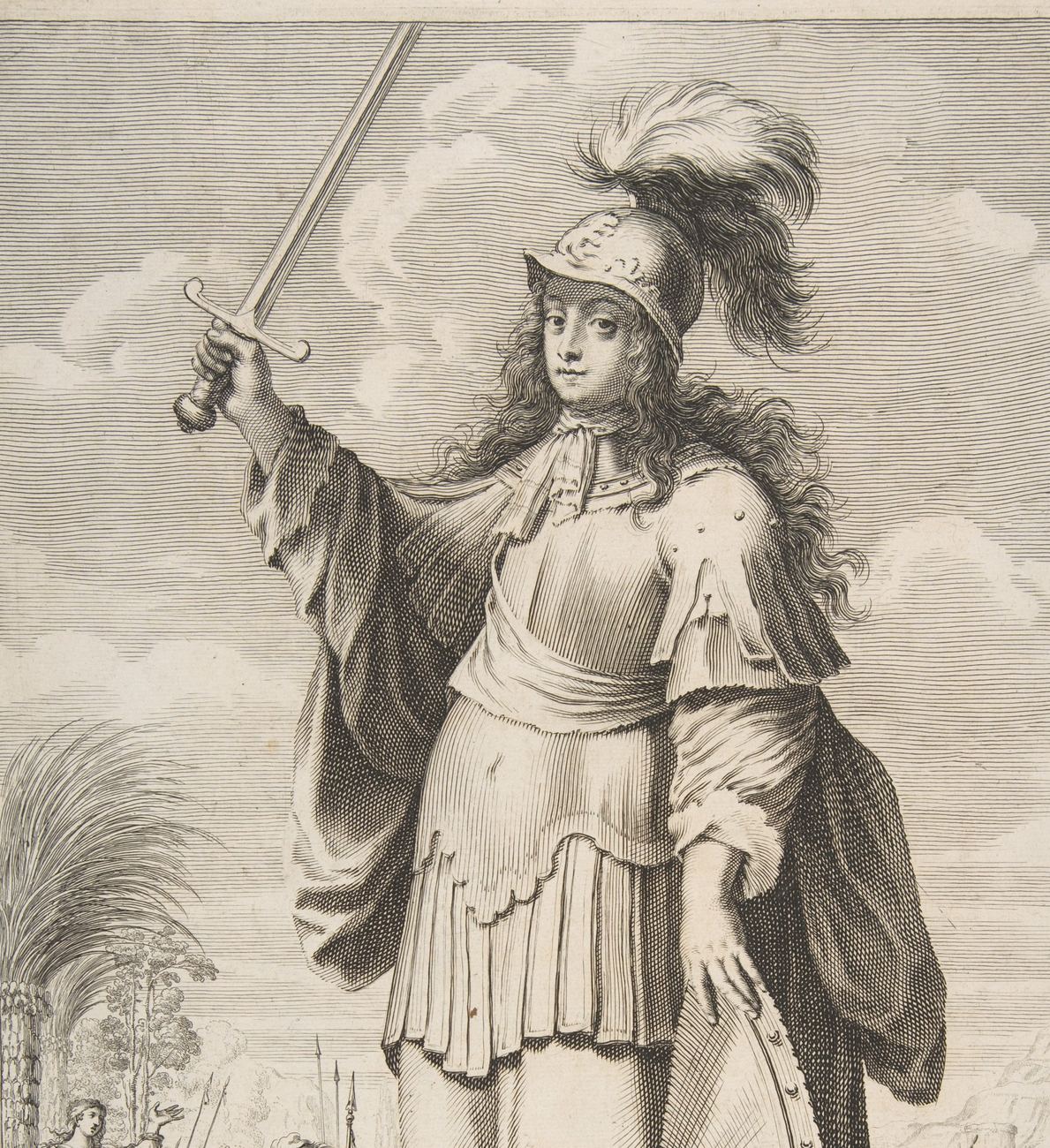
- Under her palm tree, judging; or singing her song, crowned with laurel, as in the painting at the top. A French engraving of 1647 shows her in armour.
- Other Deborahs
- Rebekah's nurse, buried under an oak below Bethel (Genesis 35:8), and Tobit's grandmother, in the book of Tobit (1:8).
what others said of her
Her own song, a Jewish historian, the Church Fathers and a later retelling, in their own words.
Awake, awake, O Deborah! Awake, awake, sing a song!
thus was this victory gained by a woman, as Deborah had foretold.
Deborah, a woman, waged war
Women have preserved whole nations; for Deborah and Judith exhibited successes worthy of men
It is not sex, but valour which makes strong.
Behold, a mother is perished out of Israel, and an holy one that bare rule in the house of Jacob
her life in six moments
Between Ramah and Bethel
Twenty years under JabinThe Palm of Deborah
Israel again did evil, and the LORD sold them into the hand of Jabin, king of Canaan, who reigned in Hazor. His commander Sisera had nine hundred chariots of iron. For twenty years Jabin “harshly oppressed the Israelites”, and they cried out to the LORD. At that time Deborah, a prophetess, the wife of Lappidoth, was judging Israel. She would sit under the Palm of Deborah in the hill country of Ephraim, “where the Israelites would go up to her for judgment.”
Judges 4:1-5Kedesh in Naphtali
The summonsShe sends for Barak
She summoned Barak son of Abinoam from Kedesh in Naphtali, and gave him the LORD's command. He was to take ten thousand men of Naphtali and Zebulun to Mount Tabor. The LORD would draw Sisera, his chariots and his troops to the River Kishon, “and I will deliver him into your hand.”
Judges 4:6-7Kedesh
Before the marchIf you go, I will go
Barak would not go alone. “If you will go with me, I will go; but if you will not go with me, I will not go.” Deborah agreed at once. But she told him the honour would not be his, for the LORD would sell Sisera into the hand of a woman. She went with him, and ten thousand men of Zebulun and Naphtali followed him.
Judges 4:8-10Mount Tabor
The day of battleDown from Tabor
Sisera heard that Barak was on Mount Tabor, and brought all nine hundred iron chariots out to the River Kishon. Deborah told Barak that this was the day. He came down from Mount Tabor with ten thousand men behind him. “And in front of him the LORD routed with the sword Sisera, all his charioteers, and all his army.” Sisera left his chariot and ran on foot. Barak chased the army as far as Harosheth-hagoyim, and “not a single man was left.”
Judges 4:12-16The tent of Jael
The same dayInto the hand of a woman
Sisera ran to the tent of Jael, the wife of Heber the Kenite, whose clan was at peace with Jabin. She welcomed him in, gave him milk and covered him with a blanket. As he slept from exhaustion, she drove a tent peg through his temple. When Barak arrived, she showed him the man he was looking for. Deborah's word had come true. “On that day God subdued Jabin king of Canaan before the Israelites.”
Judges 4:17-23Israel
On that dayThe song
After the battle, Judges says: “On that day Deborah and Barak son of Abinoam sang this song”. The song fills Judges 5: the LORD marching out from Seir, the tribes who came and the tribes who stayed home, the stars fighting from heaven, Jael's blow, and Sisera's mother waiting at her window. The chapter ends, “And the land had rest for forty years.” More of the song follows below.
Judges 5
her song
Judges tells the victory twice: in prose in chapter 4, and as a song in chapter 5. Britannica calls the song “perhaps the oldest section of the Bible”, a glimpse of Israel in the 12th century BC.
A mother in Israel
Deborah's song looks back on the bad years. The highways were empty, and travellers kept to the byways. Village life had stopped. Then she arose.
“Life in the villages ceased; it ended in Israel, until I, Deborah, arose, a mother in Israel.”Judges 5:6-7
Who came, and who stayed home
Deborah's song calls the roll of the tribes. Ephraim, Benjamin, Machir, Zebulun, Issachar and Naphtali came. Reuben could not make up its mind, Gilead stayed beyond the Jordan, Dan lingered by the ships and Asher by the coast. The town of Meroz is cursed for not coming at all.
“Zebulun was a people who risked their lives; Naphtali, too, on the heights of the battlefield.”Judges 5:14-18, 23
The stars fought
Deborah's song tells what the prose account in Judges 4 leaves out. The heavens poured out rain, and the River Kishon swept Sisera's army away. The Jewish historian Josephus, writing in about AD 93, tells of a great storm of rain and hail that the wind blew into the Canaanites' faces.
“From the heavens the stars fought; from their courses they fought against Sisera.”Judges 5:4, 20-21; Josephus, Antiquities of the Jews, book 5, chapter 5
Sisera's mother at the window
Near its end, Deborah's song moves far from the battle, to the enemy commander's mother. She watches at the lattice for a chariot that will not come. Her wisest ladies tell her he is only late because he is dividing the spoil.
“Why is his chariot so long in coming? What has delayed the clatter of his chariots?”Judges 5:28-30
Like the sun
Deborah's song closes with a prayer. Then Judges adds that the land had rest for forty years.
“So may all Your enemies perish, O LORD! But may those who love You shine like the sun at its brightest.”Judges 5:31
her words
Judges records her words in chapter 4. She sang the song of chapter 5 with Barak. Outside the section on where the Bible figure quiz places her, every Bible line on this page is from the Berean Standard Bible.
At Mount Tabor, the day of battle
Arise, for this is the day that the LORD has delivered Sisera into your hand. Has not the LORD gone before you?
Sisera's nine hundred chariots had come out to the River Kishon, in the valley below.
Judges 4:12-14Surely the LORD, the God of Israel, is commanding you: Go and march to Mount Tabor, taking with you ten thousand men of Naphtali and Zebulun.
the road you are taking will bring you no honor, because the LORD will be selling Sisera into the hand of a woman.
I will sing to the LORD; I will sing praise to the LORD, the God of Israel.
My heart is with the princes of Israel, with the volunteers among the people. Bless the LORD!
often misquoted
Deborah killed Sisera.
What the sources sayJael did, in her tent. Deborah foretold only that the LORD would sell Sisera “into the hand of a woman”. The Catholic Encyclopedia puts it plainly: the prophecy “refers not to Debbora herself, but to Jahel”.
Judges 4:9, 17-22; Catholic Encyclopedia, 1908Hebrews 11 names Deborah among the heroes of faith.
What the sources sayIt names Barak: “Gideon, Barak, Samson, Jephthah, David, Samuel, and the prophets”. Samuel's farewell speech names Barak too. No other book of the Bible names her.
Hebrews 11:32; 1 Samuel 12:11friends, family and rivals
Son of Abinoam, from Kedesh in Naphtali. He led ten thousand men down Mount Tabor, but only with her beside him. Hebrews 11 names him among the faithful.
Judges 4:6-16; Hebrews 11:32Her husband. Judges gives only his name. A later rabbinic story makes him Barak himself.
Judges 4:4; Jewish Encyclopedia, 1903The wife of Heber the Kenite. Sisera fled to her tent, and she killed him there. Deborah's song calls her “most blessed of tent-dwelling women.”
Judges 4:17-22; 5:24The commander of Jabin's army, from Harosheth-hagoyim. He fled the battle on foot and died in Jael's tent. Psalm 83 still prays, “Do to them as You did to Midian, as to Sisera and Jabin at the River Kishon”.
Judges 4:2, 15-21; Psalm 83:9King of Canaan, who reigned in Hazor and oppressed Israel for twenty years. After the battle the Israelites' hand “grew stronger and stronger against Jabin king of Canaan until they destroyed him.”
Judges 4:2-3, 23-24is she a saint?
The Orthodox honour her as Righteous Deborah, on the Sunday of the Holy Forefathers. No Catholic or Protestant calendar keeps a day for her.
- OrthodoxRighteousSunday of the Holy Forefathers, 11 to 17 December
- CatholicNo feast dayNot in the Mass calendar or the 1916 Martyrology
- ProtestantNo feast dayELCA Lutherans name her in a prayer for the saints
The Orthodox Church in America lists Righteous Deborah among those remembered on the Sunday of the Holy Forefathers. It falls between 11 and 17 December, so she has a Sunday rather than a date. Her whole entry sends the reader to Scripture: “Information about the holy Prophetess and Judge Deborah may be found in the Book of Judges 4:5-14, and also chapter 5.”
Rome's book of martyrs, in its 1916 edition, has no day for her, and nor does the calendar used at Mass today. The Church of England, the Episcopal Church and the Missouri Synod Lutherans keep none either.
Evangelical Lutheran Worship (2006), the book of the Evangelical Lutheran Church in America, names her, with Gideon, in its prayer of thanks for the saints of old.
what to read first
Concerning Widows, chapter 8
Ambrose of Milan
His praise of her, and of what she shows about courage.
Read it freeBiblical Antiquities, chapters 30 to 33
Pseudo-Philo, tr. M. R. James
A first-century Jewish retelling of her story, with her farewell to Israel.
Read it freewhere the quiz places her
The record, drawn
Each arm is one axis; length is how far from the centre the recorded acts sit. An axis the text does not place Deborah on has no arm.
In the quiz's own words
Says it, out in front, quick to confront
The six axes
Your answers are marked. From your result on . See your result
In the hatched middle the quiz names neither pole.
The moments behind each axis
Each line is one recorded act and the reference it is taken from. The sentence says what the person did; where it is in quotation marks it is verbatim from the World English Bible British Edition. An act listed here is evidence of how this person moved, not approval of it; read the passage for how it was received. On 3 of the six the text does not show this, and that axis is left out of the match rather than filled in.
Pace Acts first ↔ Weighs first
not shown in the text
The text does not show this. Nothing in the record puts Deborah at either end of this axis, so it is left out when a reader is matched, rather than counted as a position in the middle.
-
No record
The text does not show this.
Voice Says it ↔ Holds it
says it
-
Judges 4:6-7 toward Says it
She told Barak the mountain, the tribes, the number of men and where Sisera would be drawn.
-
Judges 5:1 toward Says it
She and Barak sang on that day.
Lead Out in front ↔ Alongside
out in front
-
Judges 4:4-5 toward Out in front
She judged Israel under the palm tree between Ramah and Bethel, and the children of Israel came up to her for judgement.
-
Judges 4:14 toward Out in front
She told Barak to go down, and ten thousand men went after him.
Go; for this is the day
Conflict Confronts ↔ Reconciles
quick to confront
-
Judges 4:9 toward Confronts
When Barak said he would go only if she went, she said she would go, and told him the journey would not be for his honour.
Reasons Asks why ↔ Takes it on trust
not shown in the text
The text does not show this. Nothing in the record puts Deborah at either end of this axis, so it is left out when a reader is matched, rather than counted as a position in the middle.
-
No record
The text does not show this.
Plans Plans ahead ↔ Meets the day
not shown in the text
The text does not show this. Nothing in the record puts Deborah at either end of this axis, so it is left out when a reader is matched, rather than counted as a position in the middle.
-
No record
The text does not show this.
Nearest on the map
Distance between two sets of coordinates across every axis, on the same scale a reader's answers are measured on. No number is shown against a person, and nearness is not likeness: two people can land in the same band for different reasons.
Suggest a correction. Corrections that are applied are recorded in the public changelog.
 Quiz Who in the Bible are you most like? Answer eighteen plain statements about you, none of them about the Bible, and see how near you land to Deborah. Start
  Quiz Christian Personality Test Which of eight types are you? Find your own. Start
 people like her
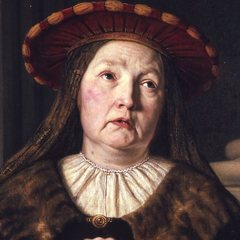 Hannah
 Her prayer became a song of victory: “My heart rejoices in the LORD.” The Talmud counts both women among Israel's seven prophetesses.
1 Samuel 2:1-10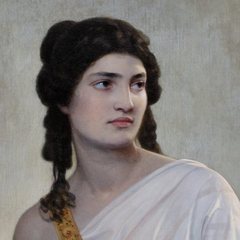 Judith
 Another woman who saved Israel and led its song of thanks. John Chrysostom named the two together.
Judith 16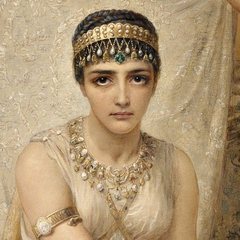 Esther
 She saved her people at the risk of her own life: “And if I perish, I perish!” The Talmud names her among the seven prophetesses too.
Esther 4:16sources
Her life, and her words
- The Berean Standard Bible, public domain. Every Bible line on this page outside the section on where the Bible figure quiz places her.
- Josephus, Antiquities of the Jews, book 5, chapter 5. Tr. William Whiston, 1737.
- Pseudo-Philo, Biblical Antiquities, chapters 30 to 33. Tr. M. R. James, 1917.
- Ambrose, Concerning Widows, chapter 8. Tr. H. de Romestin. Nicene and Post-Nicene Fathers, second series, volume 10.
- Cyril of Jerusalem, Catechetical Lecture 16. Tr. Edwin Hamilton Gifford. Nicene and Post-Nicene Fathers, second series, volume 7.
- John Chrysostom, Homilies on John, Homily 61. Nicene and Post-Nicene Fathers, first series, volume 14.
Reference
- Catholic Encyclopedia, 1908, “Debbora”
- Jewish Encyclopedia, 1903, “Deborah”, with the Talmud and the rabbinic stories
- Britannica, “Deborah”
- Bible Hub, Strong's Hebrew 1683, 1301 and 3941, for the meanings of Deborah, Barak and Lappidoth
Calendars
- OCA, “Righteous Deborah”
- OCA, lives remembered on the Sunday of the Holy Forefathers, 13 December 2026
- The Roman Martyrology, 1916 edition
- USCCB, Liturgical Calendar 2026, the calendar used at Mass
- Evangelical Lutheran Worship, ELCA, 2006, the prayer for the saints
Pictures
- Debora, Johanna Unger, oil on canvas, before 1871. Sold at Lempertz, Cologne, lot 1967. Public domain.
- Déborah, from La Galerie des femmes fortes, Gilles Rousselet and Abraham Bosse after Claude Vignon, 1647. The Metropolitan Museum of Art. CC0.
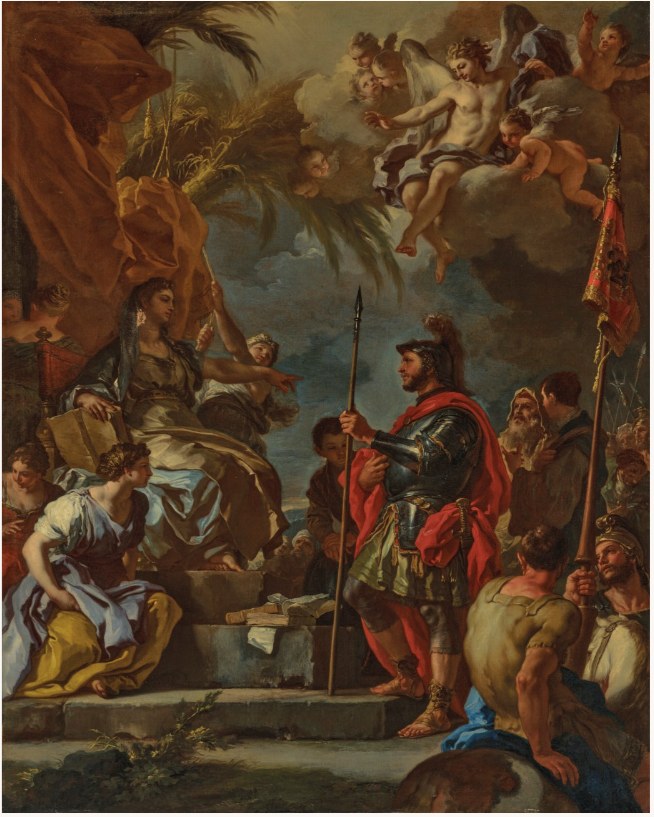
- Deborah and Barak, Francesco Solimena, oil on canvas. Sold at Christie's. Public domain.
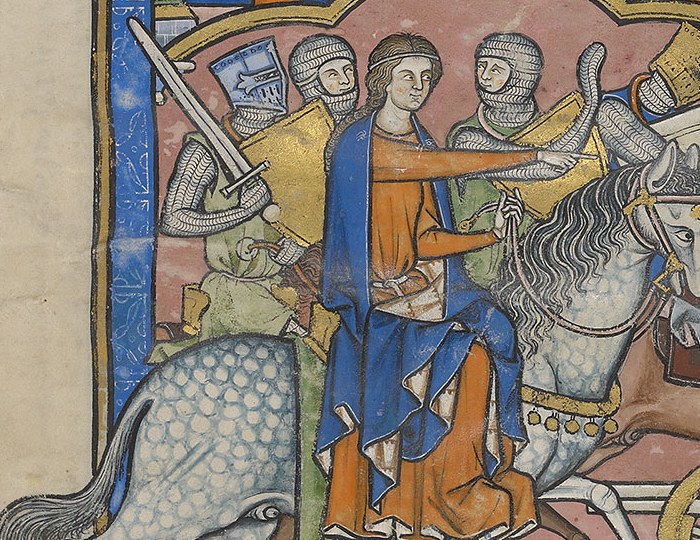
- The Morgan Picture Bible, folio 12r, Paris, about 1250. Morgan Library & Museum, MS M.638. Public domain.