
David
The shepherd who faced Goliath and became king of Israel. He fell hard, repented, and is remembered as a man after God's own heart.
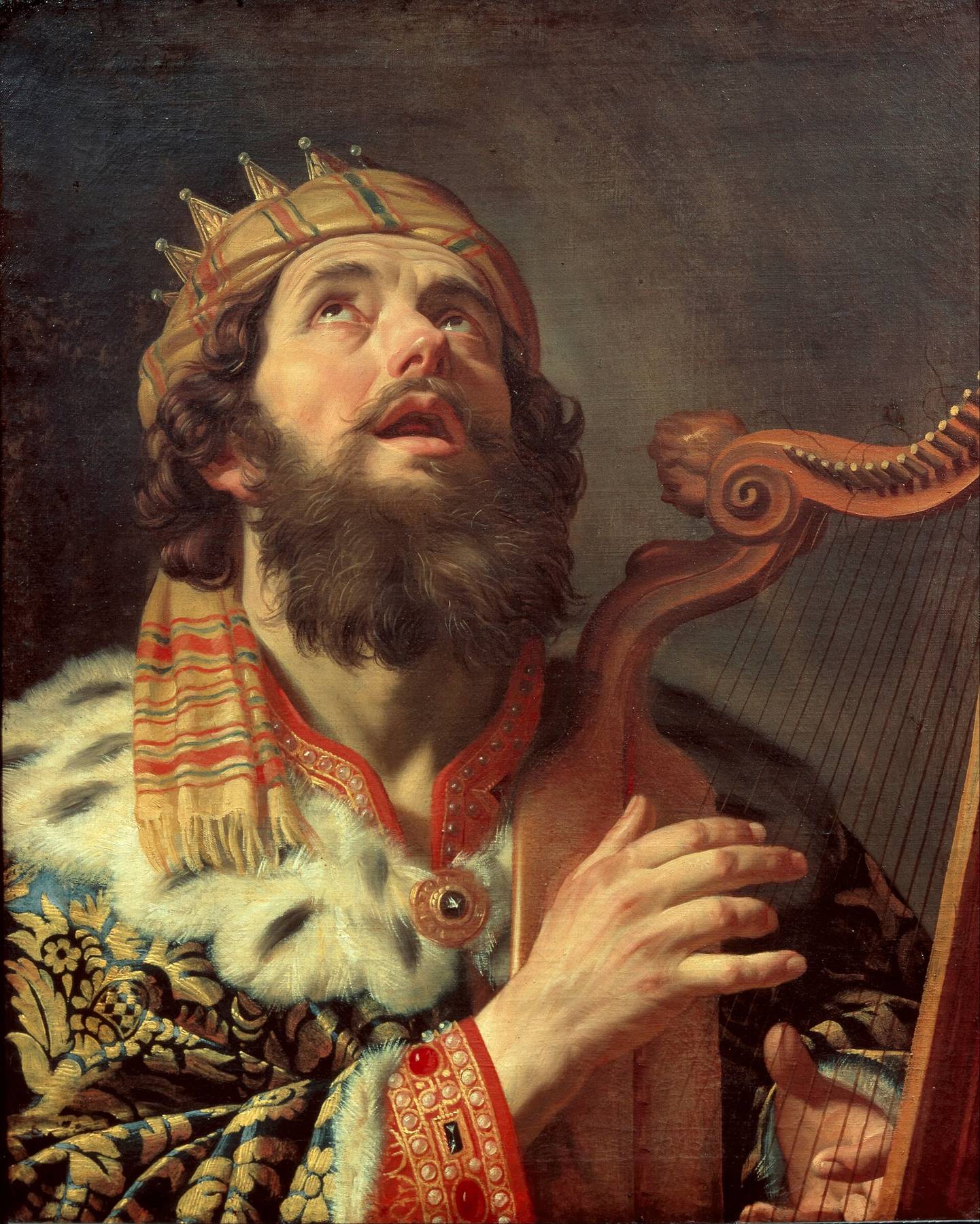
Picture: King David Playing the Harp, Gerard van Honthorst, 1622. Centraal Museum, Utrecht. Public domain.
Who was David?
David was a shepherd from Bethlehem, the youngest son of Jesse. The prophet Samuel anointed him while Saul was still king. He killed Goliath and fled from Saul for years. Then he reigned forty years, most of them in Jerusalem. He sinned with Bathsheba and repented. Many psalms bear his name, and Jesus is called the Son of David.
at a glance
His path, in order
- ShepherdHis father's sheep, at Bethlehem
- HarpistPlaying for King Saul
- WarriorGoliath, then Saul's battles
- OutlawFour hundred men, on the run
- KingForty years, in Hebron and Jerusalem
- ForefatherOf Jesus, the Son of David
in numbers
- Smooth stones he chose5
- From the brook, for his sling
- One was enough to bring Goliath down
- Times he spared Saul2
- In a cave, then in Saul's camp
- His reason: Saul was “the LORD's anointed”
- Years he reigned40
- Seven and a half in Hebron
- Thirty-three in Jerusalem
- Psalms headed with his name73
- Of the 150, in the Hebrew Bible
- Psalms 23 and 51 among them
did you know?
-
No one else in the whole Bible is called David. The name belongs to the king alone, says the Catholic Encyclopedia.
Catholic Encyclopedia, “King David” -
At the cave of Adullam he longed for water from the well by Bethlehem's gate. Three of his mighty men broke through the Philistine camp to fetch it. He poured it out to the LORD instead: “Is this not the blood of the men who risked their lives?”
2 Samuel 23:13-17 -
The early Church Fathers read his life as a picture of Christ's, says the Catholic Encyclopedia. The shepherd of Bethlehem pointed to the Good Shepherd, and his five stones to the five wounds. Fleeing his son Absalom, he crossed the Kidron Valley, as Jesus did on the night He was betrayed.
Catholic Encyclopedia, “King David”; 2 Samuel 15:23; John 18:1 -
Psalm 72 ends, “Thus conclude the prayers of David son of Jesse.” Yet more psalms headed with his name come later in the book.
Psalm 72:20; Catholic Encyclopedia, “Psalms”
- Born
- In Bethlehem of Judah, the youngest son of Jesse. He was thirty when he became king. The Lutheran Missouri Synod dates his reign about 1010 to 970 BC.
- Family
- His father Jesse was the grandson of Ruth and Boaz. His sister Zeruiah was the mother of Joab, his army commander. His wives included Saul's daughter Michal, Abigail and Bathsheba. Chronicles names nineteen sons, among them Absalom and Solomon, and a daughter, Tamar.
- Work
- A shepherd, then Saul's harpist and armour-bearer, a commander in his army, an outlaw captain, and king.
- Anointed
- Three times: by Samuel at Bethlehem, by the men of Judah at Hebron, and by the elders of all Israel at Hebron.
- Capital
- Jerusalem. He took its fortress, Zion, from the Jebusites and named it the City of David.
- Also called
- The son of Jesse. The sweet psalmist of Israel, in his last words. The Prophet-King, in the Orthodox Church. King and prophet, in the Roman Martyrology.
- Died
- In Jerusalem, at seventy, after forty years as king.
- Buried
- In the City of David. The Catholic Encyclopedia places the grave on Mount Zion. The Jewish historian Josephus says great riches were buried with him.
- Wrote
- 73 psalms are headed with his name in the Hebrew Bible. The Lutheran Missouri Synod calls him “the author of no less than 73 psalms”. 2 Samuel keeps his laments for Saul and his son Jonathan, and for Abner, the commander of Saul's army. It also keeps a song of victory and his last words. More on the psalms below.
- In art
- With a harp and a crown. As a young man, with a sling, or with Goliath's sword.
feast days
East and West, side by side
West
- Dec29
Holy David, king and prophet, in the 1916 Roman Martyrology. Lutherans in the Missouri Synod keep the same day.
East
- Jan1
The Coptic Church, on 23 Kiahk in its own calendar: the departure of David, the Prophet and King.
- Dec26
The Sunday after Christmas, with Joseph the Betrothed and James the Brother of the Lord, for the Orthodox Church in America. It falls between 26 and 31 December.
Churches on the old calendar keep the Sunday after their own Christmas, which falls on 7 January on today's calendar. The Coptic 23 Kiahk falls on 2 January in the winter before a leap day.
what others said of him
God's word, the Scriptures, the Jewish historian Josephus and the early Church, in their own words.
I have found David son of Jesse a man after My own heart; he will carry out My will in its entirety.
For David had done what was right in the eyes of the LORD and had not turned aside from anything the LORD commanded all the days of his life, except in the matter of Uriah the Hittite.
In every work of his he gave thanks to the Holy One Most High with words of glory. He sang praise with his whole heart, and loved Him Who made him.
He was prudent and moderate, and kind to such as were under any calamities; he was righteous and humane, which are good qualities, peculiarly fit for kings; nor was he guilty of any offense in the exercise of so great an authority, but in the business of the wife of Uriah.
Yet this very man saith to God, “Have mercy on me, O Lord, according to Thy great mercy.”
For many men will to fall with David, and will not to rise with David.
his life in 18 moments
Bethlehem
His father's youngest sonAnointed among his brothers
God sent the prophet Samuel to Bethlehem to anoint one of Jesse's sons as king. Samuel saw the eldest, Eliab, and thought this must be the one. But the LORD said, “Do not consider his appearance or height.” And then: “For man sees the outward appearance, but the LORD sees the heart.” Seven sons passed before Samuel, and none was chosen. “There is still the youngest,” Jesse said, “but he is tending the sheep.” They sent for David, and Samuel anointed him in front of his brothers. “And the Spirit of the LORD rushed upon David from that day forward.”
1 Samuel 16:1-13King Saul's court
A troubled kingThe harp
A spirit of distress tormented King Saul, and his servants looked for someone who could play the harp. One of them knew a son of Jesse: “a mighty man of valor, a warrior, eloquent and handsome, and the LORD is with him.” So David came to court. Saul loved him very much and made him his armour-bearer. Whenever the distress came on Saul, David took up his harp and played. “Then Saul would find relief and feel better.”
1 Samuel 16:14-23The Valley of Elah
Forty days of tauntsGoliath
The Philistine champion, Goliath of Gath, came out every morning and evening to challenge Israel, and no one would face him. David came to the camp with bread for his brothers, and heard him. He offered to fight the giant. “You are just a boy,” Saul said. But David had killed lions and bears to save his father's sheep. He tried on Saul's armour, but could not walk in it. He chose five smooth stones from the brook and ran toward the battle line. “The battle is the LORD's,” he told Goliath. His stone sank into the giant's forehead, “and he fell facedown on the ground.”
1 Samuel 17Saul's house
After the victorySaul's spear
After David killed Goliath, women came out dancing and singing: “Saul has slain his thousands, and David his tens of thousands.” Saul was furious. “What more can he have but the kingdom?” From that day he kept a jealous eye on David. While David played the harp, Saul hurled his spear at him, twice. Later Saul sent men to kill him at home. David's wife Michal, Saul's daughter, let him down through a window. Then she laid a household idol in his bed, with goat hair on its head.
1 Samuel 18:6-12; 19:9-17A field outside Gibeah
The feast of the New MoonJonathan's arrows
Saul's son Jonathan loved David “as himself”. He promised to learn whether his father meant to kill David. David would hide in a field. Jonathan would shoot arrows and call to the boy who ran for them. If he called out that the arrows were beyond him, David must flee. Saul did mean to kill him. Jonathan shot, and called, “Isn't the arrow beyond you?” When the boy had gone, the two friends “kissed each other and wept together—though David wept more.”
1 Samuel 20Nob
Alone, on the runThe holy bread
David fled to the priests at Nob. He asked the priest Ahimelech for five loaves. There was no bread but the consecrated bread, taken from before the LORD, and the priest gave it to him. There too, wrapped in a cloth, was the sword of Goliath. “There is none like it,” David said. “Give it to me.” Jesus later reminded the Pharisees of that day: “Have you not read what David did when he and his companions were hungry?”
1 Samuel 21:1-9; Matthew 12:3-4Gath, then the cave of Adullam
An outlawA madman, then a captain
He fled to Gath, Goliath's own city, and its king's servants recognised him. So he pretended to be mad. He scratched on the doors of the gate “and let his saliva run down his beard.” The king drove him away. He hid in the cave of Adullam, and his family came to him there. “And all who were distressed or indebted or discontented rallied around him, and he became their leader.” There were about four hundred of them. The headings of Psalm 34 and Psalm 142 set those psalms in these days.
1 Samuel 21:10 to 22:2; Psalm 34:1; 142:1En-gedi
Saul hunts him with three thousand menThe corner of Saul's robe
Saul went into a cave, not knowing that David and his men were hiding deep inside it. David's men said this was the day God had promised him: his enemy was in his hands. David crept up and cut off a corner of Saul's robe. Then his conscience struck him. “The LORD forbid that I should do such a thing to my master, the LORD's anointed.” When Saul left, David called out after him and bowed to the ground. He showed him the corner of his robe. Saul wept aloud. “You are more righteous than I.”
1 Samuel 24Carmel
Sheep-shearing timeAbigail
David's men had guarded the flocks of a rich man named Nabal. When they asked him for food, Nabal sneered, “Who is David?” David told his men to strap on their swords. Nabal's wife Abigail, “an intelligent and beautiful woman”, loaded donkeys with bread, wine, meat, raisins and figs, and rode out to meet David. She fell at his feet and took the blame. David blessed God, and blessed her: “Blessed is your discernment, and blessed are you, because today you kept me from bloodshed and from avenging myself by my own hand.” Ten days later Nabal died, and David asked Abigail to be his wife.
1 Samuel 25Ziklag
News from Mount Gilboa“How the mighty have fallen!”
Saul and Jonathan died fighting the Philistines on Mount Gilboa. When the news came, David tore his clothes, and he and his men wept and fasted until evening. He wrote a lament for them, the Song of the Bow. “How the mighty have fallen!” it cries, three times. Of his friend he wrote, “I grieve for you, Jonathan, my brother.” Then the men of Judah came to Hebron and anointed David king.
1 Samuel 31; 2 Samuel 1:11-27; 2:4Hebron, then Jerusalem
King of all IsraelThe City of David
He was thirty when he became king. He reigned in Hebron over Judah for seven and a half years. Then all the tribes came to him: “Here we are, your own flesh and blood.” They anointed him king over all Israel. He marched on Jerusalem, whose people boasted that even the blind and lame could keep him out. He took the fortress of Zion, named it the City of David, and made it his capital.
2 Samuel 5:1-9Jerusalem
The ark comes homeDancing before the LORD
David brought the ark of God, the ark of the covenant, up to his city with shouting and the sound of the ram's horn. Wearing a linen ephod, he “danced with all his might before the LORD”. His wife Michal watched from a window and despised him. She mocked the show he had made of himself before the servant girls. “I was dancing before the LORD,” he told her. “I will celebrate before the LORD, and I will humiliate and humble myself even more than this.”
2 Samuel 6:12-22Jerusalem
A word to Nathan by nightA house for God
“Here I am, living in a house of cedar,” David told the prophet Nathan, “while the ark of God remains in a tent.” He wanted to build God a temple. That night God sent Nathan back with a promise. David would not build a house for God. God would build a house for David, a line of kings: “Your house and kingdom will endure forever before Me, and your throne will be established forever.” David went in and sat before the LORD. “Who am I, O Lord GOD, and what is my house, that You have brought me this far?” Later he told his son Solomon why he could not build it: God had said to him, “You have shed much blood.”
2 Samuel 7; 1 Chronicles 22:7-8Jerusalem
In the spring, when kings march out to warBathsheba and Uriah
David sent his army to war and stayed in Jerusalem. From the palace roof he saw a very beautiful woman bathing. She was Bathsheba, the wife of Uriah the Hittite, one of his soldiers. David sent for her and slept with her, and she conceived. He called Uriah home from the war, but Uriah would not go to his own house while the army camped in the open field. So David sent him back with a letter for Joab, his commander: “Put Uriah at the front of the fiercest battle.” Uriah was killed, and David married Bathsheba. “But the thing that David had done was evil in the sight of the LORD.”
2 Samuel 11Jerusalem
The prophet comes“You are that man!”
The LORD sent the prophet Nathan to David with a story. A rich man had many flocks. When a traveller came, he did not take one of his own sheep. He took a poor man's only lamb, a pet that “was like a daughter to him”, and served it. David burned with anger. “The man who did this deserves to die!” Nathan said, “You are that man!” David said, “I have sinned against the LORD.” Nathan replied, “The LORD has taken away your sin.” But the child Bathsheba had borne him would die. David fasted and lay on the ground for seven days. When the child died, he got up, washed and worshipped. “I will go to him, but he will not return to me.”
2 Samuel 12:1-23The Mount of Olives
His son's revoltBarefoot and weeping
His son Absalom stole the hearts of Israel and had himself proclaimed king in Hebron. David fled Jerusalem. He crossed the Kidron Valley and went up the Mount of Olives, “weeping as he went up”, barefoot, his head covered. On the road a man of Saul's family, Shimei, threw stones and cursed him. One of his men, Abishai, offered to cut off Shimei's head. David said, “Leave him alone and let him curse me, for the LORD has told him so.”
2 Samuel 15:1 to 16:13The forest of Ephraim
The day of the battle“My son, my son”
David's army met Absalom's in the forest of Ephraim. The king had ordered his commanders, “Treat the young man Absalom gently for my sake.” Riding under a large oak, Absalom caught his head fast in its branches, and his mule went on without him. David's commander Joab found him hanging there and killed him. When David heard, he went up to the room over the gate and wept: “O my son Absalom! My son, my son Absalom! If only I had died instead of you, O Absalom, my son, my son!”
2 Samuel 18Araunah's threshing floor
After the count of the people“Offerings that cost me nothing”
David ordered his fighting men counted. His commander Joab tried to talk him out of it. Afterward David's conscience struck him: “I have sinned greatly in what I have done.” A plague fell on the land. When David saw an angel striking the people, he prayed, “Surely I, the shepherd, have sinned and acted wickedly. But these sheep, what have they done?” He was told to build an altar on the threshing floor of Araunah. Araunah offered it as a gift. David would not take it: “I will not offer to the LORD my God burnt offerings that cost me nothing.” There the plague stopped. There, too, Solomon later built the temple.
2 Samuel 24; 2 Chronicles 3:1
his words
He wrote no book of his own. His words are kept in Samuel, Kings and Chronicles, and in the psalms headed with his name. Outside the section on where the Bible figure quiz places him, every Bible line on this page is from the Berean Standard Bible. The exceptions are Sirach and Psalm 151, from the World English Bible.
To Goliath
You come against me with sword and spear and javelin, but I come against you in the name of the LORD of Hosts, the God of the armies of Israel, Whom you have defied.
Goliath had cursed David by his gods and mocked his shepherd's staff: “Am I a dog, that you come at me with sticks?”
1 Samuel 17:43-45The LORD, Who delivered me from the claws of the lion and the bear, will deliver me from the hand of this Philistine.
But if He should say, ‘I do not delight in you,’ then here I am; let Him do to me whatever seems good to Him.
But who am I, and who are my people, that we should be able to give as generously as this? For everything comes from You, and from Your own hand we have given to You.
The LORD is my shepherd; I shall not want.
Create in me a clean heart, O God, and renew a right spirit within me.
My God, my God, why have You forsaken me?
the psalms of david
Seventy-three psalms carry David's name in their Hebrew headings. Did he write those, or all 150, or fewer? Jews and Christians have answered in different ways. Here each speaks for itself.
What the headings say
The headings are part of the Bible's text. In the Hebrew Bible 73 name David, and the Greek Bible names him in many more, says the Catholic Encyclopedia. Some tie a psalm to a day in his life: Psalm 3 to his flight from Absalom, Psalm 51 to Nathan's visit. The New Testament gives him some psalms that have no heading, like Psalm 2 and Psalm 95. The Greek Bible even adds a Psalm 151, “outside the number”, and heads it as David's own. Jesus Himself quoted Psalm 110 as David's:
“Speaking by the Holy Spirit, David himself declared: ‘The Lord said to my Lord, “Sit at My right hand until I put Your enemies under Your feet.”’”Mark 12:36; Acts 4:25; Hebrews 4:7; Catholic Encyclopedia, “Psalms”
The Talmud
The Talmud names who wrote each book of the Bible. It gives the psalms to David with ten others: Adam, Melchizedek, Abraham, Moses, Heman, Jeduthun, Asaph and the three sons of Korah. Another passage gives them all to David, says the Catholic Encyclopedia.
“David wrote Psalms, with the assistance of ten elders”Babylonian Talmud, Bava Batra 14b, tr. Michael Rodkinson; Catholic Encyclopedia, “Psalms”
Augustine: all 150
The early Church was divided too. Augustine knew readers who gave David only the psalms headed with his name. Augustine held that David wrote the whole book. As God inspired him, David set other men's names over some psalms. Ambrose held the same, says the Catholic Encyclopedia.
“those seem to me to hold the more credible opinion, who ascribe to him the authorship of all these hundred and fifty psalms”Augustine, City of God, book 17, chapter 14; Catholic Encyclopedia, “Psalms”
Jerome: not all
Jerome did not give David all 150 psalms. Nor did Origen, Hilary or Eusebius, says the Catholic Encyclopedia. For them a psalm headed with another name, Asaph's or the sons of Korah's, was the work of those it named. Jerome said so in a letter:
“they err who deem all the psalms are David's and not the work of those whose names are superscribed”Jerome, Letter 140, as the Catholic Encyclopedia gives it
Rome, in 1910
The Council of Trent called the book Psalterium Davidicum, the Psalter of David. The Catholic Encyclopedia says Trent meant to settle nothing about who wrote it. In 1910 Rome's Biblical Commission ruled that David need not be held the author of every psalm. But it also ruled:
“It cannot be prudently denied that David is the chief author of the songs of the Psalter.”Pontifical Biblical Commission, 1 May 1910, as the Catholic Encyclopedia gives it
Scholars today
Scholars today believe the book gathers psalms from every period of Israel's history, from before the kings to after the Exile, says Britannica. Britannica sums it up:
“The dating of individual psalms poses an extremely difficult problem, as does the question of their authorship.”Britannica, “Psalms”
often misquoted
Goliath was over nine feet tall.
What the sources sayThe standard Hebrew text says so: “six cubits and a span”, about 9 feet 9 inches. But the Greek Septuagint, the Dead Sea Scrolls and Josephus all give “four cubits and a span”, about 6 feet 9 inches. That is still a giant of a soldier. Britannica calls him “a sizable man, but not improbably tall”.
1 Samuel 17:4, with the Bible Hub footnote; Josephus, Antiquities, book 6, chapter 9; Britannica, “How Tall Was Goliath in the Bible?”Bathsheba set out to tempt the king.
What the sources sayThe Bible does not say so. It says David stayed home from the war, saw her bathing from his palace roof, asked who she was, and “sent messengers to get her”. The prophet Nathan's story of the stolen lamb is aimed at David, and so is the verdict: “the thing that David had done was evil in the sight of the LORD.”
2 Samuel 11:1-4, 27; 12:1-9Absalom hung from a tree by his long hair.
What the sources say2 Samuel says his head was caught fast in the branches of an oak. Earlier, the book tells of his hair: he cut it once a year, when it grew too heavy, and it weighed two hundred shekels. The Jewish historian Josephus, writing in about AD 93, joined the two. He says Absalom “entangled his hair greatly in the large boughs of a knotty tree”.
2 Samuel 14:26; 18:9; Josephus, Antiquities, book 7, chapter 10The Star of David was David's own sign.
What the sources sayThe Bible never mentions it. The Jewish Encyclopedia notes that “the shield of David is not mentioned in rabbinical literature”. The oldest Jewish book it knew to name the sign was written in the 1100s. In 1354 the Jews of Prague were given a red flag that bore it. Today it is the symbol of Judaism.
Jewish Encyclopedia, “Magen Dawid”friends, family and rivals
 Ruth
Ruth His great-grandmother, a woman of Moab. Her son Obed “became the father of Jesse, the father of David.”
Ruth 4:17 Jonathan
 Saul's son and David's closest friend. On the day they met, he gave David his own robe, tunic, sword, bow and belt. He died beside his father on Mount Gilboa.
1 Samuel 18:1-4; 20; 31:2 Abigail
 The wise wife of Nabal. She rode out with food and kept David from taking revenge. After Nabal died she became David's wife, and bore him a son, Chileab.
1 Samuel 25; 2 Samuel 3:3Israel's first king. He loved David at first and made him his armour-bearer. Then a song that praised David above him made him jealous, and he hunted David for years. Wounded on Mount Gilboa, he fell on his own sword.
1 Samuel 16:21; 18:6-9; 31:3-4The prophet who anointed him at Bethlehem. When David first fled from Saul, he ran to Samuel at Ramah.
1 Samuel 16:13; 19:18Saul's daughter, who loved David and became his first wife. She saved his life by letting him down through a window. Saul then gave her to another man, and David later took her back. When he danced before the ark, she despised him.
1 Samuel 18:20, 27; 19:12; 25:44; 2 Samuel 3:13-16; 6:16The wife of Uriah the Hittite, and after his death David's wife. She was the mother of Solomon. In David's old age she and the prophet Nathan made sure Solomon took the throne. Matthew's list of Jesus' ancestors names her as Uriah's wife.
2 Samuel 11 and 12; 1 Kings 1:11-31; Matthew 1:6The prophet who brought him God's promise of a lasting house, a line of kings. Later, after David sinned with Bathsheba, he told him the story of the poor man's lamb: “You are that man!” He helped to crown Solomon.
2 Samuel 7; 12:1-14; 1 Kings 1His nephew, the son of his sister Zeruiah, and the commander of his army. He led David's wars and carried out David's order to put Uriah at the front, where he was killed. He also killed Abner, who had led Saul's army, and David's son Absalom. Then he killed Amasa, whom David had made commander in Joab's place. “These men, the sons of Zeruiah, are too fierce for me,” David said.
1 Chronicles 2:16; 2 Samuel 2:8; 3:27, 39; 11:14-17; 18:14; 19:13; 20:10His third son, the most handsome man in Israel. He had his half-brother Amnon killed, for Amnon had violated his sister Tamar. Later he turned Israel's hearts to himself and rose against his father. He died in the forest of Ephraim.
2 Samuel 3:3; 13:1 to 18:15His son by Bathsheba. The prophet Nathan named him Jedidiah, “because the LORD loved him.” David had him anointed king before he died. Solomon built the temple David had planned.
2 Samuel 12:24-25; 1 Kings 1:39; 1 Chronicles 22Jonathan's son, lame in both feet. For Jonathan's sake David gave him back Saul's land. He ate at the king's table “like one of the king's own sons.”
2 Samuel 9how he died
He died in Jerusalem at seventy, after forty years as king. He was buried in the City of David.
In his old age his son Adonijah declared, “I will be king!” The prophet Nathan and Bathsheba reminded David of his oath that Solomon would be king. That same day he had Solomon anointed, and the people shouted, “Long live King Solomon!”
As the time drew near for him to die, he charged Solomon to keep the Law of Moses. He also named men to reward. And he named men to punish, among them his commander Joab, and Shimei, who had cursed him as he fled from Absalom.
“Then David rested with his fathers and was buried in the City of David.” Chronicles adds that he died “at a ripe old age, full of years, riches, and honor.”
At Pentecost, Peter reminded Jerusalem that “the patriarch David died and was buried, and his tomb is with us to this day.” David was a prophet, Peter said. In a psalm he spoke of the Christ, Whose body would not see decay.
His last words
The Spirit of the LORD spoke through me; His word was on my tongue.
“These are the last words of David,” says 2 Samuel. In them he calls himself “the sweet psalmist of Israel”.
On a king who rules well
He who rules the people with justice, who rules in the fear of God, is like the light of the morning at sunrise of a cloudless dawn
To Solomon
I am about to go the way of all the earth. So be strong and prove yourself a man.
is he a saint?
Yes, as a king and prophet. He is honoured as a saint in the Orthodox and Catholic calendars.
- OrthodoxSaintProphet-King, the Sunday after Christmas
- CatholicSaintIn the Roman Martyrology, 29 December
- CopticSaint23 Kiahk, usually 1 January
- LutheranRememberedMissouri Synod, 29 December
- AnglicanNot on the calendarNot in the English or Episcopal calendars
The Orthodox Church in America calls him “a forefather of our Lord Jesus Christ according to the flesh”. His great sin darkened his life, it says. “He was also an example of great repentance.”
The Coptic synaxarium, the church's book of saints, says “God was with him in all his ways, for his purity of heart and his meekness.”
The Lutheran Missouri Synod's calendar finds his greatness in his loyalty to God, “coupled with his willingness to acknowledge his sins and ask for God's forgiveness”.
Rome's book of martyrs, in its 1916 edition, gives his day like this:
At Jerusalem, holy David, king and prophet.
what to read first
1 Samuel 16 and 17
The First Book of Samuel
The anointing, the harp and Goliath. Two chapters.
Read it free1 Samuel 24 to 26
The First Book of Samuel
Twice he spares Saul, and in between Abigail stops him from taking revenge. Three chapters.
Read it free2 Samuel 11 and 12
The Second Book of Samuel
Bathsheba, Uriah, and Nathan's story of the lamb. Two chapters.
Read it freePsalm 51
The Book of Psalms
A prayer for mercy. Its heading sets it after the prophet Nathan's visit. Nineteen verses.
Read it freewhere the quiz places him
The record, drawn
Each arm is one axis; length is how far from the centre the recorded acts sit. An axis the text does not place David on has no arm.
In the quiz's own words
Out in front, says it, quick to question
The six axes
Your answers are marked. From your result on . See your result
In the hatched middle the quiz names neither pole.
The moments behind each axis
Each line is one recorded act and the reference it is taken from. The sentence says what the person did; where it is in quotation marks it is verbatim from the World English Bible British Edition. An act listed here is evidence of how this person moved, not approval of it; read the passage for how it was received. On 2 the text shows both ends and they do not settle, so that axis is left out too — the acts for each end are printed under it.
Pace Acts first ↔ Weighs first
quick to move
-
1 Samuel 17:48 toward Acts first
He ran towards the Philistine line to meet Goliath.
David hurried and ran towards the army to meet the Philistine
-
1 Samuel 30:7-8 toward Weighs first
He called for the ephod and asked whether to pursue before he went after the raiders.
Voice Says it ↔ Holds it
says it
-
1 Samuel 17:32 toward Says it
He told Saul that his servant would go and fight the Philistine.
-
2 Samuel 1:17 toward Says it
He lamented with this lamentation over Saul and over Jonathan.
Lead Out in front ↔ Alongside
out in front
-
1 Samuel 22:1-2 toward Out in front
Four hundred men in distress, in debt and discontented gathered to him at the cave and he became their captain.
-
1 Samuel 17:32 toward Out in front
He offered himself to Saul as the one who would go and fight.
Conflict Confronts ↔ Reconciles
recorded at both ends
The text shows both ends. The recorded acts go one way and the other and do not settle, so this axis is left out when a reader is matched rather than counted as a position in the middle. Both ends are below.
Toward Confronts
-
1 Samuel 17:48-49 toward Confronts
He went out to meet the Philistine in single combat and struck him with a stone.
Toward Reconciles
-
1 Samuel 24:10-11 toward Reconciles
He showed Saul the cut skirt of his robe and said he had not killed him.
-
1 Samuel 26:9 toward Reconciles
He stopped Abishai from striking the sleeping Saul.
Reasons Asks why ↔ Takes it on trust
quick to question
-
1 Samuel 30:8 toward Asks why
He asked whether he would overtake the raiders before setting out after them.
-
1 Samuel 23:2-4 toward Asks why
He asked whether to go and strike the Philistines, and asked a second time before he went.
-
2 Samuel 5:19 toward Asks why
He asked whether to go up against the Philistines and whether they would be given into his hand.
-
2 Samuel 12:20-23 toward Takes it on trust
When the child died he got up, washed, worshipped and ate, and said he could not bring him back.
Plans Plans ahead ↔ Meets the day
recorded at both ends
The text shows both ends. The recorded acts go one way and the other and do not settle, so this axis is left out when a reader is matched rather than counted as a position in the middle. Both ends are below.
Toward Plans ahead
-
1 Chronicles 22:5 toward Plans ahead
He said he would make preparation for the house his son would build, and prepared abundantly before his death.
So David prepared abundantly before his death.
Toward Meets the day
-
1 Samuel 21:3 toward Meets the day
He arrived at Nob with nothing and asked for five loaves or whatever was available.
-
1 Samuel 21:8 toward Meets the day
He had come away without his sword or weapons and had to ask what was there.
I haven’t brought my sword or my weapons with me
Nearest on the map
Distance between two sets of coordinates across every axis, on the same scale a reader's answers are measured on. No number is shown against a person, and nearness is not likeness: two people can land in the same band for different reasons.
Suggest a correction. Corrections that are applied are recorded in the public changelog.
 Quiz Who in the Bible are you most like? Answer eighteen plain statements about you, none of them about the Bible, and see how near you land to David. Start
  Quiz Christian Personality Test Which of eight types are you? Find your own. Start
 people like him
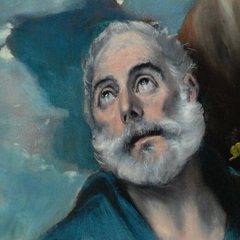 Peter
Peter He denied Jesus three times, then “went outside and wept bitterly.” Forgiven, he was given the Lord's sheep to feed.
Luke 22:61-62; John 21:15-17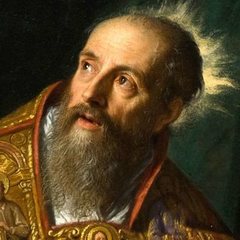 Augustine of Hippo
 Dying, he had David's psalms of repentance copied out and hung on the wall by his bed. He read them, and “wept freely and constantly”.
Possidius, Life of Augustine, chapter 31sources
His life, and his words
- The Berean Standard Bible, public domain. Every Bible line on this page outside the section on where the Bible figure quiz places him, except Sirach and Psalm 151.
- The World English Bible, British Edition, Sirach 47 and Psalm 151, public domain.
- Josephus, Antiquities of the Jews, books 6 and 7. Tr. William Whiston.
- 1 Clement, chapter 18. Tr. Alexander Roberts and James Donaldson. Ante-Nicene Fathers, volume 1, 1885.
- Augustine, Expositions on the Psalms, Psalm 51. Nicene and Post-Nicene Fathers, first series, volume 8.
- Augustine, City of God, book 17, chapter 14. Tr. Marcus Dods. Nicene and Post-Nicene Fathers, first series, volume 2.
- Possidius, Life of Augustine, chapter 31. Tr. Herbert Weiskotten, 1919.
- The Babylonian Talmud, Bava Batra, chapter 1. Tr. Michael Rodkinson.
Reference
- Catholic Encyclopedia, 1908, “King David”
- Catholic Encyclopedia, 1911, “Psalms”. With Jerome's letter and the Biblical Commission of 1910.
- Jewish Encyclopedia, 1904, “Magen Dawid”
- Britannica, “David”
- Britannica, “Psalms”
- Britannica, “How Tall Was Goliath in the Bible?”
- Bible Hub, 1 Samuel 17, the Berean Standard Bible's footnote on Goliath's height
Calendars
- The Roman Martyrology, 1916 edition, 29 December
- OCA, “Holy Righteous David the King”
- OCA, the Sunday after the Nativity
- CopticChurch.net, the Coptic synaxarium, 23 Kiahk
- The Lutheran Church–Missouri Synod, Commemorations, 29 December
Pictures
- King David Playing the Harp, Gerard van Honthorst, 1622. Centraal Museum, Utrecht. Public domain.
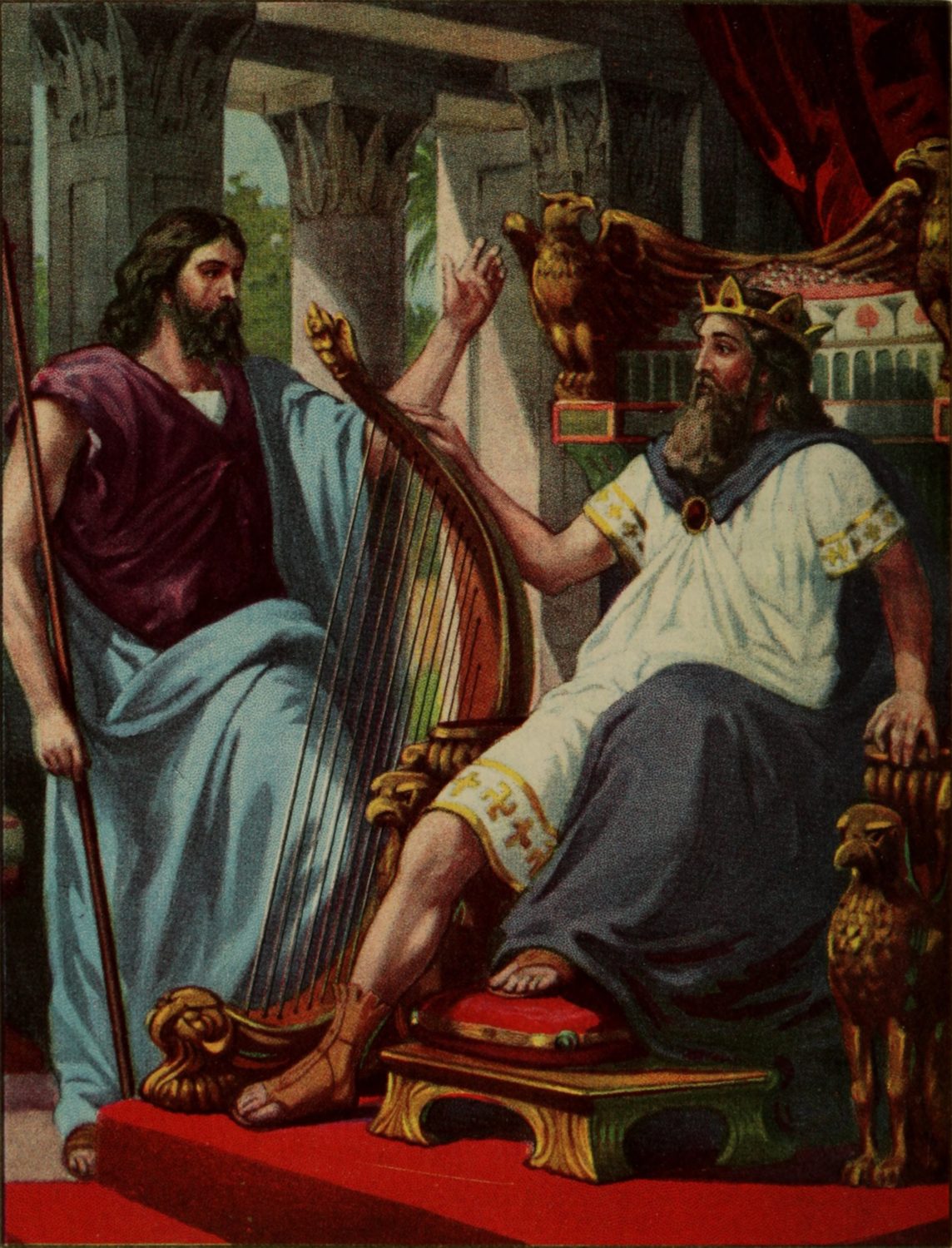
- David and the Prophet Nathan, a colour plate in Adolf Hult's Bible Primer, Old Testament, Augustana Book Concern, Rock Island, Illinois, 1919. Public domain.
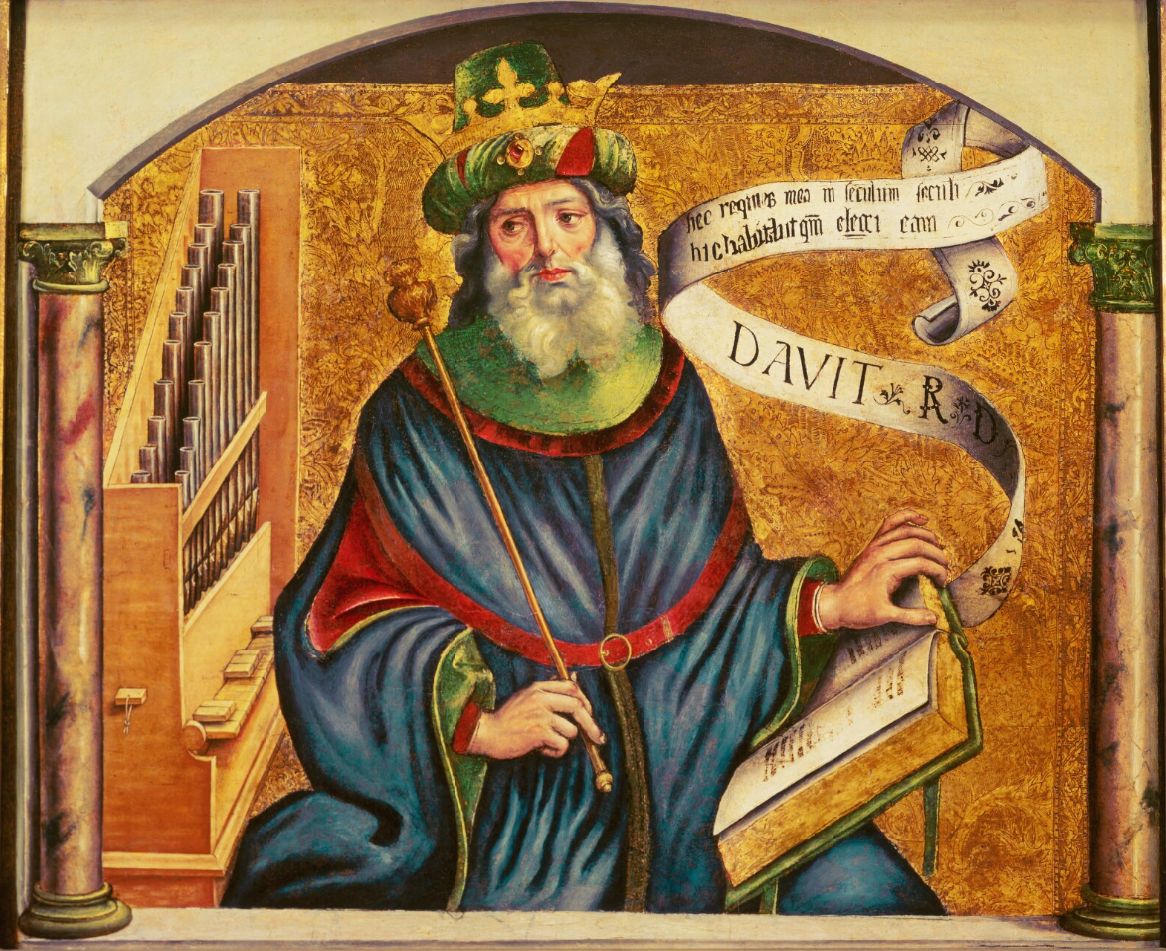
- King David, Pedro Berruguete, late 1400s. Bowdoin College Museum of Art. Public domain.
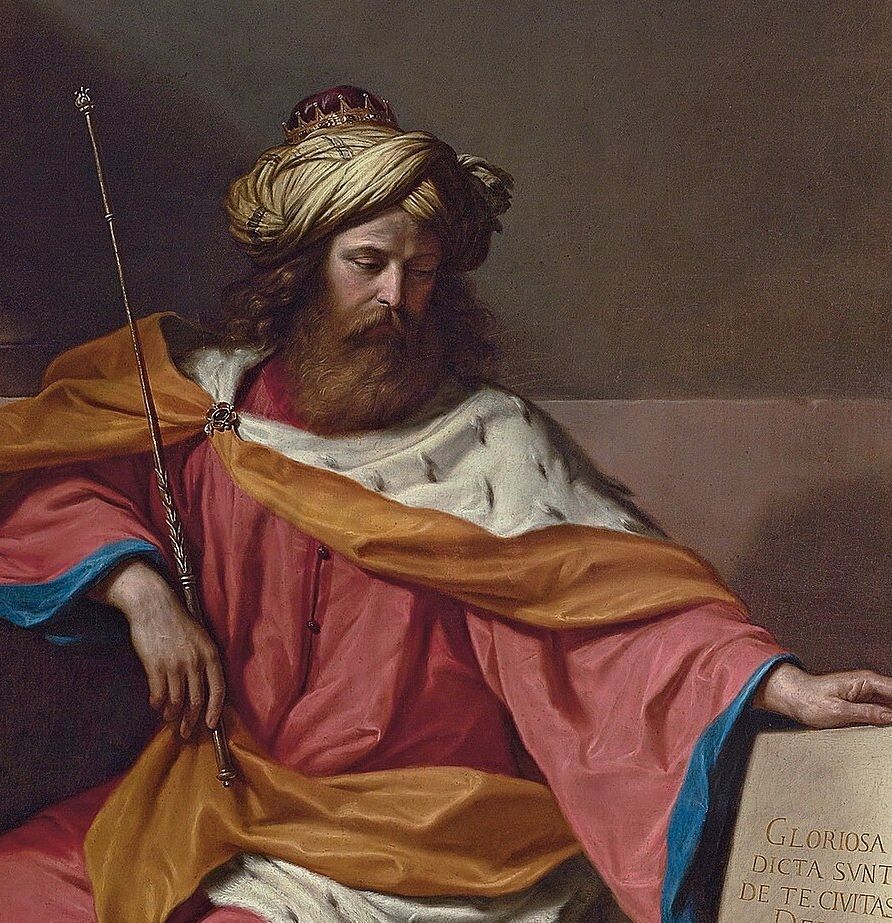
- King David, Guercino, 1651. A detail. Public domain.