
Jonathan
King Saul's son and David's closest friend. He climbed a cliff to take on the Philistines, and faced his father's spear for David's sake.
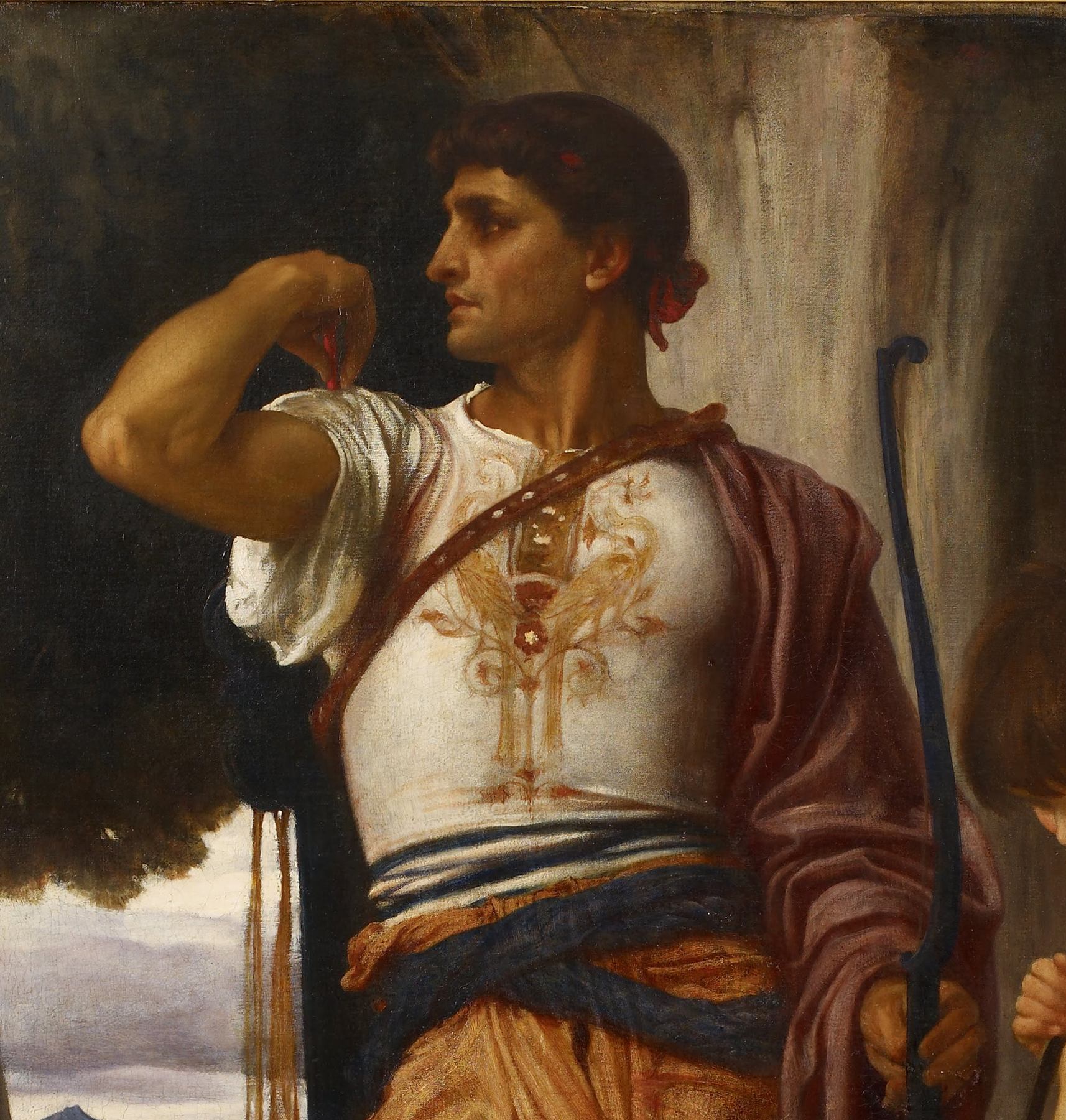
Picture: Jonathan's Token to David, Frederic Leighton, about 1868. Minneapolis Institute of Art. Public domain.
Who was Jonathan?
Jonathan was the eldest son of Saul, Israel's first king, and a brave soldier. With only his armour-bearer, he climbed a cliff and routed a Philistine outpost. He loved David as himself, though David would take the throne that would have been his. He saved David from his father, and died with Saul in battle on Mount Gilboa.
at a glance
His path, in order
- PrinceSon of Saul, Israel's first king
- CommanderA thousand men, at Gibeah
- FriendOf David, by covenant
- Go-betweenBetween David and his father
- FallenOn Mount Gilboa, with Saul
in numbers
- Israelites with a sword or spear2
- Only Saul and Jonathan, on the day of battle
- The Philistines let no blacksmith work in Israel
- Philistines struck down by two men20
- In the Bible's words: “About twenty men”
- In about half an acre of land
- Things he gave David5
- His robe and his tunic
- His sword, his bow and his belt
- Covenants he made with David3
- The first because he loved him
- The last in the wilderness, where David hid
did you know?
-
His name means “the LORD has given”.
Strong's Hebrew 3083, at Bible Hub -
In the retelling by the Jewish historian Josephus, written about the year 93, Jonathan does not beg for his life when his father condemns him for tasting honey. He tells Saul, “Nor do I desire you, father, to spare me”.
Josephus, Antiquities of the Jews, book 6, chapter 6 -
The book of Chronicles follows his family for more than ten generations. The list ends with his descendants, the sons of Ulam: “mighty men of valor, archers”.
1 Chronicles 8:33-40
- Home
- Gibeah in Benjamin, his father's town. When Saul's war with the Philistines began, a thousand men were with Jonathan there.
- Family
- His father was Saul, Israel's first king, and his mother Ahinoam. His brothers were Abinadab, Malchishua and Ish-bosheth. His sisters were Merab and Michal, David's first wife. His son was Mephibosheth.
- Work
- A soldier, and a commander in his father's war with the Philistines.
- His weapon
- The bow. David's lament for him remembers it: “the bow of Jonathan did not retreat”.
- Also called
- Yehonathan, the full form of his name in Hebrew. Ionathan, in the Greek Bible.
- Died
- In battle with the Philistines on Mount Gilboa, with his father and two of his brothers.
- Buried
- First under a tamarisk tree at Jabesh. Later David moved his bones to Zela in Benjamin, to the tomb of his grandfather Kish.
- In the Bible
- 1 Samuel 13 to 31. David mourns him in 2 Samuel 1, and keeps his promise to him in 2 Samuel 9.
- In art
- Often with a bow and arrows, for the arrows he shot to warn David. The painting at the top of this page, by Frederic Leighton, is called Jonathan's Token to David.
what others said of him
His armour-bearer, the army, his father, and the Jewish and Christian teachers who came after, in their own words.
Do all that is in your heart. Go ahead; I am with you heart and soul.
Must Jonathan die—he who accomplished such a great deliverance for Israel? Never! As surely as the LORD lives, not a hair of his head will fall to the ground, for with God’s help he has accomplished this today.
For as long as the son of Jesse lives on this earth, neither you nor your kingdom shall be established.
What love is that which depends on some thing? The love of Amnon and Thamar. And that which does not depend on anything? This is the love of David and Jonathan.
So it was with Jonathan, who for his affection's sake avoided not his father's displeasure nor the danger to his own safety.
He was many times willing even to die for his friend, and far from accusing him, he restrained even his father's accusation. Instead of envying, he joined in obtaining the kingdom for him.
his life in nine moments
Gibeah and Geba
Saul's war with the PhilistinesThe first blow
Saul chose three thousand men and put a thousand of them under Jonathan at Gibeah. Then Jonathan attacked the Philistine outpost at Geba. Yet the news that went through the land gave Saul the credit: “Saul has attacked an outpost of the Philistines”. The Philistines came up in force, with troops “as numerous as the sand on the seashore”. The men of Israel hid in caves and cisterns. They had almost no weapons, for the Philistines let no blacksmith work in the land. On the day of battle, only Saul and Jonathan had a sword or a spear.
1 Samuel 13:2-22The pass at Michmash
One dayTwo men and a cliff
Jonathan said to his armour-bearer, “Come, let us cross over to the Philistine outpost on the other side.” He did not tell his father. There were steep cliffs on both sides of the pass. Jonathan set a sign: if the Philistines called them up, they would go. The men of the outpost saw them. “Look, the Hebrews are coming out of the holes in which they were hiding!” they said. “Come on up, and we will teach you a lesson!” Jonathan climbed up on his hands and feet, with his armour-bearer behind him, and the Philistines fell before him. Panic swept the whole Philistine camp. “Indeed, the earth quaked, and panic spread from God.” That day, “the LORD saved Israel.”
1 Samuel 14:1-23A forest
The day of the Michmash battleThe honey
Saul had put the army under an oath: “Cursed is the man who eats any food before evening, before I have taken vengeance on my enemies.” The men were faint with hunger. In the forest there was honey on the ground, but no one dared to touch it. Jonathan had not heard the oath. He dipped the end of his staff into a honeycomb and ate, “and his eyes brightened.” When a soldier told him of the oath, he said, “My father has brought trouble to the land.” If the men had eaten, he said, the victory would have been far greater.
1 Samuel 14:24-30Saul's camp
The night of the Michmash battle“And now I must die?”
Saul wanted to chase the Philistines by night. He asked God, but God did not answer him that day. Saul swore that whoever had sinned must die, “even if it is my son Jonathan”. Lots were cast, and the lot fell on Jonathan. He told his father, “I only tasted a little honey with the end of the staff that was in my hand. And now I must die?” Saul swore that Jonathan would die. But the army would not allow it, and they rescued him.
1 Samuel 14:36-45Saul's court
After GoliathKnit together
David came back from killing Goliath and spoke with Saul. Then “the souls of Jonathan and David were knit together, and Jonathan loved him as himself.” Jonathan made a covenant with David. He took off the robe he was wearing and gave it to David, with his tunic, his sword, his bow and his belt.
1 Samuel 18:1-4A field near Gibeah
Saul turns on David“He has not sinned against you”
Saul ordered Jonathan and all his servants to kill David. Jonathan warned David to hide in a field. Then he went out and spoke well of David to his father. “The king should not sin against his servant David; he has not sinned against you.” David had risked his life against Goliath, he said, so “why would you sin against innocent blood by killing David for no reason?” Saul listened and swore that David would not be put to death. Jonathan brought David back to court. The peace did not last. Saul soon threw a spear at David, and David fled.
1 Samuel 19:1-10Saul's table
The New Moon feastThe empty seat
David came to Jonathan in fear for his life. “There is but a step between me and death.” Jonathan could hardly believe it, but he said, “Whatever you desire, I will do for you.” They agreed that David would hide while Jonathan sounded out his father at the New Moon feast. On the second day Saul asked where David was, and Jonathan gave David's excuse. Saul's anger burned. He cursed his son and said of David, “he must surely die!” Jonathan asked, “Why must he be put to death? What has he done?” Then Saul hurled his spear at Jonathan. Jonathan left the table in fierce anger and ate nothing that day, “for he was grieved by his father’s shameful treatment of David.”
1 Samuel 20:1-34The field by the stone Ezel
The morning after the feastThe arrows
Jonathan and David had agreed on a sign. Jonathan would shoot arrows and send a boy to fetch them. If he called out, “the arrows are beyond you,” David must go. In the morning Jonathan went out with a small boy and shot an arrow beyond him. “Isn’t the arrow beyond you?” he called. “Hurry! Make haste! Do not delay!” The boy knew nothing. Jonathan gave him his gear and sent him back to the city. Then David came out from beside the stone and bowed three times. The two friends kissed each other and wept together, “though David wept more.”
1 Samuel 20:18-42Horesh, in the Wilderness of Ziph
David on the runOne last meeting
Saul hunted David day after day. David was hiding at Horesh when Jonathan came to him there “and strengthened his hand in God.” “Do not be afraid,” he said, “for my father Saul will never lay a hand on you. And you will be king over Israel, and I will be your second-in-command.” The two made a covenant before the LORD, and Jonathan went home. The Bible never shows them together again.
1 Samuel 23:14-18
his words
1 Samuel records what he said. Outside the section on where the Bible figure quiz places him, every Bible line on this page is from the Berean Standard Bible.
Before he climbed the cliff
Perhaps the LORD will work on our behalf. Nothing can hinder the LORD from saving, whether by many or by few.
He said it to his armour-bearer, looking across the pass at the Philistine outpost. It was just the two of them against the outpost.
1 Samuel 14:6Follow me, for the LORD has delivered them into the hand of Israel.
May the LORD be with you, just as He has been with my father.
And as long as I live, treat me with the LORD’s loving devotion, that I may not die, and do not ever cut off your loving devotion from my household…
Go in peace, for the two of us have sworn in the name of the LORD, saying, ‘May the LORD be a witness between you and me, and between your descendants and mine forever.’
often misquoted
“How the mighty have fallen” is a jeer at someone brought down by their own pride.
What the sources sayIt began as grief. David sang it when Saul and Jonathan were killed on Mount Gilboa, and he did not want the enemy to gloat: “Tell it not in Gath; proclaim it not in the streets of Ashkelon, lest the daughters of the Philistines rejoice”. The line comes three times in the song. The second time, it turns to Jonathan: “Jonathan lies slain on your heights.”
2 Samuel 1:17-27friends, family and rivals
 David
David His friend. Jonathan made a covenant with him three times, and saved him from Saul more than once. David mourned him as “my brother”.
1 Samuel 18 to 23; 2 Samuel 1:26His father, Israel's first king. Twice he was ready to kill his own son: once for tasting honey during a fast he had ordered, and once at the New Moon feast, when he threw his spear at him. They died on the same day.
1 Samuel 14:44; 20:33; 31:2-6The young man, never named, who climbed the cliff at Michmash behind him and finished off the Philistines who fell.
1 Samuel 14:6-14His son, lame from the age of five. The book of Chronicles calls him Merib-baal. Saul had tried to wipe out the Gibeonites. To make amends, David handed seven of Saul's descendants over to them to be put to death. He spared Mephibosheth “because of the oath before the LORD between David and Jonathan son of Saul.”
2 Samuel 4:4; 21:1-9; 1 Chronicles 8:34His sister, and David's first wife. When Saul sent men to kill David, she let him down from a window and he escaped.
1 Samuel 14:49; 18:27; 19:11-12His brothers. Abinadab and Malchishua died beside him on Mount Gilboa. Ish-bosheth lived, and Abner, commander of Saul's army, made him king over Israel for two years.
1 Samuel 31:2; 2 Samuel 2:8-10how he died
He died in battle with the Philistines on Mount Gilboa, with his father Saul and two of his brothers.
The Philistines pressed hard after Saul and his sons, and killed Jonathan, Abinadab and Malchishua. Saul was badly wounded by archers and fell on his own sword. “So Saul, his three sons, his armor-bearer, and all his men died together that same day.”
The next day the Philistines found the bodies of Saul and his sons and hung them on the wall of Beth-shan. The fighting men of Jabesh-gilead marched all night to take them down. They burned the bodies, buried the bones under the tamarisk tree at Jabesh, and fasted seven days.
When the news reached David, he and his men tore their clothes. They wept and fasted until evening “for Saul and his son Jonathan”. Then David sang his lament, the Song of the Bow, and had it taught to the people of Judah.
Years later, David had the bones of Saul and Jonathan brought from Jabesh. They were buried in Benjamin, at Zela, in the tomb of Saul's father Kish.
The Song of the Bow
Saul and Jonathan, beloved and delightful in life, were not divided in death. They were swifter than eagles; they were stronger than lions.
For Jonathan
I grieve for you, Jonathan, my brother. You were delightful to me; your love to me was extraordinary, surpassing the love of women.
David's lament ends, “How the mighty have fallen, and the weapons of war have perished!”
is he a saint?
He has no feast day in the Catholic, Orthodox, Anglican or Lutheran calendars. But Jewish and Christian teachers alike held up his love for David as the pattern of true friendship.
- CatholicNo feast dayNot in the Roman Martyrology
- OrthodoxNo feast dayNo day of his own
- ProtestantNo feast dayNot in Anglican or Lutheran calendars
Some lists online give him a feast day on 29 December. In Rome's book of martyrs, that is the day of King David. Jonathan is in neither its 1916 edition nor its 2004 one.
The Russian Church's Orthodox Encyclopedia tells his story, but gives him no day of remembrance.
what to read first
1 Samuel 13 and 14
The First Book of Samuel
The outpost at Geba, the climb at Michmash, and the honey that nearly cost him his life. His story as a soldier, in two chapters.
Read it free1 Samuel 18 to 20
The First Book of Samuel
His friendship with David: the gift of his robe and weapons, his plea to Saul, the New Moon feast and the warning arrows.
Read it free2 Samuel 1 and 9
The Second Book of Samuel
David's lament for Saul and Jonathan, and what he did for Jonathan's son.
Read it freeOn the Duties of the Clergy, book 3
Ambrose of Milan
Its closing chapters are on friendship, with Jonathan among the examples.
Read it freewhere the quiz places him
The record, drawn
Each arm is one axis; length is how far from the centre the recorded acts sit. An axis the text does not place Jonathan on has no arm.
In the quiz's own words
Alongside, acts first, quick to reconcile
The six axes
Your answers are marked. From your result on . See your result
In the hatched middle the quiz names neither pole.
The moments behind each axis
Each line is one recorded act and the reference it is taken from. The sentence says what the person did; where it is in quotation marks it is verbatim from the World English Bible British Edition. An act listed here is evidence of how this person moved, not approval of it; read the passage for how it was received. On 1 of the six the text does not show this, and that axis is left out of the match rather than filled in. On 1 the text shows both ends and they do not settle, so that axis is left out too — the acts for each end are printed under it.
Pace Acts first ↔ Weighs first
acts first
-
1 Samuel 14:1 toward Acts first
He told his armour bearer to come over to the Philistine garrison with him, and did not tell his father.
-
1 Samuel 14:6 toward Acts first
He proposed the crossing on the spot and went.
Voice Says it ↔ Holds it
slow to speak up
-
1 Samuel 14:1 toward Holds it
He went over to the garrison without telling his father.
-
1 Samuel 20:39 toward Holds it
He passed the warning to David through arrows so that even the boy with him knew nothing.
Only Jonathan and David knew the matter.
-
1 Samuel 19:4 toward Says it
He spoke to Saul directly on David's behalf.
Lead Out in front ↔ Alongside
alongside
-
1 Samuel 18:4 toward Alongside
He took off his own robe, clothing, sword, bow and sash and gave them to David.
-
1 Samuel 23:16-17 toward Alongside
He went out to David in the woods and told him he would be king and that he himself would be next to him.
Conflict Confronts ↔ Reconciles
quick to reconcile
-
1 Samuel 19:4-6 toward Reconciles
He put David's case to Saul until Saul swore David would not be put to death.
Reasons Asks why ↔ Takes it on trust
not shown in the text
The text does not show this. Nothing in the record puts Jonathan at either end of this axis, so it is left out when a reader is matched, rather than counted as a position in the middle.
-
No record
The text does not show this.
Plans Plans ahead ↔ Meets the day
recorded at both ends
The text shows both ends. The recorded acts go one way and the other and do not settle, so this axis is left out when a reader is matched rather than counted as a position in the middle. Both ends are below.
Toward Plans ahead
-
1 Samuel 20:35-40 toward Plans ahead
He went out into the field at the time appointed with David and shot the arrows for the boy to find.
Toward Meets the day
-
1 Samuel 14:6 toward Meets the day
He went over to the garrison with only the young man who bore his armour.
Nearest on the map
Distance between two sets of coordinates across every axis, on the same scale a reader's answers are measured on. No number is shown against a person, and nearness is not likeness: two people can land in the same band for different reasons.
Suggest a correction. Corrections that are applied are recorded in the public changelog.
 Quiz Who in the Bible are you most like? Answer eighteen plain statements about you, none of them about the Bible, and see how near you land to Jonathan. Start
  Quiz Christian Personality Test Which of eight types are you? Find your own. Start
 people like him
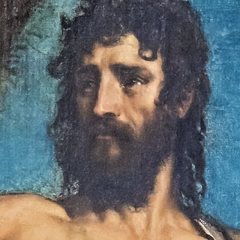 John the Baptist
 When his followers worried that the crowds were going to Jesus, he was glad to give way: “He must increase; I must decrease.”
John 3:26-30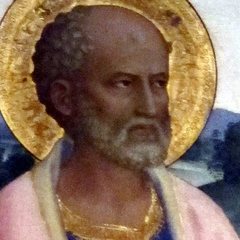 Barnabas
 The disciples in Jerusalem were afraid of Saul, the new convert later called Paul. Barnabas took him to the apostles and spoke up for him.
Acts 9:26-27; 13:9 Ruth
Ruth She bound herself for life to Naomi, her mother-in-law: “your people will be my people, and your God will be my God.”
Ruth 1:14-16sources
His life, and his words
- The Berean Standard Bible, public domain. Every Bible line on this page outside the section on where the Bible figure quiz places him.
- Josephus, Antiquities of the Jews, book 6. Tr. William Whiston, 1737.
- Sayings of the Jewish Fathers, chapter 5. The Mishnah's tractate Avot, tr. Charles Taylor, 1897.
- Ambrose, On the Duties of the Clergy, books 1 and 3. Tr. H. de Romestin. Nicene and Post-Nicene Fathers, second series, volume 10.
- John Chrysostom, Homilies on 2 Timothy, Homily 7. Nicene and Post-Nicene Fathers, first series, volume 13.
Reference
- Bible Hub, Strong's Hebrew 3083, for the meaning of his name
- Orthodox Encyclopedia, “Ionafan”, volume 25, in Russian
Calendars
- The Roman Martyrology, 1916 edition, 29 December
- Martyrologium Romanum, 2004 edition, in Latin, with its index of names
- USCCB, Liturgical Calendar 2026, the calendar used at Mass
- Church of England, Common Worship calendar
- The Episcopal Church, Lesser Feasts and Fasts 2022
- The Lutheran Church–Missouri Synod, Commemorations
- Evangelical Lutheran Worship, ELCA, the church year (final draft, 2006)
Pictures
- Jonathan's Token to David, Frederic Leighton, about 1868. Minneapolis Institute of Art. Public domain.
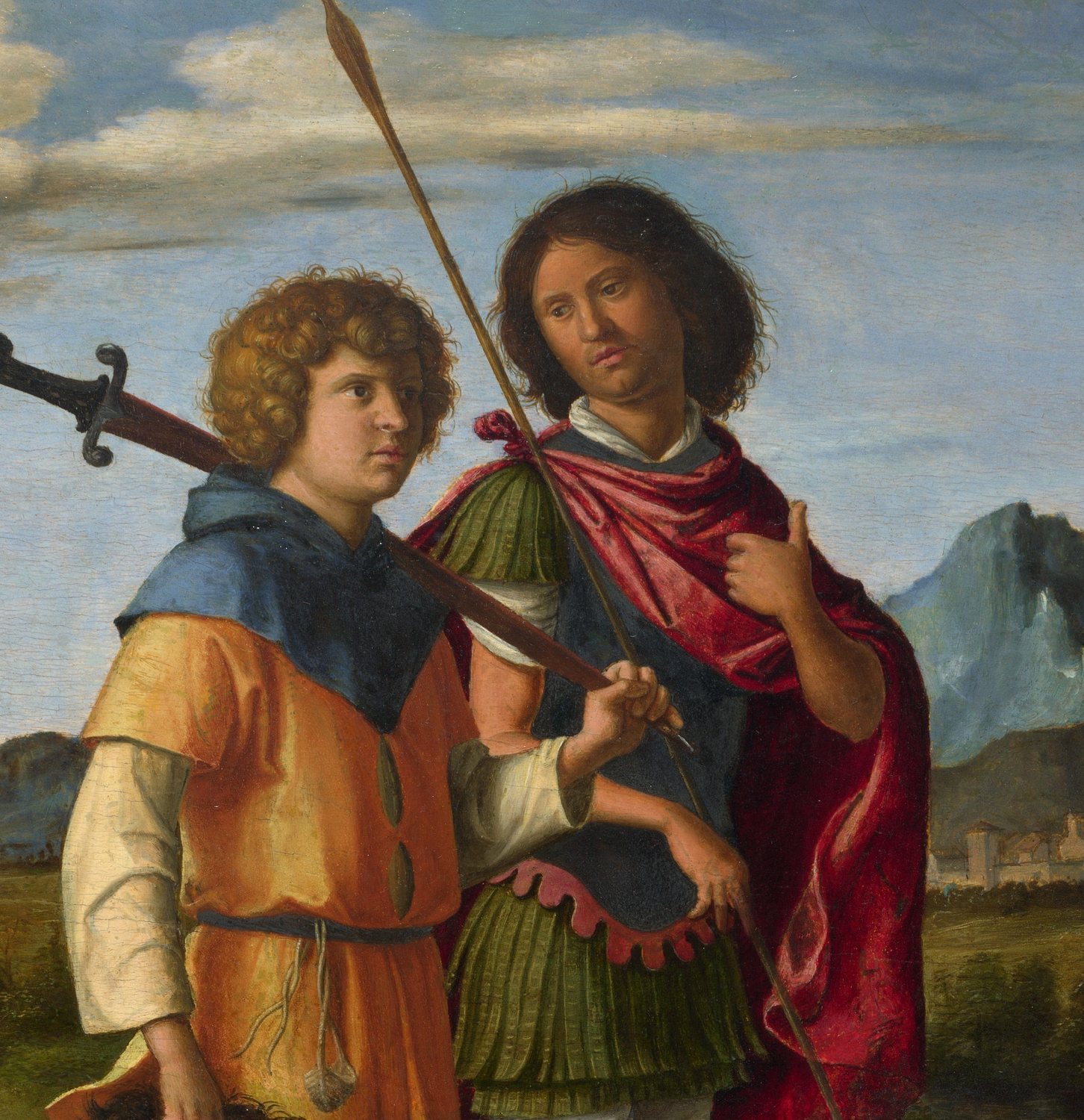
- David and Jonathan, Cima da Conegliano, about 1505 to 1510. The National Gallery, London. Public domain.
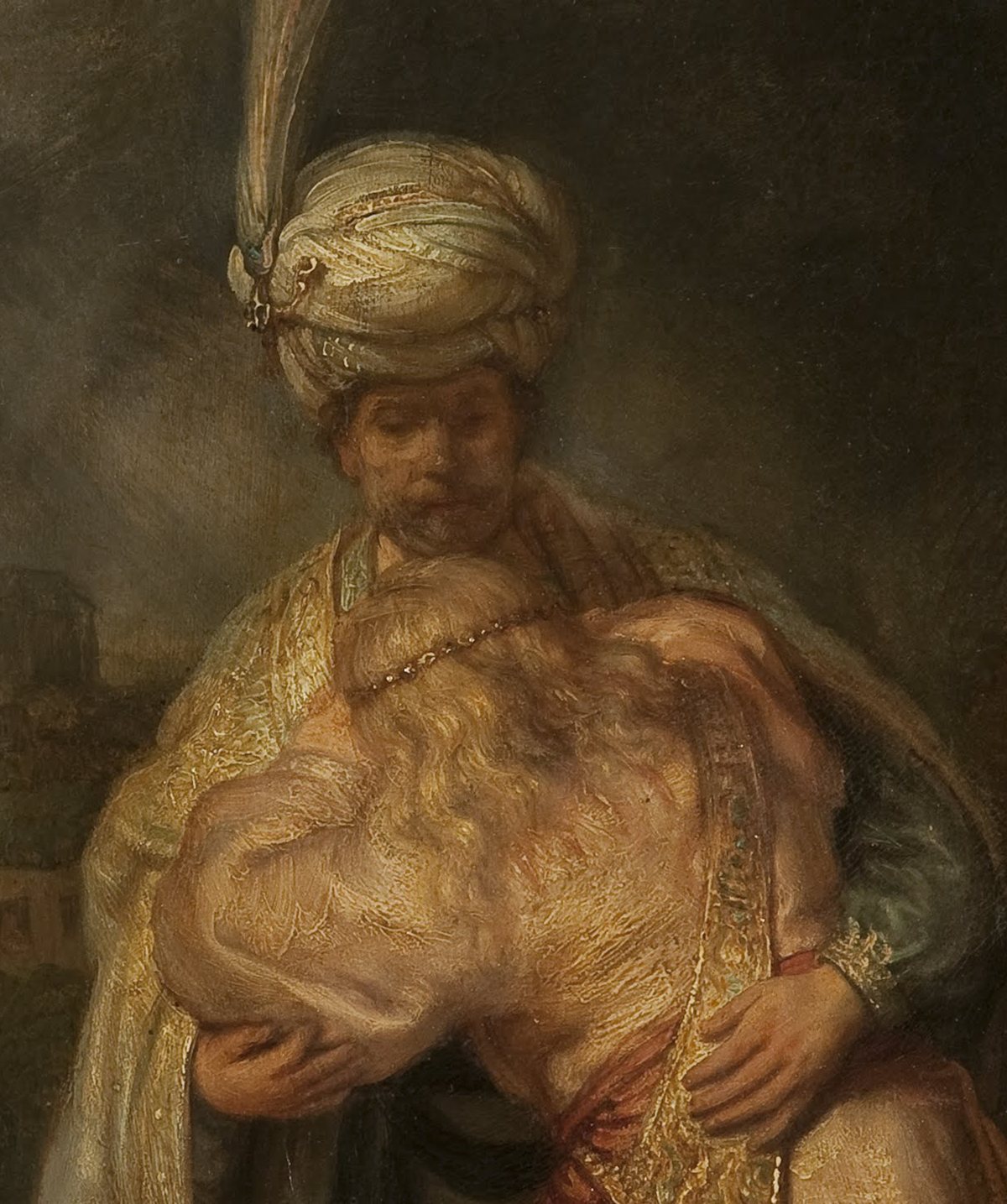
- David and Jonathan, Rembrandt, 1642. The Hermitage, Saint Petersburg. Public domain. Detail.