
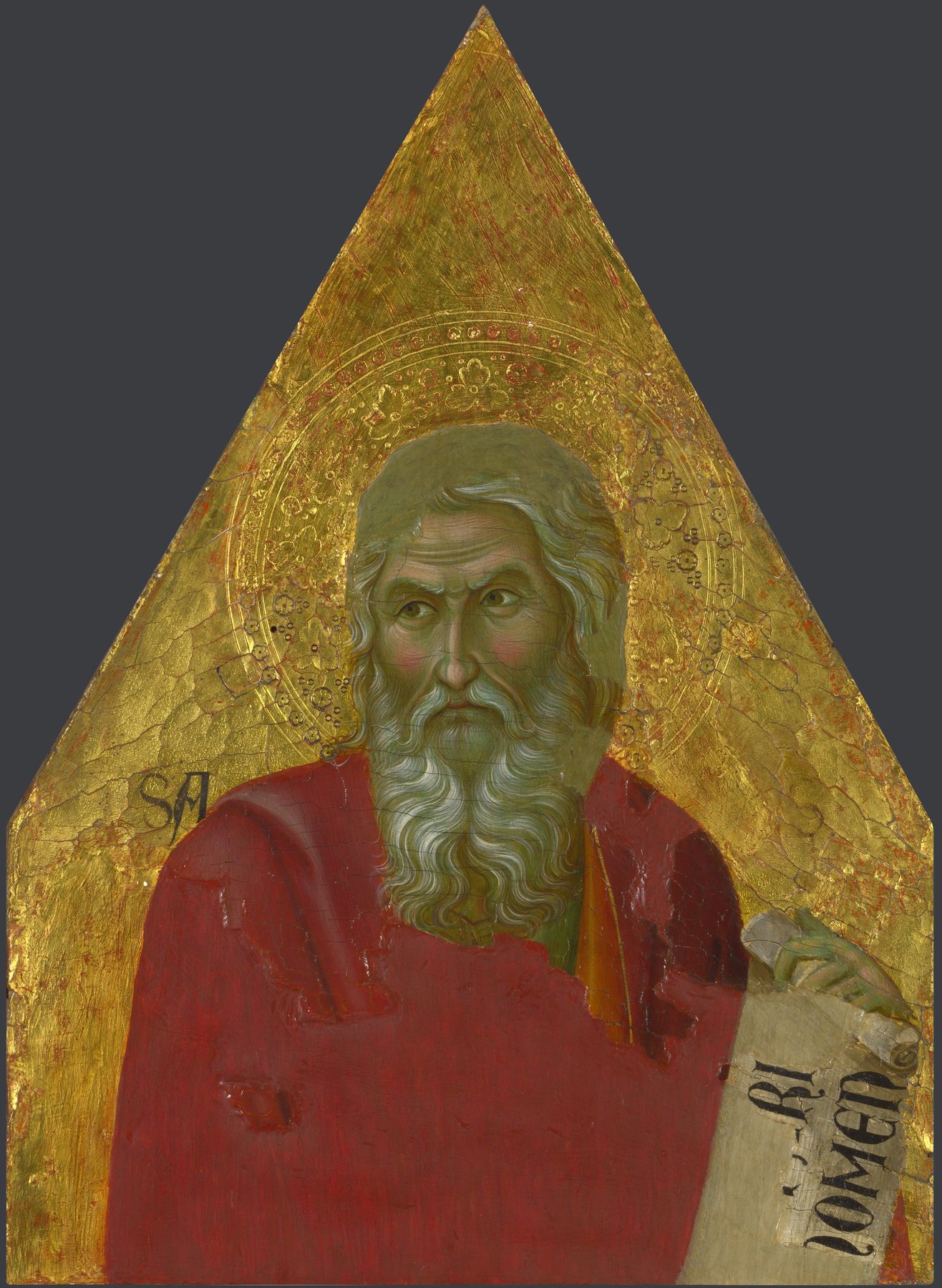
Isaiah
He foretold the Messiah so fully, from His birth to His suffering for the sins of others, that some called him an evangelist rather than a prophet.
Picture: Ugolino di Nerio, Isaiah, about 1325, from the altarpiece of Santa Croce in Florence. National Gallery, London
Who was Isaiah?
Isaiah son of Amoz was a prophet in the 700s BC, called when he saw God on His throne in the temple. When an Assyrian army came against Jerusalem, he promised King Hezekiah that it would never enter the city, and that night an angel struck the army down. The New Testament quotes him more than any other prophet.
at a glance
His path, in order
- CalledIn the temple, about 740 BC, he answered God, “Here am I. Send me!”
- Prophet to AhazGave the king the sign of Immanuel, which Matthew saw fulfilled in Jesus
- Counsellor to HezekiahPromised that Assyria’s army would never enter Jerusalem, 701 BC
- Prophet of the exileWarned that Babylon would one day carry off the king’s treasures
- MartyrBy tradition, sawn in two under King Manasseh
in numbers
- Assyrian soldiers struck down185k
- in one night by the angel of the LORD, to save Jerusalem
- years added to a king's life15
- when Hezekiah prayed and wept
did you know?
-
A seraph touched Isaiah's lips with a burning coal and told him, “Now that this has touched your lips, your iniquity is removed.” After Communion an Orthodox priest wipes his lips and says the same of himself.
Isaiah 6:6-7; the Divine Liturgy, in Isabel Hapgood's Service Book (1906) -
Jesus read Isaiah's words “He has anointed Me to preach good news to the poor” in the synagogue at Nazareth. Then He said, “Today this Scripture is fulfilled in your hearing.”
Luke 4:16-21 -
Before his baptism, Augustine asked Bishop Ambrose of Milan what to read. Ambrose chose Isaiah. Augustine guessed it was because Isaiah foretells the Gospel most clearly, but he could not understand the opening and set the book aside until he knew Christ's words better.
Augustine, Confessions, book 9, tr. E. B. Pusey -
In 1947 a scroll holding all 66 chapters of Isaiah was found at Qumran, by the Dead Sea. Copied about 125 BC, it is some 1,000 years older than the oldest copy of the Hebrew Bible known before it was found.
Israel Museum, The Great Isaiah Scroll
- Born
- In the 700s BC, perhaps in Jerusalem. The year is not recorded
- Died
- Not told in the Bible. By tradition, King Manasseh had him killed
- Buried
- By tradition, near the waters of Siloam in Jerusalem
- Name
- Yeshayahu in Hebrew (the LORD is salvation), Esaias in Greek, Isaias in Latin
- Home
- Jerusalem
- Family
- His father was Amoz, and his wife is called “the prophetess”
- Children
- Shear-jashub (a remnant will return) and Maher-shalal-hash-baz (quick spoil, fast plunder), both named as signs
- Kings
- Uzziah, Jotham, Ahaz and Hezekiah of Judah
- Prophets of his day
- Hosea in the northern kingdom of Israel (Hosea 1:1), and Micah, whose book holds almost the same words about swords beaten into plowshares (Micah 4:1-3)
- Wrote
- The Book of Isaiah and a history of King Uzziah, now lost. Many scholars think later writers added to the book
- In the Bible
- The Book of Isaiah, 2 Kings 19 and 20, and 2 Chronicles 26 and 32
- Status
- Prophet, honoured as a saint
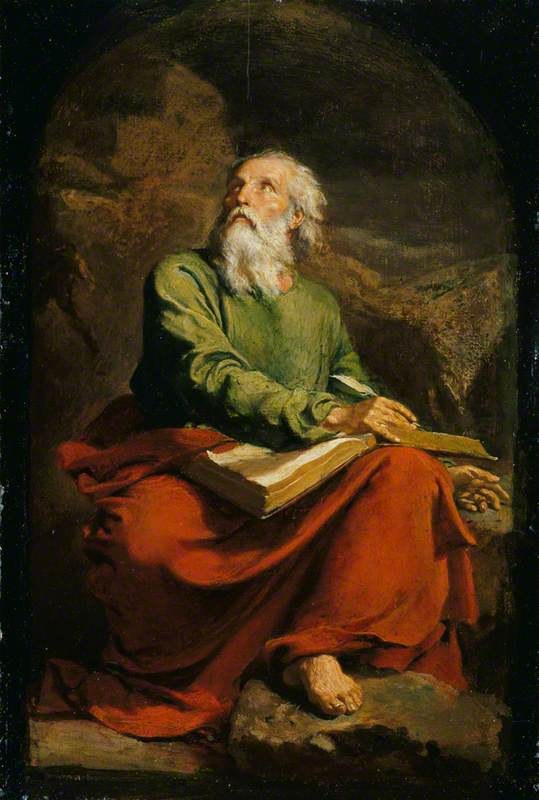
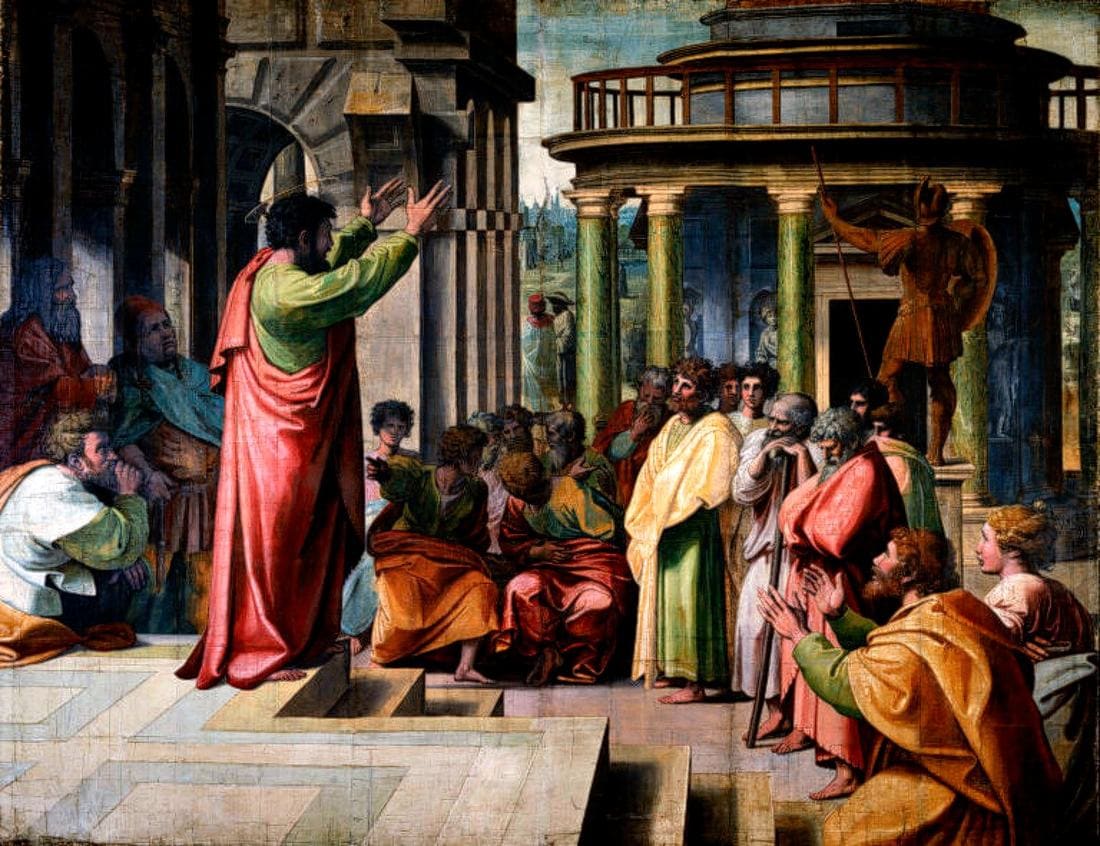 The Herald
His personality type
Sure of himself, and at his best when there is something to do.
In Pope Gregory the Great's terms
- Confident
- Restless mind
Our reading, from the Christian Personality Test. When God asked, “Whom shall I send?”, he offered himself at once. Moses before him and Jeremiah after him both held back when God called them.
See The Heraldfeast days
East and West
West
- Jul6
Catholic: named in the Roman Martyrology, as a martyr. Also kept by the Lutheran Church-Missouri Synod.
East
- May9
Orthodox: churches on the old (Julian) calendar, 13 days behind, keep it on 22 May.
- Sep16
Coptic: the day of his death, 6 Tout in the Coptic calendar, which falls on 16 September (17 September in the year before a leap year).
what others said of him
Isaiah said these things because he saw Jesus’ glory and spoke about Him.
He saw by an excellent spirit what would come to pass in the future; and he comforted those who mourned in Zion.
he was by the confession of all, a divine and wonderful man in speaking truth
As for Isaiah, Jeremiah, Ezekiel, and Daniel, who can fully understand or adequately explain them? The first of them seems to compose not a prophecy but a gospel.
his life in nine moments
The temple, Jerusalem
About 740 BCCalled in the temple
In the year King Uzziah died, Isaiah saw the Lord seated on a high throne in the temple, the train of His robe filling it. Above Him stood six-winged seraphim, calling to one another, “Holy, holy, holy is the LORD of Hosts; all the earth is full of His glory.” The doorposts shook and smoke filled the temple.
Isaiah cried out that he was ruined, a man of unclean lips who had seen the King. One of the seraphim flew to him and touched his lips with a glowing coal from the altar, taking his guilt away. Then the Lord asked whom He should send, and Isaiah answered, “Here am I. Send me!”
Isaiah 6:1-8Judah
At his callA hard message, and a holy seed
God gave Isaiah a hard message in the vision that called him. He was to tell the people, “Be ever hearing, but never understanding,” and make their hearts calloused so they would not turn and be healed (Isaiah 6:9-10). They had already turned their backs on God, Who had looked among them for justice “but saw bloodshed.”
Centuries later Jesus quoted the passage, and in His quotation it is the people themselves who “have closed their eyes” (Matthew 13:15). The preacher John Chrysostom called their blindness “voluntary and self-chosen.”
Isaiah asked, “How long, O Lord?” “Until the cities lie ruined,” God answered. Yet a remnant would be left, as a felled oak leaves a stump, and God called that remnant “the holy seed.”
Isaiah 6:9-13; 1:4; 5:7; Matthew 13:13-15; John Chrysostom, Homily 45 on MatthewThe upper pool, Jerusalem
About 735 BCAhaz at the upper pool
In about 735 BC the king of Damascus and the king of Israel marched on Jerusalem to put a man of their own on Judah's throne. Israel was then a separate kingdom in the north. King Ahaz and his people “trembled like trees in the forest shaken by the wind.”
God sent Isaiah to meet the king at the aqueduct of the upper pool. Isaiah told him not to fear “these two smoldering stubs of firewood,” but to trust God: “If you do not stand firm in your faith, then you will not stand at all” (Isaiah 7:4-9). In the end the two kings besieged Jerusalem but could not take it.
Isaiah 7:1-9, 17; 2 Kings 16:5Jerusalem
While the two kings threatenedThe sign of Immanuel
God told Ahaz to ask for any sign he liked, from the depths of the grave to the heights of heaven. Ahaz refused, saying, “I will not test the LORD,” though it was God Who had told him to ask. Isaiah answered, “Is it not enough to try the patience of men? Will you try the patience of my God as well?”
Then Isaiah gave the sign himself: “Behold, the virgin will be with child and give birth to a son, and will call Him Immanuel.” The name means “God with us,” and Matthew later saw the words fulfilled in the birth of Jesus. Isaiah also tied the sign to Ahaz's own day, saying that before the boy could tell good from evil, the two kings' lands would lie waste (Isaiah 7:16).
Ahaz put his trust in Assyria instead. He sent the temple's silver and gold to its king and begged, “I am your servant and your son. Come up and save me” (2 Kings 16:7-8).
Isaiah 7:10-16; Matthew 1:23; 2 Kings 16:7-8Jerusalem
Before 732 BCA son named as a sign
God told Isaiah to write a strange name on a large scroll, with two trusted men as witnesses. The name was Maher-shalal-hash-baz, which means quick spoil, fast plunder. Then Isaiah's wife, whom he calls “the prophetess,” bore a son, and God told Isaiah to give the boy that name (Isaiah 8:3).
God said that before the child could say “Father” or “Mother,” the king of Assyria would carry off the riches of Damascus and Samaria, the capitals of the two kings who had marched on Jerusalem. Within a few years Assyria took Damascus and killed its king, and in 722 BC it took Samaria as well.
Isaiah 8:1-4; 2 Kings 16:9; 2 Kings 18:9-10Jerusalem
Until 711 BCNaked and barefoot for three years
After Ahaz died and his son Hezekiah became king, the Philistine city of Ashdod rose against Assyria. The Assyrian king Sargon wrote that the Philistines, Judah and their neighbours sent gifts to the king of Egypt, whom he called “a prince who could not help them.” Then God told Isaiah to take off his clothes and his sandals, and for three years Isaiah walked around naked and barefoot (Isaiah 20:2-3).
It was a sign against Egypt and Cush, the kingdom south of it. The king of Assyria would lead away their captives “naked and barefoot” like Isaiah, and the people of the Philistine coast who had hoped in Egypt would ask, “How then can we escape?” In 711 BC Sargon's army took Ashdod, and no help came from Egypt.
Isaiah 20:1-6; 2 Kings 16:20; Sargon's annals, in R. W. Rogers, Cuneiform Parallels to the Old Testament (1912)The palace, Jerusalem
Before 701 BCFifteen more years
Before Assyria invaded Judah, King Hezekiah fell ill with a boil and was close to death. Isaiah told him, “Put your house in order, for you are about to die; you will not recover.” The king turned his face to the wall and wept, reminding God how faithfully he had walked before Him.
Isaiah had not yet left the palace's middle courtyard when God sent him back to say, “I have heard your prayer; I have seen your tears” (2 Kings 20:4-5). God would add 15 years to the king's life and save him and Jerusalem from the king of Assyria. Isaiah had a poultice of figs laid on the boil, and Hezekiah recovered and wrote a prayer of thanks.
Isaiah 38:1-9, 21; 2 Kings 20:1-7The palace treasury
After the king recoveredEnvoys from Babylon
When the king of Babylon heard that Hezekiah had recovered from his illness, he sent envoys with a gift. Hezekiah welcomed them and showed them all his treasure, from his silver and gold to his armory. Isaiah asked what the men had seen. “They have seen everything in my palace,” the king answered.
Isaiah told him that one day everything in the palace would be carried off to Babylon. Hezekiah's heart had grown proud, and he had not repaid God's kindness in healing him. Then he humbled himself, so the loss did not come in his lifetime (2 Chronicles 32:25-26). The very next chapter of Isaiah's book speaks to the people who would lose everything to Babylon. It opens with God's words, “Comfort, comfort My people,” and tells Jerusalem that “her iniquity has been pardoned” (Isaiah 40:1-2).
Isaiah 39:1-6; 40:1-2; 2 Chronicles 32:24-26Jerusalem's wall
701 BCThe city that was spared
In 701 BC the Assyrian king Sennacherib took the walled towns of Judah and sent an officer to demand Jerusalem's surrender. The officer shouted to the people on the wall that no god had saved any land from Assyria, and asked, “How then can the LORD deliver Jerusalem from my hand?” (Isaiah 36:20). Hezekiah spread a threatening letter from Sennacherib before the LORD in the temple and prayed.
Isaiah sent God's answer. The Assyrian king had mocked the Holy One of Israel, and he would not enter the city or shoot an arrow into it. That night the angel of the LORD struck down 185,000 men in the Assyrian camp, and Sennacherib went home to Nineveh (2 Kings 19:35-36).
Isaiah 36:1-20; 37:14-37; 2 Kings 19:35-36
his miracles
The Bible tells of one sign given at Isaiah's prayer, and later tradition adds another.
The shadow that went back
When Isaiah told the sick King Hezekiah that God would heal him, the king asked for a sign. On the stairway built by his father Ahaz, the sun's shadow crept down the steps as the day went on, and Isaiah asked whether the king wanted it to go forward 10 steps or back 10 steps.
“It is easy for the shadow to lengthen ten steps,” Hezekiah answered, “but not for it to go back ten steps.” So Isaiah called out to the LORD, and God brought the shadow back up the steps it had gone down.
“In his days the sun went backward. He prolonged the life of the king.”2 Kings 20:8-11; Isaiah 38:7-8. The quotation: Sirach 48:23, World English Bible
Water from Siloam
An old book called the Lives of the Prophets tells two stories about a spring in Jerusalem. In King Hezekiah's days enemies camped against the city, and Isaiah prayed that the spring would flow whenever the city's people came for water and stop whenever the enemy came, and it did.
Near the end of his life the spring ran low, and Isaiah prayed for a drink. Water was sent to him, and so the spring was called Siloam, which means Sent. John's Gospel gives the name the same meaning when Jesus sends a man born blind to wash in the pool.
“Go, wash in the Pool of Siloam”Lives of the Prophets, tr. I. H. Hall (1887); John 9:7
his words
These are some of the best-known lines in his book, most of them spoken in God's name.
Of the days to come
They will beat their swords into plowshares and their spears into pruning hooks. Nation will no longer take up the sword against nation, nor train anymore for war.
Isaiah spoke these words about the last days, when all nations will come to God's mountain to learn His ways. The line has travelled far beyond the Church, and in 1959 the Soviet Union gave the United Nations a bronze statue of a man hammering a sword into a plowshare.
Isaiah 2:2-4Learn to do right; seek justice and correct the oppressor. Defend the fatherless and plead the case of the widow.
Though your sins are like scarlet, they will be as white as snow; though they are as red as crimson, they will become like wool.
I will wait for the LORD, Who is hiding His face from the house of Jacob. I will put my trust in Him.
For unto us a child is born, unto us a son is given, and the government will be upon His shoulders. And He will be called Wonderful Counselor, Mighty God, Everlasting Father, Prince of Peace.
You will keep in perfect peace the steadfast of mind, because he trusts in You.
But those who wait upon the LORD will renew their strength; they will mount up with wings like eagles; they will run and not grow weary, they will walk and not faint.
three questions about his book
Who wrote it?
Jews and Christians long held that Isaiah wrote the whole book. John's Gospel quotes chapter 6 and chapter 53 side by side, both as the words of “Isaiah the prophet.” In Josephus's telling, the Persian king Cyrus read his own name in the book Isaiah had left long before, and that was why he let the Jewish exiles go home from Babylon.
The Jewish scholar Abraham ibn Ezra first hinted at other writers in the 1100s. Since the late 1700s most modern scholars have thought that later writers wrote parts of the book, above all chapters 40 to 66, the part that holds chapter 53.
In their view those chapters speak to Jews already in exile in Babylon, long after Isaiah's death, and one of them names Cyrus as the king who would set them free.
Those who believe Isaiah wrote it all answer that a prophet may speak to people of the future. The Catholic Church's Biblical Commission took that view in 1908, when it ruled that there were “no solid arguments” that several authors wrote the book.
John 12:38-41; Josephus, Antiquities of the Jews, book 11; Catholic Encyclopedia (1910), Isaias; Jewish Encyclopedia (1906), Isaiah, Book of; Encyclopaedia Britannica (1911), IsaiahA virgin, or a young woman?
Matthew writes that the virgin birth of Jesus took place “to fulfill what the Lord had said through the prophet,” quoting Isaiah 7:14.
The Hebrew word there is almah, a young woman, unmarried or newly married. Jewish teachers read the verse as a sign for the days of King Ahaz, to whom Isaiah gave it. In a debate that Justin Martyr wrote down in the AD 100s, a Jew named Trypho says the prophecy “refers to Hezekiah,” Ahaz's son. Much later, Abraham ibn Ezra thought Immanuel was a son of Isaiah himself.
Two converts to Judaism named Theodotion and Aquila put the verse into Greek as “Behold, a young woman shall conceive.” The bishop Irenaeus answered that Jews themselves had translated it long before Christ was born, and had chosen the Greek word for a virgin.
Matthew 1:22-23; Irenaeus, Against Heresies, book 3; Brenton's Septuagint, Isaiah 7:14; Brown-Driver-Briggs lexicon; Justin, Dialogue with Trypho 67; Ibn Ezra on Isaiah 7, tr. M. Friedländer (1873)Who is the suffering servant?
The New Testament reads the servant who “was pierced for our transgressions” in Isaiah 53 as Jesus. In Acts an Ethiopian official reading the passage in his chariot asked a disciple named Philip, “Who is the prophet talking about, himself or someone else?” Philip “began with this very Scripture and told him the good news about Jesus,” and baptized him that same day.
As early as the AD 200s, a Jewish scholar told the Alexandrian teacher Origen that the servant is the whole Jewish people, suffering and scattered among the nations. The medieval rabbi Rashi read it the same way: “This prophet speaks constantly of the whole people as one man.”
Like the New Testament, the old Aramaic paraphrase called the Targum names the servant as the Messiah, but turns the suffering onto others. In it the Messiah prays for the people's sins and rebuilds the temple, and it is “the mighty of the peoples” that he hands over “like a sheep to the slaughter.”
Isaiah 53:5; Acts 8:26-38; 1 Peter 2:24; Origen, Against Celsus, book 1; Rashi and the Targum, tr. Driver and Neubauer (1877)myths and misquotes
Isaiah's father was the prophet Amos.
What the sources sayHis father was Amoz, a different name in Hebrew that only looks like Amos in Greek and Latin. Some early writers mixed the two up, and Jerome pointed out the mistake.
Isaiah 1:1; Catholic Encyclopedia (1910), IsaiasIsaiah was a prince of the royal family.
What the sources sayA rabbinic tradition makes his father Amoz a brother of King Amaziah of Judah, but the Bible says nothing of it. The 1911 Britannica thought it a guess built only on the likeness of the names Amoz and Amaziah. His ease with kings does suggest he came from one of Jerusalem's leading families.
Jewish Encyclopedia (1906), Isaiah; Encyclopaedia Britannica (1911), Isaiah; Catholic Encyclopedia (1910), IsaiasThe 66 chapters of Isaiah match the Bible's 66 books, 39 for the Old Testament and 27 for the New.
What the sources sayThe match is a coincidence, because the chapter numbers came much later. The English churchman Stephen Langton divided the Bible into chapters in the Middle Ages, while he taught in Paris. Catholic and Orthodox Bibles also hold more than 66 books.
Encyclopaedia Britannica (1911), Langton, Stephen; Catholic Encyclopedia (1908), Canon of the Holy ScripturesLucifer is the devil's name, from Isaiah 14.
What the sources sayIsaiah 14 mocks the king of Babylon as a morning star fallen from heaven, and Lucifer is the Latin Bible's word for that star. Origen and Jerome saw the devil's fall in it too, but the Catholic Encyclopedia says that for the Fathers “Lucifer is not the proper name of the devil, but denotes only the state from which he has fallen.”
Isaiah 14:4, 12; Catholic Encyclopedia (1910), Lucifer; Origen, On First Principles, book 1Archaeologists have found Isaiah's own seal.
What the sources sayA small lump of clay stamped with the name Isaiah was found at the foot of the Temple Mount, near one stamped with King Hezekiah's seal, and published in 2018. Eilat Mazar led the dig, and she wrote only that it “may be” a seal impression of the prophet.
Eilat Mazar, Biblical Archaeology Review (2018)friends, family and rivals
Uzziah ruled Judah for 52 years, and God gave him success while he sought the LORD. Late in his reign pride led him to burn incense in the temple, which only priests could do. The priests told him to leave, and as he raged at them, leprosy broke out on his forehead. Isaiah recorded his reign and was called in the year Uzziah died.
2 Chronicles 26:3-5, 16-22; Isaiah 6:1Hezekiah's father Ahaz worshipped other gods and even sacrificed his own son in the fire. He ignored Isaiah's call to trust God and paid the king of Assyria to rescue him, but that king “afflicted him rather than strengthening him.”
2 Kings 16:3-4, 7-8; 2 Chronicles 28:20, 23Hezekiah trusted in the LORD as no other king of Judah did. He smashed the bronze snake Moses had made, because the people had been burning incense to it. The Assyrians took all of Judah's walled towns but Jerusalem and mocked God outside its walls. Hezekiah put on sackcloth and sent his officials to ask Isaiah to pray for the people still left.
2 Kings 18:4-5; Isaiah 36:1; 37:1-4Shebna ran King Hezekiah's palace and was cutting a grand tomb for himself high in the rock. Isaiah asked him who had given him the right to carve a tomb there, and told him God would give his robe and authority to Eliakim. By 701 BC Eliakim ran the palace, and Shebna was a scribe.
Isaiah 22:15-21; 36:3Assyria's king Sennacherib besieged Jerusalem in 701 BC. Because he had mocked the Holy One of Israel, Isaiah said he would go home without taking the city and die by the sword in his own land. After the angel of the LORD struck his camp in the night, Sennacherib went home to Nineveh, and in 681 BC two of his sons killed him.
Sennacherib had his wars written on a block of clay, which boasts of taking 46 towns in Judah and shutting Hezekiah up “like a caged bird within Jerusalem,” but never of taking the city.
R. W. Rogers, Cuneiform Parallels to the Old Testament (1912); Isaiah 37:36-38Manasseh rebuilt the pagan shrines his father Hezekiah had torn down, and by tradition he had Isaiah killed. When God warned him and he would not listen, God sent the commanders of the Assyrian army, who took him to Babylon in chains. There he humbled himself, and God heard him and brought him home.
2 Kings 21:1-3; 2 Chronicles 33:10-13how he died
The Bible does not tell how Isaiah died. Jewish and Christian tradition from the first century AD says that Hezekiah's son King Manasseh had him sawn in two with a wooden saw.
In the oldest telling, Manasseh had turned from God to serve Satan. A false prophet told him that Isaiah had foretold Jerusalem's ruin and the king's own captivity in chains. The words pleased the king, and he had Isaiah seized.
As the sawing began, the false prophet told Isaiah to say he had lied, and promised that all Jerusalem would then honour him. Isaiah refused. Caught up in a vision of the Lord, he neither cried out nor wept as he died.
From early on, Christians took him to be one of those sawn in two in Hebrews 11:37, of whom the next verse says, “The world was not worthy of them.”
is he a saint?
Isaiah is honoured as a saint in the Orthodox and Catholic calendars, as a prophet and as a martyr.
- OrthodoxProphet and martyrKept on 9 May
- CatholicIn the Roman MartyrologyNamed on 6 July, as a martyr
- CopticProphetKept on 16 September, the day of his death
- LutheranCommemoratedKept on 6 July in the Missouri Synod
Having received the gift of prophecy, O prophet and martyr Isaiah, herald of God, you made known to all that the Lord would become man, crying aloud to the ends of the earth: “Behold, the Virgin shall conceive in her womb.”
what to read first
Isaiah 6
Berean Standard Bible
His call in the temple, told in his own words, in 13 verses.
Read it freeIsaiah 36 to 39
Berean Standard Bible
The longest story about him, with King Hezekiah, the Assyrian army at the walls and the envoys from Babylon.
Read it freeThe Ascension of Isaiah
Translated by R. H. Charles (1900)
The old Jewish story of his death under Manasseh, with a later Christian vision joined to it.
Read it freetake the quizzes
 Quiz Who in the Bible are you most like? Answer eighteen plain statements about you, none of them about the Bible, and see which person of the Bible you are most like. Start
 Quiz Christian

Personality Test Isaiah reads as The Herald. Find your own type. Start
people like him
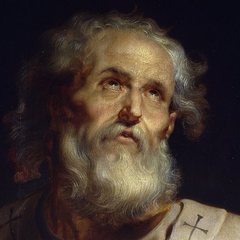 PeterThe Herald
Peter was as quick as Isaiah to offer himself. “Even if all fall away on account of You, I never will,” he told Jesus. He denied Him that same night, then wept, came back and led the Church.
Matthew 26:33, 75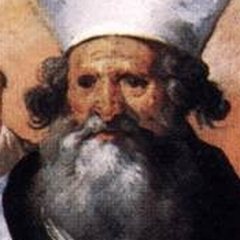 Basil the GreatThe Herald
Basil the Great shared Isaiah's readiness to put himself forward, though as a young man it showed in him as pride. He came home from his studies a practised speaker who looked down on his town's leading men. Then his sister Macrina drew him to the life of a monk, and he gave away his property to work with his hands.
Gregory of Nyssa, Life of Macrinasources
His life
- The Book of Isaiah, with 2 Kings 16 to 21 and 2 Chronicles 26 to 33. Berean Standard Bible.
- Sirach 48. World English Bible.
- The Ascension of Isaiah. Tr. R. H. Charles, 1900.
- The Lives of the Prophets, from the Syriac. Tr. Isaac H. Hall, 1887.
- Josephus, Antiquities of the Jews, books 8 to 11. Tr. William Whiston, 1737.
- R. W. Rogers, Cuneiform Parallels to the Old Testament, 1912, with the annals of Sargon and Sennacherib.
The Fathers and later readers
- Justin Martyr, Dialogue with Trypho, chapters 67 and 120.
- Irenaeus, Against Heresies, book 3, chapter 21.
- Origen, Against Celsus, book 1, chapter 55; On First Principles, book 1.
- John Chrysostom, Homily 45 on Matthew. Tr. George Prevost, 1888.
- Jerome, Letter 53, to Paulinus. Tr. W. H. Fremantle, 1893.
- Augustine, Confessions, book 9. Tr. E. B. Pusey.
- S. R. Driver and A. Neubauer, The Fifty-Third Chapter of Isaiah according to the Jewish Interpreters, vol. 2, 1877.
- The Commentary of Ibn Ezra on Isaiah. Tr. M. Friedländer, 1873.
Reference
- Catholic Encyclopedia, Isaias (1910); also Lucifer, and Canon of the Holy Scriptures.
- Jewish Encyclopedia, Isaiah (1906).
- Jewish Encyclopedia, Isaiah, Book of (1906).
- Encyclopaedia Britannica, Isaiah (1911); also Langton, Stephen.
- Brenton's Septuagint, Isaiah 7 (1851).
- Brown-Driver-Briggs Hebrew lexicon, almah (1906).
- Eilat Mazar, Is This the Prophet Isaiah's Signature?, Biblical Archaeology Review, 2018.
- United Nations, Let Us Beat Swords Into Ploughshares
- Israel Museum, The Great Isaiah Scroll, in The Digital Dead Sea Scrolls.
- Isabel F. Hapgood, Service Book of the Holy Orthodox-Catholic Apostolic Church, 1906.
Calendars
- Orthodox Church in America, Prophet Isaiah, 9 May.
- Azbyka.ru, Prophet Isaiah, troparion and kontakion in Church Slavonic.
- The Roman Martyrology (1916), 6 July.
- Lutheran Church-Missouri Synod, Commemorations, 6 July.
- Coptic Synaxarium, Tout 6, The Departure of Isaiah the Prophet.
Pictures
- Ugolino di Nerio, Isaiah, about 1325. National Gallery, London. Public domain.
- Isaiah, fresco at Lagoudera, Cyprus, 1192. Photograph: Dumbarton Oaks. CC0.