
Origen of Alexandria
Church Father. Not counted a saint.
A great Bible scholar of the early Church, tortured for his faith. Some of his ideas were condemned three centuries after he died.
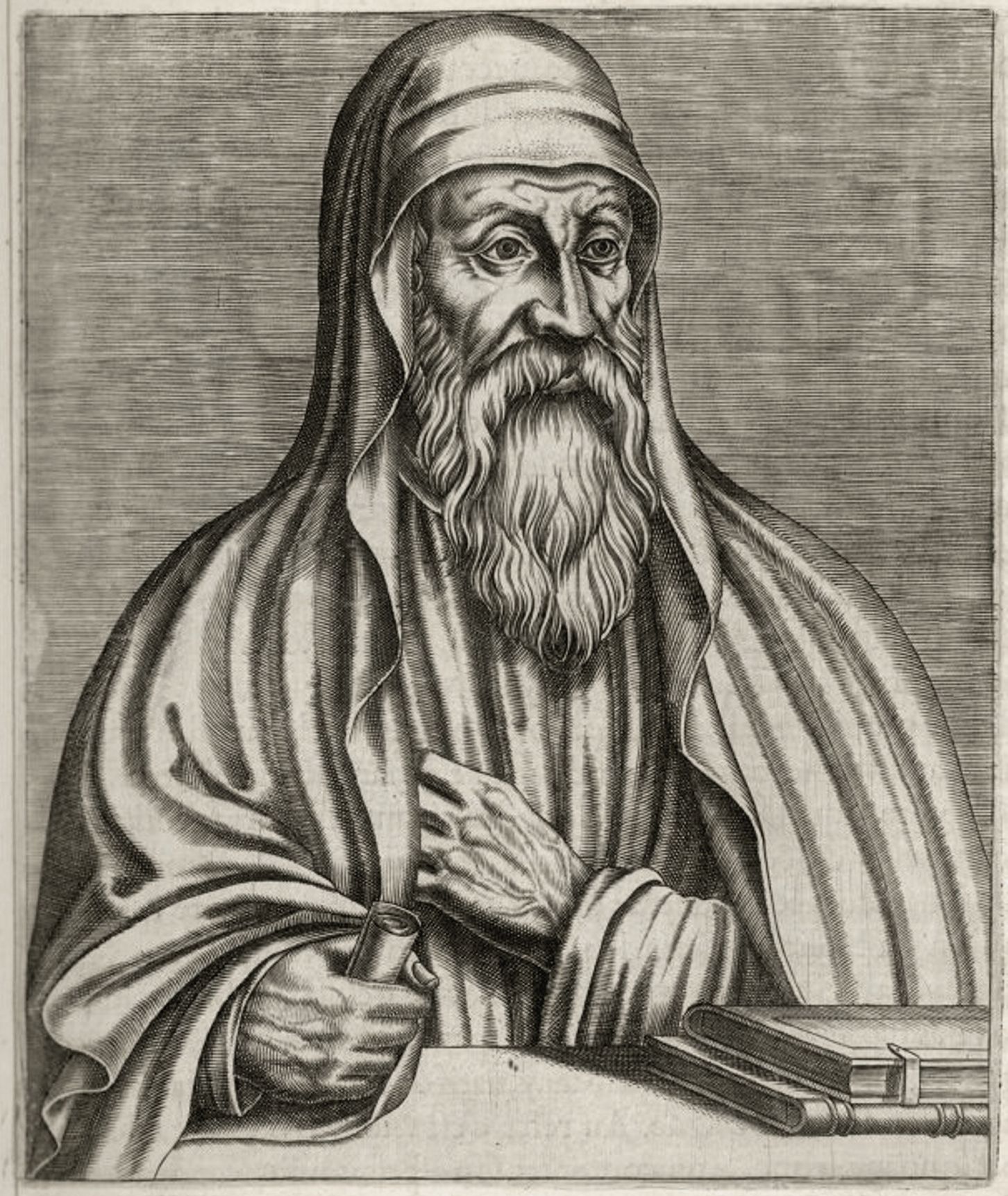
Picture: Origen, an imagined likeness. Engraving from André Thevet's Les vrais pourtraits, Paris, 1584. Public domain.
Who was Origen?
Origen was a teacher and Bible scholar of Alexandria in Egypt. At eighteen he ran its school for new Christians. He learned Hebrew and wrote more than any Christian before him. He was tortured for his faith and died a few years later. Some of his ideas were condemned about three centuries later, and no church counts him a saint.
at a glance
His path, in order
- TeacherHead of the Alexandrian school at 18
- Bible scholarLearned Hebrew; built the six-column Hexapla
- PriestOrdained at Caesarea, about 230
- PrisonerTortured under Decius, and survived
in numbers
- Age when his father was martyred16
- His father, Leonides, was beheaded for the faith in 202
- “Not quite seventeen years old”, says Eusebius
- Secretaries taking his dictation7+
- More than seven, taking turns as he spoke
- At least as many copyists, all paid for by his patron Ambrose
- Columns in his Hexapla6
- The Hebrew, the Hebrew in Greek letters, and four Greek versions
- Made for debates with rabbis, for whom only the Hebrew had authority
did you know?
-
As a boy he puzzled his father with questions about the deeper meaning of Scripture. The story went that his father would stand over his sleeping son, bare the boy's chest and kiss it, as if the Spirit of God lived there.
Eusebius, Church History, Book 6, chapter 2 -
Jerome said that in his other books Origen outdid every other writer, but in his ten volumes on the Song of Songs he outdid himself.
Jerome, Preface to Origen's Homilies on the Song of Songs -
He had his pupils read every philosopher and poet of old, rejecting nothing. Only the atheists, who deny that there is a God or a providence, were not worth reading, he held.
Gregory the Wonderworker, Oration and Panegyric Addressed to Origen, Argument 13
- Born
- About 185, probably at Alexandria in Egypt. His parents were Christians, says Eusebius. The pagan Porphyry said otherwise.
- Grew up
- At Alexandria. His father, Leonides, taught him the Bible before Greek learning. He made the boy learn and recite passages every day.
- Died
- About 253 or 254, at Tyre, today Sour in Lebanon. He was 69.
- Buried
- At Tyre. Pilgrims long visited his tomb behind the high altar of the cathedral. Its place is now unknown.
- Also called
- Adamantius, the “man of adamant”. Eusebius says it was his other name. Jerome says his zeal for the Bible earned it.
- Status
- Church Father, in the everyday sense. In strict Catholic usage he is an “ecclesiastical writer”, not a Father.
- Feast day
- None. No church keeps one. His father, St Leonides, is in the 1916 Roman Martyrology on 22 April. His martyred pupils are there on 28 June.
- In art
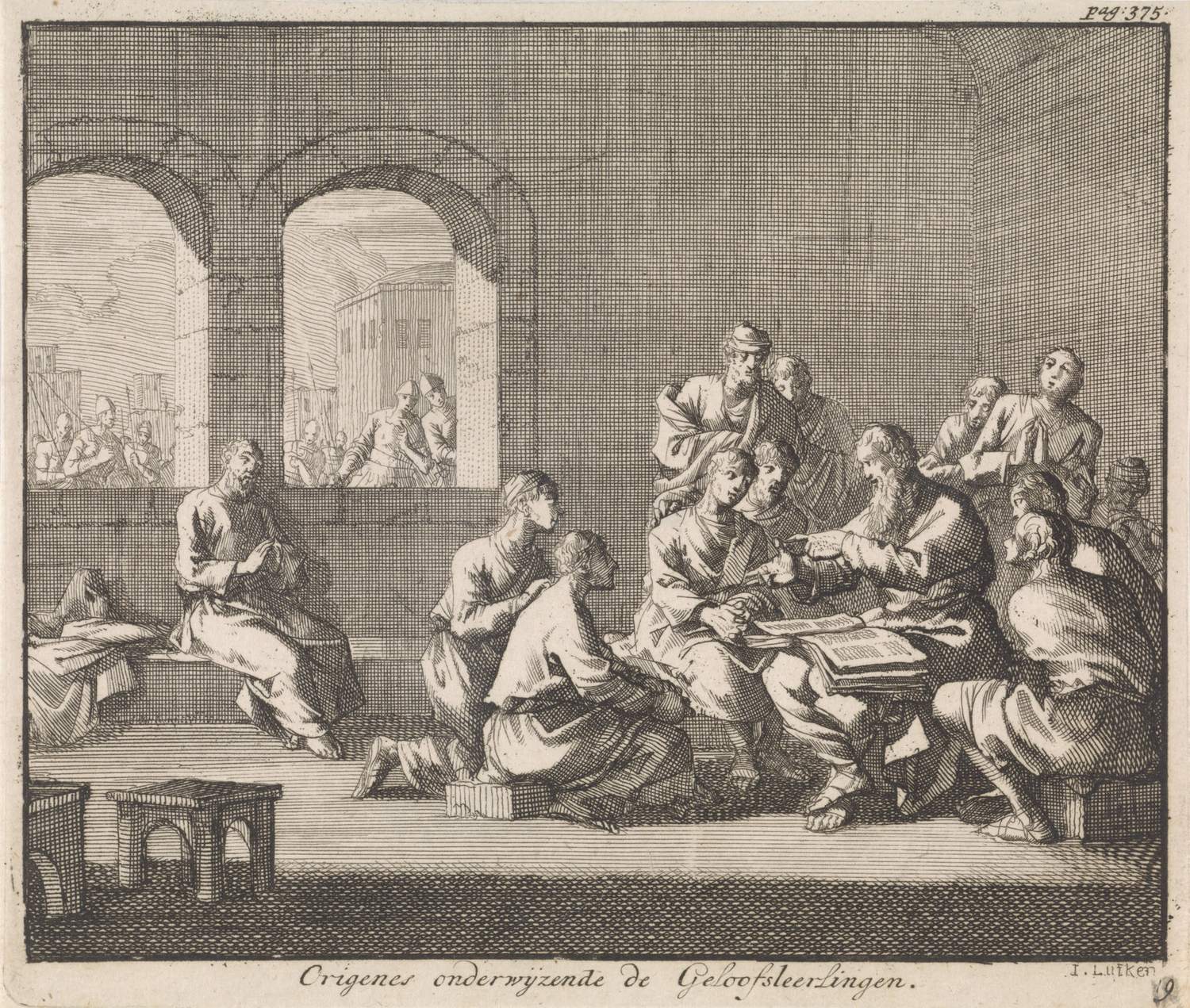
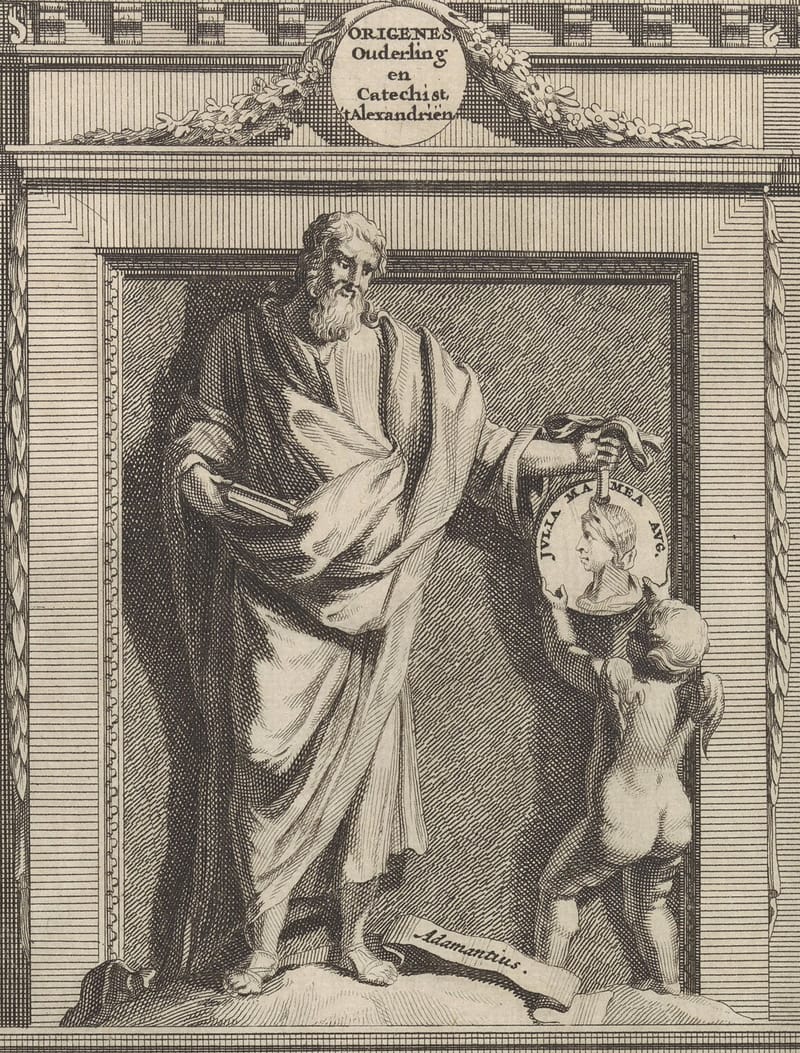
- No likeness survives. Western books show an old scholar with books, or a teacher among his students.
- Wrote
- More than any writer before him, says Jerome. Commentaries and sermons on much of the Bible, the Hexapla, On First Principles, Against Celsus and letters. Most is lost, or survives only in Latin.
- Pronounced
- OR-uh-jun, or OR-ih-jen.
what was he like?
+prayer and reading, day and night
His patron Ambrose wrote that they never ate a meal together without something read aloud. They never went to bed until a brother had read them some Scripture. Jerome, retelling it, says: “Night and day, in fact, were so ordered that prayer only gave place to reading and reading to prayer.”
Jerome, Letter 43, to Marcella+lived as he taught
For years he went barefoot and slept on the ground. He drank no wine and ate only what he needed. He nearly ruined his health. People said “his manner of life was as his doctrine, and his doctrine as his life”.
Eusebius, Church History, Book 6, chapter 3+fair to his opponents
He answered the pagan Celsus in eight books. Celsus had promised a second book, and Origen asked his patron to send it if it existed. He would refute what was false in it. Or else, he wrote, “laying aside all jealousy, we may testify our approval of whatever truth it may contain”.
Against Celsus, Book 8, chapter 76+brave, but not reckless
As a boy he longed to die a martyr. As a man he did not go looking for death. On how Jesus withdrew after John the Baptist was killed, he wrote: “When a temptation comes which is not in our power to avoid, we must endure it with exceeding nobleness and courage; but, when it is in our power to avoid it, not to do so is rash.”
Commentary on Matthew, Book 10, section 23what others said of him
Most of what we know of his life comes from Eusebius, who collected Origen's letters and spoke with people who had known him.
And thus, like some spark lighting upon our inmost soul, love was kindled and burst into flame within us, a love at once to the Holy Word, the most lovely object of all, Who attracts all irresistibly toward Himself by His unutterable beauty, and to this man, His friend and advocate.
Origen, whom all but the ignorant acknowledge as the greatest teacher of the Churches next to the Apostles.
I have praised the commentator but not the theologian, the man of intellect but not the believer, the philosopher but not the apostle.
…you may hear again from the labour-loving Origen also.
I can not sufficiently express my astonishment, that a man so erudite and well versed in ecclesiastical literature, should not have observed…
his life in eight moments
Alexandria
202The hidden clothes
Persecution broke out under the emperor Severus, and Origen's father Leonides was arrested. The boy was set on being a martyr too. His mother begged him to stay. Then she hid all his clothes, so he could not leave the house. So he wrote to his father instead: “Take heed not to change your mind on our account.” Leonides was beheaded. The family's property was seized, and Origen was left with his mother and six younger brothers.
Eusebius, Church History, Book 6, chapters 1 and 2Alexandria
About 203Head of the school at eighteen
Persecution had driven the Christian teachers out of the city. So pagans came to the young Origen to learn the faith. At eighteen he took charge of Alexandria's school for new Christians. He gave up his paid school of grammar. So that he would need no help from others, he sold his valuable books of ancient literature. The buyer paid him four obols a day, and he lived on that for years.
Eusebius, Church History, Book 6, chapter 3; Jerome, Lives of Illustrious Men, chapter 54Alexandria
Under the emperor SeverusBeside the martyrs
Several of his first pupils were arrested and killed. He stood by the martyrs in prison, friends and strangers alike, and walked with them to their deaths. He kissed them in public, and the crowds nearly turned on him. Soldiers were posted round the house where he lived. He had to move from house to house.
Eusebius, Church History, Book 6, chapters 3 and 4Alexandria
As a young teacherA deed he was blamed for
Eusebius says Origen took Jesus's words about eunuchs too literally (Matthew 19:12) and castrated himself. He taught women as well as men, and he wanted to leave no room for scandal. Eusebius calls it the deed of “an immature and youthful mind”, yet “the highest proof of faith and continence”. His bishop admired it at first, but later used it against him. Some historians doubt the story. Britannica says it “may merely have been hostile gossip”.
Eusebius, Church History, Book 6, chapter 8; BritannicaAlexandria
From about 212A Bible in six columns
He learned Hebrew. Jerome says that was “contrary to the spirit of his time, and of his people”. He hunted down Greek translations of the Old Testament, even some long hidden. One, he said, he found in a jar at Jericho. Then he set them side by side with the Hebrew, column by column. The work is called the Hexapla, for its six columns.
Eusebius, Church History, Book 6, chapter 16; Jerome, Lives, chapter 54Antioch
When Alexander was emperorSent for by the emperor's mother
His fame reached Mammaea, mother of the emperor Alexander. Eusebius calls her “a most pious woman, if there ever was one”. She was staying at Antioch, and she sent a military escort to bring him to her. He stayed a while and taught her about Christ. Then he hurried back to his work.
Eusebius, Church History, Book 6, chapter 21Caesarea
About 230Ordained, then driven out
Sent on church business to Greece, he passed through Palestine. There the bishops of Caesarea and Jerusalem ordained him a priest. His own bishop, Demetrius, was furious. A council of bishops ordered him out of Alexandria, but let him stay a priest. Then Demetrius and some Egyptian bishops took his priesthood away too. He moved to Caesarea for good.
Eusebius, Church History, Book 6, chapters 23 and 26; Photius, Bibliotheca, codex 118Caesarea
From 231A second school
At Caesarea he opened a new school, and pupils came from other countries. The bishops of Jerusalem and Caesarea sat under him “as their only teacher”. Two brothers stayed five years, and both became bishops in Pontus. One of them is remembered as Gregory the Wonderworker.
Eusebius, Church History, Book 6, chapters 27 and 30
his words
Much of Origen is lost. Some survives in his own Greek. Much survives only in Latin, in translations by Rufinus and Jerome. Rufinus said he left out passages he took for forgeries. Each line says where it comes from.
After his own bishop condemned him
We ought to pity them, not to hate them, to pray for them, not to curse them. For we have been created for blessing, not for cursing.
From a letter to friends at Alexandria, about the bishops who had cast him out. The Greek is lost. It survives because Jerome translated it, to show that Rufinus, Jerome's rival, had cut it.
Letter to friends at Alexandria, quoted by Jerome, Apology against Rufinus, Book 2, section 18For stronger than all the evils in the soul is the Word, and the healing power that dwells in Him; and this healing He applies, according to the will of God, to every man.
We may therefore make bold to say that the Gospels are the first fruits of all the Scriptures, but that of the Gospels that of John is the first fruits. No one can apprehend the meaning of it except he have lain on Jesus' breast and received from Jesus Mary to be his mother also.
Be not satisfied with knocking and seeking; for prayer is of all things indispensable to the knowledge of the things of God.
For who that has understanding will suppose that the first, and second, and third day, and the evening and the morning, existed without a sun, and moon, and stars?
That alone is to be accepted as truth which differs in no respect from ecclesiastical and apostolic tradition.
often misquoted
Origen taught reincarnation.
What the sources sayHe rejected it by name, as “the dogma of transmigration, which is foreign to the church of God, and not handed down by the Apostles, nor anywhere set forth in the Scriptures”. What he did teach, and what was later condemned, is that souls existed before birth. That is a different idea.
Commentary on Matthew, Book 13, section 1Origen said even the devil would be saved.
What the sources sayIn a letter he denied it angrily, as “a thing which not even a madman can say”. But Jerome, who read the debate behind the charge, says Origen argued there that the devil fell by his own will, and so could be saved. Augustine, writing in the 420s, believed Origen taught it. So it is still argued.
Jerome, Apology against Rufinus, Book 2, sections 18 and 19; City of God, Book 21, chapter 17Origen wrote 6,000 books.
What the sources sayRufinus said a bishop hostile to Origen claimed to have read 6,000 of his books. Jerome called the story false. Eusebius's list of Origen's works, he said, came to “not a third of that number of books”.
Jerome, Apology against Rufinus, Book 2, section 22He was condemned as a heretic in his own lifetime.
What the sources sayNot for his teaching, Jerome says. His bishop had him banished and deposed after he was ordained a priest at Caesarea. The censure, Jerome writes, was not “because of the novelty or heterodoxy of his doctrines”. It was because men “could not tolerate” his eloquence. Jerome wrote that about 384, before he turned against Origen. Britannica adds that his bishop was also shocked by his view that even the devil could repent. Councils condemned his ideas only after his death.
Jerome, Letter 33, to Paula, section 4; Photius, Bibliotheca, codex 118; BritannicaHe read the whole Bible as allegory, and did not believe its history.
What the sources sayHe said the opposite: “the passages that are true in their historical meaning are much more numerous than those which are interspersed with a purely spiritual signification”. He did think some passages could not be literal, such as days before there was a sun.
On First Principles, Book 4, chapter 1, section 19Gregory of Nazianzus called Origen the whetstone of us all.
What the sources sayThe 1911 Catholic Encyclopedia gives no work of Gregory's for it. Its source is the Suda, a Byzantine lexicon of about 1000. What is certain is that Gregory and Basil the Great made the Philocalia, a book of passages from Origen. About Easter 382 Gregory sent a copy to a friend, “containing a selection of passages useful to students of literature”.
Catholic Encyclopedia, 1911; Gregory of Nazianzus, Letter 115where he stood
Most of these lines are his own words. Two come to us through others: Eusebius, and Jerome, who quoted Origen to attack him. His hope that the Word will win every soul is close to the teaching later condemned. TapClick “Show his line” to read it.
Your answers are next to his. From your result on . See your result
“Wisdom is worth learning from anyone, even people who don't share your faith.”
Origen strongly agrees.
You
Show his line
The children of the philosophers speak of geometry and music and grammar and rhetoric and astronomy as being ancillary to philosophy; and in the same way we might speak of philosophy itself as being ancillary to Christianity.Letter to Gregory, section 1
“Anger at real wrongdoing can be a good thing.”
Origen disagrees.
You
On record in Against Celsus. Not quoted here.
“Lying can be the right thing to do if it protects someone.”
Origen agrees.
You
Show his line
But a man on whom necessity imposes the responsibility of lying is bound to use very great care, and to use falsehood as he would a stimulant or a medicine.Miscellanies, Book 6 (lost), as Jerome quotes it in Apology against Rufinus, Book 1, section 18
“God still speaks to people through dreams.”
Origen strongly agrees.
You
Show his line
Many have been converted to Christianity as if against their will, some sort of spirit having suddenly transformed their minds from a hatred of the doctrine to a readiness to die in its defense, and having appeared to them either in a waking vision or a dream of the night.Against Celsus, Book 1, chapter 46
“Miracles still happen today, just as they did in the Bible.”
Origen agrees.
You
Show his line
They expel evil spirits, and perform many cures, and foresee certain events.Against Celsus, Book 1, chapter 46
“Some questions about God are better left alone.”
Origen strongly disagrees.
You
On record in On First Principles. Not quoted here.
“In many Bible stories, the deeper meaning matters more than the history.”
Origen strongly agrees.
You
Show his line
I do not suppose that anyone doubts that these things figuratively indicate certain mysteries, the history having taken place in appearance, and not literally.On First Principles, Book 4, chapter 1, section 16
“If you believe God is calling you, follow, even if your family begs you not to.”
Origen strongly agrees.
You
Show his line
Take heed not to change your mind on our account.Letter to his father, as Eusebius records it in Church History, Book 6, chapter 2
“A church should keep out people who openly live in serious wrongdoing.”
Origen agrees.
You
On record in Against Celsus. Not quoted here.
“A Christian can fight in a just war with a clear conscience.”
Origen strongly disagrees.
You
Show his line
We do not indeed fight under him, although he require it; but we fight on his behalf, forming a special army — an army of piety — by offering our prayers to God.Against Celsus, Book 8, chapter 73
“In the end, God will save everyone.”
Origen strongly agrees.
You
Show his line
But our belief is, that the Word shall prevail over the entire rational creation, and change every soul into His own perfection.Against Celsus, Book 8, chapter 72
See where you stand beside him. Take the quiz
friends, family and rivals
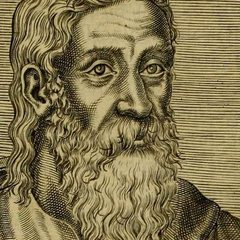 Clement of Alexandria
 Eusebius says Origen studied under him as a boy. Photius says Origen followed him as head of the school.
Eusebius, Church History, Book 6, chapter 6; Photius, codex 118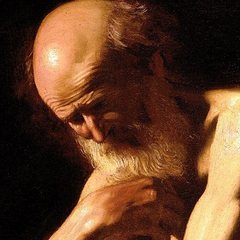 Jerome
 He praised Origen and translated his sermons. Then he turned against his ideas, and fell out bitterly with Rufinus over them.
Jerome, Letter 84; Britannica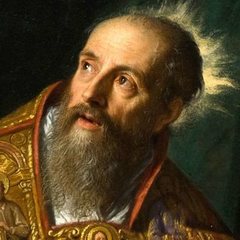 Augustine of Hippo
 Writing in the 420s, he judged the Church right to condemn Origen's hope that even the devil would be freed.
City of God, Book 21, chapter 17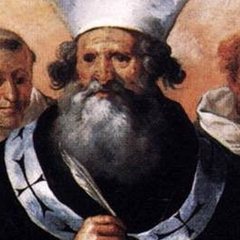 Basil the Great
 With his friend Gregory of Nazianzus, he made the Philocalia, a book of passages from Origen.
Gregory of Nazianzus, Letter 115; Britannica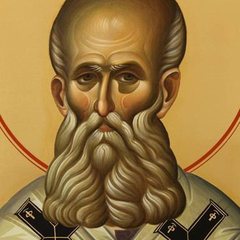 Gregory of Nazianzus
 He made the Philocalia with Basil, and sent a copy to a friend as a gift.
Gregory of Nazianzus, Letter 115His father. He taught Origen the Bible and was beheaded for the faith in 202. The 1916 Roman Martyrology counts him a saint.
Eusebius, Church History, Book 6, chapters 1 and 2His bishop. He put Origen in charge of the school, then turned on him after the ordination. Jerome says he “wrote everywhere to injure his reputation”. The Coptic Church honours Demetrius as a saint.
Jerome, Lives, chapter 54; Coptic Synaxarium, 12 BabaAn early pupil, then his assistant. He took over the school and later became bishop of Alexandria. Britannica says he ended by refusing communion with Origen. The 1911 Catholic Encyclopedia says there is no proof he broke with him.
Eusebius, Church History, Book 6, chapters 3, 15 and 26; Britannica; Catholic Encyclopedia, 1911Not Ambrose of Milan. A rich man whom Origen won over from a heretical sect, the Valentinians. He paid for Origen's secretaries and kept him writing.
Eusebius, Church History, Book 6, chapters 18 and 23His pupil at Caesarea for five years. His farewell speech to Origen survives, and so does Origen's letter to him.
Eusebius, Church History, Book 6, chapter 30A friendly critic. He argued that the story of Susanna in Daniel was a later forgery. Origen sent a long, courteous reply.
The letters of Africanus and OrigenHe put On First Principles into Latin. He said he left out passages that clashed with the faith, taking them for forgeries by others. Much of Origen survives only in his Latin.
Rufinus, preface to On First Principles, Book 3; Britannicahow he died
He died at Tyre about 253 or 254, at the age of 69. A few years before, he had been tortured for his faith.
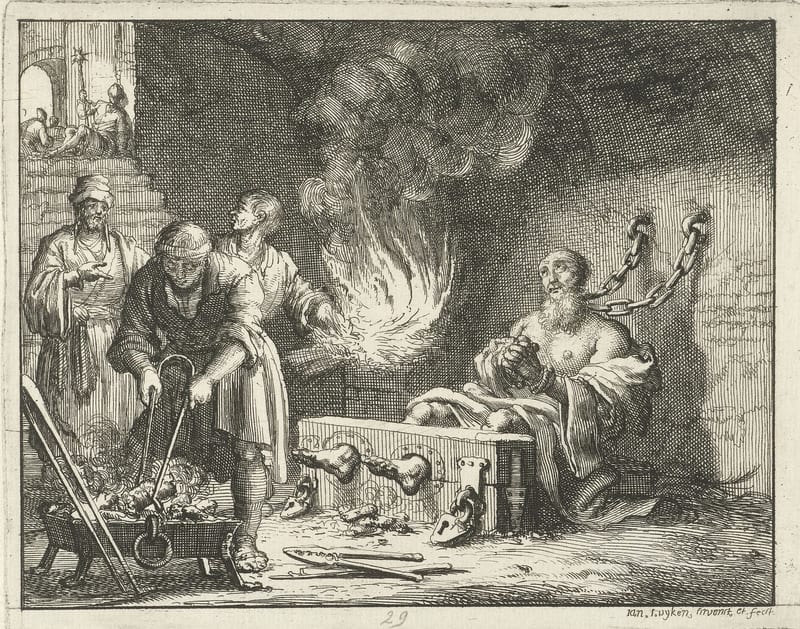
In 250 the emperor Decius began a persecution. Origen was chained and thrown into a dungeon, with an iron collar round his neck. For many days his feet were stretched wide in the stocks. He was threatened with fire.
His torturers hoped he would give up his faith, so they kept him alive. Eusebius says his judge “strove eagerly with all his might not to end his life”. Origen held firm, and survived. The letters he wrote afterwards were “full of comfort to those needing aid”.
He died a few years later at Tyre, when Gallus was emperor, and was buried there. No last words are recorded.
is he a saint?
No. No church counts him a saint. His father and several of his pupils are saints. He is not.
- CatholicNot a saintNot in the Roman Martyrology
- OrthodoxNot a saintThe Orthodox Church in America: his teaching on souls condemned in 553
- CopticNot a saintIt honours the bishop who excommunicated him
- AnglicanNot keptNot in Common Worship or Lesser Feasts and Fasts
- LutheranNot keptNot in the Missouri Synod's list
Many saints admired him. Even the 1909 Catholic Encyclopedia says his works fell under the Church's ban “though their author lived the life of a saint”.
Methodius, a bishop martyred in 311, wrote against him. From the 390s a bitter quarrel broke out over his ideas. In the 540s and 550s, under the emperor Justinian, two ideas linked to him were condemned. One was that souls exist before they are born. The other was that all things, even demons, will at last be restored. The Fifth Council, in 553, names him among heretics.
How much of this he taught is still argued. Much of his work survives only in a smoothed Latin translation, or in his enemies' quotations. Britannica warns that his opponents “were not above misquoting Origen and ascribing to him the words of later Origenists”.
Pope Benedict XVI still gave two talks praising him in 2007. The Episcopal Church keeps no day for him. But its calendar calls Origen “the most eminent theologian of early Greek Christianity”, in its entry for Clement of Alexandria.
If anyone does not anathematize Arius, Eunomius, Macedonius, Apollinaris, Nestorius, Eutyches and Origen, as well as their impious writings…
If anyone asserts the fabulous pre-existence of souls, and shall assert the monstrous restoration which follows from it: let him be anathema.
But the Church, not without reason, condemned him for this and other errors.
Were Origen and Origenism anathematized? Many learned writers believe so; an equal number deny that they were condemned; most modern authorities are either undecided or reply with reservations.
what to read first
Church History, Book 6
Eusebius of Caesarea
Almost everything we know of his life. Eusebius collected his letters and spoke with people who had known him.
Read it freeFarewell speech to Origen
Gregory the Wonderworker
A pupil's picture of him as a teacher.
Read it freeAgainst Celsus
Origen
His answer, in eight books, to a pagan's attack on Christianity. It survives whole in his own Greek.
Read it freeOn First Principles
Origen
His boldest book. Most of it survives only in Rufinus's Latin translation, which softened it.
Read it freetake the quizzes
 Quiz Which early Christian thinks like you? And which would argue with you? See where you stand beside Origen. Start
  Quiz Christian Personality Test Which of eight types are you? Find your own. Start
 sources
His life, and his words
- Eusebius, Church History, Book 6. Tr. Arthur Cushman McGiffert, 1890.
- Eusebius, Church History, Book 7. Same translator.
- Jerome, Lives of Illustrious Men, chapter 54. Tr. Ernest Cushing Richardson, 1892.
- Jerome, Letter 33, to Paula. Tr. W. H. Fremantle, 1893.
- Jerome, Letter 43, to Marcella. Same translator.
- Jerome, Letter 84. Same translator.
- Jerome, Preface to the Book on Hebrew Names. Same translator.
- Jerome, Preface to Origen's Homilies on the Song of Songs. Same translator.
- Jerome, Apology against Rufinus, Book 1, and
- Book 2. Tr. W. H. Fremantle, 1892.
- Gregory the Wonderworker, Oration and Panegyric Addressed to Origen. Tr. S. D. F. Salmond, 1886.
- Origen, Against Celsus. Tr. Frederick Crombie, 1885.
- Origen, On First Principles. Same translator, with Rufinus's preface to
- Book 3.
- Origen, Letter to Gregory. Same translator. Also in Allan Menzies's translation, 1896,
- on New Advent.
- Origen, Commentary on John, Book 1. Tr. Allan Menzies, 1896.
- Origen, Commentary on Matthew, Book 10, and
- Book 13. Tr. John Patrick, 1896.
- The letters of Africanus and Origen. Tr. Frederick Crombie, 1885.
- Athanasius, Defence of the Nicene Definition. Tr. John Henry Newman and Archibald Robertson, 1892.
- Augustine, City of God, Book 11, and
- Book 21. Tr. Marcus Dods, 1887.
- Gregory of Nazianzus, Letters, Letter 115. Tr. C. G. Browne and J. E. Swallow, 1894.
- Photius, Bibliotheca, codex 118. Tr. J. H. Freese, 1920.
- The Fifth Council, Constantinople, 553. Ed. Henry R. Percival, 1900.
Reference
- Britannica, “Origen”
- Catholic Encyclopedia, 1911, “Origen and Origenism”
- Catholic Encyclopedia, 1909, “Fathers of the Church”
- Encyclopedia.com, “Origen”
- Benedict XVI, General Audience of 25 April 2007, and
- of 2 May 2007, on Origen
- Merriam-Webster, “Origen”, and
- Dictionary.com, for how to say it
Calendars
- The Roman Martyrology, 1916 edition, 22 April and 28 June
- OCA, Commemoration of the Holy 165 Fathers of the Fifth Ecumenical Council
- Coptic Synaxarium, 12 Baba, Abba Demetrius I
- Church of England, Common Worship calendar
- The Episcopal Church, Lesser Feasts and Fasts 2022
- Concordia Publishing House, the Lutheran Service Book's commemorations (Missouri Synod)
Pictures
- Origen, an imagined likeness. From André Thevet, Les vrais pourtraits et vies des hommes illustres, Paris, 1584. Public domain.
- Origenes onderwyzende de Geloofsleerlingen (Origen teaching new believers), Jan Luyken, 1700. Rijksmuseum, Amsterdam, RP-P-OB-44.790. Public domain.
- Kerkvader Origenes, Jan Luyken after Jan Goeree, 1698, for William Cave's lives of the Fathers in Dutch. Rijksmuseum, Amsterdam, RP-P-1896-A-19368-1275. CC0.
- Origenes in de gevangenis met vuur gepijnigd (Origen tortured with fire in prison), Jan Luyken, 1685, for Tieleman van Braght's Martyrs Mirror. Rijksmuseum, Amsterdam, RP-P-OB-44.238. CC0.