
Jeremiah
A prophet who wept over his people’s coming ruin, yet promised them a new covenant, the one Jesus spoke of over the cup at the Last Supper.
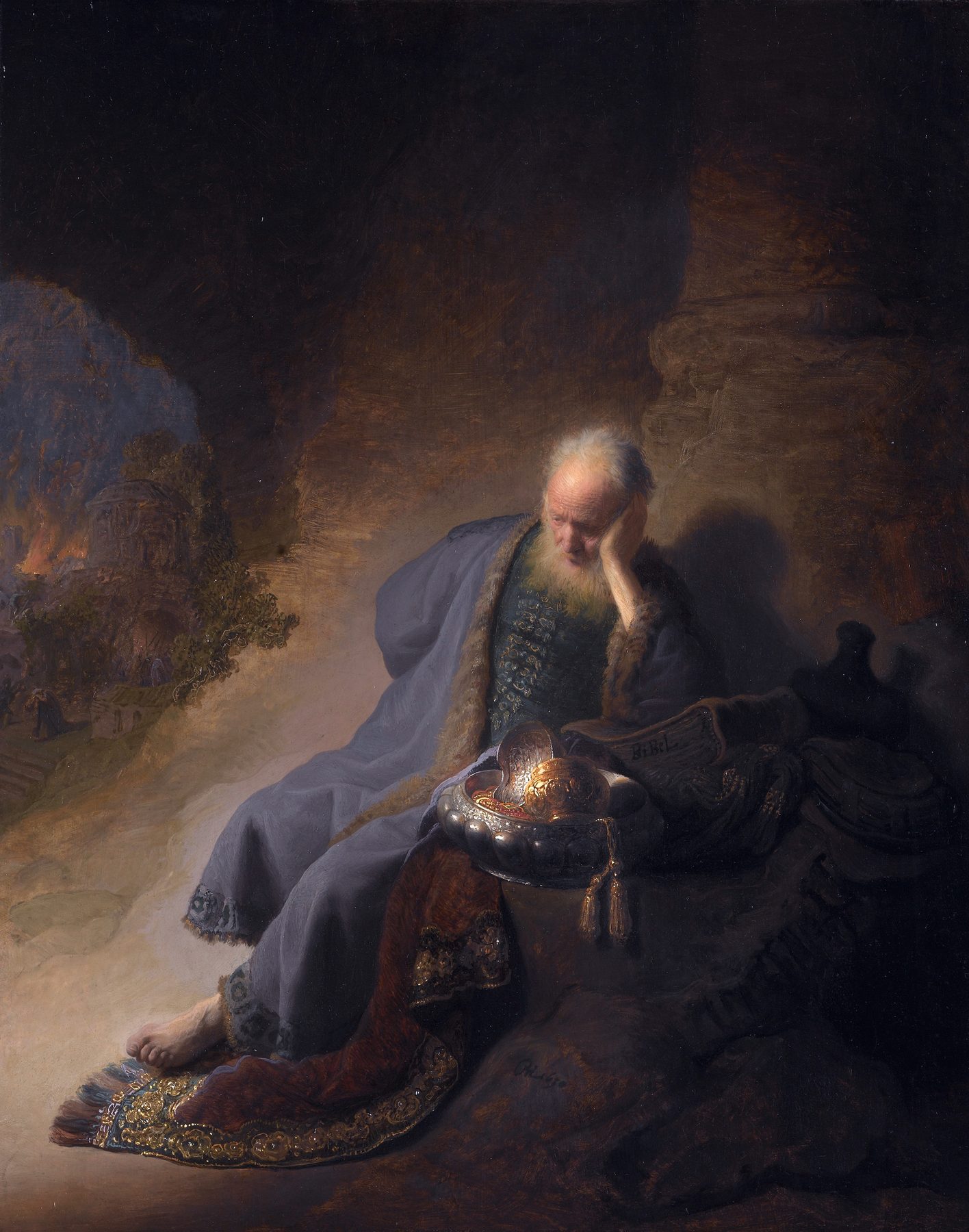
Picture: Jeremiah Lamenting the Destruction of Jerusalem, Rembrandt, 1630. Rijksmuseum, Amsterdam
Who was Jeremiah?
Jeremiah was a prophet of Judah who warned Jerusalem for over 40 years that it would fall, and saw Babylon burn it in 586 BC. While Babylon’s army besieged the city and its own king held him prisoner, he bought a field in his home town as a sign that God would one day bring His people home.
at a glance
His path, in order
- CalledIn 627 BC, when God touched his mouth and put His words in it
- On trialFor warning that the temple would be destroyed
- AuthorOf a scroll King Jehoiakim burned, column by column
- PrisonerLowered into a muddy cistern as Babylon besieged Jerusalem
- FreedFrom chains by the Babylonians who took Jerusalem
- Taken to EgyptBy his own people, who called him a liar
in numbers
- Years Babylon would rule70
- Then God would bring Judah’s captives home.
- God moved Cyrus of Persia to free them, fulfilling Jeremiah’s word.
- Hebrew words in his book22k
- The longest book in the Hebrew Bible.
- Even more than Genesis or the Psalms.
Jeremiah - 21,836,
Genesis - 20,612,
Psalms - 19,587
did you know?
-
The word jeremiad, a tale of sorrow or complaint, comes from his name.
Webster’s Dictionary (1913), “Jeremiad” -
When Jesus drove the traders out of the temple, He used Jeremiah’s words and said they had made it “a den of robbers”.
Jeremiah 7:11; Matthew 21:13 -
When the archaeologist Flinders Petrie dug at Tahpanhes in Egypt in 1886, local people called its ruined fort “the Palace of the Jew’s daughter”. Petrie believed the name went back to the daughters of Judah’s king, who were taken there with Jeremiah after Jerusalem fell.
Jeremiah 43:5-7; W. M. Flinders Petrie, Nebesheh and Defenneh (Tahpanhes), 1888 -
His book ends with an act of mercy. After 37 years as a captive in Babylon, King Jehoiachin of Judah was let out of prison by Babylon’s new king and “dined regularly at the king’s table for the rest of his life”.
Jeremiah 52:31-34
- Born
- About 650 BC, in Anathoth, a small town three miles north of Jerusalem
- Died
- Unknown, though an old tradition has him stoned in Egypt
- Name
- Yirmeyahu in Hebrew, often explained as appointed or raised up by the LORD
- Family
- Son of Hilkiah, one of the priests of Anathoth
- Married
- Never. God told him not to marry or have children, because of the disaster coming on Judah
- Known as
- The weeping prophet, for his tears over his people (Jeremiah 9:1)
- Prophet
- From 627 BC until after 586 BC
- Kings
- The last five kings of Judah: Josiah, Jehoahaz, Jehoiakim, Jehoiachin and Zedekiah
- Scribe
- Baruch son of Neriah
- His book
- Jeremiah, in 52 chapters. An old tradition gives him Lamentations too
- Feast day
- Kept on 1 May by the Orthodox, and named that day in the Catholic Roman Martyrology
- In art
- Michelangelo painted him on the Sistine Chapel ceiling, bowed, with his head on his hand
 The Still Water
His personality type
Careful by nature, and at his best when life is quiet.
In Pope Gregory the Great's terms
- Careful
- Tranquil mind
Our reading, from the Christian Personality Test. When God called him, he pleaded that he was too young to speak. Gregory the Great thought he held back out of love, because he longed to stay close to God in silence and feared that preaching would cost him that.
See The Still Waterfeast days
East and West
West
- May1
Catholic, among the saints of the day in the Roman Martyrology
- Jun26
Lutheran commemoration in the Missouri Synod’s calendar
East
- May1
Orthodox. Churches on the old calendar keep it on 14 May
- May13
Coptic Orthodox (5 Bashons), as the day of his martyrdom
what others said of him
For they mistreated him; yet he was sanctified in the womb to be a prophet, to root out, to afflict, to destroy and likewise to build and to plant.
I, Daniel, understood from the sacred books, according to the word of the LORD to Jeremiah the prophet, that the desolation of Jerusalem would last seventy years.
Some say John the Baptist; others say Elijah; and still others, Jeremiah or one of the prophets.
his life in ten moments
Judah
627 BCToo young to speak
In King Josiah’s 13th year God told a young man from Anathoth that He had chosen him before birth as a prophet to the nations. Jeremiah answered, “I surely do not know how to speak, for I am only a child!” God told him not to say it because he must go wherever God sent him. He touched Jeremiah’s mouth and put His words in it.
Next God showed him an almond branch, the first tree to blossom after winter. Its Hebrew name sounds like the word for watching, and God was watching over His word to make it happen (Jeremiah 1:11-12). He promised that Jeremiah’s enemies would fight him but never overcome him.
Jeremiah 1:1-19; the Cambridge Bible and the Pulpit Commentary on Jeremiah 1:11Jerusalem, the temple
About 609 BCOn trial for his life
Early in King Jehoiakim’s reign God sent Jeremiah to warn the people in the temple courtyard, in the hope that they would turn. They oppressed widows and orphans and burned incense to Baal, yet trusted the temple to keep them safe. Unless they changed, God would make the temple like Shiloh, where His house had first stood until He abandoned it because of the wickedness of His people (Jeremiah 7:12-14).
The priests and prophets seized him, shouting, “You must surely die!” The king’s officials ruled that he did not deserve death, because he had spoken in the LORD’s name. Another prophet named Uriah gave the same warning and fled to Egypt when King Jehoiakim tried to kill him. The king had him brought back and put to the sword (Jeremiah 26:20-23). Jeremiah escaped that end because a royal official named Ahikam stood by him.
Jeremiah 7:1-15; 26; Psalm 78:60; 2 Kings 22:12The Valley of Ben-hinnom
Under King JehoiakimThe smashed jar and the stocks
Jeremiah took a clay jar to the Valley of Ben-hinnom, where people had burned their children as offerings to Baal. Because of that, God would shatter the city “like one shatters a potter’s jar that can never again be repaired”, and he smashed the jar to show it. When he repeated the warning at the temple, the priest in charge had him beaten and put in the stocks overnight.
Afterwards he prayed, “You have deceived me, O LORD,” and told God that His word had made him a laughingstock all day long. Yet whenever he tried to keep quiet, God’s word became “a fire burning in my heart, shut up in my bones” (Jeremiah 20:9). The same prayer turns to trust, “But the LORD is with me like a fearsome warrior,” and ends in praise of God, Who “rescues the life of the needy from the hands of evildoers” (Jeremiah 20:11-13).
Jeremiah 19:1-15; 20:1-13; Jewish Encyclopedia (1906)Jerusalem
605 to 604 BCThe scroll the king burned
In King Jehoiakim’s fourth year Jeremiah dictated to his scribe Baruch everything God had told him since Josiah’s day. God wanted the people to hear it, turn from their wicked ways and be forgiven. Jeremiah sent Baruch to read the scroll aloud in the temple on a fast day the next winter.
Officials who heard it told Baruch and Jeremiah to hide, and took word to the king, who had the scroll read to him by his fire. Each time three or four columns were read, Jehoiakim cut them off with a knife and burned them, though three of his officials begged him not to (Jeremiah 36:23-25). He ordered Baruch and Jeremiah arrested, but “the LORD had hidden them”. Jeremiah dictated every burned word again, and many more like them.
Jeremiah 36The temple in Jerusalem
594 BCThe yoke Hananiah broke
King Jehoiakim was dead, and Babylon had carried off his son King Jehoiachin with thousands of Judah’s people and made Zedekiah king. God then had Jeremiah wear a yoke as a picture of Babylon’s rule, and Jeremiah urged Zedekiah to serve Babylon “and live!”
The prophet Hananiah announced that within two years God would break that yoke and bring the exiles home. Jeremiah answered, “Amen! May the LORD do so!”, but warned that time would tell. Hananiah broke the yoke off Jeremiah’s neck. Jeremiah told him he had made the people trust a lie and would die that year, and two months later he was dead (Jeremiah 28:15-17). God did promise to bring the exiles home, but after 70 years, not two (Jeremiah 29:10).
Jeremiah 27:2-17; 28:1-17; 29:10; 2 Kings 24:6-17The Benjamin Gate
About 588 BCArrested as a deserter
King Zedekiah rebelled against Babylon after all, and in 588 BC its army laid siege to Jerusalem. When the Babylonians pulled back for fear of an army from Egypt, Jeremiah warned that they would return and burn the city.
As he set out for his family’s land in Benjamin, an officer of the guard at the gate seized him, saying he was going over to the Babylonians. “That is a lie,” Jeremiah answered, but the officer took him to the king’s officials, who beat him and shut him in a dungeon (Jeremiah 37:13-16).
Zedekiah later sent for him in secret and asked, “Is there a word from the LORD?” Jeremiah warned that the king himself would be handed over to Babylon. Then Jeremiah begged not to be sent back to the dungeon, where he would die, and the king moved him to the courtyard of the palace guard, with a loaf a day “until all the bread in the city was gone”.
Jeremiah 37; 52:3-4The courtyard of the guard
About 587 BCA field bought in a siege
Jeremiah was a prisoner in the palace, with Babylon’s army round Jerusalem, when God told him that his cousin Hanamel would offer him the family field at Anathoth. Hanamel came, and Jeremiah paid 17 shekels of silver for it.
He signed the deed before witnesses and gave it to Baruch to keep in a clay jar, because God had promised, “Houses, fields, and vineyards will again be bought in this land” (Jeremiah 32:15).
Then he prayed, “Nothing is too difficult for You!” Yet his prayer ended on the siege ramps against the city, and on the field God had told him to buy anyway. God answered, “Is anything too difficult for Me?” The city would fall for turning to idols, but He would bring His people home and make an everlasting covenant with them.
Jeremiah 32A cistern in the palace
Late in the siegeLowered into the cistern
Though a prisoner, Jeremiah kept telling the people that whoever surrendered to Babylon would live, until four officials told the king, “This man ought to die, for he is discouraging the warriors.” Zedekiah answered that he could do nothing to stop them. They lowered Jeremiah on ropes into a cistern, a deep pit for storing rainwater. It held no water, only mud, “and Jeremiah sank down into the mud.”
An African palace official named Ebed-melech went to the king and warned that Jeremiah would starve, because the city had run out of bread. The king sent him with 30 men, and he let down old rags for Jeremiah to pad the ropes under his arms and pulled him out (Jeremiah 38:10-13).
Jeremiah 38:1-13Jerusalem and Ramah
586 BCThe city falls
Jeremiah told King Zedekiah that if he surrendered, his family would live and the city would not be burned. Zedekiah held out, because he feared that the Babylonians would hand him over to be abused by the Jews who had deserted to them (Jeremiah 38:19). In 586 BC the Babylonians broke in. They caught Zedekiah as he fled, killed his sons and burned the temple and the city.
At Ramah, Babylon’s captain of the guard found Jeremiah in chains among the captives being taken to Babylon. He freed him, told him that the LORD had done as He said because the people had sinned, and offered to look after him in Babylon or let him go wherever he liked (Jeremiah 40:2-4). Jeremiah stayed with the poor left in the land.
Jeremiah 38:14-28; 39; 40:1-6; 52:12-13Mizpah and Tahpanhes
After 586 BCTaken to Egypt
Babylon made Gedaliah governor of Judah, and Jeremiah lived with him at Mizpah until a man of the royal family named Ishmael murdered Gedaliah. The captains of Judah’s scattered army feared Babylon’s revenge, so they begged Jeremiah to ask God what they should do, and promised to obey whatever God told them. After 10 days God answered that if they stayed, He would build them up and not tear them down, and they need not fear the king of Babylon (Jeremiah 42:10-11).
But they had already set their hearts on Egypt. They called Jeremiah a liar and took him and Baruch to Tahpanhes in Egypt. Centuries later the preacher John Chrysostom saw mercy in this, because God sent His prophet along “so that they might not after all suffer total wreck”.
Jeremiah 40:5-6; 41:1-2, 16-18; 42; 43:1-7; John Chrysostom, Homilies on Romans 14
his object lessons
Jeremiah often acted out God’s message at His command, so that the people could see it as well as hear it.
At the potter’s house
Jeremiah went down to a potter’s house, as God told him, and watched the potter at his wheel. A pot went wrong in his hands, so the potter shaped the same clay into another pot.
God told him His people were like that clay in His hands. If He warned a nation of disaster and it turned from its evil, He would hold the disaster back. So He sent Jeremiah to call Judah to turn, though He knew they would answer, “It is hopeless. We will follow our own plans.”
“Turn now, each of you, from your evil ways, and correct your ways and deeds.”Jeremiah 18:1-11
Wine for the Rechabites
The Rechabites were a family who drank no wine, built no houses and lived in tents, because their forefather Jonadab had told them to. Under King Jehoiakim they fled into Jerusalem from the Babylonian army, and God had Jeremiah bring them into a room of the temple and set wine before them. They would not drink it.
God held them up as an example to Judah. The Rechabites had kept their forefather’s word all their lives, but Judah would not obey God, though He had spoken “again and again”. Because they had obeyed, He promised that Jonadab’s family would always have a man to serve Him.
“We do not drink wine”Jeremiah 35
A scroll to sink in the Euphrates
Jeremiah gave a scroll to Baruch’s brother Seraiah, who was going to Babylon in King Zedekiah’s fourth year. It told of the disaster coming on Babylon for all the evil it had done to Jerusalem. Seraiah was to read it aloud there, then tie a stone to it and throw it into the Euphrates, as a sign that Babylon would sink in the same way.
The same prophecies said what Babylon’s fall would mean for Judah’s exiles. God had not abandoned them, and they would come home “weeping as they come” to seek Him.
“In the same way Babylon will sink and never rise again”Jeremiah 51:59-64; 51:5; 51:24; 50:4-5
Stones at Pharaoh’s door
The people had taken Jeremiah to Tahpanhes in Egypt against God’s word. There, as God told him, he buried some large stones in the brick pavement at the entrance to Pharaoh’s palace while the Jews watched.
King Nebuchadnezzar of Babylon would one day set his throne over those very stones, so running to Egypt would not save them from Babylon. Yet God promised that a few of them would come home to Judah.
“I will set his throne over these stones that I have embedded”Jeremiah 43:8-13; 44:28
The ruined loincloth
God told Jeremiah to buy a linen loincloth and wear it, then hide it in a crevice of the rocks at a place called Perath. Many days later God sent him back for it, and when he dug it out, the cloth was ruined.
God explained that the cloth was a picture of His people, whom He had bound close to Himself to be His glory. But they would not listen and went after other gods in their stubborn pride, so He would ruin that pride like the cloth.
Jeremiah begged them not to be arrogant but to give God glory while there was still time, and said he would weep for them in secret if they refused.
“For just as a loincloth clings to a man’s waist, so I have made the whole house of Israel and the whole house of Judah cling to Me”Jeremiah 13:1-17
his words
The weeping prophet
Oh, that my head were a spring of water, and my eyes a fountain of tears! I would weep day and night over the slain daughter of my people.
Over his people, as he saw their ruin coming
Jeremiah 9:1Your words were found, and I ate them. Your words became my joy and my heart’s delight. For I bear Your name, O LORD God of Hosts.
Righteous are You, O LORD, when I plead before You. Yet about Your judgments I wish to contend with You: Why does the way of the wicked prosper?
Should good be repaid with evil? Yet they have dug a pit for me. Remember how I stood before You to speak good on their behalf, to turn Your wrath from them.
I know, O LORD, that a man’s way is not his own; no one who walks directs his own steps.
Heal me, O LORD, and I will be healed; save me, and I will be saved, for You are my praise.
the new covenant
The promise
Jeremiah wrote God’s promises in a book for the day His people would come home, and among them is a new covenant. It would not be like the one God made with their fathers when He led them out of Egypt. They had broken that covenant, “though I was a husband to them”, God said.
In the new one every one of them would know Him, “from the least of them to the greatest”, and He would forgive their sins and remember them no more.
“I will put My law in their minds and inscribe it on their hearts. And I will be their God, and they will be My people.”Jeremiah 30:1-3; 31:31-34
Taken up by Jesus
On the night before He died, Jesus took the cup after supper and called it the new covenant, in the words of Jeremiah’s promise. The letter to the Hebrews later quoted the whole promise, from its first words, “Behold, the days are coming”, to its last, and said that by speaking of a new covenant God had made the first one old.
“This cup is the new covenant in My blood, which is poured out for you.”Luke 22:20; Hebrews 8:8-13
myths and misquotes
“For I know the plans I have for you” is God’s promise that each reader’s life will go well.
What the sources sayNot quite. It was first a promise to a whole people, and it came with a long wait. Jeremiah wrote it to the Jews carried off to Babylon, telling them to build houses and pray for Babylon, because God would bring them home only after 70 years. Christians have long found comfort in it, among them the commentator Matthew Henry, who wrote that for God’s people “even that which seems evil, is for good”.
Jeremiah 29:4-14; Matthew Henry, Concise CommentaryThe poems of Lamentations name Jeremiah as their author.
What the sources sayThe poems never name their author, but an old tradition names Jeremiah, and the Greek Bible opens the book with “Jeremias sat weeping, and lamented with this lamentation over Jerusalem”. The Jewish Encyclopedia saw “weighty reasons against ascribing the authorship to Jeremiah”, such as a line saying that the prophets of that time received no vision from the LORD, while Jeremiah himself was still prophesying.Whoever wrote it, its third poem holds “His mercies never fail. They are new every morning”, still prayed today as a prayer of its own.
Lamentations 1:1 (Septuagint, tr. Brenton); 3:22-23; Jewish Encyclopedia (1906), “Lamentations”The book of Jeremiah tells how he hid the Ark of the Covenant.
What the sources sayThe story comes from 2 Maccabees, a book in Catholic and Orthodox Bibles, not from the book of Jeremiah.In it God told Jeremiah to take the ark to the mountain where Moses saw the promised land. There he sealed it in a cave. Followers who went back to mark the way could not find it, and he told them, “The place shall be unknown until God gathers the people together again and shows mercy.”
2 Maccabees 2:1-8 (World English Bible); Catholic Encyclopedia (1910), “The Books of Machabees”Plato learned about God from Jeremiah in Egypt.
What the sources sayThe dates rule it out, as Augustine came to see. Bishop Ambrose of Milan had argued that Plato met Jeremiah in Egypt, and Augustine at first repeated the idea in his own books. Later he looked at the history again and wrote that “Plato was born about a hundred years after the time in which Jeremiah prophesied”.
Augustine, On Christian Doctrine 2.28; City of God 8.11In “You have deceived me, O LORD”, Jeremiah accused God of lying.
What the sources sayThe Hebrew word can also mean persuaded, and Joseph Benson read the line as “Thou hast persuaded me, and I was persuaded”, meaning God had talked him into work he first refused. Others hear a real complaint, and the commentary of Jamieson, Fausset and Brown says that he “misunderstood God’s promise, which was not that he should have nothing to suffer, but that God would deliver him out of sufferings”.
Jeremiah 20:7-11; Joseph Benson, Commentary (1811-18); Jamieson, Fausset and Brown, Commentary (1871)friends, family and rivals
Baruch wrote down the scroll King Jehoiakim burned, then wrote it all again. As he wrote the first, he groaned that he was worn out and found no rest, and God promised to spare his life wherever he went. He lived to be taken to Egypt with Jeremiah.
Jeremiah 36; 43:6; 45God sent a promise through Jeremiah to the man who had pulled him out of the cistern. When the city fell, Ebed-melech would escape with his life, “because you have trusted in Me”.
Jeremiah 39:15-18After King Josiah was killed in battle at Megiddo, Jeremiah wrote laments for him. Later, when Josiah’s son Jehoiakim built himself a palace with unpaid labour, Jeremiah rebuked him with the memory of his father, a king who “took up the cause of the poor and needy”.
2 Chronicles 35:20-25; Jeremiah 22:13-18The men of his home town plotted to kill him for prophesying in God’s name, and Jeremiah knew nothing until God showed him. “I was like a gentle lamb led to slaughter,” he prayed. God told him that even his own brothers had betrayed him, but He promised to punish the plotters, and Jeremiah lived on.
Jeremiah 11:18 to 12:6how he died
The Bible does not tell how Jeremiah died, but an old tradition holds that his own people stoned him in Egypt.
The last chapters of his story leave him at Tahpanhes and among the Jews living elsewhere in Egypt, still warning them to stop burning incense to other gods.
In the early AD 200s the Christian writer Tertullian listed “Jeremias stoned” among the prophets who were persecuted, and Jerome repeated it in AD 393. The Roman Martyrology puts the stoning at Tahpanhes, where he was buried. A Jewish tradition holds instead that Nebuchadnezzar took him and Baruch from Egypt to Babylon, where he died.
is he a saint?
Jeremiah is honoured as a saint by the Orthodox and Catholic Churches, and the Coptic Church keeps him as a martyr.
- OrthodoxHoly prophetKept as the Holy Prophet Jeremiah on 1 May
- CatholicIn the MartyrologyListed with the saints of 1 May, though no feast is kept
- Coptic OrthodoxMartyrKeeps the day of his martyrdom on 5 Bashons (13 May)
- LutheranCommemoratedRemembered by the Missouri Synod on 26 June
what to read first
Jeremiah 1
Berean Standard Bible
His call, the almond branch and God’s promise to stand by him.
Read it freeJeremiah 36
Berean Standard Bible
The scroll Baruch wrote down and King Jehoiakim burned.
Read it freeJeremiah 37 and 38
Berean Standard Bible
His arrest, the cistern and his secret talks with King Zedekiah.
Read it freeJeremiah 31
Berean Standard Bible
God’s promise of a new covenant, written on the heart.
Read it freePastoral Rule, book 1, chapter 7
Gregory the Great
Why Isaiah stepped forward when God called and Jeremiah held back, and why Gregory saw love in both answers.
Read it freetake the quizzes
 Quiz Who in the Bible are you most like? Answer eighteen plain statements about you, none of them about the Bible, and see which person of the Bible you are most like. Start
 Quiz Christian

Personality Test Jeremiah reads as The Still Water. Find your own type. Start
people like him
 ArseniusThe Still Water
Jeremiah once wished he could leave his faithless people for a traveller’s lodge in the wilderness, and Arsenius did it.
A tutor at the emperor’s court in the late 300s, he prayed to be shown how to live, and a voice answered, “Arsenius, flee from men, and thou shalt live.” He slipped out of the palace and spent the rest of his life in the desert of Scetis, in silence and prayer.
Jeremiah 9:2; The Sayings of the Desert Fathers, in E. A. Wallis Budge, The Paradise (1907)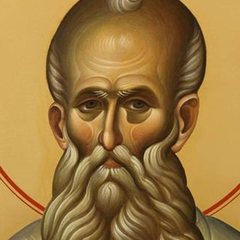 Gregory of NazianzusThe Still Water
Gregory’s father was bishop of Nazianzus and made him a priest against his will. Gregory ran away, and when he came back he defended himself by pointing to the prophets.
“Isaiah readily submitted, but Jeremiah was afraid of his youth,” he wrote. In his reading Jeremiah was not blamed for his fear, nor Isaiah for his eagerness. That thought had slowly calmed Gregory enough to return.
Gregory of Nazianzus, Oration 2.114sources
The Bible
- The Berean Standard Bible: Jeremiah, Lamentations, 2 Chronicles 35, Daniel 9, Matthew 16 and 21, Luke 22 and Hebrews 8.
- The World English Bible: Sirach 49 and 2 Maccabees 2 and 15, books in Catholic and Orthodox Bibles.
- The Septuagint, Lamentations 1. Tr. Lancelot Brenton, 1844.
Early and later writers
- The Lives of the Prophets, from the Syriac. Tr. Isaac H. Hall, 1887.
- Tertullian, Scorpiace, chapter 8. Ante-Nicene Fathers, vol. 3.
- Jerome, Against Jovinianus, book 2, and Letter 40. Tr. W. H. Fremantle, 1893.
- Augustine, City of God, books 8 and 18, and On Christian Doctrine, book 2. Tr. Marcus Dods and J. F. Shaw, 1887.
- Gregory the Great, Pastoral Rule, book 1. Nicene and Post-Nicene Fathers, series 2, vol. 12.
- Gregory of Nazianzus, Oration 2. Nicene and Post-Nicene Fathers, series 2, vol. 7.
- John Chrysostom, Homilies on Romans 14. Nicene and Post-Nicene Fathers, series 1, vol. 11.
- Thomas Aquinas, Summa Theologiae, part 3, question 27. Tr. the English Dominicans, 1920.
Reference
- Michael Faulhaber, “Jeremias”, Catholic Encyclopedia, 1910.
- “The Books of Machabees” and “Ecclesiasticus”, Catholic Encyclopedia, 1909 to 1910.
- “Jeremiah” and “Lamentations”, Jewish Encyclopedia, 1906.
- C. von Orelli, “Jeremiah”, International Standard Bible Encyclopedia, 1915.
- Commentaries on Jeremiah 1:11, 13:4, 20:7 and 29:11: Matthew Henry, Joseph Benson, the Geneva Bible notes, the Cambridge Bible and the Pulpit Commentary.
- W. M. Flinders Petrie, Nebesheh and Defenneh (Tahpanhes), 1888.
- Webster’s Dictionary, “Jeremiad”, 1913.
- The Westminster Leningrad Codex, counted by us for the number of Hebrew words in each book.
Calendars
- The Roman Martyrology, 1 May. English edition of 1916.
- Orthodox Church in America, “Prophet Jeremiah”, 1 May.
- The Coptic Synaxarium, 5 Bashons
- Lutheran Church, Missouri Synod, commemorations, 26 June.
Pictures
- Washington Allston, Jeremiah Dictating His Prophecy of the Destruction of Jerusalem to Baruch the Scribe, 1820. Yale University Art Gallery. Public domain.
- The prophet Jeremiah, fresco of 1192, the Arakos church, Lagoudera. Photograph: Dumbarton Oaks. CC0.