The Still Water
Careful by nature, and at your best when life is quiet.
- Careful
- Quiet mind
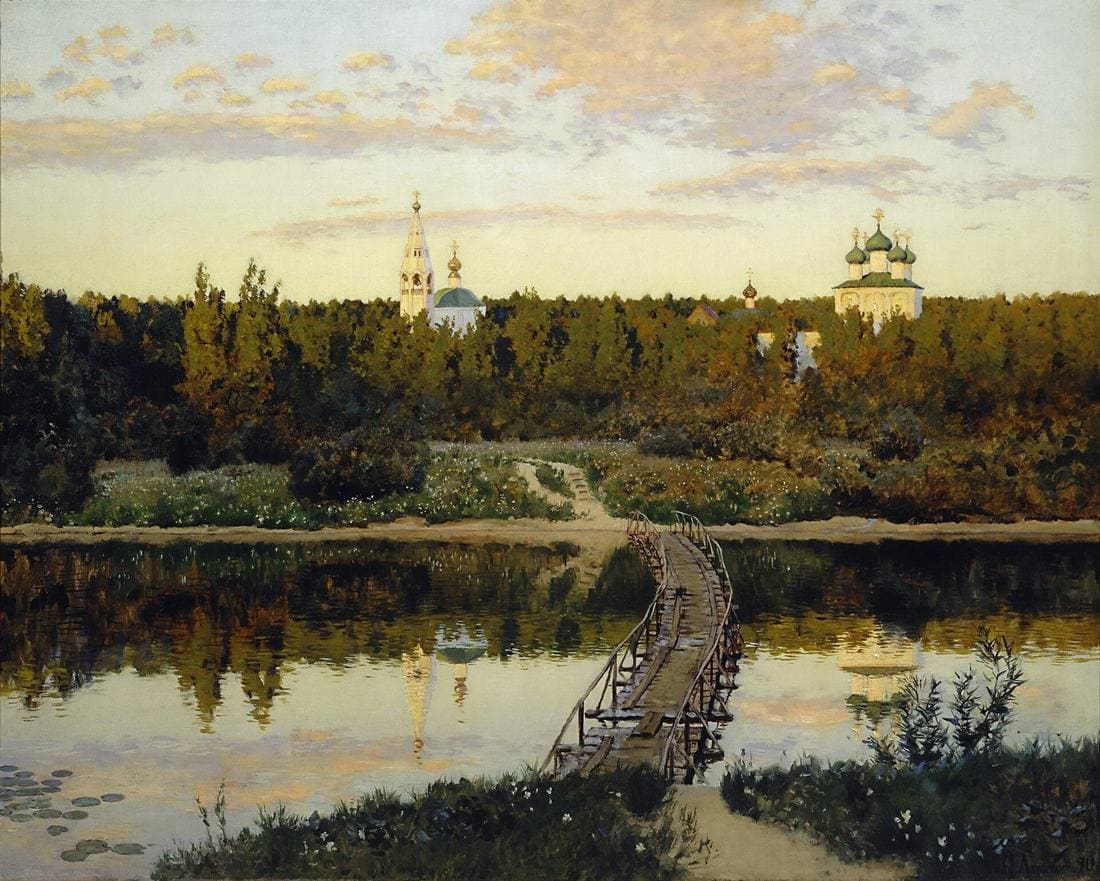
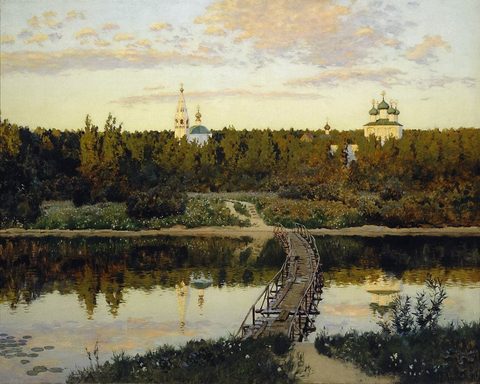
Picture: Quiet Abode, Isaac Levitan, 1890
This is your type. Your type is . See your result
You are careful by nature, and you are at your best when life is quiet. You like to know what is coming.
What you bring
- You see risks others miss.
- You hate to let people down.
- Quiet settles your mind.
What it costs you
- Doubt can keep you from things you could do well.
- Worry can pass for wisdom.
- A crowded week wears you down fast.
Where the trap is set
Fear
St Gregory the Great says the tempter first studies each person’s temperament. Then he tempts them with the fault that lies closest to it. For the cheerful it’s pleasure. For the gloomy it’s a quarrel. For the proud it’s praise. For the careful, it’s fear.
“Because the timid dread punishments, he threatens terrors to the fearful.”
St Gregory the Great, Moralia on Job
So your temptation rarely looks like temptation. It looks like worry. What if it goes wrong? What if I let them down? What if I cannot do it?
The gift in it
Your care is a gift. Gregory says the fearful should not stay in fear. Fed by love, they should grow until love does what fear used to do.
“grow up by the nursing of charity to the grace of love”
St Gregory the Great, Pastoral Rule
A quiet mind
St Gregory the Great says some minds are made for quiet. When a lot of work falls on them at once, they give way before they have begun. So do not take on more than you can bear. For minds like yours Gregory quotes the psalm, “Be still and know that I am God.” But he also says love often stirs quiet souls to work for others. He warns against loving your rest so much that you set aside the people who need you.
“there are some of such inactivity of mind, that, if the labours of business fall upon them, they give way at the very beginning of their work”
St Gregory the Great, Moralia on Job
Who else was like this
 St Gregory the Theologian
He had loved quiet and solitude since his student days. His father was a bishop, and made him a priest against his will. Gregory fled back to the solitude he had shared with his friend Basil. Within a few months he came home to serve. Years later Basil called him lazy for not taking up a bishop’s post Basil had given him. Gregory wrote back, “My greatest business always is to keep free from business.” When he stepped down as bishop of Constantinople, he said he was tired of being blamed for his gentleness.
Oration 2; Letter 49; Oration 42 Jeremiah
When God called him, he pleaded that he was too young to speak. Gregory says he held back out of love: he longed to stay close to God in quiet.
Jeremiah 1:6; Gregory, Pastoral Rule Abba Arsenius
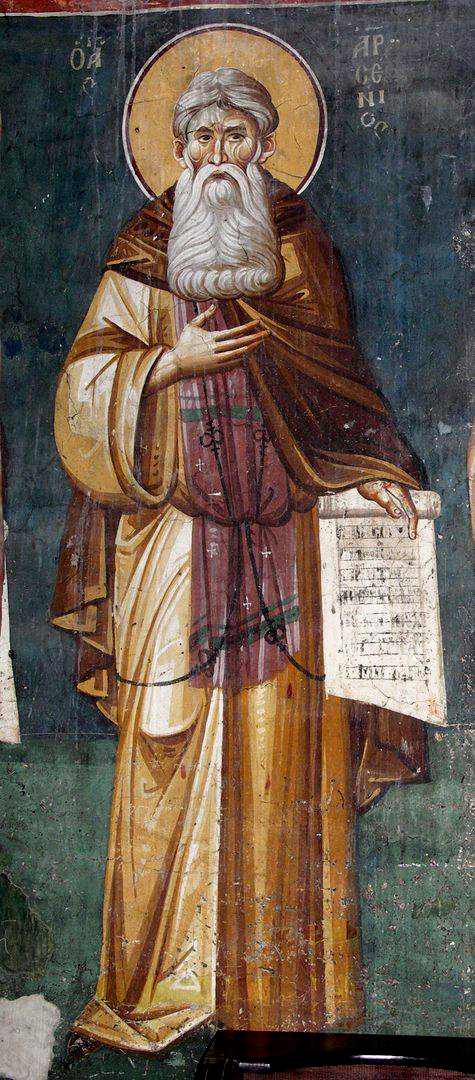
He left the emperor’s palace to become a monk in the Egyptian desert. There a voice told him, “Arsenius, flee, keep silence”. Once a visitor sat with him in silence, then went on to another monk, Abba Moses, who received him with joy. An old monk asked God to explain the difference. In a vision he saw two boats on a river. Arsenius sailed in silence with the Spirit of God. Moses sailed with angels, who fed him honey.
The Sayings of the Desert FathersIts opposite
The Herald
Sure of yourself, and at your best when there is something to do.
-
 St Basil the Great The Herald
- St Gregory the Theologian The Still Water
St Gregory the Theologian and St Basil the Great met as students in Athens. Years later Basil was archbishop of Caesarea. He was in a long quarrel with a bishop named Anthimus over who led the churches of their region. To strengthen his hand, Basil all but forced Gregory to become bishop of Sasima, a poor little village. Anthimus sent troops to hold it. Basil wanted Gregory to fight for it. Gregory would not. He wrote to Basil, “Give me before all things quiet.” Still, in his funeral speech for Basil, Gregory said of their student days, “We seemed to have one soul, inhabiting two bodies.” Both are saints.
St Gregory the Theologian, Oration 43 and Letter 48
See the Herald“let all be eye or all head: will not the body perish?”
St John Chrysostom, on 1 Corinthians
All eight types
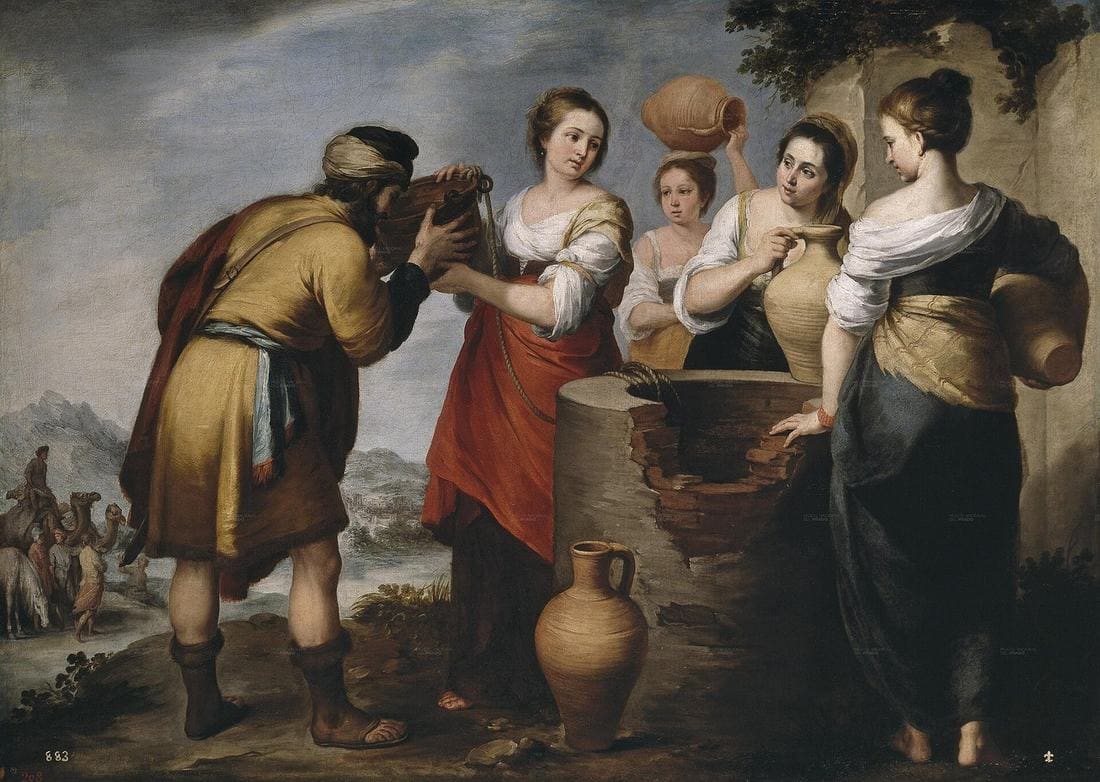
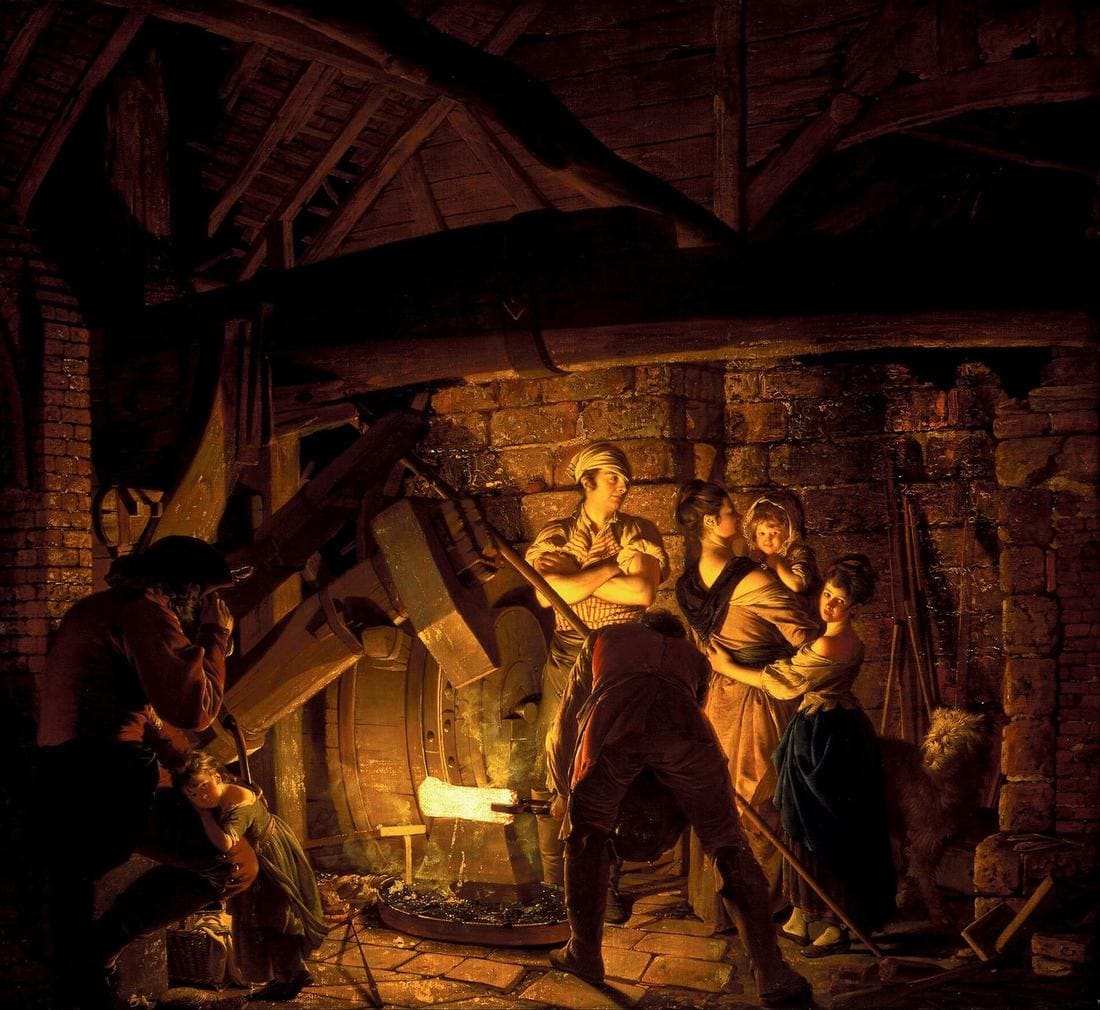
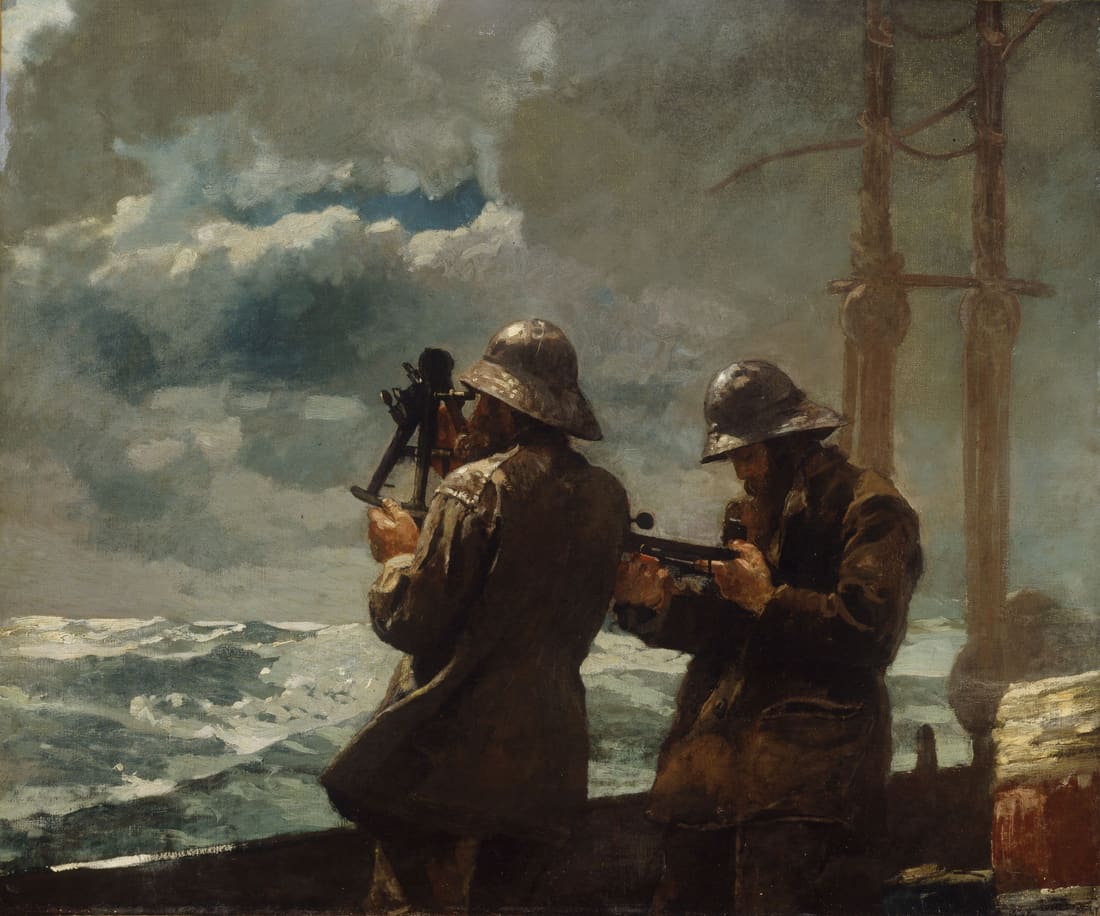
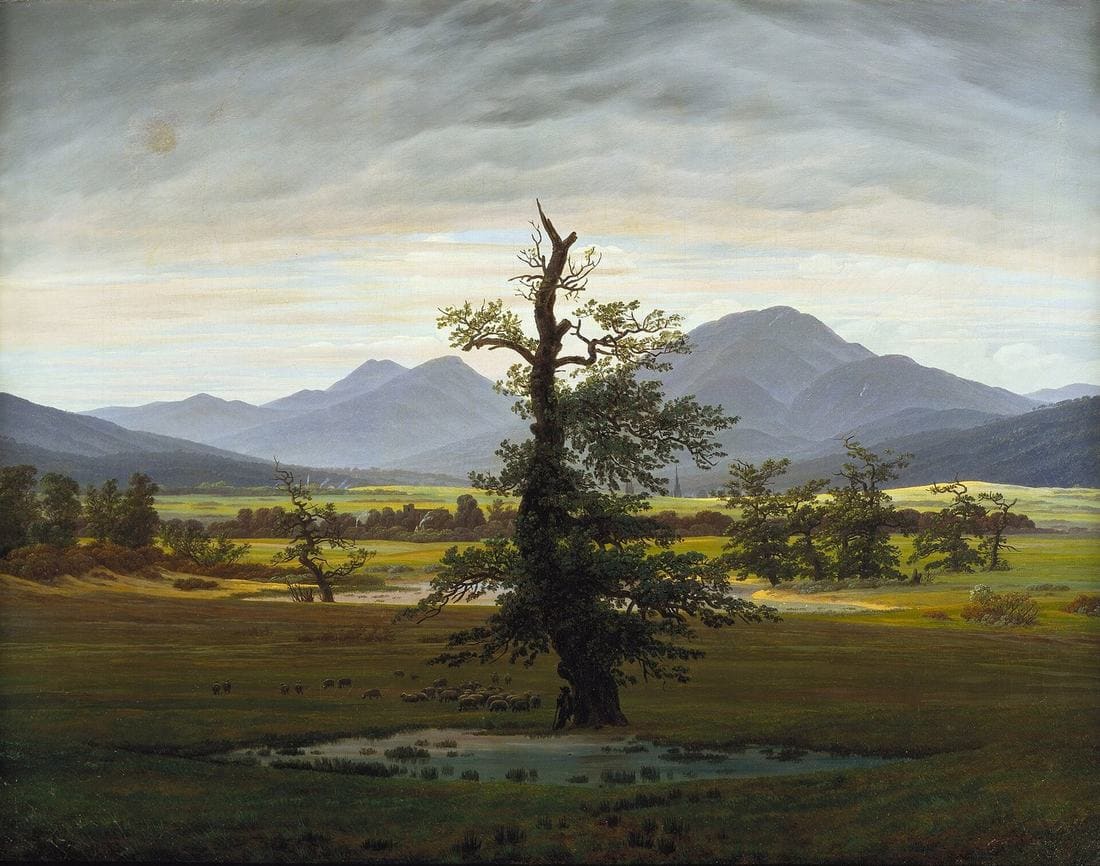
All eight types, and how St Gregory sorted them.
Picture credits
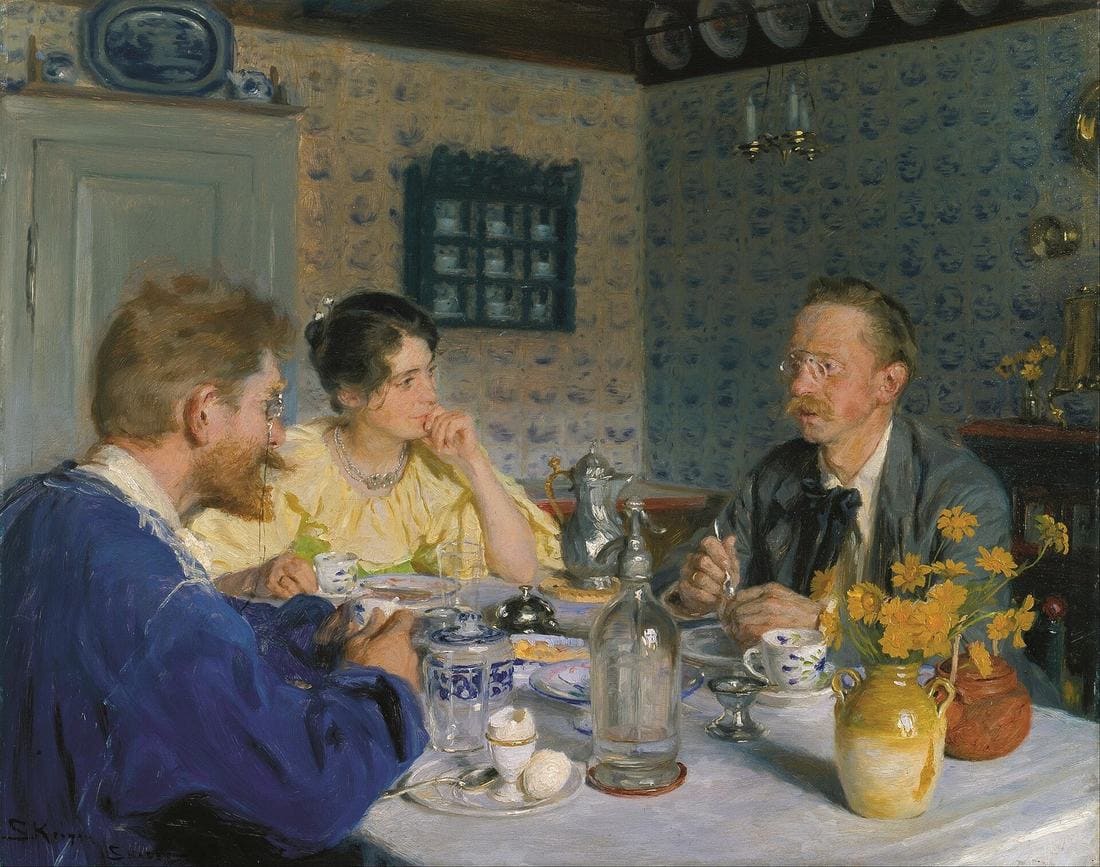
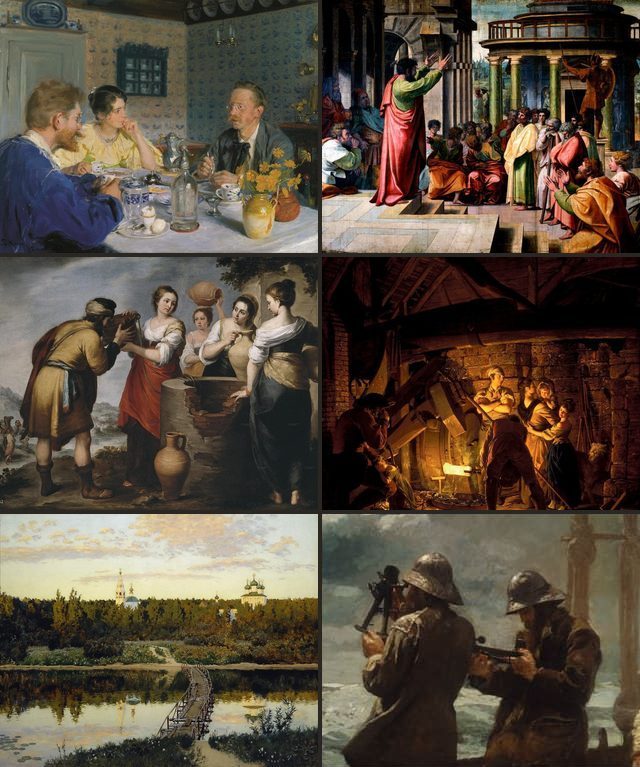
- A Luncheon: the artist, his wife and the writer Otto Benzon, Peder Severin Krøyer, 1893. Wikimedia Commons, public domain.
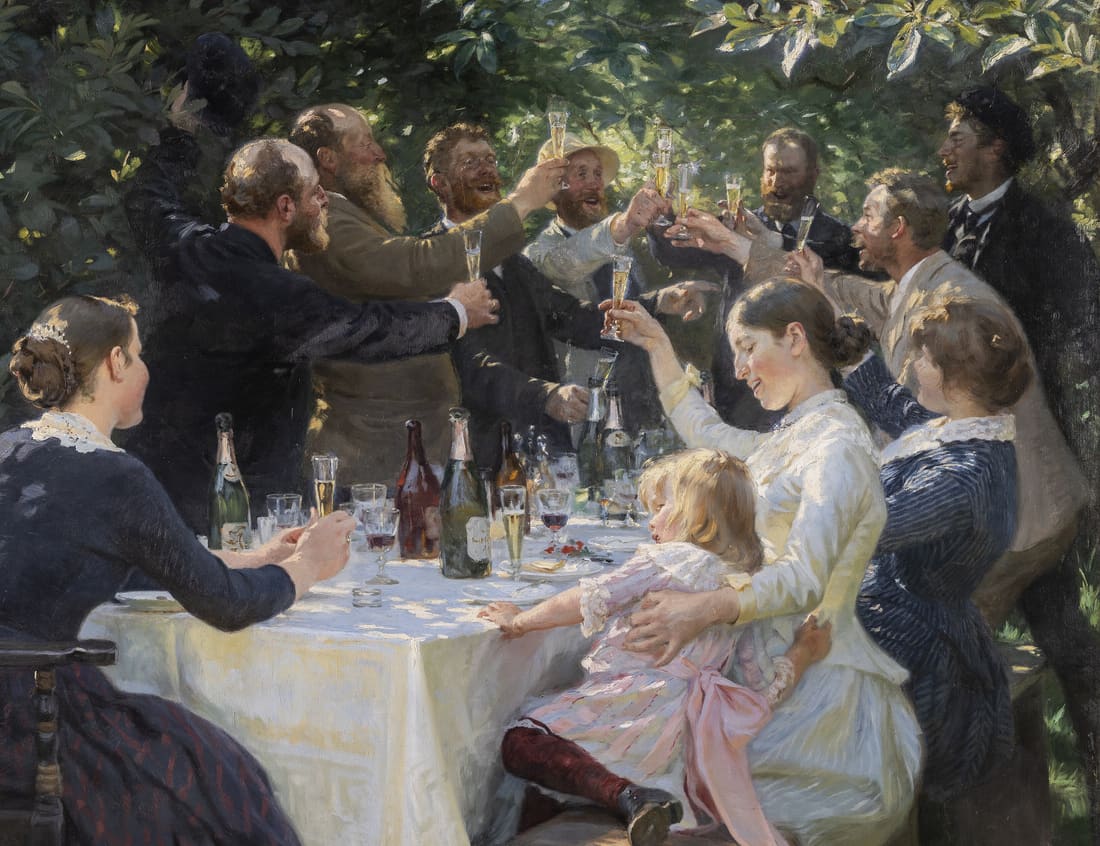
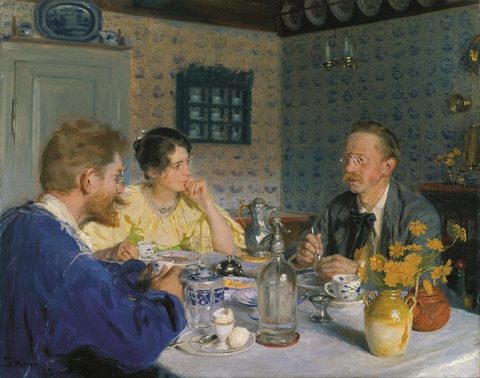
- Hip, Hip, Hurrah! Artists' Party, Skagen, Peder Severin Krøyer, 1888. Wikimedia Commons, CC BY 4.0, Gothenburg Museum of Art.
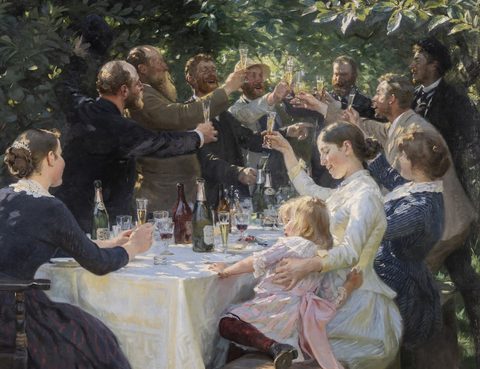
- Rebecca and Eliezer, Bartolomé Esteban Murillo, c. 1660. Wikimedia Commons, public domain.
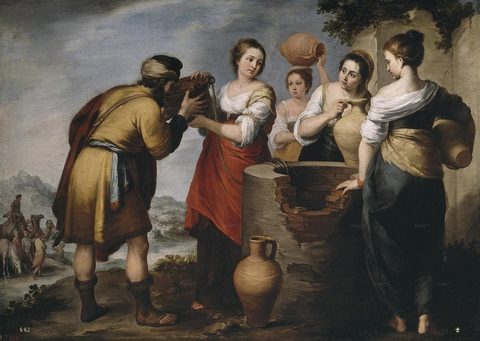
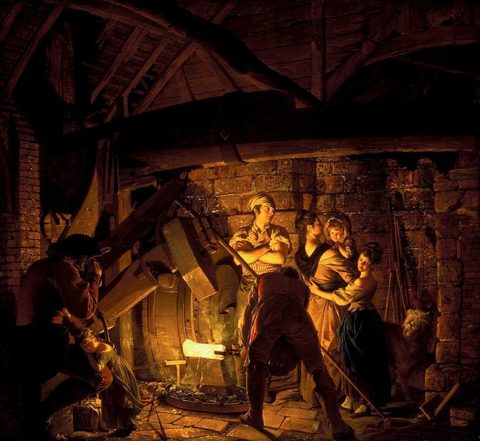
- An Iron Forge, Joseph Wright of Derby, 1772. Wikimedia Commons, public domain.
- Quiet Abode, Isaac Levitan, 1890. Wikimedia Commons, public domain.
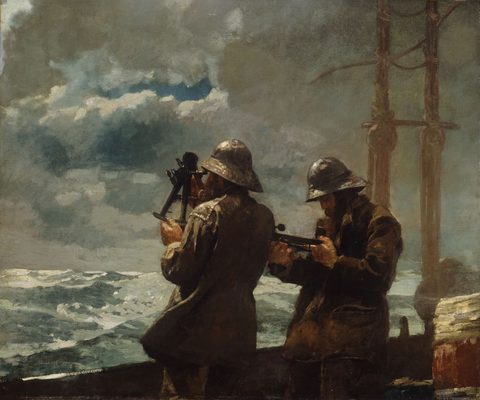
- Eight Bells, Winslow Homer, 1886. Wikimedia Commons, public domain.
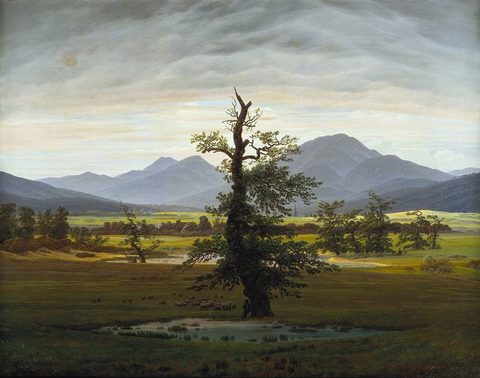
- The Lonely Tree, Caspar David Friedrich, 1822. Wikimedia Commons, public domain.
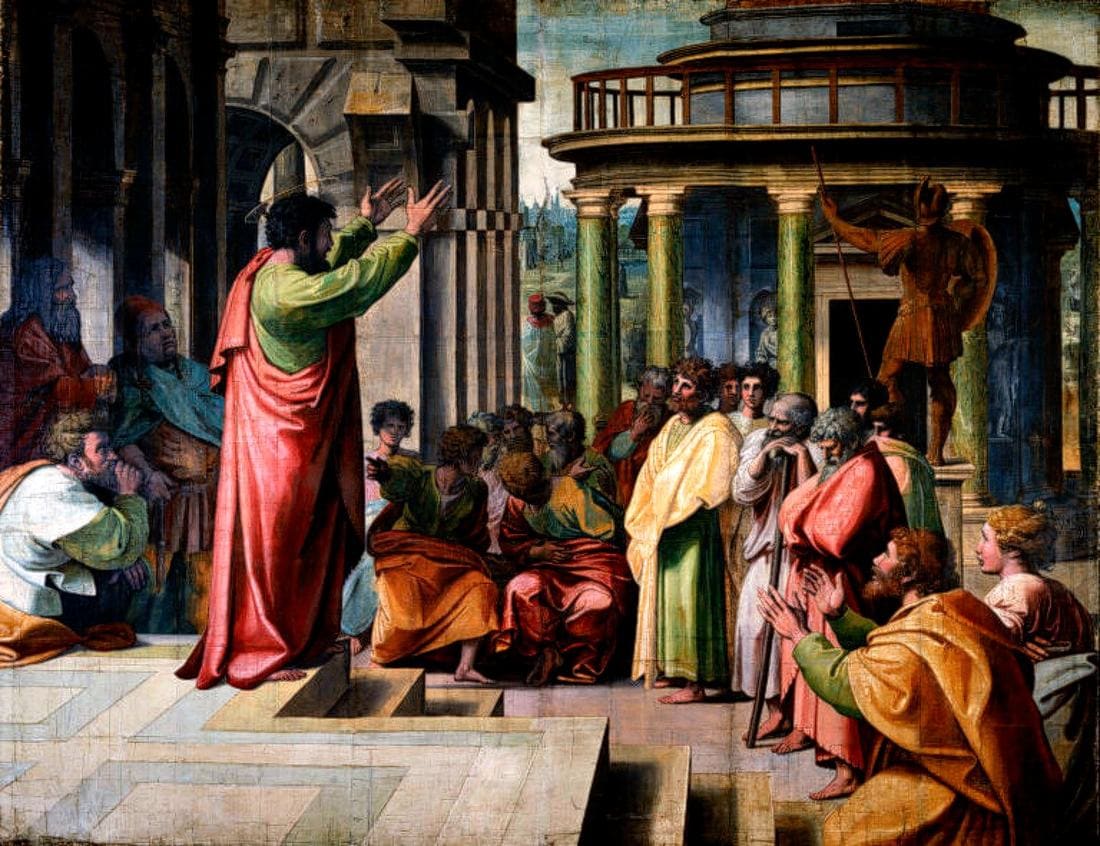
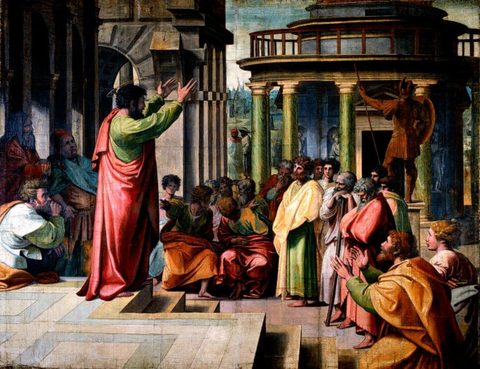
- St Paul Preaching in Athens, Raphael, 1515. Wikimedia Commons, public domain.
- Saint Gregory the Theologian, an icon. Alchetron, public domain.
- Jeremiah Lamenting the Destruction of Jerusalem, Rembrandt, 1630. Rijksmuseum, Amsterdam.
- Saint Arsenius the Great, a fresco of about 1295 in the Church of the Theotokos Peribleptos, Ohrid. Public domain.
- Saint Basil Dictating His Doctrine, Francisco de Herrera the Elder, about 1639. Musée du Louvre, Paris. Public domain.