Sign Up My Profile
Prayers

Orthodox prayers for shame and regret

Prayers for when the past still weighs on you, and it’s hard to believe that God forgives.

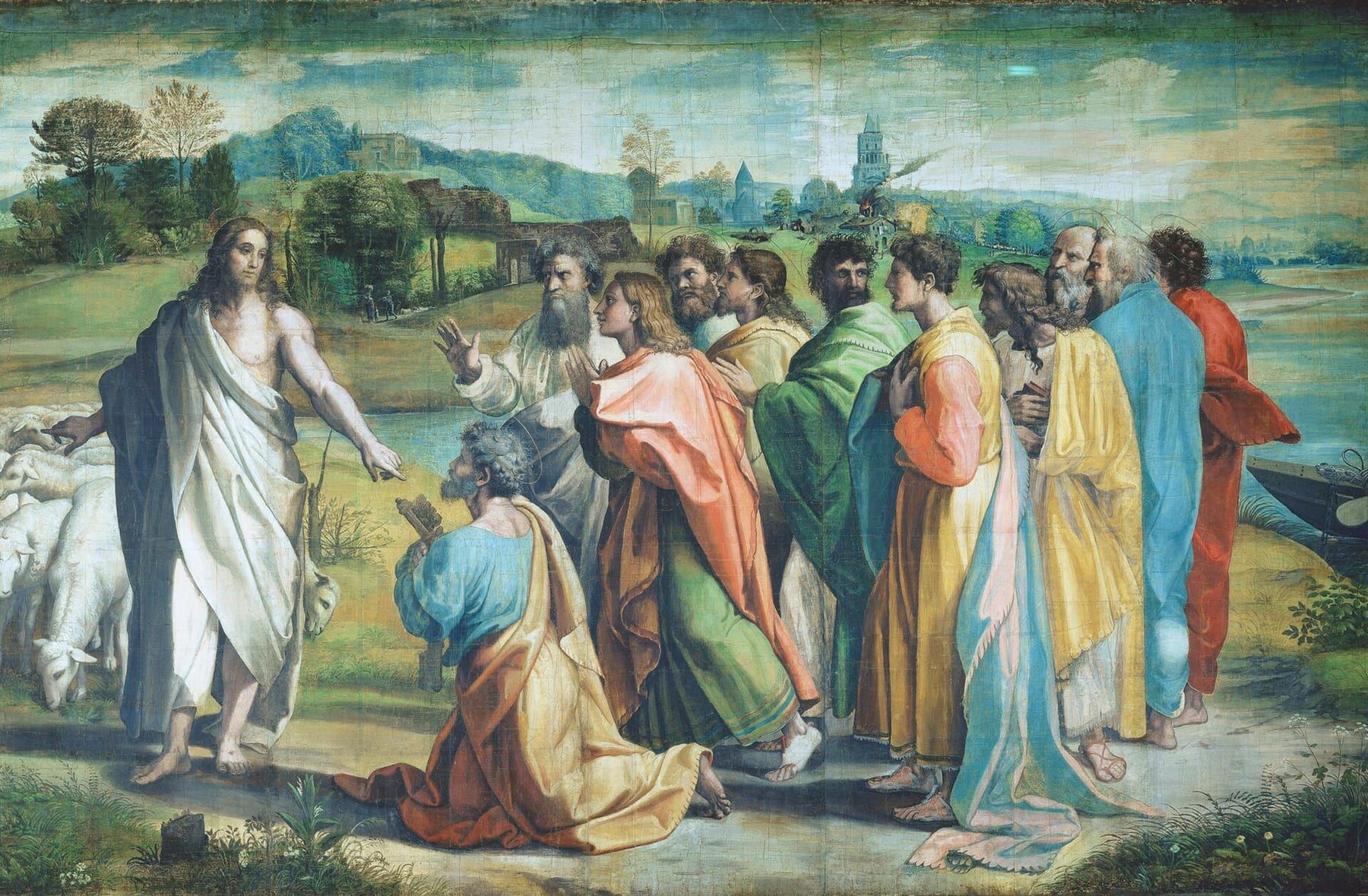
Picture: Raphael, Christ’s Charge to Peter (tapestry cartoon), 1515–16

5 prayers

When you cannot forgive yourself

Kneeling prayer of St Serapion

Give us Your hand, O Master,and raise us up.Raise us up, O God of compassion,and make us look up.

Open our eyesand give us boldness.Do not let us be ashamed,or hang our heads,or condemn ourselves.

Blot out the record of debt that stands against us.Write our names in the book of life.Count us among Your holy prophets and apostles,through Your only Son, Jesus Christ.

Through Him be glory and power to Youin the Holy Spirit,both now and for ever and ever. Amen.

Traditional wording, 1923

O Master give to us (Thy) hand and raise us up.Raise us up, O God of compassions, cause us to look up.

Uncover our eyes, grant us freedom of speech,suffer us not to be ashamed, nor to be abashed, nor to accuse ourselves.

Blot out the bond that is against us.Write our names in the book of life.Number us together with Thy holy prophets and apostles,through Thy only-begotten Jesus Christ,

through Whom to Thee (is) the glory and the strengthboth now and to all the ages of the ages. Amen.

This kneeling prayer comes from the prayer book credited to St Serapion, a bishop in Egypt about AD 350. It asks God to give us His hand and raise us up, never letting us be ashamed or condemn ourselves.

Plain English by Wiser Walk, from the Greek (the prayer’s second half), with Wordsworth’s 1923 translation beside it. How the wording is made. Traditional wording: John Wordsworth, Bishop Sarapion’s Prayer-Book, 1923.

Wordsworth’s closing words leave out “in the Holy Spirit”, which the Greek has.

Where it comes from, and the Greek

For the years you regret

Late have I loved You

Late have I loved You,O Beauty so ancient and so new,late have I loved You!

See, You were within me, and I was outside,and it was out there that I looked for You.Unlovely as I was,I plunged into the lovely things You made.

You were with me, but I was not with You.Those lovely things kept me far from You,yet if they were not in You,they would not exist at all.

You called, You cried out,and You broke through my deafness.You gleamed, You shone,and You drove away my blindness.You spread Your fragrance, and I breathed it in,and now I pant for You.I tasted You, and now I hunger and thirst.You touched me,and I burned for Your peace.

Traditional wording, 1886

Too late did I love Thee, O Fairness, so ancient, and yet so new!Too late did I love Thee!

For behold, Thou wert within, and I without, and there did I seek Thee;I, unlovely, rushed heedlessly among the things of beauty Thou madest.

Thou wert with me, but I was not with Thee.Those things kept me far from Thee, which, unless they were in Thee, were not.

Thou calledst, and criedst aloud, and forcedst open my deafness.Thou didst gleam and shine, and chase away my blindness.Thou didst exhale odours, and I drew in my breath and do pant after Thee.I tasted, and do hunger and thirst.Thou didst touch me, and I burned for Thy peace.

St Augustine wrote this looking back on the years he spent far from God, grieving that he loved God so late. Yet the prayer ends as God touches him and he burns for God’s peace.

Plain English by Wiser Walk, from the Latin, with Pilkington’s 1886 translation beside it. How the wording is made. Traditional wording: J. G. Pilkington, The Confessions of St. Augustin, 1886.

Pilkington calls God “Fairness”; the Latin word, pulchritudo, means beauty.

Where it comes from, and the Latin

When you feel unworthy to come back

Prayer of the prodigal son

Father, I have sinned against heaven and before You.I am no longer worthy to be called Your son.Make me like one of Your hired servants.

Traditional wording, 1611

Father, I have sinned against heaven, and before Thee,and am no more worthy to be called Thy son:make me as one of Thy hired servants.

Jesus told of a son who had wasted everything and rehearsed these words on the road home. His father saw him while he was still far off and ran to kiss him, then called for the best robe and a feast (Luke 15:20-24).

Plain English by Wiser Walk, from the Greek of Luke 15:18-19, with the King James wording beside it. How the wording is made. Traditional wording: The King James translators, The King James Bible, 1611.

Where it comes from, and the Greek

When your conscience is afraid

Forgive what our conscience fears

Almighty and everlasting God,in the overflowing of Your loveYou go beyond what we deserveand beyond what we pray for.

Pour out Your mercy on us,to forgive what our conscience is afraid of,and to add what our prayer does not dare to ask.

Through our Lord Jesus Christ.

Traditional wording, 1549

Almighty and everlasting God, which art always more ready to hear than we to pray,and art wont to give more than either we desire or deserve;

Pour down upon us the abundance of Thy mercy;forgiving us those things whereof our conscience is afraid,and giving unto us that that our prayer dare not presume to ask;

through Jesus Christ our Lord.

This Latin prayer comes from a Roman service book whose oldest copy was made about AD 700. It asks God to forgive what our conscience is afraid of and to give what we do not dare to ask.

Plain English by Wiser Walk, from the Latin of the Gelasian Sacramentary, with the English of the 1549 Prayer Book beside it. How the wording is made. Traditional wording: The Book of Common Prayer, The Book of Common Prayer, in Edward Cardwell’s edition, 1549.

The 1549 English adds a line the Latin does not have, “which art always more ready to hear than we to pray”. The Latin gives only the first word of its ending, “Per”, short for “Through our Lord Jesus Christ”.

Where it comes from, and the Latin

One line for the worst shame

Prayer of St Thais

You Who formed me, have mercy on me.

Traditional wording, 1907

O Thou Who didst create me, have mercy upon me.

St Thais had lived as a prostitute in Egypt, and when she turned back to God she prayed only this line for three years. After those three years, the monk who gave it to her told her that God had forgiven her.

Plain English by Wiser Walk, from the Latin of the Life of St Thais, with Budge’s 1907 English from the Syriac beside it. How the wording is made. Traditional wording: E. A. Wallis Budge, The Paradise of the Holy Fathers, 1907.

Budge translated from the Syriac, and his English has “create”. The plain wording follows the Latin, which has “formed”.

Where it comes from, and the Latin

Scripture for this

Those who look to Him are radiant with joy; their faces shall never be ashamed.

Psalm 34:5 David sings that those who look to the Lord are radiant with joy and their faces will never be ashamed.

Do not be afraid, for you will not be put to shame; do not be intimidated, for you will not be humiliated. For you will forget the shame of your youth and will remember no more the reproach of your widowhood.

Isaiah 54:4 God tells His people not to be afraid, because they will not be put to shame and will forget the shame of their youth.

I will repay you for the years eaten by locusts—the swarming locust, the young locust, the destroying locust, and the devouring locust—My great army that I sent against you.

Joel 2:25 God promises to repay His people for the years the locusts ate.

Therefore, there is now no condemnation for those who are in Christ Jesus.

Romans 8:1 Paul writes that there is now no condemnation for those who are in Christ Jesus.

19And by this we will know that we belong to the truth, and will assure our hearts in His presence: 20Even if our hearts condemn us, God is greater than our hearts, and He knows all things.

1 John 3:19-20 John writes that even if our hearts condemn us, God is greater than our hearts, and He knows all things.

15When they had finished eating, Jesus asked Simon Peter, “Simon son of John, do you love Me more than these?” “Yes, Lord,” he answered, “You know I love You.” Jesus replied, “Feed My lambs.” 16Jesus asked a second time, “Simon son of John, do you love Me?” “Yes, Lord,” he answered, “You know I love You.” Jesus told him, “Shepherd My sheep.” 17Jesus asked a third time, “Simon son of John, do you love Me?” Peter was deeply hurt that Jesus had asked him a third time, “Do you love Me?” “Lord, You know all things,” he replied. “You know I love You.” Jesus said to him, “Feed My sheep.”

John 21:15-17 After Peter’s three denials (John 18:15-27), the risen Jesus asked him three times, “Do you love Me?” and gave him His sheep to tend.

Bible text: Berean Standard Bible, public domain.

Close to this

All prayers

Quiz What prayer do you need right now? A few honest taps about where you are, and a prayer of the Church for exactly that. 8 questions, about 3 minutes. Start

Suggest a correction

Berean Standard Bible