
When it is said
Anyone may pray it, for their own eyes or for someone whose sight is failing.
It is short enough to say in a waiting room or on the way to an eye operation.
Where it comes from
Author known
Who prayed it?
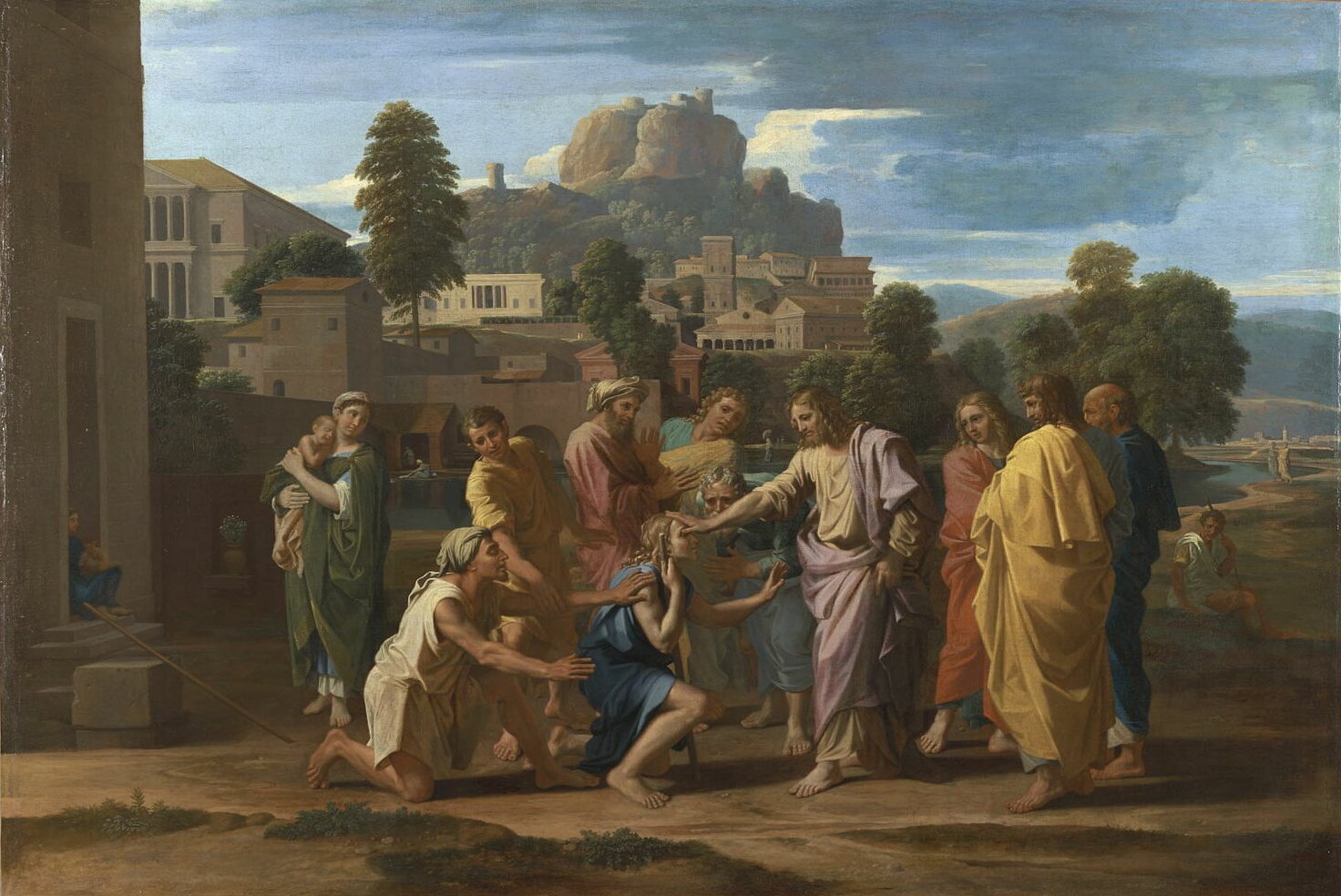
A blind man sat begging by the road as Jesus came near Jericho. When he heard that Jesus of Nazareth was passing, he called out to Him. The people in front told him to be quiet, but he cried out all the louder (Luke 18:35-39).
What Jesus did
Jesus stopped, had the man brought to Him and asked what he wanted. The man answered, “Lord, let me see again.” Jesus told him, “Receive your sight! Your faith has healed you.” At once he could see. He followed Jesus, giving glory to God, and all the people who saw it praised God too (Luke 18:40-43).
Bartimaeus
Mark tells of a blind beggar on the road out of Jericho who cried out with the same words. Mark also gives the man’s name, Bartimaeus son of Timaeus (Mark 10:46-48). Matthew speaks of two blind men by the road there, who cried, “Lord, Son of David, have mercy on us!” (Matthew 20:29-30).
The Scripture in it
So he called out, “Jesus, Son of David, have mercy on me!” Those who led the way admonished him to be silent, but he cried out all the louder, “Son of David, have mercy on me!” Jesus stopped and directed that the man be brought to Him. When he had come near, Jesus asked him, “What do you want Me to do for you?” “Lord,” he said, “let me see again.”
Bible text: Berean Standard Bible, public domain.
In Greek
Ἰησοῦ, υἱὲ Δαβίδ, ἐλέησόν με.
Υἱὲ Δαβίδ, ἐλέησόν με.
Κύριε, ἵνα ἀναβλέψω.
From Luke’s Gospel in Greek (18:38, 39 and 41), on Greek Wikisource.