
When it is said
It belongs to no service. It is said privately, anywhere and at any time, aloud or in silence. Many say it over and over, counting on a prayer rope, a cord of knots or beads.
Greek Christians most often say a shorter form: “Lord Jesus Christ, have mercy on me.” In Russian use it is usual to add “a sinner” at the end.
Monks called hesychasts, from the Greek word for stillness, pray it with a set posture and a way of breathing. The Orthodox Church in America’s handbook The Orthodox Faith says that method needs a spiritual guide. Without that method, anyone may say the prayer simply, whatever they are doing.
Where it comes from
No author known
No one wrote it
Its words are the Gospel’s own cries for mercy. Monks of the Egyptian desert in the 300s repeated short phrases. At Gaza in the 500s, the monk St Dorotheus taught “Lord Jesus Christ, have mercy on me”. The words “Son of God” join it first in an account of Philemon, an Egyptian monk of the 500s or later.
Written on a monk’s wall
In 1965 archaeologists uncovered a monk’s prayer room at Kellia, in the Egyptian desert. On its wall are 29 lines about the Jesus Prayer, written in Coptic, the language of Egypt’s Christians. They date from the 600s or 700s. The same room bore the words “Lord Jesus, help us!”
The Way of a Pilgrim
In The Way of a Pilgrim, a Russian book of the 1800s, a wanderer hears Paul’s words “pray without ceasing” read in church. An old monk teaches him to say the prayer on a prayer rope: first 3,000 times a day, then 6,000, then 12,000.
What the words mean
“Have mercy on me”
It is the tax collector’s cry in Luke 18. Jesus says that man went home justified, made right with God. The same handbook, The Orthodox Faith, says God’s mercy is what we need most of all. That is why Orthodox prayers ask for it again and again.
Orthodox Church in America, The Orthodox Faith: The Jesus Prayer
“A sinner”, or “the sinner”
St Gregory of Sinai, a monk of the 1300s, used to add “a sinner” at the end. In Greek it is “the sinner”, as in the Greek of the tax collector’s cry, Luke 18:13. Church Slavonic, the old language of Russian worship, has no word for “the”, and old English versions say “a sinner”.
Azbyka, the Jesus Prayer in Greek; Kallistos Ware, The Hesychasts
What people get wrong
Not as old as the apostles
Popular accounts say the prayer, in these words, goes back to the apostles or the first monks of the Egyptian desert. In fact it took shape slowly. “Lord Jesus Christ, Son of God, have mercy on me” is first written down in the 500s or later, and “a sinner” later still.
“Vain repetition”?
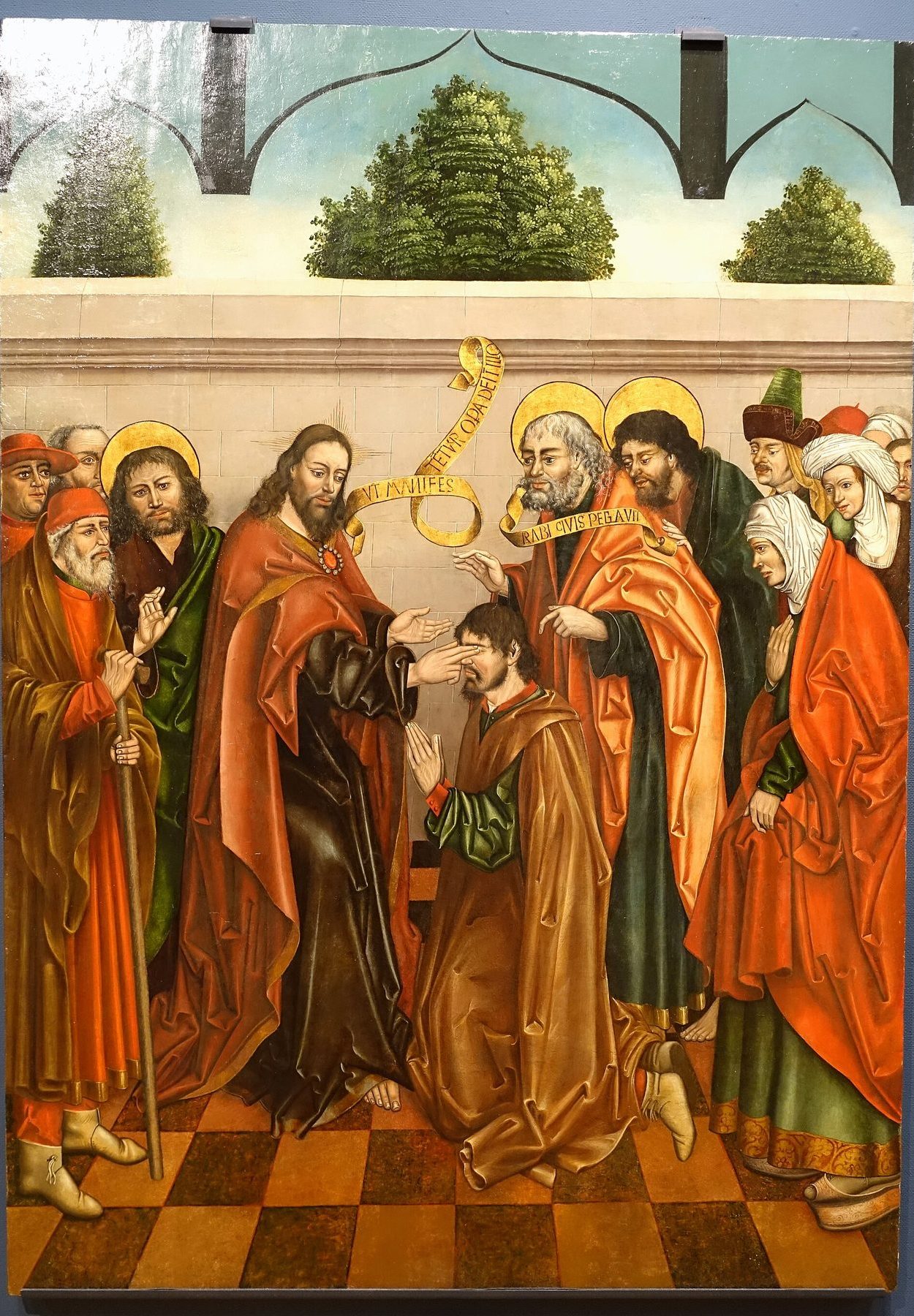
Some ask whether saying it over and over is the “vain repetition” Jesus warned against, in the King James words. His warning is against praying like pagans, who “think that by their many words they will be heard” (Matthew 6:7). Yet in Gethsemane Jesus Himself prayed a third time, “saying the same thing” (Matthew 26:44). And the blind man at Jericho “cried out all the louder” for mercy, and Jesus healed him (Luke 18:39-42).
Berean Standard Bible
The Scripture in it
But the tax collector stood at a distance, unwilling even to lift up his eyes to heaven. Instead, he beat his breast and said, ‘God, have mercy on me, a sinner!’
So he called out, “Jesus, Son of David, have mercy on me!”
Therefore I inform you that no one who is speaking by the Spirit of God says, “Jesus be cursed,” and no one can say, “Jesus is Lord,” except by the Holy Spirit.
Bible text: Berean Standard Bible, public domain.
In Greek
Κύριε Ἰησοῦ Χριστέ, Υἱὲ τοῦ Θεοῦ,
ἐλέησόν με τὸν ἁμαρτωλόν.