Sign Up My Profile
Prayers

Orthodox prayers against temptation

Prayers against temptation, for the moment you feel pulled toward what you know is wrong.

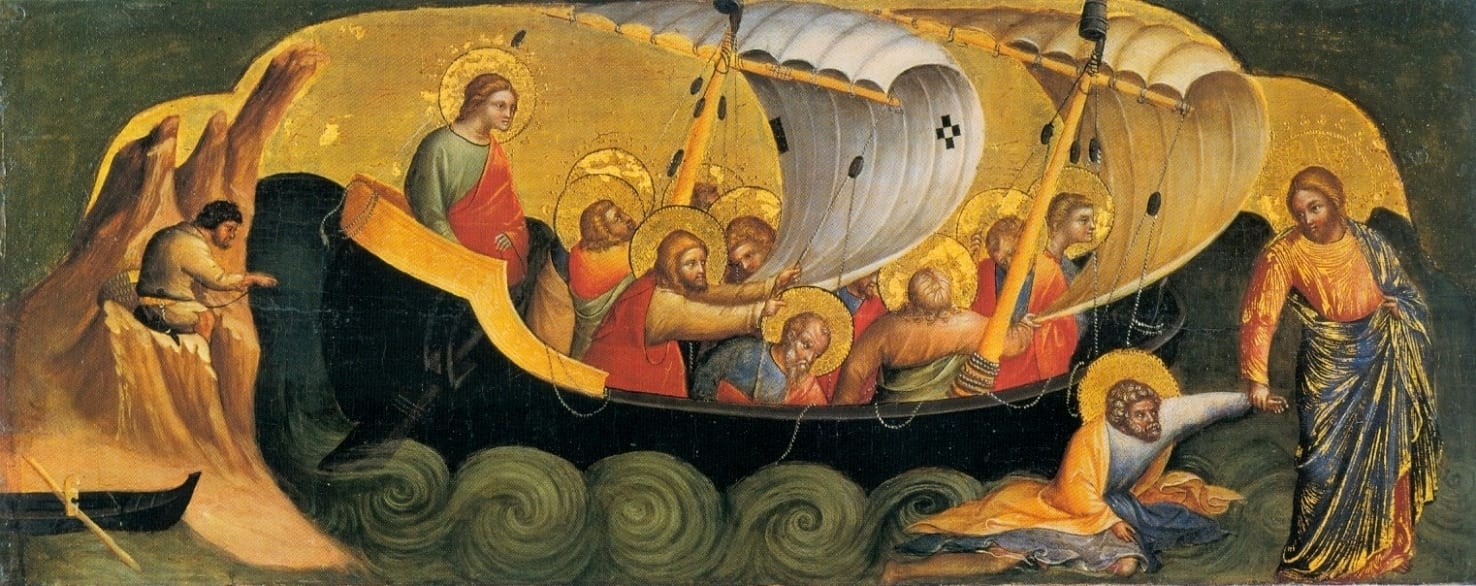
Picture: Lorenzo Veneziano, Christ Rescuing Peter from Drowning, 1370

5 prayers and 1 to the saints

In any temptation

O God, come to my assistance

O God, come to my assistance;O Lord, make haste to help me.Said again and again

Traditional wording, 1894

O God, make speed to save me:O Lord, make haste to help me.

St John Cassian heard an old monk of the Egyptian desert go through temptation after temptation, from gluttony and lust to anger and pride, and give this verse as the answer to every one. It is short enough to say the moment the pull begins.

Plain English by Wiser Walk, from the Latin of Cassian’s Conferences, with Gibson’s 1894 translation beside it. How the wording is made. Traditional wording: Edgar C. S. Gibson, Nicene and Post-Nicene Fathers, Second Series, vol. 11, 1894.

Where it comes from, and the Latin

When a thought will not let go

The Jesus Prayer

Lord Jesus Christ, Son of God,have mercy on me, a sinner.Said slowly, many times over

Traditional wording, 1916

Lord Jesus Christ, Son of God,have mercy upon me a sinner.

It is said slowly, again and again. Each time, it turns the mind from the tempting thought to the name of Jesus and His mercy.

Plain English by Wiser Walk, from the Greek and the Slavonic, with Robinson’s 1916 wording beside it. How the wording is made. Traditional wording: N. F. Robinson, Monasticism in the Orthodox Churches, 1916.

Where it comes from, and the Greek

Against evil and lustful thoughts

Prayer before the Lord’s Prayer

Master, make our souls and bodies and spirits holy.Touch our minds, and search our consciences.

Drive out of us every evil thought and every lustful one,every shameful desire and imagining,every unseemly word,all envy, conceit and hypocrisy,all lying, all deceit,every temptation of everyday life,all greed, all craving for praise,all malice, all rage, all anger,every grudge, all slander,all love of money and all laziness,and every stirring of flesh and spiritthat is foreign to Your holy will.

And make us worthy, Master, Lord, Lover of mankind,with boldness and without condemnation,with a clean heart and an enlightened soul,with unashamed faces and lips made holy,to dare to call on You, the holy God in heaven, as Father,and to say:Then say the Lord’s Prayer

Traditional wording, 1886

Sanctify also, O Lord, our souls, and bodies, and spirits,and touch our understandings, and search our consciences,and cast out from us every evil imagination,every impure feeling, every base desire, every unbecoming thought,all envy, and vanity, and hypocrisy, all lying, all deceit,every worldly affection, all covetousness, all vainglory,all indifference, all vice, all passion, all anger, all malice, all blasphemy,every motion of the flesh and spiritthat is not in accordance with Thy holy will:

And count us worthy, O loving Lord,with boldness, without condemnation, in a pure heart,with a contrite spirit, with unshamed face, with sanctified lips,to dare to call upon Thee, the holy God, Father in heaven,and to say,

In the Liturgy of St James the priest says this just before the Our Father. It asks God to drive out every evil and lustful thought, every shameful desire and every temptation of everyday life. Its last line leads straight into the Our Father below it.

Plain English by Wiser Walk, from the Greek (the prayer’s second half) printed by the Greek Orthodox Archdiocese of America, with William Macdonald’s 1886 translation beside it. How the wording is made. Traditional wording: William Macdonald, Ante-Nicene Fathers, vol. 7, 1886.

Macdonald’s English agrees with the manuscripts in F. E. Brightman’s Greek of 1896, so it has “unbecoming thought” for “unseemly word” and “a contrite spirit” for “an enlightened soul”, and no “love of money”. The plain English follows the Greek printed today. His “malice” is the word given here as “every grudge”.

Where it comes from, and the Greek

Every day

The Lord’s Prayer

Our Father in heaven,hallowed be Your name.Your kingdom come,Your will be doneon earth as it is in heaven.

Give us today our daily bread.And forgive us our debts,as we also forgive our debtors.And lead us not into temptation,but deliver us from the evil one.

When a priest leads the service, he ends it:For Yours is the kingdom and the power and the glory,of the Father and of the Son and of the Holy Spirit,now and always, and for ever and ever.All answer:Amen.

Traditional wording, 1906

Our Father, Who art in heaven,Hallowed be Thy Name.Thy kingdom come.Thy will be done on earth,As it is in heaven.Give us this day our daily bread.And forgive us our trespasses,As we forgive those who trespass against us.And lead us not into temptation;But deliver us from the evil one:

For Thine is the kingdom, and the power, and the glory,of the Father, and of the Son, and of the Holy Spirit,now, and ever, and unto ages of ages.Amen.

Jesus taught His disciples this prayer, and its last request is “lead us not into temptation, but deliver us from the evil one.” An early Christian guide called the Didache has believers pray it three times a day.

Plain English by Wiser Walk, from the Greek, with Hapgood’s 1906 translation beside it. How the wording is made. Traditional wording: Isabel F. Hapgood, Service Book of the Holy Orthodox-Catholic Apostolic Church, 1906.

Hapgood says “trespasses”, as the usual English wording does. The Greek says “debts”, and so does the plain English.

Where it comes from, and the Greek

Right after the Our Father

Prayer after the Lord’s Prayer

And lead us not into temptation, Lord,Lord of hosts, You Who know how weak we are,but deliver us from the evil one and from his works,from all his malice and all his schemes,for the sake of Your holy name,by which we are called, lowly as we are.

For Yours is the kingdom and the power and the glory,of the Father and of the Son and of the Holy Spirit,now and always, and for ever and ever. Amen.

Traditional wording, 1886

And lead us not into temptation, Lord, Lord of Hosts,Who knowest our frailty,but deliver us from the evil one and his works,and from all his malice and craftiness,for the sake of Thy holy name,which has been placed upon our humility:

For Thine is the kingdom, the power, and the glory,Father, Son, and Holy Spirit, now and for ever.Amen.

In the Liturgy of St James the priest takes up the Our Father’s last request and carries it further, calling on God, Who knows how weak we are. At home you might add it after the Our Father.

Plain English by Wiser Walk, from the Greek, with William Macdonald’s 1886 translation beside it. How the wording is made. Traditional wording: William Macdonald, Ante-Nicene Fathers, vol. 7, 1886.

Where Macdonald has the name “placed upon our humility”, the Greek uses the words of James 2:7 for the name a people is called by, so the plain wording says “by which we are called”.

Where it comes from, and the Greek

To the guardian angel · At night

Prayer to your guardian angel

Angel of Christ, my holy guardian,protector of my soul and body,forgive me every sin of this day.Deliver me from all the cunning of the enemy who fights me,so that I may not anger my God by any sin.

Pray for me, a sinful and unworthy servant,so that you may show me worthyof the goodness and mercy of the All-holy Trinity,of the Mother of my Lord Jesus Christ,and of all the saints. Amen.

Traditional wording, 1982

Angel of Christ, my holy guardian,the protector of my soul and body:forgive me for all the sins I have committed this day.Deliver me from all the evil of my militant enemy,that I may not anger my God by any sin.

Pray for me, your sinful and unworthy servant,that you may show me worthyof the goodness and mercy of the All-Holy Trinity,the Mother of my Lord Jesus Christand all the Saints. Amen.

Russian prayer books give it among the prayers before sleep. It asks your guardian angel for help against the cunning of the enemy, so that you do not anger God by any sin.

Plain English by Wiser Walk, from the Church Slavonic of the Russian prayer book. How the wording is made. Traditional wording: St Tikhon’s Seminary Press, Orthodox Daily Prayers, 1982.

Where it comes from, and the Church Slavonic

Scripture for this

No temptation has seized you except what is common to man. And God is faithful; He will not let you be tempted beyond what you can bear. But when you are tempted, He will also provide an escape, so that you can stand up under it.

1 Corinthians 10:13 Your temptation is common to all. God is faithful, and He will not let you be tempted beyond what you can bear.

15For we do not have a high priest who is unable to sympathize with our weaknesses, but we have one Who was tempted in every way that we are, yet was without sin. 16Let us then approach the throne of grace with confidence, so that we may receive mercy and find grace to help us in our time of need.

Hebrews 4:15-16 Christ was tempted in every way as we are, yet without sin. So we can approach the throne of grace with confidence and find help.

“Watch and pray so that you will not enter into temptation. For the spirit is willing, but the body is weak.”

Matthew 26:41 Jesus warned His sleepy disciples to watch and pray, so that they would not enter into temptation.

12Blessed is the man who perseveres under trial, because when he has stood the test, he will receive the crown of life that God has promised to those who love Him. 13When tempted, no one should say, “God is tempting me.” For God cannot be tempted by evil, nor does He tempt anyone. 14But each one is tempted when by his own evil desires he is lured away and enticed.

James 1:12-14 God tempts no one. Each of us is pulled by our own desires, and the one who stands firm is blessed.

7Submit yourselves, then, to God. Resist the devil, and he will flee from you. 8Draw near to God, and He will draw near to you. Cleanse your hands, you sinners, and purify your hearts, you double-minded.

James 4:7-8 Submit to God. Resist the devil, and he will flee from you. Come near to God, and He will come near to you.

Finally, brothers, whatever is true, whatever is honorable, whatever is right, whatever is pure, whatever is lovely, whatever is admirable—if anything is excellent or praiseworthy—think on these things.

Philippians 4:8 Paul urges believers to think about whatever is true, honourable, right, pure, lovely and admirable.

Bible text: Berean Standard Bible, public domain.

Close to this

All prayers

Quiz What prayer do you need right now? A few honest taps about where you are, and a prayer of the Church for exactly that. 8 questions, about 3 minutes. Start

Suggest a correction

Berean Standard Bible