
When it is said
It ends the Trisagion prayers, a short set named after the hymn “Holy God, Holy Mighty, Holy Immortal”. The set comes near the start of each daily service of the Orthodox Church, and of Orthodox morning and evening prayers at home, just after “O Heavenly King”. When a priest leads the service, he adds the ending of praise aloud, and all answer “Amen”.
At every Divine Liturgy, the Orthodox Communion service, the people pray it just before Communion. First the priest asks God to let us dare, boldly and without condemnation, to call Him Father. In the 300s St Cyril, bishop of Jerusalem, already describes it just before Communion in his lessons for the newly baptized.
Christians of every tradition pray it, but they end it differently. Most Protestant churches close with words of praise, as the King James Bible has them: “For Thine is the kingdom, and the power, and the glory, for ever. Amen.” At a Catholic Mass the priest says a short prayer after it, and the people answer, “For the kingdom, the power and the glory are Yours now and for ever.”
Where it comes from
Author known
Taught by Jesus, in two forms
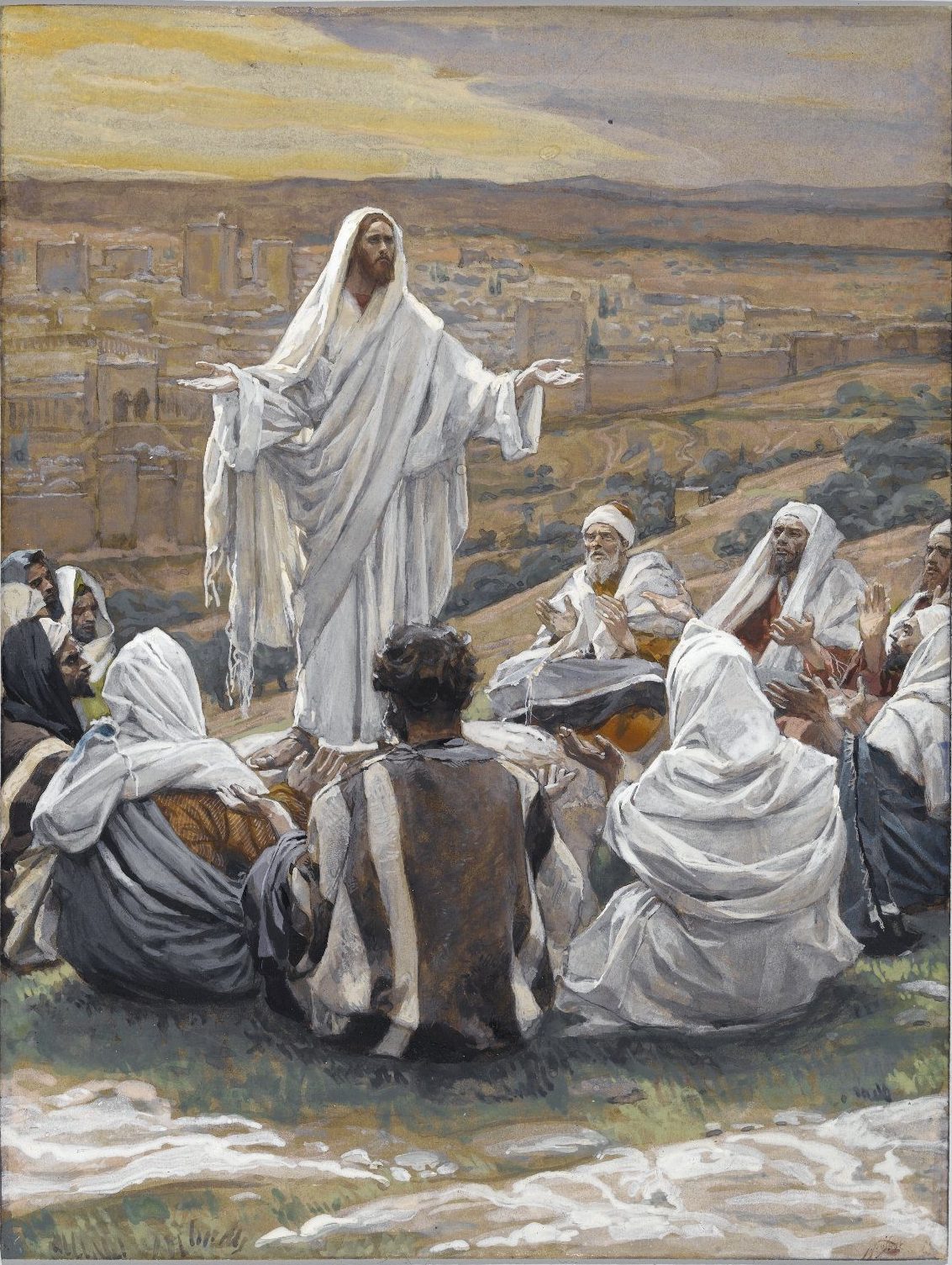
Jesus gives this prayer in the Sermon on the Mount, in Matthew’s Gospel. In Luke’s Gospel a disciple asks Him, “Lord, teach us to pray”, and He gives a shorter form. The Didache, a Christian guide from about AD 100, gives Matthew’s form, so the Church seems to have prayed it from the start.
Three times a day
The Didache also tells Christians: “Three times in the day pray ye so.” It ends the prayer with praise: “for Thine is the power and the glory for ever and ever”. In Orthodox services the priest still ends it with praise.
The Didache, chapter 8, in Lightfoot and Harmer, The Apostolic Fathers (1891)
What the words mean
“Our daily bread”: more than bread
The Greek word for “daily”, epiousios, is found almost nowhere outside this prayer. It may mean bread “for the coming day”, or bread “for our being”: what we need to live. And bread stands for far more than food. St Augustine taught, “When we ask for bread, we thereby understand all things.” So we ask our Father for all we need today, body and soul, as Israel gathered the manna one day at a time. Many Fathers heard Christ in it too, the Bread of Life.
Origen, On Prayer; Thayer’s Greek Lexicon, epiousios; Augustine, Sermon 57, on the Lord’s Prayer; Cyprian, On the Lord’s Prayer; Orthodox Church in America, The Orthodox Faith: The Lord’s Prayer
“Lead us not into temptation”
This does not mean that God tempts anyone. The Orthodox Church in America’s handbook says we ask Him not to let us fall into situations where sin would overcome us. St Cyril of Jerusalem compared temptation to a winter torrent: we pray to cross it, not to be swept away.
Orthodox Church in America, The Orthodox Faith: The Lord’s Prayer; Cyril of Jerusalem, Catechetical Lecture 23
The Scripture in it
So then, this is how you should pray: ‘Our Father in heaven, hallowed be Your name. Your kingdom come, Your will be done, on earth as it is in heaven. Give us this day our daily bread. And forgive us our debts, as we also have forgiven our debtors. And lead us not into temptation, but deliver us from the evil one.’
So Jesus told them, “When you pray, say: ‘Father, hallowed be Your name. Your kingdom come. Give us each day our daily bread. And forgive us our sins, for we also forgive everyone who sins against us. And lead us not into temptation.’”
Yours, O LORD, is the greatness and the power and the glory and the splendor and the majesty, for everything in heaven and on earth belongs to You. Yours, O LORD, is the kingdom, and You are exalted as head over all.
Then the LORD said to Moses, “Behold, I will rain down bread from heaven for you. Each day the people are to go out and gather enough for that day. In this way I will test whether or not they will follow My instructions.”
Keep falsehood and deceitful words far from me. Give me neither poverty nor riches; feed me with the bread that is my portion.
Bible text: Berean Standard Bible, public domain.
In Greek
Πάτερ ἡμῶν ὁ ἐν τοῖς οὐρανοῖς,
ἁγιασθήτω τὸ ὄνομά Σου,
ἐλθέτω ἡ βασιλεία Σου,
γενηθήτω τὸ θέλημά Σου,
ὡς ἐν οὐρανῷ, καὶ ἐπὶ τῆς γῆς.
Τὸν ἄρτον ἡμῶν τὸν ἐπιούσιον δὸς ἡμῖν σήμερον,
καὶ ἄφες ἡμῖν τὰ ὀφειλήματα ἡμῶν,
ὡς καὶ ἡμεῖς ἀφίεμεν τοῖς ὀφειλέταις ἡμῶν,
καὶ μὴ εἰσενέγκῃς ἡμᾶς εἰς πειρασμόν,
ἀλλὰ ῥῦσαι ἡμᾶς ἀπὸ τοῦ πονηροῦ.
Ὅτι Σοῦ ἐστιν ἡ βασιλεία καὶ ἡ δύναμις καὶ ἡ δόξα,
τοῦ Πατρός, καὶ τοῦ Υἱοῦ, καὶ τοῦ Ἁγίου Πνεύματος,
νῦν καὶ ἀεί, καὶ εἰς τοὺς αἰῶνας τῶν αἰώνων.
Ἀμήν.
From the Greek service texts of the Greek Orthodox Archdiocese of America, with capitals for God.