
When it is said
At the Liturgy of St James, all the people say the Our Father together.
The priest then bows at the altar and prays this in a low voice. He says only its closing words of praise aloud, and the people answer “Amen.”
In Jerusalem the Liturgy of St James is served on St James’s day, 23 October.
At home, a person might add it after the Our Father.
Where it comes from
No author known
From the old liturgy of Jerusalem
The Liturgy of St James bears the name of James the brother of the Lord, the first bishop of Jerusalem. Most scholars date the form we know to the late 300s, and by the early 400s it was the main liturgy of the Churches of Jerusalem and Antioch. The oldest copy is a manuscript of the 800s that was once used in church at Damascus.
Wikipedia, “Liturgy of Saint James”; The Liturgy of St James in Church Slavonic, preface (Azbyka)
A clue from the 300s
Lectures credited to St Cyril of Jerusalem explain the Liturgy part by part to the newly baptized. They quote the Our Father’s last request with an extra word: “And lead us not into temptation, O Lord.” In his notes of 1896 the scholar F. E. Brightman drew attention to that “Lord” and pointed to this prayer, which has the same word in the same place.
St Cyril of Jerusalem, Mystagogical Lecture 5, in Nicene and Post-Nicene Fathers, series 2, vol. 7 (1893); F. E. Brightman, Liturgies Eastern and Western (1896), appendix on St Cyril
What the words mean
What “lead us not into temptation” means
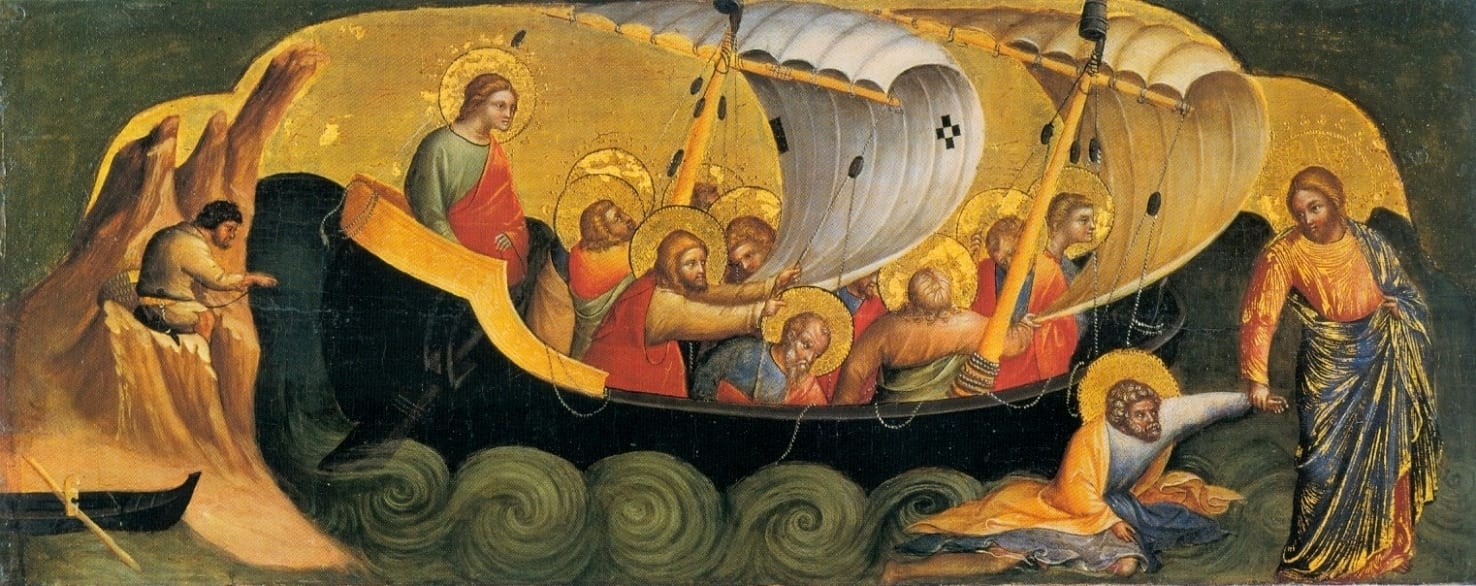
The Jerusalem lectures credited to St Cyril ask whether Christ teaches us to pray never to be tempted at all. They answer that to enter into temptation is to be overwhelmed by it, for temptation is like a winter torrent that is hard to cross. Some are swept away, and others swim through. Peter denied Christ, yet the temptation did not overwhelm him, and he swam through it.
The Scripture in it
And lead us not into temptation, but deliver us from the evil one.’
For we do not have a high priest who is unable to sympathize with our weaknesses, but we have one Who was tempted in every way that we are, yet was without sin.
Put on the full armor of God, so that you can make your stand against the devil’s schemes.
Are they not the ones who blaspheme the noble name by which you have been called?
Bible text: Berean Standard Bible, public domain.
In Greek
Καὶ μὴ εἰσενέγκῃς ἡμᾶς εἰς πειρασμόν, Κύριε, Κύριε τῶν δυνάμεων,
ὁ εἰδὼς τὴν ἀσθένειαν ἡμῶν,
ἀλλὰ ῥῦσαι ἡμᾶς, ἀπὸ τοῦ πονηροῦ καὶ ἐκ τῶν ἔργων αὐτοῦ
καὶ πάσης ἐπηρείας καὶ μεθοδείας αὐτοῦ
διὰ τὸ ὄνομά Σου τὸ ἅγιον,
τὸ ἐπικληθὲν ἐπὶ τὴν ἡμετέραν ταπείνωσιν.
Ὅτι Σοῦ ἐστιν ἡ βασιλεία καὶ ἡ δύναμις καὶ ἡ δόξα
τοῦ Πατρὸς καὶ τοῦ Υἱοῦ καὶ τοῦ ἁγίου Πνεύματος,
νῦν καὶ ἀεὶ καὶ εἰς τοὺς αἰῶνας τῶν αἰώνων. Ἀμήν.
From the Divine Liturgy of St James, Greek Orthodox Archdiocese of America (glt.goarch.org).