Sign Up My Profile
Prayers

The morning prayer of St Basil

A morning prayer of thanks for the night’s sleep, credited to St Basil the Great. It belongs to the Midnight Office and to Orthodox morning prayers at home.

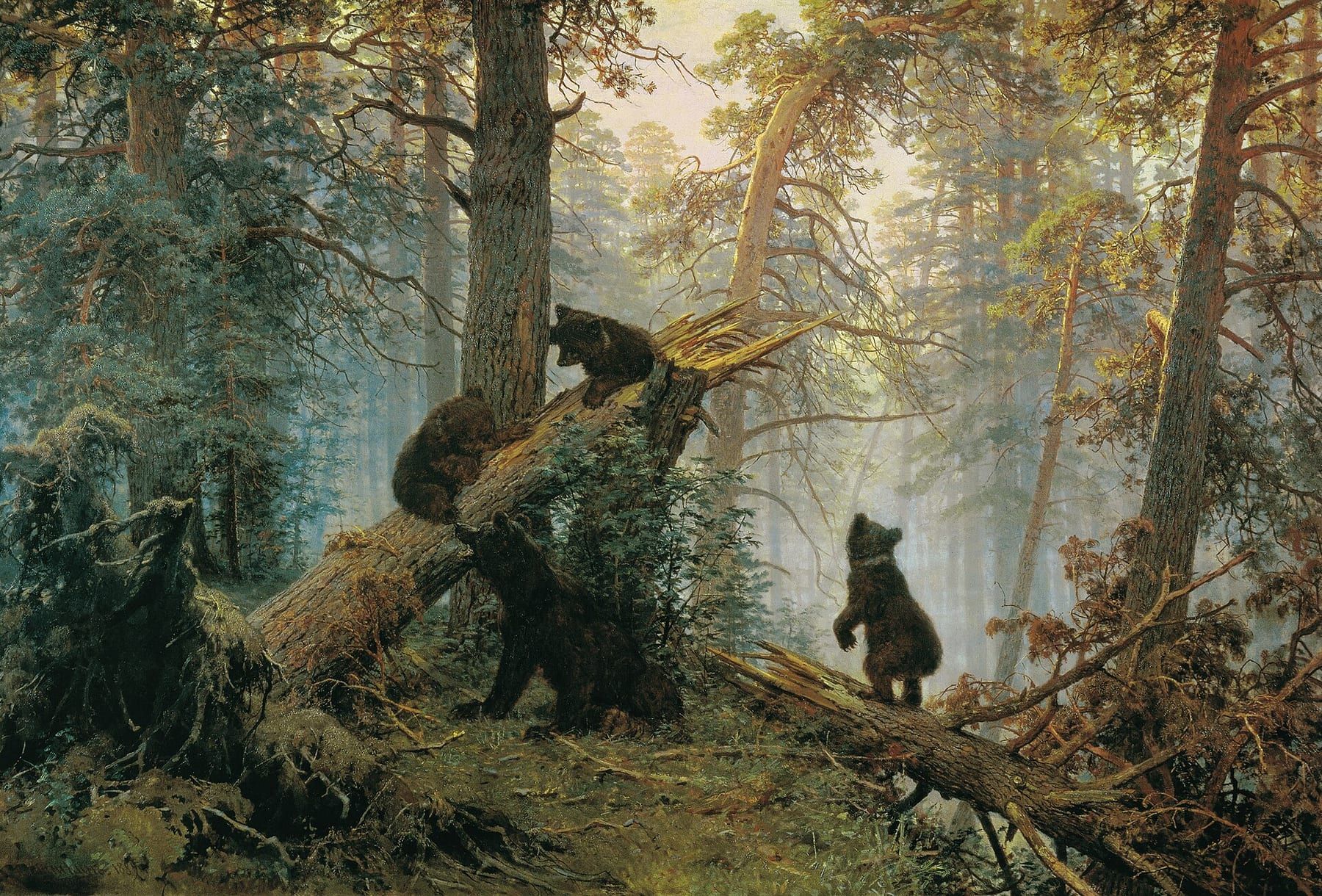
Picture: Ivan Shishkin and Konstantin Savitsky, Morning in a Pine Forest, 1889

The words of the prayer

Plain English

We bless You, O God most high and Lord of mercy.You always do great and unsearchable things among us,glorious and awesome things beyond number.You have given us sleep to rest our weaknessand to ease the labours of our toiling flesh.

We thank You that You did not destroy us in our sins,but showed us Your love for mankind, as You always do,and raised us as we lay in despairto glorify Your power.

So we ask Your boundless goodness:enlighten our thoughts and our eyes,and raise our mind from the heavy sleep of laziness.Open our mouths and fill them with Your praise,so that we may sing to You and give You thanks, never wavering,O God, glorified in all things and by all,the Father without beginning,with Your only-begotten Sonand Your all-holy, good and life-giving Spirit,now and always, and for ever and ever. Amen.

Traditional wording, 1891

We bless Thee, O God most high and Lord of mercy,Who ever doest amongst us great and unsearchable, glorious and terrible things, of which there is no number,and Who grantest unto us sleep to rest our weaknessand to relieve the labour of our toiling flesh.

We give Thee thanks that Thou hast not destroyed us in our transgressions,but, in Thy wonted love to man, hast raised us lying in despair to glorify Thy power.

Therefore we pray Thee of Thine unmeasurable goodnessto enlighten our thoughts and our eyes,and to raise our minds from the heavy sleep of sloth.Open our lips and fill them with Thy praise,that we may continually sing and give thanks unto Thee,O God, the unbeginning Father, Who in all things and by all things,together with Thine only-begotten Son, and Thy most holy, and good, and life-creating Spirit,art glorified, now and ever, and to ages of ages. Amen.

Plain English by Wiser Walk, from the Church Slavonic of the book of hours, with Shann’s 1891 translation beside it. How the wording is made. Traditional wording: G. V. Shann, Euchology: A Manual of Prayers of the Holy Orthodox Church, 1891.

Shann’s “terrible” is the old sense, things that fill us with awe: the plain wording says “awesome”.

When it is said

It is the sixth of the morning prayers in the Russian prayer book, the second of two under St Basil’s name.

In church it belongs to the Midnight Office, the Church’s service of prayer in the night. On weekdays from 22 September until Palm Sunday, the priest raises his hands and says it. The book counts by the Church’s old calendar, so 22 September is 5 October on ours.

A Greek-English prayer book, An Orthodox Prayer Book (Oxford, 1999), has it among its morning prayers, to be said every day but Saturday.

Where it comes from

Author by tradition

Two prayers of St Basil

St Basil the Great, a bishop, died in AD 379. The Church Slavonic book of hours puts his name over two prayers of its weekday Midnight Office: this one, and the one just before it.

The Church Slavonic Horologion, on Azbyka.ru; Azbyka.ru, the morning prayers (in Russian)

From church to home

The prayer moved from church into prayer at home. A Russian prayer book copied by hand in the mid-1500s has it among the prayers said alone after the Midnight Office. Today’s morning prayers still share Psalm 51, the Creed and both of St Basil’s prayers with that service, as a study of their history notes.

Priest Pyotr Pchelintsev, on the history of the morning and evening prayers (in Russian)

What the words mean

“As we lay in despair”

The old word means lying without hope. A Russian note on the prayer reads it as sleep itself: we lay as if unconscious, and God raised us and woke us. So the prayer gives thanks for waking, and for the sleep before it, which rested a weak and weary body.

Azbyka.ru, the morning prayers with notes (in Russian)

The Scripture in it

… the One Who does great and unsearchable things, wonders without number.

Job 5:9 Echoed Words from the book of Job: God does great and unsearchable things, wonders without number.

O Lord, open my lips, and my mouth will declare Your praise.

Psalm 51:15 Echoed “O Lord, open my lips, and my mouth will declare Your praise.”

Bible text: Berean Standard Bible, public domain.

In Church Slavonic

Тя благословим, вышний Боже и Господи милости, творящаго присно с нами великая же и неизследованная, славная же и ужасная, ихже несть числа, подавшаго нам сон во упокоение немощи нашея, и ослабление трудов многотрудныя плоти.

Благодарим Тя, яко не погубил еси нас со беззаконьми нашими, но человеколюбствовал еси обычно, и в нечаянии лежащия ны воздвигл еси, во еже славословити державу Твою.

Темже молим безмерную Твою благость, просвети наша мысли, очеса, и ум наш от тяжкаго сна лености возстави: отверзи наша уста, и исполни я Твоего хваления, яко да возможем непоколеблемо пети же и исповедатися Тебе, во всех, и от всех славимому Богу, Безначальному Отцу, со Единородным Твоим Сыном, и Всесвятым и Благим и Животворящим Твоим Духом, ныне и присно и во веки веков, аминь.

From the Church Slavonic book of hours (Horologion), the weekday Midnight Office, in modern Russian letters on Azbyka.ru.

Close to this

All prayers

Suggest a correction

Berean Standard Bible