
When it is said
They are sung near the end of Matins on the night of Pascha, each after a verse from Psalm 68 or Psalm 118.
After the last of them, “Christ is risen” is sung again and again while the people greet one another with a kiss.
They are sung again at Vespers and Matins on each day of Bright Week. In Russian practice they also come at the vigil before each Sunday, until the eve of the Ascension.
Where it comes from
No author known
Why “Let God arise”
The verses come from the opening of Psalm 68 and from Psalm 118, “This is the day that the Lord has made.” A note in the Russian prayer book says that the holy Fathers read the first words of Psalm 68 as David foretelling the resurrection of Christ. On Easter night each verse is answered by a hymn of the feast.
The Russian prayer book, on Azbyka.ru; The Greek service of Pascha, on the Greek Orthodox Archdiocese of America’s liturgical texts site
Not the prayer to the Cross
The same words of Psalm 68 also open a different prayer, the prayer to the Cross said at bedtime in the Russian prayer book. That prayer goes on from the psalm to greet the Cross itself. In the Paschal stichera the psalm’s verses stand alone, each followed by an Easter hymn.
The last hymn
The last of them, “It is the day of the resurrection”, comes after “Glory to the Father”. Its opening is the start of the sermon St Gregory the Theologian preached on Easter Day in AD 362, and it ends in the Easter hymn “Christ is risen”.
G. V. Shann, Euchology (1891); St Gregory the Theologian, First Oration, in Nicene and Post-Nicene Fathers (1894)
What the words mean
Pascha, again and again
The first hymn names Pascha 10 times, and calls it sacred, new, mystical, spotless and great. Isabel Hapgood’s 1906 English gives each one as “Passover”, which is what Pascha means. The hymn calls Christ Himself the Pascha, as Paul calls Him “our Passover lamb” (1 Corinthians 5:7).
Out of the tomb like a bridegroom
Two of the hymns see Christ come out of the tomb like a bridegroom from his room. The picture comes from Psalm 19, where the sun rises “like a bridegroom emerging from his chamber” (Psalm 19:5).
The Scripture in it
God arises. His enemies are scattered, and those who hate Him flee His presence. As smoke is blown away, You will drive them out; as wax melts before the fire, the wicked will perish in the presence of God. But the righteous will be glad and rejoice before God; they will celebrate with joy.
This is the day that the LORD has made; we will rejoice and be glad in it.
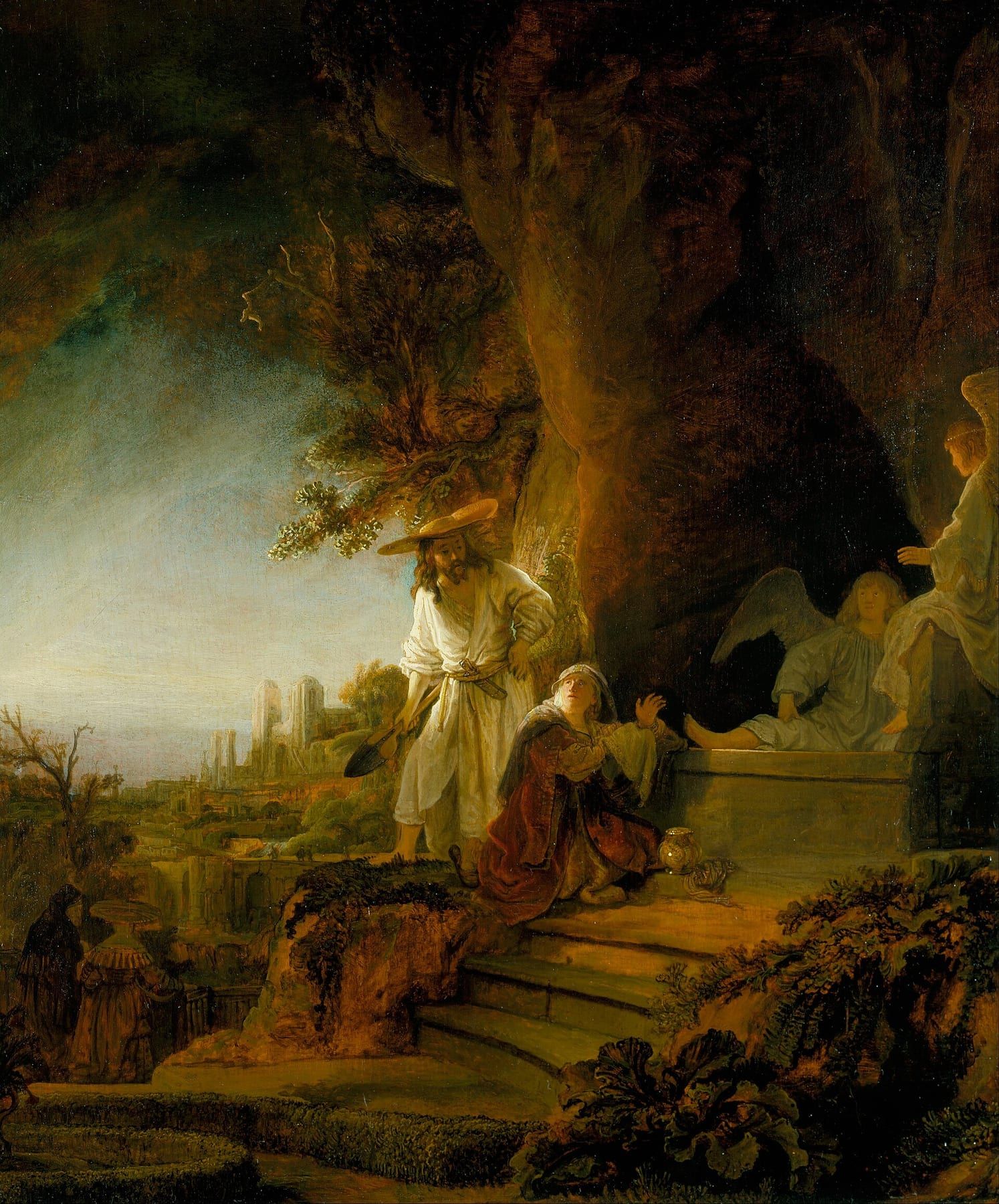
Suddenly there was a great earthquake, for an angel of the Lord descended from heaven, rolled away the stone, and sat on it.
As the women bowed their faces to the ground in terror, the two men asked them, “Why do you look for the living among the dead?”
Like a bridegroom emerging from his chamber, like a champion rejoicing to run his course …
Get rid of the old leaven, that you may be a new unleavened batch, as you really are. For Christ, our Passover lamb, has been sacrificed.
Bible text: Berean Standard Bible, public domain.
In Greek
Στίχ. Ἀναστήτω ὁ Θεός, καὶ διασκορπισθήτωσαν οἱ ἐχθροὶ Αὐτοῦ, καὶ φυγέτωσαν ἀπὸ προσώπου Αὐτοῦ οἱ μισοῦντες Αὐτόν.
Πάσχα ἱερὸν ἡμῖν σήμερον ἀναδέδεικται, Πάσχα καινόν, Ἅγιον, Πάσχα μυστικόν, Πάσχα πανσεβάσμιον, Πάσχα Χριστὸς ὁ λυτρωτής, Πάσχα ἄμωμον, Πάσχα μέγα, Πάσχα τῶν πιστῶν, Πάσχα, τὸ πύλας ἡμῖν τοῦ Παραδείσου ἀνοῖξαν, Πάσχα, πάντας ἁγιάζον πιστούς.
Στίχ. Ὡς ἐκλείπει καπνός, ἐκλιπέτωσαν, ὡς τήκεται κηρὸς ἀπὸ προσώπου πυρός.
Δεῦτε ἀπὸ θέας Γυναῖκες εὐαγγελίστριαι, καὶ τῇ Σιὼν εἴπατε· Δέχου παρ΄ ἡμῶν χαρᾶς εὐαγγέλια, τῆς Ἀναστάσεως Χριστοῦ, τέρπου, χόρευε, καὶ ἀγάλλου Ἱερουσαλήμ, τὸν Βασιλέα Χριστόν, θεασαμένη ἐκ τοῦ μνήματος, ὡς νυμφίον προερχόμενον.
Στίχ. Οὕτως ἀπολοῦνται οἱ ἁμαρτωλοὶ ἀπὸ προσώπου τοῦ Θεοῦ. καὶ οἱ δίκαιοι εὐφρανθήτωσαν.
Αἱ Μυροφόροι γυναῖκες, ὄρθρου βαθέος, ἐπιστᾶσαι πρὸς τὸ μνῆμα τοῦ Ζωοδότου, εὗρον Ἄγγελον, ἐπὶ τὸν λίθον καθήμενον, καὶ αὐτὸς προσφθεγξάμενος, αὐταῖς οὕτως ἔλεγε· Τί ζητεῖτε τὸν ζῶντα μετὰ τῶν νεκρῶν; τί θρηνεῖτε τὸν ἄφθαρτον ὡς ἐν φθορᾷ; ἀπελθοῦσαι κηρύξατε, τοῖς Αὐτοῦ Μαθηταῖς.
Στίχ. Αὕτη ἡ ἡμέρα, ἣν ἐποίησεν ὁ Κύριος, ἀγαλλιασώμεθα, καὶ εὐφρανθῶμεν ἐν αὐτῇ.
Πάσχα τὸ τερπνόν, Πάσχα Κυρίου, Πάσχα, Πάσχα πανσεβάσμιον ἡμῖν ἀνέτειλε, Πάσχα, ἐν χαρᾷ ἀλλήλους περιπτυξώμεθα, ὦ Πάσχα λύτρον λύπης· καὶ γὰρ ἐκ τάφου σήμερον ὥσπερ ἐκ παστοῦ, ἐκλάμψας Χριστός, τὰ Γύναια χαρᾶς ἔπλησε λέγων· Κηρύξατε Ἀποστόλοις.
Δόξα... Καὶ νῦν...
Ἀναστάσεως ἡμέρα, καὶ λαμπρυνθῶμεν τῇ πανηγύρει, καὶ ἀλλήλους περιπτυξώμεθα. Εἴπωμεν ἀδελφοί, καὶ τοῖς μισοῦσιν ἡμᾶς· Συγχωρήσωμεν πάντα τῇ Ἀναστάσει, καὶ οὕτω βοήσωμεν· Χριστὸς ἀνέστη ἐκ νεκρῶν, θανάτῳ θάνατον πατήσας, καὶ τοῖς ἐν τοῖς μνήμασι, ζωὴν χαρισάμενος.
From the Greek service of Pascha, on the Greek Orthodox Archdiocese of America’s liturgical texts site.