Sign Up My Profile
Prayers

Prayer for fallen soldiers

These are the deacon’s petition and two hymns from the Russian Church’s memorial service for soldiers who died in battle, held on 29 August.

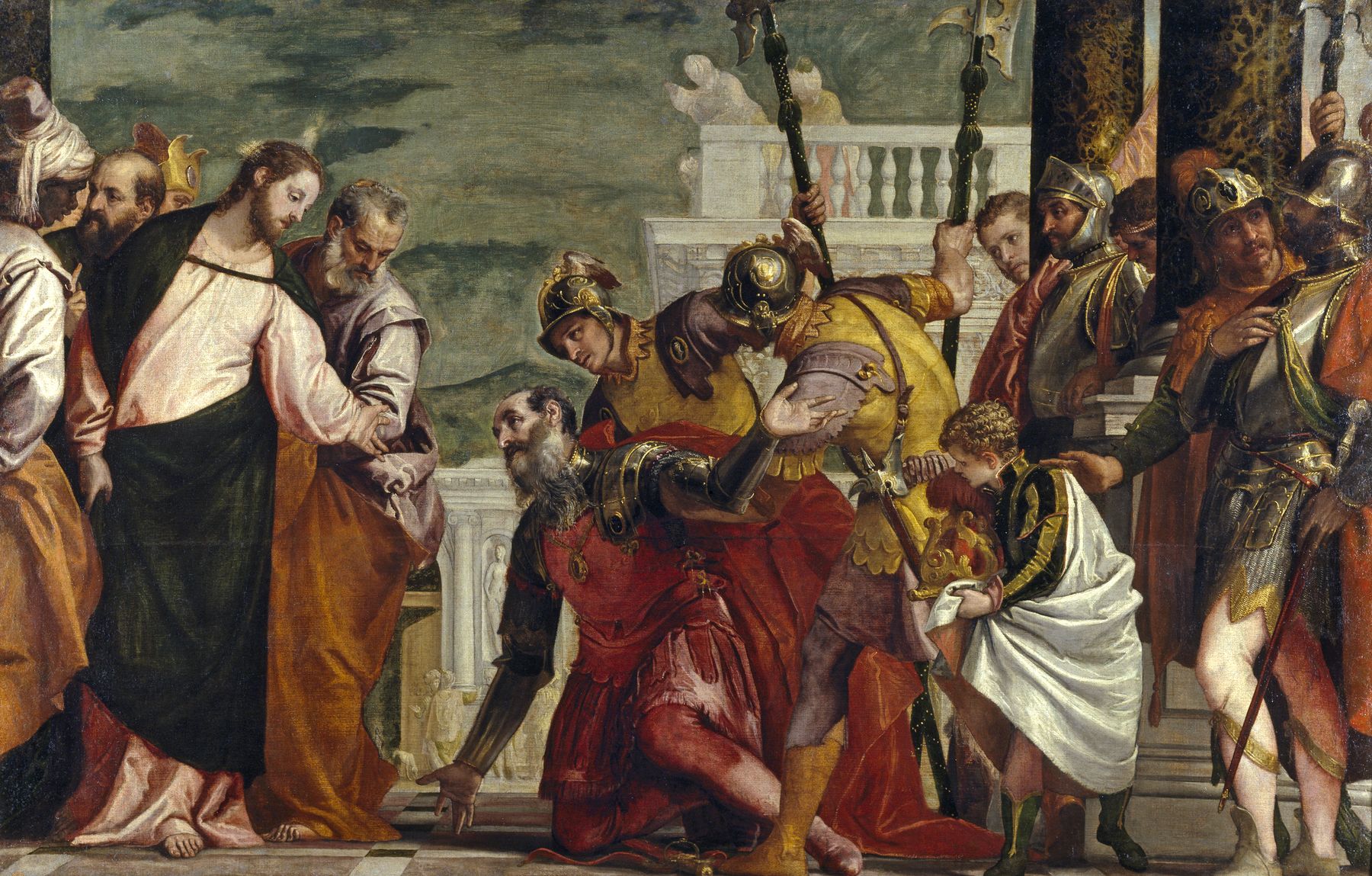
Picture: Paolo Veronese, Jesus and the Centurion, about 1571

The words of the prayer

Plain English

For the ever-remembered servants of God,the Orthodox soldiers who fought bravely,and for all who laid down their lives in battlefor the faith and for their country,for their rest, their peace and their blessed memory,let us pray to the Lord.The people answer: Lord, have mercy.

Then, from the canonI have opened my mouth, O Saviour:give me words to pray, O Merciful One,for those who fought bravelyfor the faith and for their country,so that You may give rest to their souls, O Master.

In a place of green pasture, a place of rest,where the choirs of the saints rejoice,give rest, O Christ, to the souls of Your servantswho fought bravely for the holy Church and their country,O only Merciful One.

Traditional wording, 1906

For the repose, tranquillity and blessed memoryof the ever-memorable servants of God,the Orthodox Warriors who have valiantly contended:and for all who have laid down their life in battlefor the Faith and the Fatherland,let us pray to the Lord.

Having opened my mouth, O Saviour,give me speech to pray, O Compassionate One,for those who have wrought valiant deedsof the Faith and the Fatherland;and give rest to their souls, O Master.

In a place of verdure, a place of repose,where the company of the Saints rejoice,give rest, O Christ, to the souls of Thy servantswho have valiantly wrought for the Holy Church and their Fatherland,only Merciful One.

Plain English by Wiser Walk, from the Church Slavonic, with Hapgood’s 1906 translation beside it. How the wording is made. Traditional wording: Isabel F. Hapgood, Service Book of the Holy Orthodox-Catholic Apostolic Church, 1906.

Hapgood’s “Fatherland” is “their country” in the plain wording.

When it is said

The Russian Church holds a memorial service for soldiers killed in battle on 29 August, and again on the Saturday before 26 October.

At that service the deacon adds a petition for the soldiers to the opening litany, and a canon of hymns is sung for the fallen.

A family might pray these words at home on the anniversary of a soldier’s death or on a national day of remembrance.

Where it comes from

No author known

Where does it come from?

These words come from the memorial service the Russian Church holds for soldiers who died in battle, a custom that began in 1769, in a time of war. The translator Isabel Hapgood printed the service in English in her service book of 1906. It includes a canon, a long hymn sung in sections, for “Orthodox warriors slain on the field of battle”.

The Great Book of Needs, Volume III (St Tikhon’s Seminary Press, 1999); Isabel F. Hapgood, Service Book (1906), pp. 439-452

Why 29 August?

The service falls on the day the Church remembers the beheading of John the Baptist. A Russian service book printed in 1898 explains the choice. John suffered for the truth, so his day is a fitting one to pray for all who suffered in the same way and laid down their lives for their faith and their country.

Alexei Maltsev, Чины погребения (Berlin, 1898)

A second day for the fallen

Soldiers are remembered again on Demetrius Saturday, the Saturday before St Demetrius’s feast on 26 October. The custom is traced to St Dimitry Donskoy. After the battle of Kulikovo in 1380 he held a memorial for his fallen men, and with the counsel and blessing of St Sergius of Radonezh he ordered it kept every year.

The Great Book of Needs, Volume III (St Tikhon’s Seminary Press, 1999)

The Scripture in it

Greater love has no one than this, that he lay down his life for his friends.

John 15:13 Echoed “Laid down their lives” echoes Jesus’ words about laying down one’s life for one’s friends.

He makes me lie down in green pastures; He leads me beside quiet waters.

Psalm 23:2 Echoed “A place of green pasture” is the Slavonic wording of this verse.

Bible text: Berean Standard Bible, public domain.

In Church Slavonic

О приснопамятных рабех Божиих православных воинех,

мужественно подвизавшихся,

и о всех за веру и отечество на брани живот свой положивших,

покоя, тишины, блаженныя памяти их, Господу помолимся!

Отверз уста моя, Спасе, слово ми подаждь молитися, Милосерде,

о подвизавшихся за веру и отечество мужественно,

да покоиши души их, Владыко!

В месте злачне, в месте покойне, идеже лицы Святых веселятся,

покой, Христе, души раб Твоих,

за церковь святую и отечество мужественно подвизавшихся,

едине милостиве!

From Alexei Maltsev, Чины погребения и некоторые особенные и древние церковные службы (Berlin, 1898), on Azbyka.ru, a Russian Orthodox website.

Close to this

All prayers

Suggest a correction

Berean Standard Bible