
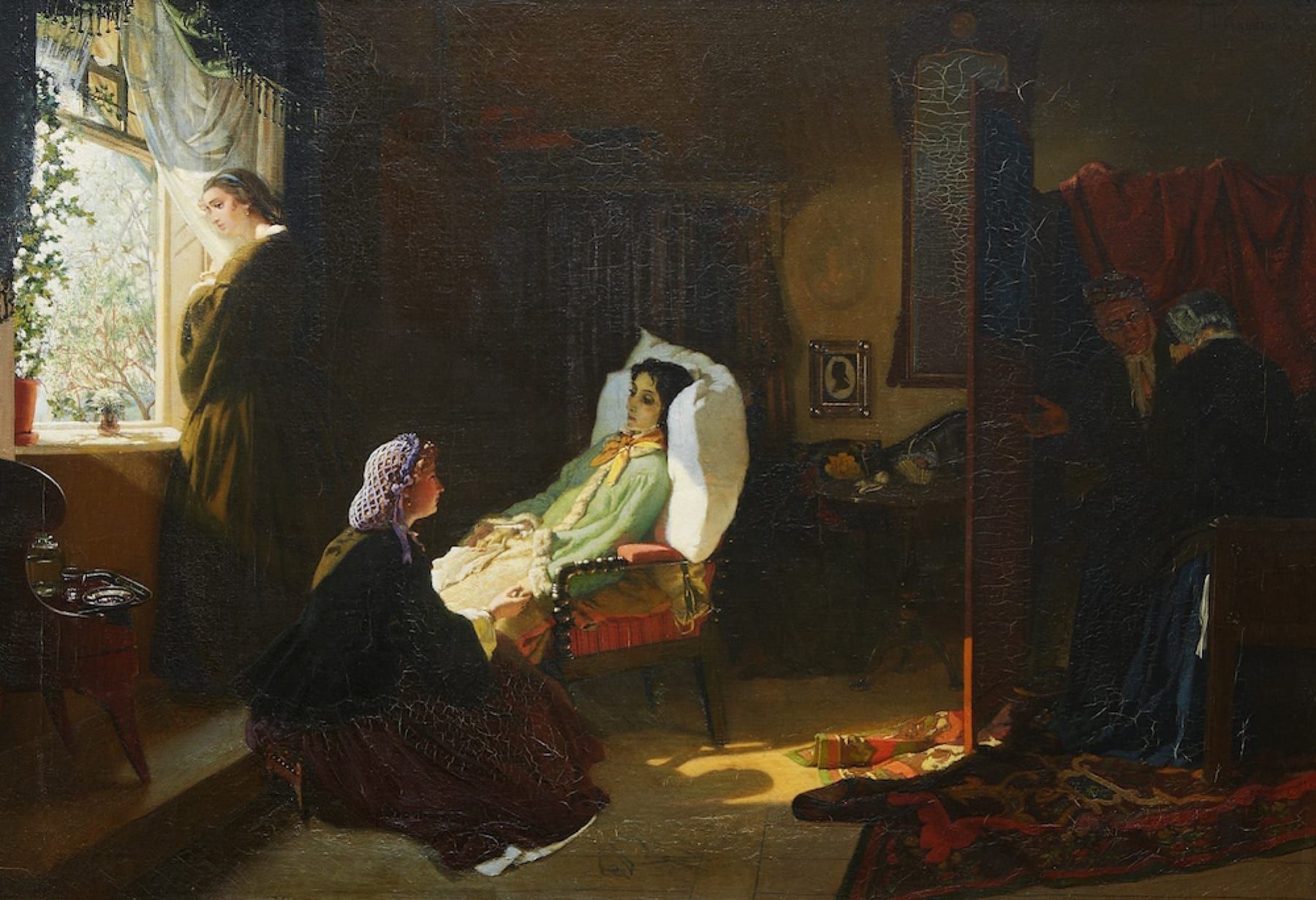
When it is said
A priest says it at the bedside of someone who is dying. It closes a set of hymns in the Russian service books called the canon at the parting of the soul from the body.
When no priest can come, the family may read the canon themselves. St Athanasius (Sakharov), a Russian bishop, gave the rule: they leave this prayer out, because only a priest reads it.
Where it comes from
No author known
Said for someone who cannot speak
The canon before this prayer speaks in the voice of the dying person, “who is not able to speak”. One of its hymns says: “My mouth is silent, and my tongue speaketh not, but my heart maketh utterance.” In Russian the canon is called the otkhodnaya, the departing prayer.
G. V. Shann, Book of Needs of the Holy Orthodox Church (1894): the canon at the parting of the soul; Isabel F. Hapgood, Service Book of the Holy Orthodox-Catholic Apostolic Church (1906); E. A. Tikhomirov, Life after death (1888), on Azbyka.ru (in Russian)
Who wrote it?
No one knows. It stands in the Small Trebnik, the Russian book of services for life’s needs, at the end of the canon for the dying. G. V. Shann put the whole service into English in 1894. A parish booklet of the Orthodox Church in America prints this prayer among its prayers for the dying.
E. A. Tikhomirov, Life after death (1888), on Azbyka.ru (in Russian); G. V. Shann, Book of Needs of the Holy Orthodox Church (1894): the canon at the parting of the soul; St Nicholas Orthodox Church, Portland: Prayers in time of sickness, suffering, dying and death (on the website of the Orthodox Church in America)
What the words mean
“Every bond” and “every curse”
The prayer asks God to free the soul “from every bond” and “from every curse”. The English in the OCA parish booklet renders the curse as “every unfulfilled pledge” the person gave. A related prayer in the same service, for someone who has suffered long, names such bonds: a priest’s ban, bitterness caused to parents, a broken vow.
St Nicholas Orthodox Church, Portland: Prayers in time of sickness, suffering, dying and death (on the website of the Orthodox Church in America); Isabel F. Hapgood, Service Book of the Holy Orthodox-Catholic Apostolic Church (1906)
The Scripture in it
Who wants everyone to be saved and to come to the knowledge of the truth.
Say to them: ‘As surely as I live, declares the Lord GOD, I take no pleasure in the death of the wicked, but rather that the wicked should turn from their ways and live. Turn! Turn from your evil ways! For why should you die, O house of Israel?’
He executes justice for the oppressed and gives food to the hungry. The LORD sets the prisoners free, the LORD opens the eyes of the blind, the LORD lifts those who are weighed down, the LORD loves the righteous.
In My Father’s house are many rooms. If it were not so, would I have told you that I am going there to prepare a place for you?
Bible text: Berean Standard Bible, public domain.
In Church Slavonic
Владыко Господи Вседержителю, Отче Господа нашего Иисуса Христа, Иже всем человеком хотяй спастися и в разум истины приити, не хотяй смерти грешному, но обращения и живота!
Молимся и милися Ти деем: душу раба Твоего (имя рек) от всякие узы разреши, и от всякие клятвы свободи, остави прегрешения ему, яже от юности, ведомая и неведомая, в деле и слове, и чисто исповеданная, или забвением или студом утаенная.
Ты бо един еси разрешаяй связанныя и исправляяй сокрушенныя, надежды неначаемым, могий оставляти грехи всякому человеку, на Тя упование имущему.
Ей, человеколюбивый Господи, повели, да отпустится от уз плотских и греховных, и приими в мире душу раба Твоего сего (имя рек), и покой ю в вечных обителех со Святыми Твоими, благодатию единородного Сына Твоего, Господа Бога и Спаса нашего Иисуса Христа, с Ним же благословен еси, с пресвятым, и благим, и животворящим Твоим Духом, ныне и присно и во веки веков, аминь.