
When it is said
It comes near the end of the morning prayers in the Russian prayer book, said each day at home. Just before it come short calls on the angels, the apostles, the martyrs and all the saints to pray for us. Then you turn to your own saint, by name.
The evening prayers close by naming the same saint. Their last blessing asks Christ’s mercy for the sake of the prayers of His Mother and of your patron saint.
Greek prayer books arrange their morning and evening prayers differently and do not have this line. So this prayer is said above all where the Russian prayer book is used, as in the Orthodox Church in America.
Where it comes from
No author known
Your saint, your name day
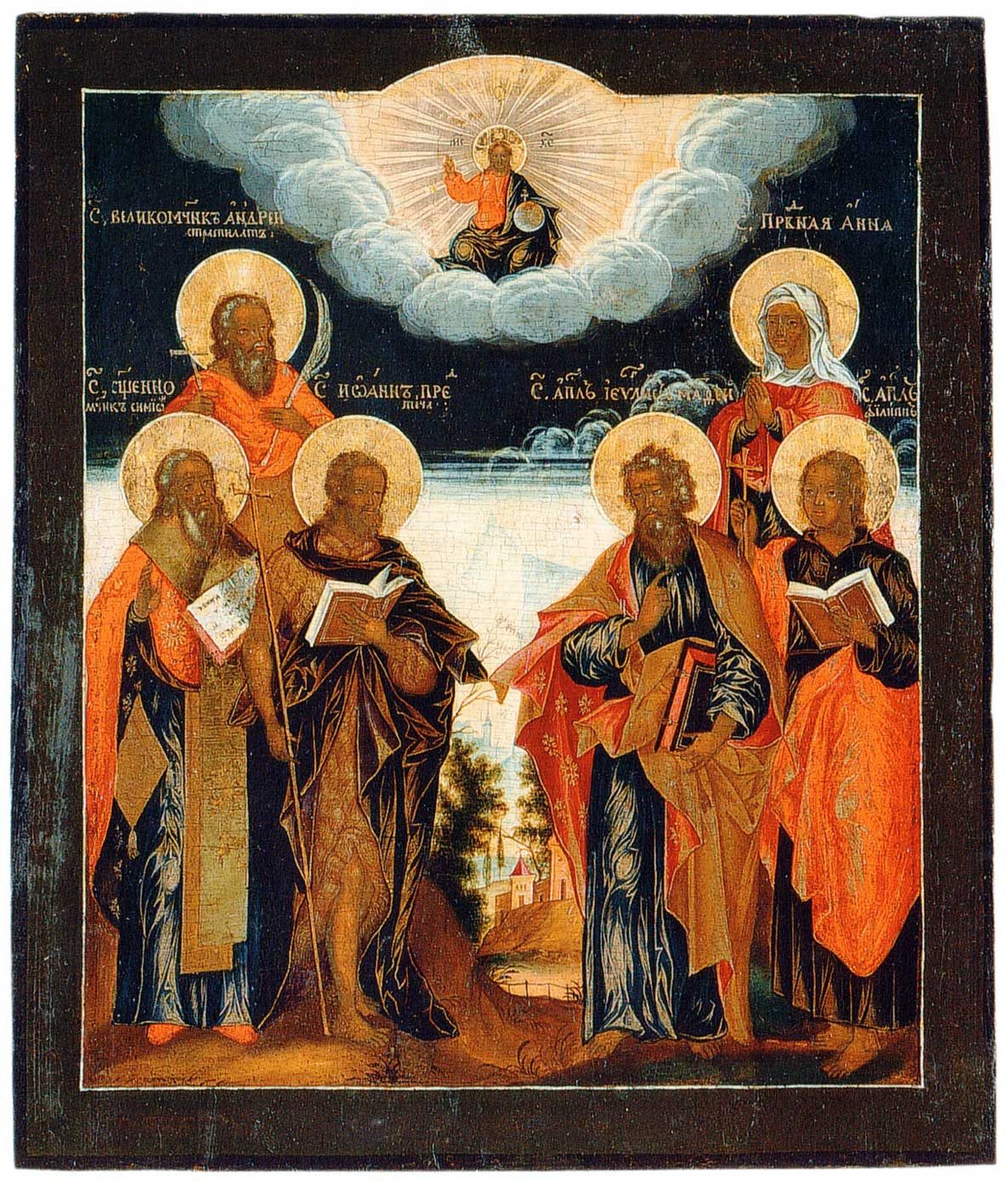
At baptism an Orthodox Christian is given a saint’s name. That saint becomes a patron in heaven, and the saint’s feast is the person’s name day. Russian Orthodox writers note that in the past the name day counted for more than the birthday. This prayer turns to that saint each morning.
If you do not know your saint
Many saints share a name. If you do not know which one you were named for, Russian custom gives an answer: take the saint of that name whose day falls on your birthday, or comes soonest after it. If you were not given a saint’s name at all, ask your priest.
What the words mean
“I run to you”
The Slavonic verb is the word for running to someone for help. The Russian prayer book’s notes gloss it “I turn to you, I run to you for help”. The saint is called a quick helper, and one who prays for my soul. So the help asked for is the saint’s prayer to God.
Prayers, not worship
The prayer asks one thing: “Pray to God for me.” That is how the Orthodox turn to the saints. The Orthodox Confession, adopted by a synod in 1643 and signed by the Eastern patriarchs, says they call on the saints “as our Brethren and the Friends of God”. They do not give them the worship that belongs to God alone.
The Orthodox Confession (1643), Lodvill’s translation, Overbeck’s edition of 1898; Philip Schaff, The Creeds of Christendom, volume 2
The Scripture in it
Now I urge you, brothers, by our Lord Jesus Christ and by the love of the Spirit, to join me in my struggle by praying to God for me.
Bible text: Berean Standard Bible, public domain.
In Church Slavonic
Моли Бога о мне, святый угодниче Божий (имя),
яко аз усердно к тебе прибегаю,
скорому помощнику и молитвеннику о душе моей.
From the Russian prayer book, in modern Russian letters, on the Orthodox portal Azbyka.ru.