
When it is said
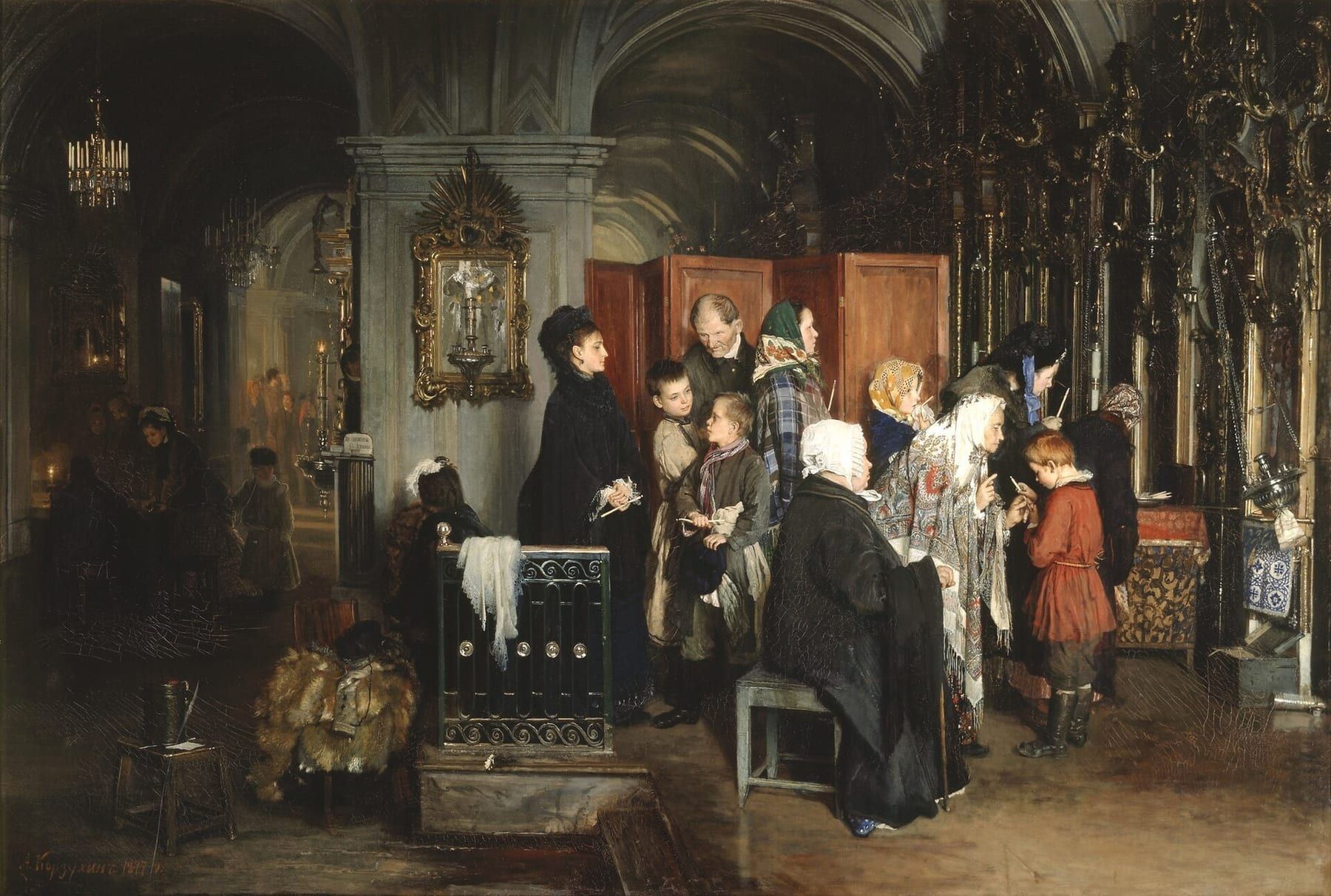
The priest reads it at the start of confession, before anyone names their sins. Before it come Psalm 51 and “Lord, have mercy” 40 times.
Often this opening part of the service is read once for everyone waiting to confess, and then each person confesses alone.
Greek parishes often hear confession without the written service, so you may not hear it there.
Where it comes from
No author known
“Christ stands here unseen”
After this prayer and one more, the Russian Book of Needs has the priest speak to the person confessing. Christ stands here unseen, he says, to hear your confession. So do not be ashamed or afraid, and hide nothing. The priest is only a witness. You have come to the physician, he ends, so do not leave unhealed.
G. V. Shann, Book of Needs of the Holy Orthodox Church (1894)
David and Manasseh
The prayer leans on two kings. When the prophet Nathan confronted King David over his sin, David said, “I have sinned against the LORD.” Nathan told him that God had taken his sin away. King Manasseh of Judah led his people into idol worship. When he humbled himself in captivity, God heard his prayer.
From an old Greek order
An old Greek order of confession is credited to St John the Faster, Patriarch of Constantinople from AD 582 to 595. It holds seven prayers for the forgiveness of the person confessing, and this is the third. Speaking to priests in Athens in 2013, Fr Theodoros Georgiou noted that in practice today the written order is not followed.
The Scripture in it
Then David said to Nathan, “I have sinned against the LORD.” “The LORD has taken away your sin,” Nathan replied. “You will not die.”
And in his distress, Manasseh sought the favor of the LORD his God and earnestly humbled himself before the God of his fathers. And when he prayed to Him, the LORD received his plea and heard his petition. So He brought him back to Jerusalem and to his kingdom. Then Manasseh knew that the LORD is God.
Say to them: ‘As surely as I live, declares the Lord GOD, I take no pleasure in the death of the wicked, but rather that the wicked should turn from their ways and live. Turn! Turn from your evil ways! For why should you die, O house of Israel?’
Then Peter came to Jesus and asked, “Lord, how many times shall I forgive my brother who sins against me? Up to seven times?” Jesus answered, “I tell you, not just seven times, but seventy-seven times!”
If You, O LORD, kept track of iniquities, then who, O Lord, could stand?
Bible text: Berean Standard Bible, public domain.
In Church Slavonic
Боже, Спасителю наш, Иже пророком Твоим Нафаном покаявшемуся Давиду о своих согрешениих оставление даровавый,
и Манассиину в покаяние молитву приемый,
Сам и раба Твоего (имя), кающагося о нихже содела согрешениих,
приими обычным Твоим человеколюбием,
презираяй ему вся содеянная, оставляяй неправды и превосходяй беззакония.
Ты бо рекл еси, Господи: хотением не хощу смерти грешника, но яко еже обратитися и живу быти ему,
и яко седмьдесят седмерицею оставляти грехи.
Понеже яко величество Твое безприкладное и милость Твоя безмерная.
Аще бо беззакония назриши, кто постоит?
Яко Ты еси Бог кающихся и Тебе славу возсылаем,
Отцу и Сыну и Святому Духу, ныне и присно и во веки веков. Аминь.